最初にあるのは姿ではなく傷
鎌鼬の古い記録は、怪物の外見より出来事の順序を語る。風が起き、人がそれに巻かれ、風が去った後で腿、顔、脛などに刃物で切ったような傷が見つかる。周囲には鎌も刀もない。この「原因物が見えないのに、切創に似た結果がある」という空白が怪異の入口である。『伽婢子』(1666年)では、傷は刃物で切ったように開くが、痛みは甚だしくなく、血も出ない。[1]ただし後代の全記録が無血ではなく、秩父では出血する型が記録されている。[2]
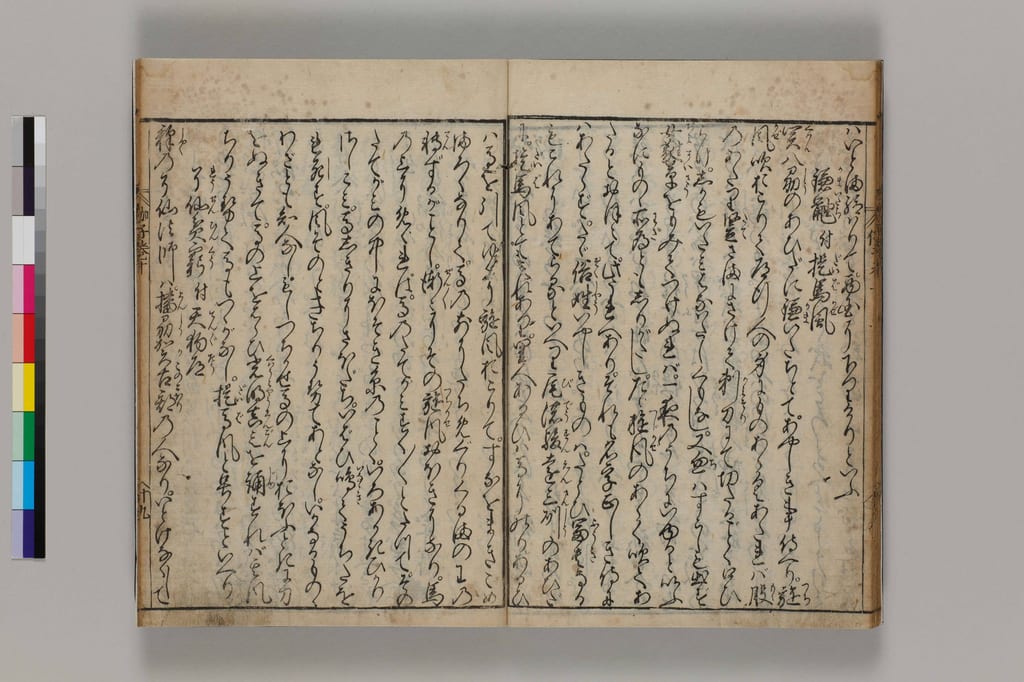
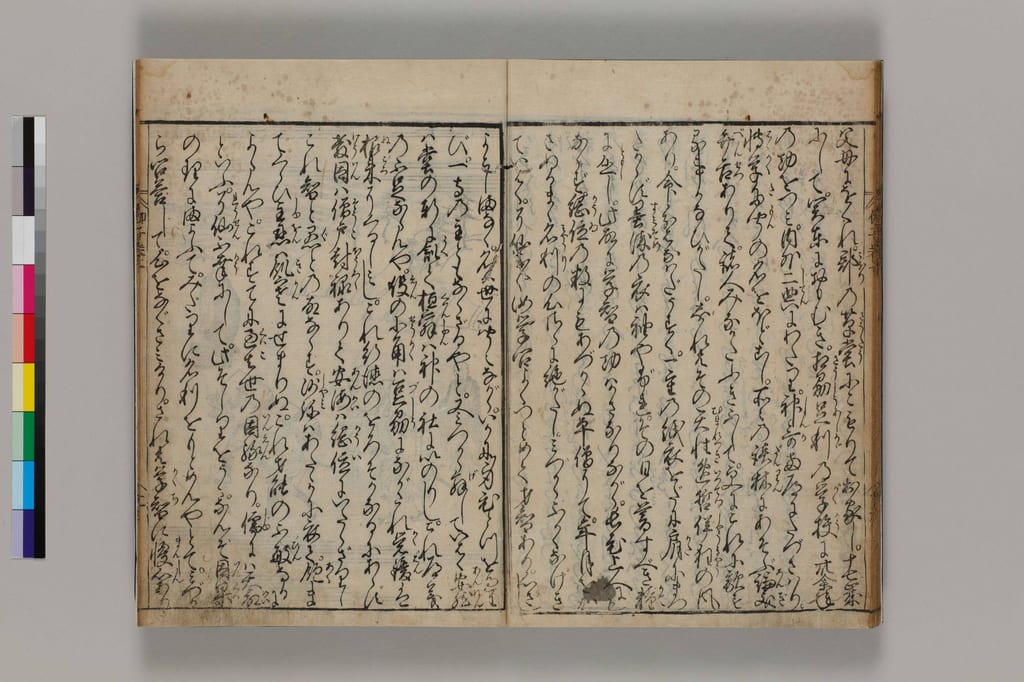
『伽婢子』の二画面には、旅人が旋風に当たり、腿が刃物で切られたように開いたという本文が続く。ここには三匹の鼬の絵も、三人の神も登場しない。鎌鼬がまず「姿」ではなく、説明しにくい傷の名として記録されたことを示す資料である。
「鎌」と「鼬」は説明であり、
語源の証明ではない
「かまいたち」を「鎌鼬」と書けば、鎌のような爪を持つ鼬を想像しやすい。しかし、歴史資料には「鎌馳」という表記もあり、新発田周辺には神の抜き身の刀を「構え太刀」と説明する語りもある。[3][4]人々は同じ音へ、鎌、鼬、疾走、刀の構えという複数の意味を読み込んだ。1955年の伊那には目に見えないほど速い鼬の一種とする記録があるが、それも数ある地域説明の一つである。[5]
「窮奇」は中国から来た本名ではない
近世の節用集や石燕は「窮奇」を「かまいたち」と読ませた。『淮南子』で窮奇が広莫風から生じるとされる点は、風の怪異を漢籍の語へ接続する手掛かりになった。[6]しかし、『山海経』の窮奇は牛のような姿、蝟の毛、食人という、日本の鎌鼬とは大きく異なる特徴を持つ。[7]確実に言えるのは、近世日本の知識人が風との関係を持つ漢籍語を土地の「かまいたち」へ当てたことであり、二つが同じ動物の系譜だったことではない。
石燕の一体像が与えた姿
鳥山石燕『画図百鬼夜行』の「窮奇」は、風の渦を背負った細長い獣が一体だけ走り、前脚の爪を長く伸ばす。原版は1776年で、公開画像の底本は1805年の求板である。[8]
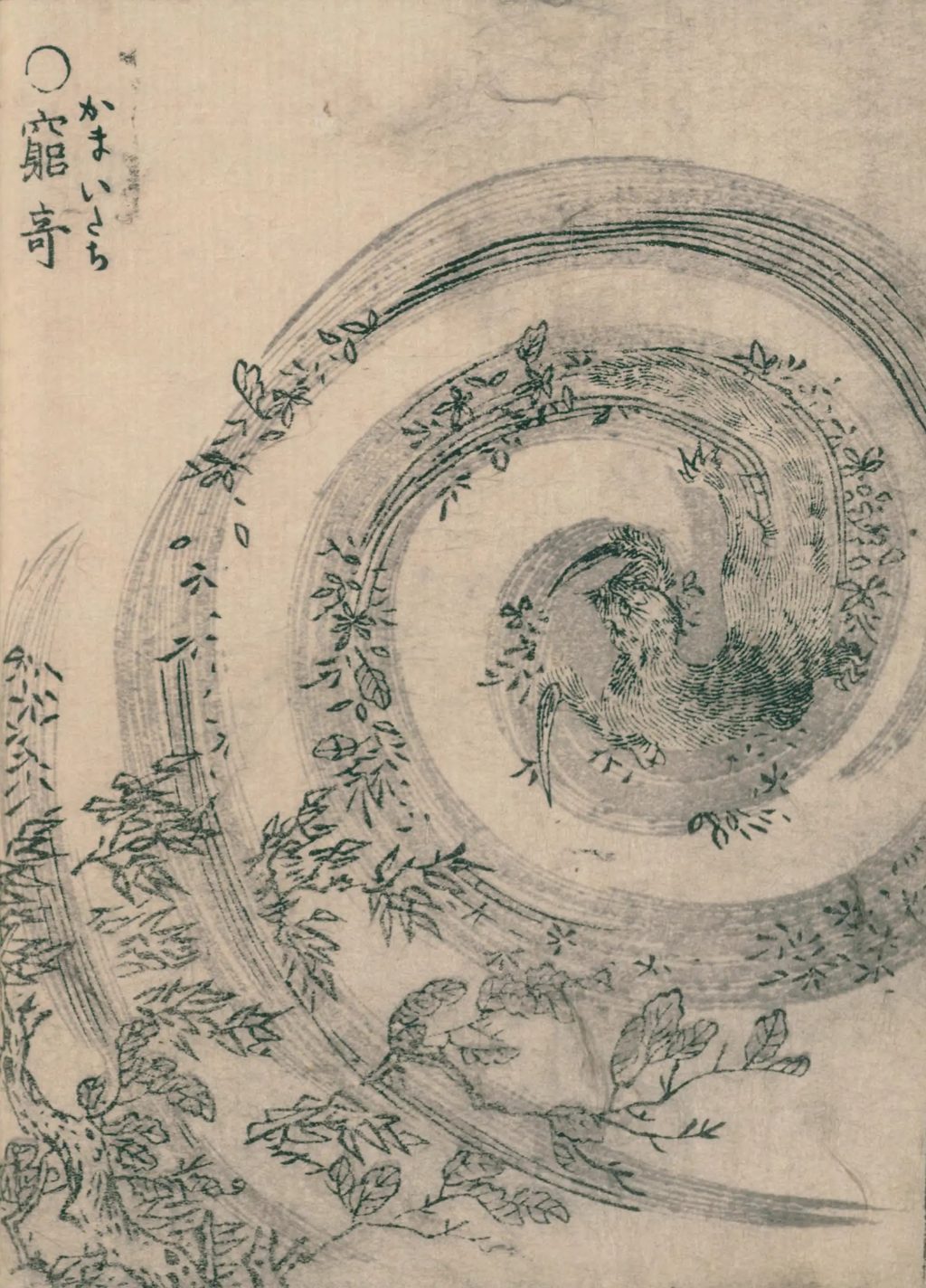
この図は、風傷の目撃写生ではなく、文章、辞書、本草学、言葉遊びを素材に、見えない怪異を一体の動物へまとめた近世の造形として読める。[3]画面では「狸」の後に置かれ、次画面に「網剪」が続くが、隣接する妖怪が同じ物語や一族に属するわけではない。
三人神はいるが、
三匹の鼬とは限らない
有名な「第一が転ばせ、第二が切り、第三が薬を塗る」という説明には、確かな民俗記録と後世の視覚化が重なっている。旧上宝村の採訪は明確に「三人一組の神様」と記し、旧静波村でも三人の神が転ばせ、切り、治す。[9][10]ここから三匹の鼬、三兄弟、親子、個別の武器や薬箱へ進むには別の出版史料が必要である。親しみ深い三匹像は後世の代表的な受容形だが、古来唯一の正体ではない。
暦は弱点ではなく地域の禁忌と療法
新発田周辺では傷に伊勢暦や古暦の黒焼きを用いるとされ、旧静波村では暦をまたぐ行為が発生条件となり、暦の灰と油が療法となる。[4][10]暦は神聖な文字、日取り、伊勢信仰と日常生活をつなぐ物であり、踏む、またぐという不敬と、焼いて傷へ施す力が同じ体系に置かれている。灰は妖怪を倒す武器ではなく、歴史的な地域処置である。現代の傷へ灰や油を塗らず、止血、洗浄、医療相談を優先する。
季節・方角・地域は固定しない
鎌鼬は雪国の冬だけに起こると説明されがちだが、記録は越後、信濃、奥羽、飛騨だけでなく、関八州、愛知、兵庫、埼玉などへ広がる。福島県茂庭には「三月雷鎌いたち」という春の表現があり、水中でも起きるという話まである。[11]冬の季語という歳時記上の整理は、各地の発生季節を一つに定めない。方角も全国共通の禁忌として確定できず、地域と出典を伴わない方角説を鎌鼬全体の特徴とみなす根拠はない。
野鎌・鎌風・カミタタレを一括しない
愛知県旧下山村の「鎌風」は同じ記録内で「鎌いたち」と併記され、兵庫県旧竹野町の「カミタタレ」もカマイタチと並記されるため、それぞれの地域異名として扱える。[12][13]一方、高知県旧月灘村の「野鎌」は、道で転倒し、刃物や石がないのに大けがをする別の伝承であり、記録は鎌鼬との同一性を述べない。[14]機能の似た傷の怪異として比較できるが、同じ名の一伝承へはまとめられない。
科学説明も一つの受容史である
井上円了の低圧・真空説は、明治の知識人が妖怪を自然現象で説明した例として重要である。[15]寺田寅彦の批判と飛来物仮説も、科学者が古い記録を読み直した例として価値を持つ。[16]しかし、どちらも現代の患者を対象とした臨床一次資料ではない。実際の傷には転倒、鋭利物、枝や飛来物、乾燥による皮膚亀裂など多様な原因があり得る。怪異談と現代の医療判断は分けて考える必要がある。
説明が姿になる歴史
鎌鼬の面白さは、一体の妖怪が完成した姿のまま全国を移動したことにあるのではない。名のない裂傷が、風、鬼魅、神、鼬、鎌、疾走する獣、漢籍の窮奇という別々の語彙で説明され、画譜によって一体の獣となり、地方の三人神型が大衆文化で三匹のチームへ読み替えられた。三匹の鼬は親しみ深い現代像であり、その背後には姿のない風傷、近世の書物知識、土地ごとに異なる民俗記録が重なっている。
Character Profile
This section is our own creative profile for storytelling. It is not historical fact or scholarship.
Yokai Type - Traditional Yokai
Category - Natural Phenomena Spirits
Rarity - Legendary
Personality - cool-headed, swift, not relentless
Compatibility - dry cold winds, valley winds
Abilities - rides with whirlwinds to approach and slice skin cleanlycauses falls cuts and pain or bleeding that arrive lateremains unseen leaving only traces
Weaknesses - details uncertain, in some regions warded off by calendrical talismans or incantations
Habitat - places where valley winds gather in the mountains, heavy-snow regions, country roads and slopes, wind paths that blow into houses