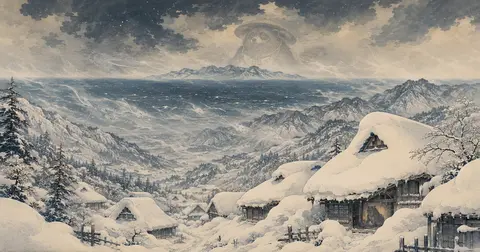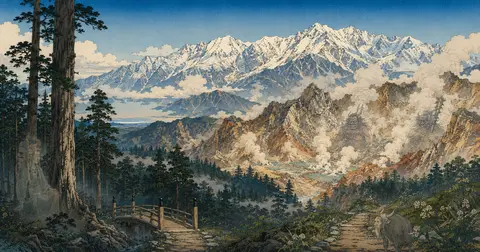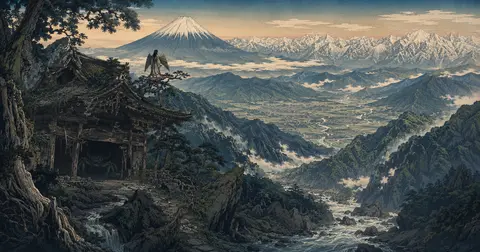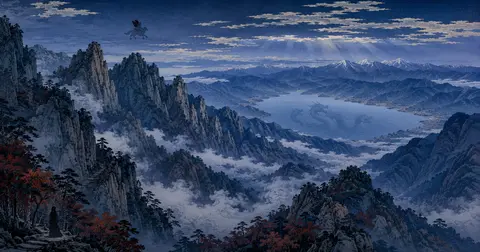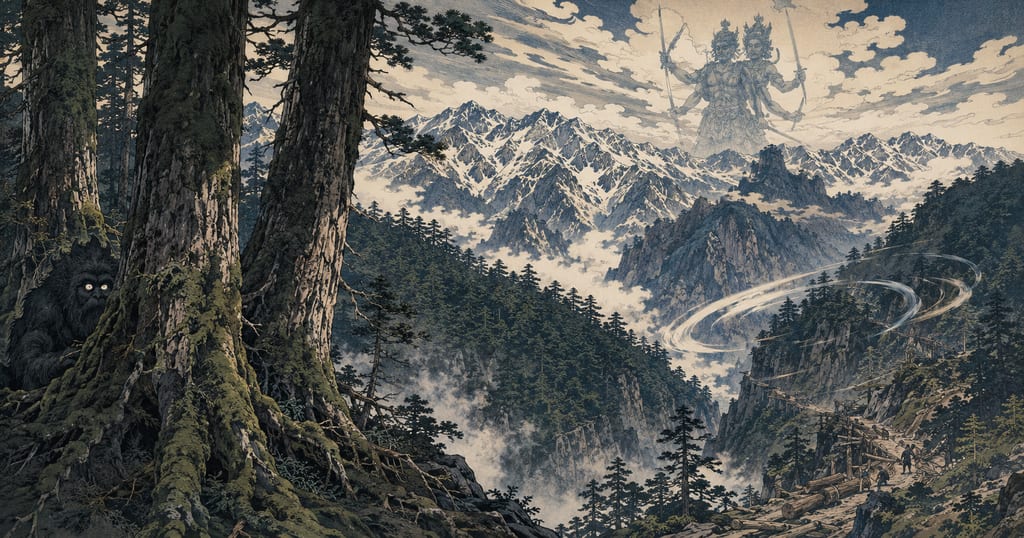
本州のほぼ中央、北を北アルプスの白い壁に塞がれ、平地のほとんどない山ばかりの国 ── それが飛騨国である。律令の世、この国は他のどことも違う扱いを受けた。米や布を税として納める代わりに、人を、それも木を扱う匠を都へ送り出すことを義務づけられたのである。養老令の賦役令[1]は「斐陀国は庸調を免じ、里ごとに匠丁十人を一年交替で出せ」と定めた。山が深く田の乏しい国は、その不利を木工の技で都へ贖ったのだ。
税ではなく腕で国家に仕えた国。そこに育った妖怪たちもまた、平野の里の怪とは肌合いが違う。一つの胴に二つの顔を持つ両面宿儺、人の心を残らず読む覚、生贄を求める猿神、辻風とともに肌を裂く鎌鼬、火の中で片目を失った鍛冶の風神一目連 ── いずれも、人が容易に踏み込めぬ高峰の奥から立ち上がった「向こう側」の存在だ。本記事は、飛騨国という古代山国の成り立ちそのものを軸に、この五体の異形を読み解く。県全体を飛騨と美濃の対照で束ねた宏観は岐阜県の妖怪事典に譲り、ここでは飛騨という一国の古層へ深く分け入る。
匠の国・飛騨という古代
飛騨が国として歴史に姿を見せるのは早い。『先代旧事本紀』の国造本紀[2]によれば、四世紀の成務朝に尾張連の祖・瀛津世襲命の子である大八椅命が斐陀国造に任じられたという。その本拠は宮川の流れる古川盆地から高山盆地にかけて ── 現在の飛騨市古川町から高山市北部にあたる山あいの平地であった。やがて七世紀、この斐陀国造の領域を中心に、律令国としての飛騨国が立ち上がる。
立ち上がったその国に、律令国家は特異な役を割り当てた。先に触れた賦役令[1]の規定がそれである。多くの国が稲・布・特産物を税として納めたのに対し、飛騨だけは庸と調を免じられ、代わりに「匠丁」と呼ばれる木工の職人を都へ送り出した。年に動員されたのはおよそ百人。彼らは一年交替で都に詰め、平城京や平安京の宮殿・寺院の造営に腕をふるった。飛騨匠の系譜を伝える記録[3]によれば、匠丁は都で年に三百三十日から三百五十日も働かされ、課された仕事を果たすまでは故郷の山へ帰ることを許されなかったという。山深く貧しいがゆえに、人の手と技そのものを国家に差し出した国 ── それが飛騨であった。
この「飛騨の匠」は、やがて伝説の名工として語り継がれていく。『今昔物語集』巻第二十四第五話「百済川成、飛騨の工と挑み語」[4]には、絵師の百済川成と飛騨の工が互いの技を競い合う話が収められている。飛騨の工は四方すべてに扉を設けた小堂を建て、開けようと近づく川成を扉とともにくるくる回して翻弄する。負けじと川成は、膨れ上がって腐り爛れた死人の絵を堂内に描き、それを本物と見て腰を抜かす工を驚かせる。二人の名手が技でだまし合うこの説話は、平安の都人にとって「飛騨の工」が絵師の名匠と並び称される伝説的存在であったことを物語る。山の国の貢ぎ物だった匠が、いつしか神業の代名詞になっていたのである。
技は信仰にもつながった。飛騨一宮水無神社の御神体である霊峰・位山には、イチイ(一位)の原生林が広がる。位山のイチイと笏木献上の伝承[5]によれば、平治元年(一一五九)に位山のイチイが笏の材として朝廷に献じられ、その木が「一位」の位を賜ったことから、木の名も山の名もそう呼ばれるようになったと伝わる。笏は束帯のとき右手に持つ細長い板で、イチイの心材を一年ほど乾かし、地元の匠が真っ直ぐな木目に仕上げた。以後、歴代天皇の即位に際して位山のイチイの笏が献上され続けたという。木を都へ貢ぐという飛騨の宿命は、税の匠丁から即位の笏木まで、形を変えて千年以上も続いたのだ。
木と山と匠 ── この三つが結び目になった国だからこそ、飛騨の異形は他国とは違う相貌を帯びる。最初に立つのは、その国の成り立ちそのものに食い込んだ一体の怪である。
両面宿儺 ── 賊か、
英雄か
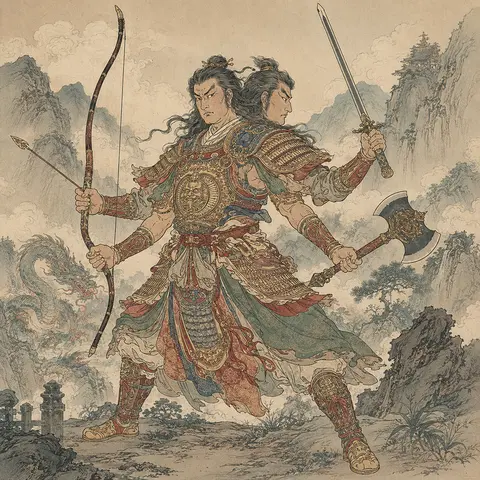
飛騨の妖怪を語るとき、避けて通れないのが一体の異形だ。一つの胴体に背き合う二つの顔を持ち、それぞれに手足を備えた両面宿儺。日本の古代史料に名を残す数少ない「異形」のひとつである。
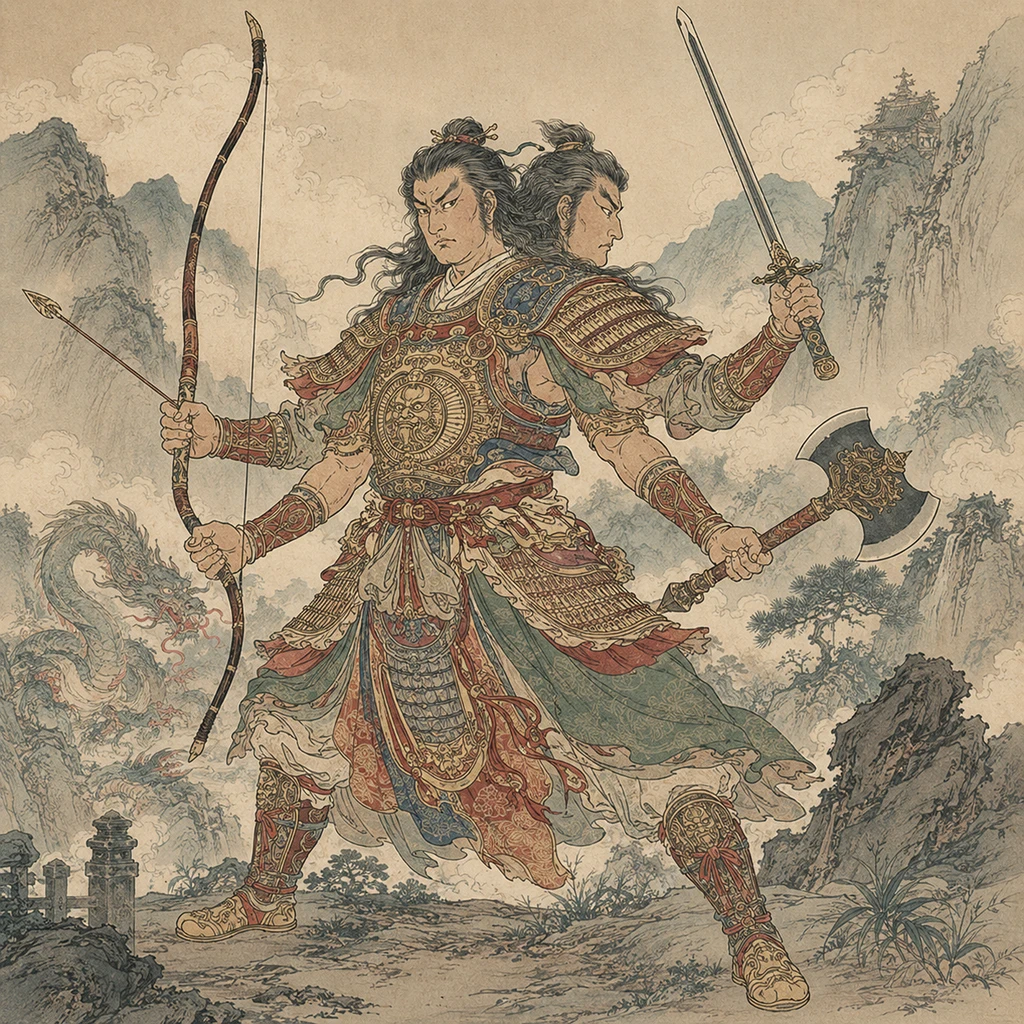
その姿が最初に記されるのは、奈良時代の勅撰正史『日本書紀』巻第十一の仁徳天皇六十五年条[6]だ。そこには「壹體有兩面(一つの胴体に二つの顔があり)」「面各相背(顔は各々背き合う)」とあり、宿儺は四つの手で弓矢を操り、左右の腰に剣を帯びていたと描かれる。膝はあるが踵がない、という人ならざる細部まで添えられている。そして書紀の筆は冷たい ── この異形は朝廷の命に従わず、人民から略奪を働く賊であった。仁徳天皇は和珥氏の祖・難波根子武振熊命を遣わし、宿儺を討たせたのである。
Ryōmen Sukuna
Ryōmen Sukuna is an extraordinary figure from Hida Province described in the Nihon Shoki and remembered in later Hida and Mino traditions as a temple founder, guardian of Buddhism, and dragon-defeating hero. Often presented today as an oni or monster, the entry for the sixty-fifth year of Emperor Nintoku in Book Eleven of the Nihon Shoki merely says, “In Hida Province there was a man named Sukuna”; it does not call him an oni, demon deity, or brigand. It says that he defied the imperial command and delighted in plundering the people, and that Naniwa no Neko Takefurukuma, an ancestor of Wani no Omi, put him to death. The chronicle thus portrays him as an adversary of imperial authority. The brief entry describes his body with unusual specificity: one torso bore two faces turned away from one another; their crowns met, leaving no nape; and each had hands and feet. He had knees but no backs of the knees or heels. Strong and agile, he wore swords at his sides and used bow and arrows with four hands. Four legs are a widespread interpretation of “each had hands and feet,” but the text does not explicitly state their number. This must be distinguished from later images with two faces, four arms, and two legs, and from Zenkyūji’s tradition of two faces, four hands, and four legs. Hida Senkōji still tells of Sukuna opening its mountain sanctuary in Emperor Nintoku’s reign. Its official history says he opened an ancient place of prayer later established as a Buddhist temple by Prince Shinnyo. At Zenkyūji, an appearance account says Sukuna emerged from a cave and became Eleven-Headed Kannon. At Nichiryūbu-ji in Mino, he drove away a divine dragon that harmed the people, founded the temple, and left a cypress staff that became the “Thousand-Cypress Tree.” These portraits come from temples and local communities, not the Nihon Shoki. Neither the adversary of official history nor the protective hero of regional tradition can simply be declared the sole truth. They are separated by a long span of time, and the dates when temple traditions were put into writing also need scrutiny. Yet one name has been retold as an extraordinary figure killed by imperial authority, a founder associated with Kannon, a dragon-defeating hero, and an object of devotion carved by Enkū. The two faces do not assign good and evil neatly to opposite sides; they let us see the different memories that different eras and storytellers attached to one name.
Read moreところが、舞台となった飛騨の地に下りると、宿儺の像は正反対に反転する。飛騨では、両面宿儺は討たれるべき賊などではない。村を守り、農耕や土木の技を伝え、毒龍を退治した英雄として語り継がれてきた。高山市丹生川町下保の袈裟山千光寺[7]は、その開山を両面宿儺とする寺伝を伝え、宿儺を観音の化身として祀る。関市下之保の日龍峯寺もまた、宿儺が高沢山の毒龍を制した功によって開かれたと伝える。中央の正史が「討伐された異形の賊」と記した存在を、その地の人々は「村を救った開山の英雄」として千年以上も祀り続けてきたのだ。
なぜ朝廷と在地でこれほど評価が割れるのか。一つの見方は、宿儺が大和朝廷に服さなかった飛騨の在地豪族の記憶であり、それを征服する側が「異形の賊」として記録したのに対し、征服される側はその指導者を恩人として記憶し続けた、というものである。歴史の勝者が書いた一行と、敗者が守り続けた信仰。両面宿儺の二つの顔は、まさにこの二つの視点が一体に貼り合わさった姿といえる。事実として確かなのは書紀の記述と各寺の伝承の存在までで、宿儺が実在の人物・集団であったかは留保すべきだが、賊と英雄というこの落差が飛騨の語りの核にあることは疑いない。匠を都へ貢いで国家に仕えながら、その奥には朝廷に服さぬ者の記憶を抱え続けた ── 飛騨という国の二重性が、両面という形姿に凝縮されている。
この賊と英雄の二面性を、最も雄弁に造形したのが円空である。江戸前期の山林修行僧・円空は飛騨の地に多くの木彫仏を残したが、その本拠が千光寺であった。千光寺の円空仏寺宝館に伝わる円空作の両面宿儺坐像[8]は、一方の顔に怒りを、もう一方の顔に微笑をたたえ、爪などの細部まで彫り込まれ、円空仏には珍しく光背まで備える異色の作だ。千光寺には円空仏が六十余体(現存六十四体とも)伝わり、その荒削りで素朴な木肌は、まさに「木の国・飛騨」の信仰が生んだ造形である。中央の歴史叙述では一行で「討たれた」と片づけられた異形が、在地ではいくつもの寺の縁起となり、円空の刻んだ木像となって、千年以上も生き延びた。両面という形姿は、見る角度によって賊にも英雄にも転ずるこの存在の宿命を、最初から造形として宣言していたかのようである。
山が人の心を読む ── 覚
飛騨の山は、人が一人で踏み込めば、たちまち自分の心と向き合わされる場所だった。その孤独と恐れが生んだのが、人の心を読む怪である。
覚(さとり)は、まさに「心を読む」一点に特化した妖怪だ。江戸期の絵師・鳥山石燕は『今昔画図続百鬼』[9]の中で、こう記している ── 「飛騨美濃の深山に玃(かく)あり。山人呼んで覚と名づく。色黒く毛長くして、よく人の言をなし、よく人の意を察す。あへて人の害をなさず」。注目すべきは、石燕がこの怪の住処を名指しで「飛騨美濃の深山」と書いたことだ。覚は全国の山に伝わる妖怪だが、その故郷として真っ先に挙げられたのが、ほかならぬ飛騨の山だったのである。
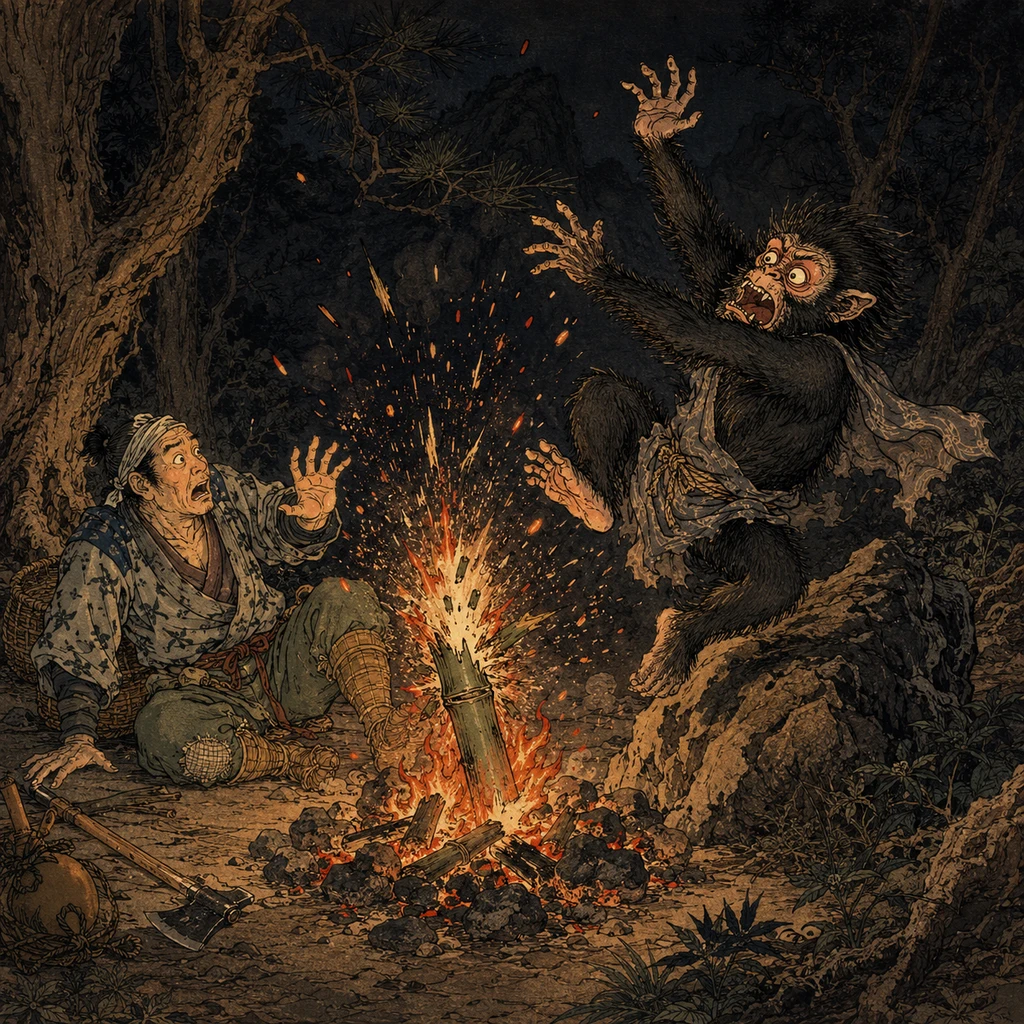
Satori
A mind-reading yokai recorded in the Edo-period scroll Konjaku Gazu Zoku Hyakki. Said to dwell in the remote mountains of Hida and Mino, it appears like a dark-skinned, shaggy, ape-like creature that understands human speech and speaks aloud a person’s inner thoughts. It does not wish to harm people, but if threatened with death it flees first. The creature has been linked to the "kaku/jué" (玃) of Chinese lore and to local tales of mind-reading mountain beings.
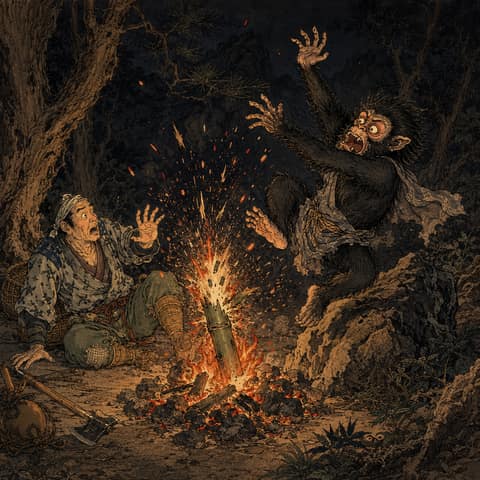
Read more覚をめぐる民話の型は、どこか哀しい滑稽さを帯びている。山小屋で寝泊まりする樵や猟師の前に、黒く毛深い化物が現れる。男が「逃げようか」と思えば「逃げようとしているな」と言い当て、「斧で打とうか」と思えば「斧で打つ気だな」と先に口にする。心の動きをことごとく読まれ、男は身動きが取れない。ところが ── 囲炉裏の薪がぱちんと爆ぜ、その破片が偶然に化物へ飛ぶ。「人の心は読めても、心にないことは読めぬ」。思いがけぬ出来事に覚は驚き、「人間の心にないことをするから恐ろしい」と言い残して逃げ去る。人智を超えた読心の怪が、人の予測できぬ偶然にこそ敗れる ── この逆転に、山に対する畏れと、それでも生き延びる人間のしたたかさが同居している。
石燕が覚を「玃」という字で呼んだことにも、この怪の本性がにじむ。玃は中国の古典で大型の猿の類を指す字であり、覚は黒く毛深い猿に似た姿で描かれることが多い。山中で人に最もよく似た獣 ── 猿。その猿が人の言葉を話し、人の意を察するという設定は、人と獣の境界が曖昧になる深山の不安を、そのまま形にしたものだ。覚に心を読まれるという恐怖は、突き詰めれば「自分の内面が、山という他者にすべて見られている」という感覚であり、孤独に山へ入った者だけが味わう、純粋な心理の怪異である。木を求めて誰よりも深く山へ分け入ったのは、ほかならぬ飛騨の樵や匠であった。覚の故郷が飛騨美濃の深山とされたのは、その深い山に最も多く分け入った人々が、最も濃くこの心理の怪を語り伝えたからだろう。
山が命を求める ── 猿神
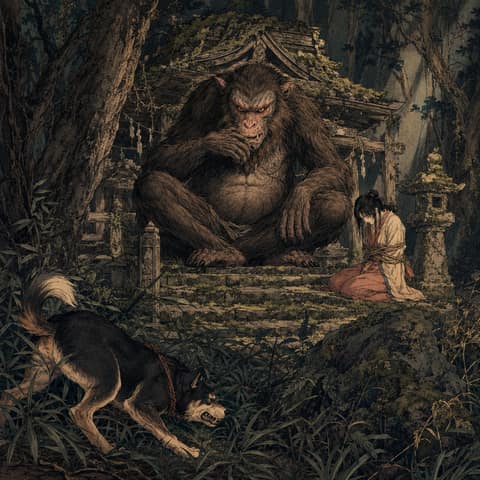
覚が心を読む怪なら、猿神はもっと直截に人の命を奪う山の神だった。平安末期の説話集『今昔物語集』巻第二十六[10]には、飛騨国を舞台とする生贄譚が収められている。注目すべきは、この巻のすぐ手前 ── 第七話に美作国の猿神退治譚[11]が置かれていることだ。
美作の話では、中山の神である大猿が年に一度、若い娘を生贄に求める。そこへ東国から来た猟師が、猿退治に仕込んだ犬を連れて娘の身代わりとなり、櫃に潜んで生贄として差し出され、飛び出して大猿を組み伏せ、ついに生贄の風習を断ち切る。猿神退治の説話には必ずといってよいほど犬が登場する ── 山の神に対抗できるのは、人に最も近い従順な獣だという感覚が、この型の底に流れている。飛騨と美作、二つの猿神譚が同じ巻に並べて編まれたという事実は、人身御供という古い記憶が、山深い土地に共通して根を張っていたことを物語っている。
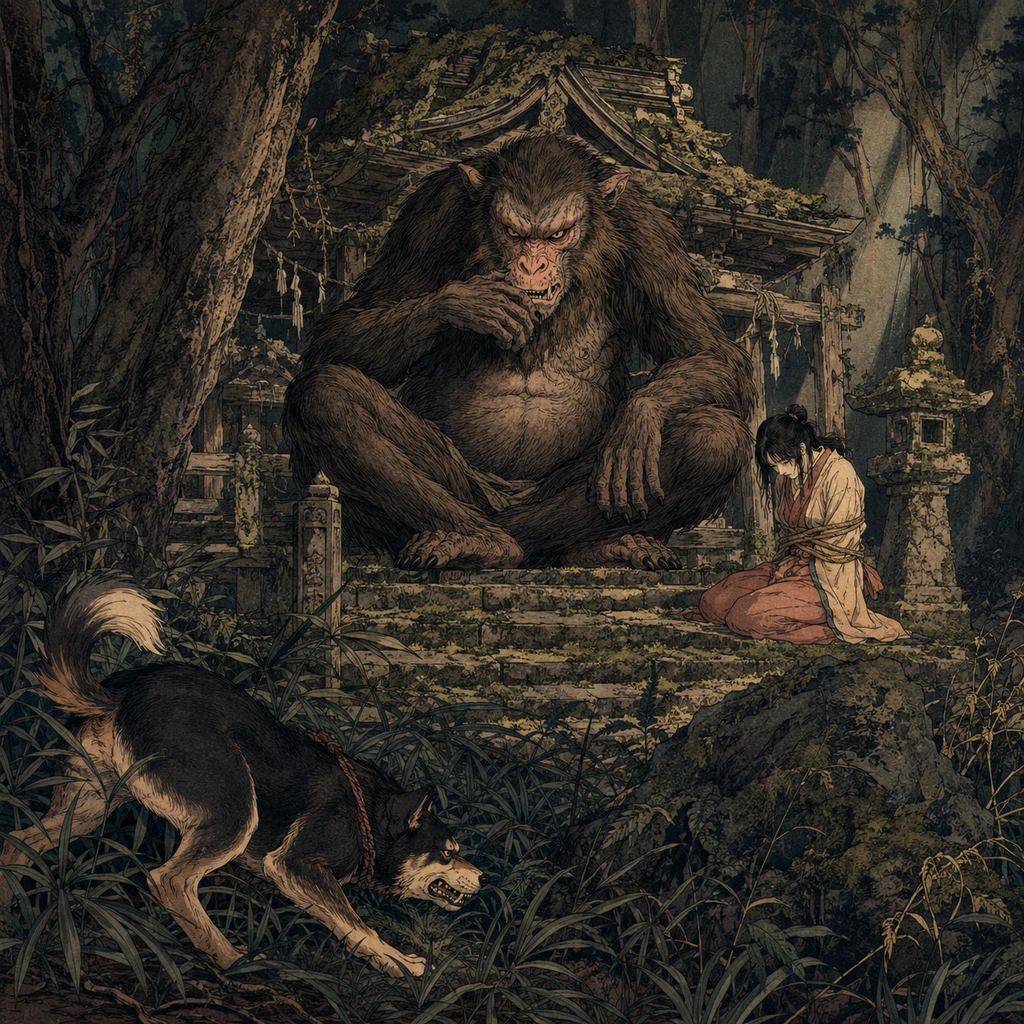
覚と猿神は、同じ「猿に似た山の存在」でありながら、片や心を読む者、片や命を求める者として二様に語られた。人に近い知能を持つ猿は、神にも怪にもなりうる両義的な存在として、山の民の想像力を最も強く刺激したのである。飛騨の深山は、単なる地形ではなく、人を見つめ返し、ときに人の命さえ要求してくる「意志ある他者」として畏れられていた。匠を都へ送り出した山の国は、その山の奥に、決して馴致できぬ畏怖を抱え続けていたのだ。
飛騨の風と火 ── 鎌鼬と一目連
山の怪が「意志ある異形」なら、飛騨にはもう一系統、「自然の力そのもの」を神や怪として捉えた信仰がある。風と火である。
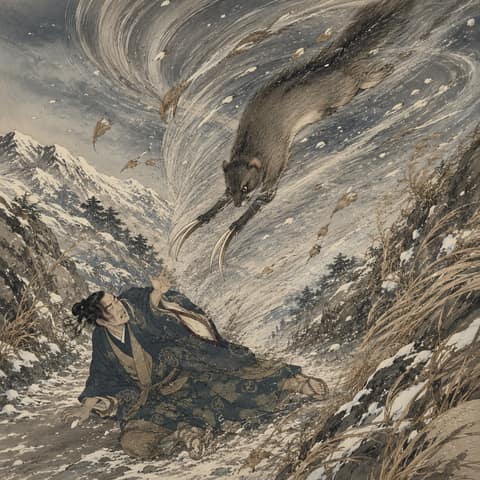
鎌鼬は、旋風とともに現れ、知らぬ間に皮膚を鎌で切ったような傷を負わせる怪だ。全国に分布するが、その正体を「三匹一組の神の業」として説いたのは、ほかならぬ飛騨の民俗だったとされる。飛騨丹生川流域の三神説[12]によれば、辻風の中には三柱の悪神が連れ立っており、一の神がまず人を倒し、二の神が刃で切りつけ、三の神がすかさず薬を付けていく ── だからこそ、傷口からは血も出ず、痛みも感じない、というのである。突然の旋風で気づかぬうちに裂けた傷という不可解な現象を、神々の分業として精緻に説き明かした、飛騨ならではの合理的な怪異観だ。鼬(いたち)の字が当てられるのは、すばやく走り抜ける旋風の動きが、細い体で地を駆ける鼬の身ごなしを思わせたからだろう。山あいに吹き下ろす局地的な突風が多い飛騨の地形を考えれば、旋風を生きものの仕業と捉える感覚が育ったのも自然なことである。
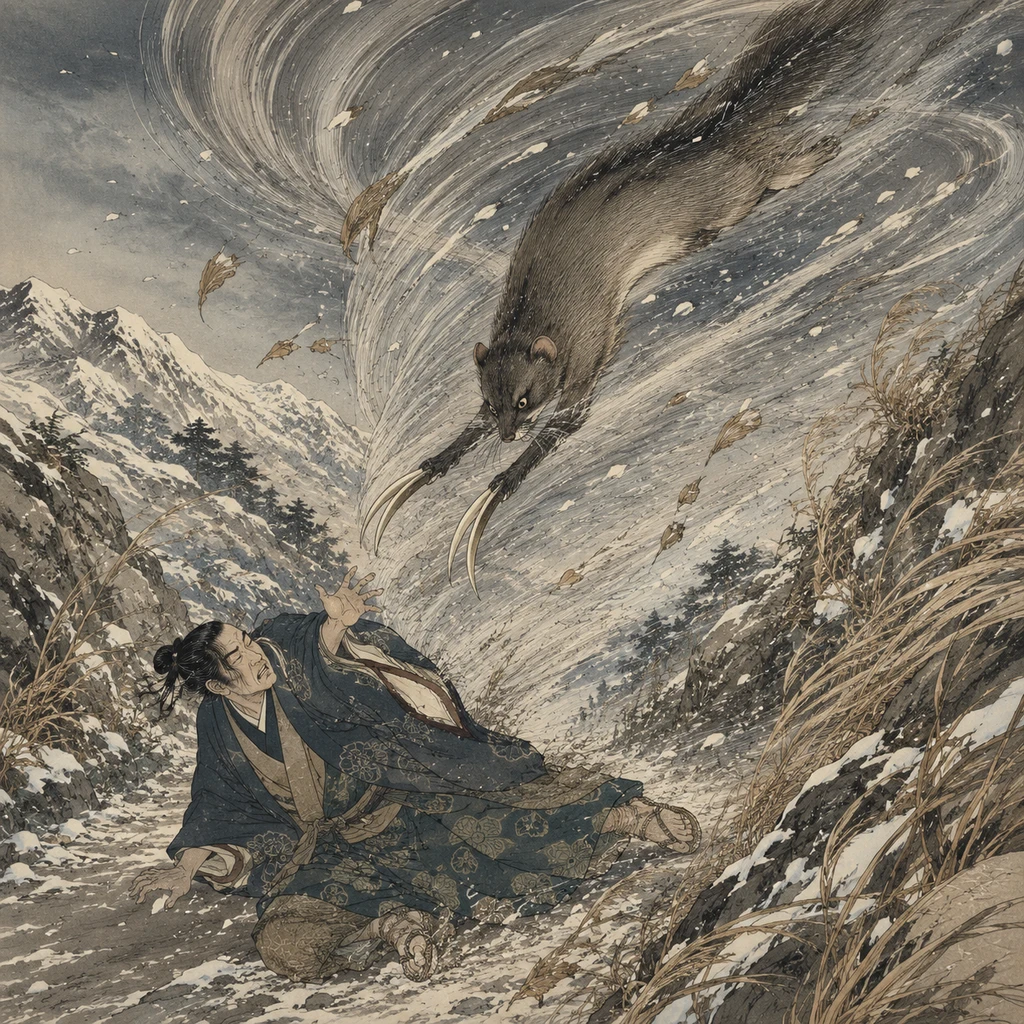
Kama-itachi
Kama-itachi are yokai said to ride dust devils or sudden whirlwinds, slicing human skin as if by a blade. Victims often feel little pain at first and may not bleed until later. From the Edo period on, they’re depicted as weasels with sickle-like claws, though explanations vary by region—some attribute the cuts to the phenomenon itself, to wind deities, or to minor spirits. The term is also a classical winter seasonal word.
Read more風の信仰は、鍛冶の神にもつながる。一目連は、隻眼の風神にして鍛冶の神である。その淵源は天目一箇神[13]という古い鍛冶の祖神にあり、後に片目の龍神たる一目連と習合して、風雨を司る神となった。なぜ鍛冶の神が片目なのか ── そこには切実な現実がある。古代の鍛冶師は、炉の中で熔ける鉄の色を見極めるために片目を細めて火を見続け、ときに飛び散る火花と熱で片目の視力を失った。隻眼の神は、その職能の身体的代償が神格化されたものだと考えられている。
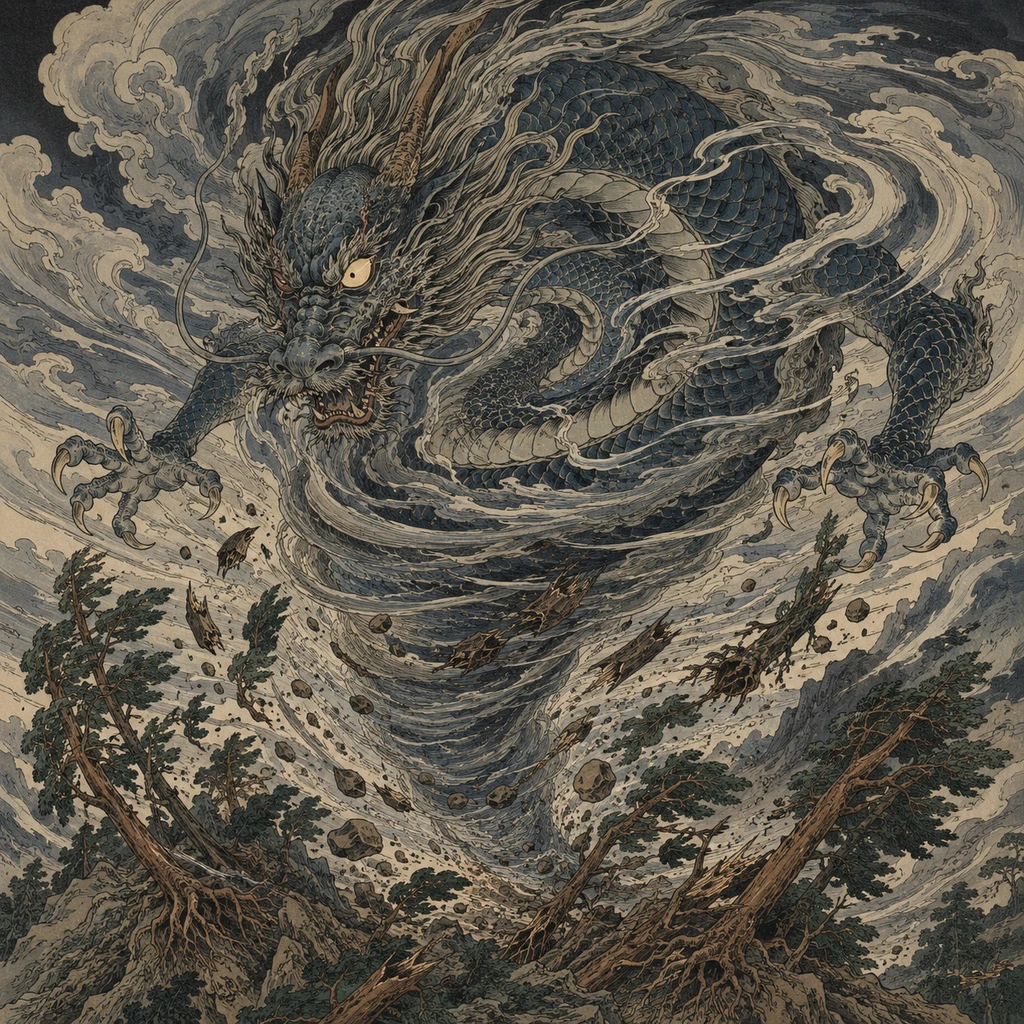
一目連を祀る本拠は伊勢国の多度大社別宮であり、岐阜の地に固有の社があるわけではない。だが、隻眼の鍛冶神という観念は、飛騨の風と火の文化と深く響き合う。木工の匠の国として知られる飛騨だが、木を扱う道具 ── 鑿(のみ)・鉋(かんな)・手斧(ちょうな) ── を打ったのは鍛冶であり、その鍛冶の火を吹き上げたのは風だった。風が炉の火をあおり、火が鉄を変え、鉄の刃が木を彫る。一目連は、その風と火と鉄の連鎖を一身に体現した神である。匠の国の根を辿れば、必ずこの隻眼の鍛冶神にたどり着く。山の鉄を掘り、その鉄を鍛え、刃にして木へ向かう ── 飛騨の匠の技は、火を見続けて片目を失った職人たちの系譜の上に立っていたのだ。
古層の山国に息づくもの
飛騨国。北アルプスに塞がれ、田の乏しい、山ばかりの古代山国。米でも布でもなく、木を扱う匠そのものを都へ貢いだこの国の妖怪は、平野の里の怪とは肌合いを異にする。
人を寄せつけぬ高峰の奥からは、両面宿儺のような異形、覚や猿神のような「意志ある山の存在」、鎌鼬や一目連のような「自然の力の神格」が立ち上がった。それらは概して、人が制御できぬものへの根源的な畏れの結晶である。とりわけ両面宿儺が、中央には賊、在地には英雄という二つの顔を持ち続けたことは、辺境であるがゆえに中央の物語に回収されきらなかった飛騨の独立性を象徴している。匠を貢いで国家に仕えながら、その奥には服従しない者の記憶を、そして心を読む山と命を求める山への畏怖を、千年以上も抱え続けてきたのだ。
そして、それらすべての根に流れているのは「木」である。位山のイチイが笏となって天皇の即位を支え、飛騨の匠が都の宮殿を建て、円空が荒削りの木肌に両面宿儺を彫った。風が炉の火をあおり、火が鉄を変え、鉄の刃が木を彫り、彫られた木が神となり仏となる ── 飛騨の妖怪と信仰は、この木をめぐる連環の上に成り立っている。高山の古い町並みを歩き、白川郷の雪に埋もれた合掌造りを仰ぎ、位山のイチイの森を仰ぐとき、その風景の奥には、税の代わりに技を差し出し続けた古代山国の記憶と、そこに棲む異形たちの気配が、今も静かに息づいている。
飛騨と美濃を併せ持つ岐阜という県の宏観については、岐阜県の妖怪事典を併せて読まれたい。そこでは、この飛騨の山の畏れが、美濃の里と川の戒めの怪とどう対をなすかを辿っている。