YOKAI.JP

Yokai Encyclopedia

Explore Japanese yokai by name, type, place, and theme

592 Yokai|12 Category|Page 24 of 25
Localization in Progress - More content available in Japanese version
View Japanese
Sort by: NameAscending
  • Yamanoke

    Yamanoke

    Epic

    Yamanoke

    The Headless One-Legged Entity Possessing Women

    山野の怪2007年2ちゃんねる発祥の創作怪談

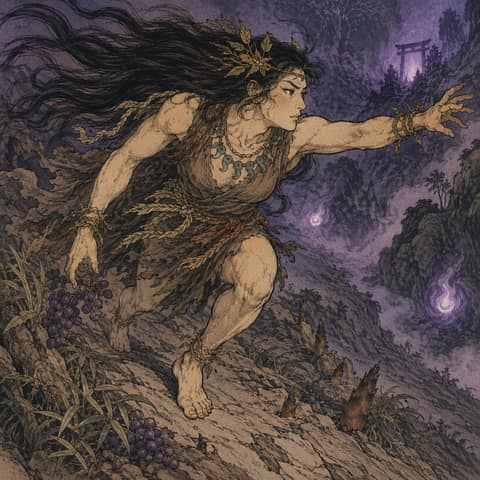
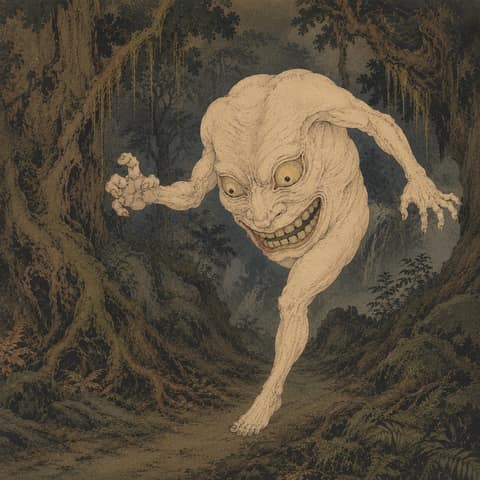
    The Literary Prowess of the "ShareKowa" Golden Age. As mentioned in the base description, Yamanoke is a masterpiece from the golden age of 2channel's occult board. In this deep dive, we will explore the specific literary mechanisms that make this story so effective. The 'ShareKowa' (Scary Stories You Can't Laugh At) thread produced numerous internet legends, but Yamano Keita's Yamanoke stands out for its exceptional narrative pacing. The story transitions seamlessly from a mundane, slightly mischievous act by a father (driving down an unpaved mountain road to scare his daughter) into a sudden encounter with the incomprehensible. The pacing of the escape, the creeping realization of the daughter's abnormal behavior, and the dramatic diagnosis by a temple priest are woven together with the precision of a professional horror short story, elevating it far beyond a simple forum post. The Psychological Horror of Possession. Unlike monsters that simply attack or kill, Yamanoke's terror lies in "possession." When the daughter is afflicted, she loses her sanity and begins mimicking the monster's eerie "Ten-sou-metsu" chant. The horror is twofold: the physical danger of the encounter, and the psychological devastation of watching a loved one's mind be erased and replaced by something alien. The ticking clock element introduced by the priest—"if not exorcised within 49 days, she will never recover"—adds a desperate, suspenseful tension to the narrative that mirrors classical demonic possession tropes while rooting them firmly in Japanese folk Buddhism. The Resonance with Classical Mythology: Xing Tian. The morphological similarity between Yamanoke and the Chinese mythological figure Xing Tian (from the *Classic of Mountains and Seas*) is a subject of endless fascination among folklore enthusiasts. Xing Tian, the headless giant who fought the Yellow Emperor using his chest as a face, represents relentless, unyielding willpower in Chinese mythology. Whether Yamano Keita intentionally borrowed this imagery or arrived at it independently, transplanting this bizarre, ancient anatomy onto a modern Japanese mountain spirit creates a visual that is both absurd and deeply unsettling. The juxtaposition of a mythological warrior's body with the behavior of a grinning, muttering stalker is a masterclass in character design. The Linguistic Genius of "Ten-sou-metsu". The phrase "Ten-sou-metsu" is a brilliant piece of horror writing. In Japanese, the syllables "ten," "sou," and "metsu" evoke kanji related to heaven (天), sending/transferring (送), and destruction/annihilation (滅). It sounds like a fragmented Buddhist incantation or a curse. Because the author never provided a canonical kanji spelling or translation, readers are forced to imagine what this entity is trying to convey. Is it a threat? A countdown? A prayer? This linguistic ambiguity forces the reader's imagination to do the heavy lifting, ensuring the monster remains truly incomprehensible and, therefore, terrifying. The 2025 Resurgence and Sequel. The landscape of internet horror was shaken in late 2024 when Yamano Keita, the original author, re-emerged on social media after nearly two decades. The release of the sequel, *Zange* (Confession), in March 2025 proved that the author's ability to craft atmospheric dread remained entirely intact. The fact that an internet legend born in 2007 could receive a direct, canonical continuation 18 years later—and that the internet community reacted with such fervor—demonstrates that entities like Yamanoke are not just disposable forum posts, but enduring pieces of modern digital folklore that command genuine cultural legacy.
  • Yamaoroshi

    Yamaoroshi

    Rare

    yah-mah-oh-ROH-shee

    Based on Sekien Toriyama’s Iconography

    Animated Objects & UndeadJapanese folklore

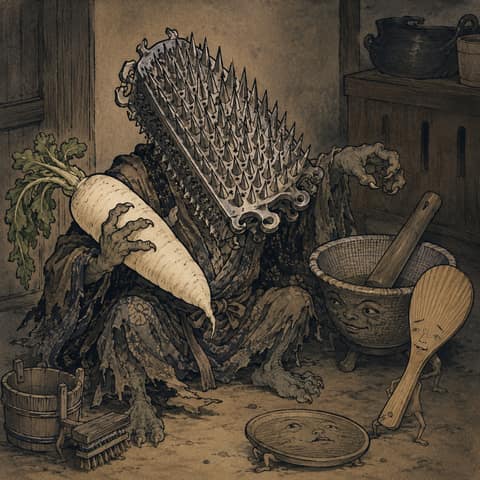
    A reconstruction guided by Sekien Toriyama’s image and notes. The head resembles a grater, its surface studs likened to porcupine quills. Though written as “Yamaoroshi,” its nature is not a mountain wind itself but an abstract monster born from combining a utensil (grater) with a bestial image. Daikon radishes and mortars placed nearby signal a tsukumogami-style scene, with no specific harm or blessing described. Rooted in Edo-period paintings, it lacks regional oral lore or cult, and later handbooks often present it as an example of utensil transformation and wordplay.

  • Yamasachihiko

    Yamasachihiko

    Divine

    やまさちひこ

    Amatsuhikohikohohodemi-no-Mikoto

    Divine Spirit / DeityMiyazaki

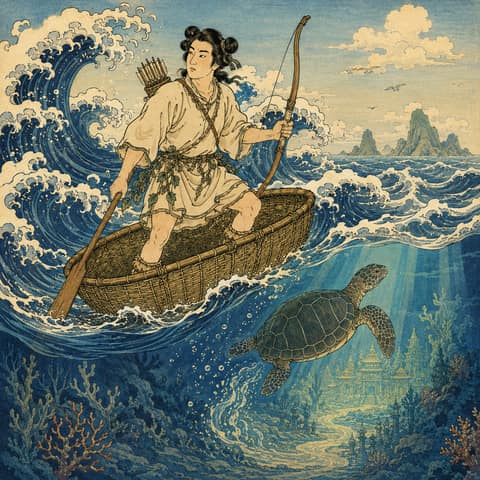
    Also known as Amatsuhikohikohohodemi-no-Mikoto. In the Umisachi-Yamasachi myth, he visited the sea palace guided by Shiotsuchi-no-Kami. He married Toyotamahime and used the tide jewels to subjugate his brother. Breaking the taboo of looking led to his wife's departure, but their lineage established the imperial family tree. Venerated at Udo Shrine.

  • Yamata no Orochi

    Yamata no Orochi

    Divine

    Yamata no Orochi

    Serpent God of Izumo's Hii River: Yamata no Orochi

    Divine spirit / serpent deityShimaneHiroshima

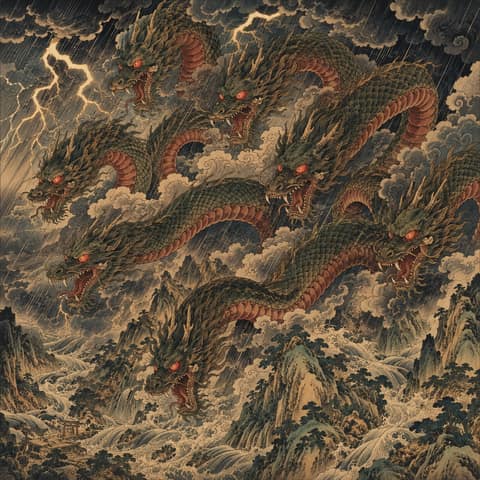
    Orochi is more than a snake. The old word orochi is often explained as combining a term for peak or ridge with chi, a word for spirit-power. The Kojiki describes moss, cypress, and cedar growing on the serpent and a body spanning eight valleys and eight ridges. That is closer to a living mountain range than to an animal. Other Japanese serpent-slaying tales, from Koga Saburo at Suwa to the Yahiko serpent of Echigo and the Aso traditions around Takeiwatatsu, can be read in the same serpent-deity line. The Kojiki's account of Omononushi in the reign of Sujin, where a god appears as a snake, forms another great pole of ancient Japanese serpent worship. Sand iron and the bloody riverbed. Oku-Izumo was a center of sand iron and tatara smelting. Kanna-nagashi washed mountain soil through channels, separating sand iron and staining riverbeds with red earth and iron. The Kojiki's image of Orochi's belly as always bloody and raw can therefore be read as the mythic language of a red river. Furnace fire, the relative independence of ironworking groups, and the seizure of good blades by central power all make the ironmaking reading persuasive. Mizu no Bunka issue 54 presents this as one of the key local theories. The repeated eight. Yamata, eight heads and eight tails, eight valleys and eight ridges, yashiori sake, eight vats, and the "Yakumo tatsu" poem all make eight the story's organizing number. It may mean literal eight, sacred multiplicity, or both. The eightfold fence around Kushinada-hime gives the number a ritual and spatial force. Even the placement of the tale in book one, section eight of the Nihon Shoki has invited speculation, though that remains an inference about editorial intent. Izumo drawn into Yamato myth. Orochi's defeat can also be read politically. A serpent deity of Izumo is slain by Susanoo from the Takamagahara sphere, and the treasure inside its tail enters the imperial regalia. The later kuni-yuzuri myth of Okuninushi follows the same broad problem: how Izumo is brought into the central mythic order. The Izumo no Kuni no Miyatsuko lineage claims descent in the Susanoo line while serving Okuninushi's cult, so the story survives both as a myth of conquest and as Izumo's own ritual memory. Iwami Kagura keeps the serpent moving. Iwami Kagura's Orochi turns the ancient myth into a present-day bodily performance. Paper-and-bamboo serpent bodies coil and strike across the stage, and several serpents may fight at once. Once an offering at shrine festivals, the performance also became a postwar attraction and regional symbol. What the audience sees is not an abstract myth, but the way Izumo and Iwami continue to tell the serpent story through movement, sound, and spectacle.

  • Yamato Takeru

    Yamato Takeru

    Legendary

    Yamato Takeru

    Yamato Takeru, the tragic hero and greatest warrior of ancient Japan

    Divine spirit / deified heroShiga

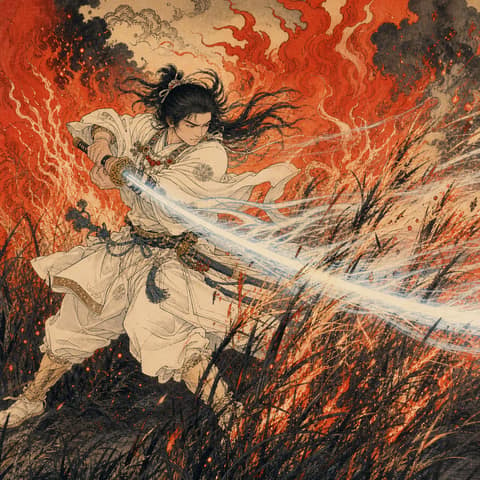
    The ancient mythic type of the tragic hero. The general entry covered Yamato Takeru's myth. Here the focus is the ancient pattern of the tragic hero. Yamato Takeru is a rare heroic deity who unites the tragic hero, short-lived warrior, father-son conflict, sacrificial love, and ascent after death in a single figure. He begins with fratricide, is rejected by his father and sent on campaigns, survives through his wife's sacrifice, and dies from a mountain god's curse. That arc is structurally close to tragic heroes across the ancient world, including Heracles, Sigurd, and Arjuna. It is a Japanese form of a widespread story pattern: the fate, suffering, and heavenly transformation of the hero. Father-son conflict and the myth of heroic exile. Yamato Takeru is estranged from Emperor Keiko and repeatedly ordered to go on distant campaigns. In comparative mythology, this belongs to the broad pattern of a dangerous son being exiled, tested, and made to conquer. Stories in which a father or ruler sends such a figure away are often compared with traditions surrounding David, Sigurd, and Zheng He, and they reflect questions of patriarchy, succession, and kingship. The tale marks the killing of the brother as a failure of human restraint, yet it also shows the father's coldness. That double structure gives the story a tragic intelligence beyond simple good and evil. Disguise as a young woman: strategy turned into myth. In the Kumaso episode, Yamato Takeru disguises himself as a young woman, enters the enemy camp, and kills the chieftain. The scene is a memorable mythic rendering of military strategy, disguise, and surprise attack. Yet the female disguise is more than tactics. In ancient Japanese myth and folklore, reversal, thresholds, and the crossing of gendered boundaries can be sources of ritual power and sacred danger. Yamato Takeru's disguise can therefore be read not simply as deception but as an act that embodies the magical force of inversion. It also stands as a mythic ancestor to later religious and theatrical traditions of cross-gender performance in kagura, noh, and kabuki. The Kusanagi sword and the Three Sacred Treasures. Yamato Takeru receives the Kusanagi sword from Yamato-hime, escapes the Yaizu fire with it, and after his death the sword is enshrined at Atsuta Jingu. Kusanagi is one of the Three Sacred Treasures at the core of ancient Japanese royal legitimacy. Its transmission runs from Susanoo's defeat of Yamata no Orochi, to presentation to Amaterasu, to the heavenly descent of Ninigi, to Yamato-hime, to Yamato Takeru, and finally to Atsuta Jingu. Through that chain, myth, sacred object, and imperial lineage are joined in material and religious form. Yamato Takeru is one of the few figures who actually uses a sacred treasure in battle, making him a symbol of the union of artifact, hero, and state. Ototachibana-hime's sea sacrifice and the origin of Azuma. Ototachibana-hime's self-sacrifice at sea and Yamato Takeru's cry, "Azuma haya," are treated as the mythic origin of Azuma, the eastern lands and eastern Japan. Ancient myth did not only entertain; it gave meaning to names, geography, land, and local custom. Here a woman's sacrifice becomes attached to the name of the entire east. Hashirimizu Shrine in Yokosuka still enshrines Ototachibana-hime, showing that the episode continues not only in texts but also in place names, worship, and local memory. The death poem and ancient Japanese longing for home. The death poem Yamato Takeru sings at Nobono, "Yamato wa kuni no mahoroba," has long been cherished as one of ancient Japan's foundational expressions of homeland, longing, and love of country. Mahoroba means an excellent, beautiful place, and the word condenses an early feeling for the homeland and the land itself. It influenced later waka traditions such as the Man'yoshu, Kokinshu, and Shinkokinshu. The structure is powerful: a hero at the edge of death praises the place he longs to return to. In modern Japan, the poem has continued to appear in education, literature, music, and public speech. The white-bird legend and ancient Japanese ideas of ascent and rebirth. After death, Yamato Takeru becomes a white bird, rises from his tomb, passes through Kotohiki-no-hara in Yamato and Shiki in Kawachi, and flies high into the sky. The legend is a representative example of the ancient Japanese idea that a hero may ascend and be transformed after death. In early Japan, the white bird could be imagined as a bearer of souls or a messenger of the gods. Beliefs in the dead soul becoming a bird and rising to the sky also have affinities with northern Asian, Siberian, and Korean ideas of birds, funerary practice, and the soul. The image later resonated with Pure Land faith, Shinto views of death, warrior ethics, and even the spiritual culture around the kamikaze special attack corps. It is not merely an ending to a hero tale. It is one of the narratives through which ancient Japan thought about death, religion, and beauty. Yamato Takeru in the twenty-first century. Today Yamato Takeru remains a subject of ancient-history research, local tourism, Shinto worship, and popular culture. Visits to Nobono, Kotohiki-no-hara, Atsuta Jingu, Yaizu Shrine, and Hashirimizu Shrine continue. He is repeatedly reshaped in works such as the game Okami, the 1994 film Yamato Takeru, and manga including Demon Slayer. Across more than two millennia of cultural memory, he has remained a symbol of the tragic hero, the short-lived warrior, love and sacrifice, and ascent after death. From political emphasis in prewar State Shinto, through postwar cultural reinterpretation, to plural retellings in the twenty-first century, he is a model case of how an ancient divine figure can keep entering modern culture.

  • Yamauba

    Yamauba

    Legendary

    yah-mah-OO-bah

    Yamanba (Traditional Folkloric Form)

    Mountain & Wilderness SpiritsKanagawa

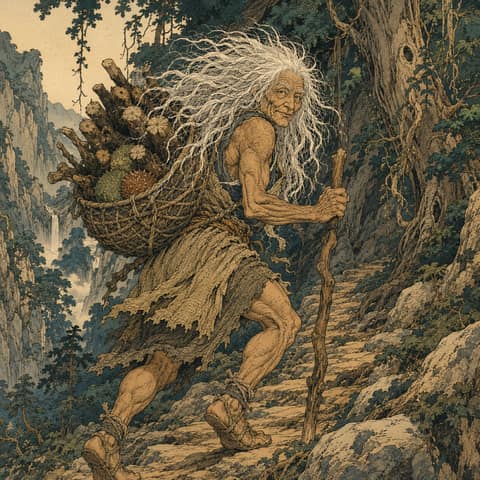
    An elderly woman with white hair and a body hardened by life in the mountains, she is famed as the nurturing figure who raised Kintaro. Her deeply lined face reflects priceless life experience, and she offers precise guidance to the lost. Though she may appear strict, a profound love resides beneath the stern exterior.

  • Yamauba

    Yamauba

    Legendary

    yah-mah-OO-bah

    Mother of Kintaro

    Mountain & Wilderness SpiritsKanagawa

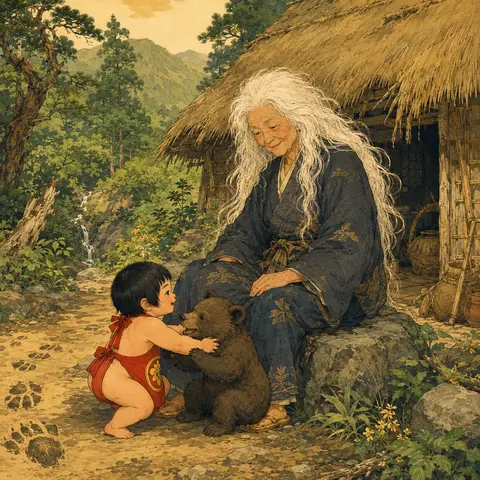
    Deep in the Ashigara Mountains, in a secluded hollow along bamboo ridgelines untrodden by humans, dwells a lineage of yama-uba known as the Yae-giri Mother Form. Bathed at birth in dew gathered on layered paulownia leaves and nourished by the breath of the mountains, this line is said to conceive children through union in dreams with an akairyū—an “red dragon” that appears on nights when crimson vapors gather. They rarely mingle with the human world, opening paths for those who keep the mountain’s order and baring fangs at those who trample its law. The Ashigara Yae-giri Mother Form takes as her charge the raising of children, favoring those with especially strong vital spirit. With few words she teaches how to split firewood, read the presence of beasts, ford streams, follow the courses of stars, and use the virtues of roots, leaves, and bark. When a child stumbles on a stone she watches and smiles, and when blood is drawn she silently applies moss juice. It is not pampering but passing on the mountain’s severity as it is. The crimson vapor seen in the Konjaku Monogatari is her warding veil, a barrier that blinds the eyes of outside gods. When Yorimitsu ascended from Kazusa, he recognized that vapor and sent Watanabe no Tsuna, an act born of the ancients’ intuition about this Mother Form’s power. In a thatched hut lived an old woman and a youth not yet twenty. The old woman called herself a demon-woman and felt no shame for her bond with the dream-red dragon, saying only that the child was born according to the mountain’s law. The boy she raised was later named Sakata Kintoki and became famed, yet once a child enters the world the Yae-giri Mother Form releases attachment and fades like mountain mist, caring nothing for wealth or honor, wishing only that the mountain’s balance remain unbroken. In Edo times, when the Kimpira jōruri was popular, she was portrayed as an ogress, but in old tales of Ashigara, oni signifies awe-inspiring power and is not confined to evil. Stories of bearing a thunder child and of a red dragon entrusting a child to the paulownia atop Mount Kintoki show this lineage’s dual nature of receiving from heaven and nurturing on earth. When sharing the mountain’s bounty she wears the face of an old mother, against ravagers she takes the aspect of a peak-dwelling oni. At midnight, when crimson vapor drapes the ridge, she consults the stars over a child’s fate and, if needed, commands beasts and trees to open the way. She leaves no treasure, only marks carved in wood grain and the remembered weight of a hand-axe in a child’s palm. Even now, on mist-laden mornings deep beyond the Ashigara Pass, she is said to listen for the breath of those who are meant to be raised, hidden within the rustle of bamboo wrens.

  • Yamawaro

    Yamawaro

    Rare

    yamawaro

    The Mountain Child of Kyushu Migrating Between Mountains and Rivers: Yamawaro

    Mountain / Field YokaiNagasakiFukuoka

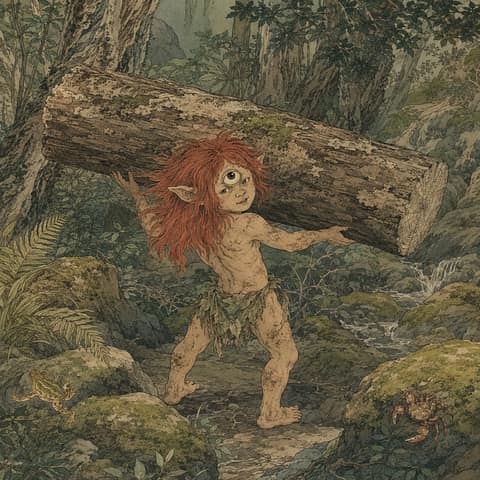
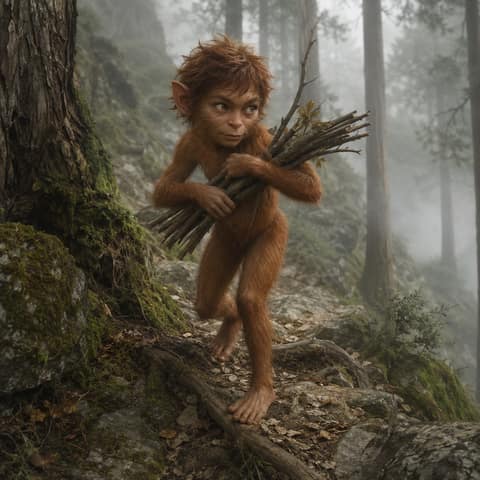
    While the *Yamawaro* is a mountain monster unique to the mountainous regions of Kyushu, its greatest originality lies in the fact that it forms two aspects of a single body with the *kappa*. The fact that Terajima Ryoan noted the habitation of *Yamawaro* in Chikuzen and Goto in *Wakan Sansai Zue* is evidence that early modern intellectuals incorporated the folklore of grotesque beings from the western mountains into the framework of natural history, showing that the Goto Islands were designated early on as a land of *Yamawaro* traditions. In the migration belief, it is said that the *kappa* of the river and the *Yamawaro* of the mountain switch places at the boundary of the spring and autumn equinoxes, which is thought to be a crystallization of the agricultural calendar, water god worship, and mountain god worship into a single existential image. Its assistance to woodcutters and the reward of rice balls, its love of sumo, its dietary preference for salt and crabs, and its grotesque form with dog ears, red hair, and a single eye are all supported by the *Wakan Sansai Zue* and the oral traditions of various parts of Kyushu. Amidst life in the Goto Islands, surrounded by sea and mountains, the *Yamawaro* has become inextricably linked to the *kappa* (*gataro*), becoming an entity that embodies the local spirituality penetrating both the waterside and the mountains.

  • Yamawaro (Mountain Child)

    Yamawaro (Mountain Child)

    Epic

    ya-ma-wa-ro

    The Mountain Boy of Western Japan, the Yamawaro

    Mountain & Wilderness SpiritsKyushu (yamawaro; mountains of western Japan)

    This version looks at the yamawaro — the kappa's "other half" — from the side of life in the mountains. If the kappa is the being that menaces people at the water's edge, the yamawaro is the one that appears at the worksites of mountain labor. It helps woodcutters and charcoal burners haul their timber, taking sake or rice balls in return. Yet the exchange follows a strict code: hand over the promised goods first and it runs off without working, and break a promise and it flies into a furious rage and brings down misfortune. To those who worked the mountains, the yamawaro was at once a dependable partner and a neighbor not to be trusted, one that bared its fangs at any lapse of courtesy. The tales of the yamawaro are packed tight with the eeriness of the mountains: the "tengu-fell," the sound of a great tree crashing down when no one is there; a voice that mimics human songs and the strokes of an axe to the life; and the strange weakness of disliking the line of a carpenter's ink pot. These are the very dread felt by those who venture deep into the hills. And the legend of the "crossing of the kappa" — entering the mountains at the autumn equinox and returning to the rivers at the spring equinox — ties the yamawaro and the kappa together with a single thread. A single water god that passes between mountain and river — its mountain face is the yamawaro.

  • Yao-bikuni

    Yao-bikuni

    Rare

    yao bikuni

    Yao-bikuni from Wakasa and Beyond

    Ghosts and spiritsFukuiKyoto

    Yao-bikuni is recorded in a 1449 diary as a long-lived nun who came from Wakasa to Kyoto; in the early modern period, she became linked to a story of a girl who ate mermaid flesh. More than two hundred years old in *Yasuyoshi-ki*, eight hundred years old in *Gaun Nikkenroku*, and more than four hundred years old in *Honchō Jinja Kō*, the shifting numbers trace the legend’s long development.

  • Yarikechō (Spear Tuft Spirit)

    Yarikechō (Spear Tuft Spirit)

    Rare

    yah-ree-keh-CHOH

    Yarigechō (Iconographic Tradition)

    Animated Objects & UndeadEdo period, Japan

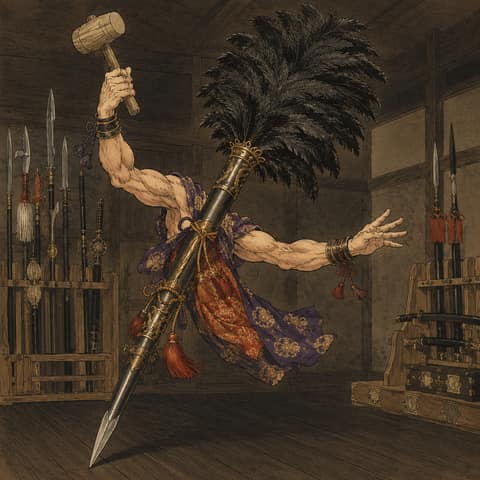
    A type of tsukumogami typical of early modern yokai art. The hair-spear used both as a practical weapon and as a symbol in processions was thought to accrue spiritual potency through associations with masters and tales of valor. In Hyakki Tsurezure Bukuro, Sekien depicted it wielding a wooden mallet, assigning it a specific object-name while drawing on older iconographic bones. The name Yarigechō likely arose where Night Parade motifs from the Muromachi era, Edo antiquarian taste, and the culture of famed implements converged. Modern print editions and nishiki-e varied the image, sometimes stressing the spear’s decorative plumes, yet it lacks distinctive oral lore and is known mainly through pictures and bibliographic notes.

  • Yatagarasu

    Yatagarasu

    Divine

    yatagarasu

    The Sacred Bird Leading from Kumano to Yamato: Yatagarasu

    Divine Spirit / DeityWakayamaNara

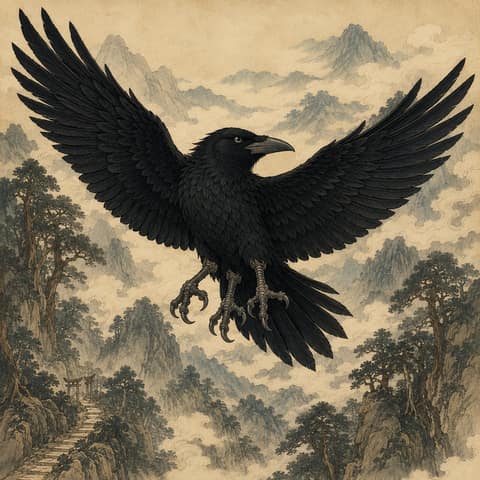
    In this version, we read the Yatagarasu as the "divine messenger who opens the way." The Yatagarasu is not a war god who strikes down enemies, but a presence that indicates where one should go. In the tale of the Eastern Expedition, when the party is lost on the mountain paths of Kumano, the heavenly gods do not increase their army, but send a single crow. Herein lies the essence of this sacred bird. Bestowing direction, rather than power, is the divine virtue of the Yatagarasu. The Yatagarasu in the *Kiki* binds geography and legitimacy simultaneously. The road entering Yamato from Kumano is not a mere mountain path, but a boundary that must be crossed for a new royal authority to be established. The scene in the *Kojiki* where the crow leads the way not only shows the route through the mountains but narrates that Jimmu's progression is approved by the gods. The direction the bird flies directly becomes the political course. The iconography of the three legs vastly expanded later understandings of the Yatagarasu. The three-legged crow overlaps with the East Asian concept of the sun bird, granting Japan's Yatagarasu the meanings of the sun, direction, and heavenly order. However, the strongest aspect in the original text of the *Kiki* is not "three legs" but "guidance." Therefore, this version does not lean too heavily on the splendor of its iconography, but centers on the primal sensation of a black bird flying ahead on a dark mountain road. Within the Kumano faith, the Yatagarasu gained a concrete place of worship as a divine messenger. The crow characters of the Kumano Goou Houin are not mere decorations; they are signs carrying the power of vows and talismans. While crows are often viewed as ominous scavengers of carrion, they also become birds that carry the words of the gods. This duality prevents the Yatagarasu from being reduced to a simple, cheerful mark of victory. The depth of the Kumano mountains and its mythology lies in the fact that a black bird becomes a holy guide. The modern image of the Yatagarasu is also read as a symbol of sports victories and indicating a team's course. Yet, at its root is the experience of a signpost appearing ahead when a lost person can no longer proceed alone. The Yatagarasu of this version does not explain the answer at length. It simply flies ahead. Whether to follow or not is left entirely to the humans. In this version, we also want to draw attention to the Yatagarasu's blackness. Crows are frequently viewed as inauspicious birds, but in the context of Kumano, they become messengers of the gods. Where the ominous and the sacred invert, there lies the profound depth of mountain asceticism. Proceeding without losing sight of the black bird on a dark mountain path is akin to reading divine will in the dark. Furthermore, the Yatagarasu is a guide who speaks few words. It does not stand before them as a god like Sarutahiko, but flies ahead as a bird. Humans must interpret the direction of its flight and advance on their own two feet. Guidance is not forced; it demands reading. Therein lies the quiet severity of the Yatagarasu. Even today, when the three-legged image and the soccer emblem are widely known, the root of this sacred bird remains on that mythological mountain path cutting from Kumano to Yamato. Stripping away the glamorous symbolic layers, what remains at the end is a single, giant crow flying ahead of a lost party. That simple scene is the strongest image of the Yatagarasu. Because of this, the Yatagarasu symbolizes not the destination itself, but the trust required to head toward the destination. When the road is unseen, a person must first believe in the direction they are advancing. The leading flight of the black bird is the mythological gesture that gives form to that trust.

  • Yokkabu-i

    Yokkabu-i

    Common

    Yokkabu-i

    Deity Preaching Warnings of the Water

    Gods & SpiritsKagoshima

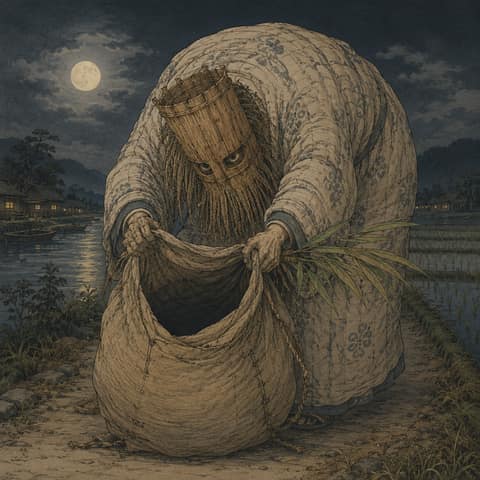
    The Yokkabu-i ritual is a rare folkloric example that beautifully blends water god worship with the discipline of children in the Satsuma Peninsula, where Garappa (kappa) legends remain strong. The method of manifesting an extraordinary "god" using eerie masks made of palm bark and everyday tools like the *yogi* conveys the ancient layers of Japan's masked deity and visiting deity faiths. While the continuation of such traditional events is threatened by a declining and aging population, it has functioned as a crucial cultural mechanism to deepen community bonds and pass down both the terrors and blessings of nature to the next generation.

  • Yomotsushikome

    Yomotsushikome

    Legendary

    よもつしこめ

    Underworld Pursuer of the Kojiki: Yomotsushikome

    Divine Spirit/DeityYomi (Mythology) / Yomotsu Hirasaka Lore Site (Higashi-Izumo-cho Iya, Matsue City, Shimane Prefecture)

    The Position of Grotesque Deities in Kiki Mythology. While the basic description touches on the accounts in the *Kojiki* and *Nihon Shoki*, the deep dive explores Yomotsushikome's position as a "grotesque deity" within the mythological system. Deities in *Kiki* mythology are broadly classified into three layers: (1) Takamagahara lineage (heavenly/pure deities), (2) Ashihara-no-Nakatsukuni lineage (earthly/indigenous deities), and (3) Yomi lineage (deities of the dead/grotesque deities). Yomotsushikome belongs to the third lineage, forming a cohesive system alongside Izanami (the goddess stationed in Yomi), the Eight Thunder Deities, and the Underworld Army. *Kiki* mythology is not a simple dualism of good and evil; it possesses a three-tiered structure of "life, purity, and light" versus "death, impurity, and darkness," where grotesque deities are positioned as essential entities upholding the order of the underworld. Etymology of "Shiko"—The Semantic Field of Ancient Japanese. Interpreting "shiko" as "ugly" is a reductive interpretation from the Middle Ages onwards. In ancient Japanese, "shiko" was a rich word connoting "strength, hardness, and terror." Cognate words like "shikobuchi" (rocky abyss) and "shikofune" (sturdy boat) express the hardness of coastal rocks. "Shikome" was not merely an "ugly woman" but understood as a "hard, strong, and terrifying female demon-deity." The names of ancient deities tended to be based on "spiritual power and function" rather than "visual features," positioning Yomotsushikome as a "female demon-deity with terrifying power governing death." The fixed image of a "flesh-rotting, fanged hideous hag" in medieval picture storytelling is a later reconstruction distinct from her original mythological figure. East Asian Comparison of Peach Warding Beliefs. The episode of Izanagi using peaches to repel Yomotsushikome serves as a key subject in comparative religion regarding East Asian warding culture. In Chinese Taoism, warding off evil spirits using peach wood swords, peach charms, peach seals, and peach offerings was systematized and widely spread to East Asian regions. The magical power of the peach repeatedly used in Japanese court rituals (Tsuina, Tango no Sekku, Momo no Sekku) was formed through the complex intertwining of the Izanagi myth in the *Kojiki* and Chinese Taoist peach worship. This is a classic example of how ancient Japan constructed its unique system while assimilating the religious cultures of the Chinese mainland and the Korean peninsula. The Pursuit Tale as a Narrative Type. A hero escaping from the land of the dead by throwing magical items that transform to delay pursuers—this is known in world mythology as the "Magic Flight" motif, a widely distributed narrative type. Similar tales exist in the Greek myth of Orpheus and Eurydice, Eastern European folklore of Baba Yaga, and Native American creation myths, demonstrating a universal structure of ancient human concepts of the underworld and escape narratives. The tale of Izanagi and Yomotsushikome holds exceptionally high comparative mythological value as one of the oldest literary records of this global narrative type in East Asia. The Geography of Yomotsu Hirasaka—Relationship with the Izumo Belief Sphere. The modern estimated site of Yomotsu Hirasaka in Higashi-Izumo-cho Iya, Matsue City, Shimane Prefecture, is located in the core region of the ancient Izumo belief sphere, alongside the Izumo Kuni-no-Miyatsuko stronghold, Kumano Taisha, and Kamiarizuki legends. In the *Kojiki* and *Nihon Shoki*, Izumo is depicted as the intersection of the three mythological layers—Takamagahara, Ashihara-no-Nakatsukuni, and Yomi—and placing the "entrance to Yomi" in Izumo was no coincidence. It reflects Izumo's status as the religious center for "death, the otherworld, and Ne-no-Katasukuni" in ancient Japan. Myths involving Okuninushi, Susanoo, Izanagi, and Izanami intersect in this region, serving as the key to deciphering ancient religious geography. Reduction Since the Middle Ages and Modern Renewed Interest. In medieval sermons, picture storytelling, Noh, and Joruri theater, Yomotsushikome was fixed into the image of a "flesh-rotting, fanged hideous hag," losing the original ancient semantic field of a "strong female demon-deity." However, since the 2010s, amidst a renewed interest in Japanese mythology, re-evaluations based on findings in ancient linguistics, mythology, and archaeology are progressing. Modern subcultures such as the *Megami Tensei* game series, *Record of Ragnarok* manga, and *Demon Slayer* anime functionally reconstruct ancient mythological materials, thereby reintroducing the mythological worlds of Yomotsushikome, the Underworld Army, and Yomi to younger generations. This is a symbolic example of cultural historical circulation from ancient to modern times. Positioning as "Japan's Oldest Yokai". Yomotsushikome is a female demon-deity appearing in the *Kojiki* (712 CE), Japan's oldest extant book, giving her a unique status not just as a "post-Heian yokai" but as a "grotesque deity recorded in the original texts of Japanese mythology." Predating the yokai systems involving oni, tengu, and kappa that formed from the Middle Ages onwards—in an era where the boundary between ancient gods (kami) and yokai was still undifferentiated—she is a core subject for tracing the origins of yokai studies. Dismantling the binary opposition of "is it a god or a yokai?", she serves as an excellent starting point for examining the rich, multi-layered nature of ancient Japan's grotesque deities.

  • Yonatama

    Yonatama

    Rare

    yonatama

    Yonatama, the Sea Spirit That Summons a Tsunami

    Sea SpiritOkinawa

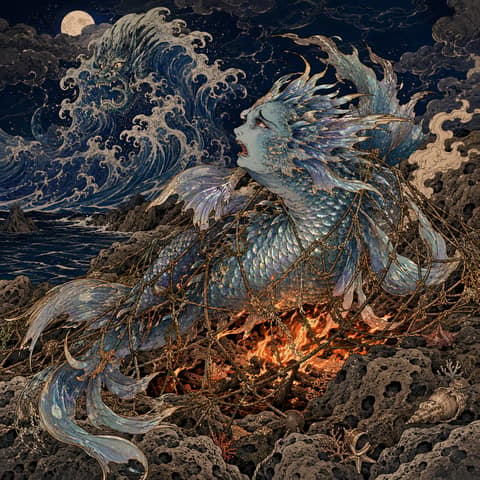
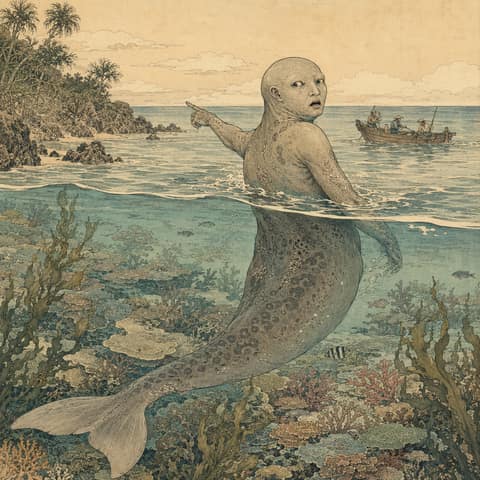
    Yonatama is a sea spirit of the Miyako Islands, described either as a mermaid or as a fish able to speak in a human voice. Fishers on Shimojishima caught one and tried to roast it over their net. When a voice from offshore called its name that night, Yonatama answered that it was trapped in the fire and asked its companions to send a tsunami to save it. Only a mother and child are said to have escaped to Irabujima in time. After the wave, the ground beneath the fishers' house collapsed, and the hollow was remembered as the origin of Tōriike. The name Yonatama is commonly read as a union of 'sea' and 'spirit,' and the being embodies both the sea's bounty and its anger. Interwoven with memories of the Great Meiwa Tsunami of 1771, the tale remains a warning against treating the ocean with contempt.

  • Yudonosan-daigongen

    Yudonosan-daigongen

    Divine

    Yudonosan-daigongen

    The Unspeakable Deity of the Sacred Rock of Mount Yudono

    Divine Spirits / DeitiesYamagata

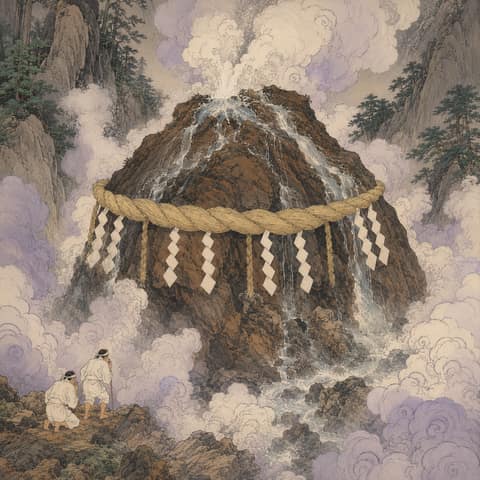
    Yudonosan-daigongen does not have a tangible statue form; instead, a giant, brownish-red sacred rock spewing hot water serves directly as the object of worship, preserving the oldest form of nature worship in Japanese mountain faith. The Dewa Sanzan are considered a trinity of ascetic training grounds: Mount Haguro symbolizes worldly happiness in the present, Mount Gassan represents the afterlife, and Mount Yudono signifies the future of rebirth. Therefore, Mount Yudono, as the inner sanctuary, is positioned as the final destination of the three-mountain pilgrimage. The object of worship has neither a shrine building nor a roof. Pilgrims must take off their footwear and walk barefoot on the approach mixed with earth and stones to climb the sacred rock. The strict taboo against disclosing one's experiences on the mountain—"Do not speak of it, do not ask of it"—is still observed today, and photography is strictly prohibited. Although it lost the title of "gongen" during the Meiji era's anti-Buddhist movement and became a shrine dedicated to deities like Ōyamatsumi-no-Mikoto, the faith itself—pressing one's hands together in prayer to the silent sacred rock—has never been broken. It is the silent divine entity of Dewa that presides over rebirth and *sokushin-jōbutsu*.

  • Yuki-onna

    Yuki-onna

    Legendary

    Yuki-onna

    Yuki-onna in Snowy Landscapes and Variant Traditions

    Natural Phenomena & Nature SpiritsNiigataTokyo

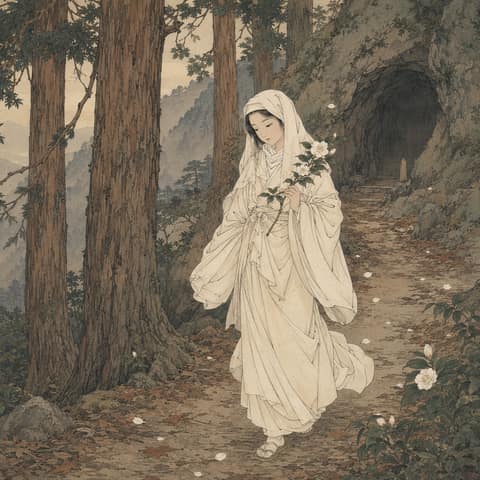
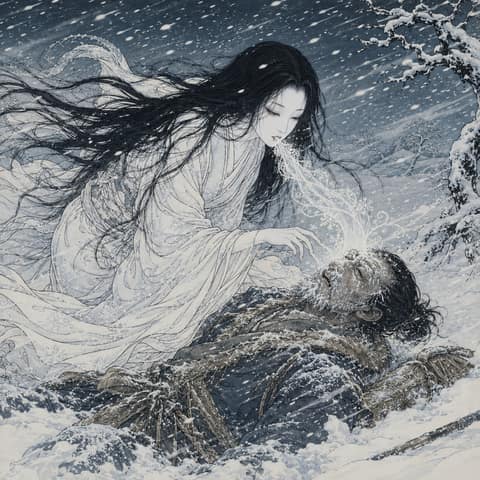
    Yuki-onna is a broad name for female apparitions that appear on snowy nights and mountain roads. An early use of the word appears in the 1642 *Takatsukuba*, and regional traditions include a harmless snow spirit who makes bridges, a woman who leaves bloody footprints, and a figure invoked in child-minding words. The familiar image of white breath, Oyuki as a wife, and a broken secret became widely known through Lafcadio Hearn’s *Kwaidan* (1904).

  • Yuki-warashi (Snow Child)

    Yuki-warashi (Snow Child)

    Uncommon

    YOO-kee WAH-rah-shee

    Echigo Traditions Type Snow Child

    Natural Phenomena SpiritsNiigataGifu

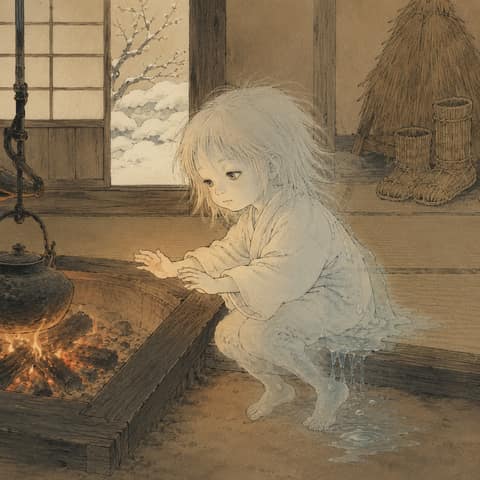
    Based on the Snow Child figure from Echigo Province. It appears as a small child on snowy days, visiting from the doorway on blizzard nights to warm itself by the hearth. When cared for, it comforts the household and may help with chores, yet with the first signs of spring it loses strength and fades. It shows no malice and instead bears the character of a guest deity, a seasonal visitor heralding winter’s presence. Its visits recur but never last, and finally cease, reflecting the impermanence of snow. It is also called “Yuki-warashi” or “Yukiko,” names that all link snow with a childlike form.

  • Yukijoro

    Yukijoro

    Rare

    ゆきじょろう

    The Snow Princess Descended from the Moon: Yukijoro

    Natural Phenomenon / Nature SpiritYamagata

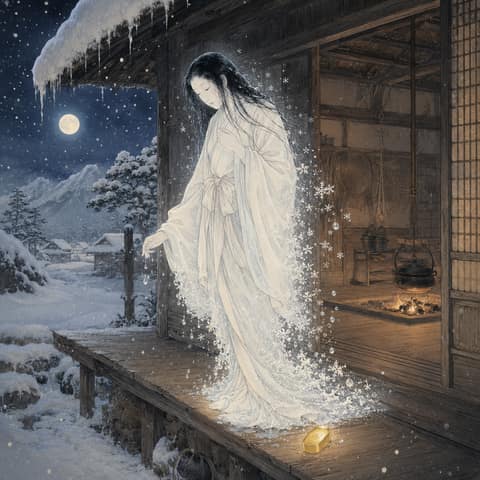
    The *Yukijoro* is a highly unique snow woman nurtured by Yamagata, one of Japan's premier heavy snowfall regions. While snow women nationwide are told of as cruel monsters who freeze travelers to death, Yamagata's *Yukijoro* strongly retains "gratitude-type" tales where she rewards human compassion with blessings. In the Oguni region, her true identity is said to be a princess who descended from the moon world with the snow, losing her way back and appearing on nights lit by the snow's glow—a rare archetype blending East Asian moon worship with the snow woman. In folktales, a house that coldly rejects the white-robed woman begging for lodging falls into ruin, while a house that welcomes her warmly is left with the blessing of a lump of gold. The *Yukijoro*'s body melts upon touching human warmth, leaving grace in the wake of her melting. Furthermore, in the Mogami region, there are tales of an *Ubume*-like snow woman trying to hand over a child, or a snow woman leading a cow, showing that the *Yukijoro* does not fit into a single mold. The terror of the freezing winter, and the emotion of a snow country where one cannot survive without nevertheless cherishing the snow, are superimposed on this multifaceted snow woman.

  • Yūrei (Ghost)

    Yūrei (Ghost)

    Legendary

    YOO-ray

    Toriyama Sekien “Yūrei” (An’ei era)

    Ghosts and spiritsAcross Japan

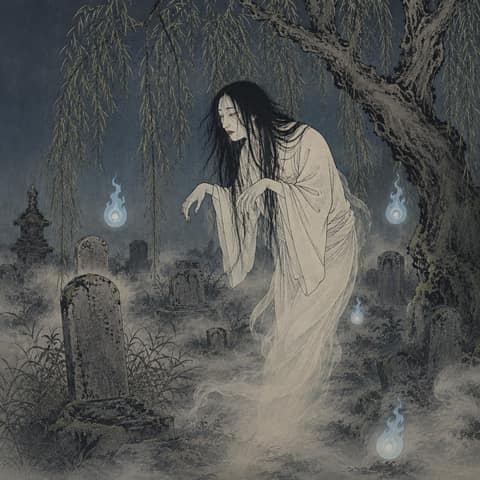
    An image based on the “Yūrei” in Toriyama Sekien’s Gazu Hyakki Yagyō, published around 1776 (An’ei 5). In a nighttime graveyard a woman’s ghost appears between drooping willows, wearing a white burial robe and a forehead cap, raising her arms as if to halt a passerby. It is a transitional depiction from before footless forms and the triangular headcloth became fixed conventions, emphasizing the lifelike force of the arms and the willow and gravestones as symbols of place. Sekien’s plates organized contemporary strange tales, Buddhist views, and funeral customs, profoundly shaping the visual codification of yūrei. While indicating gender and costume, the image leaves the source of attachment unspecified, inviting the viewer to imagine the relationship.

  • Zan

    Zan

    Epic

    zan

    Zan, the Dugong Spirit That Warns of Tsunami

    Sacred Marine SpiritOkinawa

    This form draws on the Nosoko story in which a fisher finds Zan in his net. The mermaid-like creature weeps and begs for its life. When the fisher releases it, Zan answers that mercy with a warning of an approaching tsunami, allowing the villagers who believe it to escape to the mountains. Zan is generally understood as a folkloric image of the dugong. Dugongs were long regarded in Ryukyuan waters as messengers of the gods: familiar animals of the shallows, yet beings approached with awe. Zan does not cause the disaster it predicts. It senses danger before human beings can and stands between sea and land to preserve life. Yonatama, another island spirit associated with a tsunami warning, brings the wave in anger after being roasted. Zan takes the opposite role. Together they reveal two moral faces of the sea: cruelty toward a marine creature may call forth vengeance, while mercy may be repaid with rescue. Zan remains one of the Ryukyuan sea's gentlest prophets because its power rests not on punishment, but on gratitude.

  • Zashiki-warashi

    Zashiki-warashi

    Legendary

    zashiki-warashi

    Zashiki-warashi in Tōhoku Homes

    Half-Human / Half-YokaiIwateAomori

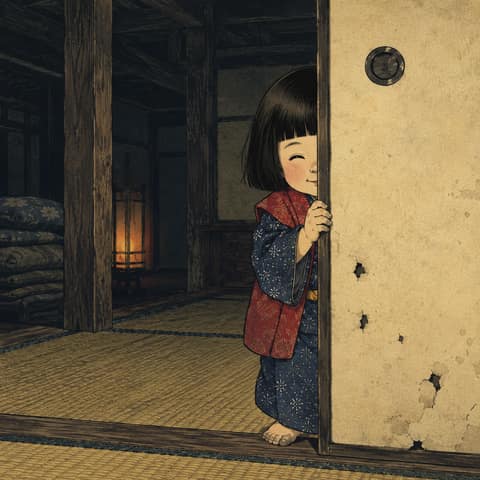
    The zashiki-warashi is not simply a young god of good fortune in red clothing. Tales 17 and 18 of Tales of Tōno include a boy of about twelve or thirteen, an unseen presence known only by rustling paper and snuffling, and two young girls who leave a household. The stories associate it with a home’s prosperity or decline, but the original does not say that the children caused the disaster. As Kizen Sasaki’s 1920 collection shows, its names, forms, rooms of appearance, and explanations of origin vary greatly by region.

  • Zen-Gama-no-Shō (Zen Kettle Monk)

    Zen-Gama-no-Shō (Zen Kettle Monk)

    Rare

    ZEN-gah-mah-noh SHOH

    Iconographic Tradition: Tsukumogami Kettle

    Animated Objects & UndeadJapanese folklore

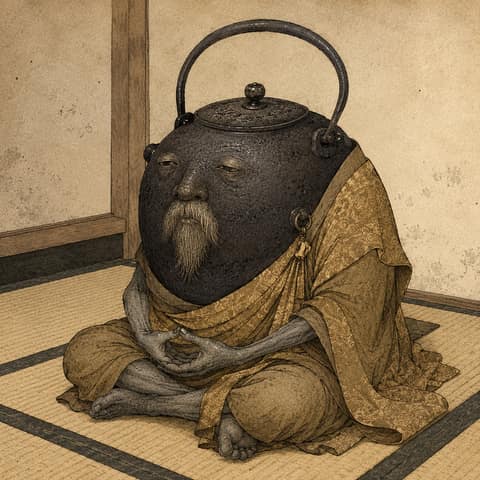
    Based on examples by Toriyama Sekien, this image depicts an aged tea kettle manifesting with spiritual authority. Its posture and arrangement inherit compositional methods akin to the Night Parade of One Hundred Demons scrolls, often shown marching alongside Torakakushi and Yarinaga. The name plays on the kinship between chanoyu and Zen, hinting at a caricature of a Buddhist priest. By the logic of mononari, tools long used or neglected accrue ki, appear before people, and inspire awe. Meiji painters continued this iconographic lineage, and yokai catalogues and dictionaries classify it as a type of tsukumogami, though specific local legends are scant. Later commentaries add anecdotes of startling humans, but early records offer little confirmation, so it is understood chiefly through its iconographic tradition.

  • Zhong Kui (Shōki)

    Zhong Kui (Shōki)

    Divine

    SHOH-kee

    Traditional Iconography Shoki, Warding Demon-Queller

    Deities & Divine SpiritsKyoto

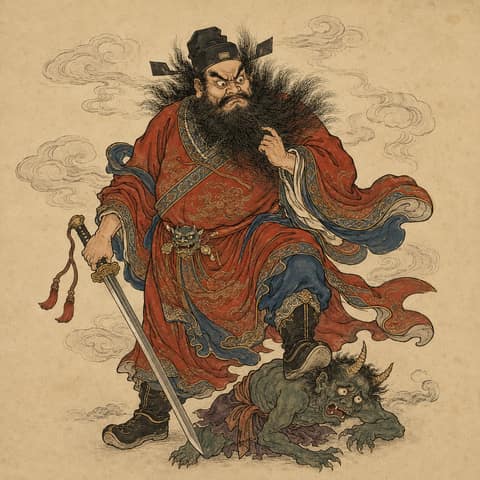
    Shoki, a demon-quelling deity spread across East Asia from Tang dynasty lore, took root in Japan as a talismanic power against calamity and smallpox. He is depicted as a bearded martial figure in official robes and cap, glaring with fierce eyes and wielding a sword in one or both hands. He often appears hunting, trampling, or bagging small demons. At New Year and Boys’ Festival he is displayed on hanging scrolls, banners, and screens, and many townhouses placed ceramic Shoki figures on eaves or roof corners. In Japan the earliest examples trace back to late Heian apotropaic paintings; from the Muromachi period the theme became established, and by late Edo he also appeared as May Festival dolls. Images and figures were hung at entrances, gates, or the upper seat of reception rooms to stop plague deities and malign spirits. Although dedicated shrines are limited today, regional folk belief since early modern times continues, and rooftop Shoki statues are still found from Kinki through the Chubu region. His powers are symbolized by the subduing glare and swordplay that drive off evil sprites, functioning as amulets against drug harm and epidemics.

Showing 553 - 576 of 592 yokai