YOKAI.JP

🔤 Yokai by Kana

Find yokai in hiragana order

146 Yokai|12 Category|Page 3 of 7
Localization in Progress - More content available in Japanese version
View Japanese

Filter by hiragana row

Sort by: ReadingAscending
Ikiryō (Living Spirit)

Ikiryō (Living Spirit)

Legendary

ee-kee-RYOH

Ikiryō

Ghosts & SpiritsAcross Japan

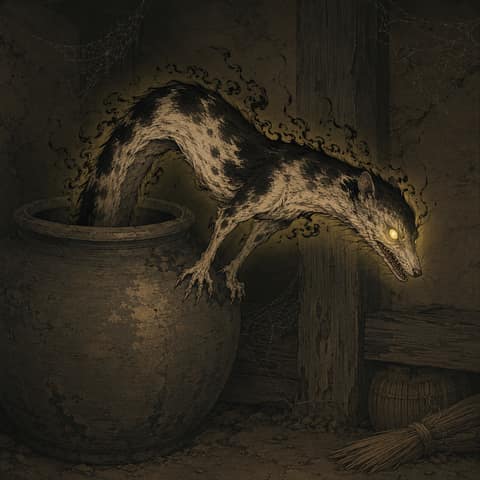
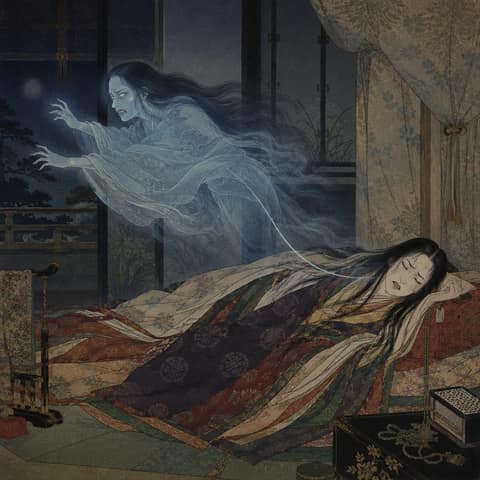
Ikiryō refers to a living person’s soul separating from the body and roaming abroad. Spurred by intense grudge, obsessive love, or deathbed yearning, it was believed to possess a target and cause illness or misfortune. Accounts span from Heian aristocratic circles to early modern popular belief. It may appear as a person’s shadow-double. Besides unintended separation, some tales describe sending one’s spirit deliberately through curses.
The Kesa-Monk of Igusa

The Kesa-Monk of Igusa

Uncommon

ee-GOO-sah no keh-SAH-boh

Folkloric Record Edition

Aquatic SpiritsSaitama

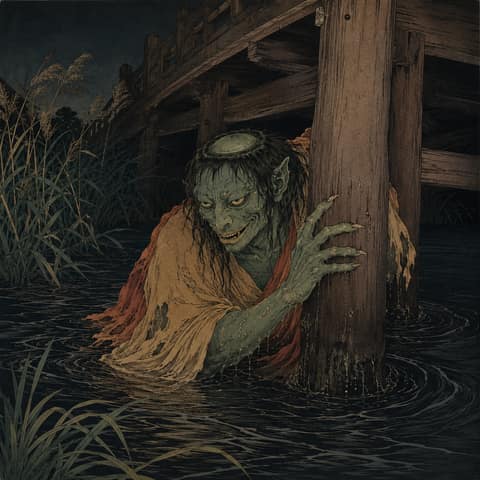
A kappa from Igusa in Kawajima, Saitama. It is said to wear a monk’s kesa robe—hence its name. Late at night near Ochiai Bridge it would call out to passersby, transform into a towering man to block the road, or cling to the back of handcarts to weigh them down. Grim tales say nearby kappa offered it human intestines as a midyear tribute. It is linked in lore to neighboring kappa such as Takebō and Kojirō.

The Woman of Ikebukuro

The Woman of Ikebukuro

Uncommon

ee-keh-BOO-kroh no OHN-nah

Edo Folk Belief: The Woman from Ikebukuro

General ClassificationsTokyo

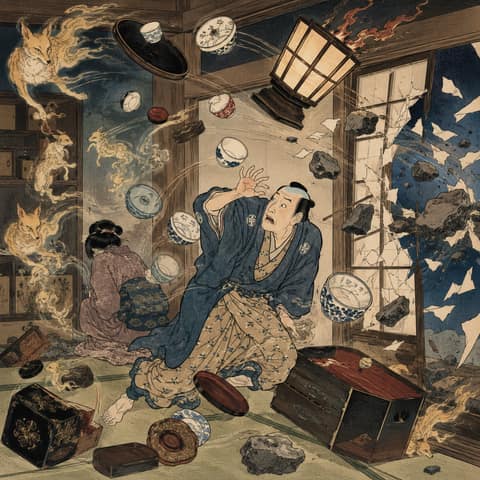
A late Edo-period folk belief: hiring a woman from Ikebukuro into another household would bring poltergeist-like disturbances—mysterious noises, thrown stones, and dishes or lanterns flying about. First recorded in Negishi Jin’e’s Mimibukuro (Kansei era), where hauntings followed a servant’s affair with a household member and ceased once she was dismissed. Similar tales are told of women from Ikejiri, Numabukuro, and Meguro, sometimes linked to the protection of their local tutelary deities or to the curse of osaki spirit-users.

Izanagi

Izanagi

Legendary

Izanagi

Izanagi no Mikoto, ancestral god of creation, land-birth, and purification

Deity / divine spiritHyogo

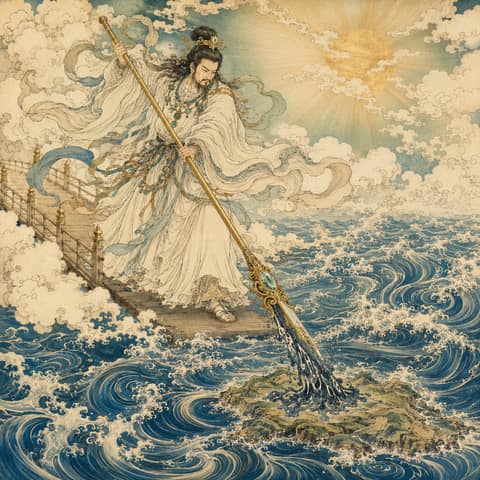
Izanagi is a creator deity in Japan's oldest mythological records, the Kojiki of 712 and the Nihon Shoki of 720. The Kojiki writes his name as Izanagi no Kami or Izanagi no Mikoto, while the Nihon Shoki gives the form Izanagi no Mikoto. In the final generation of the Kamiyo Nanayo, the Seven Generations of the Age of the Gods, he appears with his wife Izanami. Ordered by the heavenly deities, the pair stand on the Floating Bridge of Heaven and stir the sea with the heavenly jeweled spear, Ame-no-nuboko, creating Onogoro Island. There they marry and give birth to the Oyashima, the great eight islands of Japan, along with many other deities. When Izanami dies after giving birth to the fire god Kagutsuchi, Izanagi follows her into Yomi, the land of the dead, but flees after seeing her decayed body. At Yomotsu Hirasaka he seals the boundary between the living and the dead with the Chibiki rock, then purifies himself at Awagihara. From that act of misogi are born the Three Precious Children: Amaterasu Omikami, Tsukuyomi no Mikoto, and Susanoo no Mikoto. Taga Taisha in Shiga, Izanagi Jingu on Awaji Island, and Eda Shrine in Miyazaki are among his major cult sites. As the ancestral deity of misogi and harae, Izanagi remains central to Shinto ideas of purification.

Izanami

Izanami

Legendary

Izanami

Izanami no Mikoto, Ancient Mother Goddess of Birth and Death

Deity / divine spiritMie

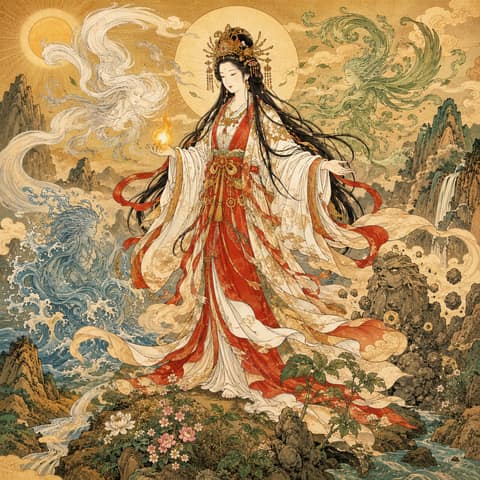
Izanami is the primordial goddess of creation in the Kojiki (712) and Nihon Shoki (720). Together with her husband Izanagi, she gives birth to Oyashima, the islands of Japan, and to many deities; she is the central female power of the myths of land-birth and god-birth. In the Kojiki her name appears as Izanami no Mikoto and Izanami no Kami, while the Nihon Shoki writes it with the forms Izanami no Mikoto and Izanami no Kami using different characters. She appears with Izanagi as the final paired deity of the Seven Generations of the Age of the Gods. At the last stage of giving birth to lands and gods, she bears Kagutsuchi, the fire god, and dies after being burned in her genitals, becoming the first dead being in Japanese myth. After death she becomes queen of Yomi no Kuni, the land of the dead. When Izanagi comes to Yomi to retrieve her and sees her decaying body, she erupts in shame and rage, sending the Yomotsu-shikome, the eight thunder gods, and the armies of Yomi after him. At Yomotsu Hirasaka she curses him, declaring that she will kill one thousand people each day; Izanagi answers that he will cause fifteen hundred to be born each day. In this exchange, the order of life and death is fixed. Her burial places are variously identified with Mount Hiba between Izumo and Hoki, Hana no Iwaya in Kumano, Mie, and Ifuyazaka in eastern Izumo, Matsue. Hana no Iwaya Shrine in Kumano is especially famous: linked in the Nihon Shoki to Izanami's burial and the mythic stage of creation, it is counted among Japan's oldest shrines and forms part of the UNESCO World Heritage Site Sacred Sites and Pilgrimage Routes in the Kii Mountain Range.

伊斯許理度売命

伊斯許理度売命

Divine

いしこりどめのみこと

岩戸に八咫鏡を鋳る鏡作神・伊斯許理度売命

神霊・神格Wakayama

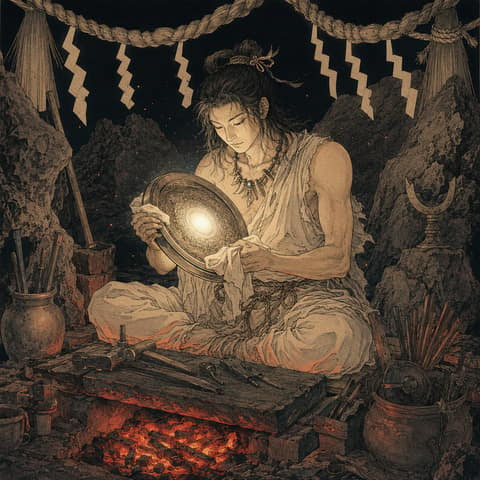
Ishikoridome is the mirror-making deity who was commanded to forge the Yata-no-Kagami (Eight-Span Mirror) during the Heavenly Rock Cave (Ama-no-Iwato) myth, and was later recognized as the ancestral god of the Kagamitsukuri-no-Muraji (mirror-makers guild) during the Descent of the Heavenly Grandson (Tenson Korin). In the *Kojiki* (Ama-no-Iwato II), acting on Omoikane's plan, the gods gathered hard rocks from the Heavenly Tranquil River and iron from the Heavenly Metal Mountains. After seeking out the blacksmith Amatsu-Mara, they commanded Ishikoridome to forge a mirror. In the ritual to draw the sun goddess Amaterasu-Omikami out of the cave, this mirror was no mere ceremonial prop; it was the core vessel designed to reflect her own light and figure back to the hidden goddess. Kokugakuin University's commentary on the Tenson Korin chapter categorizes Ishikoridome as the ancestor of the Kagamitsukuri-no-Muraji, and also notes the genealogy of mirror-making deities appearing as Ishikoridome (or Ishikoridobe) in various accounts of the *Nihon Shoki*. In Tenson Korin II, Ishikoridome descends from heaven alongside Ame-no-Koyane, Futodama, Ame-no-Uzume, and Tama-no-Oya as one of the Five Attendant Deities (Itsutomonoo), and is recorded as the ancestor of the mirror-making clan. The official overview of Hinokuma Shrine and Kunikakasu Shrine mentions that Ishikoridome is enshrined in the auxiliary shrine of Hinokuma Shrine, passing down the legend that in the Age of Gods, Ishikoridome acted as the master artisan who cast Amaterasu's sacred mirror. Before the cave, the mirror stood alongside Ame-no-Koyane's prayers and Futodama's *gohei* as an implement capable of moving the divine will. Ishikoridome is not a deity who calls out to the light directly in the darkness, but rather the deity who crafts the mirror for the light to return to.

Ijū (Strange Beast)

Ijū (Strange Beast)

Uncommon

ee-JOO

Ijū (Hokuetsu Seppu Version)

Animal ShapeshiftersNiigata

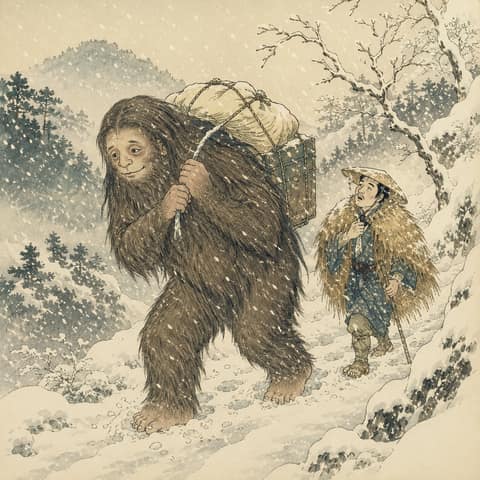
A mysterious beast recorded in the late Edo period as appearing in the mountains of Uonuma, Echigo. The Hokuetsu Seppu (Book 2, Scroll 4) says it was “like a monkey yet not a monkey,” with long hair hanging down its back and a height greater than a person. Rather than harm people, it begged for food and at times helped with human labor, such as carrying loads. Its true nature was unknown—seen as either a mountain spirit or a rare creature—and it lives on in the oral traditions of a weaving region.

Iso-onna

Iso-onna

Epic

iso-onna

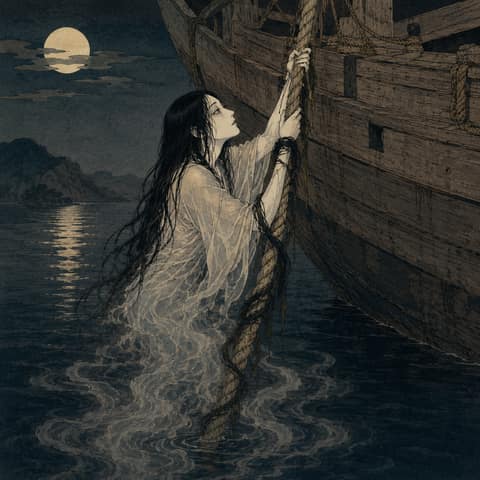
Iso-onna, the Shore Woman Who Climbs a Mooring Line

Coastal Female YokaiKumamotoNagasaki

Iso-onna is a female sea apparition found along the northwestern coast of Kyūshū, including Amakusa, Shimabara, Tsushima, and Kakarashima. She approaches beaches, rocky shores, and moored boats, entangling people in her long hair and drinking their blood. Her upper body resembles a beautiful woman, while her lower half is said either to fade from view or to be serpentine; from behind, she may look like nothing more than a wet rock. Names vary by region, including Iso-joshi, Nure-joshi, Ama, and Umi-hime. She appears when the sea is calm and is sometimes linked with the resentful dead of maritime disasters. Some traditions also pair her with Ushi-oni, another dangerous being of the shore.

Iso-onna

Iso-onna

Epic

iso-onna

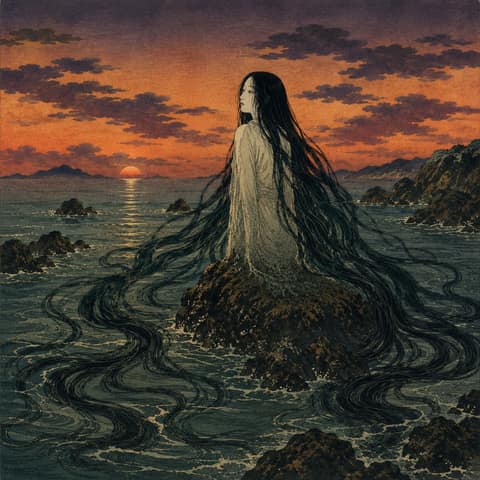
Isonna of the Aft-Rope Crossing

Coastal Female YokaiKumamotoNagasaki

Iso-onna is a female sea apparition found along the northwestern coast of Kyūshū, including Amakusa, Shimabara, Tsushima, and Kakarashima. She approaches beaches, rocky shores, and moored boats, entangling people in her long hair and drinking their blood. Her upper body resembles a beautiful woman, while her lower half is said either to fade from view or to be serpentine; from behind, she may look like nothing more than a wet rock. Names vary by region, including Iso-joshi, Nure-joshi, Ama, and Umi-hime. She appears when the sea is calm and is sometimes linked with the resentful dead of maritime disasters. Some traditions also pair her with Ushi-oni, another dangerous being of the shore.

Isonade

Isonade

Epic

isonade

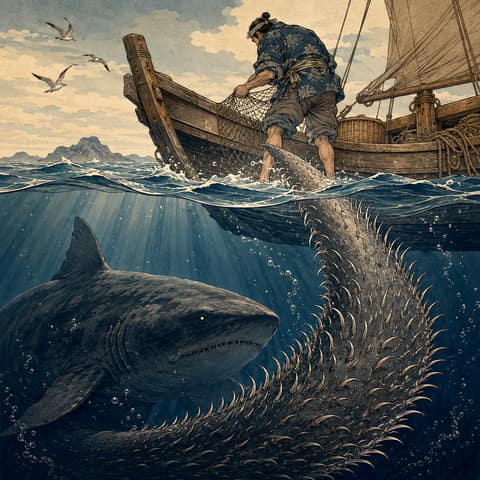
Isonade, Gliding beneath the North Wind

Sea MonsterSaga

Isonade is a sea monster of western Japan. Its body resembles a shark, but its tail fin is said to bristle with countless fine spines. It appears when the north wind blows hard, approaching as lightly as a hand passing over the water. Without showing itself, it hooks people from the deck with its barbed tail, drags them into the sea, and swallows them. Edo-period collections of strange tales, including Ehon Hyaku Monogatari, and works of natural history both record the creature. Its name is said to come either from the way it 'strokes' the surface or from the deceptively slight movement with which it takes a victim. For sailors, Isonade embodied a maritime disaster almost impossible to prevent.

Ita-oni (Board Demon)

Ita-oni (Board Demon)

Uncommon

EE-tah-oh-nee

Canon-Concordant (Based on Tradition)

Household SpiritsCourtly and aristocratic residences around Heian-kyō (Kyoto), Japan

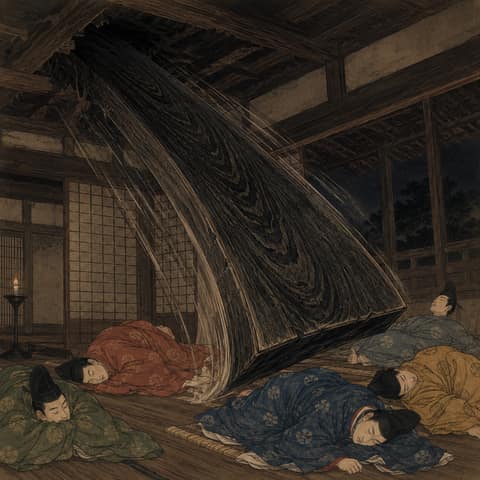
Derived from the Konjaku Monogatari tale of the “Board Demon,” this is a case of animated boards causing a haunting. Planks jut from beams or latticework inside a house, elongate, and crush people to death. Here “oni” means a broad class of uncanny phenomena rather than a horned demon. The stories stress that it targets those unarmed, serving as a cautionary tale for night watch duty.

Ichikishima-hime-no-Mikoto

Ichikishima-hime-no-Mikoto

Divine

ichikishima-hime-no-mikoto

Ichikishima-hime, Goddess of the Sacred Island and Sea Routes

Sea and Navigation DeityHiroshimaFukuoka

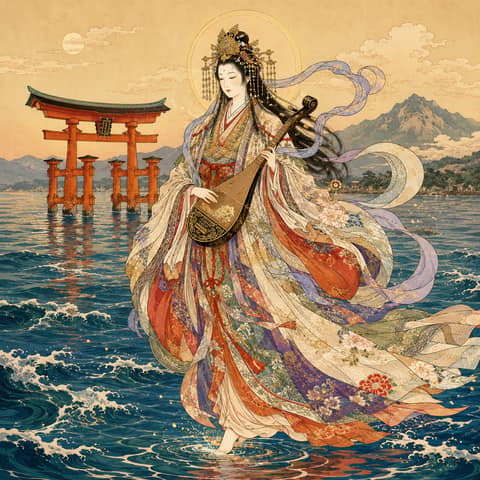
Ichikishima-hime-no-Mikoto is one of the Three Munakata Goddesses—Tagori-hime, Tagitsu-hime, and Ichikishima-hime—and a principal deity of the World Heritage-listed Itsukushima Shrine on Miyajima. In the oath, or ukei, myth of the Kojiki and Nihon Shoki, Amaterasu breaks Susanoo's ten-span sword, chews the pieces, and breathes out a mist from which the three goddesses are born. The element ichiki in her name is associated with ritual service to a deity, giving rise to the interpretation 'princess of the island of worship.' She governs the sea, navigation, and water. The Three Munakata Goddesses guard the sea routes across the Genkai Sea from their shrines at Munakata Taisha; their worship was brought to Itsukushima in Aki, where they became protectors of passage through the Seto Inland Sea. In the medieval blending of kami and Buddhism, Ichikishima-hime was identified with Benzaiten through their shared ties to water, wealth, and the arts and revered as Itsukushima Daimyōjin. The Meiji separation of Shinto and Buddhism placed Benzaiten at Daiganji and Ichikishima-hime at Itsukushima Shrine, but both retained the image of a beautiful goddess of water.

Ikijama (Living Jinx)

Ikijama (Living Jinx)

Uncommon

EE-chee-JAH-mah

Nama-Jama (Folkloric Sketch)

Ghosts & SpiritsOkinawa Prefecture

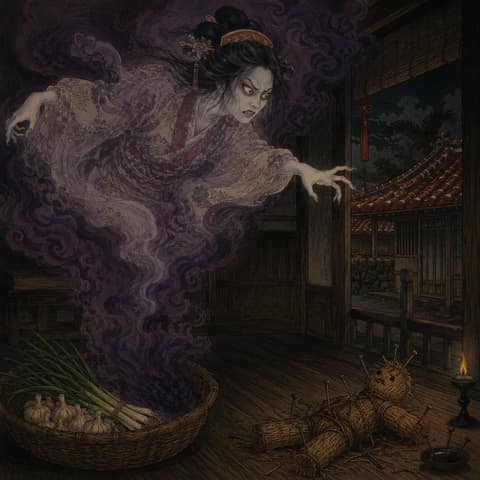
Ikijama is an Okinawan term for a malevolent living spirit. It refers to a soul that slips out of a living person consumed by resentment or jealousy and afflicts its target with illness or misfortune. Possession is said to be transmitted through gifts; receiving items like banana plant (bashō), garlic, or Chinese scallion (rakkyo) could bring on mysterious sickness. The sorcery that sends such a spirit, as well as its practitioners and lineages, are also called Ikijama. Exorcism is traditionally performed by yuta (Okinawan shamans).

Hitome-ryō

Hitome-ryō

Epic

HEE-toh-meh RYOH

Hitome-no-Ren of Tado (Tradition-Based)

Deities & Divine SpiritsMieAichi

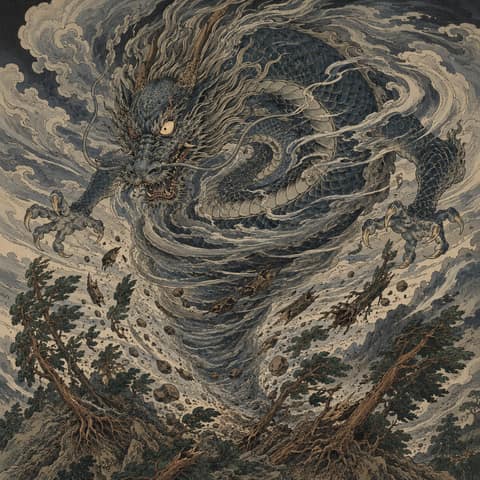
A wind deity enshrined at Hitome-ryō Shrine, the auxiliary sanctuary of Tado Grand Shrine. Traditionally viewed as a one-eyed dragon god, later syncretized with the smithing deity Ame-no-Mahitotsu (Ame-no-Hitotsu-no-Megane). Along the Ise Bay coast, he was revered as a ruler of wind and rain, attracting prayers for safe voyages and rainmaking. The shrine’s hall has no doors so the god may come and go freely to manifest his power. Feared and respected for the ability to unleash violent gales.

Demons of Mt. Ichiya

Demons of Mt. Ichiya

Rare

ichiyazan-no-oni

The Demons of Kinasa Who Built a Mountain in One Night

Demons / Giant MonstersNagano

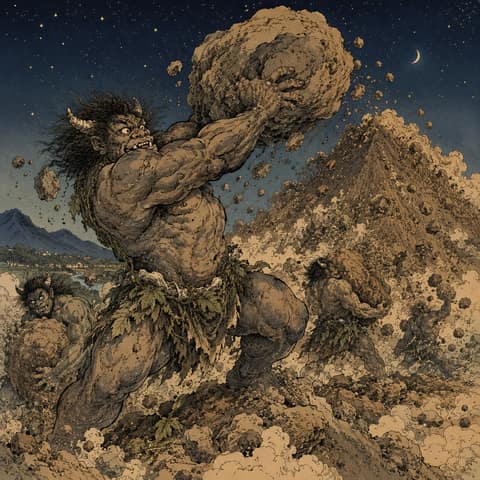
The *Demons of Mt. Ichiya* (*Ichiyazan no Oni*) are demons said to have inhabited Minase in Shinano Province (present-day Kinasa, Nagano City), and are the main figures in a capital relocation legend that explains the origin of the place name *Kinasa* (Village with No Demons). During the Hakuho era, Emperor Tenmu planned to establish a new capital in Shinano, and his envoy, Prince Mino, selected this basin as a candidate site. The indigenous demons, learning of this, feared that 'if a capital is built, we will lose our home', and overnight they built a mountain in the center of the basin to block the flatland, thus thwarting the relocation. The iconic conical mountain of Kinasa that is said to have appeared at this time is Mt. Ichiya (One-Night Mountain). Enraged that the capital relocation was prevented, Emperor Tenmu dispatched Abe no Hirafu to strike down the demons. Because the demons were exterminated and it became a 'village where demons are no more', it is said that the land formerly called Minase was renamed Kinasa (= Village with No Demons). Alongside the theory of the origin of the place name based on the Momiji Legend—which regards the demoness Momiji as the 'demon'—this is another prominent origin tale. Its distinct feature lies in depicting the demons as a local existence resisting the central capital relocation plan.

Issun-boshi

Issun-boshi

Legendary

EE-soon BOH-shee

Issun-boshi of the Needle-Sword and Schemes

Human-Yokai / Half-Human Half-YokaiOsakaKyoto

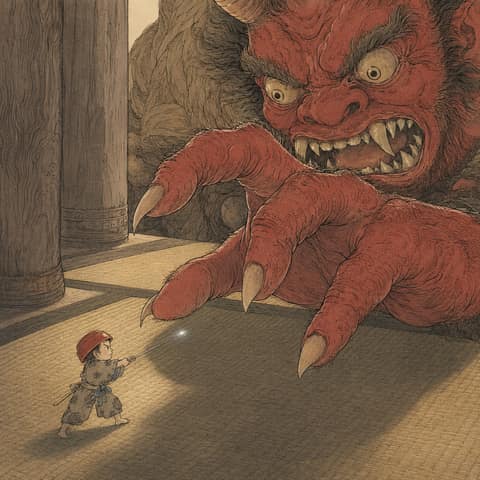
Issun-boshi is widely recognized in modern times as a pure and righteous fairytale hero for children—a "brave little boy who rides in a bowl-boat and defeats oni with a needle-sword." However, his original depiction in the Muromachi period literature *Otogizoushi* reveals a dark hero (or a half-human, half-yokai trickster) overflowing with ambition and cunning, fully willing to employ despicable schemes to achieve social advancement. In folkloric classification, he belongs to the "Chiisako" (Little Child) archetype connected to Japanese mythology. Born from an abnormal prayer by an old couple and retaining a physical stature of merely one sun (about 3 centimeters) no matter how many years pass, this trait indicates he is not purely human, but a "liminal existence" belonging to the realm of the otherworld or divine spirits. The motif of arriving from the waterside (Naniwa Bay) in a bowl deeply inherits the mythological lineage of Sukunabikona-no-Kami, a tiny deity who crossed the sea from the eternal land (Tokoyo) riding in a Metaplexis pod boat. He compensates for his overwhelming physical handicap with abnormal intelligence, glibness, and a lack of ethical constraint. Upon ascending to the capital and infiltrating the mansion of a powerful chancellor, he uses not martial prowess but "scheming" to claim a beautiful princess as his own. Ultimately, by stealing the oni's treasure (the Miracle Mallet), he literally transforms into a "human man of great power." This is no mere adventure tale, but an extremely realistic, Machiavellian story of social upheaval, where a deformed existence at the very bottom of society climbs to the absolute pinnacle using intellect and deceit.

Ittan-Momen

Ittan-Momen

Epic

ittan momen

Ittan-Momen of Ōsumi Takayama

Household SpiritsKagoshima

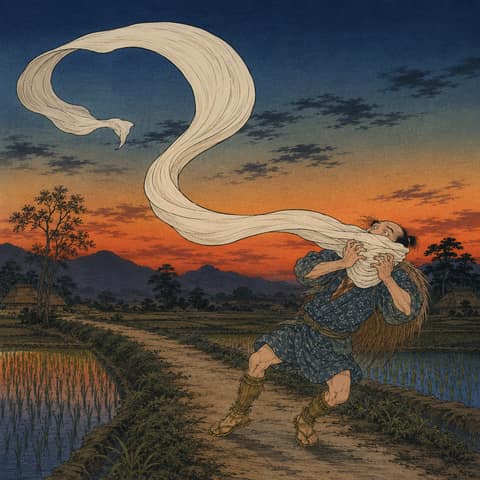
Ittan-Momen is a strange, long cotton-like presence associated with the Ōsumi Takayama region, around present-day Takayama in Kimotsuki Town, Kagoshima Prefecture. In 1938, Kunio Yanagita recorded that something in the form of an Ittan-Momen fluttered at night and attacked people. No color, face, limbs, or voice is given; what remains is the vivid sense of something long moving through the dark. A 1942 dialect collection calls “Ittan-Monmen” a kind of monster and describes it as a cotton-like object about one tan in length that attacks people at night. A tan measures a bolt of cloth, but its dimensions have varied by period, place, and textile; it cannot be reduced to one fixed number of meters. The name evokes a length of cloth long enough to cover a body, flickering like a living thing. Later local materials tell of Ittan-Momen flying in at dusk and winding around a person’s head or neck. Interviews conducted in Kimotsuki Town preserve accounts from Ikenosono, Hami, Gongen-yama, and the banks of the Kimotsuki River, while also noting communities where the story was unknown. This was not one uniform tale across all of Kagoshima, but a presence remembered unevenly in particular parts of Ōsumi. The figure now familiar throughout Japan owes much to Shigeru Mizuki. According to an account published by the Agency for Cultural Affairs, Mizuki gave distinctive designs to yokai named in *Yōkai Meii* whose appearances had not been handed down. Ittan-Momen, too, acquired the recognizable body of a long flying cloth and became known nationwide through manga and animation.

Ippon-Datara

Ippon-Datara

Epic

EE-pohn dah-TAH-rah

Kii–Kumano Tradition Variant

Mountain & Wilderness SpiritsWakayamaNara

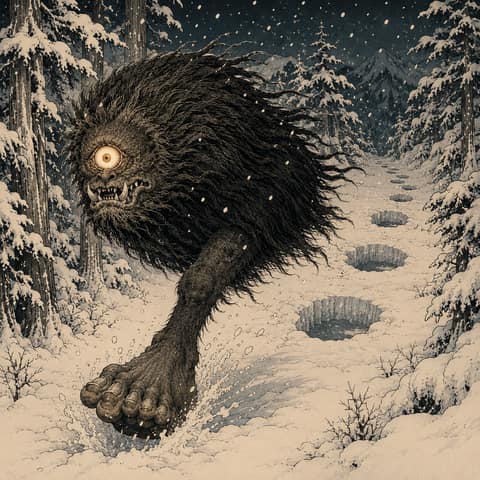
Ippon-Datara is a mountain yokai said to appear as a one-eyed, one-legged being, best known from tales in Kumano (Kii) and Mt. Obagatake in Nara. It is famed for leaving a single, broad footprint in the snow, with few claiming to have seen its body. A well-known tradition says it appears only on December 20, the “Last Twentieth Day,” when entering the mountains is taboo. Folklore often links it to blacksmithing and the tatara furnace, sometimes interpreted as a fallen, one-eyed smithing deity.

Itsumade

Itsumade

Epic

e-tsu-mah-deh

The Death-Bringer that Cries "Itsumade": Itsumade

Animal YokaiKyotoShiga

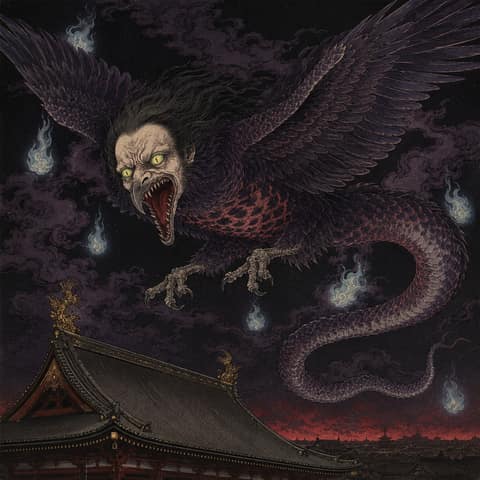
The Itsumade (以津真天) is a gigantic monster bird with a human-like face, a curved beak lined with saw-like teeth, a long serpentine body, and sharp sword-like spurs on its legs. Said to possess a wingspan of up to one *jō* six *shaku* (approximately 4.8 meters), it terrifies people by echoing its eerie cry of "Itsumade, itsumade" ("Until when? Until when?") from the night sky. The primary source of this yokai is an anecdote about an unnamed "monster bird" recorded in Volume 12, "The Matter of Hiroari Shooting the Monster Bird," of the pinnacle of war chronicles, the *Taiheiki* (established in the 14th century). According to the legend, in the autumn of the first year of the Kenmu era (1334), as an epidemic ravaged Heian-kyō (Kyoto) and claimed countless lives, this creature flew above the Shishinden (the Kyoto Imperial Palace) every night, letting out its ominous cry until it was brilliantly shot down by the master archer Oki no Jirōzaemon Hiroari. Crucially, in classical texts, this bird was consistently referred to only as a "monster bird" and lacked a specific proper name. It wasn't until the Edo period that the painter Toriyama Sekien included it in his *Konjaku Gazu Zoku Hyakki* (1779), applying the kanji "以津真天" (Itsumade) to its cry, that it crystallized as a distinct named yokai for the first time. In modern yokai encyclopedias, it is often explained that it "appears beside corpses left abandoned due to war or famine, crying out in protest, 'Until when (will you leave them exposed to the elements)?'" However, this direct connection to "corpses" is absent from medieval and early modern literature; it is a later interpretation added in modern times that logically reinterprets the *Taiheiki*'s backdrop of a rampant epidemic.

Izutamahiko no Mikoto

Izutamahiko no Mikoto

Divine

izutamahiko

Guardian Deity of Mount Zozu, Izutamahiko no Mikoto

Divine Spirit/DeityKagawa

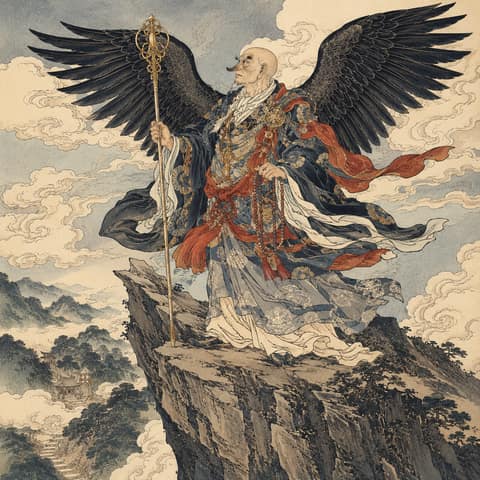
Izutamahiko no Mikoto is the deity enshrined at the Okusha (Inner Shrine), the Izutama Shrine of Kotohira-gu. His true identity is Kongobo Yusei, an ascetic monk (shugenja) who restored the Konpira faith to prominence at the end of the Sengoku period. Yusei, who was the fourth head of the Konkoin temple, left behind the words "I shall die and protect this mountain forever" in the 18th year of Keicho (1613), after which it is said he turned into a tengu and vanished suddenly. In other words, he is a rare deity—a real, historical high-ranking monk who, after his death, became a tengu and a guardian deity, eventually being elevated to the status of a mountain tutelary god. During his life, in the 11th year of Keicho (1606), Yusei had a statue of himself made and enshrined beside the main hall, which later became the origin of the Okusha's deity, Izutamahiko no Mikoto. The Okusha sits atop a steep mountain at an altitude of 421 meters, requiring a climb of 1,368 stone steps from the main shrine, and is revered as the second most sacred site after the main shrine of Kotohira-gu.

Iizuna Saburō

Iizuna Saburō

Legendary

Iizuna Saburō

The War-God Who Rides a White Fox — Iizuna Saburō

Mountain & Wilderness SpiritsNagano

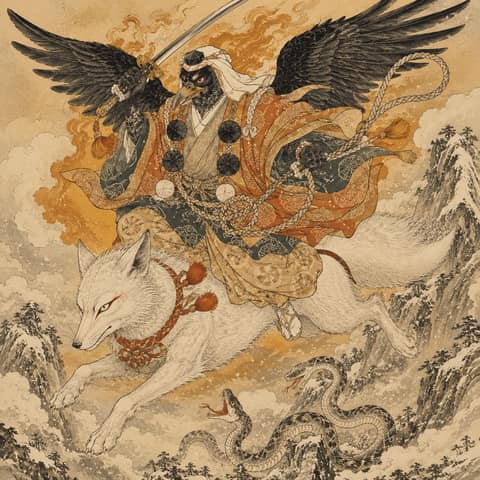
Iizuna Saburō is a great tengu enthroned on Mt. Iizuna in Shinano Province, and the lord of that mountain, who as Izuna Gongen drew a syncretic Shintō-Buddhist devotion. Counted among the Eight Great Tengu, he is said to have styled himself "the third tengu of Japan." He is figured as a crow-tengu bearing a sword and a rope (saku), mounted upon a white fox, and was deeply revered by the warrior houses as a war-god of victory. His name is recorded as "Izuna Saburō" in the medieval Togakushi-san Kenkō-ji Ruki (1458), which transmits that in the first year of Tenpuku (1233) the Izuna Daimyōjin named himself "the third tengu of Japan"—the reason for the "Saburō" (third son), ranking after Atago Tarōbō and Hira Jirōbō. He also stands named as "Izuna no Saburō" in the Muromachi Noh play Kurama Tengu.

Thread-Spinning Maiden

Thread-Spinning Maiden

Uncommon

EE-toh-hee-kee MOO-soo-meh

Traditional Account

Mountain & Wilderness SpiritsTokushima

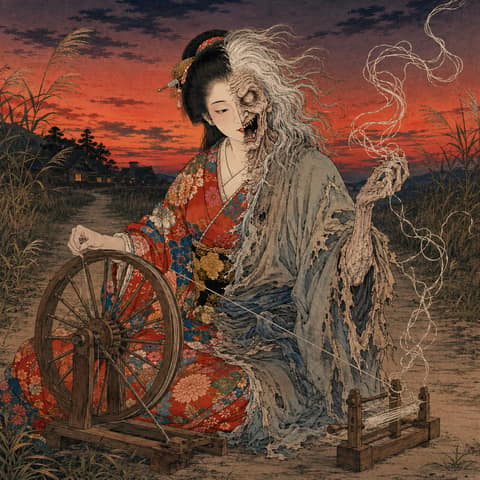
A yokai that appears by the roadside as a young woman spinning thread on a wheel. If passersby are entranced by her beauty, she suddenly turns into a white-haired crone and bursts into loud laughter, shocking them. The striking, instantaneous transformation is her hallmark. No concrete harm is recorded; she is told of as a roadside surprise. Her name comes from her spinning motion, and the legend is rooted in Awa Province.

Inari

Inari

Legendary

いなりのかみ

Inari, King of Faiths for Bountiful Harvests and Prosperous Business

Deity / Divine SpiritKyoto

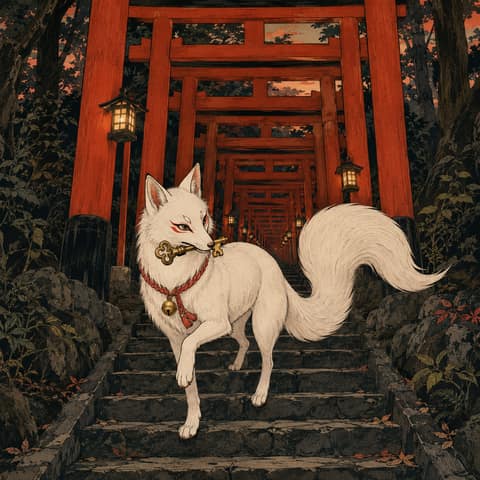
The principal deity is Ukanomitama-no-Kami (also known as Ukanomitama-no-Mikoto). This is Japan's foremost faith, rooted in the grain and food deity that already appears in the "Kojiki" and "Nihon Shoki." Originating from its enshrinement at Fushimi Inari Taisha by the Hata clan in 711 AD (the 4th year of Wado), it is currently worshipped at over 30,000 Inari shrines and branch shrines nationwide, constituting the largest belief system in Japan by number of shrines. From the Middle Ages onward, it synchronized with the Buddhist deity Dakini-ten, and came to be enshrined as the principal image at temples like Toyokawa Inari and Saijo Inari. The fox is not the deity itself but a divine messenger (shinshi), although the two are often conflated in folk belief. As the deity of bountiful harvests, prosperous business, family safety, and household protection, Inari is widely worshipped across shrines, temples, private residences, roadside shrines, and even corporate altars.

Inugami

Inugami

Legendary

EE-noo-GAH-mee

Inugami (Traditional Form)

Animal ShapeshiftersTokushimaKochi

Inugami are possessing dog-spirits found mainly in western Japan, counted alongside fox possession and kuda-gitsune as a powerful occult force. Shikoku—especially Tokushima, Kochi, and Ehime—is regarded as their heartland, with traces reported from Shimane and Yamaguchi down through Kyushu to the Satsunan Islands and Okinawa. Families believed to host hereditary Inugami—called “Inugami bloodlines”—were stigmatized, leading to marriage taboos and social discrimination. Their form and temperament vary widely by locale, with traditions describing them as mouse-like, weasel-like, or bat-like, among other shapes.

Showing 49 - 72 of 146 yokai