YOKAI.JP

🔤 Yokai by Kana

Find yokai in hiragana order

146 Yokai|12 Category|Page 2 of 7
Localization in Progress - More content available in Japanese version
View Japanese

Filter by hiragana row

Sort by: ReadingAscending
Trailing Boy

Trailing Boy

Uncommon

AH-toh-oh-ee koh-ZOHH

Trailing Boy Monk (Tradition-Faithful)

Mountain & Wilderness SpiritsKanagawa

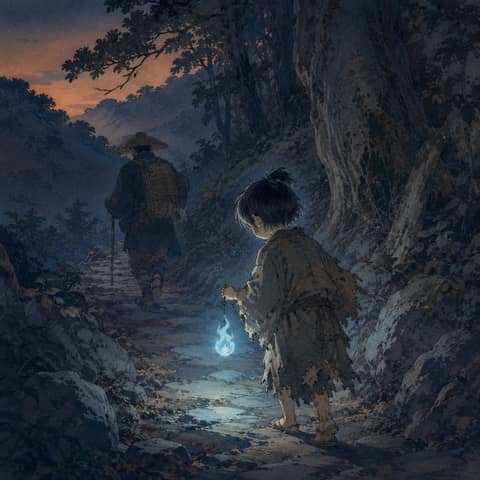
A type of mountain spirit from the eastern Tanzawa range. It appears as a child about four to ten—sometimes up to fifteen—wearing straw mats, homespun kasuri cloth, or animal pelts, and follows people in silence. When one turns around, it slips behind trees or rocks and vanishes, doing no harm. At times it even goes ahead to guide travelers. After dusk it is said to carry a small light like a lantern, which fades as it nears the village.

Abumikuchi

Abumikuchi

Rare

ah-BOO-mee-KOO-chee

Sekien Zue Conformant

Animated Objects & UndeadJapanese folklore

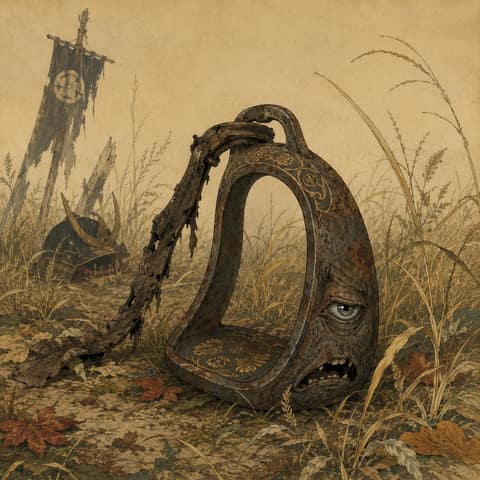
Abumikuchi is a tsukumogami depicted as a stirrup sprouting eyes and a mouth. It appears in Toriyama Sekien’s Hyakki Tsurezure Bukuro, where discarded arms and tack are said to gain a spirit over time. Sekien quotes a line from the Noh play Tomonaga, evoking battlefields, but offers no specific tale. The theme centers on the grudge and attachment of tools treated with neglect.

Oil Baby

Oil Baby

Rare

AH-boo-rah AH-kah-go

Sekien Iconography Edition

Household SpiritsShiga

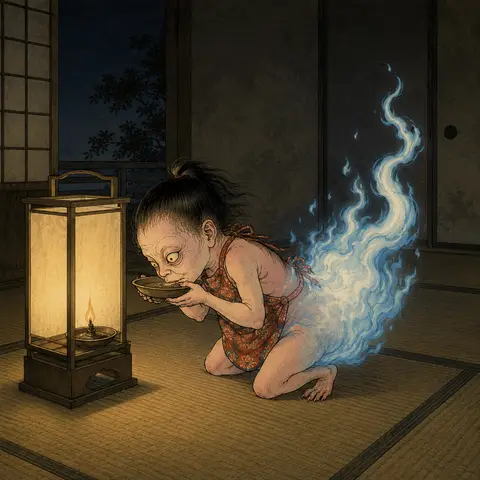
A yokai illustrated in the mid-Edo period by Toriyama Sekien in Konjaku Gazu Zoku Hyakki. It appears as an infant that licks oil from household lamps. The motif draws on a local belief from Ōtsu in Ōmi: an oil seller who stole oil offered to a Jizō statue died and became a wandering fire. Sekien adapted that ghost-fire tale, embodying an obsession with oil in the form of a red baby.

Aburasumashi

Aburasumashi

Rare

あぶらすまし

The Voice of Kusazumigoe: Aburasumashi

Apparitions of Mountains and FieldsKumamoto

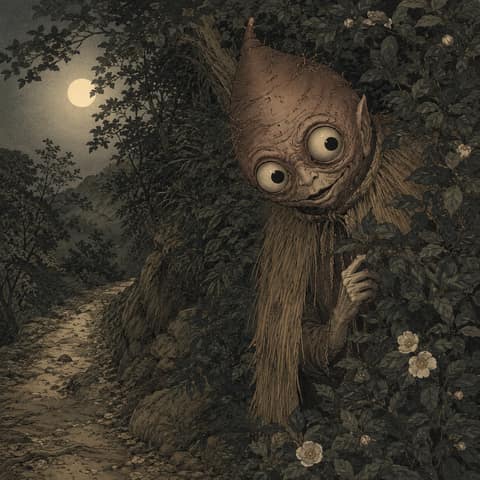
Aburasumashi is a yokai said to appear at a mountain pass in Higo Amakusa. Although often depicted as a small figure wearing a straw raincoat (mino) with a potato-like head and large eyes, the original folklore describes it as a phenomenon without a definite form, appearing merely as a voice or a presence. It is known from a tale set in Kusazumigoe—a pass lying between Kawachi in Sumoto-machi and Shimoura in Hondo—which was recorded by folklorist Ryuichi Hamada in his *Amakusa-to Minzokushi* (Folklore of Amakusa Island) (1932). The "sumashi" in its name is said to mean "to squeeze" or "press" (oil) in the Amakusa dialect, suggesting the yokai has its roots in the local practice of pressing precious oil from the seeds of camellias and sasanquas.

Aburahi-daimyojin

Aburahi-daimyojin

Divine

あぶらひだいみょうじん

The Tutelary Deity of Koka Descending with Fiery Light upon Mount Aburahi

Divine Spirits / DeitiesShiga

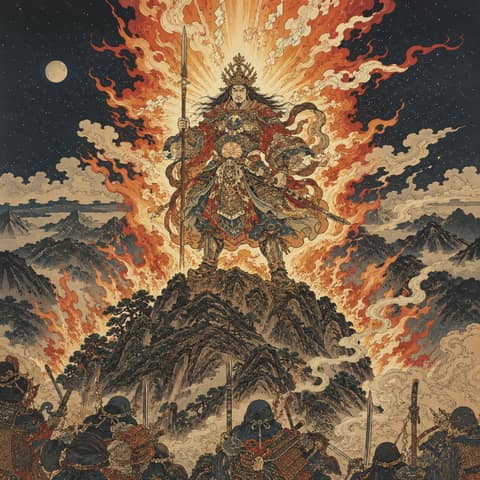
Aburahi-daimyojin is the enshrined deity of Aburahi Shrine, situated at the foot of Mount Aburahi, a sacred peak in Koka District, Omi Province. It is a deity worshipped as the god of oil and fire. According to shrine legend, a deity descended upon the summit of Mount Aburahi emitting a light like burning oil, and the name "Aburahi" (Oil Sun/Fire) originated from this auspicious sign. At the summit stands the Take Shrine, where the water goddess Mitsuhanome-no-kami is enshrined, preserving an ancient form of mountain worship that reveres Mount Aburahi itself as a sacred body (shintaisan). Records show that the deity of Aburahi received the Junior Fifth Rank, Lower Grade in the first year of the Gangyo era (877) during the Heian period, indicating it has been an ancient shrine revered since long before that time.

Aburabō (Oil Wraith)

Aburabō (Oil Wraith)

Uncommon

ah-boo-rah-BOH

Abura-bō (Traditional Form)

Half-Human BeingsShiga

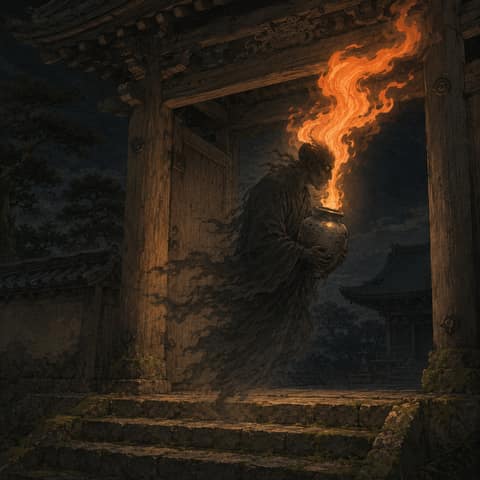
Aburabō is said to be the spirit of someone who committed a transgression involving temple or shrine lamp oil, appearing as a strange, wandering fire. Reported in Shiga and Kyoto, it is described as either a monk transformed after stealing oil from Mount Hiei or the ghostly silhouette of a figure clutching an oil jar. Most often seen on late spring and summer nights, it manifests at temple gates, along foothills, and by ponds or embankments, then drifts away in silence. Its name reflects guilt and fixation tied to oil.

Abe no Seimei

Abe no Seimei

Legendary

AH-beh noh SAY-may

Onmyoji Seimei

Ghosts & SpiritsKyoto

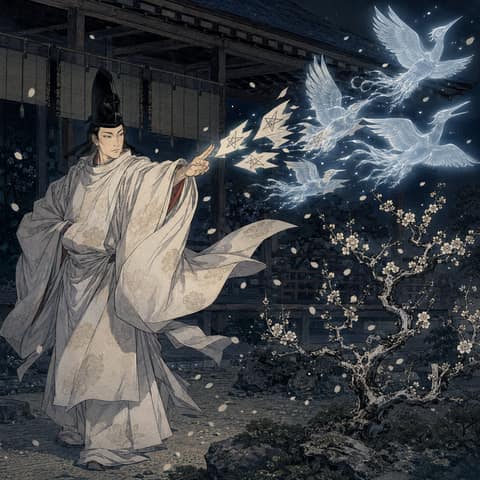
A historical onmyoji (court diviner) of the mid-Heian period recorded in official sources. Trained under the Kamo lineage in astronomy, calendrics, and divination, he performed purifications and ritual steps (heihaku/henbai) at court. Diaries note the trust he gained from Emperors Kazan and Ichijo and from Fujiwara no Michinaga. He later also held the post of Astronomer-in-Chief, paving the way for the Abe (Tsuchimikado) lineage to codify Onmyodo as a hereditary tradition. Over time his legend grew, and he came to embody the archetype of the sorcerer who subdues yokai and commands shikigami.

Amazake Hag

Amazake Hag

Epic

ah-mah-ZAH-keh BAH-bah

Traditional Folklore Aligned

Half-Human BeingsNagano

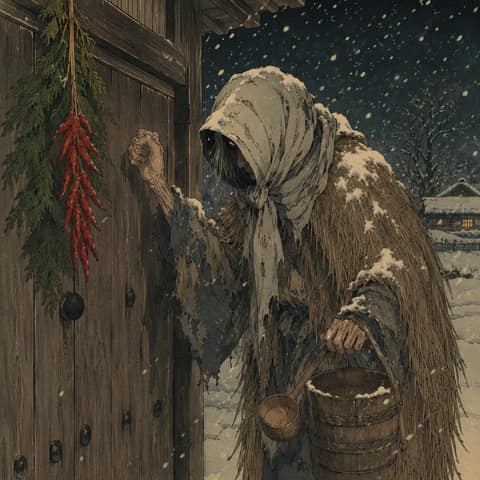
A yokai that appears as an old woman roaming late at night, knocking on doors and calling, “Any sweet sake?” Regardless of how people answer—whether they respond or stay silent—she was feared to bring illness. Households hung sprigs of cedar, nandina, or red chili peppers at the doorway to ward her off. Legends are found from Edo up through the Tohoku region, often linking her to the spread of epidemics; some identify her with the smallpox deity. She is also associated with the winter night cries of itinerant vendors.

Amaterasu-Omikami

Amaterasu-Omikami

Divine

あまてらすおおみかみ

Supreme Deity of Takamagahara

Divine Spirit / DeityMie

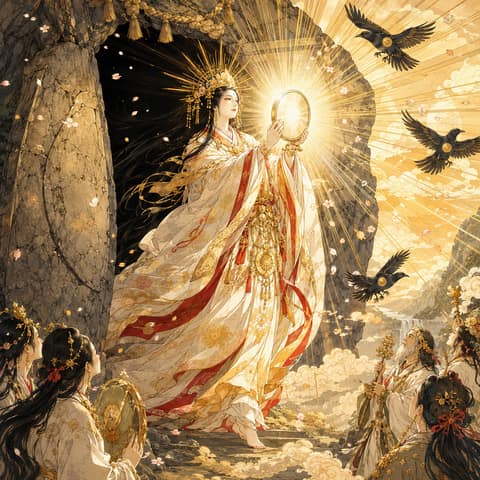
Amaterasu-Omikami is the sun goddess appearing in the *Kojiki* (712) and *Nihon Shoki* (720). She is the eldest of the Three Precious Children, born from the left eye of her father, Izanagi-no-Mikoto, when he performed a purification ritual (misogi) at Ahakihara to cleanse himself of the impurities of the underworld (Yomi). In the *Kojiki*, her name is written as "Amaterasu-Omikami" (天照大御神 / 天照大神); in the *Nihon Shoki*, she is referred to as "Sun Goddess," "Ohohirume-no-Muchi," and "Amaterasu-Omikami." The divine name chanted by Shinto priests before the altar at Ise Jingu is "Amaterashimasu-Sume-Okami." Entrusted by her father with the rule of Takamagahara (the High Plain of Heaven), she was enraged by the violent acts of her younger brother Susanoo-no-Mikoto in Takamagahara and hid in the Heavenly Rock Cave (Amano-Iwato), plunging the world into darkness. This "Hiding in the Rock Cave" episode is one of the greatest stories in Japanese mythology. After being lured out of the cave by the wisdom and dances of the eight million gods, she bestowed the Three Sacred Treasures (the Yata no Kagami mirror, the Yasakani no Magatama jewel, and the Kusanagi sword) upon her grandson Ninigi-no-Mikoto, sending him down to govern Ashihara-no-Nakatsukuni (the Central Land of Reed Plains). Thus, she became the ancestral deity of Emperor Jimmu and the successive imperial lineage. With her primary enshrinement at the Inner Shrine of Ise Jingu (Kotaijingu), she has been revered as Japan's supreme deity from ancient times to the present.

Amano-zako (Heaven-Contrary Deity)

Amano-zako (Heaven-Contrary Deity)

Epic

ah-mah-noh-ZAH-koh

Zukai-Conformant Demon-Deity Form

Deities & Divine SpiritsUncertain (descriptions chiefly in Edo-period encyclopedias)

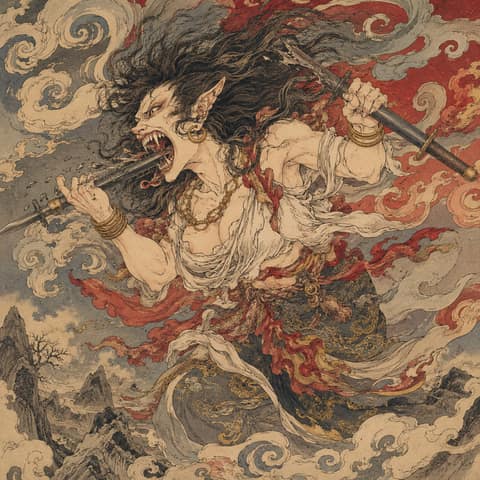
Amano-zako is a monstrous deity cited in an unspecified source quoted by the Edo natural history compendium Wakan Sansai Zue. Said to have taken shape from the fierce breath that Susanoo expelled from his body. Humanoid with beast-like traits, it has a high nose, long ears, and fangs. Its temper is violent; when defied, it rages and can hurl even mighty gods far away. It habitually contradicts things, linking it to the amanojaku, the contrary imp of Japanese lore.

Amanojaku

Amanojaku

Epic

ah-mah-noh-JAH-koo

Traditional Iconography and Folktale

Demons & GiantsOkayamaShizuoka

Amanojaku is a small demon known for defying people, twisting words and actions, and teasing by doing the opposite of what is asked. In Buddhist iconography it appears as a wicked imp trampled underfoot by the Four Heavenly Kings or Shukongōshin, symbolizing human passions and delusions. In mythic lore its name connects to figures like Ama-no-Sagume and Ame-wakahiko, suggesting an old deity or shamanic spirit later reduced and recast as a mischievous goblin. Local traditions portray it variously as a voice-mimicker, a mountain echo, or even a giant.

Amabie

Amabie

Legendary

amabie

Amabie, the Luminous Prophet from the Sea off Higo

Prophetic YokaiKumamoto

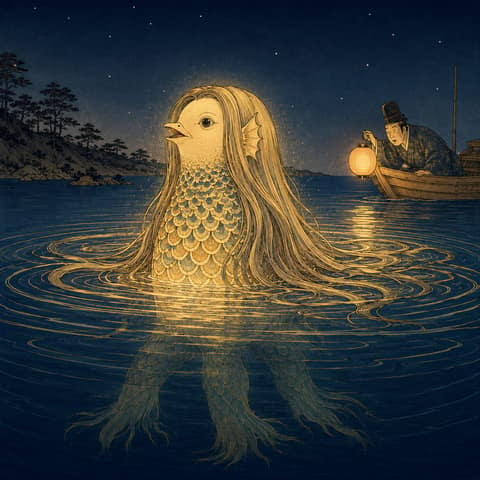
Amabie is a prophetic yokai said to have appeared in the sea off Higo Province in mid-April 1846. Its only known contemporary source is a single kawaraban held by Kyoto University Library; no parallel account from the period has been confirmed. According to the sheet, something shone in the sea night after night. When an official went to investigate, a creature appeared and announced, 'I am Amabie, a being who lives in the sea.' It foretold six years of abundant harvests across the provinces, together with an epidemic, and instructed people to copy its form and show it to others at once before disappearing beneath the water. The text describes its appearance only as 'like the picture.' In the accompanying image it has long hair, a beak, scales, and three leg- or fin-like appendages.

Amamikiyo

Amamikiyo

Divine

あまみきよ

Amamikiyo, the Creation Deity of Ryukyu

Deity / Divine SpiritOkinawa

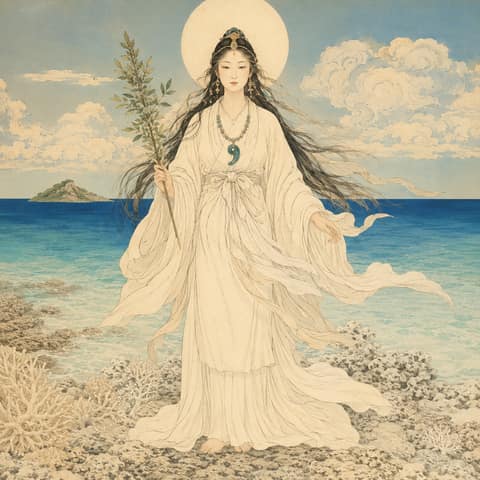
Amamikiyo (also known as Amamiku) is the creation deity believed to have formed the islands and lands of the Ryukyu archipelago. It is said that they came across the sea from Nirai Kanai, the otherworld, to shape the islands, settle people upon them, and establish the sacred groves known as *utaki*. In some accounts, Amamikiyo is paired with the male deity Shinerikiyo, and the two are said to have created the land and its people under the command of the sun god. Other texts portray Amamikiyo as a solitary creator. Regardless of these literary variations, Amamikiyo stands at the apex of the Okinawan belief system, serving as the root of the Ryukyuan pantheon connected to other visiting deities like Kinmamon from Nirai Kanai and the goddesses who manifest at the *utaki*.

Net-Cutter

Net-Cutter

Rare

AH-mee-kee-ree

Iconographic Standard, Traditional Interpretation

General ClassificationsJapanese folklore

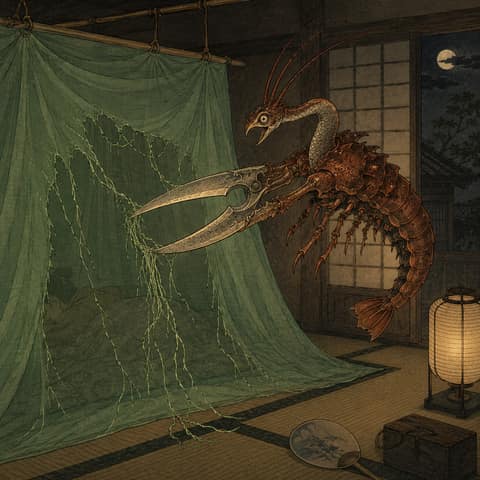
A yokai depicted only as an image in Toriyama Sekien’s Edo-period Gazu Hyakki Yagyō. It appears with scissor-like claws resembling those of a crab or scorpion, but the book gives no explanation, and its nature remains unknown. Some link it to the hair-cutting yokai “Kamikiri” seen in earlier picture scrolls, or read it as a visual pun connecting fishing nets and small crustaceans. Later writers often describe it as snipping mosquito nets or fishing nets, though historical evidence for this is limited.

Rain Woman

Rain Woman

Epic

AH-meh-ON-nah

Rain-Summoning Female Spirit

Weather & Calamity SpiritsNagano

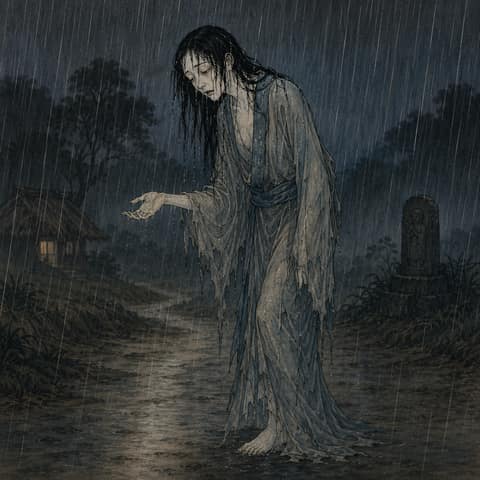
A feminine yokai or spirit associated with calling rain. Toriyama Sekien includes the subject “Ame-onna” in Konjaku Hyakki Shūi, but his treatment leans on the Chu poet Song Yu’s tale of “morning cloud, evening rain,” using it satirically rather than defining a concrete monster. In folk belief she is feared as a figure who appears on rainy days to snatch children, yet also revered as a rain-bringing spirit who ends drought.

Ame-no-uzume

Ame-no-uzume

Divine

ame-no-uzume

The Laughing Dancer Who Opens the Rock Cave

Deity / Divine SpiritMieMiyazaki

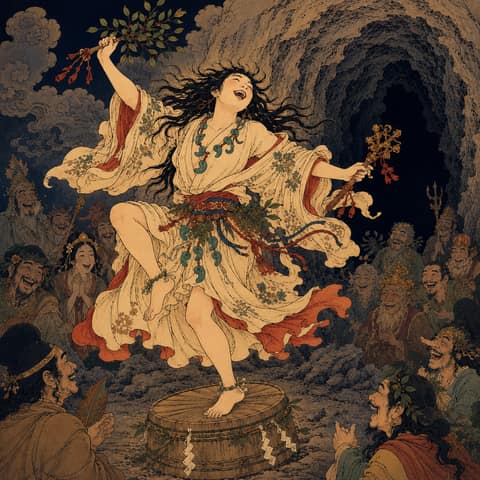
Ame-no-uzume (Ame-no-uzume-no-mikoto) is the goddess of performing arts and festivity who danced before the Amano-Iwato (Heavenly Rock Cave), provoking laughter that lured Amaterasu-Omikami outside. In the "Kojiki," when Amaterasu hid in the rock cave and plunged the world into darkness, Uzume overturned a tub, stamped on it resoundingly, and danced as if divinely possessed, exposing her breasts. The myriad deities gathered there roared with laughter, and the commotion caused Amaterasu to peek outside, returning light to the world. Her overwhelming individuality lies in how laughter and dance resolved a cosmic crisis. The "Nihon Shoki" also contains various accounts of the rock cave myth, depicting her as Ame-no-uzume-no-mikoto, a divine figure performing skillfully before the gods. She is not merely a cheerful dancer. She is a ritual specialist who manipulates the gods' attention, forces closed doors to open, and completely changes the atmosphere of a space. Read as a combination of performing arts, kagura (sacred music and dance), shamanic possession, and the magical power of laughter, she holds a role unparalleled in the yokai and deity database. During the Descent of the Heavenly Grandson (Tenson Korin), Ame-no-uzume confronts Sarutahiko-no-mikoto, who blocks the path, asks his name, and plays a role in opening the way to guide the heavenly grandson. Later enshrined at places like Sarume Shrine in connection with Sarutahiko, her beliefs overlap with the improvement of performing arts, matchmaking, and opening paths. The dance that opens the rock cave and the dialogue that opens the path are consistent in their power to open what is closed. Among the heavenly gods, Uzume is not a god who issues authoritative commands, but one who moves the world by setting the stage. If Amaterasu is light itself, Uzume creates the mechanism for that light to shine forth. If Sarutahiko is the god of the path, Uzume is the one who initiates the dialogue to open that path. Operating around the main characters, she decisively alters the course of myth. This flexible strength supports her irreplaceable presence within mythology.

Ame-no-Oshihomimi

Ame-no-Oshihomimi

Divine

あめのおしほみみのみこと

Ame-no-Oshihomimi, the Crown Prince Deity Who Passes the Mission to His Child on the Floating Bridge of Heaven

神霊・神格Fukuoka

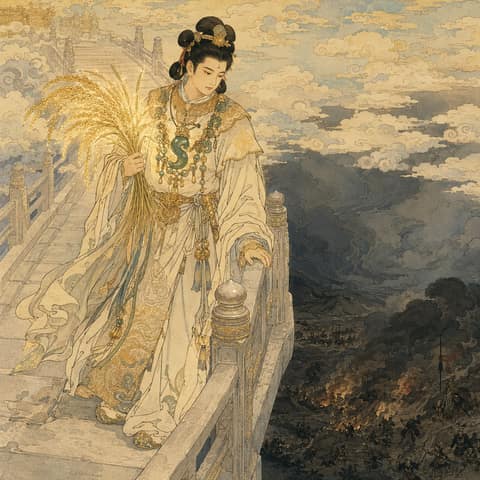
Ame-no-Oshihomimi is the principal deity among the five male gods born from the *ukehi* (pledge) between Amaterasu-Omikami and Susanoo-no-Mikoto, and the crown prince deity who stopped one step short of the Tenson Korin (the descent of the heavenly grandchild). In the *Kojiki* account of the *ukehi*, Susanoo takes the beads wrapped around Amaterasu's left hair bunch, washes them in the Heavenly True Well, crunches them, and blows them out. From the mist of his breath, Masakatsu-Akatsu-Katsuhayahi-Ame-no-Oshihomimi-no-Mikoto comes into being. Regarding the five male gods born afterward, Amaterasu declares that because the *monozane* (the seed objects) belonged to her, they are naturally her own children. The word "katsu" (victory), which appears three times in his name, is interpreted by the Kokugakuin University commentary as an issue related to the victory or defeat of the *ukehi*. In the first part of the Pacification of Ashihara-no-Nakatsukuni, Amaterasu intends to have him descend, declaring the "Land of Plentiful Reed Plains and Fresh Rice Ears of a Thousand Autumns and Five Hundred Autumns" to be the land ruled by my child, Masakatsu-Akatsu-Katsuhayahi-Ame-no-Oshihomimi-no-Mikoto. However, standing on the Floating Bridge of Heaven, Ame-no-Oshihomimi sees that the earth is exceedingly tumultuous and returns. In the first part of the Tenson Korin, after the pacification, he receives the order from Amaterasu and Takagi-no-Kami but suggests that they should send his newly born child, Ame-no-Nigishikuni-Nigishiamatsuhiko-Hikoho-no-Ninigi-no-Mikoto, who was born while he was preparing to descend. Hikosan Jingu enshrines Masakatsu-Akatsu-Katsuhayahi-Ame-no-Oshihomimi-no-Mikoto as its principal deity, and tradition holds that Mount Hiko was called the "Mountain of the Sun's Child" (Hikosan) because of this deity. Despite bearing a name of victory, Ame-no-Oshihomimi is a god who does not descend himself, but instead accurately gauges the right moment and passes the heavenly mission to the next generation.

Ame-no-koyane

Ame-no-koyane

Divine

ame-no-koyane

Ame-no-koyane, Ritual God Reciting Prayers at the Rock Cave

Deity / Divine SpiritNaraMie

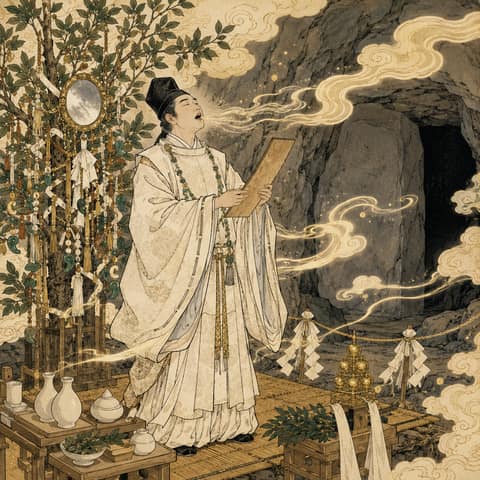
Ame-no-koyane is the god of ritual and words who recited norito prayers before the Heavenly Rock Cave (Ama-no-Iwayato) and is considered the ancestor of the Nakatomi muraji during the Descent of the Heavenly Grandson. In the second part of the Heavenly Rock Cave myth in the Kojiki, after Amaterasu-Omikami hid in the Heavenly Rock Cave, under Omoikane's strategy, Ame-no-koyane and Futodama-no-mikoto were summoned. They extracted the shoulder bone of a stag from Mount Amanokagu, prepared divination using Hahaka wood, and hung jewels, a mirror, and cloth on a sacred sakaki tree. Then, Futodama held the gohei offerings, and Ame-no-koyane fervently recited the Futonoritogoto (solemn norito prayers), opening the rock cave scene with words. Here, Ame-no-koyane is neither a fighting god, a dancing god, nor a god who forces the door open with strength. He is the god who, in a world sunk in darkness, transforms the ritual implements and the space prepared by the gods into an order of voices called norito. Kokugakuin University annotations note that Ame-no-koyane is the ancestor of the Nakatomi muraji and others, and descends accompanying Ninigi-no-mikoto as one of the Itsutomonoo (five attendant deities). In the Descent of the Heavenly Grandson, Ame-no-koyane descends as Itsutomonoo alongside Futodama, Ame-no-uzume, Ishikoridome, and Tamanoya, connecting to earthly order as the ancestral god of the clan in charge of rituals. At Kasuga Taisha, the official history records that in the second year of Jingo-Keiun (768), a main sanctuary was built at the foot of Mount Mikasa, enshrining Takemikazuchi-no-mikoto, Futsunushi-no-mikoto, Ame-no-koyane-no-mikoto, and Himegami. Ame-no-koyane-no-mikoto has been worshipped to the present day as one of the Kasuga deities, the tutelary deity of the Fujiwara clan. The essence of Ame-no-koyane lies in his power to articulate divine will and establish a space as a ritual.
Amenosagume

Amenosagume

Divine

ah-meh-noh-sah-GOO-meh

Accompanying Goddess of Ame-no-Wakahiko, Amenosagume

Half-Human BeingsOsaka

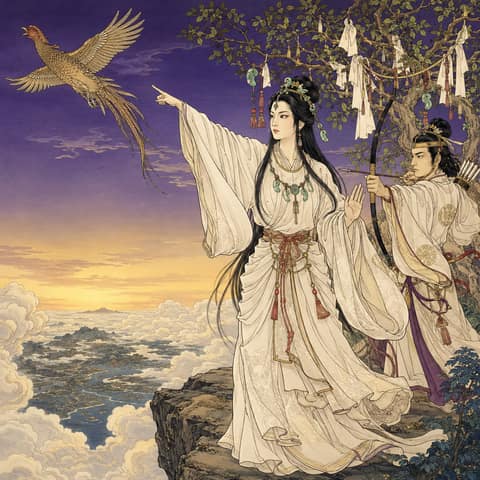
A goddess written as "Ame-no-Sagume" in the *Kojiki* and the *Nihon Shoki*. She appears as an entity accompanying Ame-no-Wakahiko and is known for the anecdote where she warned that the cry of the pheasant Nakime was ominous. She is interpreted as having a nature related to shamanic divination of good and bad fortune, and from a folkloric perspective, some consider her the prototype of the Amanojaku. Whether she is an Amatsukami (heavenly deity) or Kunitsukami (earthly deity) varies depending on the historical material, making her divine status quite unique.

Ame-no-tajikarao

Ame-no-tajikarao

Divine

ame-no-tajikarao

Ame-no-tajikarao, the God of Strength Who Opens the Rock Cave

Deity / Divine SpiritNaganoMie

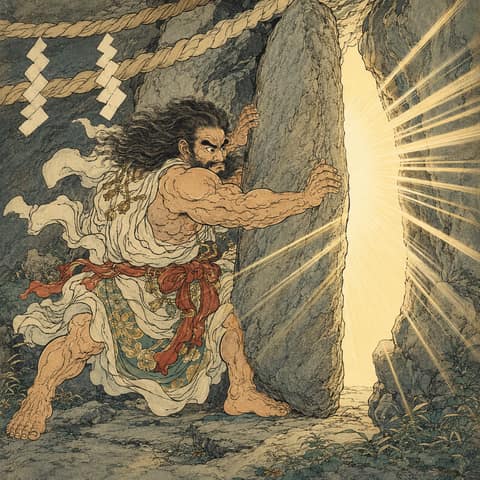
Ame-no-tajikarao is a god of strength who appears in "The Heavenly Rock Cave" and "The Descent of the Heavenly Grandson" in the first volume of the Kojiki. The Kokugakuin University Deity Name Database notes his reading as "Ame-no-tajikarao-no-kami", and details that he is written as Tajikarao-no-kami or Ame-no-tajikarao-no-kami in the Nihon Shoki, and Ame-no-tajikarao-no-kami in the Kogo Shui. His name is often interpreted as "the male god of the heavenly realm with exceptional hand strength," but he is not merely a god of physical brawn. In the scene where Amaterasu-Omikami hides in the Heavenly Rock Cave (Ama-no-Iwayato) and plunging the world into darkness, the moment Ame-no-koyane-no-mikoto and Futodama-no-mikoto present a mirror and Amaterasu approaches the entrance, Ame-no-tajikarao, who had been hiding to the side, takes her hand and pulls her out. With this single action, Takamagahara and Ashihara-no-nakatsukuni are illuminated once again. In other words, Ame-no-tajikarao's strength is not violence, but the decisive power to open a closed sacred boundary at the right moment, restoring light and order. The myth of the Heavenly Rock Cave intertwines the wisdom of Omoikane, the dance of Ame-no-uzume, the ritual implements of mirrors, jewels, and cloth, and the shimenawa (sacred rope) of Futodama-no-mikoto. Ame-no-tajikarao serves as the grand finale, bearing the role of moving the enclosed sun goddess to the outside world. In the section on the Descent of the Heavenly Grandson, he is added as an accompanying deity to the three sacred treasures, along with Tokoyo-no-omoikane-no-kami and Ame-no-ishikadowake-no-kami, and is recorded as the god enshrined in Sana-no-agata. Togakushi Shrine in Nagano Prefecture enshrines Ame-no-tajikarao-no-mikoto as the deity of its Okusha (inner shrine), passing down to this day the legend of his divine power that opened the Heavenly Rock Cave and how the thrown rock door became Mount Togakushi. Rather than an anomaly, he exists as a divine figure who shatters the mythological state of closure.

天穂日命

天穂日命

Divine

あめのほひのみこと

出雲へ傾いた天つ穂霊・天穂日命

神霊・神格Shimane

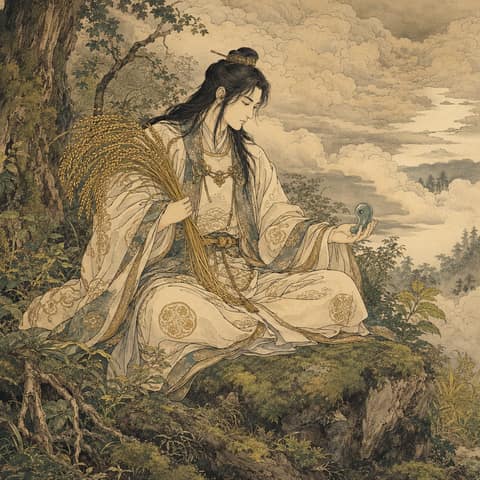
Ame-no-hohi is one of the five male deities born from the ukehi (pledge) between Amaterasu Omikami and Susanoo-no-Mikoto. Recorded in the Kojiki as Ameno-hohi-no-Mikoto or Ameno-hopi-no-Mikoto, he is described as a deity born from the breath of Susanoo-no-Mikoto, using Amaterasu Omikami's magatama beads as the 'monozane' (source material). Annotations in Kokugakuin University's "Kojiki Viewer" explain that 'Ho' in his name refers to rice ears and 'Hi' to spirit, making him the spirit of rice ears in the heavenly realm. His divinity is thus primarily linked to agricultural abundance and heavenly lineage. If among the five male deities, Ame-no-oshiho-mimi bears the direct light leading to the Tenson Korin (descent of the heavenly grandchild), Ame-no-hohi stands beside him, opening a horizontal circuit toward rice ears, the earthly realm, and Izumo. Straddling the celestial bloodline and the earthly world of rice cultivation is the defining characteristic of this deity. However, his narrative soon takes a twist toward Izumo. During the pacification of Ashihara-no-Nakatsukuni (the Central Land of Reed Plains), the myriad deities and Omoikane nominate Ame-no-hohi as the first messenger, but he curried favor with Okuninushi and did not report back for three years. On the other hand, the same annotations point out that in the "Izumo-no-Kuni-no-Miyatsuko-no-Kamuyogoto" (Congratulatory Words of the Governor of Izumo), Ame-no-hohi is described as inspecting the earthly realm, with his son Ame-no-hinadori participating in the pacification. In other words, despite being a child of Amaterasu, Ame-no-hohi holds a dual position as the ancestral deity of Izumo. He is both a failed messenger and an intensely political and ritualistic boundary deity connecting the commands of the heavenly deities with the world of the earthly deities. He should be viewed not simply as a loyal retainer or a traitor, but as a deity standing where central mythology collides with the interpretation of Izumo rituals.

Rainfall Page-Boy

Rainfall Page-Boy

Uncommon

ah-meh-FOO-ree koh-ZOH

Rain-Attendant Page

Household SpiritsEdo period

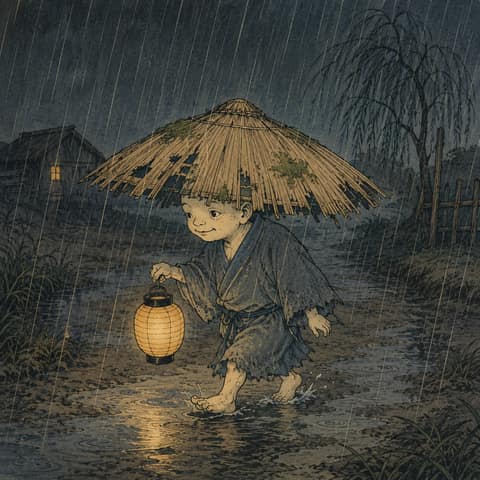
A page-boy–shaped yokai depicted in the Edo-period picture book Konjaku Gazu Zoku Hyakki. He’s shown wearing a Japanese paper umbrella with its main ribs removed over his head and holding a lantern. The notes liken him to a young attendant serving the rain deity (Ushi/Ame-no-shi), with a punning wordplay behind his name. He also appears in kibyōshi (yellow-backed comic books), often in a menial attendant role. He lacks strong ties to local folk traditions and is largely a literary-artistic invention.

Heaven-Descending Maiden

Heaven-Descending Maiden

Uncommon

AH-moh-roh-nah-goo

Lore-Faithful Version

Ghosts & SpiritsKagoshima

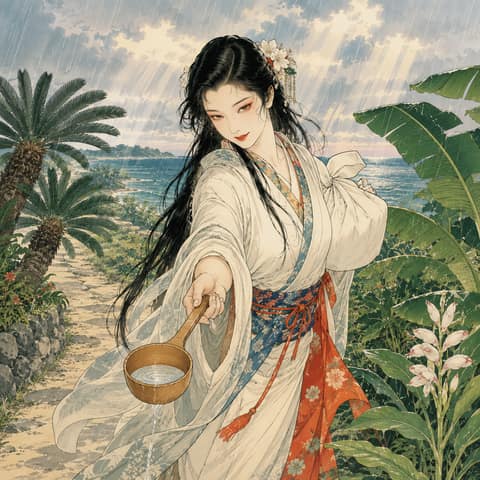
A celestial-maiden-type apparition from Amami Ōshima. Also linked to feathered-robe legends, she descends from the heavens seeking men. She appears carrying a white furoshiki cloth on her back and is accompanied by a light drizzle even under clear skies. She seduces men with bewitching allure; those who yield lose their lives. Some tales say she makes victims drink water from a ladle and carries their souls to the heavens.

Ayakashi

Ayakashi

Epic

ayakashi

Ayakashi: Ghost Lights and Phantoms of the Western Seas

Maritime Apparitions (General Term)A general name for uncanny phenomena at sea; what it denotes varies from region to region

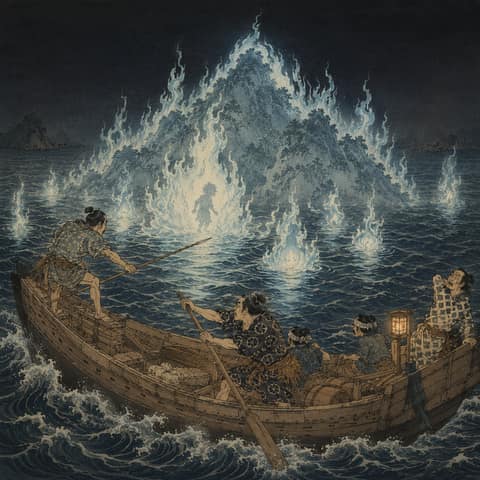
Ayakashi is a broad name for uncanny phenomena and yokai encountered at sea. Its meaning shifts from one region to another, encompassing ghost lights, Funayūrei, and mirages over the water. In Nagasaki it can refer to eerie lights at sea; in Yamaguchi and Saga, to boat-haunting spirits that endanger vessels. On Tsushima, a great fire is said to rise on the shore and then become a mountain offshore, blocking a ship's course. Some communities also connected the name with folk beliefs about the remora, a real fish. Ayakashi stories gave sailors a way to speak about shipwrecks and other dangers whose causes were hard to see.

Showing 25 - 48 of 146 yokai