🔤 Yokai by Kana

Find yokai in hiragana order

32 Yokai|12 Category|Page 1 of 2
Localization in Progress - More content available in Japanese version
View Japanese

Filter by hiragana row

Sort by: ReadingAscending
Yao-bikuni

Yao-bikuni

Rare

yao bikuni

Shiro-bikuni, the Nun from Wakasa

Half-Human BeingsFukuiKyoto

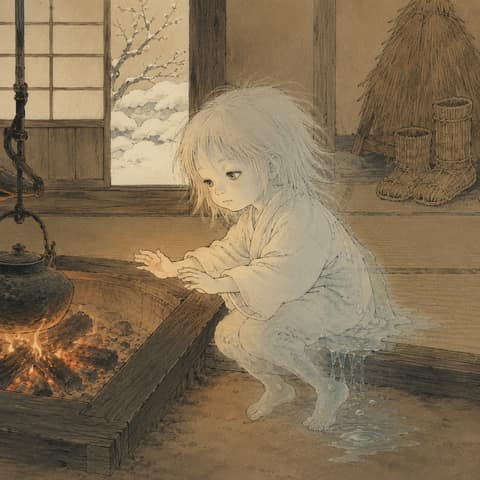
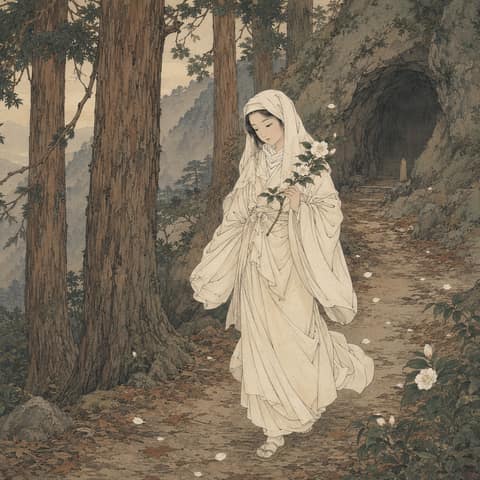
Yao-bikuni, “the eight-hundred nun,” is a nun said to have lived an immense span of years, told of across Japan with Wakasa at the center. She is also called Shiro-bikuni, “the white nun.” The best-known story has a girl who ate mermaid flesh, stopped aging, became a nun and wandered the provinces, but in the sources both her age and the reason for her long life change from period to period. The earliest record is in Kyoto in 1449. The diary of Nakahara no Yasutomi, Yasutomi-ki, entry for the 26th day of the 5th month of Bun’an 6, notes that a “Shiro-bikuni” more than two hundred years old came up from Wakasa and was shown for a fee at the great Jizō hall at Nijō Higashinotōin, and that an elder said, “This is the Shiro-bikuni I heard of years ago.” The name was already known in the capital before that year. In Zuikei Shūhō’s Gaun nikkenroku of the same year, the nun from Wakasa is called “the eight-hundred-year-old nun,” and seeing her cost a hundred or ten coins according to rank. Neither diary mentions a mermaid. Mermaid flesh appears in early modern records. Hayashi Razan’s Honchō jinja kō records, as a story heard from his late father, that the father of the Shiro-bikuni of Wakasa obtained a mermaid from a stranger in the mountains and that his daughter ate it and lived over four hundred years. Kaibara Ekiken, who visited Obama in 1689, wrote that near the Shinmei shrine there was “a portrait of Yao-bikuni at eighteen,” and recorded a local tradition that a rich man’s daughter who ate mermaid flesh lived eight hundred years. Before Kūinji in Obama there is a sacred cave where Yao-bikuni is said to have entered final meditation. A 1982 survey counted 166 traditions of Yao-bikuni at 121 sites in 28 prefectures, most of them in Ishikawa, Fukui, Saitama, Gifu and Aichi.
Epidemic God

Epidemic God

Epic

yahk-BYOH-gah-mee

Gyōekishin, Plague-Deity

Deities & Divine SpiritsHiroshimaKyoto

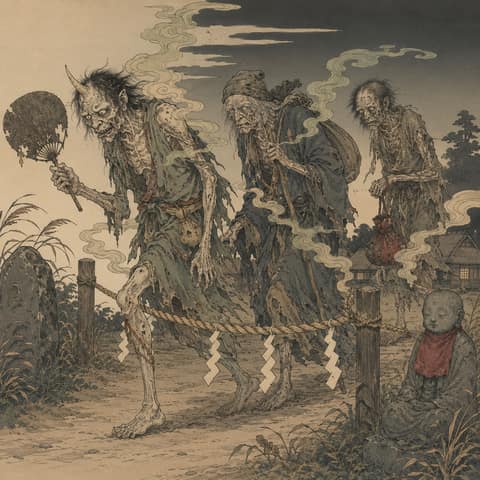
The Epidemic God is a feared malign deity believed to bring outbreaks and calamities. From the Heian period onward, notions of pestilential demons merged with aristocratic beliefs about vengeful spirits and popular views of disease-bringing beings. Usually invisible, it appears in dreams, paintings, or visitor tales as a demon-like figure or an old man. Communities across Japan held rites, used talismans, guarded boundary spaces, and performed summer purifications to bar and drive it away.

Yako (Field Fox)

Yako (Field Fox)

Uncommon

ya-ko

The Yako — Low Fox of the Kyushu Packs

Animal ShapeshiftersNorthern Kyushu, Izumi, and elsewhere (a low-ranking fox spirit)

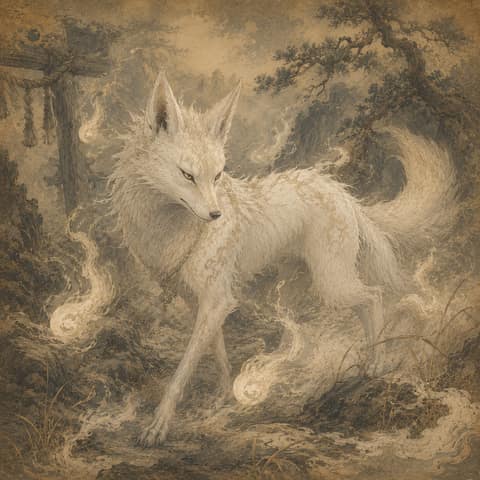
The Yako (also read nogitsune) is held to be the lowest in rank among fox yokai, set at the opposite pole from the white foxes—the benevolent foxes revered as messengers of the god Inari. It is an ordinary wild fox of the hills and fields that, with age, has come to deceive and possess people; in the Edo-period hierarchy of foxes (Tenko, Kūko, Kiko, Yako) it was counted at the very bottom. Whereas the higher foxes are regarded as formless spiritual beings, the Yako is distinctive as the one rank thought to keep a visible body of flesh. That much closer to the human world, it has long been known for near-at-hand, tangible mischief: leading travelers astray, taking on disguises to startle them, and possessing people. It is also written as yakan, a word that originally referred to the jackal in the Buddhist scriptures but came in Japan to be confused with the fox.

Yatagarasu

Yatagarasu

Divine

Yatagarasu

Yatagarasu, guide from Kumano to Yamato

Deities and divine beingsWakayamaNara

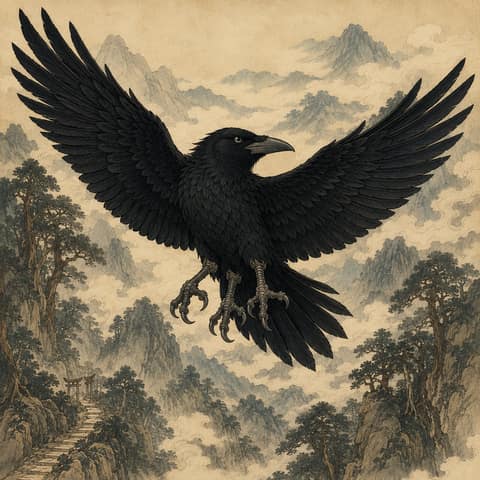
Yatagarasu is the great crow that guided Emperor Jimmu from Kumano to Yamato on his eastern expedition. In the Kojiki, Takagi no Ōkami declares, "Now I shall send the Yatagarasu from heaven; that Yatagarasu will lead the way. Follow behind it as it goes," and the emperor followed it from the mouth of the Yoshino River to Uda. In the Nihon shoki, when the mountains grew so steep there was no road left, Amaterasu told the emperor in a dream, "I now send the Atama-yatagarasu; make it your guide," and the crow came flying down from the sky. Kumano Hongū Taisha reveres the Yatagarasu as the servant of its chief deity, Ketsumimiko no Ōkami (Susanoo), and as a god of guidance.

House Groans (Yanari)

House Groans (Yanari)

Epic

yah-NAH-ree

Ienari (Traditional Depiction)

Household SpiritsVarious regions of Japan

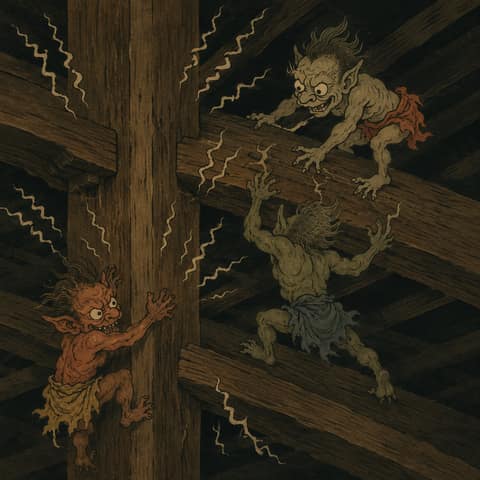
Yanari is a catchall term for uncanny creaks, tremors, and noises that seem to come from houses and furnishings for no apparent reason. Older records note ominous rumblings from hearths, storehouses, and armories, often read as ill omens. Picture scrolls personify it as little goblins shaking a house, but lore usually leaves the cause unexplained. Explanations vary by region—angry spirits, beast spirits, or a house deity’s mood—and it is said to occur most often around midnight to the Hour of the Ox.

Yamaoroshi

Yamaoroshi

Rare

yah-mah-oh-ROH-shee

Based on Sekien Toriyama’s Iconography

Animated Objects & UndeadJapanese folklore

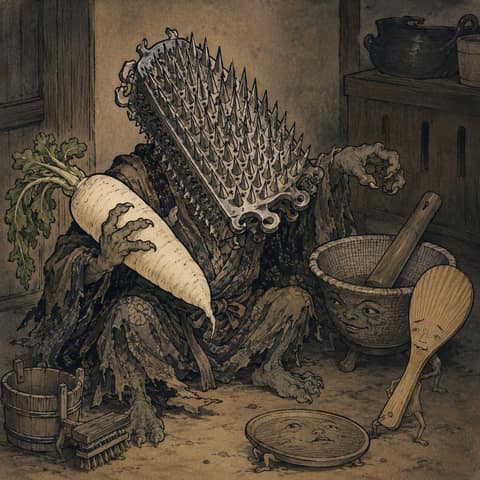
A human-shaped yokai depicted by Toriyama Sekien in Hyakki Tsurezurebukuro. Its head is covered with countless protrusions like a grater, and kitchen tools—daikon radish, suribachi mortar, and a shell ladle—appear at its side. Sekien notes the resemblance to the porcupine (yamaarashi) and plays on the similar sound to “yama-oyaji,” linking the name and form. The figure strongly reflects pictorial invention based on early modern artworks and is often read as a tsukumogami of utensils or a pun-based conceit.

Yamasachihiko

Yamasachihiko

Divine

やまさちひこ

Amatsuhikohikohohodemi-no-Mikoto

Divine Spirit / DeityMiyazaki

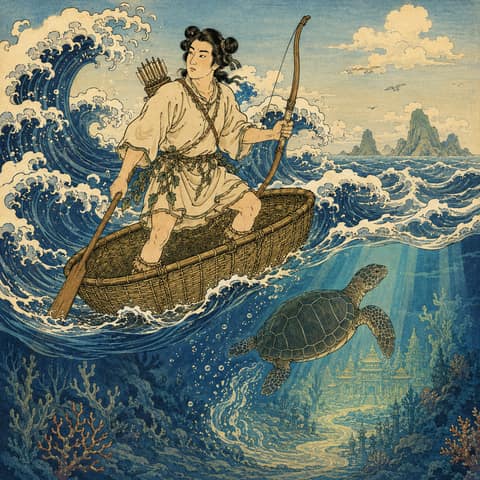
The child of Ninigi-no-Mikoto and Konohanasakuya-hime, also known as Amatsuhikohikohohodemi-no-Mikoto. Protagonist in the Umisachi-Yamasachi myth. After losing his brother's fishhook, Shiotsuchi-no-Kami guided him to the sea palace, where he married Toyotamahime. He returned with the tide-controlling jewels, which he used to subjugate his brother. As the grandfather of Emperor Jimmu, he is an important ancestor of the imperial lineage. Enshrined at Udo Shrine, Aoshima Shrine, and Kagoshima Shrine.

Yamata no Orochi

Yamata no Orochi

Divine

Yamata no Orochi

Serpent God of Izumo's Hii River: Yamata no Orochi

Divine spirit / serpent deityShimaneHiroshima

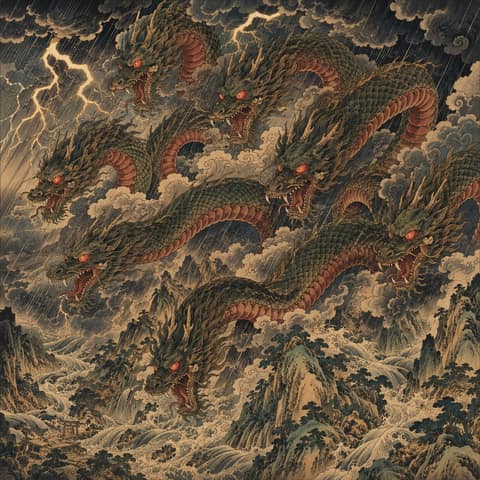
Yamata no Orochi is the enormous serpent deity of Izumo mythology, recorded in the Kojiki, upper volume, completed in 712 and the Nihon Shoki, book one, section eight, completed in 720. It is said to have lived in the upper reaches of the Hii River, anciently called the Hi River, and to have been slain by Susanoo. Yet Orochi is not simply a monster to be defeated. It can be read as the spirit of Izumo's mountains and rivers, the memory of a flooding river, a mythic image of sand iron and tatara ironmaking, and a sign of local Izumo cults being drawn into the mythology of Yamato rule. The Kojiki describes eyes red like winter cherries, one body with eight heads and eight tails, moss, cypress, and cedar growing on its back, a body stretching across eight valleys and eight ridges, and a belly always bloody and raw. Susanoo prepares eight vats of strong yashiori sake and an eightfold fence, lets the eight heads drink themselves senseless, cuts the serpent down with his totsuka sword, and finds the great sword Tsumugari in the middle tail: the later Kusanagi, or Ame-no-Murakumo. This sword becomes the martial treasure among the Three Sacred Treasures. After the victory, Susanoo marries Kushinada-hime, builds a palace at Suga in Izumo, and composes the celebrated "Yakumo tatsu" poem, often treated as Japan's earliest waka. Today Unnan records roughly fifty sites tied to the Orochi legend, while the Iwami Kagura drama Orochi keeps the serpent on stage in the present.

Yamachichi

Yamachichi

Uncommon

Yamachichi

Yamachichi, the Breath-Drinking Beast of the Oshu Mountains

Animal ShapeshiftersOshu (the broad old name for northeastern Japan, now the Tohoku region; no specific site recorded)

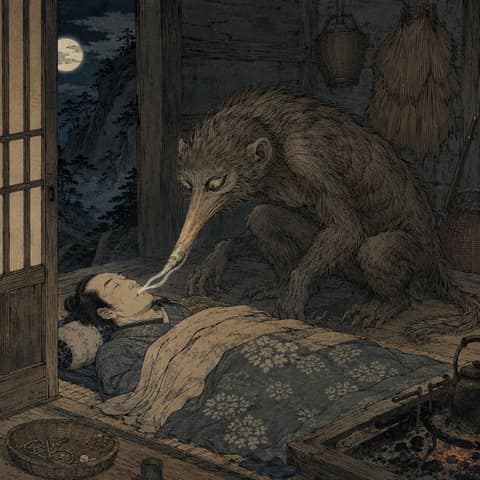
The Yamachichi is a mountain beast that appears in the Ehon Hyaku Monogatari (Picture Book of a Hundred Tales), a book of strange tales and yokai pictures published in 1841 (Tenpo 12). According to its text, a bat that lives long enough first becomes a Nobusuma, and if it grows older still it turns into a Yamachichi and retreats deep into the mountains. Its picture in the Ehon Hyaku Monogatari shows a monkey-like animal with a pointed snout. What sets it apart is that it sucks the breath of people while they sleep. If someone witnesses this, the sleeper is granted a longer life; if no one sees it, the victim dies the next day. The Yamachichi is not a famous mountain terror that raids villages, but a narrowly defined creature of the strange tale, whose effect flips on three conditions: a sleeper's breath, a witness, and a lifespan. The Ehon Hyaku Monogatari says it is common in Oshu, yet names no village or mountain, and the creature is hard to find under the same name in other books or oral traditions, which is worth keeping in mind.

Yamato Takeru

Yamato Takeru

Legendary

Yamato Takeru

Yamato Takeru, the tragic hero and greatest warrior of ancient Japan

Divine spirit / deified heroShiga

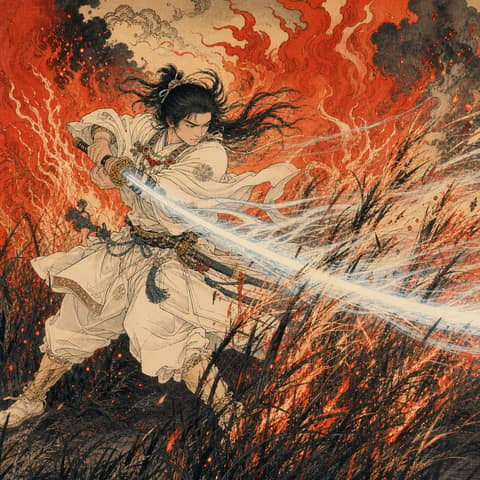
Yamato Takeru is one of ancient Japan's greatest deified heroes, known from the Kojiki and Nihon Shoki as a tragic prince, the son of the twelfth emperor Keiko. In the Kojiki he appears as Yamato Takeru no Mikoto and Ousu no Mikoto; in the Nihon Shoki he is written as Nihon Buyson, Ousu no Mikoto, Yamatooguna, and other forms. After killing his elder brother, Ousu is feared and rejected by his father, Emperor Keiko. He is sent on one campaign after another: west to Kumaso in southern Kyushu and Izumo, then east to the Tokai, Kanto, and Tohoku regions, subduing local gods and powerful clans along the way. In the Kumaso campaign, he disguises himself as a woman, slips into the enemy camp, and kills the Kumaso Takeru brothers; at the moment of death, Kumaso Takeru grants him the name Yamato Takeru. With the Kusanagi sword, given to him by his aunt Yamato-hime, ancestress of the Ise Shrine saigu, he escapes the grass-fire attack at Yaizu in Suruga. At the sea of Hashirimizu, his consort Ototachibana-hime throws herself into the waves to calm the sea god. Finally, after being cursed by the mountain deity of Mount Ibuki in Omi, he falls gravely ill and dies at Nobono in Ise, now Kameyama in Mie Prefecture. The legend that he became a white bird after death and flew away is one of ancient Japan's major tales of heroic ascent and transformation. Shrines, tomb traditions, Shiratori shrines, and Atsuta Jingu, where the Kusanagi sword is enshrined, preserve his memory across Mie, Aichi, Gifu, Shizuoka, and beyond.

Yamatohime

Yamatohime

Divine

Yamatohime-no-Mikoto

Yamatohime, the Mitsueshiro Who Led the Goddess to the Isuzu River

Divine Spirit / DeityMie

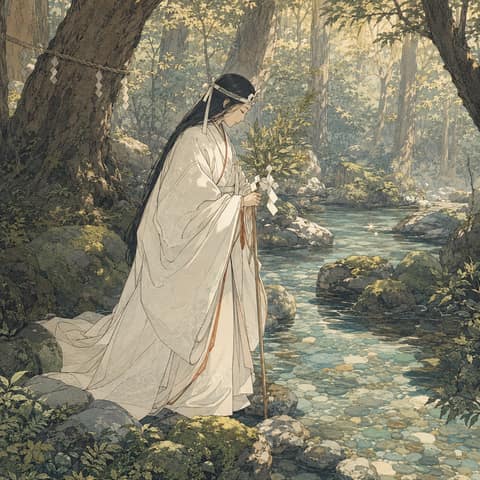
Yamatohime-no-Mikoto is said to have been a daughter of Suinin, the eleventh emperor, and the mitsueshiro, the living staff through whom Amaterasu was carried and served, who succeeded Toyosukiirihime-no-Mikoto in serving the goddess. In the history given by the Jingu Shicho, the administration of Ise Jingu, she sets out from Yamato Province bearing the great goddess, travels through Iga, Omi, Mino, and other provinces into Ise Province, and by the goddess's will establishes Kotai Jingu, the Inner Shrine, on the banks of the Isuzu River. She is no wild yokai, nor someone who moves the gods. She is a divine spirit who hears the gods' will, chooses the land, and gives ritual its form, and in so doing sets an invisible divine power back down within the human world. Her name is easily confused with the later saio system of imperial priestesses at Ise, but her role in tradition is more fundamental. She stands at the stage before the institutions of Ise Jingu come into view in history, and is told of as a guide who binds shrine, river, forest, purification, and sacred food offerings into a single order. Though a princess of myth, her outline is also strikingly practical. Her very divinity is made of judgments: which land can receive the goddess, which water to purify with, which festivals to set at the turning points of the year. Yamatohime can therefore be read less as a figure in Amaterasu's orbit than as a personification of the very moment when Ise became a holy place. Today, at Kusube-cho in Ise, stands Yamatohime-no-miya, which enshrines her in the forest of Mount Kurata, midway along the Miyuki Road that links the Inner and Outer Shrines. Yamatohime's story is the keystone of the Ise faith, joining in a single line the enshrinement of Amaterasu, the founding of Ise Jingu, and the origins of ritual abstinence and the order of worship.

Yamanoke

Yamanoke

Epic

Yamanoke

The One-Legged Yamanoke with a Face on Its Chest

Mountain & Wilderness SpiritsMiyagiYamagata

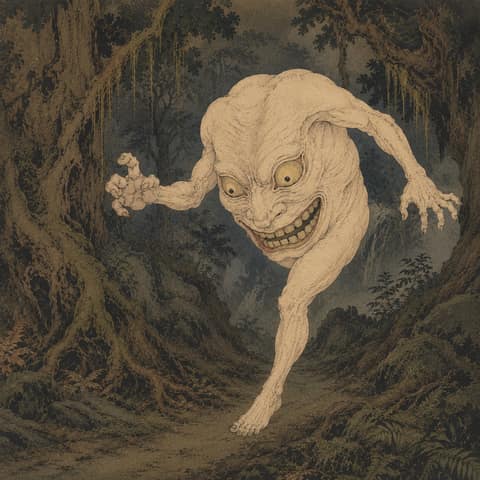
Yamanoke is the mountain creature of a scary story posted on February 5, 2007, to the thread “Shinu hodo share ni naranai kowai hanashi o atsumete minai? 157” on 2channel’s occult board. The poster wrote it in three parts between 10:47 and 10:48 p.m., as something that had happened a week earlier. On a drive with his daughter he turned onto an unpaved side road, the engine died, and they spent the night in the car. That night, with a voice repeating “Ten (Ken?)… sō… metsu…”, something white and featureless, headless and on one leg, came toward the car, hopping and flailing both arms. When it reached the passenger window, it had a face on its chest, and it was grinning. When the poster shouted “You bastard!!”, it vanished, and his daughter sat bolt upright murmuring “I got in, I got in.” The priest at the temple he ran to called it “Yamanoke” and told him that if she was still like this after forty-nine days, she would stay that way for life and never return to her senses. Yamanoke possesses women, the priest said, so had they gone home, it would have taken his wife too. Asked where it happened, the poster answered, “On the border between Miyagi and Yamagata,” and signed off with “Don’t go into the mountains for fun.” On March 8, 2025, a sequel, “Zange (Yamanoke Sequel)”, was published on the fiction site Kakuyomu under the name “Yamano Keita (author of Yamanoke)”. The writer’s profile says they are the one who long ago posted “Yamanoke” and other stories to the scary-story thread on 2channel’s occult board.

Yamabiko

Yamabiko

Epic

yah-mah-BEE-koh

Traditional Figure (Kodama and Mountain-Deity Retainer Interpretation)

Natural phenomena and nature spiritsNagano

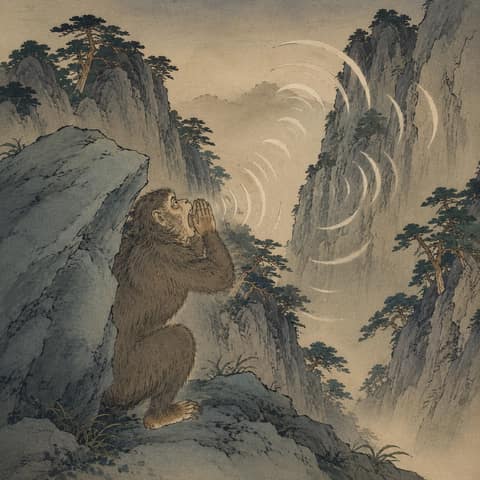
The echo heard in mountains and valleys is personified as Yamabiko—literally “mount echo.” While recognized as a natural acoustic reflection, it’s also told as a mountain spirit, a retainer of mountain gods, a tree spirit (kodama), or a mysterious creature of the deep woods. Picture scrolls sometimes show it with beastlike features. Responding with the exact words it hears, it inspired both awe and caution.

Sanmoto Gorōzaemon

Sanmoto Gorōzaemon

Uncommon

Sanmoto Gorōzaemon

Master of the Inō Mononoke Roku: Sanmoto Gorōzaemon

Mountain & Wilderness SpiritsHiroshima

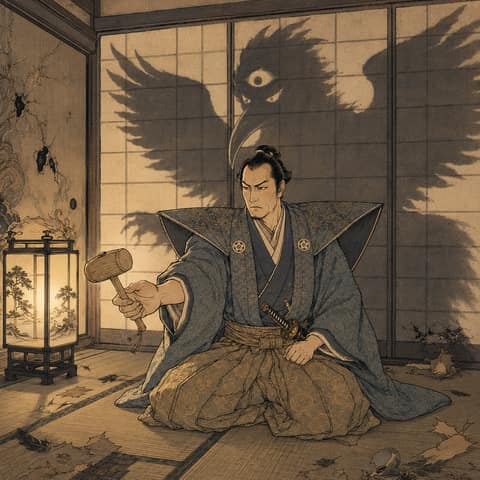
Sanmoto Gorōzaemon is the master of the apparitions in the Inō Mononoke Roku ("Record of the Inō Hauntings"), the story of a month-long haunting of the house of Inō Heitarō, a boy of Miyoshi in Bingo Province. On the final night he shows himself and gives his name. In the manuscript handed down in the family of Hirata Atsutane, on the last night of the seventh month of Kan'en 2 (1749), a stout man of about forty sits down before Heitarō, dressed in a pale blue summer robe and a light yellow kamishimo, with two swords at his waist. Asked who he is, he answers "Yamamoto Gorōzaemon"; the characters 山本 are glossed "Sanmoto", and he adds that "Sanmoto" is written as Yamamoto. When Heitarō asks whether he is a fox, a tanuki or a tengu, he replies that he is no lowly creature like a fox or tanuki, neither human nor tengu, but of the kind of the demon kings. He first came to Japan at the time of the Genpei War, and in Japan the only other of his kind is one called Shinno Akugorō. Gorōzaemon explains that Heitarō had reached a time in his life when misfortune was due, so he came to frighten him, but the boy showed no fear at all and the days dragged on. Now, he says, he is going down to Kyūshū. He leaves Heitarō a mallet: if anything uncanny happens again, he should face north, say "Sanmoto Gorōzaemon, come quickly," and strike a pillar hard with it, and he will come at once to help. Then he steps into a palanquin and, with a retinue of strange creatures, rises into the sky and vanishes. The manuscript closes by noting that the mallet is still at Kokuzen-ji in Hiroshima, Aki Province.

Yamawaro (Mountain Child)

Yamawaro (Mountain Child)

Epic

ya-ma-wa-ro

The Mountain Boy of Western Japan, the Yamawaro

Mountain & Wilderness SpiritsKyushu (yamawaro; mountains of western Japan)

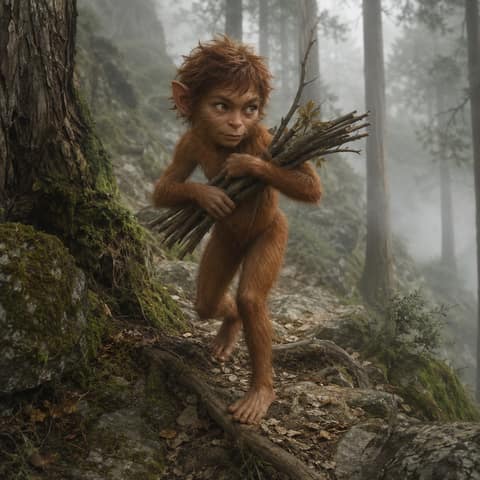
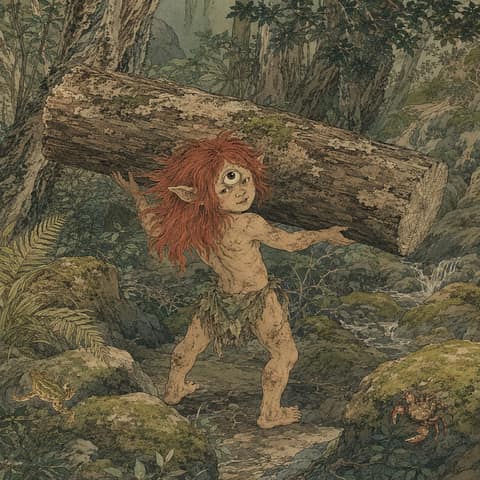
The yamawaro is a yokai of the mountains of western Japan, often said to be the form a kappa takes when it climbs into the hills in autumn. About the height of a child, it has long legs, a body covered in fine hair, and is said to understand human speech. The *Wakan Sansai Zue* records it with long reddish-brown hair, a round face, pointed ears like a dog's, and a single eye above the nose. It is said to lend a ready hand with mountain work, yet it also loves sumo, plays tricks on cattle and horses, and even climbs into people's homes to soak in the bath. In Kumamoto it is told that the creature dislikes the inked line of a carpenter's ink pot, and that drawing such a line keeps it away.

Yamawaro

Yamawaro

Rare

yamawaro

The Mountain Child of Kyushu Migrating Between Mountains and Rivers: Yamawaro

Mountain / Field YokaiNagasakiFukuoka

The *Yamawaro* (Mountain Child) is a mountain monster, sometimes said to have one eye and one leg, passed down as dwelling in the mountains of Kyushu. Terajima Ryoan's *Wakan Sansai Zue* (1712) records that *Yamawaro* exist in Chikuzen Province (Fukuoka Prefecture) and the Goto Islands, describing them as resembling humans with round faces, long red hair covering their eyes, pointed dog-like ears, and a single eye on their nose. Said to be about the height of a ten-year-old child, they appear in mountain huts to steal salt and are fond of eating crabs and frogs. While they help with woodcutting and charcoal-making, demanding sake or rice balls in return, they are also known for their mischievous nature—challenging people to sumo wrestling, playing tricks on livestock, and entering baths without permission. The tradition that kappa move to the mountains and transform into Yamawaro is widely distributed across Kyushu.

Yamauba

Yamauba

Legendary

yah-mah-OO-bah

Yamanba (Traditional Folkloric Form)

Mountain & Wilderness SpiritsKanagawa

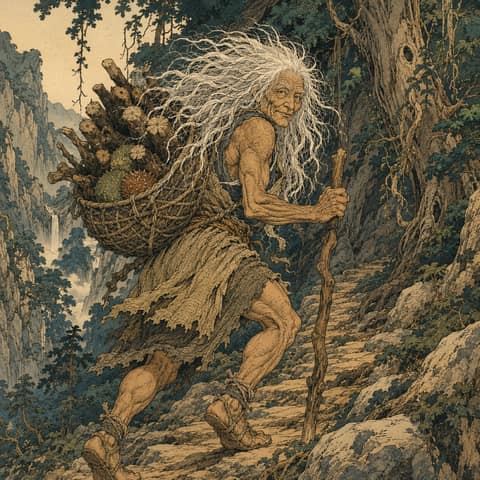
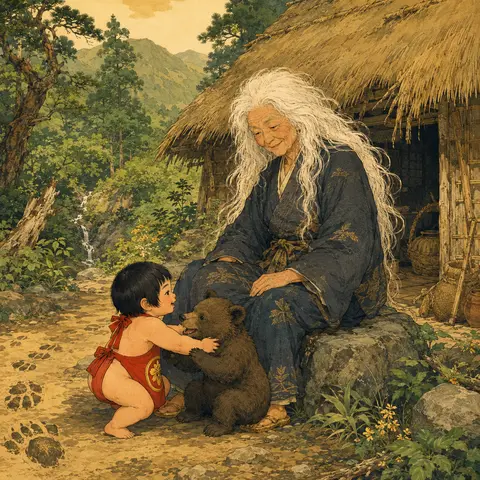
An old witch-like yokai who dwells deep in the mountains. She is also known as the foster mother of the folk hero Kintaro.

Yamauba

Yamauba

Legendary

yah-mah-OO-bah

Mother of Kintaro

Mountain & Wilderness SpiritsKanagawa

An old witch-like yokai who dwells deep in the mountains. She is also known as the foster mother of the folk hero Kintaro.

Yarikechō (Spear Tuft Spirit)

Yarikechō (Spear Tuft Spirit)

Rare

yah-ree-keh-CHOH

Yarigechō (Iconographic Tradition)

Animated Objects & UndeadEdo period, Japan

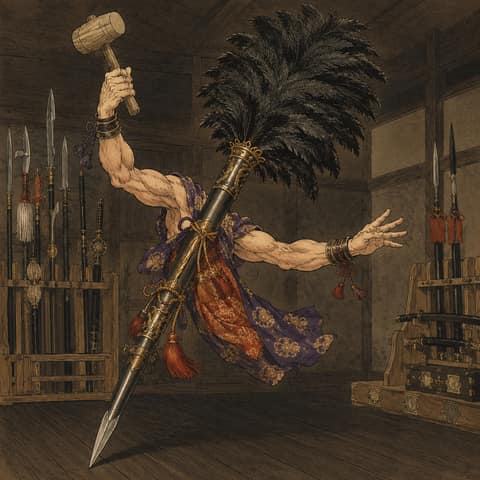
A tsukumogami of a feather-crested spear (ke-yari) depicted by Edo-period artist Toriyama Sekien in Hyakki Tsurezure Bukuro. The spear, adorned with bird plumes at its tip, is said to have gained spirit through long years and storied use. Sekien portrays it leaping about brandishing a mallet. His note hints that a peerless warrior once wielded the weapon, suggesting the renown of a famous spear could awaken its numinous power—an example of an object becoming ensouled.

Yūrei (Ghost)

Yūrei (Ghost)

Legendary

YOO-ray

Toriyama Sekien “Yūrei” (An’ei era)

Ghosts and spiritsAcross Japan

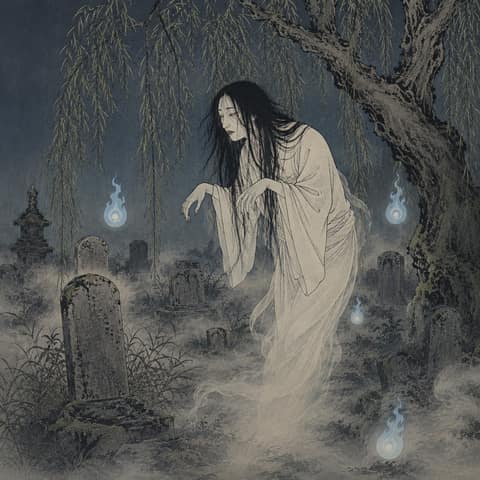
Yūrei are the spirits of the dead who remain in the living world, appearing at night or in places tied to them. They are said to manifest due to lingering attachments, grudges, or insufficient memorial rites. Their now-classic image—white burial robes, inverted or missing feet—became standardized in later periods. They appear at graves, bedside, or former homes, pleading through voice or vision. Buddhist memorial services can pacify them, though powerful resentment is believed to prolong hauntings.

Yuki-onna

Yuki-onna

Legendary

Yuki-onna

The Snow Woman of Snowy Nights, from Haikai to Hearn

Natural Phenomena & Nature SpiritsNiigataTokyo

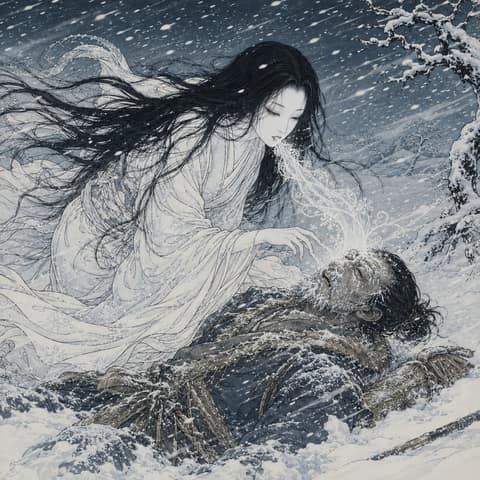
Yuki-onna, the "snow woman," is a yokai said to appear in the form of a woman on snowy nights or snowy mountains. The name was often used in early Edo haikai: in Kagawa Masanobu's survey it appears in haikai books beginning with Takatsukuba (1642), and in Kefukigusa, Yama no i, Konzanshū, Gyokukaishū and others, while Zō yama no i (1667) classes "yuki-onna" as a haigon. Kokon hyakumonogatari hyōban, published in 1686, takes up the yuki-onna beginning with the question "These days the word yuki-onna turns up often in the hokku of haikai. Is there really such a thing?" In book 5 of Sōgi shokoku monogatari, published in 1685, a young woman about one jō (some three meters) tall appears in a bamboo grove in Echigo. Her skin is so white it seems transparent, and a companion explains that she is the spirit of the snow, the thing called yuki-onna. Toriyama Sekien drew her in Gazu hyakki yagyō (1776) as a woman in white standing among snow-laden bamboo, labeled "Yuki-onna". Local traditions give her many different forms and ways. In Tōno monogatari (1910), the yuki-onna comes out to play with a crowd of children on the night of Little New Year or on a winter night of full moon, and children were warned to come home early on the fifteenth because the yuki-onna would be out. In Niigata, the footprints of the yuki-onna were dotted with blood, and anyone who met her was sure to be killed. At Tateshina in Nagano she did no harm, and would lay a great tree that woodcutters had felled across a valley overnight to make a bridge. The best-known story today is "Yuki-Onna," which Lafcadio Hearn included in Kwaidan in 1904. On a snowstorm night in a ferryman's hut, the snow woman freezes the old woodcutter Mosaku with her white breath, spares the young Minokichi and swears him to silence. Later she becomes a girl named O-Yuki, marries Minokichi and bears him ten children. When he tells of that night, she reveals herself, spares him for the children's sake and vanishes as a white mist.

Snow Elder

Snow Elder

Uncommon

YOO-kee-jee-jee

Elder of Snow Standing in the Mountains

Natural Phenomena SpiritsMountain regions of Tohoku, Hokuriku, and Koshin (uncertain)

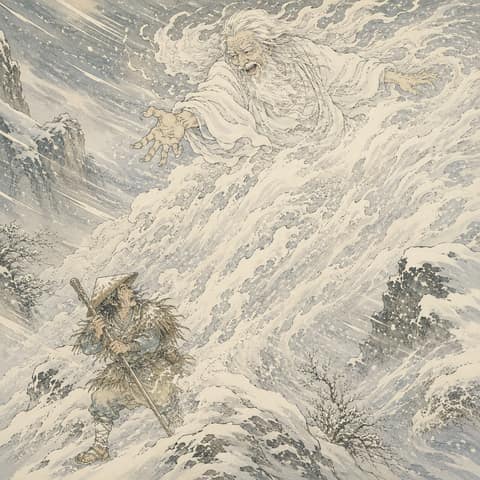
The Snow Elder is a snow-born yokai appearing as an old man in deep, snowbound mountains. He shows himself during blizzards to mislead travelers, startling them off-course. He is sometimes grouped with the Yuki-onna and Yuki-nyudo as a snow-related apparition. Some say he is the transformed spirit of those who perished in winter mountains, or a manifestation related to a snow deity; details remain uncertain.

Yukijoro

Yukijoro

Rare

ゆきじょろう

The Snow Princess Descended from the Moon: Yukijoro

Natural Phenomenon / Nature SpiritYamagata

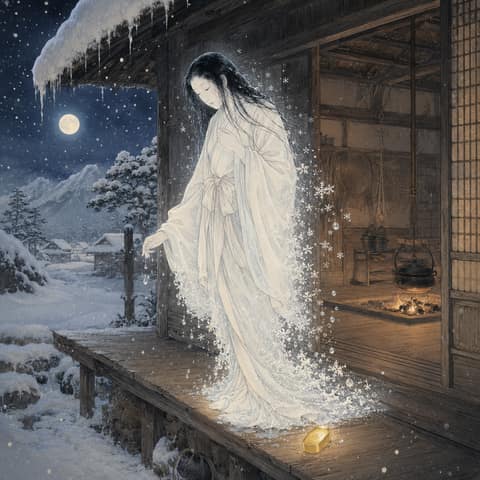
The *Yukijoro* is a lineage of snow women (*yuki-onna*) passed down in Yamagata, the heavy snowfall region of Dewa Province. While snow women across the country are generally spoken of as terrifying beings that freeze people to death, Yamagata's *Yukijoro* has a distinct regional flavor: she has a side that rewards human compassion with blessings, and a unique origin story claiming she descended from the world of the moon . On snowy nights, she appears as a woman wrapped in white garments, visiting houses to ask for lodging. In the Oguni region, it is said that the *Yukijoro* was originally a princess of the moon world who descended to earth with the snow but became unable to return, showing her form only on nights illuminated by the snow's glare . The sensibilities of people surviving heavy snow and long winters—fearing the snow yet also cherishing it—are projected onto the image of this *Yukijoro*.

Yuki-warashi (Snow Child)

Yuki-warashi (Snow Child)

Uncommon

Yuki-warashi

The snow child of the Narcissus Month

Natural phenomena and nature spiritsGifuWakayama

The yuki-warashi is a snow spirit in the form of a child who makes the snow fall. In Miyazawa Kenji’s children’s story “The Fourth Day of the Narcissus Month” (in Chūmon no ōi ryōriten, 1924), where the name is read “yuki-warasu,” he wears a three-cornered cap of polar-bear fur, has cheeks like apples, cracks a leather whip to drive the snow wolves, and raises a blizzard at the command of Granny Snow (yukibango). Human eyes cannot see him, and his voice sounds only like the wind. Folklore reports tell of similar figures: small hollows in the snow are said in Kii to be the footprints of a one-legged little boy called the yukibō, and in Hida those of a one-eyed, one-legged yuki-nyūdō.

Showing 1 - 24 of 32 yokai