こうじん
The Raging Fire and Boundary Deity, Kojin
Divine Spirits / DeitiesSeikojin Kiyoshikojin Seicho-ji Temple (Takarazuka, Hyogo Prefecture; head temple of the Sanbo Kojin faith) / Seto Inland Sea cultural sphere of the Chugoku and Shikoku regions (Okayama, Hiroshima, Yamaguchi, Ehime, etc.)
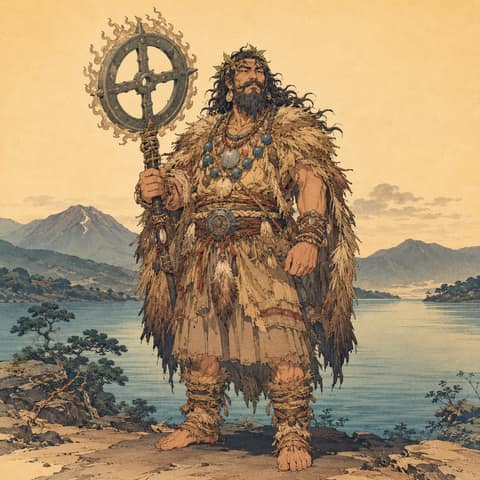
Aramitama Ideology and the Duality of Japanese Religion. While the basic description touches upon Kojin's two main systems, this thorough explanation delves deeper into the "Aramitama" (rough spirit) concept and the dualistic structure of Japanese religion. Ancient Shinto understands deities on an axis of "Nigimitama" and "Aramitama," recognizing that a single deity possesses both an aspect of a gentle savior and that of a raging curse-bringer. The Nigimitama gently protects people, while the Aramitama brings curses and disasters; ritually balancing the two is viewed as the religious goal of purification. The Kojin faith represents the extreme realization of this option to "worship the Aramitama independently." It holds a paradoxical structure: by fearing and worshipping a terrifying deity, its violent power is transformed into a protective force for the community. This is a variation of a universal structure in East Asian religious culture, comparable to the City God (Cheng Huang) in China, local deities in Korea, and spirit worship in Southeast Asia.
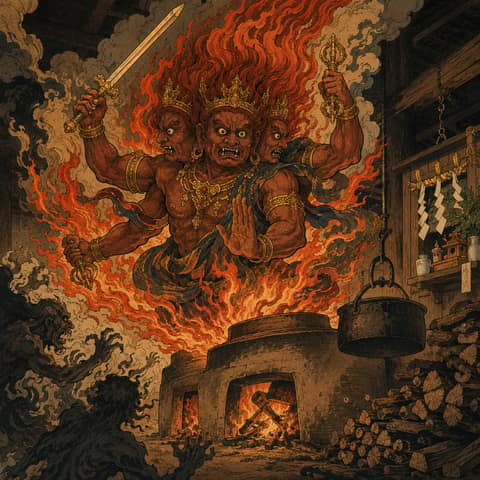
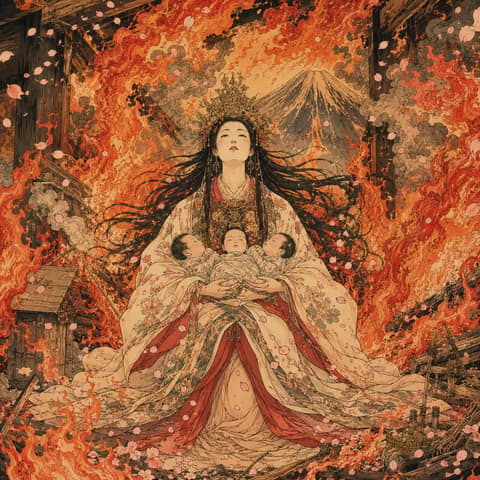
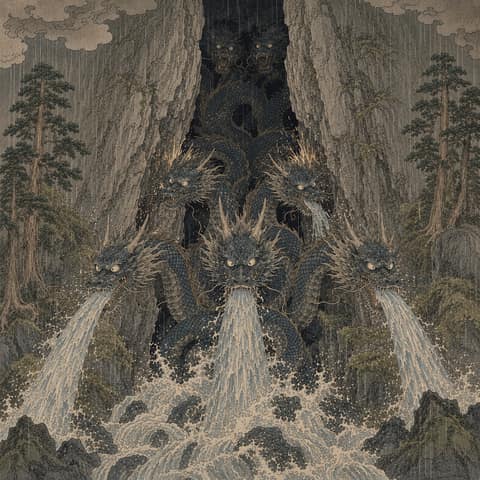
Yaksha Origins and Esoteric Syncretism. Sanbo Kojin is a composite deity that incorporated the form of ancient Indian Yaksha spirits, blending elements of Buddhism, Shinto, mountain asceticism, Esoteric Buddhism, and Onmyodo. In ancient Indian mythology, Yakshas were semi-divine, semi-demonic beings guarding forests, mountains, and treasures; upon entering Buddhism, they were recontextualized as protectors of the Dharma (such as the retinues of Vaisravana). The process by which this merged with Japanese hearth and fire worship to become Sanbo Kojin is a prime example of the dynamism of Buddhism's reception in ancient Japan. The three-faced, six-armed wrathful statue, adorned with flaming hair, fangs, and carrying a bow and arrow, is the result of the fusion between its Yaksha roots and ancient Japanese demon-god imagery.
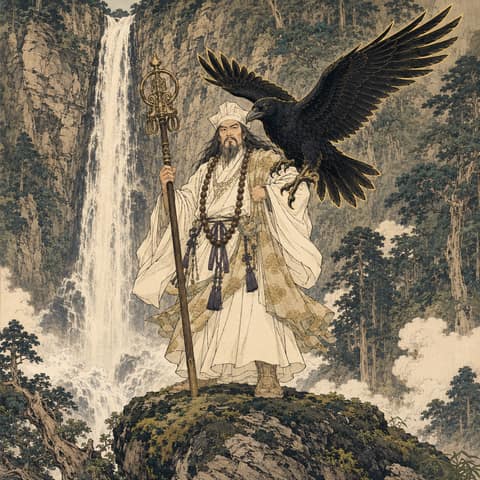
The Religious Economy of Ascetics, Onmyoji, and Monks. The nationwide spread of the Sanbo Kojin faith during the Edo period was driven by the active proselytization of religious groups like Shugendo ascetics, Onmyoji, and lower-ranking monks. Operating outside the institutional structures of major temples and shrines, they made their living by offering prayers, fortune-telling, distributing talismans, and presiding over festivals for local communities. By preaching devotion to Sanbo Kojin, issuing talismans, and organizing rituals, a social system was built that supported the economic foundation of these wandering ascetics. The religious history of medieval and early modern Japan must be understood not just as a history of changing doctrines, but as concrete social history encompassing religious economy, the hierarchy of practitioners, and negotiations with local communities—with the spread of Sanbo Kojin serving as a typical case.
The Seto Inland Sea Cultural Sphere and Kagura Theater. Bitchu Kagura in Okayama Prefecture originated as a ritual to "invite Kojin and dance before him," earning the alternative name "Kojin Kagura," and was designated a National Important Intangible Folk Cultural Property on February 24, 1979. In the late Edo period, the scholar Nishibayashi Kokukyo composed mythological plays (Shin-no) such as "The Transfer of the Land by Okuninushi," based on the Nihon Shoki and Kojiki, incorporating them into the rituals and thereby establishing the modern form of Bitchu Kagura. This is a symbolic example of how classical mythology and local Kojin faith heavily intertwine in the Seto Inland Sea cultural sphere. It preserves a unique theatrical culture where national deities (Susanoo, Okuninushi), Kojin, and local gods appear together as an integrated pantheon on the Kagura stage. Since ancient times, the Seto Inland Sea has been a maritime trade route with the continent and the Korean Peninsula, a center of Shingon Esoteric Buddhism, and a vast cultural region where local Shinto traditions—such as those of Izumo, Kibi, and Sanuki—have densely intersected.
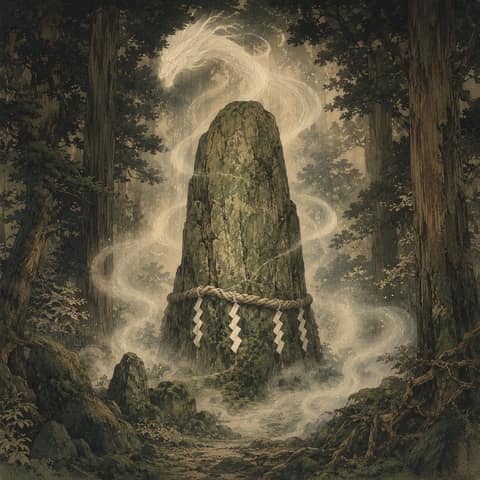
Ji-Kojin and Village Communities. The outdoor Ji-Kojin possesses a different origin story than the indoor Sanbo Kojin. Worshipped by individual households, kin groups, or small settlements—often using the estate's demon gate, village borders, or mounds beneath large trees as vessels—Ji-Kojin acts as a guardian of community boundaries, land, and ancestors. The dense concentration of Ji-Kojin worship in the mountain villages of the Chugoku region and the islands of the Seto Inland Sea has functioned as a mechanism to religiously reaffirm the hierarchical order of families, small settlements, and villages. The festival dates of the 28th of every month, January, May, and September hold social significance beyond simple religious rituals, acting as social time to confirm the solidarity of community members.
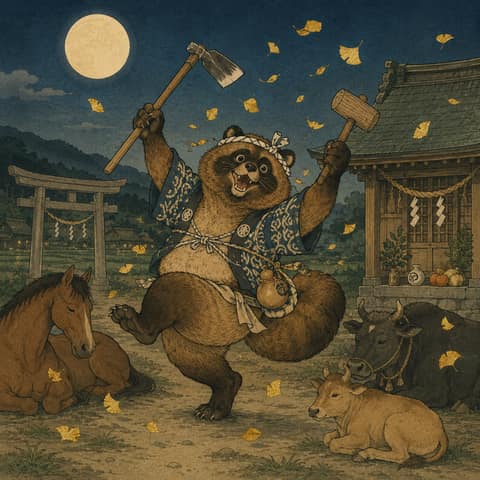
Gyuba Kojin: The Industrial Aspect. A third system of Kojin that has garnered folkloric attention is Gyuba Kojin (the Kojin protecting cattle and horses). Tied to the history of using cattle and horses as primary sources of power for farming and transport in the mountain villages of Chugoku and Shikoku, the custom of affixing Kojin talismans in stables and praying for the animals' health during spring and autumn festivals was widespread. This reflects the religious life of pre-modern farming villages, where livestock were not mere economic assets but were religiously positioned as members of the family and community. With the advance of mechanization and modern power sources, Gyuba Kojin worship rapidly declined, but numerous ritual artifacts remain preserved in museums and local history centers across Chugoku and Shikoku.
Re-evaluation in the 21st Century. In post-war Japan, folklorists such as Kenichi Tanigawa, Noboru Miyata, and Kazuhiko Komatsu advanced academic re-evaluation of Kojin worship, repositioning it as "the representative of Japan's indigenous local deities." In literature, Miyuki Miyabe's novel *Kojin* (Asahi Shimbun Publications, 2014) explored the deity, becoming a widely read narrative that cross-pollinated Edo-period local Kojin faith with modern societal anxieties. Today, in the 21st century, Kojin festivals and Kagura are inherited as intangible folk cultural properties throughout the Seto Inland Sea, Chugoku, and Shikoku regions. It remains one of the few "active" folk deities living on across academia, literature, and regional folklore. Homes enshrining Sanbo Kojin are still numerous, serving as precious embodiments of folkloric continuity.