YOKAI.JP

Traditional Yokai Encyclopedia

Yokai passed down through the ages

473 Yokai|15 Category|Page 8 of 20
Localization in Progress - More content available in Japanese version
View Japanese
Sort by: NameAscending
Iso-onna (Shore Woman)

Iso-onna (Shore Woman)

Epic

EE-soh-OHN-nah

Toma-Shunning Nure-Onna

Aquatic SpiritsKumamotoNagasaki

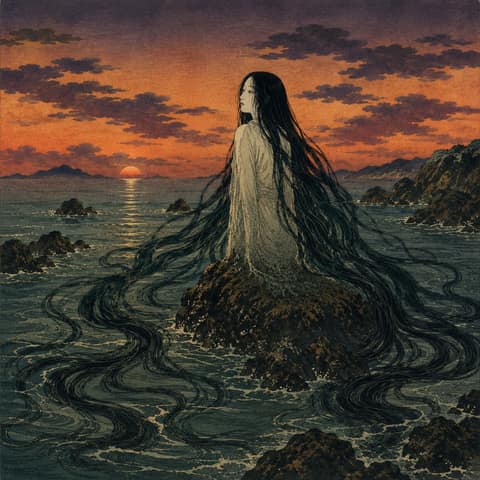
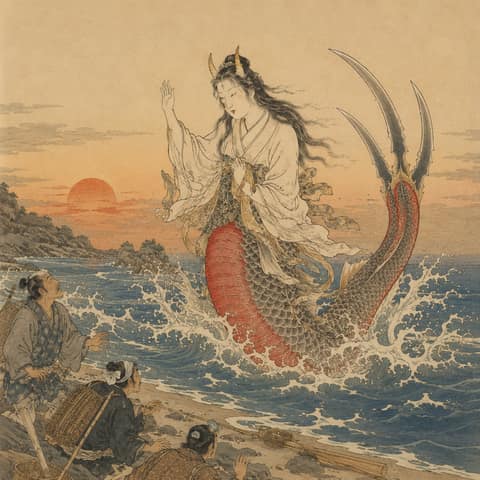
Among the coastal Nure-onna of northwestern Kyushu, a variant that particularly despises the handling of reed mats and thatch is called the Toma-Shunning Nure-Onna. On windless nights she appears on the beach without leaving footprints, a young woman from the waist up with black hair slicked by brine, shell-pale skin holding the moon, and eyes that reflect the distant whitecaps offshore. Below the waist she is indistinct like sea-mist, and if trod upon there is only sand with no true form. From behind she bears a jagged, craglike shadow like a collapsed rock face, and if one’s gaze falters she seems nothing more than a shore rock. Drawn by the hush of a calm, she stares seaward; if her name is called or a careless voice is thrown at her back, she answers with a shrill cry. The scream overlaps the roar of the tide and cuts the ears, her loosened hair stretching like wet seaweed to entangle the caller. Each briny strand bites the skin like the barb of a fishhook and is said to draw up warm blood along the hair. Yet if three old thatch stems from a reed mat are placed over the chest not as a cross but in the shape of the character for river, her hair recoils from the thatch, and she cannot step on the edge of the mat, only drip seawater in frustration from the gunwale. She favors boarding boats by their stern line; if a stranger’s harbor leaves the stern line set, at midnight she will crawl up it, slip in over the rail, and drape her hair over sleepers’ faces to steal their breath. Thus old fishermen followed the rule of taking in the stern line when calling at a port, dropping only the anchor and keeping watch at the bow while reading the wind. She is susceptible to the human-made ideas of knots and naming in ropes; if the rope is cinched hard while whispering the owner’s name three times, she cannot unravel that name and cannot travel along the line. Though drawn by the grudges of the drowned, she does not harm indiscriminately. When she sees discarded reed mats or thatch, or cut ropes drifting in the tide, she scents the neglect of the hands that wove them and approaches their owner’s boat. Conversely, those who dry nets and mats without letting the ends trail into the sea or blocking the tide’s path may find her invisible presence come near and, by the creak of moorings, warn of a calm about to break, old skippers say. In parts of the Fukuoka coast, it is said she walks the water not for lack of feet, but because she avoids reed mats, stepping only on the thinnest skin of the waves. Northern Kyushu has a crab-incarnation theory, but this Nure-Onna does not hate crabs; rather, when shore crabs scuttle, she draws in her hair and returns to rock. Her name varies by place—Iso-Onna, Nure-Onna, Sea Princess—but her ties to the etiquette of thatch and rope are constant. To avoid her: do not call to a woman’s back on a night beach, do not leave a stern line fast in unfamiliar ports, and place three thatch stems in a river shape where you sleep. Keep these and she will only turn her white offshore eyes toward you, then blend into rock-shadow and unravel into the tide mist, leaving only her presence to be told as footprints that were never there by morning.

Iso-onna (Shore Woman)

Iso-onna (Shore Woman)

Epic

EE-soh-OHN-nah

Isonna of the Aft-Rope Crossing

Aquatic SpiritsKumamotoNagasaki

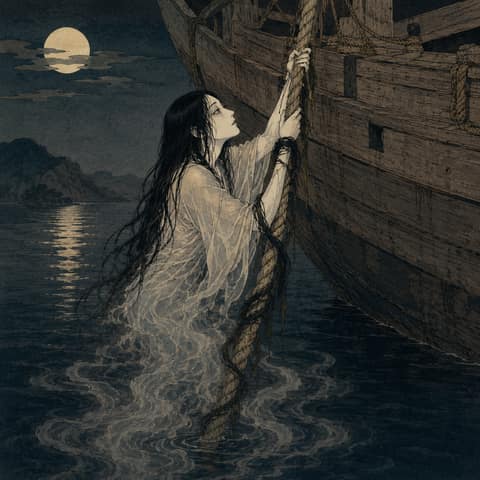
A feared variant along Amakusa and the Shimabara Peninsula, named for slipping aboard by following the aft mooring rope. She appears as the upper body of a young woman scented with the sea, while her lower half is hazy and shifting like wave-shadows. Her long wet black hair constantly streams from her chest to the floor, branching into fine threads that cling to human skin. When a hush falls over the harbor at midnight, she stands in the lee of the shore or at a stern’s tip staring seaward, and will either echo the name of anyone who calls to her or answer with a piercing scream. At that cry she reaches a white hand to the aft rope, crosses soundlessly onto the boat, shrouds a sleeper’s face with her hair, and twists up blood strand by strand. By morning only a tide stain and a thin ring of hair remain at the pillow. Said to be the shape taken by the regrets of the drowned or a love unfulfilled by one who waited at the harbor, she is known as an isonna and also as nure-onna. The practice of avoiding the aft rope comes from this variant’s habit of treating ropes as roads. So long as she touches a line she can climb anywhere, but she does not swim about recklessly and prefers calm surfaces. On thin-moon nights some have seen her walk the water from shore, but only when the harbor tide lies asleep. She is weakened by light and prayer, so fishermen in unfamiliar ports avoid taking the aft rope, drop only the anchor, and keep the gunwale light burning. In Shimabara it is said that placing three dry thatch reeds from a roof upon one’s kimono while sleeping prevents tangling and wards her off. Those who touch her hair are seized by chill and lethargy, and the roar of the sea lingers in their ears for days. She is merciless toward mockery and rudeness, targeting first those who call her name without honorifics or taunt her with whistles. Conversely, she is said to avoid boats whose crews offer prayers for the lost at sea. Some tales claim that if you move behind her she resembles a rock shadow, and under moonlight her back becomes the outline of a wet reefs tone to let waves pass. The Isonna of the Aft-Rope Crossing is a grudge born at the liminal space of the harbor, hard to approach for those who keep the code and unforgiving toward arrogance, dropping her hair without mercy.

Isonade

Isonade

Epic

EE-soh-NAH-deh

Iso-nade (Traditional Accounts)

Aquatic SpiritsSaga

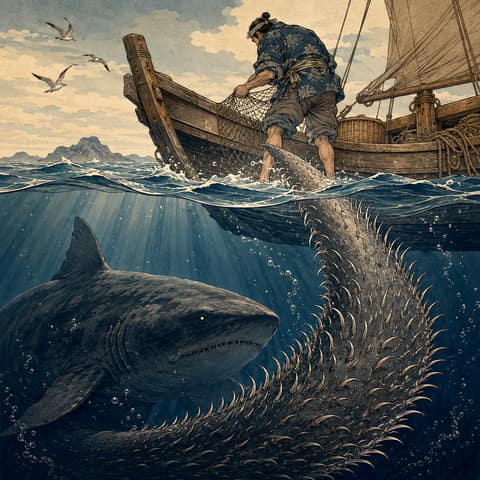
A consolidated portrayal of the Iso-nade based on Edo-period strange tales and materia medica notes. It approaches without ruffling the sea’s surface, signaling itself only through shifts in sea color and wind. Its body is shark-like, said to bear coarse protrusions and needle-like organs from tail to back. It most often appears in seasons of cutting cold winds and was especially feared on days of strong northerlies. Seafarers avoided boisterous work, stowed nets and ropes, and kept away from the rail—customs passed down as seamanship to prevent disaster. Names and details vary by region, but the core remains an unseen approach that is noticed too late and the terror of being swept overboard by a single strike of the tail. Early modern records also frame it as a narrative of maritime hazard awareness and caution.

Issun-boshi

Issun-boshi

Legendary

EE-soon BOH-shee

Issun-boshi of the Needle-Sword and Schemes

Human-Yokai / Half-Human Half-YokaiOsakaKyoto

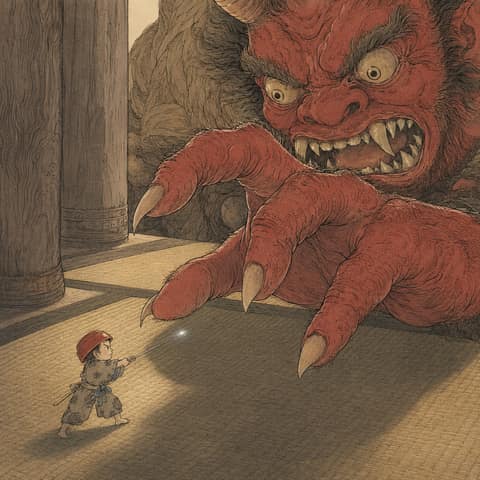
This interpretation shatters the illusion of the "innocent and brave little person" sanitized by later children's literature, restoring his true nature as the "extremely ambitious and cunning trickster" depicted in the original Muromachi *Otogizoushi*. This version of Issun-boshi carves out his destiny not through martial force, but through advanced psychological manipulation (off-board tactics) and amoral scheming. His greatest defining trait is his abnormal "upward mobility." Burdened with the supreme handicap in human society—a height of merely one sun (about 3 cm)—he never abandons his ambition to take a powerful man's daughter as his wife and achieve worldly success. His method of framing the princess using the "rice grain scheme," having her disowned by her father to socially isolate her, and creating a state of complete dependence on him, displays a cold-blooded Machiavellianism that puts modern psychopaths and con artists to shame. Even in his battle with the oni, he does not fight fair and square. He turns the desperate situation of being swallowed whole to his advantage, executing a gruesome internal destruction (assassination technique) by continuously stabbing the oni's internal organs from the safety of its body (stomach and eyeballs) with his needle-sword. Finally, he robs the oni of its treasure, the "Miracle Mallet," using it to rapidly grow his body and ultimately obtain the ultimate social status of a "perfect human man." He represents the darkest and most realistic rags-to-riches hero in Japanese literary history, overturning his inherent, irrational handicaps entirely through intellect, lies, and the plunder of otherworldly power (the oni's treasure).

Ita-oni (Board Demon)

Ita-oni (Board Demon)

Uncommon

EE-tah-oh-nee

Canon-Concordant (Based on Tradition)

Household SpiritsCourtly and aristocratic residences around Heian-kyō (Kyoto), Japan

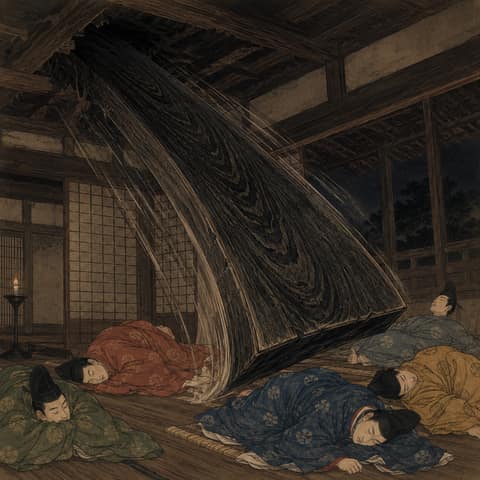
Drawing on the Konjaku Monogatari-shū, later scholarship calls it “Ita-oni” (Board Ogre). The entity is either a board itself or a phenomenon dwelling in a board, taking a plank-like form that juts from roof beams or lattices. Its motive and will are unstated, but its core act is crushing sleepers to death. In Heian court and aristocratic residences, night watch and gate duty were crucial, and tales of the uncanny often served to reinforce discipline. Here too, it bypasses two armed men and strikes a defenseless sleeping place, embodying the ethic that negligence invites death. While it aligns with the idea of spirits inhabiting objects, it lacks tales of aging into autonomy or growth, and is told as a transient manifestation of a specific board appearing to suit the scene. There are no records of pursuit or capture, and it appears and vanishes swiftly without leaving traces.

Itsumade

Itsumade

Epic

e-tsu-mah-deh

The Death-Bringer that Cries "Itsumade": Itsumade

Animal YokaiKyotoShiga

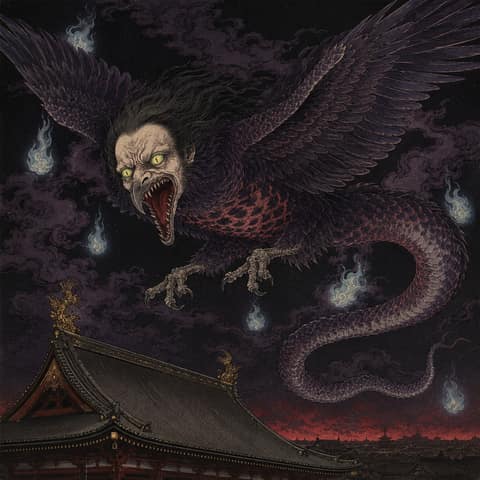
This version, 'The Death Herald Crying Itsumade (Until When) / Itsumaden', goes beyond being a mere physical monstrous bird, highlighting its aspect as an 'ominous bird of prophecy' that embodies the anxiety of its era's society. In the *Taiheiki*, the appearance of this monstrous bird coincides with the political upheaval of the Kenmu Restoration (1334). The bird's cry of 'Itsumade (Until when?)' superficially incites the fear of death from plagues. However, in a literary and historical context, it acts as a political allegory, representing the agonizing cries of the common people exhausted under Emperor Go-Daigo's direct rule: 'Until when will this war and suffering continue?' In medieval literature, a monster appearing on the roof of the Emperor's palace (Shishinden) signified a warning from heaven (heavenly punishment) against the instability of royal authority and a lack of virtue. Furthermore, the sequence of exterminating this monstrous bird strongly mirrors the 'template' of Minamoto no Yorimasa's 'Nue extermination' in *The Tale of the Heike*. The structure—an unidentified chimera appearing at the night palace, its subjugation by a master archer, and the subsequent reward from the Emperor—served as an epic device to heroicize Oki Jirozaemon Hiroari as a 'new Yorimasa', thereby decorating the authority of the Kenmu government that commanded him. However, while the Nue cried with a voice 'like a bulbul', this bird uttered the clear, human-like words 'Itsumade', imbuing it with a much more direct curse upon its era. During the Edo period, when Toriyama Sekien drew it in his *Konjaku Gazu Zoku Hyakki*, he added the depiction of it breathing terrifying flames from its mouth. The original text of the *Taiheiki* contains absolutely no mention of it breathing fire. This is thought to be the result of overlaying the imagery of mysterious lights flying in the night sky and the 'Kasha' (fire chariot) that carries the resentment of the dead. The visual impact of this 'flame' and 'nocturnal monstrous bird' decisively shifted its interpretation in the later Showa period toward a vengeful spirit, described as 'a monster born from the resentment emitted by abandoned corpses.' In this version, Itsumaden is not merely a bird of prey that attacks people; it is closer to an 'arbiter' that manifests using the resentment of those who died with no one to mourn them and the distortions of society as its energy. Therefore, its cry functions as a cold herald of death, striking directly at the listener's mind more than any physical attack could, questioning: 'Until when will your fate (or your sins) hold out?'

Ittan-Momen

Ittan-Momen

Epic

ee-tahn moh-men

The Strangling Cloth of Satsuma's Night Sky: Ittan-Momen (Folklore Version)

Household SpiritsKagoshima

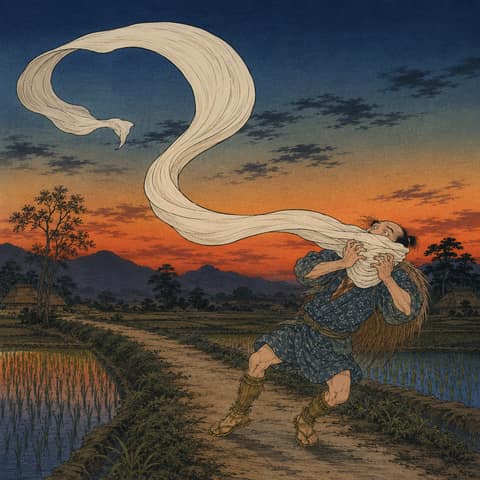
Completely stripped of the pop-culture motif of a "friendly yokai with eyes and a mouth that speaks a local dialect" depicted in later anime and manga, this interpretation faithfully reproduces the "fundamentalist terror" of the oldest folktales passed down in the Osumi Peninsula of Kagoshima Prefecture. This version of the Ittan-Momen is depicted as an entirely "Faceless, silent assassin" completely incapable of communicating with humans. The core of its terror lies in its overwhelming "silence" and "otherness." On dimly lit paths between rice paddies at dusk, or at the edge of deserted woods at night, it glides down from the sky just like an ordinary piece of white cloth, making no sound of flapping wings or footsteps. Then, it silently descends from above the target's head, completely covering the human's entire face with the sensation of cold, damp cloth, and rapidly suffocates them by wrapping tightly around their neck multiple times. Since it is merely a long piece of cloth with no eyes, nose, or mouth, the victim can neither read its emotions nor beg for their life; they are simply robbed of their sight and breath in the darkness, experiencing the ultimate "claustrophobic terror." Furthermore, it is accompanied by a highly gruesome episode showing that it is not merely a "moving piece of cloth (a tool spirit)." A man who was attacked by this apparition on a dark road and was about to die of suffocation unsheathed the wakizashi (short sword) at his waist and frantically slashed at the cloth wrapped around his face. At that moment, the cloth instantly vanished into the darkness, but the blade of the sword left in the man's hands was thickly smeared with warm "fresh blood." This vivid, physical tale of confrontation—where "slashing it causes it to bleed"—strongly suggests that the Ittan-Momen is not merely a trick of the wind or a cloth monster, but an unidentified "fleshy, grotesque predator," brilliantly embodying the primal fear lurking in the rural darkness.

Iwanabōzu (Monk Trout)

Iwanabōzu (Monk Trout)

Uncommon

ee-wah-nah-BOH-zoo

Iwaname Monk (Tradition-Faithful)

Animal ShapeshiftersGifu

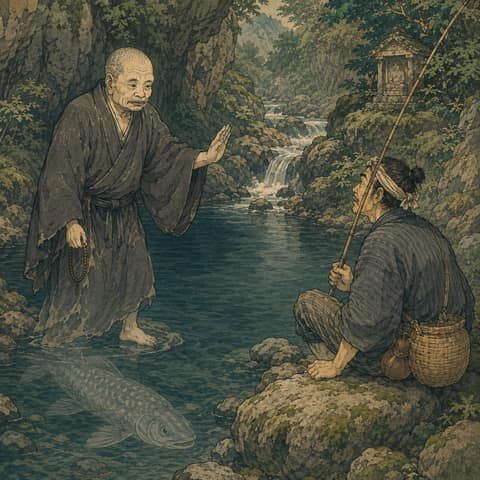
Based on Edo-period records and regional folktales. An aged char trout appears in the guise of a Buddhist monk and speaks to anglers. It often urges moderation, citing the temple’s domain or the pool’s lord, and departs quietly if given alms. Later it may be caught as a great char, where rice or rice cakes given as alms are found in its belly, revealing its identity. The motif reflects reverence for river and pool guardians and ideas akin to eel and other water deities. Depending on region, it appears as a harmless, didactic type, a warning type bearing deadly poison, or a salvific type that sacrifices itself to stop a levee breach, yet all embody folk norms that safeguard the boundary between waters and livelihoods.

Iyaya (Negaya)

Iyaya (Negaya)

Rare

ee-YAH-yah

Sekien Iconography Standard

Household SpiritsUncertain; Japanese folklore

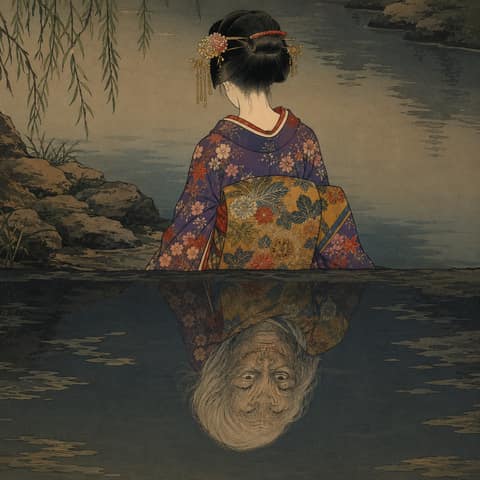
Adheres strictly to Toriyama Sekien’s image and notes, avoiding later embellishments. The yokai is shown as the back view of a young woman standing by water, while the surface reflects the visage of an old man. The name draws on Dongfang Shuo’s “kaizai” expressions of wonder, suggesting Sekien likely fashioned an allegory. Youth and age, beauty and ugliness, front and back are opposed within a single frame, read as a design warning against being deceived by appearances. Firm oral traditions are scarce, so its character is defined largely through image interpretation. The readings iyaya or iyami vary by source, possibly evoking refusal or repulsion akin to “no,” but the literature offers no certainty.

Izutamahiko no Mikoto

Izutamahiko no Mikoto

Divine

izutamahiko

Guardian Deity of Mount Zozu, Izutamahiko no Mikoto

Divine Spirit/DeityKagawa

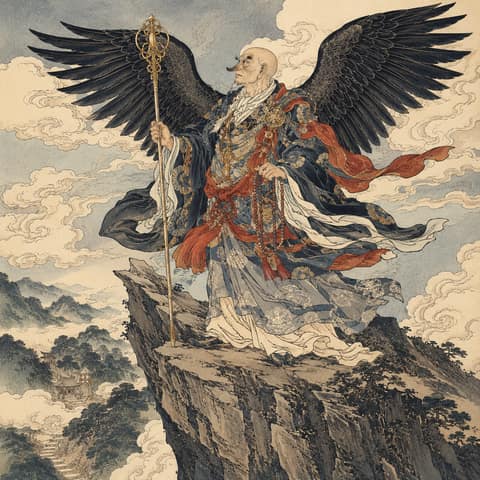
Izutamahiko no Mikoto is a rare deity whose existence traces three stages of elevation: originally a real high-ranking monk, Kongobo Yusei (the fourth head of Konkoin, died 1613), who became a tengu and guardian spirit after death, and was finally redefined as a Shinto deity during the Meiji era's separation of Shinto and Buddhism. While the principal deity Konpira (Omononushi) originates from a foreign water god (Kumbhira) and presides over "maritime protection," Izutamahiko no Mikoto embodies the lineage of "mountain asceticism and tengu worship." The dual structure of the Mount Zozu faith—where a god of the sea and a tengu of the mountain reside together—is demonstrated through the relationship between the principal deity and the deity of the Okusha (Inner Shrine), making this deity highly significant in religious history. The Okusha, Izutama Shrine, sits at an altitude of 421 meters, 1,368 steps away from the main shrine, and is considered the second holiest site of Kotohira-gu.

Jami (Evil Miasma Spirit)

Jami (Evil Miasma Spirit)

Rare

JAH-mee

Iconographic Interpretation Version

Half-Human BeingsChina

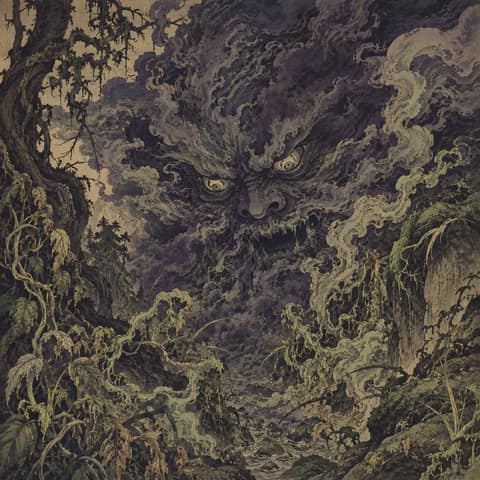
This version organizes the image of the Jami as an example of Sekien aligning a Chinese-origin demonic concept within Japan’s yokai system. Its original sense is “pernicious enchantment,” classed among chimi, a noxious presence born from the gloom of mountains and wastelands that harms body and mind. Its form is not fixed in classical texts, and images function more as visualizations of an idea. The effects fall between illness and invisible curse—fever, hallucination, frenzy—sometimes triggered by contact with resentment or defilement. Countermeasures include bans, talismans, and wards; traditions speak of drawing a prison on the ground to summon and seal, binding it by asking its name, or transferring it into a vessel. In Japan it rarely became an object of distinct cult, often treated as a generic term alongside more-ryo. In folk terms it is distinguished from miasma, mononoke, and tsukumogami, a high-abstraction yokai appearing where the chill of wild places intersects with human grudge.

Jiosenbi

Jiosenbi

Uncommon

じおうせんび

The Vengeful Fire of the Jiosen Peddler Lit at Izuminawate on Rainy Nights

Natural Phenomena / Natural SpiritsShiga

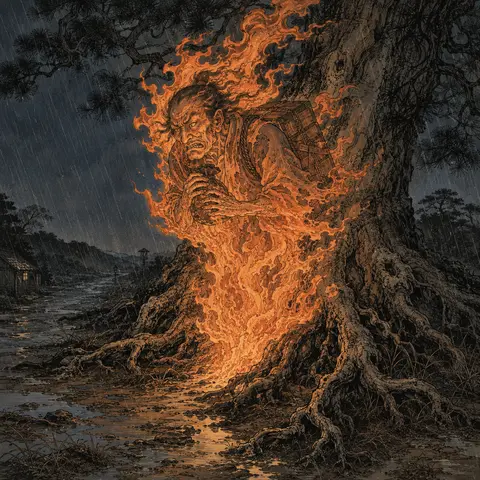
Even among early modern ghost fire tales, the Jiosenbi is a rare example where "who, where, and why" are told in concrete detail. The victim is not a nameless monster, but a peddler selling a real-life sweet called Jiosen, and the scene is the Hizagashira Pine at Izuminawate near the Tokaido's Minakuchi post town—a large tree whose location people could identify. The conditions for the fire's occurrence are also restricted to "rainy nights." It is thought that the experience of seeing will-o'-the-wisps or fox fires on humid nights became intertwined with memories of murders along the highway, solidifying into a single ghost story. The fire as a symbol of obsession with money connects to the lineage of grudge tales born from the monetary economy of early modern cities. As an apparition rooted in the land of Minakuchi, Koka District, it holds value in being passed down alongside other local entities like the Katawa-guruma and Koka Saburo.

Jorōgumo (Enchanting Spider)

Jorōgumo (Enchanting Spider)

Legendary

jo-ROH-goo-moh

Tradition-Faithful Jorōgumo Archetype

Animal ShapeshiftersShizuokaNagano

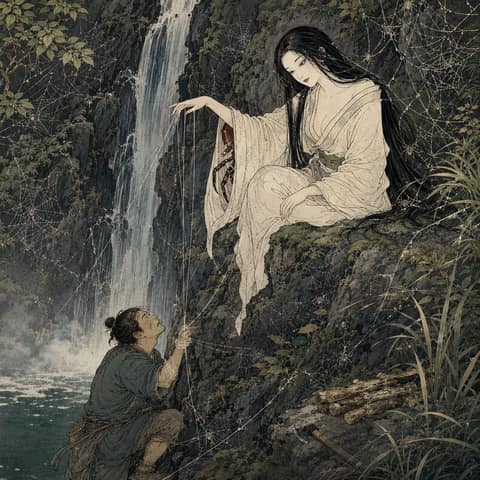
A Jorōgumo based on the canonical image found in Edo-period sources. A great spider, having aged into a yokai, assumes the form of a young woman or a mother and child to exploit lapses in human judgment. She appears at liminal places such as waterfalls, deep pools, verandas at the edges of mountain villages, and abandoned houses, casting many layers of silk to bind victims and dull their judgment through sleep or enchantment. Toriyama Sekien depicted her commanding fire-breathing spiderlings, helping fix motifs of acting in groups and fleeing into the upper parts of houses such as the attic. In some regions she is deified as a protector against drowning, with stones or small shrines raised in her honor. Many tales end with her being thwarted by human wit—cutting her threads and tying them to a stump, or seeing through her disguise—while others warn of taboos where breaking a vow of secrecy brings death, or of fatal infatuations that drain one’s life. This profile avoids modern embellishment and stays within the breadth of existing tradition.

Kainan-bōshi (Drowned Monks of the Sea)

Kainan-bōshi (Drowned Monks of the Sea)

Uncommon

KAI-nahn BOH-shee

Tradition-Faithful Izu Seven Islands Type

Aquatic SpiritsTokyo

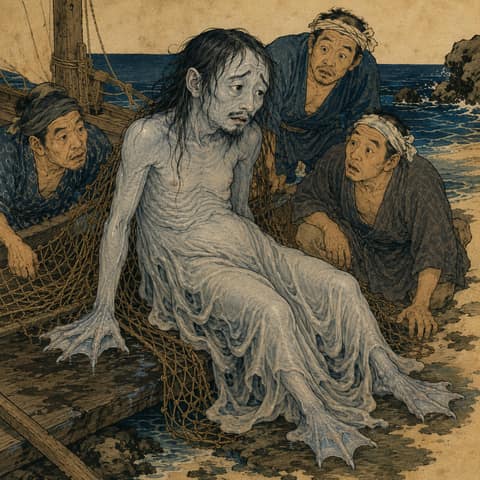
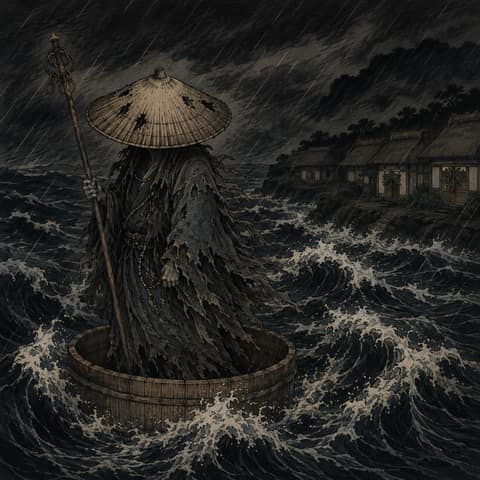
Uminyobōzu here is envisioned as the vengeful dead of drowning tied to the Izu Seven Islands’ January 24 taboo day. Origins cite grudges against island officials and group deaths of youths lost in storms. Spirits were feared to arrive from off shore riding a basin, bringing calamity to those who behold them. Households covered their gates with baskets, set holly and cleyera in shutters, and strictly avoided going out. On the following day some burned the cleyera, divining crop prospects by the sound and swelling. Practices vary: at Izutsu on Izu Ōshima the spirit is honored as “Hii-sama,” with a shrine cult and a designated household keeping vigil by the shore. On Kōzushima a solemn nocturnal reception by shrine priests is kept, blending vengeful ghost and visiting deity aspects. On Miyakejima dishes or earthenware are offered at doorways, and small children are put to bed early. Across these, the institutionalized taboo protects the boundary between sea and community, and slighting or breaking it is warned to bring anomalies and ill fortune. Southern areas note few related traditions, showing an uneven distribution.

Kama-itachi

Kama-itachi

Legendary

kah-mah-ee-TAH-chee

Kama-itachi

Animal ShapeshiftersNiigataNagano

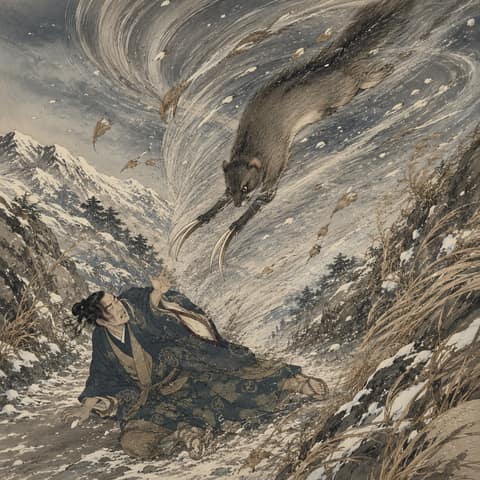
Kama-itachi is a name for a wind-borne anomaly found in Edo-period art, essays, and oral lore, referring both to the phenomenon and its alleged agent. It is tied to whirlwinds and chill gusts in northern and mountainous regions, noted for razor-like lacerations when one stumbles on the road, delayed pain or bleeding, and frequent injuries to the legs. Its true nature varies across sources: invisible minor spirits, beasts riding the wind, or acts of deities coexist as explanations. In Shin’etsu it is said to strike those who break calendrical taboos, and in Hida a three-stage action is told. In parts of Chubu and Kinki, the whirlwind itself is called kama-itachi, while Edo essays report beast tracks left after a dust devil. Under regional aliases like Tosa’s “Field Sickle,” funerary tools turned uncanny are blamed for similar wounds. In haiku it settled as a winter season word and a sign of wind-borne calamity. This version limits itself to attested sources, avoids overlinking to specific places or persons, and presents regional types side by side.

Kameosa

Kameosa

Rare

KAH-meh-OH-sah

Iseya Toriyama Plate Edition

Animated Objects & UndeadEdo period

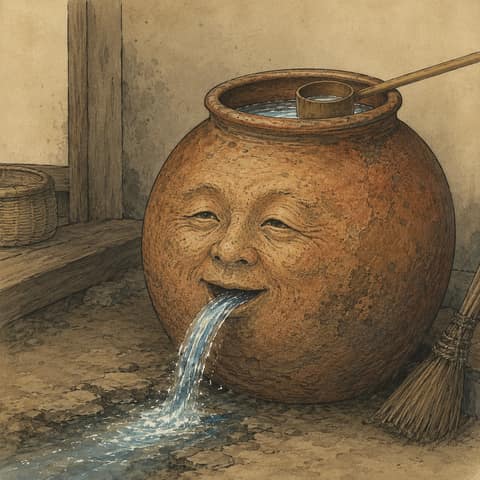
An interpretation based on Toriyama Sekien’s Hyakki Tsurezurebukuro image and inscription. The water jar faces forward, its rim becomes the mouth, and patterns on the body are read as eyes and nose. The inscription pivots on the phrase “calamity turns to good fortune,” entrusting the vessel with the idea that blessings fill after adversity. Placed at the end of the volume to serve a congratulatory cadence, its nature is read as leaning more toward good than ill. Though grouped with tsukumogami familiar to early modern life, independent oral lore or怪談 are scarce. Later retellings expand the “inexhaustible when drawn” motif into control over water’s increase, decrease, and measured pouring, but the original is a symbolic painting with verse, and narrative deeds are limited.

Kanatsubute

Kanatsubute

Uncommon

kah-nah-TSOO-boo-teh

Canon-Conforming (Traditional Lore)

Demons & GiantsNaraKyoto

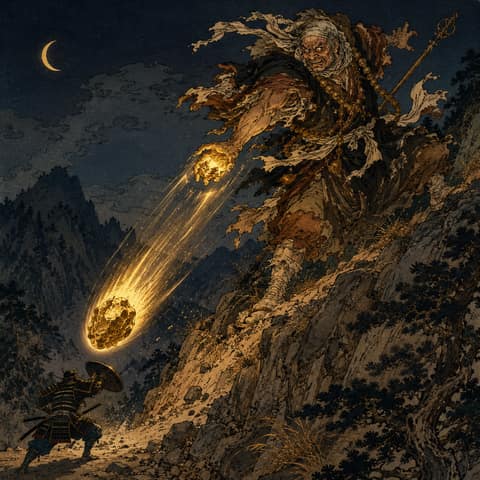
Rooted in the Treasure Compendium account and given concrete form in the Otogizōshi Tamura tales, this type portrays the yokai as a shape-shifting brigand haunting the strategic pass at Narazaka, preying on travelers and tribute. The monk guise, gigantic body, and golden sling-stones became fixed traits. The golden stones are ranked as Tarō, Jirō, and Saburō, each escalating in power and boasted to shatter mountains and armor. The usual slayer is Inase Gorō Sakanoue no Toshimune, who leads troops, blunts the stones with traps and quick wits, and relentlessly pursues the creature with secret whistling arrows. The tale ends in surrender and execution, restoring safety to a key route. It is understood as a specter embodying the dangers and brigandage of local slopes and passes, emphasizing metallic gleam and the terror of flying stones.

Kanazuchibō

Kanazuchibō

Rare

kah-nah-ZOO-chee-boh

Iconographic Reconstruction (According to Tradition)

Household SpiritsJapanese folklore

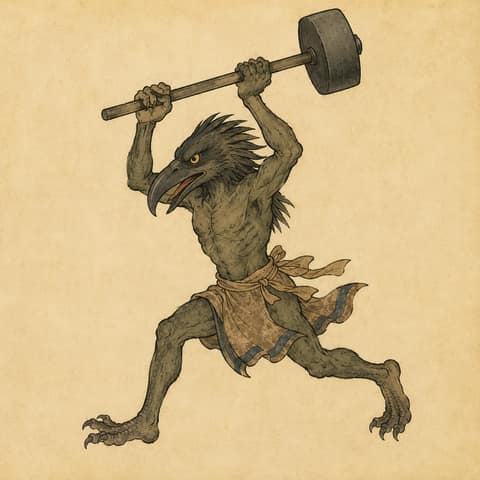
Reconstructed after the iconography seen in the Matsui Library Hyakki Yagyō handscroll and other monster scrolls held by institutions such as the National Museum of Japanese History: a bird-faced figure brandishing a raised hammer. Following the sources, its name is noted as Kanezuchibō, with a comment on its affinity to the cognate form Daichiuchi; its deeds and origins remain unknown. While the hammer suggests a tool-turned-tsukumogami reading, no explicit statement in the sources confirms this. It is most often depicted as a member of a procession, one of the recurring motifs in Hyakki Yagyō imagery. Later metaphorical readings (e.g., caution or self-effacement) are treated as secondary interpretations and not conflated with the original tradition.

Kappa

Kappa

Legendary

KAH-pah

The Dish-Headed River Spirit – Kappa

Water SpiritsKumamotoFukuoka

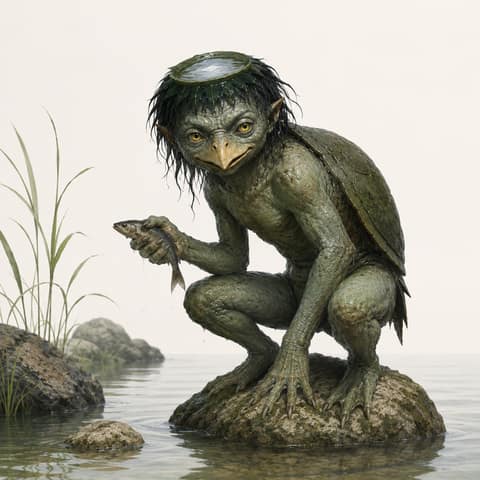
"Kappa" is not, in truth, the name of any single creature. It is a collective term—the word by which the whole of Japan, each region in its own dialect, has called the water spirits that dwell in rivers and ponds. In southern Kyushu it is the Garappa; in Tōhoku, the Medochi; in Shikoku, the Enko; in Chūbu, the Kawaranbe; in Kinki, the Gataro; in Kyushu again, the Hyosube. From place to place the name and the form shift a little, and the total is said to exceed eighty. Some are close to monkeys, some shaggy with fur, some moving in troops. Yet all share a common core: they live by the water, hold water in the dish on their heads, and drag away people and horses. The kappa, in other words, is the shared name of a vast clan into which all the water spirits of the land have gathered. It is the reading of folklore studies that binds these many variants into one. Yanagita Kunio and Orikuchi Shinobu held that the kappa was originally a god who governed water—a water deity—who declined into a yokai as belief in it faded. The fact that in the komahiki legends the kappa always tries to pull a horse or ox into the water may itself be a memory of festivals in which horses and oxen were offered to a water deity in prayer for a good harvest. In Kappa Komahiki Kō (1948), Ishida Eiichirō compared this bond between horse and water deity with myths from across Eurasia. Precisely because it is a god of water, the kappa draws water to the fields, grants fish, and even hands down bone-setting remedies—while also drowning people and pulling out their shirikodama. Its twin aspects, blessing and curse, are the two sides of a fallen water deity. Traces of the water deity show even in the turning of the seasons. Across western Japan it is widely told that at the autumn equinox the kappa goes up into the mountains to become a yamawaro, and at the spring equinox comes down again to the river to return to being a kappa. The field god who descends from the mountains to the villages in spring, the mountain god who returns to the peaks in autumn—that idea of coming and going maps exactly onto the exchange between kappa and yamawaro. In this way the clan’s variants, too, are bound to one another as a single continuous terrain. The clan even has its legend of a chieftain. On the Kuma River in Kyushu the tale survives of Kusenbō, a kappa general who crossed over from the continent at the head of nine thousand kindred. Having drawn the wrath of Katō Kiyomasa, he was driven from the region, moved to the Chikugo River, and became one of the retainers of the Suitengū shrine in Kurume. That a kappa was imagined not as a lone monster but as a clan linked from river to river is plainly expressed in this tale of a boss. Places tied to the kappa are found all over the country. At Tōno in Iwate there is a "Kappa Pool" (Kappa-buchi) where kappa are said to appear, and at Jōken-ji temple, in honor of a kappa that put out a fire with the water from its head-dish, stand "kappa guardian lions" whose heads are shaped like a dish. At Lake Ushiku in Ibaraki the painter Ogawa Usen, who depicted kappa all his life, was called "Usen of the Kappa," and Tanushimaru in Fukuoka styles itself "the birthplace of the kappa clan." In the Kappabashi district of Tokyo a legend tells of Sumida River kappa who came each night to help a merchant pressing ahead with flood-control works. To this day kappa festivals are held in many places, and the kappa lends its name to sake brands and town mascots alike—remaining the most beloved of all Japan’s water yokai.

Karakasa-kozou

Karakasa-kozou

Uncommon

KAH-rah-KAH-sah koh-ZOH

Karakasa-kozou, the Old Umbrella Hopping on Night Roads

Dwellings & ObjectsAll over Japan ── A tsukumogami of an old umbrella, without a specific origin.

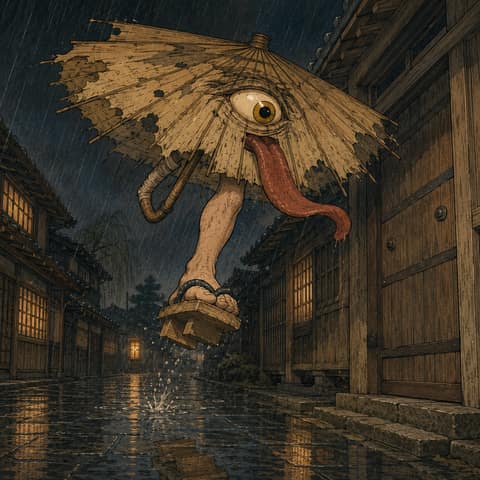
This is an interpretation of the one-eyed, one-legged paper umbrella monster, typified by post-Edo period kusazoushi (illustrated entertainment books) and performing arts. In this version, Karakasa-kozou is not a terrifying vengeful spirit that takes human lives, but exhibits an extremely comical and mischievous nature, lurking in the dark to surprise passersby and enjoying their reactions. Although its iconographic roots trace back to the Muromachi period's *Hyakki Yagyo Emaki*, the widely recognized form of "the umbrella handle becoming one leg, with a single eye and long tongue sticking out from the umbrella's fabric" is the result of repetitive production in late Edo "monster playing cards," sideshows, and kabuki trick props. Lined up with visually impactful yokai like the Rokurokubi and Mitsume-kozou, it became a staple star of "toy prints" for children due to the amusement of its design. It appears in alleyways and under eaves at night, hopping on one leg while rustling its frame, causing visual and onomatopoeic strange phenomena, such as licking human faces with its long tongue, but it causes no essential harm. Because it lacks region-specific legends, its haunts and activities are freely adapted depending on the medium, which ironically made it easy to adapt to modern movies and animation. In a sense, it is the ultimate form of Edo townspeople culture completely deodorizing the primal fear of "tsukumogami"—the idea that old objects possess souls—into a "character (toy)" and sublimating it into entertainment.

Kasha (Corpse-Dragging Fiend)

Kasha (Corpse-Dragging Fiend)

Epic

KAH-shah

Cat-Type Kasha (Early Modern Tale Variant)

Ghosts & SpiritsIwateGunma

A composite form of the bakeneko that solidified in the late 17th century. An aged cat arrives with thunderstorm or dark clouds, seizing the corpse from a coffin by exploiting lapses during funeral processions or wakes. After Toriyama Sekien’s illustrations, the feline form became standard. Regional lore varies: forked tails, attendant will-o’-wisps, or concealment within black clouds. Its targets are not limited to evildoers. Folk countermeasures include night-long vigil at the wake, placing knives or razors atop the coffin, using prayer beads and sutra recitation, and disruptive funeral tactics.

Kasho Tengu

Kasho Tengu

Epic

Kasho-tengu

Venerable Chuhoson, the Great Tengu of Mount Kasho

Apparition of the Mountains and FieldsGunma

The Kasho Tengu distinctively stands apart from the common noun "tengu"; it is an entity unique to Kashozan Miroku-ji. At its core lies an actual historical high monk, the Venerable Chūhōson. This reflects a "monk-deification type" of tengu faith, wherein a holy man with superhuman ascetic powers settled into the mountain as a tengu (an incarnation of Kasho Buddha) after his death. Its ranking as one of the Three Great Tengu of Japan (alongside those of Mount Takao and Kurama), the boastfully largest Great Tengu mask in the country, and the unique votive custom of borrowing a mask and returning two the following year distinguish this tengu from other mountain tengu. Combined with its historical prestige as a prayer site for the Tokugawa family, the Kasho Tengu is deeply rooted in the Numata region as a tengu of worldly benefits, governing victory in battle, traffic safety, and the fulfillment of all wishes.

Kataashi-pinza

Kataashi-pinza

Uncommon

Kataashi-pinza

Kataashi-pinza: The One-Legged Goat of the Midnight Crossroads

Animal SpiritOkinawa

A one-legged goat *majimun* that haunts the Ganguri-yumata intersection in Shimozato. Standing on its solitary hind leg, it glides out of the darkness into deserted crossroads, its hard hooves ringing out with a rhythmic "gan, guri-guri" sound. Once it spots a passerby, it unleashes an ear-splitting shriek that tears through the night and leaps over their head like an arrow, snatching their *mabui* (soul) in the process. However, it cannot harm those who quickly crouch down to avoid being jumped over; defeated, it leaves only its scream and footsteps echoing in the street before melting back into the shadows.

Katawaguruma (One-Wheeled Carriage)

Katawaguruma (One-Wheeled Carriage)

Uncommon

kah-tah-wah-GOO-roo-mah

Kyo’s One-Wheeled Fire Cart

Household SpiritsKyotoShiga

A variant of the Katakuruma said to haunt Kyoto’s Higashi-no-Toin, marked by a strong urge to chasten with words. In the Enpo era, disliking the city’s taste for night roaming and nosy tongues, it rolled through the streets as a single ring of fire. It appears as one lone ox-cart wheel, cypress spokes sooted and red-hot, with a broad-jawed man’s face set in the hub. Its eyes flicker like lantern flames, its teeth gleam like a comb, and it often arrives biting a child’s single foot. Its first cry is always “Look to your child before you look at me,” both a threat and a plain command to tend the home; those who rush inside sometimes avert harm. But peep out of curiosity and, before rumor can spread, calamity befalls the household’s child. The foot it holds is not some stranger’s far away but is bound to the onlooker’s own child—the terror of this type—its fire slipping thinly through the door crack, drawing blood like beriberi in the sleeping room, leaving a tear. This speech-making Katakuruma is often confused with the Wheel Monk, yet it prefers admonition to mockery, and a single line of speech sets both the cause and the end. When a housewife once peered through a slit on Higashi-no-Toin, the wheel halted before the home, pressed its nose to the door, uttered a verse, and left; she ran to the parlor and found the child only lightly harmed, cured by prayer and decoctions. Thereafter, from the bell at sunset, households barred lattices tight, hung dim lamps within, and vowed not to speak of the strange at their lips. Sightings waned, yet during festivals and pilgrimages it returns, rolling as if stepping on the shadows of paper lanterns. It feeds above all on named gossip; if one whispers “katawa-guruma” thrice, its flame licks the eaves and seeks the lattice gap. Elders avoided the name, saying “the one-wheeled fire” or “the wheel’s voice.” Still, a gate warded with waka or votive words can halt it; honoring the power of speech, it eases if the text is orderly and heartfelt for the child. In towns thick with rumor it grows strong, in towns that mind their words and households it wanes, a monster mirroring Kyoto’s temperament.

Showing 169 - 192 of 473 yokai