YOKAI.JP

Traditional Yokai Encyclopedia

Yokai passed down through the ages

473 Yokai|12 Category|Page 20 of 20
Localization in Progress - More content available in Japanese version
View Japanese
Sort by: NameAscending
Yamawaro (Mountain Child)

Yamawaro (Mountain Child)

Epic

ya-ma-wa-ro

The Mountain Boy of Western Japan, the Yamawaro

Mountain & Wilderness SpiritsKyushu (yamawaro; mountains of western Japan)

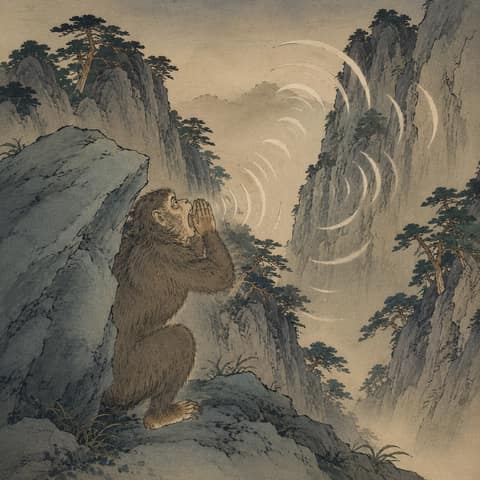
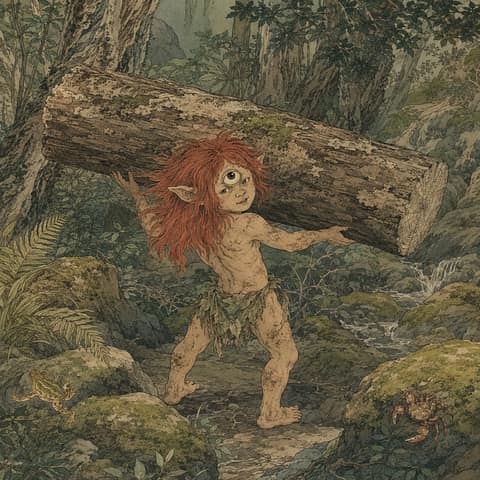
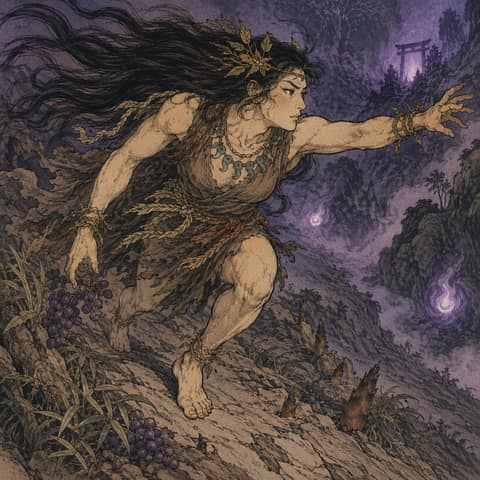
This version looks at the yamawaro — the kappa's "other half" — from the side of life in the mountains. If the kappa is the being that menaces people at the water's edge, the yamawaro is the one that appears at the worksites of mountain labor. It helps woodcutters and charcoal burners haul their timber, taking sake or rice balls in return. Yet the exchange follows a strict code: hand over the promised goods first and it runs off without working, and break a promise and it flies into a furious rage and brings down misfortune. To those who worked the mountains, the yamawaro was at once a dependable partner and a neighbor not to be trusted, one that bared its fangs at any lapse of courtesy. The tales of the yamawaro are packed tight with the eeriness of the mountains: the "tengu-fell," the sound of a great tree crashing down when no one is there; a voice that mimics human songs and the strokes of an axe to the life; and the strange weakness of disliking the line of a carpenter's ink pot. These are the very dread felt by those who venture deep into the hills. And the legend of the "crossing of the kappa" — entering the mountains at the autumn equinox and returning to the rivers at the spring equinox — ties the yamawaro and the kappa together with a single thread. A single water god that passes between mountain and river — its mountain face is the yamawaro.

Yao-bikuni

Yao-bikuni

Rare

yao-bikuni

Camellias, the Cave of Nyujo, and the Eternal Maiden: Yao-bikuni

霊・亡霊Fukui

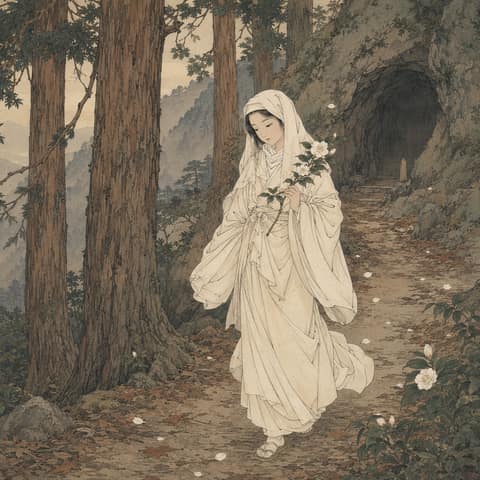
The Myth of the "Curse" of Immortality. The legend of Yao-bikuni is the most beautiful yet cruelest answer Japanese folklore offers to humanity's universal "fear of aging" and "thirst for eternal life." At first glance, immortality seems like the ultimate blessing, but in this tale, it is explicitly depicted as a "curse." Her tragedy is not that she cannot die, but that "everyone other than herself will inevitably die." Left behind in the world as a beautiful teenage girl while watching her beloved ones grow senile and pass away, this overwhelming temporal isolation inflicted upon her an agony worse than death. Her nationwide pilgrimages to perform good deeds (building infrastructure and planting trees) can be interpreted not merely as acts of compassion, but as an agonizing journey of atonement to find some meaning in an endless existence and to sublimate her karma. Wakasa's Kuin-ji Temple and the Concept of "Nyujo". The cave where she is said to have spent her final moments (Yaohime-gu) still remains at Kuin-ji Temple in Obama City, Fukui Prefecture, the terminus of Yao-bikuni's journey. What is particularly noteworthy is that her end is not told as a simple "death (starvation)," but as "Nyujo." Nyujo refers to a high-ranking Buddhist monk entering a deep state of meditation while still alive in order to save sentient beings, becoming an eternal entity (a mummy or Sokushinbutsu). Having been stripped of a physical death by the Ningyo meat, the only way she could "end her existence (or elevate her dimension to something sacred)" was by confining herself to a cave by her own will and renouncing food. The Metaphor of "Yao-bikuni" in Modern Times. In modern subcultures—such as literature, manga, and animation—Yao-bikuni (or her motifs) is an immensely popular subject. Elements like "eternal youth and beauty," "never-ending loneliness," and "the agony of being unable to die" resonate deeply with modern society's fanaticism over anti-aging and the very real social issues of "aging and isolation" in a society with increasing longevity. She is not merely a character from an old folktale, but an eternal heroine who continuously confronts humanity with the ultimate proposition of how we should face time and death.

Yarikechō (Spear Tuft Spirit)

Yarikechō (Spear Tuft Spirit)

Rare

yah-ree-keh-CHOH

Yarigechō (Iconographic Tradition)

Animated Objects & UndeadEdo period, Japan

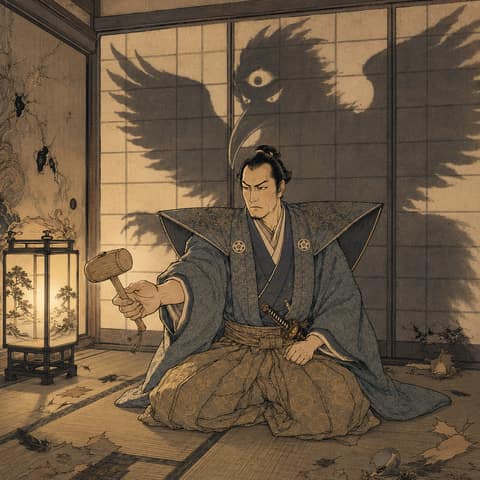
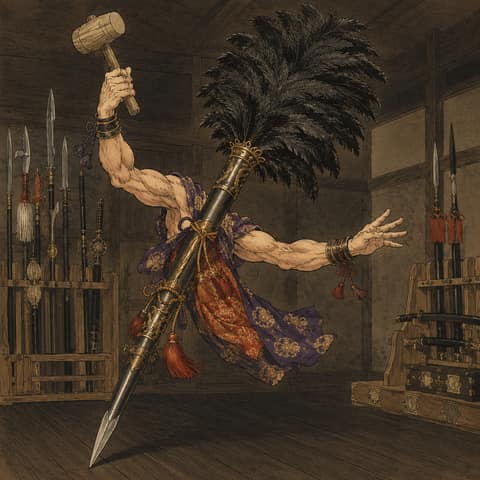
A type of tsukumogami typical of early modern yokai art. The hair-spear used both as a practical weapon and as a symbol in processions was thought to accrue spiritual potency through associations with masters and tales of valor. In Hyakki Tsurezure Bukuro, Sekien depicted it wielding a wooden mallet, assigning it a specific object-name while drawing on older iconographic bones. The name Yarigechō likely arose where Night Parade motifs from the Muromachi era, Edo antiquarian taste, and the culture of famed implements converged. Modern print editions and nishiki-e varied the image, sometimes stressing the spear’s decorative plumes, yet it lacks distinctive oral lore and is known mainly through pictures and bibliographic notes.

Yokkabu-i

Yokkabu-i

Common

Yokkabu-i

Deity Preaching Warnings of the Water

Gods & SpiritsKagoshima

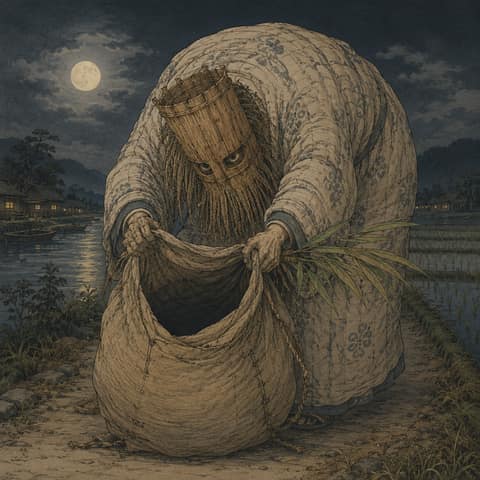
The Yokkabu-i ritual is a rare folkloric example that beautifully blends water god worship with the discipline of children in the Satsuma Peninsula, where Garappa (kappa) legends remain strong. The method of manifesting an extraordinary "god" using eerie masks made of palm bark and everyday tools like the *yogi* conveys the ancient layers of Japan's masked deity and visiting deity faiths. While the continuation of such traditional events is threatened by a declining and aging population, it has functioned as a crucial cultural mechanism to deepen community bonds and pass down both the terrors and blessings of nature to the next generation.

Yomotsushikome

Yomotsushikome

Legendary

よもつしこめ

Underworld Pursuer of the Kojiki: Yomotsushikome

Divine Spirit/DeityYomi (Mythology) / Yomotsu Hirasaka Lore Site (Higashi-Izumo-cho Iya, Matsue City, Shimane Prefecture)

The Position of Grotesque Deities in Kiki Mythology. While the basic description touches on the accounts in the *Kojiki* and *Nihon Shoki*, the deep dive explores Yomotsushikome's position as a "grotesque deity" within the mythological system. Deities in *Kiki* mythology are broadly classified into three layers: (1) Takamagahara lineage (heavenly/pure deities), (2) Ashihara-no-Nakatsukuni lineage (earthly/indigenous deities), and (3) Yomi lineage (deities of the dead/grotesque deities). Yomotsushikome belongs to the third lineage, forming a cohesive system alongside Izanami (the goddess stationed in Yomi), the Eight Thunder Deities, and the Underworld Army. *Kiki* mythology is not a simple dualism of good and evil; it possesses a three-tiered structure of "life, purity, and light" versus "death, impurity, and darkness," where grotesque deities are positioned as essential entities upholding the order of the underworld. Etymology of "Shiko"—The Semantic Field of Ancient Japanese. Interpreting "shiko" as "ugly" is a reductive interpretation from the Middle Ages onwards. In ancient Japanese, "shiko" was a rich word connoting "strength, hardness, and terror." Cognate words like "shikobuchi" (rocky abyss) and "shikofune" (sturdy boat) express the hardness of coastal rocks. "Shikome" was not merely an "ugly woman" but understood as a "hard, strong, and terrifying female demon-deity." The names of ancient deities tended to be based on "spiritual power and function" rather than "visual features," positioning Yomotsushikome as a "female demon-deity with terrifying power governing death." The fixed image of a "flesh-rotting, fanged hideous hag" in medieval picture storytelling is a later reconstruction distinct from her original mythological figure. East Asian Comparison of Peach Warding Beliefs. The episode of Izanagi using peaches to repel Yomotsushikome serves as a key subject in comparative religion regarding East Asian warding culture. In Chinese Taoism, warding off evil spirits using peach wood swords, peach charms, peach seals, and peach offerings was systematized and widely spread to East Asian regions. The magical power of the peach repeatedly used in Japanese court rituals (Tsuina, Tango no Sekku, Momo no Sekku) was formed through the complex intertwining of the Izanagi myth in the *Kojiki* and Chinese Taoist peach worship. This is a classic example of how ancient Japan constructed its unique system while assimilating the religious cultures of the Chinese mainland and the Korean peninsula. The Pursuit Tale as a Narrative Type. A hero escaping from the land of the dead by throwing magical items that transform to delay pursuers—this is known in world mythology as the "Magic Flight" motif, a widely distributed narrative type. Similar tales exist in the Greek myth of Orpheus and Eurydice, Eastern European folklore of Baba Yaga, and Native American creation myths, demonstrating a universal structure of ancient human concepts of the underworld and escape narratives. The tale of Izanagi and Yomotsushikome holds exceptionally high comparative mythological value as one of the oldest literary records of this global narrative type in East Asia. The Geography of Yomotsu Hirasaka—Relationship with the Izumo Belief Sphere. The modern estimated site of Yomotsu Hirasaka in Higashi-Izumo-cho Iya, Matsue City, Shimane Prefecture, is located in the core region of the ancient Izumo belief sphere, alongside the Izumo Kuni-no-Miyatsuko stronghold, Kumano Taisha, and Kamiarizuki legends. In the *Kojiki* and *Nihon Shoki*, Izumo is depicted as the intersection of the three mythological layers—Takamagahara, Ashihara-no-Nakatsukuni, and Yomi—and placing the "entrance to Yomi" in Izumo was no coincidence. It reflects Izumo's status as the religious center for "death, the otherworld, and Ne-no-Katasukuni" in ancient Japan. Myths involving Okuninushi, Susanoo, Izanagi, and Izanami intersect in this region, serving as the key to deciphering ancient religious geography. Reduction Since the Middle Ages and Modern Renewed Interest. In medieval sermons, picture storytelling, Noh, and Joruri theater, Yomotsushikome was fixed into the image of a "flesh-rotting, fanged hideous hag," losing the original ancient semantic field of a "strong female demon-deity." However, since the 2010s, amidst a renewed interest in Japanese mythology, re-evaluations based on findings in ancient linguistics, mythology, and archaeology are progressing. Modern subcultures such as the *Megami Tensei* game series, *Record of Ragnarok* manga, and *Demon Slayer* anime functionally reconstruct ancient mythological materials, thereby reintroducing the mythological worlds of Yomotsushikome, the Underworld Army, and Yomi to younger generations. This is a symbolic example of cultural historical circulation from ancient to modern times. Positioning as "Japan's Oldest Yokai". Yomotsushikome is a female demon-deity appearing in the *Kojiki* (712 CE), Japan's oldest extant book, giving her a unique status not just as a "post-Heian yokai" but as a "grotesque deity recorded in the original texts of Japanese mythology." Predating the yokai systems involving oni, tengu, and kappa that formed from the Middle Ages onwards—in an era where the boundary between ancient gods (kami) and yokai was still undifferentiated—she is a core subject for tracing the origins of yokai studies. Dismantling the binary opposition of "is it a god or a yokai?", she serves as an excellent starting point for examining the rich, multi-layered nature of ancient Japan's grotesque deities.

Yonatama

Yonatama

Rare

Yonatama

Yonatama, the Tsunami-Summoning Sea Spirit

Water SpiritOkinawa

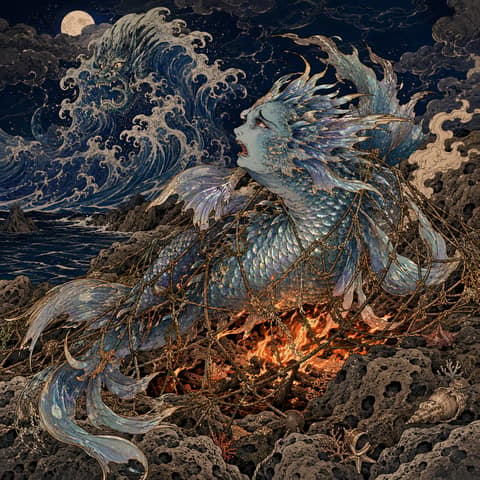
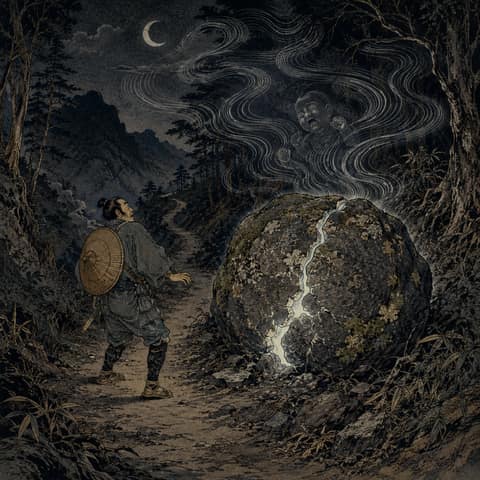
This is a sea spirit of Miyako, often depicted as a mermaid or a talking fish. Legend has it that on the night it was caught by Shimojishima fishermen and roasted over a net, it answered a call from the deep sea, begging for a tsunami to save it. Only a mother and child managed to escape to Irabu Island, and the sunken crater left where the fishermen's home once stood is said to be the origin of the famous Toriike pond. Embodying both the ocean's boundless bounty and its terrifying wrath, its very name is a fusion of the words "sea" and "spirit." Intertwined with the tragic memory of the Great Meiwa Tsunami of 1771, the Yonatama remains a stark warning passed down across the islands to those who would disrespect the sea.

Yuki-onna

Yuki-onna

Legendary

Yuki-onna (the Snow Woman)

The White Apparition of the Snow-Country Night

Natural Phenomena & Nature SpiritsIwate

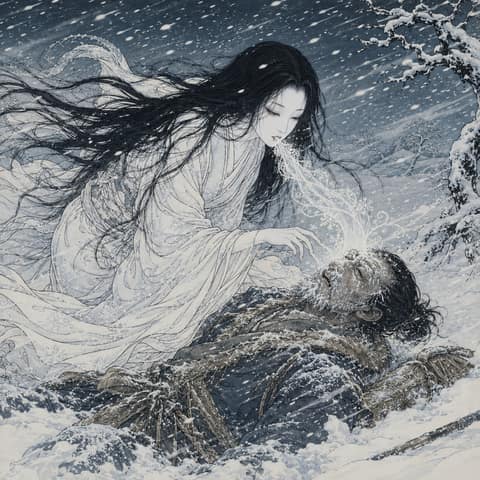
As a "white apparition," the Yuki-onna is told of as a white figure that suddenly stands in one's path on a blizzard night, leaving no footprints. Before she draws near, the air first turns cold and one's breath freezes white; then, in the glow of the snow, a woman with a long trailing hem floats dimly into view. This sense that "the cold announces her before she comes" is the shared core of encounter-tales across the regions. Her face alone is translucently pale, her eyes glint from within, and she either gives no answer when addressed or asks one's name in a low voice. In many versions the taboo runs thus: answer her question and your life-force is drained; stay silent and you are spared. The tale of Minokichi and O-Yuki that Lafcadio Hearn set down in Kwaidan conveys this white-apparition image most vividly. Having frozen the old woodcutter Mosaku to death in a storm-bound hut, the snow woman leaves the young Minokichi with a single command: tell no one what you have seen tonight. Later Minokichi weds a traveling woman named O-Yuki, fathers children, and lives happily — until one snowy night, watching his wife's pale profile as she sews by lamplight, he sees in her the face of the snow woman of long ago and lets the words slip. O-Yuki reveals herself, declares that she spares him only for the love of their children, and vanishes through the smoke-hole as a white mist. A bond sealed by a single forbidden word comes undone: the sorrow of parting, and the otherworldly woman who longs for a human, crystallize here. In pictorial tradition she is usually painted as a tall woman in white in pale washes, her outline never drawn too firmly, dissolved into a white scarcely distinguishable from the snow. Her feet are blurred into haze and she casts no shadow, lending the air of something not of this world. Less a spirit who sings and dances than a still apparition who stands without sound and vanishes without sound — that is the true nature of the Yuki-onna as a "white apparition."

Yuki-warashi (Snow Child)

Yuki-warashi (Snow Child)

Uncommon

YOO-kee WAH-rah-shee

Echigo Traditions Type Snow Child

Natural Phenomena SpiritsNiigataGifu

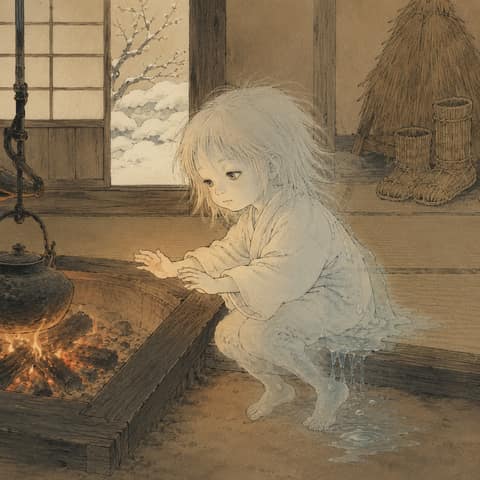
Based on the Snow Child figure from Echigo Province. It appears as a small child on snowy days, visiting from the doorway on blizzard nights to warm itself by the hearth. When cared for, it comforts the household and may help with chores, yet with the first signs of spring it loses strength and fades. It shows no malice and instead bears the character of a guest deity, a seasonal visitor heralding winter’s presence. Its visits recur but never last, and finally cease, reflecting the impermanence of snow. It is also called “Yuki-warashi” or “Yukiko,” names that all link snow with a childlike form.

Yukijoro

Yukijoro

Rare

ゆきじょろう

The Snow Princess Descended from the Moon: Yukijoro

Natural Phenomenon / Nature SpiritYamagata

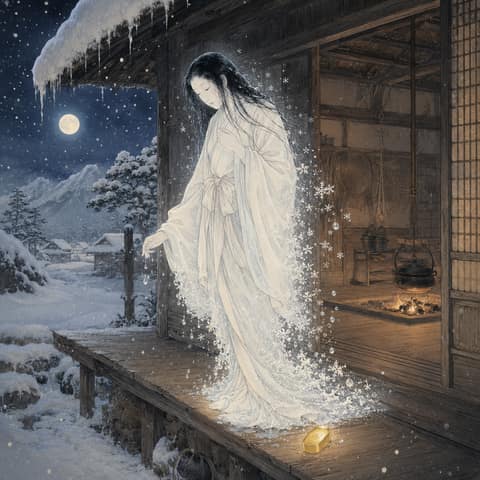
The *Yukijoro* is a highly unique snow woman nurtured by Yamagata, one of Japan's premier heavy snowfall regions. While snow women nationwide are told of as cruel monsters who freeze travelers to death, Yamagata's *Yukijoro* strongly retains "gratitude-type" tales where she rewards human compassion with blessings. In the Oguni region, her true identity is said to be a princess who descended from the moon world with the snow, losing her way back and appearing on nights lit by the snow's glow—a rare archetype blending East Asian moon worship with the snow woman. In folktales, a house that coldly rejects the white-robed woman begging for lodging falls into ruin, while a house that welcomes her warmly is left with the blessing of a lump of gold. The *Yukijoro*'s body melts upon touching human warmth, leaving grace in the wake of her melting. Furthermore, in the Mogami region, there are tales of an *Ubume*-like snow woman trying to hand over a child, or a snow woman leading a cow, showing that the *Yukijoro* does not fit into a single mold. The terror of the freezing winter, and the emotion of a snow country where one cannot survive without nevertheless cherishing the snow, are superimposed on this multifaceted snow woman.

Yūrei (Ghost)

Yūrei (Ghost)

Legendary

YOO-ray

Toriyama Sekien “Yūrei” (An’ei era)

霊・亡霊Across Japan

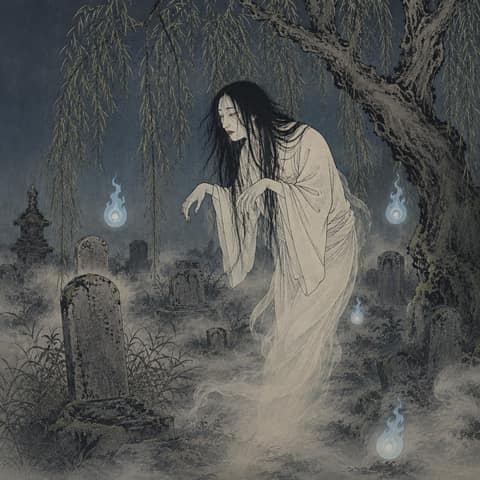
An image based on the “Yūrei” in Toriyama Sekien’s Gazu Hyakki Yagyō, published around 1776 (An’ei 5). In a nighttime graveyard a woman’s ghost appears between drooping willows, wearing a white burial robe and a forehead cap, raising her arms as if to halt a passerby. It is a transitional depiction from before footless forms and the triangular headcloth became fixed conventions, emphasizing the lifelike force of the arms and the willow and gravestones as symbols of place. Sekien’s plates organized contemporary strange tales, Buddhist views, and funeral customs, profoundly shaping the visual codification of yūrei. While indicating gender and costume, the image leaves the source of attachment unspecified, inviting the viewer to imagine the relationship.

Zan

Zan

Epic

Zan

Zan, the Tsunami-Predicting Mermaid

Water SpiritOkinawa

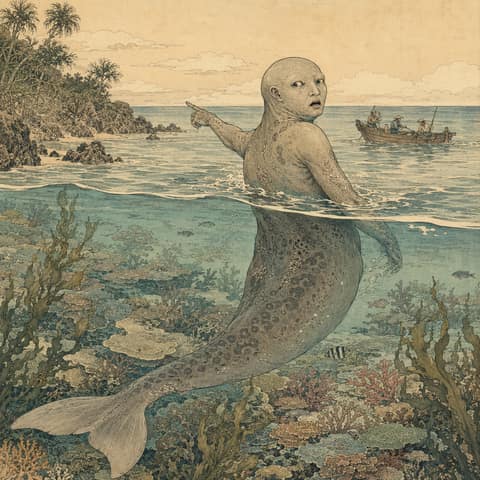
This is the legendary mermaid Zan, famously caught in the net of a Nosoko fisherman, weeping tears as it begged for its life. It is said that in gratitude for being released, it warned the village of an approaching tsunami, ultimately saving the entire community. Its true identity is the dugong, a marine mammal that has long been revered in Ryukyuan waters as a sacred messenger of the gods. Rather than raging and bringing forth calamity, the Zan stands between the ocean and the land to warn humans of impending disaster before it strikes. As the most compassionate prophet born of the Ryukyuan sea, the Zan's story continues to be told to this day.

Zashiki-warashi

Zashiki-warashi

Legendary

za-shi-ki-wa-ra-shi

Child Protector of Iwate Homes: Zashiki-warashi

Half-Human / Half-YokaiIwateAomori

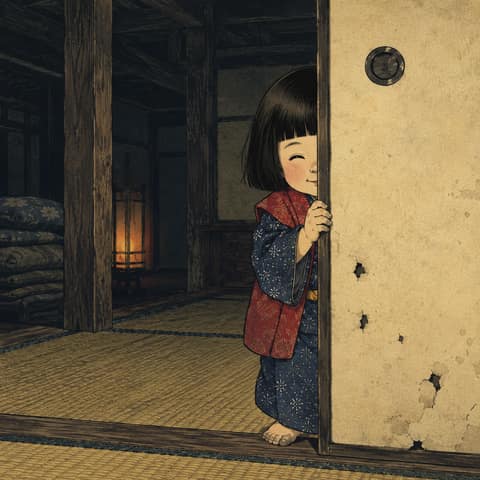
This version is interpreted as a child deity that resides in old houses in Tohoku and governs the rise and fall of the household. In this iteration, the zashiki-warashi possesses both the innocent, friendly side of a "god of fortune" and the cold side of a "god of fate" that will mercilessly abandon the family to ruin if displeased in the slightest. Its nature varies depending on the space where it appears: the pale, beautiful Chopirako appears in "hare" (sacred/formal) spaces like the inner parlor, while the Notabariko or Usutsukiko appear in "ke" (profane, or spaces closest to death) like the dirt floor or kitchen. A popular theory once claimed in some dictionaries that the description of "Chopirako" was found in the Edo-period essay "Jippoan Yureki Zakki," but this is a clear error caused by confusion with other literature; the first mention of zashiki-warashi hierarchies comes strictly from the Tohoku local studies by Kizen Sasaki and others. It is said that zashiki-warashi are mainly visible to the children of the house or outside guests. Even today, there are places like the inn Ryokufuso in Ninohe City, Iwate Prefecture, where guests from all over the country visit in hopes of meeting a zashiki-warashi (= being granted wealth). If someone tries to harm it, such as by shooting it with a bow, it will disappear; if enshrined warmly, it will enrich the home forever. Its adorable childlike appearance is a thin veil concealing the most painful sacrifices (infanticide) of village life, making it the ultimate "guardian deity of the home" born from regret for dead children and the obsession with family continuity.

Zen-Gama-no-Shō (Zen Kettle Monk)

Zen-Gama-no-Shō (Zen Kettle Monk)

Rare

ZEN-gah-mah-noh SHOH

Iconographic Tradition: Tsukumogami Kettle

Animated Objects & UndeadJapanese folklore

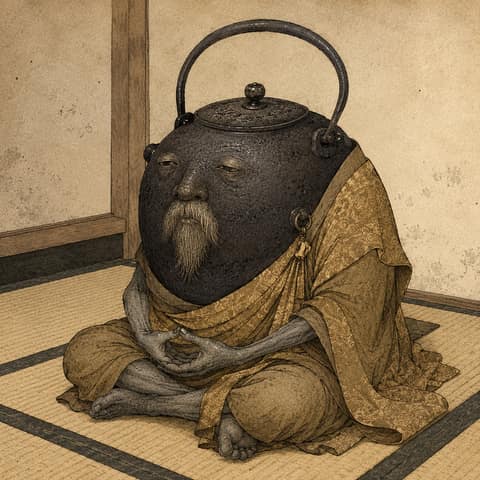
Based on examples by Toriyama Sekien, this image depicts an aged tea kettle manifesting with spiritual authority. Its posture and arrangement inherit compositional methods akin to the Night Parade of One Hundred Demons scrolls, often shown marching alongside Torakakushi and Yarinaga. The name plays on the kinship between chanoyu and Zen, hinting at a caricature of a Buddhist priest. By the logic of mononari, tools long used or neglected accrue ki, appear before people, and inspire awe. Meiji painters continued this iconographic lineage, and yokai catalogues and dictionaries classify it as a type of tsukumogami, though specific local legends are scant. Later commentaries add anecdotes of startling humans, but early records offer little confirmation, so it is understood chiefly through its iconographic tradition.

Zhong Kui (Shōki)

Zhong Kui (Shōki)

Divine

SHOH-kee

Traditional Iconography Shoki, Warding Demon-Queller

Deities & Divine SpiritsKyoto

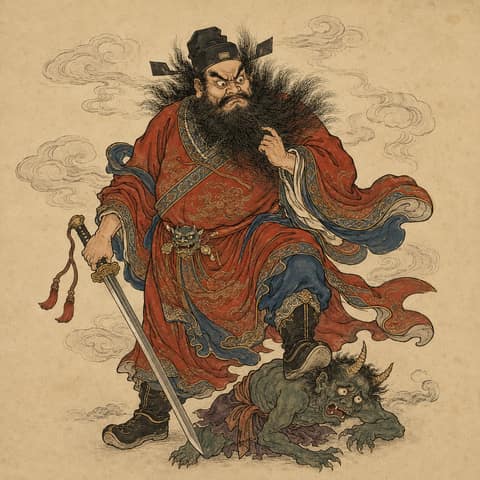
Shoki, a demon-quelling deity spread across East Asia from Tang dynasty lore, took root in Japan as a talismanic power against calamity and smallpox. He is depicted as a bearded martial figure in official robes and cap, glaring with fierce eyes and wielding a sword in one or both hands. He often appears hunting, trampling, or bagging small demons. At New Year and Boys’ Festival he is displayed on hanging scrolls, banners, and screens, and many townhouses placed ceramic Shoki figures on eaves or roof corners. In Japan the earliest examples trace back to late Heian apotropaic paintings; from the Muromachi period the theme became established, and by late Edo he also appeared as May Festival dolls. Images and figures were hung at entrances, gates, or the upper seat of reception rooms to stop plague deities and malign spirits. Although dedicated shrines are limited today, regional folk belief since early modern times continues, and rooftop Shoki statues are still found from Kinki through the Chubu region. His powers are symbolized by the subduing glare and swordplay that drive off evil sprites, functioning as amulets against drug harm and epidemics.

Ōmagatoki – The Bewitching Hour of Dusk

Ōmagatoki – The Bewitching Hour of Dusk

Uncommon

OHH-mah-gah-TOH-kee

The Witching Hour (Traditional Narrative)

Half-Human BeingsVarious regions across Japan

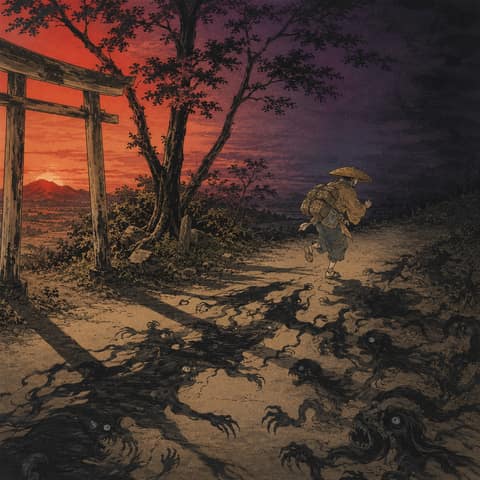
Though lacking a concrete form, the Witching Hour has long been understood as the effect of dusk’s dimness upon landscape and mind. Households would shut doors, call children inside, and avoid wandering, linking daily rules to this time. Toriyama Sekien depicted a hundred specters gathering at twilight, framing the hour itself as a stage that summons the uncanny. Folklore notes that the difficulty of recognizing faces stirs fear, and mishaps—losing one’s way, waterside accidents, and mountain village straying—were cautioned against as “meeting demons.” Dialects across Japan share this semantic field, often referring to twilight in general without explicit monstrosity. Thus it is not a combative yokai but a sense of peril dwelling in a liminal hour, preserved as a warning tied to the rhythm of daily life.

Ōmine Zenkibō

Ōmine Zenkibō

Legendary

Ōmine Zenkibō

The Dharma-Guarding Tengu Turned from an Oni — Ōmine Zenkibō

Mountain & Wilderness SpiritsNara

The essence of Ōmine Zenkibō lies in the structure of rebirth: "an oni turning into a tengu." It is a tale that embodies the heart of Shugendō in a single being. His source lies in the old tales of En no Gyōja and the oni. The oldest extant text depicting En no Ozunu is the Nihon Ryōiki (early Heian), which portrays him as a thaumaturge who flew through the air commanding demons. The Konjaku Monogatarishū, Book 11 carries the tale of En no Gyōja having demons build a bridge across the mountains, showing the fixing of the image of En no Gyōja as one who commands demons. Zenki was originally a violent oni who carried off human children. En no Gyōja captured him with the secret rite of Fudō Myōō and reformed him into an attendant. By one account, En no Gyōja hid the youngest child of the Zenki couple in an iron cauldron and, through the grief of having one's own child taken, brought them to realize the sin of carrying off the children of others. The reformed Zenki and Goki became dharma-protecting oni and supported En no Gyōja's practice. This Zenki, sublimated into a great tengu at the end of long austerities, is Ōmine Zenkibō. This plot, of a violent being turning into a guardian of the Buddhist law, shows most clearly that the dread of a child-snatching tengu and the faith in a tengu who guards people share a single root. The Ōmine on which Zenkibō sits is the holy ground of Shugendō. The Ōmine training ground founded by En no Gyōja, and the Ōmine Okugake-michi registered as World Heritage, is a perilous route that ascetics still tread at the risk of their lives, and Zenkibō was conceived as its guardian. He is chanted as "the band of Zenki of Ōmine" in the Muromachi Noh play Kurama Tengu, and stands among the forty-eight tengu of the Tengu-kyō (some sources give "Nachi Takimoto Zenkibō"). And the heaviest single point of this lore is that the bloodline of Zenki is said to live on into the present. Of the five lodges kept by the five children of Zenki and Goki, only the Onakabō of the Gokijo family remains today, and the present-day Gokijo Yoshiyuki continues to receive the ascetics of the Ōmine Okugake-michi. This genealogy is hard to source explicitly in old documents and is transmitted as the oral lore of the surviving lodge; yet this real continuity—descendants of a reformed oni guarding the path of Shugendō beyond thirteen hundred years—makes Ōmine Zenkibō not a mere legend but a symbol of living faith. Chigiri Kōsai of tengu scholarship, too, placed him within the system of the great tengu of the many mountains.

Ōyama Hōkibō

Ōyama Hōkibō

Legendary

Ōyama Hōkibō

The Great Tengu of the Transferred Seat — Ōyama Hōkibō

Mountain & Wilderness SpiritsKanagawa

The core of Ōyama Hōkibō lies in a tale of succession to a seat within the tengu world—the "seat transfer." Yet the Mt. Ōyama on which he sits was a sacred mountain established in antiquity, without need of the transfer legend. The Engishiki Jinmyōchō (927) ranks the Afuri Shrine among the official shrines of Sagami Province, showing that Ōyama's divinity was recognized by the ancient state. On the Buddhist side, the Ōyama-dera engi emaki depicts how Rōben—carried off by an eagle and raised in Nara—opened Ōyama-dera and enshrined Fudō Myōō (the Sagami version; a different work from the engi of Hōki's Daisen-ji). And in early-modern times the official gazetteer the Shinpen Sagami no Kuni Fudoki-kō (1841) conveys the summer ascent season and the bustle of pilgrims from many provinces. The manners of pilgrimage—purifying oneself at the waterfalls under a sendatsu's guidance before climbing—and the Ōyama confraternities everywhere: this density of faith gave Hōkibō, the successor tengu, the character of a guardian watching over the common people. The seat-transfer tradition overlays this sacred-mountain history. According to the arrangement of Chigiri Kōsai of tengu scholarship, Sagami Ōyama originally had a great tengu named Sagamibō. But when the Retired Emperor Sutoku—defeated in the Hōgen Rebellion (1156) and exiled to Sanuki—passed away, Sagamibō removed to Shiramine in Sanuki to console and guard his bitter spirit (= Shiramine Sagamibō). The one who succeeded to the vacant seat of Sagami Ōyama was Hōkibō, come from Mt. Daisen in Hōki. This symmetrical transfer—"Sagamibō to the west, Hōkibō to the east"—is a Chigiri-derived arrangement lacking explicit sources in the classical literature, and should be read not as historical fact but as lore that mirrors the notion that a tengu's seat is succeeded through mountain and bond (en) rather than being a fixed individual. Chanted as "Hōkibō of Ōyama" in the Muromachi Noh play Kurama Tengu, and standing among the forty-eight tengu of the Tengu-kyō, his seat continues to be remembered, together with this distinctive engi, as one of the Eight Great Tengu.

Showing 457 - 473 of 473 yokai