YOKAI.JP

Traditional Yokai Encyclopedia

Yokai passed down through the ages

479 Yokai|15 Category|Page 9 of 20
Localization in Progress - More content available in Japanese version
View Japanese
Sort by: NameAscending
Katawaguruma (One-Wheeled Carriage)

Katawaguruma (One-Wheeled Carriage)

Uncommon

kah-tah-wah-GOO-roo-mah

Katawaguruma of Shiga

Household SpiritsKyotoShiga

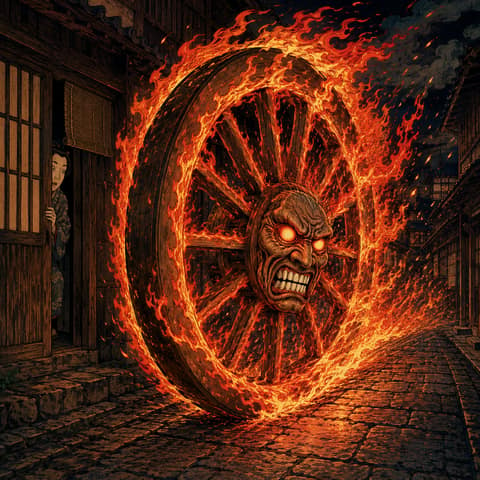
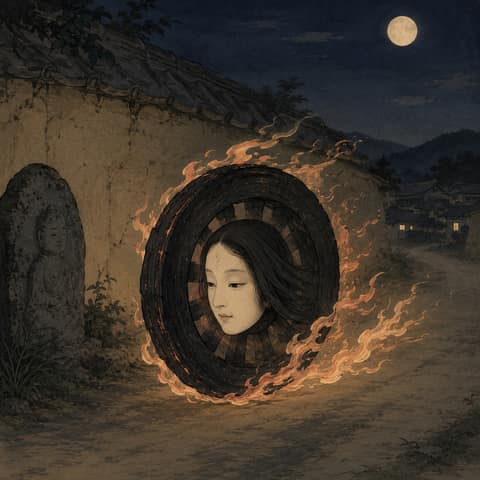
A regional variant of the katawaguruma said to haunt the Koka foothills and the lake winds’ thoroughfares since the Kanbun era. Its flames are steady like a watchfire, and a single scorched ebony wheel skims along nighted earthen walls. A woman’s face floats at its hub, classical and composed, hair unruffled by wind, the mouth faintly smiling yet almost mocking. When it circles a village threshold, lamps shiver and a far voice calls the names of sleeping children. More feared than its form were its “looks” and “rumor”: those who peeked through a door’s crack at midnight, or joked about it next morning, drew misfortune. The calamity was never grand but left a house half wanting—children vanish for a time, a mother’s milk stops, sheaves on the drying rack grow damp on one side. Villagers called this “stealing the half.” Yet it is no lawless fiend; if humans observe propriety, it answers with reason. One tale tells of a woman who repented peeping and pasted a tanka on her door; the katawaguruma sang it back the next night, saying “How gentle you are,” and returned her child. This is its Koka nature: to chide those who break night taboos and mend order through the power of words. When wayside deities and crossroads shrines waned, it appeared like a night watch, staying travelers’ feet and reminding households of latches and silence. Its female visage is said to echo ancient awe of birth goddesses who govern children’s comings and goings, or the many nights in Koka when women kept the home. The wheel is a lone wheel of an old ox cart, scorched axle-grain traced with sigils like Siddham; its fire gives light without heat. If people pierce its guise and spread tales of its traces, it deems its whereabouts too well known and departs. Thus it rarely lingers after a single appearance, blending back into roadside dark once rumors subside. Often confused with Wanyudo, but this kind favors admonition over scorn and prides itself on always returning the children it takes. Sensitive to song, norito, and quiet prayers at the threshold, it favors dignified speech; hence local house codes forbade loud late-night talk, door cracks, and calling children’s names at night. So the katawaguruma came to be seen as Koka’s hidden guardian, teaching courtesy through affliction and undoing affliction through courtesy.

Kawauso (Otter Yokai)

Kawauso (Otter Yokai)

Epic

kah-wah-OO-soh

Tradition-Based Transforming Otter

Animal ShapeshiftersKochiTokushima

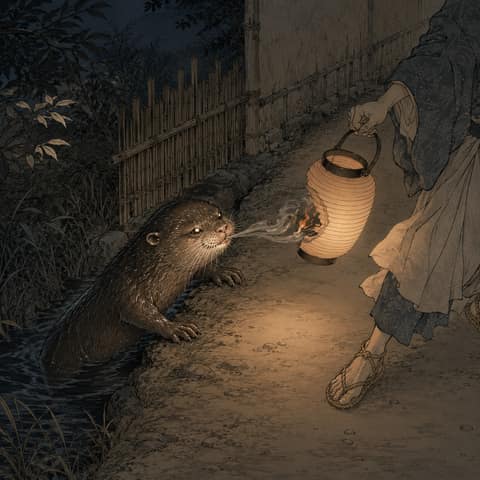
A rendition based on records and oral tales of the shape-shifting otter. It mimics human speech, but its intonation and sentence endings sound off, and when pressed with questions it gives nonsensical replies. Its guises range from a beautiful woman to a child or a monk, distracting passersby and misleading them with tricks such as snuffing lanterns, inviting people to wrestle, or making stones and tree roots appear human. In some regions it overlaps with kappa lore, possessing great strength in water and luring victims to look upward to gain advantage. In the context of spirit possession, it is feared for sapping a person’s vitality and inducing lethargy. While violent episodes are recorded, most encounters amount to threats or pranks.

Kazembō (Fire-Monk of Toribe Hill)

Kazembō (Fire-Monk of Toribe Hill)

Uncommon

kah-ZEN-boh

Traditional Account Compliant

霊・亡霊Kyoto

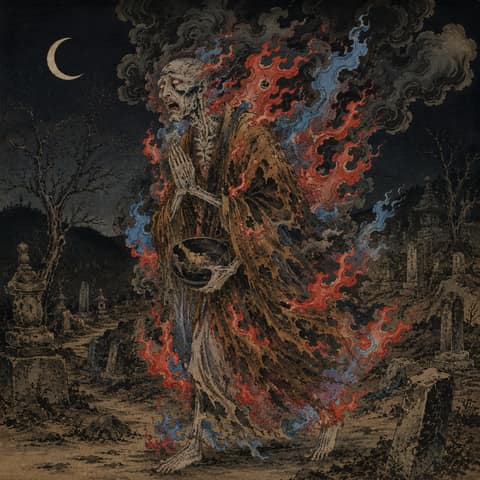
Centered on Toriyama Sekien’s illustration and framed by the funerary culture of Mount Toribe and beliefs in salvation through self-immolation. Kabenbō is not a single named human spirit but a class of monk spirits whose frustrated vows or lingering attachments turn into ghostly fire. It appears as a monk wreathed in flame and smoke, haunting graveyards and funeral routes at night. Rather than directly harming people, it instills awe and caution, fitting within tales of strange fires and spirit flames. A folk etymology links it by wordplay to Azabu’s Gazenbō, but evidence is inconclusive, with primary sources limited to Sekien’s print and modern yokai encyclopedias.

Kejōrō (Hair Courtesan)

Kejōrō (Hair Courtesan)

Epic

keh-JOH-roh

Printed Edition – Sekien School Variant

Household SpiritsEdo period

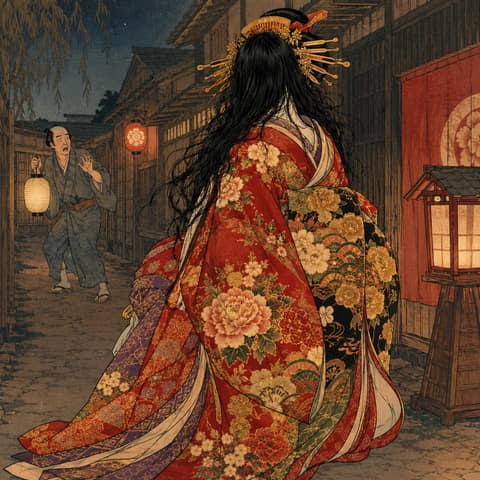
A canonical image based on Toriyama Sekien’s illustrations and Edo kibyoshi. Dressed like a courtesan of the pleasure quarters, its hair grows unnaturally long to shroud the body so the face cannot be discerned. Born from urban satire centered on Yoshiwara and a pun linking courtesans with shapeshifters, it appears as a literary construct with no proper name or origin tale. Sometimes read as a faceless yōkai, it serves as a symbol that reverses the viewer’s desires and assumptions. Sources are primarily printed editions, with scant oral tradition.

Kenmun

Kenmun

Uncommon

KEN-moon

Spirit of the Amami Banyan – Kenmun

Water SpiritsKagoshima

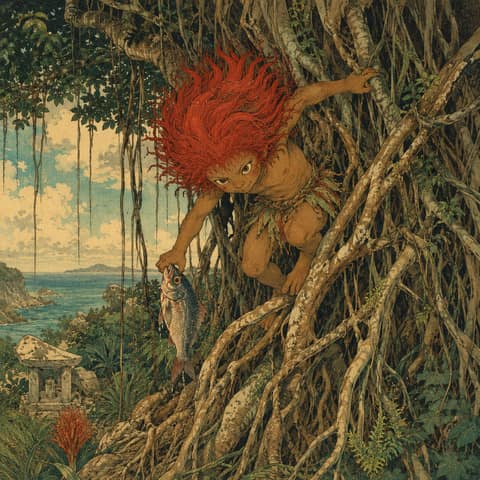
This version looks closely at the form and nature of the kenmun—kin to the kappa, yet bearing colors all its own from Amami. It stands about as tall as a child, its skin tinged with red, its body covered in ape-like hair, with hair that is black or red. In the dish on its head it holds the water that is its source of strength, and its fingertips, its drool, and the dish itself are said to glow faintly. Where the mainland kappa is bound to rivers and pools, the kenmun makes its home in old banyan (gajumaru) trees and moves between sea and mountains with the seasons—a distinctive character rooted in the nature of the southern isles. Its range, too, spreads from island to island, with its own tellings handed down on Amami Ōshima, Kakeroma, Tokunoshima, Okinoerabu, and elsewhere. In the tales of older generations it was most often a harmless spirit that helped people, but as the ages passed its mischievous, menacing side came to the fore. As the island life lived alongside the forest fades, the kenmun’s own place, too, is slowly drawing away.

Kenne-o

Kenne-o

Common

kenne-o

The Weighing Demon of the Eryoju Tree

霊・亡霊中国偽経『十王経』の三途の川の老爺、奪衣婆と対、渡来仏教

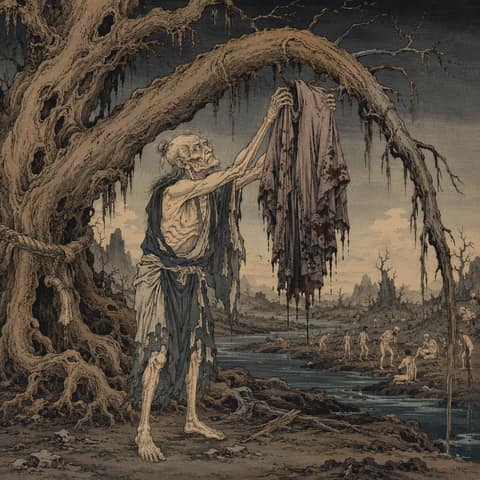
Kenne-o as the Underworld's Back-End Engineer. The base description noted that Kenne-o is Datsue-ba's counterpart, but here we dissect his "systemic singularity." While Datsue-ba handles the violent "front-end" task of directly interacting with the dead to strip their clothes, Kenne-o manages the "back-end" data processing: receiving the clothes and hanging them on the Eryoju tree to weigh the sins. The resulting measurement—how deeply the branch bends—is sent directly to King Shoko (or King Enma) as the foundational data for the deceased's trial. He does not even converse with the dead, specializing entirely in the role of a "ruthless measuring instrument" that mechanically calculates karma. An Inversion of Gender and Faith in the Japanese Underworld. Typically, in pairings of gods or demons, the male deity assumes the leading role while the female deity is subordinate. However, with the two demons of the Sanzu River, this dynamic is completely inverted. It was the old hag Datsue-ba whose name became known, feared, and ultimately prayed to by the commoners as a "cough-curing deity." The old man Kenne-o, meanwhile, faded entirely from the historical center stage. This occurred because Japanese folk religion exhibits a strong affinity for "motherhood" and the "shamanic power of old women," and because the visceral, direct action of "stripping clothes" was far more sensational in inciting the masses' fear. The Modern Rediscovery of Kenne-o. Even in modern subcultures such as yokai media, horror fiction, and video games, Datsue-ba often appears as a boss character or a memorable NPC, whereas Kenne-o's presence is minimal to nonexistent. Recently, however, alongside the re-evaluation of Buddhist art and hell scrolls, the iconographic significance of the "old man working silently beneath the Eryoju tree" is garnering renewed attention. Without him, the uniquely elaborate Japanese mechanism of "weighing sins by the weight of stripped clothes" simply collapses. To allow the overwhelmingly present Datsue-ba to exist, Kenne-o serves as an absolutely essential "demon as a stage prop."

Kera-kera Woman

Kera-kera Woman

Rare

keh-rah KEH-rah OHN-nah

Sekien Illustrative Edition

Ghosts & SpiritsJapanese folklore

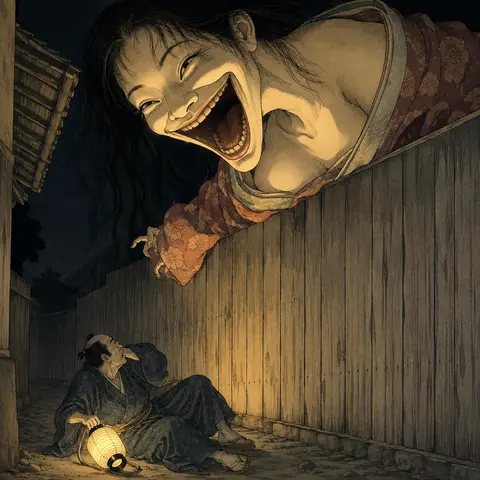
This entry centers on Toriyama Sekien’s imagery, supplemented only minimally by the popular explanations found in modern yokai handbooks. Citing the anecdote of Song Yu of Chu, Sekien likened a woman laughing alluringly over a wall to the spirit of a wanton. The plate itself does not detail temperament, degree of harm, or methods of dispelling, offering only form and associative origin. Later commentators emphasize a dry laugh heard by one person alone on an empty road, framing it as a psychological apparition that provokes fear, shame, and unease. Tangible harm is rarely noted, sometimes limited to shock, freezing in place, or fainting. Its hauntings are not tied to a specific region, and are imagined wherever sightlines are blocked—along city walls, crossroads, or over hedges—though sources are not cited. Accordingly, this version keeps Sekien’s visual prompt at its core, treating confusion by laughter as an ancillary function.

Keukegen

Keukegen

Epic

KAY-oo-kay-gen

Kehakigen (Traditional Version)

General ClassificationsJapanese folklore

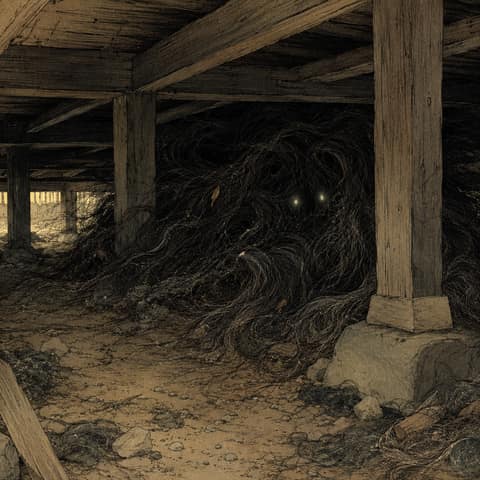
A hair-covered apparition of uncertain origin first depicted in Sekien’s illustrated compendium. Its name implies “seldom seen,” and this rarity is considered its defining trait. Later links to dampness or illness are editorial interpretations without firm oral tradition. Adhering to the original source, only its appearance and rarity are treated as certain.

Kidōmaru (Demon Prodigy)

Kidōmaru (Demon Prodigy)

Epic

kee-DOH-mah-roo

Classical Lore Version

Demons & GiantsKyoto

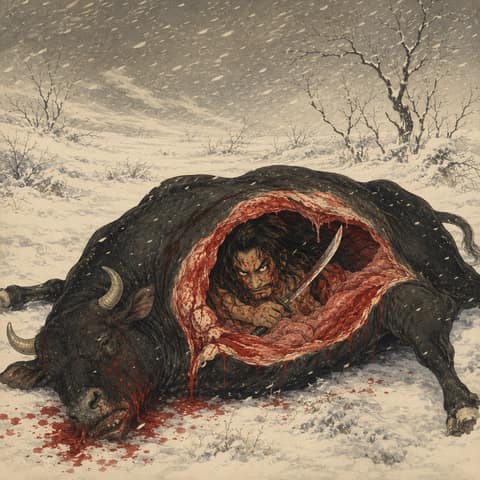
Centered on Kokon Chomonjū, this version frames Kidōmaru as an oni confronting Minamoto no Yorimitsu (Raikō) and Watanabe no Tsuna. After escaping capture, he shadows his targets and, anticipating them on the road to Kurama, lies in wait at Ichiharano by hiding inside the body of a cow—an audacious ruse seen through by Raikō’s caution. When Tsuna’s arrow breaks the concealment, Kidōmaru reveals his oni form and charges, only to be felled by a single stroke from Raikō. Iconography was fixed by Toriyama Sekien as a figure draped in cowhide in the snow, and early modern warrior prints often depict him as a rival in contests of sorcery. His lineage is unsettled: in the Unbara tradition he is the child of Shuten Dōji, while in war tales he is a novice from Mount Hiei. In all strands he is understood as a being who hides in wilds, watching for opportunity through brute strength, transformation, and stealth. Avoiding later embellishments, this reconstruction centers on his core behaviors of concealment, transformation, and ambush.

Kihachi

Kihachi

Epic

Kihachi

Kihachi, the Savage God of Aso's Frost

Oni / GiantKumamoto

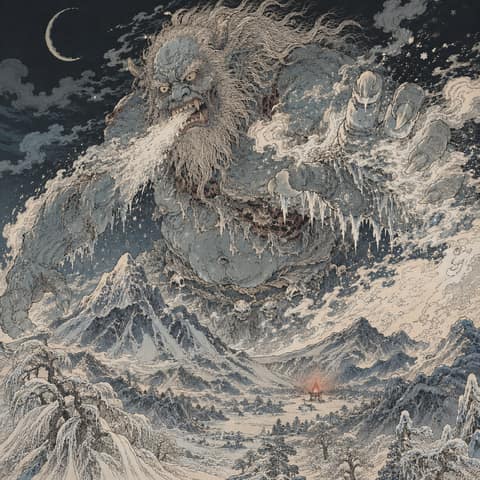
Kihachi was a savage deity who served as an arrow retriever for Takeiwatatsu-no-Mikoto, the pioneer god of Aso. Exhausted from his duties, he kicked an arrow back with his foot, enraging the god, who chased him to Takachiho and struck him down. Yet his severed body attempted to knit itself back together to revive, and even when buried in three separate pieces, he laid a curse, swearing to "make frost fall upon the Aso Valley." Left with no choice, Takeiwatatsu-no-Mikoto enshrined Kihachi as a deity at Shimo Shrine, where every year for fifty-nine days, a young maiden keeps a sacred fire burning day and night to warm his cold, severed body—a ritual that continues to this very day. A demon that brings the chill of frost to Aso, the Mountain of Fire. Slain only to become a god, he is the embodiment of the deep, complex layers of mythology woven into this land.

Kijimuna

Kijimuna

Legendary

kijimuna

The Banyan Spirit: Kijimuna

自然現象・自然霊Okinawa

The Nansei Islands Tree Spirit Lineage and "Banyan Culture". While the basic overview discusses regional name variations and dietary habits, this deep dive explores the profound roots of the "Banyan Culture in the Nansei Islands" upon which the Kijimuna stands. The banyan tree (*Ficus microcarpa*) is an evergreen of the mulberry family native to tropical and subtropical climates, characterized by its imposing form draped in countless aerial roots. Ancient banyans, some over several centuries old, are revered as sacred trees where deities reside and have been fiercely protected as objects of worship in the *Utaki* (sacred groves) across Okinawa. The Kijimuna is inextricably tied to these ancient banyans; their existence is merged with the local religious belief that cutting down an *Utaki* tree will rain catastrophe upon the entire village. Comparative Folklore with the Amami "Kenmun". The Kijimuna is frequently compared by folklorists to the "Kenmun" of Amami Oshima—a yokai that shares traits like a red body, dwelling in trees, and a love for fishing and sumo wrestling. The academic distinctions are as follows: - The Kenmun is often categorized alongside the Kappa as more of a "water anomaly," whereas the Kijimuna leans heavily toward being a "nature spirit" of the trees. - The Kenmun prefers sumo wrestling, while the Kijimuna's core folklore revolves around cooperating in fishing. - The Kenmun features many tales regarding male/female pairs and married couples, whereas the Kijimuna is fundamentally treated as an individual entity. By grouping both under the broader umbrella of "Tree Spirits of the Nansei Islands," the island folklore of Okinawa and Amami emerges as a unified cultural sphere. This distribution correlates significantly with the history of human migration and linguistics (the Ryukyuan languages and Amami dialects) in the region. "Fish Eyes" and the Okinawan Concept of the Soul. The Kijimuna's peculiar habit of eating only the left eye of a fish (or both eyes, in some telling) is not mere grotesque eccentricity. In ancient Japanese and Ryukyuan animism, the "eye" was considered one of the primary vessels where the soul resided. Eating an animal's eyes was interpreted as the act of consuming its spirit. Thus, the Kijimuna is not eating the physical flesh of the fish, but draining its soul. This gave rise to regional customs where the leftover, eyeless fish was prized as a "body emptied of its soul." This represents a distinct Ryukyuan variation of the pan-Japanese "Eye = Soul" ideology dating back to the Jomon period. The "Befriend, then Rupture" Narrative Structure. Tales of relations between humans and Kijimuna strictly follow a set pattern: "Massive bounties via fishing cooperation → A minor human blunder (breaking a promise, damaging a banyan, farting) → A total rupture → A lifelong curse." This is not a simple morality tale of good versus evil. It functions to transmit the ethics of living in moderation with nature through the allegory of a "transactional relationship" with a tree spirit. Societal rules—such as "do not cut the banyan," "do not monopolize the fish," and "show respect to entities of the otherworld"—are encoded into a narrative structure designed to be passed down to the next generation. Okinawan Yokai Studies from Kunio Yanagita and Fuyu Iha. Genshichi Shimabukuro's 1929 *Yanbaru no Dozoku* systematically recorded the oral traditions of the Yanbaru region and stands as a pivotal document in the lineage of Okinawan folklore studies pioneered by Kunio Yanagita and Fuyu Iha. Pre-war Okinawan folklore heavily attracted the attention of mainland Japanese academia. As a "unique spirit non-existent on the Japanese mainland," the Kijimuna occupies a critical position in comparative Japanese yokai research. Post-war, local researchers like Tsuneo Sakihara carried the torch, ensuring the spirit's inclusion as a standalone entry in major modern encyclopedias like Kenji Murakami's 2005 *Nihon Yokai Daijiten* (Comprehensive Dictionary of Japanese Yokai). Resurgence in Modern Tourism and Pop Culture. During the community revitalization movements in post-war Okinawa (1970s–90s), the Kijimuna (and Bunagaya) was reconstructed as a powerful symbol of regional identity. Examples include the "Village of the Bunagaya" in Kijoka, the Okinawa Television mascot "Yu-tan," its appearance in Tsuyoshi Takamine's 1989 film *Untamagiru*, and the annual "Kijimuna Festa." Its robust survival in both tourism and modern media is highly exceptional, especially considering how many mainland yokai exist today solely within the pages of old books. As a spirit embodying Okinawa's perspective on nature, sacred trees, and the ethics of coexistence, the Kijimuna remains a living entity in the 21st century.

Kijo (Demon Woman)

Kijo (Demon Woman)

Uncommon

KEE-joh

Canonical Folkloric Type: Kijo (Ogress)

Demons & GiantsVarious regions (notably Tōhoku, Shinano, Ōmi, and around Ise)

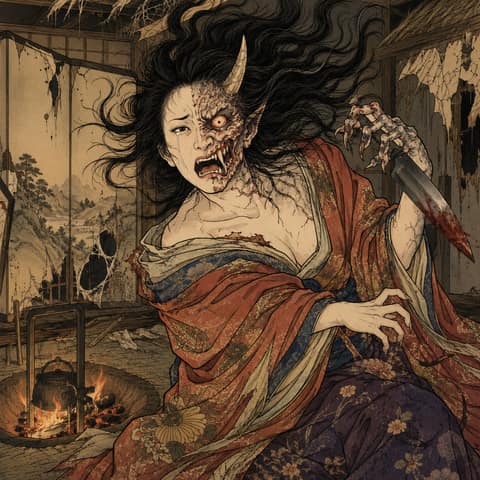
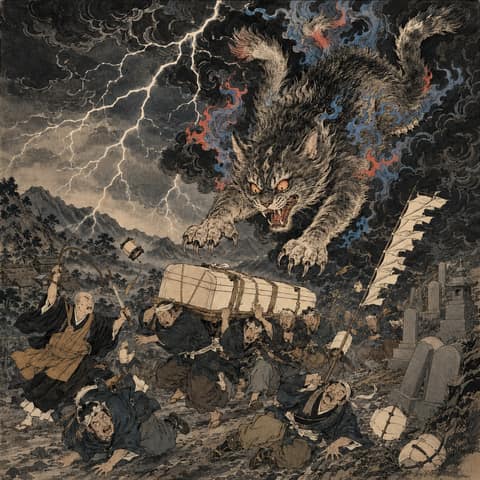
A standardized profile of the archetypal kijo found across regional tales. She embodies the belief that human passions can ripen into demonic nature, appearing as anything from a beauty to an old woman. By night she lures travelers in mountains or at crossroads, invites them into a lodge or hermitage, then reveals her true form. Many stories end with her being driven off or laid to rest by Buddhist rites, serving as both horror and moral instruction. Depending on locale she may eat humans, target infants, or drink blood, all understood as outcomes of taboo-breaking, suspicion, and obsessive attachment. In Noh, sekkyō, and origin-picture scrolls she is depicted with horns, fangs, and bristling hair, the shock between human guise and oni form being a key dramatic moment.

Kiko (Air Fox)

Kiko (Air Fox)

Uncommon

ki-ko

The Kiko — Mid-Ranking Fox Become a Breath of “Ki”

Animal ShapeshiftersThroughout Japan (third rank in the fox hierarchy)

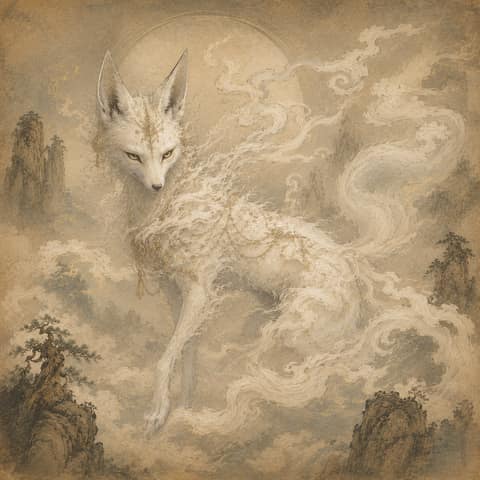
This version digs into the role the Kiko plays among the four fox ranks: that of a boundary. The fox hierarchy is not merely an order of strength but a single ladder by which the beast draws step by step closer to spirit and to god. The rung on which the Kiko stands is the very seam dividing “the flesh-bodied Yako” from “the form-shedding Kūko and Tenko”. Where the Yako is known for visible mischief — leading travelers astray, taking on a guise to fool them — the Kiko, having already slipped free of its shell, turns its workings further inward: possessing a person, troubling the heart. The view that the fox in tales of possession is no ordinary Yako but a Kiko of deeper attainment is rooted right here. There is one more thing visible in the Kiko: incompleteness. Where the Kūko holds twice its power and goes on to become the Tenko and depart the human world, the Kiko cannot yet cut its ties to people. Swaying between the instinct of the beast and the detachment of a god, deceiving and possessing by turns, it is in a sense a fox still only halfway through its training. If the higher foxes are beings that watch quietly over the world, the Kiko is the one that, nearest of all to humankind, still struggles on.

Killing Stone

Killing Stone

Epic

Sesshōseki

The Killing Stone of Nasu, the Poison-Breathing Stone

Dwellings and ObjectsTochigi

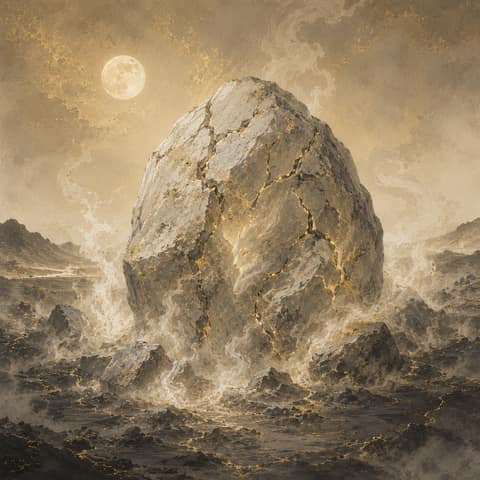
This version looks at how the Sesshōseki, as a poison stone, has been told of on the noh stage and at sites of worship. In the noh play Sesshōseki, when the traveling priest Gennō approaches the stone on the Nasu Plain, a village woman appears and tells the stone’s origin; in time the stone splits open and the spirit of the fox emerges from within. The spirit repents of the evil deeds of its life, vows to attain buddhahood, saved by the priest’s ritual power, and vanishes. Here the Killing Stone is not merely a stone that kills, but something in which a lost soul dwells, to be quieted through memorial rites. Around the Killing Stone lies a desolate land where no plant grows and sulfurous smoke hangs in the air, called from of old the Sai-no-Kawara, lined with countless Jizō statues that mourn the dead. The Nasu Onsen Shrine stands close by, and at its Goshinka (Sacred Fire) Festival each May, a rite is said to be held in which the shrine’s fire is carried before the stone to quiet the mountain’s fire and the stone’s numinous power. Seen this way, the dread of the Killing Stone is rooted less in a stone that moves of its own will than in the sense of a boundary: “step past here and you lose your life.” The very zone filled with poison fumes was feared as a threshold between the world of the living and the world beyond, and it was believed that calamity reached only those who trespassed that boundary.

Kincho

Kincho

Epic

Kincho

Kincho, Hero of the Awa Tanuki War

ShapeshifterTokushima

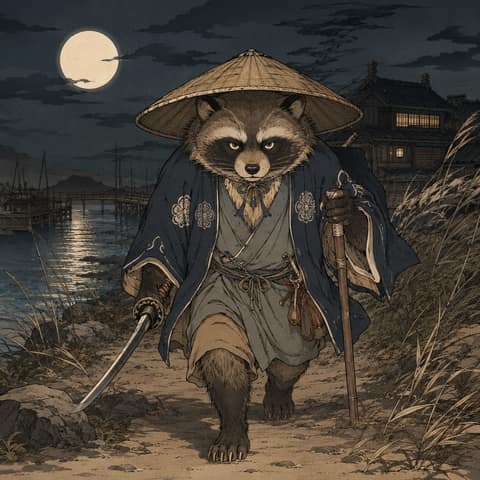
This is Kincho, the guardian deity of Yamatoya and the tanuki commander of Hikaino. Originally a highly loyal tanuki saved by Moemon, he strove to bring prosperity to the dye shop in return for his life. He later went to train under Rokuemon, the supreme commander of Shikoku's tanuki, but despite his extraordinary talents being recognized, he incurred Rokuemon's wrath by refusing a marriage proposal. After his friend was murdered, Kincho led the Hikaino tanuki army in the epic three-day "Awa Tanuki War" against Rokuemon. Though he ultimately vanquished his arch-nemesis in a one-on-one duel, he too succumbed to his wounds. Revered in death as Kincho Myojin, his name lives on today as a god of business prosperity and victory.

King of the Waterfall Spirit

King of the Waterfall Spirit

Epic

tah-kee RAY-oh

Sekien Iconographic Interpretation

Deities & Divine SpiritsShiga

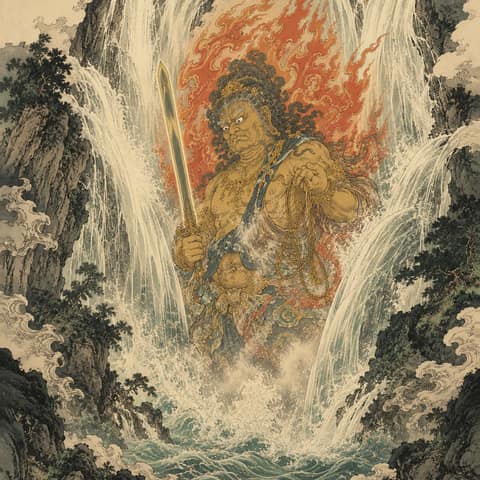
An interpretive line anchored in Toriyama Sekien’s iconography, organizing the notion of Fudō Myōō’s epiphany at waterfalls as a yokai-encyclopedia entry. The title “Takiryōō” is treated as a pictorial theme, while the entity itself is viewed as a manifestation of Myōō devotion. It appears at waterfall basins across the provinces, subduing demons and malign influences, and is cited in miracle tales told by ascetics and pilgrims. Its virtue and demon-subduing nature take precedence over yokai-style terror, placing it closer to a divine spirit among strange phenomena. Concrete site names and dated incidents are scarce, with accounts drawn mainly from iconographic materials and temple origin narratives.

Kinmamon

Kinmamon

Divine

KEEN-mah-mohn

Traditional Version (Ryukyu Shintoki)

Deities & Divine SpiritsOkinawa

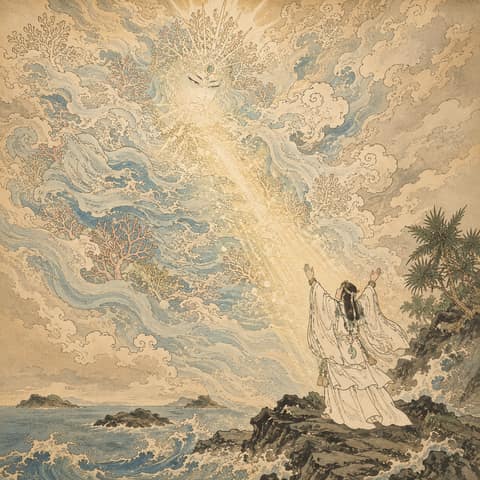
Based on Baguchu’s early 17th-century Ryukyu Shintoki. Kinmamon possesses dual yin–yang aspects: the descent from the heavens evokes the distant Everworld, while the ascent from the sea bears the character of a sea-borne visiting deity. Its visitations follow set cycles and rites, delivering oracles to the royal court and communities through possession of the highest priestess, the Kikoe-ōgimi. Folklorically, its core rests on the otherworld symbolized by Nirai Kanai, blessings and ordering power from beyond the sea, and the legitimizing authority that upholds priestess rituals. Literature reinforces its guardian nature and imagery of a palace beneath the sea, though details vary by era and many ritual specifics remain unclear. In modern times some reinterpret it as a chief deity, yet broad popular distribution is hard to confirm. Setting aside creative embellishment, four features remain stable: visitation, possession, oracle-giving, and an otherworld across the sea.

Kinrei (and Kintama)

Kinrei (and Kintama)

Epic

kee-NREH

Kinrei • Kintama, Curated Tradition Edition

Ghosts & SpiritsAcross Japan (noted in Edo, the Kanto region, and Suruga)

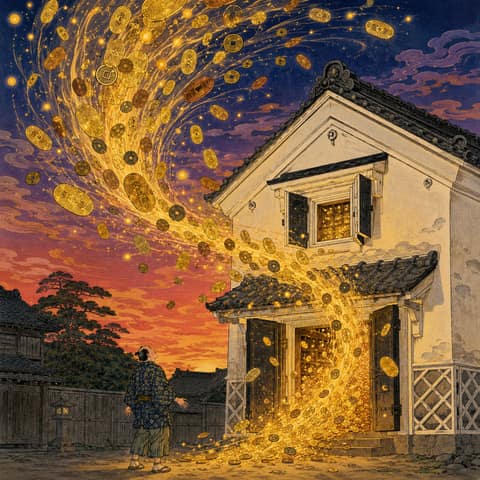
Kinrei appears in Edo-period art and commentary as a spiritual notion symbolizing the reward for moral practice, with household prosperity explained as part of a heaven-given order. Rather than a visitor like a tangible kami, it is understood as the auspicious aura born of selflessness and good deeds. Kintama, by contrast, is told across regions as a strange fire or orb-like visitant that brings luck to a home when respectfully enshrined, yet turns ominous if scraped or damaged, a taboo tied to its form. Early chapbooks and ghost collections depict swarms of coin-spirits drifting in the evening sky, or a roaring sphere flying in to enter the honest. Postwar retellings often link it to the rise and fall of household fortunes, but older records stress symbolic meaning and will-o’-wisp tales. Because names and traits overlap among regional traditions, sources differ in how they use “Kinrei” and “Kintama.”

Kinutanuki

Kinutanuki

Rare

kee-noo-tah-NOO-kee

Based on Sekien’s Illustrated Compendium

Animated Objects & UndeadEdo (place of publication)

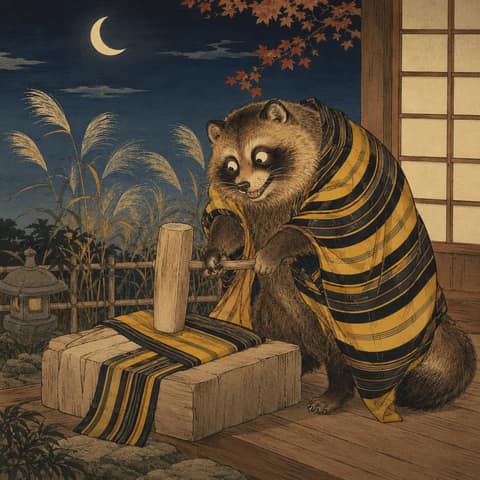
The Silk Tanuki is a yokai born from printed books, a visual conceit that overlays vocabulary from Hachijo silk (Kihachijo) with tales of shape-shifting tanuki. In Sekien’s example, a tanuki draped in silk patterns is paired with a caption that evokes both the name Hachijo and popular lore of trickster tanuki. Independent oral traditions are scarce; later readings add the sound of fulling blocks and cloth-beating gestures, but these remain reinterpretations of the image. Its nature aligns with object-spirits and a mitate-based tsukumogami, more a crystallization of wordplay and design in print culture than a field-reported apparition. It is described as wearing the yellow-striped Kihachijo motif and revealing itself less by appearance than by nocturnal cloth-beating sounds, yet such traits are interpretive and no fixed image is established.

Kiri Ichibē

Kiri Ichibē

Uncommon

KEE-ree EE-chee-bay

Traditional Lore Version

Ghosts & SpiritsNiigata

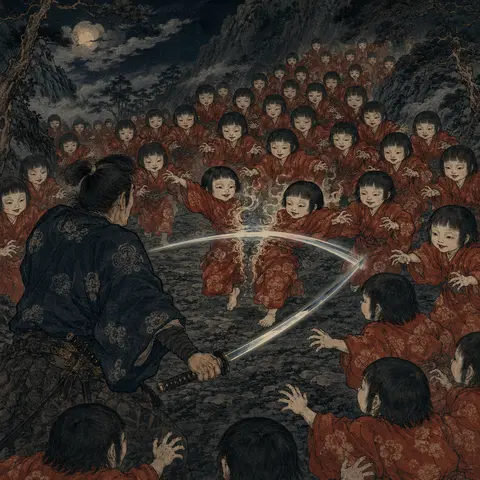
A multiplying apparition said to appear at night on mountain passes and bypaths in Niigata. It takes the form of a small child to lower one’s guard, then hounds its target into striking; each cut doubles its number, forcing flight. Its true nature is unstated—seen as a vengeful spirit or a mountain entity—but folklore stresses that its power fails at dawn or at the cock’s crow. The name “Ichibai” points to its doubling trait, and tales note chicken motifs on sword fittings acting as talismans. Its exact origin is unknown; encounter stories warn against night travel on mountain roads.

Kiyohime

Kiyohime

Legendary

きよひめ

Kiyohime, the Serpent Woman Who Burned Dojoji

Human-Yokai / Half-Human Half-YokaiWakayama

This version places Kiyohime's personal nature at the forefront of the Dojoji legend. She is not merely a serpentine monster. Four layers overlap within her: the woman who confessed her love, the woman who was fled from, the woman who crossed the river, and the serpent woman who burned the bell. Dojoji Temple conveys the story through picture scroll storytelling (etoki), and in the Noh play *Dojoji*, the shirabyoshi dancer from the sequel tale disappears under the bell, only to reappear as a serpentine demoness . In other words, the terror of Kiyohime lies in the fact that the incident of the past is never truly over, being continually actualized on the stage of performing arts. In terms of yokai classification, Kiyohime is simultaneously a "serpent woman" and a "woman turning into a Hannya." She gathers within a single human body the anger and sorrow carved into the Hannya mask, the jealousy Hashihime left at the bridge and river, and the serpentine calamity mythologically displayed by Yamata no Orochi. The temple bell should have been a safe hiding place, but upon touching Kiyohime's obsession, it becomes a furnace instead of a refuge. This is where the symbolic nature of the Dojoji legend lies. The Buddhist temple, the Kumano pilgrimage route, the water of the Hidaka River, the metallic sound of the bell, and the fire of a woman collide at a single point, changing a romance tale into a yokai tale.

Kodama (Japanese Tree Spirit)

Kodama (Japanese Tree Spirit)

Epic

kodama

Kodama (Ancient Tree and Echo Spirit)

Mountain and Forest SpiritsTokyoOkinawa

This is the classical kodama: not a mascot-like creature, but the unseen presence of an old tree and the voice that seems to answer from the mountain. It draws on older ideas of tree divinity, on the belief that ancient trunks hold spiritual force, and on the folk reading of yamabiko, the returning mountain echo. The kodama may remain invisible, showing itself only through sound, silence, unease, or the taboo surrounding a tree that should not be cut without ceremony. This version emphasizes the traditional boundary: kodama can be described as a tree spirit, a forest yokai, or a lingering kami-like presence, but its power lies precisely in not fitting only one category.

Kodama (Japanese Tree Spirit)

Kodama (Japanese Tree Spirit)

Epic

kodama

Kidama-sama of Aogashima

Mountain and Forest SpiritsTokyoOkinawa

A wood spirit from Aogashima in the Izu Islands, long honored by islanders as “Kidama-sama” or “Kodama-sama,” enshrined at small altars set at the roots of great cedars. The island forest drinks sea wind and volcanic breath, driving deep roots through shallow soil. The spirit dwelling there is not a mere echo, but an ancient memory woven from the age of the tree itself. At dawn mist, if you call its name before the shrine, the reply comes only once, a slightly damp sound, taken as a sign of assent. If it returns twice or thrice, uneven and jarring, it warns that the season is wrong—do not cut. Before felling wood, locals offer a handful of rice, sea salt, and a cup of shochu, tap the trunk three times, and state the reason and the count. Kidama-sama honors this rule: when respect is paid, it sets the wind fair, keeps blades from dulling, and prevents workers from losing their way. If slighted, the mountain’s sounds grow muddy, blades kick against knots, and toil is shadowed by illness. Its form is uncertain, yet elders speak of a “shadow of rings”: when the bark reddens in the evening glow, a single pale eye like a water mirror appears deep in the grain and melts away. Before great winds or earth-rumblings, pebbles at the shrine rearrange themselves, a sign of the forest’s breath in disorder; those who heed it halt farm and boat work and lessen harm. It is not closed to outsiders: give your name, bring salt as a gift, keep your voice low before the shrine, and the returning echo softens and the mountain path confuses less. Laughing and shouting bring a delayed, high, splintered reply that lingers in the ear and upsets your sense of direction. When a tree’s life nears its end, Kidama-sama may appear in dreams to say, “Now I change worlds.” Villagers take this as a good omen, planting three saplings after a fall and moving the shrine to the new root to carry the breath onward. Thus the island forest renews by generations, and the spirit moves without fading, a vivid afterimage of the old tree gods living strong on a sea-bound isle, quietly listening as a mediator between mountain rites and ocean sustenance.

Kodama (Japanese Tree Spirit)

Kodama (Japanese Tree Spirit)

Epic

kodama

Southern Island Kinushi-Haunted Kodama

Mountain and Forest SpiritsTokyoOkinawa

Among the kodama whose echoes are heard across Japan, a southern island variant dwelling especially in Okinawa’s Yanbaru and sacred utaki groves is known as the Kinushi-Haunted Kodama. As its name implies, it settles like a lord within each individual tree, living in sync with the tree’s breath, the flow of sap, and the spread of its roots. Old lore says that if a woodcutter lightly taps the trunk before the first axe bite and offers a name and prayer, the kodama will tune the sound within the wood, align the wind with the intended fall, and guide the work safely. Strike in silence, however, and the tree will creak and cry, hollow tones will stutter across the mountains, and within days the surrounding leaves will lose color as if scorched. On uneasy nights, a heavy thud may carry through the mountain village though no tree has fallen; this is said to be the cry of a Kinushi-Kodama in unbearable pain. The tree where that sound is heard will soon shed dieback from its crown, white mycelium will gather at the roots, and its life will end. Witnessing this, elders understood that sound is the true form of the kodama, and passed down taboos: do not raise your voice at the forest’s threshold, and when calling a tree by name, pause to await its answer. Though it has no body, at dusk the air around the roots will sometimes shimmer like water and a childlike laugh may echo twice or thrice; islanders take this as a good omen and offer salt and black sugar to that tree. If a small child naps in its shade, mosquitoes and midges keep away and the sea breeze softens. Elders say that when winds from beyond the sea make their rounds among the mountain gods, the kodama resonates with the wind and guards the village bounds. Often confused with mountain echoes, the Kinushi-Haunted Kodama differs in that it does more than repeat a voice: by the timing and tone of its reply it foretells fortune. A clear prompt note means a good day for work, a heavy delayed reply is a sign to rest, and a muffled response from within the trunk portends sickly leaves. The islands also keep rites for transplanting trees. On the eve of root-pruning, stroke the trunk three times and name the soil of the new site; the kodama will fold the root tips and slim itself so it will not thirst during the journey. Neglect this and hollow knocks will sound nightly at the new place and the household may fall to fever. In coastal banyans dwell playful spirits known as Kijimunā. In older thought, Kijimunā are those Kinushi-Kodama that took on a more human-like notion of form: the kodama is the voice of the roots, the Kijimunā the laughter of the branches. Both are tree divinities at heart, guiding the respectful and chastening the careless with sound. Thus in the southern island forests, sound is law, and people and trees have long lived by each other’s breath.

Showing 193 - 216 of 479 yokai