Yokai Encyclopedia

Encyclopedia of Japanese Yokai

121 Yokai|14 Category|Page 2 of 6
Localization in Progress - More content available in Japanese version
View Japanese
Sort by: NameAscending
Epic
  • Funayūrei (Boat Ghosts)

    Funayūrei (Boat Ghosts)

    Epic

    foo-nah-YOO-ray

    Murasa (Nigashio-Lodged of Tsuma Village)

    Aquatic SpiritsYamaguchiFukushima

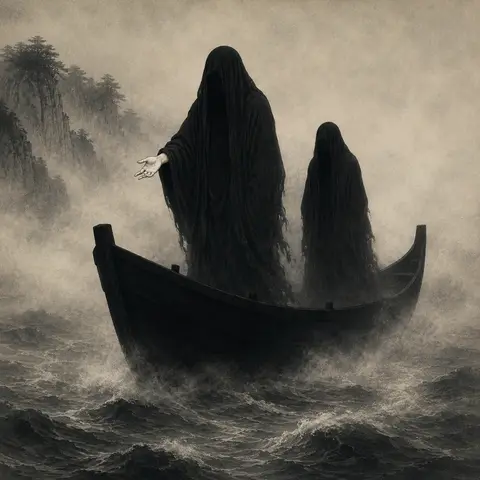
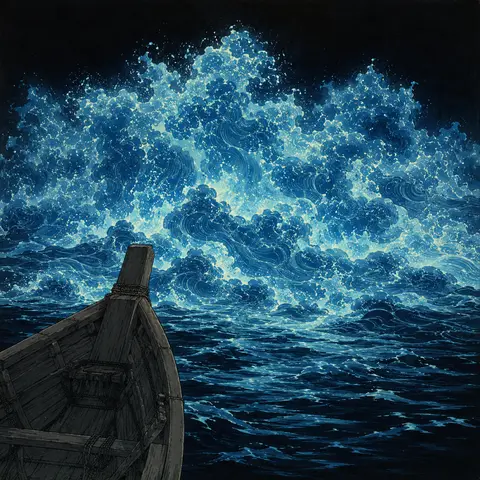
    A variant of the funayurei recorded in Tsuma Village, Oki District, Shimane. On nocturnal seas, clusters of faint lights gathering are called Murasa. Locals call the countless drifting sea sparkle nigashio. When that flow blurs into a single round mass that pulses like a pale blue breath, it is feared not as mere sea gleam but as remnants of the drowned lodging in the tide, namely Murasa. It will suddenly gather before a bow to bar the way, dimly lighting the surface and throwing off the sense of course. If a boat rides over it, the light scatters at once to the four directions, shadows on deck and gunwale sway strangely, and though the helm bites, the hull feels as if spinning uselessly on the sea. Not individual ghosts grasping with limbs, but a swarm of lights stroking the hull and upsetting the rhythm of the waves to lure toward grounding, they say. Late at night, when the sea flashes “chik” bright as day for a beat and all falls still, villagers say one is “possessed by Murasa,” stop the rudder, lash a dagger or kitchen knife to a pole, and cut the surface three times. At the sound of blade parting tide, the light thins like unwinding thread and scatters back into ordinary nigashio. Local lore holds that passing a bottomless dipper or throwing rice balls or ash has little effect here, while quietly setting incense flowers or dumplings adrift makes the light keep its circle, skirt the boat, and open a path. Murasa raises no voice, nor demands a bailer. Yet on the sixteenth of Obon the rings double and triple, drawing near and away, harboring an inner dark like a ghost ship’s shadow. Working the sea then is forbidden, for even a veteran skipper is dazzled and drawn to the cape’s black rocks. Its color is cold yet clear, and when met with shouts and disorder it flickers as if with a thin smile. Before those who ravage or foul the sea, the ring narrows and only the water at one’s feet grows unnaturally bright, leaving no escape. Conversely, for those who mourn kin lost at sea and make offerings, it lays a guiding streak in the offshore dark and sets distant whitecaps in relief to lead to safe water veins. Thus Murasa is both a drowning ghost and a guiding ghostlight. On Tsuma’s shore, the custom remains on the first catch night to chant words that calm both sea gods and the dead, then cut the tide with a blade before casting the nets. The light cannot be scooped by hand, nor a voice seized, yet it readily dissolves its form in answer to the threefold cutting rite and quiet offerings, returning to mere nigashio.
  • Funayūrei (Boat Ghosts)

    Funayūrei (Boat Ghosts)

    Epic

    foo-nah-YOO-ray

    Ugume (Kyushu West Coast Variant)

    Aquatic SpiritsYamaguchiFukushima

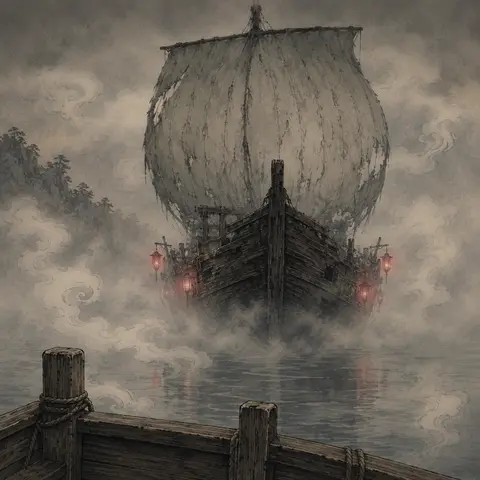
    Across the west coast of Kyushu—especially from Hirado in Nagasaki to Amakusa and Goshoura Island—a variant of the funayurei is known as the Ugume. It appears in night fog or under a windless overcast stillness: an old sailboat with bellied sails despite no wind, or a small unmanned skiff, gliding up silently from behind. Its lights are faint, wavering along the gunwales like something between flame and fireflies. The closer it comes, the farther the sound of waves recedes; though the vessel seems to move forward, the surface of the sea slips backward. This is the sign of possession: cold water seeps into the bilge, oars grow heavy, and the compass drifts a hair off. The Ugume has no fixed form, sometimes turning into the silhouette of an island to lure boats, sometimes showing a non-existent cove offshore to run them aground. From the shadow of a rotted mast it will murmur, “Give me a bilge-scoop,” asking for a scoop or ladle to bail. One must hand over a scoop with a hole in the bottom; give a sound one by mistake and it will pour water over the gunwale without cease, weighing the boat down to sink. In Hirado they say a pinch of ash cast upon the sea will lift the fog. On Goshoura, one calls out “Dropping anchor!” throws a stone first, then casts the anchor—a ritual aligning words and action to tell what lies below, “We intend to stay here,” whereupon the Ugume loosens its hold. A thread of tobacco smoke will also thin it, sending it retreating toward the stern. Offerings include rice balls, rice cakes, and a small amount of ash, and special caution is urged on the sixteenth day of Obon. The Ugume are less indiscriminate vengeful ghosts than a host of those who slipped outside the sea’s order, drawn by lapses in shipboard manners, careless speech, or neglected greetings to the sea gods. If faced squarely, with proper names and rites observed, they slip back into the shadow of the tide. The fear that “it disguises itself as boats or islands” along Kyushu’s west coast reflects memories rooted in fickle currents and tangled shoals—an embodiment of losing one’s way at sea. Ugume also portend maritime misfortune; in fishing villages it is said that on nights they draw near, someone somewhere has lost the path home.

  • Funayūrei (Boat Ghosts)

    Funayūrei (Boat Ghosts)

    Epic

    foo-nah-YOO-ray

    Mouren Yassa, the Vengeful Sea Ghost (Tales of Choshi and Kaijo District)

    Aquatic SpiritsYamaguchiFukushima

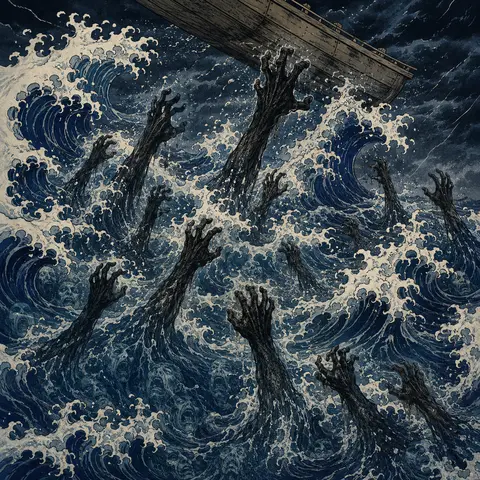
    A variant of the funayurei remembered along the coast from Choshi City through the old Kaijo District. On stormy nights when fog smothers the sea and whitecaps rise, it approaches from the offshore dark chanting “mōren yassa mōren yassa” in the rhythm of oar beats. The voice rises and falls with wind and current, then stops just beneath the gunwale. A moment later a black dripping arm reaches up from the water and croaks, “Lend a scoop.” Locals gloss mōren as “restless dead,” inaga as “water ladle,” and yassa as the chant for bringing boats in line. When these three arrive together, it portends a surge of drowning souls trying to board. They are a collective of those lost to the sea who have no shore to return to, strongest on the 16th of Obon and on the monthly death-days of the unlaid. Their aim is to sink the boat and add new hands to their wet rail. With the borrowed ladle they tap in seawater, and to the yassa beat they shift the water’s weight toward the bilge until the boat is swallowed. Time-honored countermeasures are set. First, hand over a ladle with the bottom knocked out. Showing a vessel that takes from the sea but not the boat convinces the dead that “water will not enter the hull” and breaks their rhythm. Second, fix them with a stare and hold the boat still. Do not steer, face the wave crests, breathe short, and the swarm loses its heading and melts into the fog. Third, throw ash or rice balls. Ash, as the remnant of shore-fire, points a way home, and rice balls salted for the sea serve as an offering to calm the tide. In Choshi, the one who calls the first haul keeps a guarded tongue, for Mouren Yassa is keen to a skipper’s words. Taboos are strict: putting out to sea on Obon’s 16th, scorning the foghorn and not sounding it, or laughing with the tide-waiting torii at your back will summon them. Their form shifts: they may pace you as a ghost ship under a furled white sail, or press the prow like the shadow of an umibozu. Yet what lingers in the ear is always the beat of “mōren yassa,” and when it fades, the danger passes. Early modern picture books paint them as vengeful spirits, but elder fishers call them “the voice that restates the sea’s law.” If flowers or dumplings are set afloat at the shore, by morning the prow-weed is shed and net frays are stilled. The name later was written as “Fierce Spirits, Eight Calamities,” a dread title of wild might, but at root they are a drifting host. If you hear them offshore, knock out the ladle’s bottom, set your prow straight, and mind your words—that is the shorewise rule kept at Choshi.

  • Funayūrei (Boat Ghosts)

    Funayūrei (Boat Ghosts)

    Epic

    foo-nah-YOO-ray

    Namōrei, Black Little-Craft of Kosode

    Aquatic SpiritsYamaguchiFukushima

    A variant of the funayurei from Kosode in Ube Village, Kunohe District, Iwate (now Kosode, Kuji City), whispered locally as the Namōrei. During night squalls or heavy sea fog, a small black-painted boat with a high stern and low prow appears soundlessly, as if running back along a tide line offshore. Its silhouette parts no waves, only blurs the surface like ink, and though no oar or sail is seen, it glides forward. One or several shadowy figures in glossy black garments stand along the gunwale, and only their voices slice through the wind. In a low, lingering tone they demand, “Hand over an oar,” or “Answer,” and if one replies, they at once sheer alongside and seize the other boat’s heading and helm. The Namōrei are the remnants of those who perished at sea and could not return home, craving oars and sculls—the “power to bring one back.” Elders warn that answering opens the mouth of one’s soul, and lending an oar is akin to yielding a boat’s lifeline. Thus in Kosode, when called from the sea at night, one must never respond, but either stand at the rail and glare steadily, or keep one’s hat brim pulled low in silence. The Namōrei are weak to the eye; met with a powerful gaze, they and their black boat melt into the tide fog. If they ask for an oar and are given a bottomless ladle, a split oar, or a holed bamboo scoop—“useless things”—their fixation breaks as seawater spills out at once. This is the widespread funayurei art of “passing the empty,” and along the Tohoku coast, refusing to answer and never handing over anything of substance were especially prized. The black boat appears when the stars hang low, on the sixteenth night of Obon, or when the offshore singing sands cry. White handprints multiplying on the rail and the gunwale growing heavy and low foretell their clinging approach. In contrast, scattering a pinch of rice or ash from one’s palm and sweeping it thrice to sea is said to dissolve the prints into the tide. In Kosode’s rocky coves, sailors shun picking up driftwood oars and loading them, and before setting out they tie a single thread to the oar’s handle to mark a “way home.” The Namōrei are keen to advantage, following slips of speech and bonds of lending to insinuate themselves, so banter and calling across boats are taboo. At a break in the morning fog the black craft vanishes at once, leaving only a chill tang of brine and dark water-spots on the rail. Those who see it refrain from offshore nets that year and offer incense, flowers, and dumplings to the beach deity, as old custom dictates.

  • Futakuchi-onna (Two-Mouthed Woman)

    Futakuchi-onna (Two-Mouthed Woman)

    Epic

    foo-tah-KOO-chee OHN-nah

    Futakuchi-onna

    Half-Human BeingsChibaTokyo

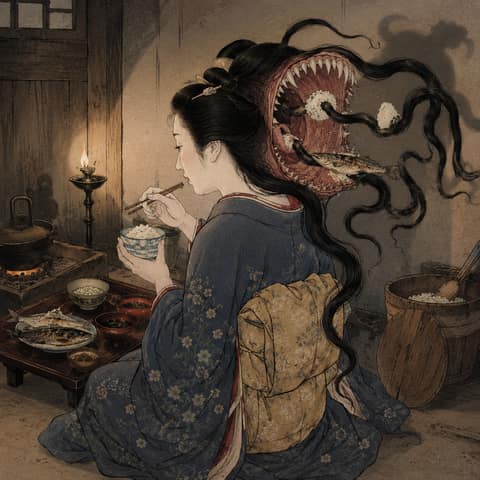
    Aligned with Edo-period strange tales, this type’s true hunger is amplified by a mouth on the back of the head. The front mouth feigns daintiness, while the rear mouth manipulates the hair to pull dishes close. It secretly devours nearby food, sowing domestic discord and appearing in stories about household budgets and shame. In art, a fanged mouth peeks from between coiffed hair. Said to be keen to sounds and smells, it hides its nature deftly in public.

  • Garappa

    Garappa

    Epic

    Garappa

    The Deposed Water God of Southern Kyushu

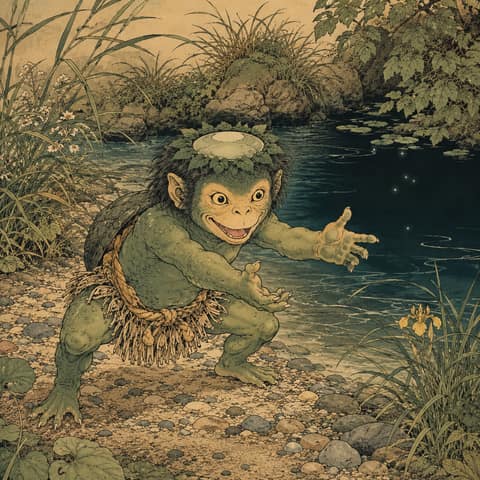
    As pointed out by folklorist Kunio Yanagita in works like *Yokai Dangi* (Discussions on Japanese Monsters), the Garappa is perhaps the most vivid surviving example among all Japanese kappa legends of a "former water deity that has degenerated into a yokai over time." Their seasonal metamorphosis—entering the mountains in winter to become *yamawaro* and returning to the rivers in spring—is the very embodiment of the cyclical rotation of the mountain god and the rice paddy god in traditional rice-farming culture. They are frequently feared as symbols of water-related disasters, prone to playing vicious pranks and occasionally claiming human lives. Yet, if treated with the proper respect, they transform into "reliable neighbors" who bless fishermen with bountiful catches and work through the night to assist with grueling rice planting. This dual nature is the very core of animism. Understanding the Garappa requires seeing beyond a simple river monster; in the harsh natural environment of southern Kyushu, bounded by rugged mountains and fierce rivers, the Garappa is a projection of the local people's "awe of nature" and their "prayer for coexistence," making them an indispensable presence in the regional community.

  • Giant Centipede

    Giant Centipede

    Epic

    OH-oh-MOO-kah-deh

    Giant Centipede (Mikami-yama Tradition)

    Demons & GiantsShigaTochigi

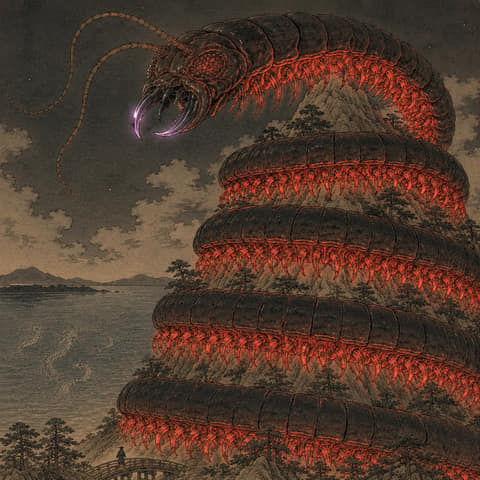
    A famed form tied to legends of Mount Mikami in Ōmi and the shores of Lake Biwa. Said to coil around the mountain seven and a half times, its shell is as hard as metal or stone, impervious to arrows and blades. At night its legs gleam crimson, casting a long shadow over the lake and mountain skirts. Tales of its slaying are linked to martial valor and understood in relation to dragon-god worship and the numinous power of bridges. Connections to mining and blacksmith lore have been noted, though details remain unclear.

  • Great Catfish

    Great Catfish

    Epic

    oh-nah-MAH-zoo

    Traditional Version: The Great Catfish Subdued by the Keystone

    Weather & Calamity SpiritsIbaraki

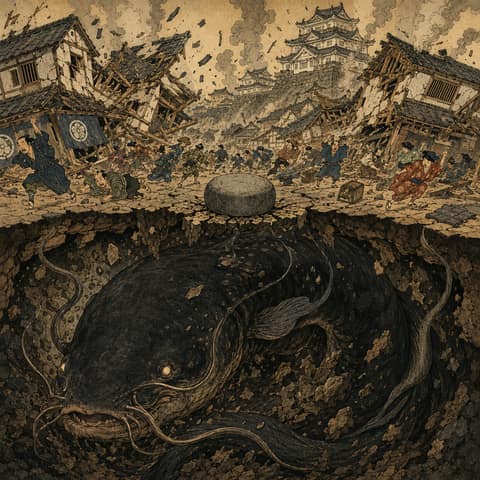
    An image based on the early modern belief that a great catfish causes earthquakes and is held down by the keystones of Kashima and Katori Shrines. The ancient notion of an underworld dragon-serpent was reworked in early modern urban society into imagery for interpreting disasters and critiquing the times. After the Ansei Earthquake, many namazu-e prints were published, adding allegories of recovery and debt relief. Here the great catfish lies in the subterranean mud, at times shuddering to cause quakes, yet is pacified when pressed by the keystone. Regional lore links it to origin tales of stones, landforms, and river courses, serving as markers of shrine-temple origins and local spiritual power. It appears in early modern documents, broadsides, and origin tales without fixed personal names or lineage, told as a symbolic personification of earthquakes rather than an observed creature, with a yokai framework for interpreting calamities at its core.

  • Great Head

    Great Head

    Epic

    OH-oh-KOO-bee

    Hybrid Sources, Record-Grounded Version

    Ghosts & SpiritsVarious provinces (attested in Edo, Kaga, Nagato, and elsewhere)

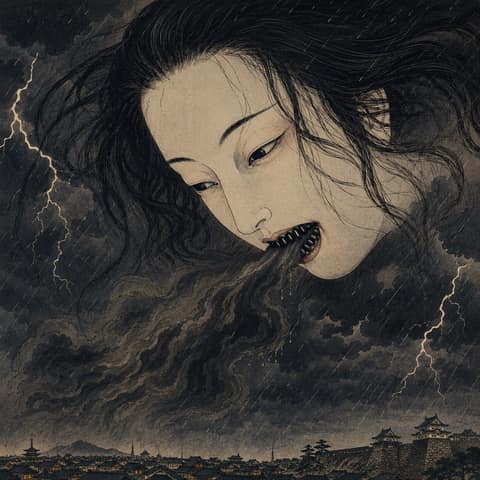
    The Okubi is a type formed where images and records intersect. While Sekien’s depiction is noted for satire, Edo-period tales and essays contain many independent accounts of a gigantic woman’s head appearing. Common traits include manifesting during shifts in the heavens such as rainy nights, thunder, or moonrise, fixing itself to walls, doorways, or midair, the depiction of blackened teeth indicating a married woman, and a chill, stench, and dampness when approached. Its true nature is unsettled, described either as a spirit shaped by grudge or as fox or tanuki sorcery. Malice varies, from mockery, glaring, and breath that causes malaise to mere display before vanishing. Physical attacks rarely take effect, with reports of little resistance when stabbed. It is widespread in regions such as Chubu, Chugoku, and Kanto, without becoming a localized deity. The modern image of a “flying Okubi” owes much to Sekien, yet old texts also record appearances on the ground and indoors.

  • Great Nyūdō (Giant Priest Apparition)

    Great Nyūdō (Giant Priest Apparition)

    Epic

    oh-oh-nyoo-DOH

    Annotated Traditional Edition: Ōnyūdō (Giant Priest)

    Demons & GiantsMie

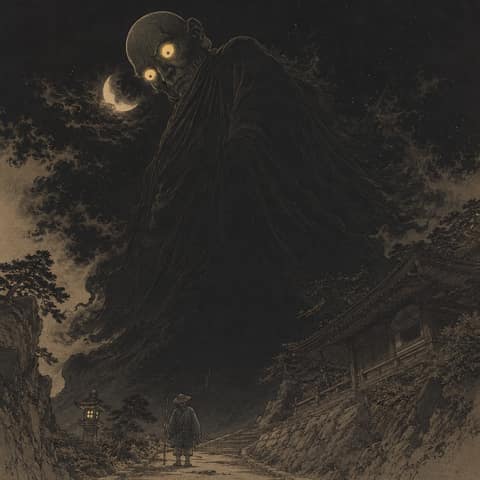
    The Ōnyūdō is defined by its sheer size and piercing glare. Reports range from a monk-like giant with a topknot to a vague shadowy figure, appearing in liminal places such as night roads, temple and shrine grounds, mountain passes, and lakesides. It draws the gaze of onlookers and, the instant they look up, grows taller to assert its might. Explanations of its nature vary by locale: a transformed animal, the spirit of an old stone pagoda or boulder, or an unclassified anomaly. Harmful cases include people collapsing under its stare or developing fever afterward, yet in places like Awa it is also told as a semi-guardian that helps with labor. Countermeasures follow traditional banishment methods: do not fear or avert your eyes, break its menace with arrows or prayer beads, or expose the true form of the shapeshifter. Historical sources sometimes mix names like Ōbōzu and Ōnyūdō, so it is best understood within local traditions.

  • Great Spider

    Great Spider

    Epic

    OHH-goo-moh

    Great Spider of Mountain and Wilds

    Animal ShapeshiftersNagano

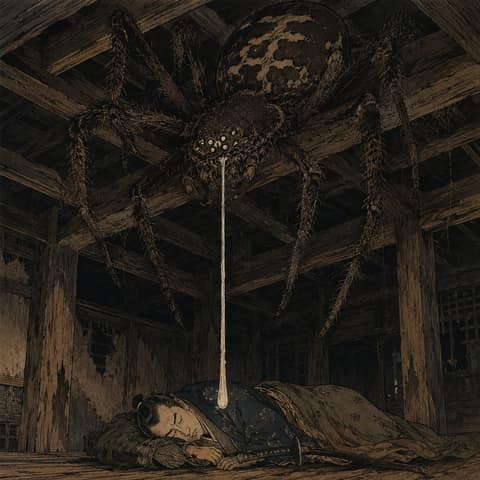
    A tradition-grounded composite of spider apparitions said to gain occult power through great age, lurking in mountain passes, temple rafters, and caves. Appearances range from an ordinary spider grown enormous, to a hairy arm extending from the ceiling, to an old woman in human guise. Avoiding notice, it moves by night, saps vital energy, and binds victims with silk. In slaying tales it often retreats after its limbs are severed by blades, or reveals its true form and is later found as a corpse. Names and lairs vary; reports surface sporadically in local curiosities and essays. Though terms like yamagumo and tsuchigumo sometimes overlap, here it refers broadly to eldritch old spiders.

  • Great Zato (The Blind Masseur Yokai)

    Great Zato (The Blind Masseur Yokai)

    Epic

    OH-zah-TOH

    Sekien Zue Version

    人妖・半人半妖Edo period

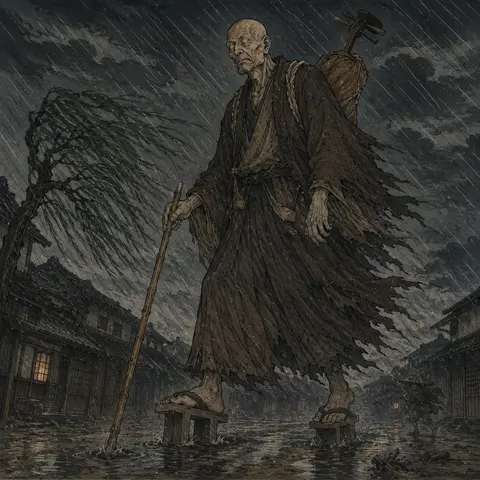
    An interpretive version based on one plate from Toriyama Sekien’s Konjaku Hyakki Shūi. It depicts a blind lute-priest in tattered hakama and wooden clogs, staff in hand, traveling the roads on stormy nights. A marginal note mentions plucking the shamisen in brothels, reflecting ties between early modern urban pleasure quarters and performing guilds. Folklorically, it blends visual othering with social satire, presenting a visage of the age more than a tale of uncanny powers. Kenji Murakami notes the othered image of the nocturnal zatō, while Katsumi Tada reads a “demonic” aura of enforcement from their shogunal protection and involvement in finance. Neither grants concrete supernatural powers, emphasizing a presence that appears on rainy nights and overawes the heart.

  • Hannya

    Hannya

    Epic

    HAHN-nyah

    Noble Living Ghost - White Hannya (Lady Rokujo)

    Oni / Giant SpecterNaraKyoto

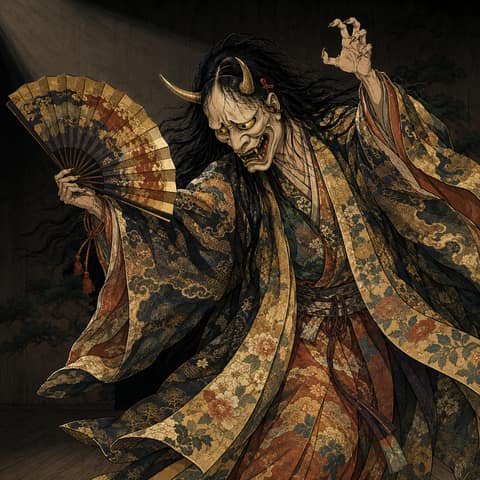
    Among the numerous variations of Hannya, this is an interpretation of the 'White Hannya (Shiro-hannya)', which embodies the highest dignity and the deepest psychological terror. The prototype for this version is the spiritual form of Lady Rokujo, a royal consort appearing in *The Tale of Genji* and the Noh play *Aoi no Ue*. She was a noble lady possessing peerless beauty, exceptionally high culture well-versed in waka and Chinese poetry, and immense pride. However, loneliness from the waning visits of her beloved Hikaru Genji, combined with a decisive, public humiliation suffered at the hands of the attendants of Genji's lawful wife, Aoi no Ue, during a 'carriage dispute' (a fight for viewing space for oxcarts) at a festival, birthed jealousy and resentment within her heart that exceeded her limits. Terrifyingly, even though Lady Rokujo herself tried to maintain her reason and not hate Genji, the massive passions suppressed in her subconscious slipped out of her body night after night as a 'living ghost (ikiryo)', standing by Aoi no Ue's bedside to curse her to death. This White Hannya is fundamentally different from the savage demons living deep in the mountains. The paleness of her face represents the nobility unique to aristocratic women, while simultaneously expressing the pale agony of having her blood drained and life force whittled away by the flames of jealousy. She does not use violent physical attacks, but slowly erodes the target's mind and body in the form of illness and nightmares. On the Noh stage, the figure of the White Hannya appearing in a broken carriage is a symbol of her shattered pride and deep sorrow. Swords and military might are entirely useless to defeat this noble living ghost. She can only be countered when high-ranking monks like Yokawa no Kohijiri sound the strings of an azusa-yumi (catalpa bow) to ward off evil and fiercely recite the Lotus Sutra or the Heart Sutra. And ultimately, the White Hannya retreats not because she was exorcised (overpowered by force) through prayer, but because the voice of the sutra chanting makes her realize her own hideous demonic form (the sin of attachment), allowing her to attain religious ecstasy (Buddhist salvation) and calm her heart. She perfectly dramatizes the spirituality of Japanese Buddhism: the fragility where humanity's highest intellect can so easily fall into becoming a monster, and the eventual salvation through enlightenment.

  • Hashihime (Bridge Princess)

    Hashihime (Bridge Princess)

    Epic

    HAH-shee-HEE-meh

    Hashihime of Uji (Traditional Form)

    Half-Human BeingsKyoto

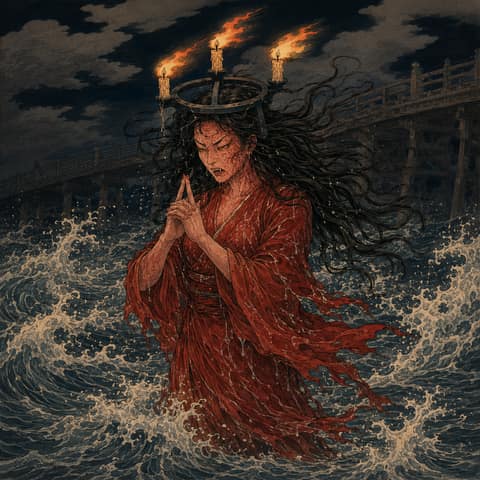
    An integrated portrayal of Hashihime as a local divinity of Uji Bridge on the Uji River and as the jealous demon-woman of medieval war tales and Noh. As a local deity she was venerated at the bridgehead as a water and land guardian, protecting crossings and safe passage. Traditions forbid praising other regions or singing lines that stir jealousy upon the bridge, reflecting the belief that local gods dislike talk that exalts elsewhere. In the later tale, a woman visits Kifune, undergoes purificatory austerities in the Uji River, becomes a demon, and encounters a warrior at Ichijō Modori-bashi. Toriyama Sekien noted the shrine at Uji Bridge, and the Noh play Kanawa fixed the image of a demon-woman crowned with an iron trivet. Folklorically, bridges are liminal spaces, linked to water deities, female divinities, and warnings against jealousy, so ritual and storytelling long coexisted. While invented details vary by source, devotion to Uji Bridge, the Modori-bashi encounter, and the dual nature of taboo and protection form the core.

  • Hihi (Demon Baboon)

    Hihi (Demon Baboon)

    Epic

    HEE-hee

    Hihi (Traditional Accounts)

    Animal ShapeshiftersNagano

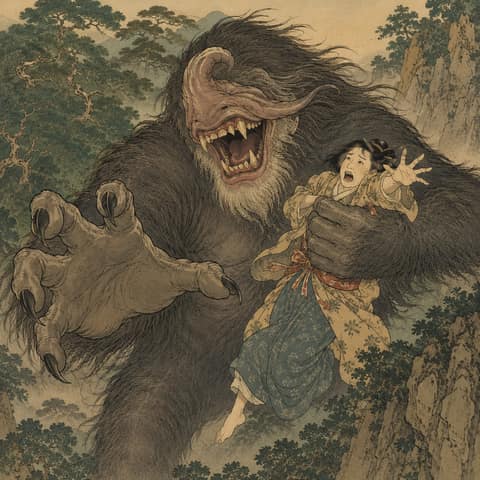
    A depiction of the hihi based on Edo-period images and folklore. Said to dwell in mountains, it is an aged monkey transformed into a giant, powerfully built being. Many regions tell that it bursts into loud laughter, and when its long upturned lips roll back to cover its eyes, it leaves an opening to strike. Tales include the abduction of women, bouts with woodcutters, and raising wind and storm to hurl people. Natural history compendia such as Wakan Sansai Zue report black hair, large size, and hearsay of human speech, though exact locales and physical evidence remain uncertain. Its name is commonly linked to its laugh. It is sometimes conflated with yama-warawa or monkey deities, but is often distinguished as an ape-shaped mountain monster.

  • Hitodama (Human Soul Fire)

    Hitodama (Human Soul Fire)

    Epic

    hee-toh-DAH-mah

    Hitodama (Traditional Tale Version)

    Ghosts & SpiritsVarious regions across Japan

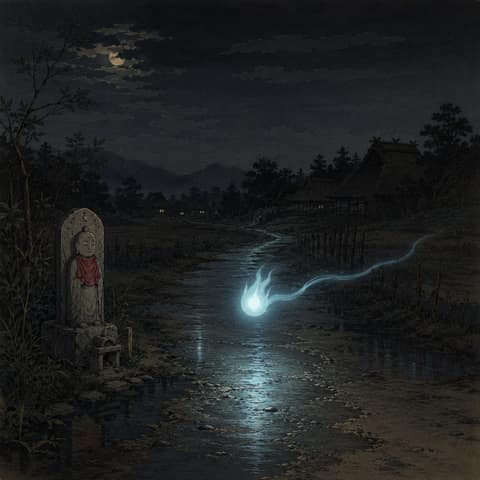
    A depiction based on the traditional understanding of hitodama. It is a spirit flame that appears in answer to impending death or powerful emotions, said to fly to one’s family line or close relations. It drifts lower than shoulder height with a faint trailing tail. Though it seems to be carried by the wind, it is also said to travel as if toward a destination. Its color is often pale blue, but varies by region, with many reports of orange or red. Sightings cluster near places of passage or boundary—temple and shrine grounds, graveyards, old roads, field ridges, and pond edges. Early modern essays, local gazetteers, and modern folklore collections mention it as a “greeting flame before death” or “parting flame,” and distinguish it from onibi and kitsunebi, which have different origins. Scientific explanations have been attempted, yet tradition regards it as a sign of a soul’s coming and going.

  • Hitome-ryō

    Hitome-ryō

    Epic

    HEE-toh-meh RYOH

    Hitome-no-Ren of Tado (Tradition-Based)

    Deities & Divine SpiritsMieAichi

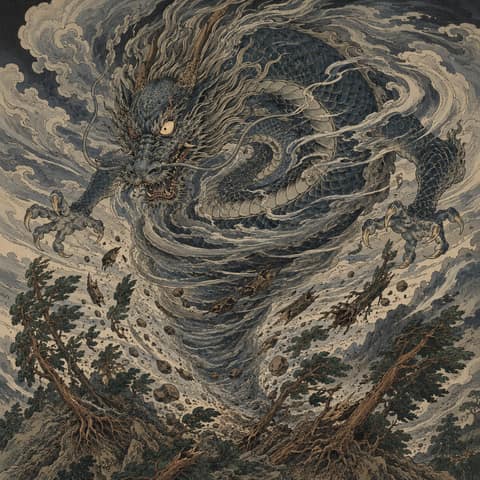
    A wind divinity anchored to Mount Tado, once feared as a one-eyed dragon god. Ideas of “divine wind” recorded in Edo-period sources intersected with local weather watching, leading sailors on the Ise Bay route and coastal villages to revere it deeply. Later it blended in folk belief with the smithing deity Ame-no-Mahitotsu-no-Kami, and shrines preserved doorless architecture so the god’s passage would not be hindered. It governs storms and rain, is invoked for bringing and stopping rain and for protection from maritime disasters, yet tales also stress its aramitama, a wild and fearsome aspect. Iconography varies: sometimes a dragon body, sometimes a one-eyed deity, but details remain uncertain.

  • House Groans (Yanari)

    House Groans (Yanari)

    Epic

    yah-NAH-ree

    Ienari (Traditional Depiction)

    Household SpiritsVarious regions of Japan

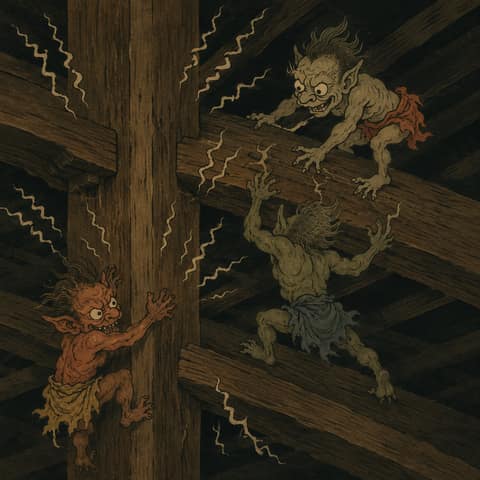
    In picture scrolls it appears as little goblins shaking beams and pillars, a visual rendering of the intangible phenomenon of creaks and tremors within a house. In actual lore it is often told as the house itself rumbling without a fixed cause, though in some regions it is tied to animal curses, the misdeeds of residents, or signs of spirits lingering on the estate. It is said to occur late at night, especially around the Dead of Night, and noises arising at vital spots such as the hearth, storehouse, or armory were feared as ominous. Quiet sitting or sutra chanting, checking and offering for the crawlspace, and purifying beams and pillars are said to calm it, but if it persists, moving house is sometimes recommended. Traditional advice warns against hasty causal claims, urging first a review of the property’s lineage and proper rites to ancestral and household deities.

  • Hōsōshi (Exorcist of the Great Exorcism)

    Hōsōshi (Exorcist of the Great Exorcism)

    Epic

    HOH-soh-shee

    Hōsōshi of the Courtly Tsuina Rite

    神霊・神格Imperial court (continental ritual imported to Japan)

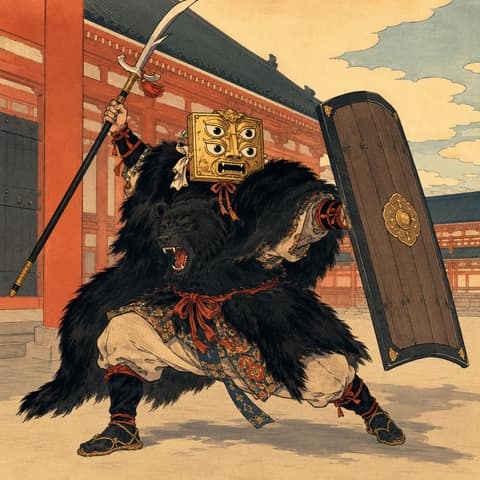
    In the imperial court’s Great Tsuina exorcism, this figure confronts and drives out pestilential oni. Wearing a four-eyed square mask, bear hide, and armed with a halberd and great shield, he leads pages and tsuina attendants to circuit the four directions of the palace. The rite follows set forms—onmyoji invocations, drum cues, and expulsion beyond the gates—and later influenced demon-chasing observances at temples and shrines. By the late Heian period, shifts in the term tsuina saw him at times enact a visible “oni role.” Though attire, implements, and routes changed with ceremonial norms, the core purpose remained the banishment of epidemics and ill fortune.

  • Ippon-Datara

    Ippon-Datara

    Epic

    EE-pohn dah-TAH-rah

    Kii–Kumano Tradition Variant

    Mountain & Wilderness SpiritsWakayamaNara

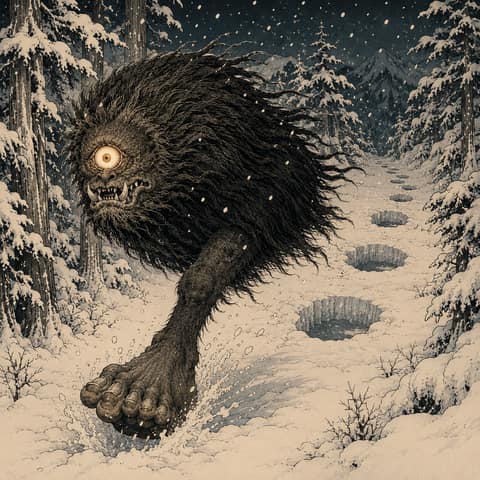
    A portrayal of the Ippon-datara based on records from Kii and Kumano through Nara. It is said to be one-eyed and one-legged, but firsthand sightings are rare; in many regions a single large track left after snowfall is taken as proof of its presence. Its most notable trait is appearing on December 20, the “Hate-no-Hatsuka,” a day overlapping taboos of mountain deities and roads, effectively discouraging entry into the mountains. In its link to smithing, folklore explains the one-leg one-eye form as derived from the tatara blower treading the bellows with one foot and watching the furnace with one eye. In the Obagatōge lineage it is equated with the oni-god Inosasao, once a terror of the peak but sealed by a monk and released only once a year. In Kumano and Itsukushima it is said “only footprints appear, not the body,” feared yet seldom directly harmful. While stories of one-legged snow spirits (such as Yuki-nyūdō and Yukibō) have blended with it, this entry centers on the Kumano–Nara stream, emphasizing three points: the taboo day, the single track, and the blacksmith-origin theory.

  • Iso-onna (Shore Woman)

    Iso-onna (Shore Woman)

    Epic

    EE-soh-OHN-nah

    Toma-Shunning Nure-Onna

    Aquatic SpiritsKumamotoNagasaki

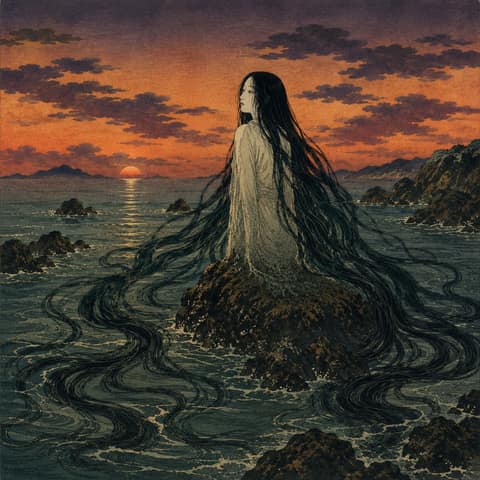
    Among the coastal Nure-onna of northwestern Kyushu, a variant that particularly despises the handling of reed mats and thatch is called the Toma-Shunning Nure-Onna. On windless nights she appears on the beach without leaving footprints, a young woman from the waist up with black hair slicked by brine, shell-pale skin holding the moon, and eyes that reflect the distant whitecaps offshore. Below the waist she is indistinct like sea-mist, and if trod upon there is only sand with no true form. From behind she bears a jagged, craglike shadow like a collapsed rock face, and if one’s gaze falters she seems nothing more than a shore rock. Drawn by the hush of a calm, she stares seaward; if her name is called or a careless voice is thrown at her back, she answers with a shrill cry. The scream overlaps the roar of the tide and cuts the ears, her loosened hair stretching like wet seaweed to entangle the caller. Each briny strand bites the skin like the barb of a fishhook and is said to draw up warm blood along the hair. Yet if three old thatch stems from a reed mat are placed over the chest not as a cross but in the shape of the character for river, her hair recoils from the thatch, and she cannot step on the edge of the mat, only drip seawater in frustration from the gunwale. She favors boarding boats by their stern line; if a stranger’s harbor leaves the stern line set, at midnight she will crawl up it, slip in over the rail, and drape her hair over sleepers’ faces to steal their breath. Thus old fishermen followed the rule of taking in the stern line when calling at a port, dropping only the anchor and keeping watch at the bow while reading the wind. She is susceptible to the human-made ideas of knots and naming in ropes; if the rope is cinched hard while whispering the owner’s name three times, she cannot unravel that name and cannot travel along the line. Though drawn by the grudges of the drowned, she does not harm indiscriminately. When she sees discarded reed mats or thatch, or cut ropes drifting in the tide, she scents the neglect of the hands that wove them and approaches their owner’s boat. Conversely, those who dry nets and mats without letting the ends trail into the sea or blocking the tide’s path may find her invisible presence come near and, by the creak of moorings, warn of a calm about to break, old skippers say. In parts of the Fukuoka coast, it is said she walks the water not for lack of feet, but because she avoids reed mats, stepping only on the thinnest skin of the waves. Northern Kyushu has a crab-incarnation theory, but this Nure-Onna does not hate crabs; rather, when shore crabs scuttle, she draws in her hair and returns to rock. Her name varies by place—Iso-Onna, Nure-Onna, Sea Princess—but her ties to the etiquette of thatch and rope are constant. To avoid her: do not call to a woman’s back on a night beach, do not leave a stern line fast in unfamiliar ports, and place three thatch stems in a river shape where you sleep. Keep these and she will only turn her white offshore eyes toward you, then blend into rock-shadow and unravel into the tide mist, leaving only her presence to be told as footprints that were never there by morning.

  • Iso-onna (Shore Woman)

    Iso-onna (Shore Woman)

    Epic

    EE-soh-OHN-nah

    Isonna of the Aft-Rope Crossing

    Aquatic SpiritsKumamotoNagasaki

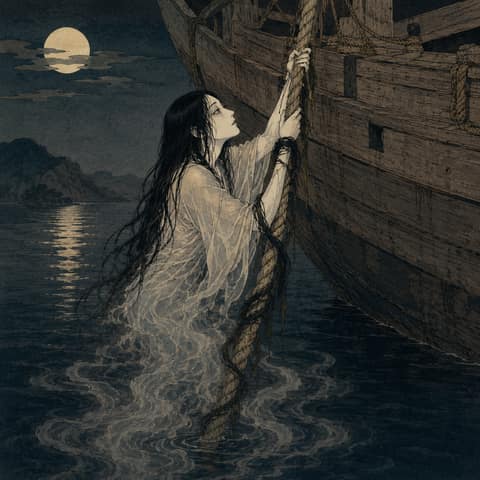
    A feared variant along Amakusa and the Shimabara Peninsula, named for slipping aboard by following the aft mooring rope. She appears as the upper body of a young woman scented with the sea, while her lower half is hazy and shifting like wave-shadows. Her long wet black hair constantly streams from her chest to the floor, branching into fine threads that cling to human skin. When a hush falls over the harbor at midnight, she stands in the lee of the shore or at a stern’s tip staring seaward, and will either echo the name of anyone who calls to her or answer with a piercing scream. At that cry she reaches a white hand to the aft rope, crosses soundlessly onto the boat, shrouds a sleeper’s face with her hair, and twists up blood strand by strand. By morning only a tide stain and a thin ring of hair remain at the pillow. Said to be the shape taken by the regrets of the drowned or a love unfulfilled by one who waited at the harbor, she is known as an isonna and also as nure-onna. The practice of avoiding the aft rope comes from this variant’s habit of treating ropes as roads. So long as she touches a line she can climb anywhere, but she does not swim about recklessly and prefers calm surfaces. On thin-moon nights some have seen her walk the water from shore, but only when the harbor tide lies asleep. She is weakened by light and prayer, so fishermen in unfamiliar ports avoid taking the aft rope, drop only the anchor, and keep the gunwale light burning. In Shimabara it is said that placing three dry thatch reeds from a roof upon one’s kimono while sleeping prevents tangling and wards her off. Those who touch her hair are seized by chill and lethargy, and the roar of the sea lingers in their ears for days. She is merciless toward mockery and rudeness, targeting first those who call her name without honorifics or taunt her with whistles. Conversely, she is said to avoid boats whose crews offer prayers for the lost at sea. Some tales claim that if you move behind her she resembles a rock shadow, and under moonlight her back becomes the outline of a wet reefs tone to let waves pass. The Isonna of the Aft-Rope Crossing is a grudge born at the liminal space of the harbor, hard to approach for those who keep the code and unforgiving toward arrogance, dropping her hair without mercy.

  • Isonade

    Isonade

    Epic

    EE-soh-NAH-deh

    Iso-nade (Traditional Accounts)

    Aquatic SpiritsSaga

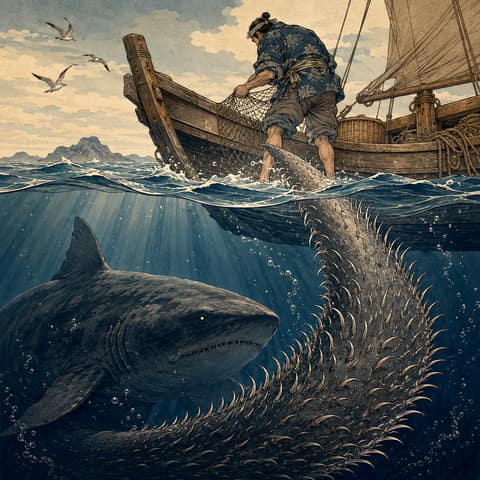
    A consolidated portrayal of the Iso-nade based on Edo-period strange tales and materia medica notes. It approaches without ruffling the sea’s surface, signaling itself only through shifts in sea color and wind. Its body is shark-like, said to bear coarse protrusions and needle-like organs from tail to back. It most often appears in seasons of cutting cold winds and was especially feared on days of strong northerlies. Seafarers avoided boisterous work, stowed nets and ropes, and kept away from the rail—customs passed down as seamanship to prevent disaster. Names and details vary by region, but the core remains an unseen approach that is noticed too late and the terror of being swept overboard by a single strike of the tail. Early modern records also frame it as a narrative of maritime hazard awareness and caution.

  • Itsumade

    Itsumade

    Epic

    e-tsu-mah-deh

    The Death-Bringer that Cries "Itsumade": Itsumade

    Animal YokaiKyotoShiga

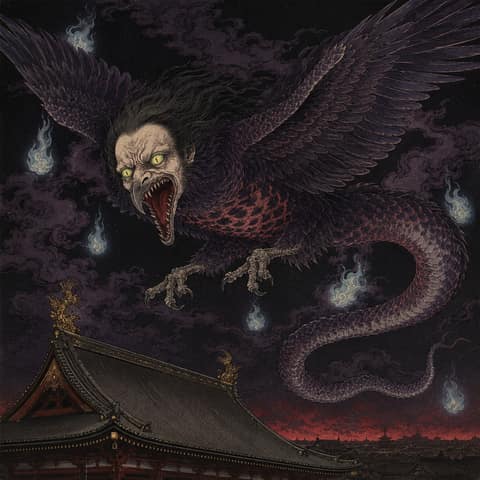
    This version, 'The Death Herald Crying Itsumade (Until When) / Itsumaden', goes beyond being a mere physical monstrous bird, highlighting its aspect as an 'ominous bird of prophecy' that embodies the anxiety of its era's society. In the *Taiheiki*, the appearance of this monstrous bird coincides with the political upheaval of the Kenmu Restoration (1334). The bird's cry of 'Itsumade (Until when?)' superficially incites the fear of death from plagues. However, in a literary and historical context, it acts as a political allegory, representing the agonizing cries of the common people exhausted under Emperor Go-Daigo's direct rule: 'Until when will this war and suffering continue?' In medieval literature, a monster appearing on the roof of the Emperor's palace (Shishinden) signified a warning from heaven (heavenly punishment) against the instability of royal authority and a lack of virtue. Furthermore, the sequence of exterminating this monstrous bird strongly mirrors the 'template' of Minamoto no Yorimasa's 'Nue extermination' in *The Tale of the Heike*. The structure—an unidentified chimera appearing at the night palace, its subjugation by a master archer, and the subsequent reward from the Emperor—served as an epic device to heroicize Oki Jirozaemon Hiroari as a 'new Yorimasa', thereby decorating the authority of the Kenmu government that commanded him. However, while the Nue cried with a voice 'like a bulbul', this bird uttered the clear, human-like words 'Itsumade', imbuing it with a much more direct curse upon its era. During the Edo period, when Toriyama Sekien drew it in his *Konjaku Gazu Zoku Hyakki*, he added the depiction of it breathing terrifying flames from its mouth. The original text of the *Taiheiki* contains absolutely no mention of it breathing fire. This is thought to be the result of overlaying the imagery of mysterious lights flying in the night sky and the 'Kasha' (fire chariot) that carries the resentment of the dead. The visual impact of this 'flame' and 'nocturnal monstrous bird' decisively shifted its interpretation in the later Showa period toward a vengeful spirit, described as 'a monster born from the resentment emitted by abandoned corpses.' In this version, Itsumaden is not merely a bird of prey that attacks people; it is closer to an 'arbiter' that manifests using the resentment of those who died with no one to mourn them and the distortions of society as its energy. Therefore, its cry functions as a cold herald of death, striking directly at the listener's mind more than any physical attack could, questioning: 'Until when will your fate (or your sins) hold out?'

Showing 25 - 48 of 121 yokai