Yokai Encyclopedia

Encyclopedia of Japanese Yokai

121 Yokai|14 Category|Page 4 of 6
Localization in Progress - More content available in Japanese version
View Japanese
Sort by: NameAscending
Epic
  • Kyōkotsu (Mad Bone)

    Kyōkotsu (Mad Bone)

    Epic

    KYOH-koh-tsu

    Sekien Zue Version

    Animated Objects & UndeadEdo period

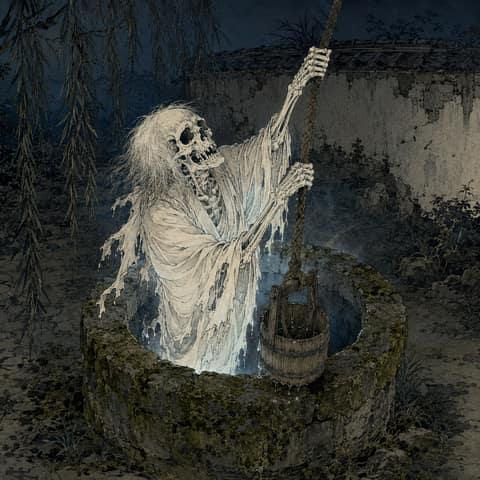
    A form named and illustrated by the Edo-period artist Toriyama Sekien, who depicted white bones in a well as “Kyōkotsu.” The motif shows a skeleton in white garb linked to a bucket rope, rising from the well’s depths, often accompanied by phrases stressing violent grudge. Oral tradition for a proper name is sparse, and the figure likely arose from the linkage of image and words (dialect “kyōkotsu,” the term for bare bones “髑髏/白骨”). Later writers attached explanations such as “bones discarded in a well” or “spirits of the drowned or those who fell,” but primary sources do not fix its nature. Its eeriness as a skeletal image is emphasized, foregrounding symbolism over spiritual rank.
  • Menreiki

    Menreiki

    Epic

    MEN-ray-kee

    Classical Iconographic Interpretation

    Animated Objects & UndeadJapanese folklore

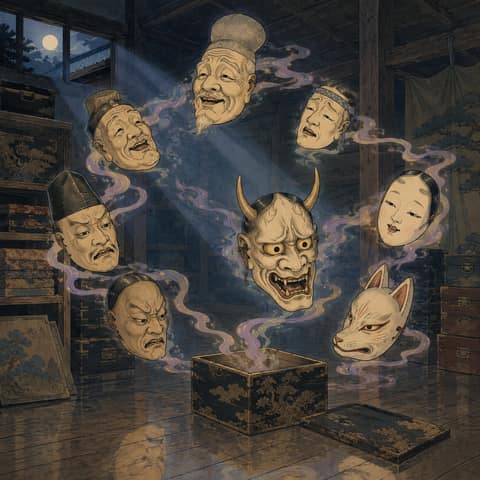
    Based on Toriyama Sekien’s illustration and notes, this version interprets Noh and Sarugaku masks as having accumulated vital aura over long years. The spiritual qi residing in the masks is said to rise at night, slip out from shelves and boxes, line up, and dance. They do not harm people without cause, showing resentment only when treated roughly, a later tsukumogami-like trait, yet at its core the phenomenon is an allegory for the living vitality born from the masks’ refinement. In households that revere the arts, they are enshrined and purified, with words of blessing offered during airing and maintenance to calm their numinous power.

  • Mikoshi-nyūdō (Looming Priest)

    Mikoshi-nyūdō (Looming Priest)

    Epic

    mee-KOH-shee nyoo-DOH

    Mikoshi-nyūdō (Edo Kaidan Record Type)

    Demons & GiantsTokyoSaitama

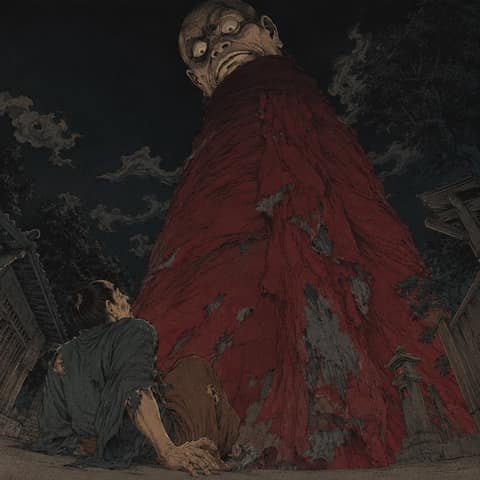
    An Edo-period anecdotal and ghost-story variant in which a giant priest-like figure blocks the night road, chilling the heart of anyone who looks up. In some regions it is treated as a plague-bringing deity that can cause fever or sudden death, and is taboo to step over. Its true nature is left unclear, sometimes taken as a disguise of a shape-shifting animal or a haunted object. Methods of banishment emphasize conduct unshaken by fear, such as calling it out by name, looking down on it, or pretending to measure its height.

  • Mirage (Shinkirō)

    Mirage (Shinkirō)

    Epic

    shin-kee-ROH

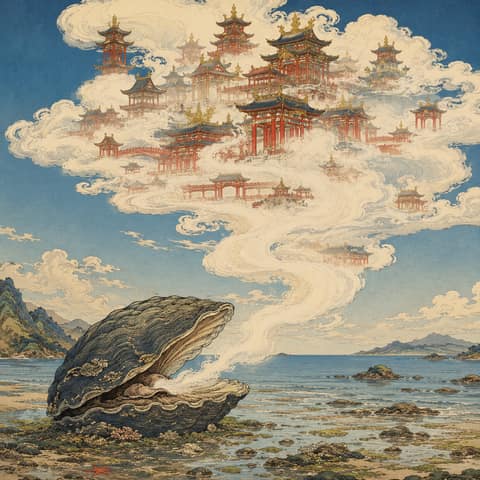
    Mirage Pavilions Breathed by the Shink (Sekien lineage image)

    Natural Phenomena SpiritsCoastal regions across Japan

    In the lineage attributed to Toriyama Sekien’s Konjaku Hyakki Shūi, the shink—an enormous clam—exhales a vapor at the shore, which fills the sky and forms images of towers and palace gates. The imagery depicts inverted or elongated castles and gatehouses drifting above the sea, sometimes shown alongside the shink itself or a dragon. In the late Edo period the motif was repeated in surimono and ukiyo-e and became a popular topic among spectators. The tradition is not fixed to a single locale, with sightings told from coasts and tidal flats such as Etchū. As a yokai it lacks a stable body, appearing and vanishing to beguile onlookers while causing little harm.

  • Mokumokuren

    Mokumokuren

    Epic

    MOH-koo-moh-koo-REN

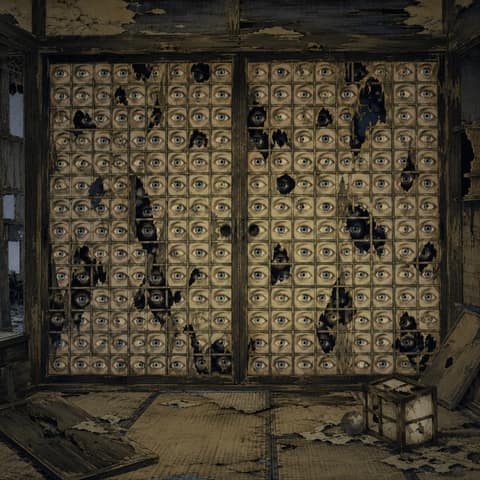
    Toriyama Sekien Zue–Conformant Edition

    Household SpiritsJapanese folklore

    Reconstructed from Toriyama Sekien’s imagery and captions as a swarm of disembodied eyes gathering on the shoji of a ruined dwelling. Rather than inflicting direct harm, it unsettles by staring. It is mediated by domestic neglect and unappeased sentiments, yet belongs to a generalized lineage of house-haunts not tied to specific individuals or locales. This reading also aligns with later variations in collected names and with links to visual illusion phenomena.

  • Moon Rabbit

    Moon Rabbit

    Epic

    TSOO-kee-noh oo-SAH-ghee

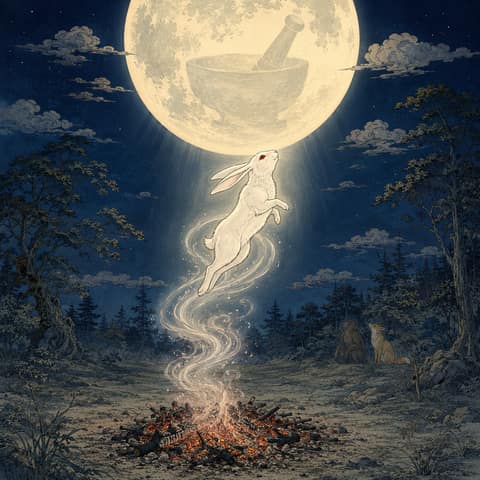
    Moon Rabbit Pounding Mochi

    Animal ShapeshiftersAcross Japan (widespread after the arrival of Buddhism)

    An image of the Moon Rabbit grounded in Japanese iconography. From Asuka-period examples onward, the rabbit within the lunar disk was paired with the solar crow in medieval Buddhist painting and received as a bearer of celestial phenomena. In early modern times, depictions of a rabbit using a Chinese-style mortar and pestle spread through books and prints, and by the eighteenth century the mortar shifted into a characteristically Japanese hourglass shape. The rabbit came to be understood not as compounding an elixir of immortality but as pounding mochi, linking it through wordplay to moon viewing and full-moon festivals. In lore, a self‑sacrificing rabbit ascends to the moon by Indra’s grace, with the lunar shadows and smoke-like markings read as its traces. In folk practice, people gazed at the moon seeking the rabbit’s silhouette, and the theme persisted in moon‑vigil gatherings and storytelling, overlapping with other celestial yokai and lunar deities.

  • Mujina

    Mujina

    Epic

    MOO-jee-nah

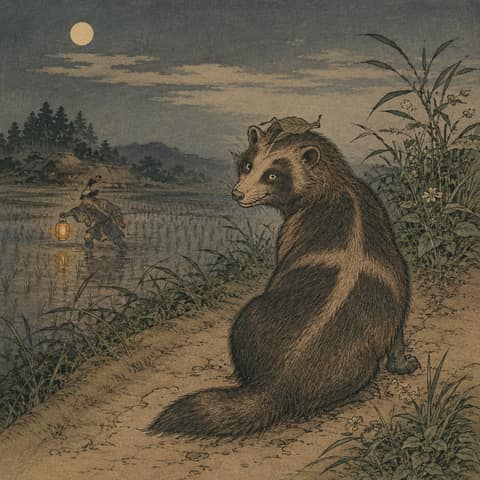
    Traditional Tale Compliant – Trickster Mujina

    General ClassificationsFukushimaChiba

    A trickster figure based on mujina tales from across Japan. It appears as a beast about the size of a dog with slightly short forelegs; elders are said to show a cross-shaped patch of fur on the back. Skilled at disrupting attention and sense of direction, it makes travelers mistake fields for rivers, ridges for water surfaces, and straw stacks for human figures on night roads. Malicious ones disguise food and latrines as other things, causing shame or misfortune. When taking human form it favors inconspicuous looks such as a boy, a traveler, or a village woman, and may lure with voice alone. In many regions its lore blends with tanuki and fox tales, with the name “mujina” used regardless, but it broadly belongs to the class of beasts that bewitch. Rather than being repelled by martial arts or spells, most stories end with it vanishing once its true nature is seen through, after which it avoids the area. The proverb “mujina of the same hole” means birds of a feather, combining the observation that they share burrows with associations from trickster tales. Traditions are rich in eastern Japan, and Edo-period paintings depict it under the title “Mami” or “Badger.”

  • Myōtaraten

    Myōtaraten

    Epic

    myoh-tah-rah-ten

    Myōtaraten, Local Guardian Deity

    Deities & Divine SpiritsShiga

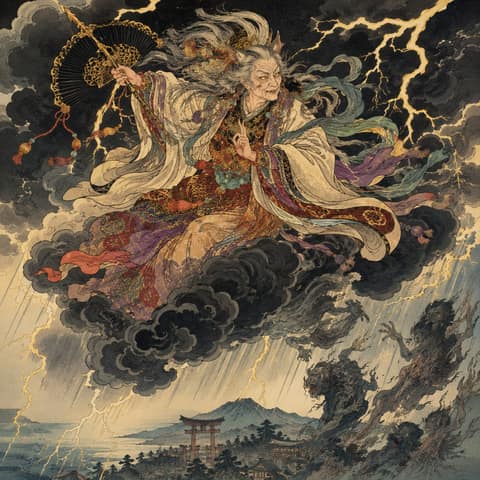
    A compiled version of the Myōtaraten images rooted in local faiths of Echigo Yahiko and Okitama in Dewa. Their origin tales involve transformations of an old woman, an ogre, or a shapeshifting cat, whose ferocity is quelled when enshrined, after which they call rain and protect children and the virtuous as village guardian deities. Though bearing a Buddhist-style celestial name, the being is essentially a deified female presence embodying the numinous power of mountains and borders, centered on faith around Mount Yahiko and the Ichihon-yanagi wayside shrine. One tradition says thunder roars once a year when she returns to Sado, aligning agrarian views that link thunderstorms with harvests. Names and forms vary—old crone, celestial maiden, demoness—but the core is a turn toward benevolent protection.

  • Mōryō

    Mōryō

    Epic

    MOH-ryoh

    Mōryō (Classical Depiction)

    Aquatic SpiritsUncertain (concept from ancient China, adopted in Japan)

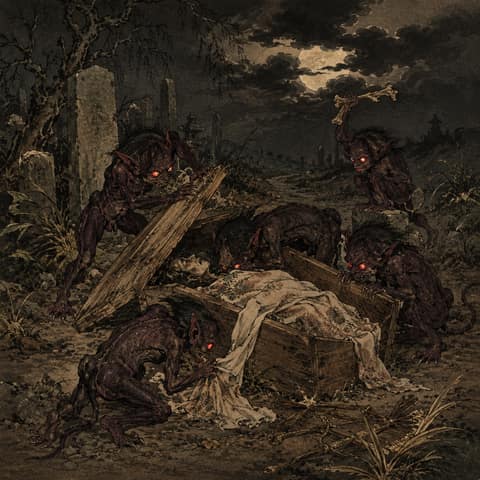
    A generalized classical image of the mōryō based on historical sources. The term was used for uncanny phenomena tied to watersides, graveyards, ancient trees, and great stones, and is understood to be linked with disasters that defile corpses and the spread of death impurity. Its form is not fixed—some accounts call it childlike, others say it manifests only as a vapor or miasma. In Japan, the word came to denote corpse-stealing spirits and served to justify funerary taboos and rites of purification.

  • Nuppefuhofu

    Nuppefuhofu

    Epic

    NOOP-peh-FOH-hoh-foo

    Traditional Image (E-maki Source Fidelity)

    General ClassificationsJapanese folklore

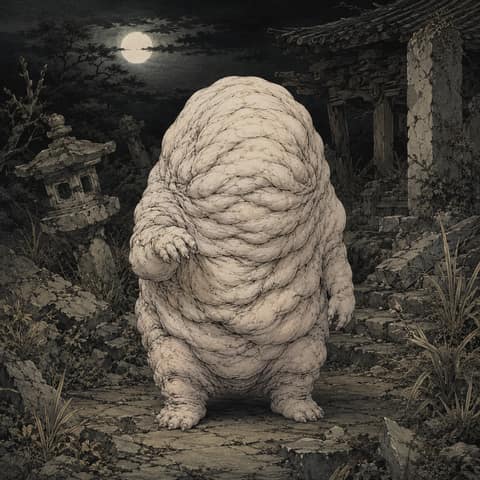
    A typical form based on Edo-period yokai picture scrolls. A one-head-tall, white, wrinkled mass stands upright with stumpy limbs and indistinct facial features. Only its name and image are preserved, so its behavior and intent are unsettled. In texts it is sometimes read as a prototypical faceless ghost (nopperabo), or noted as a transformation of an old toad or of foxes and raccoon dogs. Satirical books mention it “drinking the fat of the dead” or “disguising itself as a doctor,” but a broad regional tradition is hard to confirm. Claims of temple hauntings or a corpse-like stench likely stem from later interpretations, and firsthand accounts are limited. Its look is marked by powdery white skin and continuous folds of wrinkles.

  • Nure-onna

    Nure-onna

    Epic

    NOO-reh-OHN-nah

    Nure-onna (Tradition-Faithful Version)

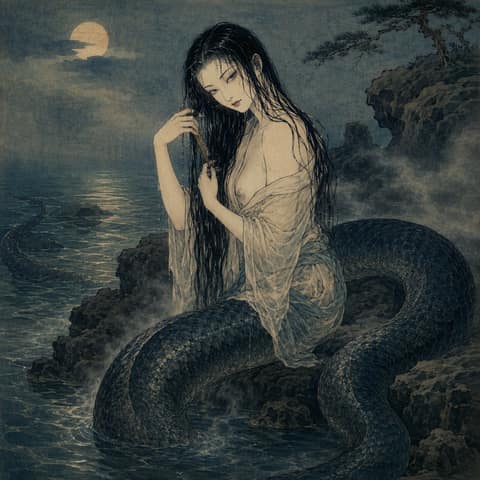
    Seen along seashores and riverbanks as a woman with long wet hair. Depending on the region, she either lures victims by making them hold a baby and then immobilizes them, or appears as a menacing aquatic entity evocative of a serpent’s body and a massive tail. Edo-period yokai art often depicts a serpentine woman, though narrative sources offer scant confirmation. In Iwami she is classed as a water spirit linked to the gyuki, with advice to never hold her burden barehanded. She is sometimes conflated with the iso-onna, and both name and traits vary by locale.

  • Nurikabe

    Nurikabe

    Epic

    NOO-ree-KAH-beh

    Nurikabe

    General ClassificationsFukuokaOita

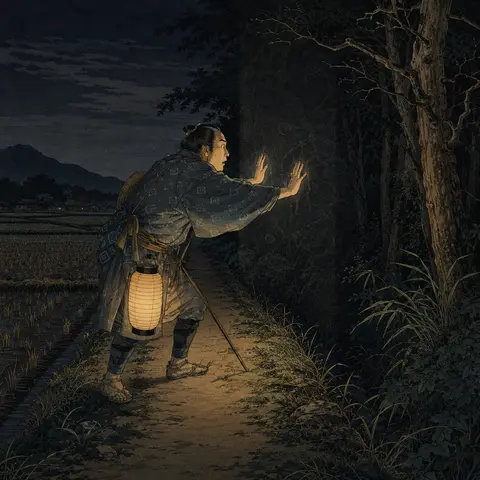
    Invisible to the eye yet felt as a solid wall, this form matches northern Kyushu tales of travelers led astray. It does little harm and specializes in halting progress. The obstruction spreads from ankle to shoulder height, denying head-on passage. Stepping to the side, pausing to rest, or probing the ground and roadside with a stick weakens it. It is understood as a road spirit that tests those who travel.

  • One-Eyed Boy Monk

    One-Eyed Boy Monk

    Epic

    hee-TOH-tsu-meh koh-ZOH

    Traditional Aspect (Hitotsume-bō)

    山野の怪Across Japan (Edo, Aizu, Tanba, Bizen, etc.)

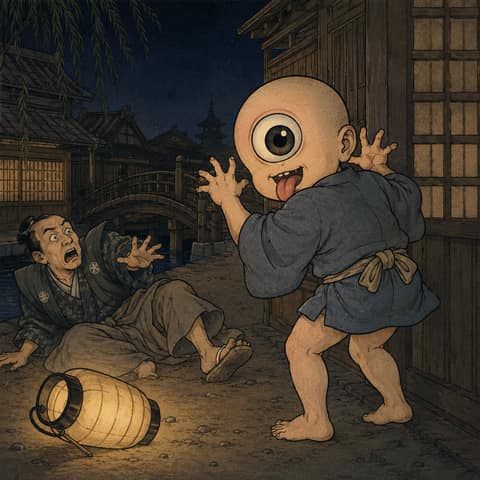
    A整理 based on Edo-period picture scrolls such as Hyakkai Zukan and Bakemono-zukushi depicting the figure known as Hitotsume-bō. It takes the form of a shaven-headed child monk, appearing suddenly in parlors, on bridges, slopes, and crossroads, then vanishing once satisfied with the onlooker’s reaction. Though often associated by inference with the one-eyed, one-legged monk of Mount Hiei, direct identification is avoided. Folklore links it to food by claiming it dislikes beans, and later images show it carrying tofu, yet it rarely intends harm to people or livestock. Its appearances vary by season and weather; in some regions, its single eye is said to glow dimly on rainy nights in late autumn. Names vary by locale, including “Hitotsu-managu” in Ōshū and the widespread “Hitotsume-kozō” and “Hitotsume-bō.”

  • Oni of Gango-ji

    Oni of Gango-ji

    Epic

    GAHN-goh-jee no OH-nee

    Canonical Folkloric Tradition

    Ghosts & SpiritsNara

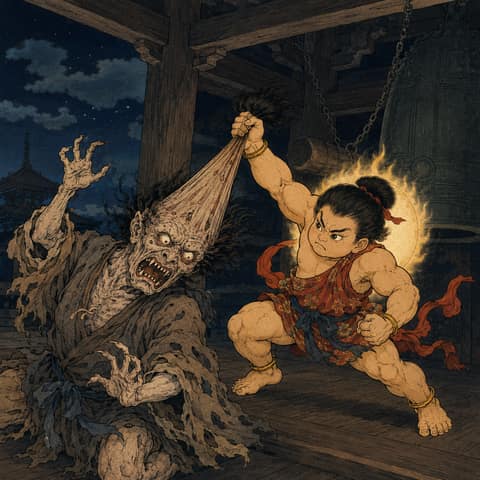
    This version follows storylines found in Heian-period tale collections and represents the type fixed as the bell-tower apparition of Gangoji. The demon’s true form is the restless spirit of a servant connected to the temple, manifesting as a figure that frightens monks and children. It appears at midnight, and accounts say its form can be verified by lamplight, reflecting a folk view that sacred beings hide yet reveal themselves under certain conditions. A preceding thunder-god episode is linked as a strong-child birth tale, reinforcing the idea that the power of thunder can dwell in a person. The subjugation is not by beheading but by tactile restraint—“grabbing the hair,” “tearing it out”—with the hair remaining as a relic treasured by the temple. Thereafter the monster is calmed, and the child takes vows and is known as Dōjō Hōshi. Words like Gagoze and Gagoji appear regionally as generic terms for yokai, but their etymology is debated and left unspecified.

  • Oni of Rajōmon (Rashōmon Demon)

    Oni of Rajōmon (Rashōmon Demon)

    Epic

    rah-JOH-mohn no OH-nee

    Canonical Lore: Oni of Rashomon Gate

    Demons & GiantsKyoto

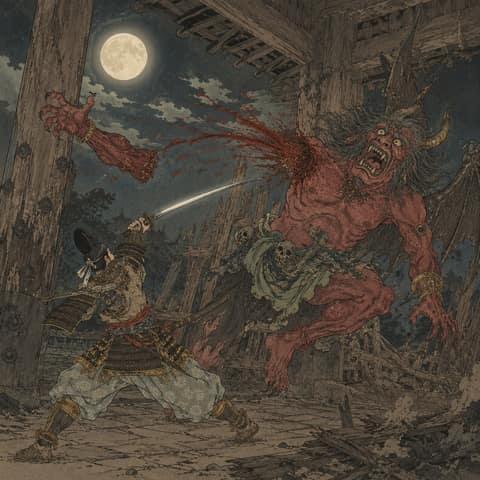
    An oni that appears at Rashomon Gate and on the outskirts of the capital, serving to highlight a warrior’s valor. Medieval war tales and Noh plays preserve multiple versions with differing stages and details, but the core remains: a lone warrior meets an oni at a gate or bridge and severs its arm. The arm is treated as a symbol of impurity and numinous power, leading to later tales of its recovery. Its conflation with Ibaraki-dōji intensified in early modern retellings, shifting names and locales, yet overall it embodies a liminal threat haunting the edges of the capital. Iconography shows an iron staff, horns, red-black skin, and wild hair, often set amid stormy weather and black clouds. Representations rooted in warrior lore, Noh, and picture scrolls continue to shape its image today.

  • Osakabe-hime

    Osakabe-hime

    Epic

    oh-sah-KAH-beh-hee-meh

    Osakabe-hime (Traditional Tale Version)

    Half-Human BeingsHyogo

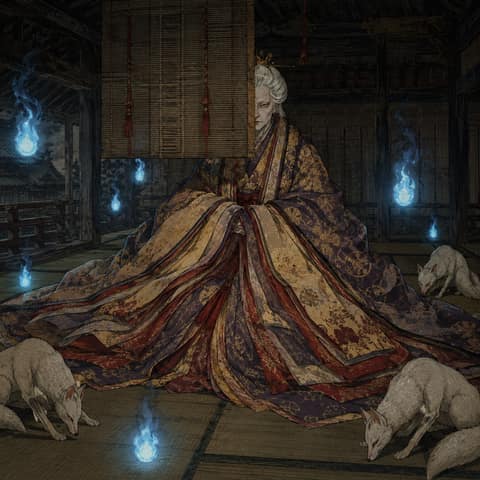
    Based on the image of a castle-deity linked to Himeji Castle’s main keep, centered on the kimon northeastern quarter. Known as Osakabe as well as Koshogobu or Shogobu, she appeared through the early modern era as a shifting “castle specter” before settling into the form of an aged princess or female apparition. Her pedigree ties to shrine relocations during construction and the founding of Hattendo, understood as a spiritual force intervening in the castle’s ritual order. She sees into human hearts, sometimes proving herself by producing tangible tokens such as combs or helmet scales, and is also recorded to assume a grand oni-like form in response to prayers or provocation. Her true nature is variously attributed to an ancient fox, the castle’s tutelary deity, an unknown noblewoman’s spirit, or a human sacrifice legend, with no single origin fixed. She protects when the lord governs justly and brings calamity when order falters, embodying a guardian of the boundary between castle and community.

  • Otoroshi

    Otoroshi

    Epic

    oh-toh-ROH-shee

    Iconography from Picture Scrolls (Early Modern Tradition)

    総称・汎称Unknown

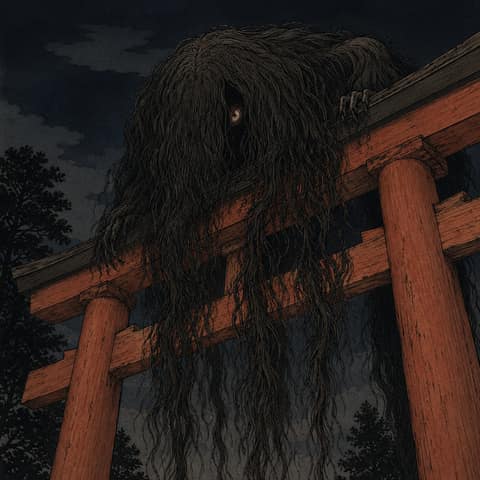
    Organized around forms depicted in Edo-period picture scrolls and picture sugoroku. Long hair covers the entire body, with bangs hanging down to obscure the face. In works like Hyakkai Zukan and Gazu Hyakki Yagyō it appears on the same page as Waira, suggesting a shared sound and sense of fear. Names such as Otoroshi, Odoro-odoro, and Keiippai are listed together, implying variation from differing readings of repeating marks. Specific locales, deeds, or omens cannot be inferred from the images; some show it atop a torii, but no sources conclusively assign it a punitive divine role. In folk thought, it is seen as a form shaped by the notion of odorogami (bristling hair) and the language of fear.

  • Painted Buddha

    Painted Buddha

    Epic

    NOO-ree-boh-TOH-keh

    Canonical Traditional Iconography

    Household SpiritsJapanese folklore

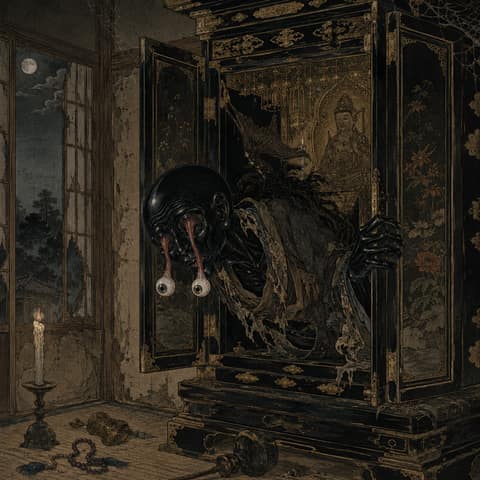
    Based on Edo-period yokai picture scrolls: a monk-like figure lacquer-black in color with protruding drooping eyes, accompanied behind by hairlike or fishtail-like elements. Most sources lack commentary, leaving its nature and origins unclear. In Sekien’s depiction it emerges from within a household Buddhist altar, which later encouraged reinterpretations as a possessed object or tool-spirit, though the original intent is uncertain. Accordingly, it is treated as an image embodying anxieties and awe surrounding domestic ritual spaces, with abilities limited to what the images suggest.

  • Powdered-Hag

    Powdered-Hag

    Epic

    oh-shee-ROH-ee bah-BAH

    Powder-Faced Hag of the Snowy Night

    Half-Human BeingsNara

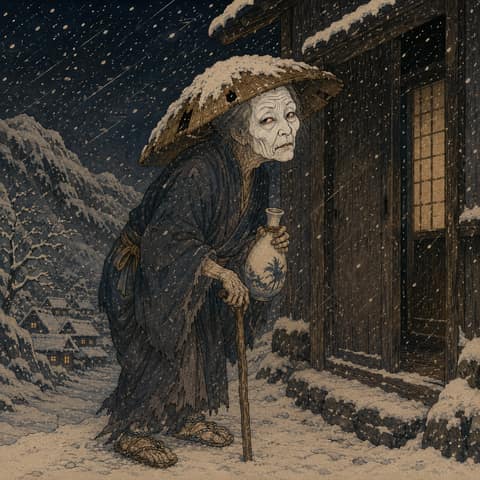
    On snowy nights she appears at the door, face pale as if dusted with powder, wearing a torn straw hat and carrying a sake flask. She asks for sake or sweet sake, thanks the giver even for a small portion, and leaves. If refused, she troubles the household with knocking and calls. She blends the idea of a winter visiting deity with eerie folktales, remembered as a figure embodying customs of sharing and proper hospitality.

  • Prince Sawara

    Prince Sawara

    Epic

    SAH-wah-rah shin-NOH

    Emperor Sudō as Vengeful Spirit – Traditional Goryō Version

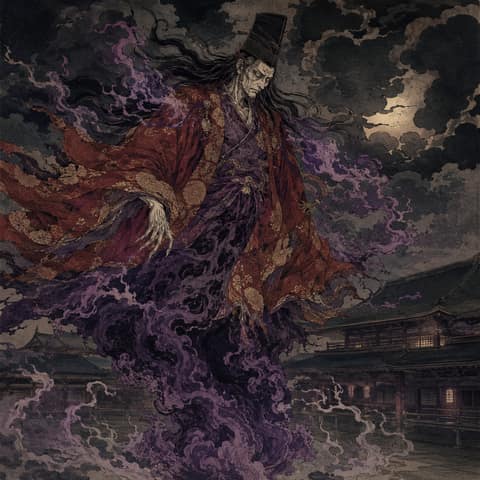
    Ghosts & SpiritsNaraKyoto

    An image grounded in local and court memories that Prince Sawara’s resentment manifested as a goryō. Amid suspicion over his alleged crimes he died by fasting, and later plagues, famine, and illnesses afflicting the imperial line were seen as his curse. The court sought reconciliation through land donations, sutra recitations and esoteric rites, reburial, and posthumous honorific titles, carefully enshrining him as a goryō. Revered as a power that judges right and wrong, he received offerings at shrines and temples, seasonal services, and apologies at his mausoleum. In later years, rites centered on the Sudō Tennō Shrine took form, spreading protective faith between the capital and Yamato. His grudge was understood not as private spite but as a warning against political disorder and calumny, prompting rulers to vow purity and justice with sacrifices, written oaths, and sutra offerings. The spirit bears a wild aspect, yet when appeased turns to guardianship.

  • Raigō

    Raigō

    Epic

    RAI-goh

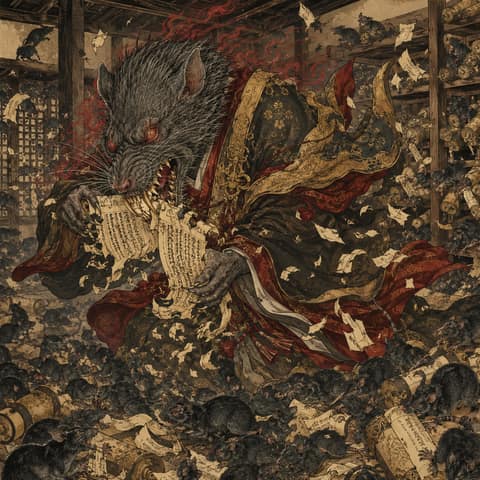
    Iron Rat (Raiyō’s Vengeful Spirit Tale)

    Ghosts & SpiritsShiga

    A version grounded in medieval tales where the spirit of the monk Raiyō becomes a swarm of rats or a monstrous iron-furred rat known as the Tesso and gnaws through the sutra repository of Enryaku-ji. Rivalries among temple powers are projected onto a narrative of vengeful deification, linking ritual efficacy with retribution. In literature it appears mainly in war chronicles, blending a real monk’s biography with a settled ghost-vengeance legend. Later yomihon and paintings amplified this image, symbolizing rat blight and the ruin of sutra scrolls, yet at its core lies a folk pattern of a rancorous spirit bringing calamity upon sacred objects and scriptures.

  • Rain Woman

    Rain Woman

    Epic

    AH-meh-ON-nah

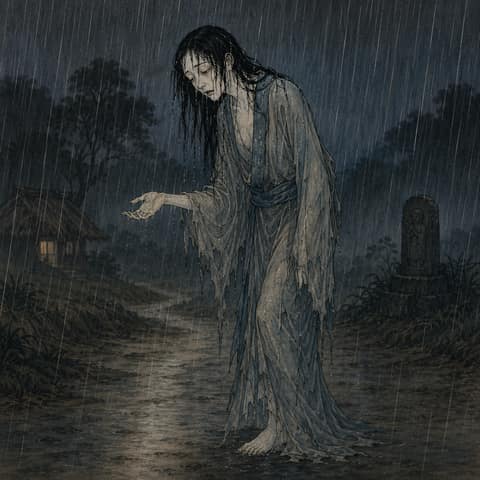
    Rain-Summoning Female Spirit

    Weather & Calamity SpiritsNagano

    In historical sources, Ame-onna first appears in Toriyama Sekien’s illustrations, though his entry leans on an allegory from Chu, leaving the standalone monster image faint. In oral traditions nationwide two types stand out. One is a female apparition on rainy nights that targets children (such as Shinshu’s “Ame-onba”), with motifs like approaching crying children on night roads and carrying a sack. The other is a numinous being that summons rain in drought, tied to rain-invoking rites and shrine prayers, venerated as a symbol of blessed showers. Rather than contradicting each other, these reflect a folk reading of rain’s dual gifts and perils. From early modern times, a nickname meaning “one who brings rain” also stuck to individuals, but that is a social label, not a yokai image. Sources vary widely by region, and many tales leave names and citations unspecified.

  • Red Ray (Akaei)

    Red Ray (Akaei)

    Epic

    AH-kah-eh-ee

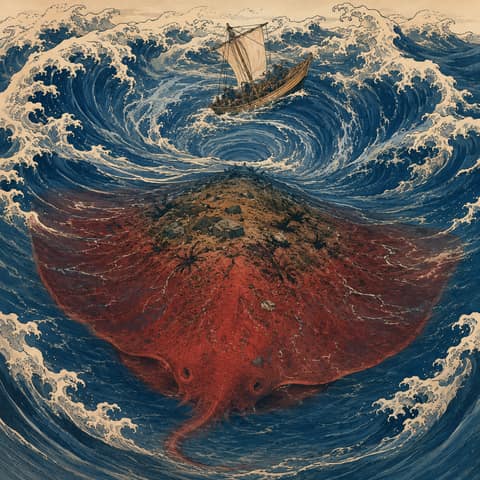
    Legend-Concordant Sea Giant Fish Tale

    Aquatic SpiritsChiba

    Based on the account in Ehon Hyaku Monogatari, this version frames it as a sea monster whose massive body surfaces like an island. Its back bears sand and pebbles, so from afar it is mistaken for an uninhabited isle. When sailors draw near it sinks, spawning whirlpools and heavy seas that damage or capsize ships. The tales strongly warn against navigational hazards and errors of sea-line sighting. Reported as a firsthand sighting off Awa, it is discussed alongside records of giant fish off Ezo and curiosities like the “Capital of the Red Ray,” collectively naming common sea-borne anomalies. Natural-history notes mingle with怪談, with little concrete ecology, but three cores recur: immensity, floating and sinking, and stormy waves.

  • Red Tongue

    Red Tongue

    Epic

    AH-kah-shah

    Iconographic Tradition: Akazashita (Toriyama Sekien lineage)

    General ClassificationsVarious regions of Japan (sources uncertain)

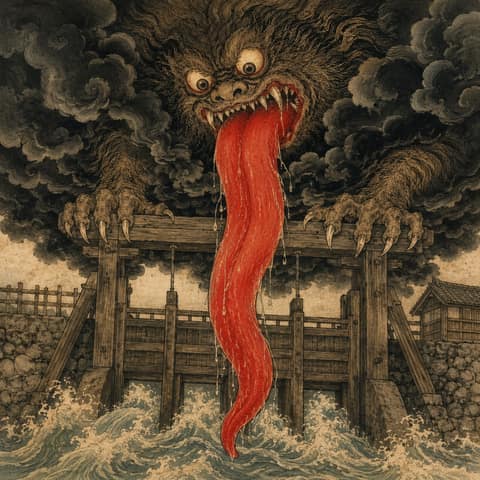
    Akazashita is a rare case where imagery precedes textual records. Its core features are a colossal tongue thrusting from black clouds and a bestial face. Toriyama Sekien placed this figure over a sluice gate, and later scholars offered symbolic readings drawing on notions of filth such as scum and grime and on proverbs that cast the mouth and tongue as gates of calamity, but Sekien left no notes. In many early modern sources the sluice gate is absent, and the name wavers between Akazashita and Akakuchi. Links to the Onmyodo guardian name Akazashita-shin of the Grand Duke direction or to the Rokuyo day Akakuchi have been noted but cannot be firmly genealogized. Since the Showa era, fable-like explanations and local tales have spread, yet statements beyond the base sources should be avoided.

Showing 73 - 96 of 121 yokai