Yokai Encyclopedia
Encyclopedia of Japanese Yokai
稀少 
Gotoku Neko (Trivet Cat)
GOH-toh-koo NEH-koh
Iconographic Tradition, Sekien-Centered Version
Animal Shapeshifters Japanese folklore This version reconstructs the Gotoku-neko based on Toriyama Sekien’s original image and earlier iconography. An aged cat with a forked tail wears a trivet like a crown and lingers at the hearth’s edge. In Hyakki Tsurezure Bukuro, Sekien plays with the boundary between tool-spirits and animal-spirits, citing Tsurezuregusa’s “Crowned Trivet” and offering a punning interpretation. Thus the Gotoku-neko is not merely a monster cat but a symbolic being linking utensils and literary sources. The Muromachi-period Night Parade scrolls show a yokai bearing a trivet among figures balancing tools on their heads; Sekien follows that lineage while giving it a feline form. The postwar notion that it “kindles fire by itself” derives from later guesses about the depicted blowpipe; older records do not specify such acts. Accordingly, in this version it is restrainedly treated as an apparition seen by the hearth, attended by the presence of fire.
稀少 
Human-Faced Tree
neen-MEN-joo
Illustrated Compendium Tradition—Sekien Design Edition
Natural Phenomena Spirits Unknown; said in sources to grow in the distant land of Dashi ("Great Food" country) to the southwest Based on Edo-period natural history notes and shaped by Toriyama Sekien’s pictorial intent. It is a tree that grows thick in mountain valleys and bears blossoms at the tips of its branches that resemble human faces. The flowers do not understand human speech, but are said to smile at calls or sounds. When laughter overlaps, the petals lose strength and eventually wither and fall. In Japan it was received as a tale of foreign curiosities, lacking specific local toponyms or anecdotes. The faces vary from old to young, often depicted grinning with teeth as they sway in the wind. Its true nature is unclear—treated either as a plant spirit or a rare anomalous tree—and it was recorded more as a curiosity than a source of fear.
名妖 
Hitodama (Human Soul Fire)
hee-toh-DAH-mah
Hitodama (Traditional Tale Version)
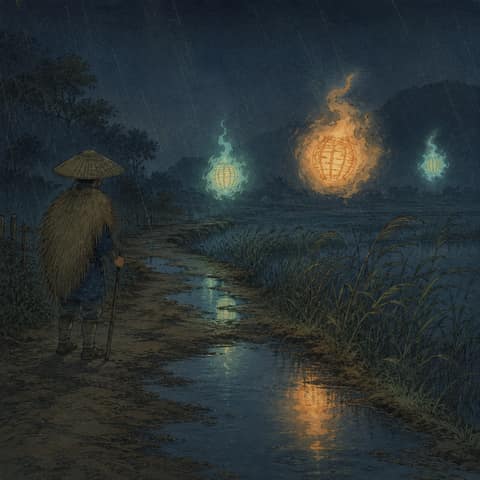
Ghosts & Spirits Various regions across Japan A depiction based on the traditional understanding of hitodama. It is a spirit flame that appears in answer to impending death or powerful emotions, said to fly to one’s family line or close relations. It drifts lower than shoulder height with a faint trailing tail. Though it seems to be carried by the wind, it is also said to travel as if toward a destination. Its color is often pale blue, but varies by region, with many reports of orange or red. Sightings cluster near places of passage or boundary—temple and shrine grounds, graveyards, old roads, field ridges, and pond edges. Early modern essays, local gazetteers, and modern folklore collections mention it as a “greeting flame before death” or “parting flame,” and distinguish it from onibi and kitsunebi, which have different origins. Scientific explanations have been attempted, yet tradition regards it as a sign of a soul’s coming and going.
伝説 
Tsukumogami
tsoo-KOO-moh-gah-mee
Tsukumogami (Classical Depiction)
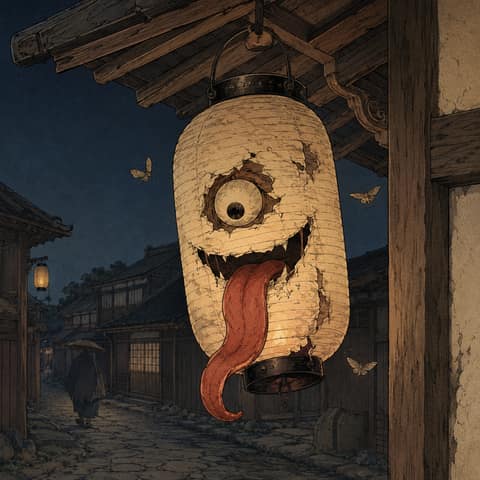
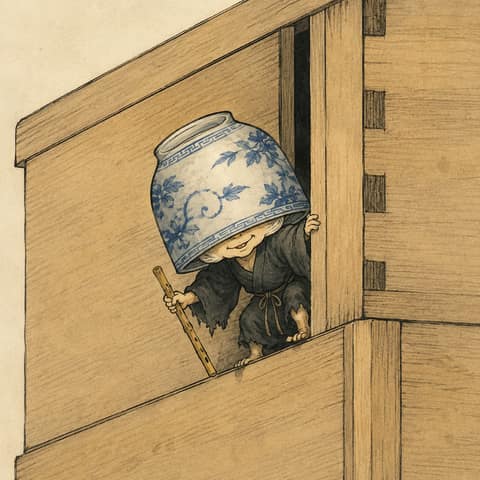
Household Spirits Medieval Japan, chiefly the Kinai region Rooted in Muromachi-period picture scrolls, this portrayal centers on tools and household objects that gain spirit through long use. When discarded carelessly, they bear resentment and cause disturbances, yet they can be calmed by Buddhist rites, prayers, or renewed respectful use, and may act protectively thereafter. The number of one hundred years is symbolic, expressing the accumulated time that grants spiritual potency. Their forms vary widely—humanoid, demonic, bestial—with everyday implements such as braziers, washbasins, and sake pourers often depicted transforming. Although the name spread less in the early modern era, tool-spirits continued to appear in Night Parade of One Hundred Demons imagery, reflecting attitudes toward tools and impermanence. Local names are not fixed, and sources chiefly trace to the Tsukumogami picture scrolls and old glosses. The tales avoid fanciful additions, serving as moral lessons urging people to cherish and respect their tools.
名妖 
Itsumade
e-tsu-mah-deh
Itsumaden (Classical Form)
Animal Shapeshifters Hira Mountains, Shiga Prefecture Itsumaden slips into the night as if dissolving into darkness, flying while wreathed in black and violet miasma. Its wings are unnaturally large, its eyes gleam eerily, and its gaze instills a crushing sense of dread. Its voice rings out like human speech, whispering “itsu made…”—how long remains—foretelling the listener’s lifespan. It is said to appear before calamities and wars, inspiring both fear and reverence among the people.
名妖 
Kudan (Prophetic Human-Cow Yokai)
koo-DAHN
Late Edo Kawaraban Woodblock Version of the Kudan
Half-Human Beings Across Japan (notably Tango Province and Etchū/Tateyama traditions) A Kudan image that spread in the late Edo period through kawaraban broadsides and printed books. Depicted as a human-faced cow, it appears, utters a prophecy, and soon dies. A Tenpō-era broadside recounts an appearance in Tango, stressing powers over harvest fortunes and averting misfortune, with cases recommending the display of its image. Meanwhile, the Kutabe of Etchū’s Mt. Tateyama appears in records from the 1820s onward, showing diverse traits such as a woman’s or elder’s face, sharp claws, and eyes drawn on the torso. Both share a reputation for prophecy and warding off epidemics, and their circulation increases during crises. The folk etymology linking the formulaic phrase “kudan no gotoshi” at the end of documents to the monster Kudan is viewed skeptically based on earlier linguistic usage. In folklore, the core pattern is appearance, proclamation, short life, and the image used as an amulet, while place names, dates, and specific efficacies vary widely by source.
名妖 
Kudan (Prophetic Human-Cow Yokai)
koo-DAHN
Kurahashiyama Notice of Protective Talismans (Kudan Variant)
Half-Human Beings Across Japan (notably Tango Province and Etchū/Tateyama traditions) Known as the Kurahashiyama Notice of Protective Talismans, this variant is said to have appeared from the mountain valleys of Yosa District after the Tenpō Famine. Though half-ox and half-human, its face looks somewhat young, with a broad brow, moist eyes, and a faintly upturned mouth. The ox body is gaunt with ribs showing, yet white flecks like morning dew scatter across its back, taken as signs that mark the year’s omens. It appears mostly between midnight and dawn, at paddy ridges along the mountain foot or before boundary shrines, witnessed typically by those on night rounds or out to relieve themselves. The kudan speaks no more than three times. First, it declares the Path of Pestilence, fixing from which direction the sickness will come and in which month it will intensify. Second, it details the Method of the Posted Image: draw its likeness on a half-sheet, paste it facing north on the inner lintel of the doorway or atop the rice bales, use fresh soot for ink and half-size paper offered at the previous autumn festival, and allow only one sheet per household. Third, it states the Year’s Aspect, leaving brief lines on bounty or scarcity and on protections within the home. When it finishes, it chews the paddy grass, bows its head, its breath thins, and it expires before sunrise. The village carries its body to the mountain’s base, covers it shallowly with earth, and sets a sprig of bamboo above. After seven days, when unearthed, the bones are soft and only the hooves remain hard; fitting a hoof to a brush shaft and tracing the edge of the charm was said to let misfortune flow out of the house. The image has fixed conventions: a single vertical crease at the center of the human brow, three white dots on the ox shoulder, and a bifurcated tail flowing to the left. Errors weaken its efficacy, and if the tail is drawn to the right, the disease’s direction reverses and brings calamity. The kudan also teaches that replacement of the posted image is limited to twice a year, at barley harvest and on the first day of the Frost Month. The artist must purify the hands with salt, keep the lamp dim at night, speak no words while drawing, and at the end write small, This extends not only to this house but to the neighboring hamlet. Homes that keep these rules know fewer domestic quarrels and lighter crop damage. The Kurahashiyama kudan closely matches the archetype of a prophetic beast in that it announces both good omens and protections from pestilence, yet it never speaks of profit in trade or victories in war, confining its words to home and field. A Kurahashiyama broadsheet states that posting its image in a storehouse or earthen-floor entry will drive out damp from the granary and keep illness from the threshold, and when sending copies to distant villages, they must circulate within three nights. Delay was thought to wither the effect, prompting village youths to run them by night. Later tales try to link a formulaic closing phrase of legal documents to the kudan, but this version forbids it, warning that using that phrase in a talisman blunts its power. Those who see it suffer a brief fever, which lightens after seven days, and they avoid serious illness for three years. Its short life is a vow not to linger in the world, and the more it returns to the earth, the deeper its words take root.
名妖 
Kudan (Prophetic Human-Cow Yokai)
koo-DAHN
Ushi-no-Ko, Entrusted Oracle Variant
Half-Human Beings Across Japan (notably Tango Province and Etchū/Tateyama traditions) This Entrusted Oracle variant of the Ushi-no-Ko is born with mingled human and bovine features and speaks human language the moment it emerges from its cow mother, asking to be called a kudan. It appears only in byres attached to human homes or in pens on mountain pastures, distinct from types that manifest in the open wilds. Its face ranges from a young woman’s to a gaunt elder’s, yet the eyes are always moist and fixed, piercing the listener without widening. Instead of a cry it sighs briefly, first urging that the mother cow not be slaughtered. It then foretells roughly seven years of abundance, household prosperity, or the dispersal of epidemics, and declares that in the eighth year war or calamity will cast a shadow. It ends by stating its own short life, saying it will die within three days. If the body is buried shallowly it averts misfortune, but display as a spectacle draws gloom upon the house. Even so, antiquarians have preserved it as taxidermy or portraits, and capturing its image in broadsheets or records is accepted as apotropaic. Its oracles address only large-scale matters such as harvests, plagues, drought, and war, and it remains silent on personal fortunes. This preserves the weight of its words and tests the listener’s judgment, keeping it apart from trivial divination. The truer the prophecy, the healthier the mother cow remains thereafter, and the household’s cattle and horses are said to avoid disaster. If its birth is treated as a joke and made a commotion, it bites its tongue to blood and falls silent. When drawn, give it short horns, a thick neck, and the rounded body of a calf. It has four legs, a tail thin and long like straw rope, and small hooves. A single swirl of hair sits on its brow; stamping that spot with ink and hanging the image at home was believed to ward off fire and theft for seven years. During the three days after birth it wishes to look outside once late at night. If the back door is cracked open at moonrise and it is faced northeast, its words will carry clear, according to oral lore. It does not call itself a god, only one who knows the world’s turn ahead of time. Offerings should be simple, a pinch of salt and a bowl of pure water. After death it is wrapped in a straw mat and buried in a byre’s corner or on a raised ridge of a field; setting a hat upside down to keep off rain is said to keep grain luck in the family line. It appears most in checkpoint towns by the sea and along mountain herb-gatherers’ roads, especially in border villages where travelers mingle, places thought to gather the world’s signs for it to read.
珍しい 
The Kesa-Monk of Igusa
ee-GOO-sah no keh-SAH-boh
Folkloric Record Edition
Aquatic Spirits Musashi Province (modern Kawajima, Hiki District, Saitama Prefecture) The Kesa-bō of Igusa is told as a kappa belonging to the local waters, marked by a monkly appearance symbolized by a priest’s kesa stole. Its pranks cause real harm, such as obstructing passage or adding weight, and at times tie into sacrificial notions surrounding the intestines. The listing of neighboring kappa names typifies kappa groups distributed along each water system, accompanied by ideas of mutual visits and marriage ties. The setting centers on the channels near Ochiai Bridge, where nighttime travel was shunned. Later records sometimes confuse it with examples from Miyagi Prefecture, but locally the tradition is firmly fixed under the name Igusa.
稀少 
Kera-kera Woman
keh-rah KEH-rah OHN-nah
Sekien Illustrative Edition
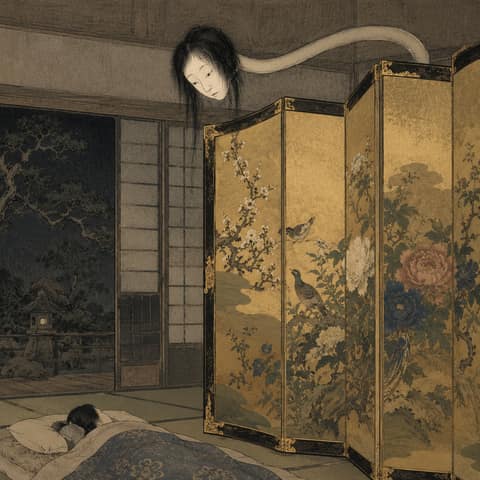
Ghosts & Spirits Japanese folklore This entry centers on Toriyama Sekien’s imagery, supplemented only minimally by the popular explanations found in modern yokai handbooks. Citing the anecdote of Song Yu of Chu, Sekien likened a woman laughing alluringly over a wall to the spirit of a wanton. The plate itself does not detail temperament, degree of harm, or methods of dispelling, offering only form and associative origin. Later commentators emphasize a dry laugh heard by one person alone on an empty road, framing it as a psychological apparition that provokes fear, shame, and unease. Tangible harm is rarely noted, sometimes limited to shock, freezing in place, or fainting. Its hauntings are not tied to a specific region, and are imagined wherever sightlines are blocked—along city walls, crossroads, or over hedges—though sources are not cited. Accordingly, this version keeps Sekien’s visual prompt at its core, treating confusion by laughter as an ancillary function.
珍しい 
Phantom Locomotive
nee-SEH-kee-shah
False Locomotive (Traditional Type)
General Classifications Across Japan (especially along railway lines) Accounts of the False Locomotive cluster around the era when the alien sounds and sights of steam engines entered rural life, understood through beliefs in beastly transformations and mimicry. Across regions the plot is similar: at night a whistle and pounding wheels approach from ahead, even lights are seen, but everything vanishes just before impact. Soon after, a dead tanuki or badger is found and given memorial rites. Folklorists place it alongside beings like Azukiarai and Sand-Throwers, extending the idea that uncanny noises are the work of animals. Rumors spread not only by word of mouth but also via newspapers, producing uniform distribution and content. Even when tied to specific locales or temples, the core remains threefold: the match of sound and phantasm, and the tangible animal corpse. It declined as modern transport expanded, yet survives in trackside ghost tales.
珍しい 
Kugutsushi (Puppet Troupers)
koo-GOO-tshee
Kugutsu Performer (Traditional Figure)
Half-Human Beings Regions of western Japan, especially Nishinomiya in Settsu Province The figure of the kugutsu performer is distilled in accounts of a perpetual wanderer who appears at shrine fronts and market squares with the seasons and festivals, showcasing many arts such as puppet play, comic turns, sword dances, and sumo. Old records note mastery of archery and horsemanship, juggling two swords, manipulating seven balls, and astonishing onlookers by making wooden figures dance. Female performers, known as kugutsume, excelled in song and dance and were linked to ideas of purification. In later eras they were tied to temple and shrine guild quarters, joined troupes praising Ebisu and puppet guilds, and are regarded as forerunners of sarugaku, kagura, and puppet theater. Some received patronage from court and samurai, contributing to the transmission of songs and narrative arts. As a yokai, they are told of as liminal wanderers who appear suddenly at village borders or before shrines, offer their art, leave lucky coins or a patter of words, and vanish. Folklorically they are noted in relation to outcaste status, guild systems, and ritual entertainment, understood—without embellishment—as mediators whose itinerant arts bridge the human world and the otherworld.
名妖 
Oni of Gango-ji
GAHN-goh-jee no OH-nee
Canonical Folkloric Tradition
Ghosts & Spirits Yamato Province (modern Nara Prefecture) This version follows storylines found in Heian-period tale collections and represents the type fixed as the bell-tower apparition of Gangoji. The demon’s true form is the restless spirit of a servant connected to the temple, manifesting as a figure that frightens monks and children. It appears at midnight, and accounts say its form can be verified by lamplight, reflecting a folk view that sacred beings hide yet reveal themselves under certain conditions. A preceding thunder-god episode is linked as a strong-child birth tale, reinforcing the idea that the power of thunder can dwell in a person. The subjugation is not by beheading but by tactile restraint—“grabbing the hair,” “tearing it out”—with the hair remaining as a relic treasured by the temple. Thereafter the monster is calmed, and the child takes vows and is known as Dōjō Hōshi. Words like Gagoze and Gagoji appear regionally as generic terms for yokai, but their etymology is debated and left unspecified.
珍しい 
Court-Entering Sparrow
NYOO-nai SOO-zoo-meh
Court-Entering Sparrow (Traditional Tale)
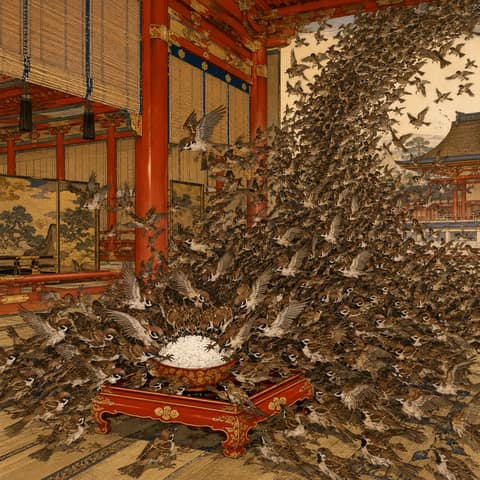
Animal Shapeshifters Yamashiro Province (Kyoto) The Court-Entering Sparrow is often cited as a case where personal grudge takes the form of a small bird that slips in and out of the imperial palace. Its pecking at offerings in the Seiryōden symbolizes trespass into forbidden precincts and the ill omen of defiling sacred food, feared for disrupting court ritual. It was taken as the metamorphosis of Fujiwara no Sanekata’s exile to Mutsu and his unresolved yearning for the capital, and used to explain calamities and blights. A revelatory dream at the Kangakuin and the raising of a Sparrow Mound reflect medieval rites of pacifying vengeful spirits through Buddhist memorials. Real sparrows’ migrations, flocking, and seasonal crop damage underlie the tale, which fused with the idea of visiting birds as vessels for souls. The tradition appears across various records, but details and dates differ, leaving much uncertain.
一般 
Fridge Ward
RAY-zoh-MO-ree
Modern Version
Household Spirits Urban apartment complexes Among residents of housing blocks and apartments, people have long whispered that if fridge magnets fall or move on their own, it is the work of the Fridge Guardian. In one home, opening the refrigerator at night revealed a single magnet shifted to a new spot, and the next day the head of the house forgot to use meat in the freezer and let it spoil. In another home, a child was found crying before the fridge at night, and when asked why, replied, “A voice from the refrigerator told me to eat snacks.” From tales like these, the Fridge Guardian came to be known as a modern yokai that disrupts people’s eating rhythms.
珍しい 
Gambari Nyūdō
GAHN-bah-ree nyoo-DOH
Tradition-Concordant Version
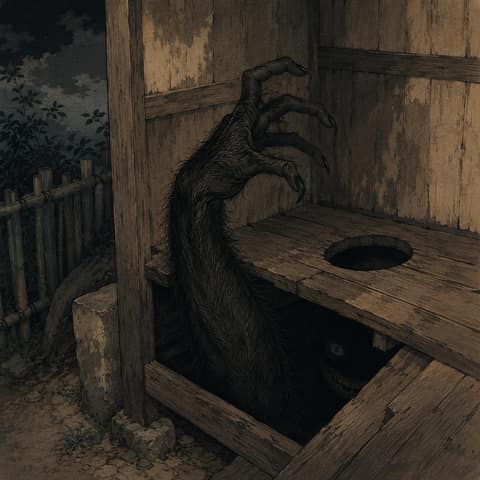
Aquatic Spirits Various regions (Edo, Kinai, Sanyōdō, etc.) A synthesis based on Toriyama Sekien’s imagery and regional taboos and chants tied to privies. Since antiquity, latrines were seen as thresholds where impurity and boundary meet, with apparitions said to appear at liminal times such as midnight and New Year’s Eve. Sekien depicts a monk-like figure vomiting a bird and notes a charm invoking “Gambari Nyūdō Cuckoo.” Folklore records chants that decide fortune or misfortune, tales of transmutation to gold or koban alongside ominous encounters marked by hearing the cuckoo. Scholars note punning links with the graph for cuckoo and Chinese toilet deities, and strong regional variation and name fluidity, including Wakayama’s “Setsuin-bō” and blending with Okayama’s Mikoshi-nyūdō. Practices on how and when to enter the privy, cautions on time, and children’s nerve-testing customs intertwine with taboos over what to say and tales of invited luck.
伝説 
Bakeneko
bah-keh-NEH-koh
Bakeneko
Animal Shapeshifters Various regions across Japan A consolidated image of the bakeneko based on Edo-period woodblock prints, printed books, and oral tradition. An aged house cat, or one abused by humans, becomes a yokai imbued with vengeful spirit. Portents include licking lamp oil, standing on two legs, and taking human form to slip into a home. Its curses typically target owners or abusers, manifesting as illness, strange deaths, or household decline. Interfering with funerary rites and desecrating corpses are recurring motifs, and tales often end with pacification by monks or ritual prayers. Early modern folk beliefs feared long-tailed cats as gaining occult power, leading to taboos about tail length. Boundaries with the nekomata are blurry, and when the forked tail is not emphasized, the creature is commonly called bakeneko. Urban entertainment refined the monster-cat image, even linking it with courtesan motifs, yet at its core lies awe of a familiar animal and a worldview of gratitude and retribution.
珍しい 
Bakezōri (Haunted Straw Sandal Tsukumogami)
bah-keh-ZOH-ree
Tsukumogami Sandal Spirit
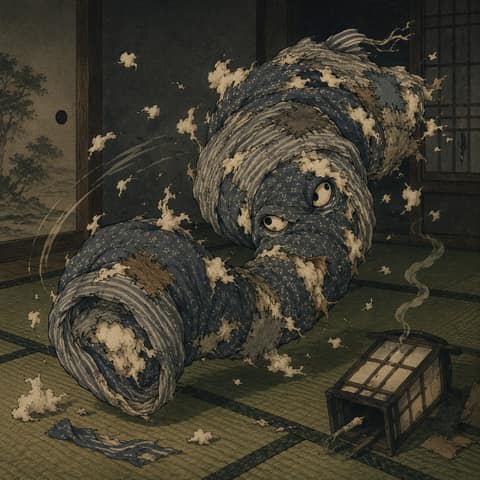
Animated Objects & Undead Japanese folklore A reconstructed image based on medieval to early modern depictions of sandal tsukumogami. Straw sandals were everyday items that wore out quickly and were often discarded, so after a certain number of years they were thought to gain a resident spirit. It reveals itself with noisy nighttime footsteps and aimless hopping, yet causes little harm. The “singing footwear” anecdote found in modern yokai encyclopedias likely conflates a geta folktale and lacks firm evidence as a distinct tradition of the straw-sandal specter. In folklore studies it is understood as a visual emblem of the norm “do not treat tools carelessly,” and is classed as one type within the broader category of tsukumogami.
名妖 
Thousand-Wolf Pack
SEHN-bee-kee OH-oh-kah-mee
Senbiki-Ōkami
Animal Shapeshifters Across Japan (Shikoku, Izumo, Echigo, etc.) The traditional image of the Senbiki-Ōkami portrays not a lone wolf but the terror of a pack moving under command. Tales begin on a nighttime pass where a survivor escapes up a tree. The pack gains height through leaps and coordinated boosts, and when they cannot reach, they summon a chieftain or outside entities such as an old cat, an ogress, or the Blacksmith’s Wife. Those summoned are linked to in-home impostors disguised as family, and by morning the world bears traces—bloodstains, missing household vessels, wounds, or memorial steles—that anchor the tale in reality. Though the wolves’ behavior is exaggerated, older interpretations align it with knowledge of nocturnal habits and pack movement, and prayers, edged tools, and daybreak commonly mark the turning point. Depending on region, the chieftain appears as a white-maned great wolf, an old cat, or an ogress, with names like the Blacksmith’s Wife, Koike Hag, or Yasaburō Hag, yet the core pattern of tree-bound escape and summoning remains. Folklorically, the story links calamity lurking at borders—mountain passes, the hour before dawn—to shapeshifters within the home, often accompanied by memorial towers and place-name lore.
珍しい 
Resurrection Incense
hahn-GOHN-koh
Canon-Conforming Incense Apparition
Household Spirits Unknown Rather than a physical substance, the reviving incense is told in narrative tradition as a medium for reunion with the dead. The Chinese motif of seeing a figure within smoke was adopted into early modern Japanese literature and theater, where the handling of censers, incense wood, and ash is rendered with ritual care. In yokai picture compendia it sometimes appears as a type of tool-born apparition, with set-piece depictions of a visage forming in the incense smoke. It is often interpreted not as recalling a spirit itself, but only as manifesting a semblance or shadow. Medicinal virtues are mentioned as apocrypha in materia medica, yet Edo-period notes record skepticism and file it among curious tales. In Kamigata and Edo rakugo, a tryst lasts only until the incense or stick burns out, making the quantity and duration of incense a key stage device.
稀少 
Kokuri Baba (Temple Kitchen Hag)
KOH-koo-ree bah-BAH
Sekien Iconography Version
住居・器物 Japanese folklore An interpretation grounded in Toriyama Sekien’s Konjaku Hyakki Shūi depiction. Said to be the transformed bōnsō of the seventh prior abbot haunting the temple kitchen quarters, it steals offerings and money, digs up graves to braid hair into garments, and eats human flesh. Artwork pairs an old woman twisting thread with a cat, suggesting satire of clerical corruption and monastic lapses. The name “Kokuri” may pun on a word for something terrifying. Lacking a fixed regional distribution, it is chiefly known as a bookborne pictorial yokai. Rather than field sightings, it likely served as a moral warning and social satire aimed at temple society.
珍しい 
Battlefield Will-o'-Wisp
koh-SEN-joh-bee
Battlefield Will-o’-the-Wisp (Classical Form)
Demons & Giants Old battlefields across Japan (e.g., Wakae in Kawachi Province) A standardized image of the battlefield will-o’-the-wisp as seen in Edo-period picture scrolls and ghost tales. Most appear as multiple pale fireballs at midnight, drifting low as if against the wind. They are thought to rise as spirit-fire from the defilement of blood and corpses saturating the ground, each flame regarded as a fragment of the aura of soldiers and horses. Accounts describe repetitive behavior—circling fixed spots, appearing and vanishing, crossing rice-field ridges—rather than chasing people. Witnesses would recite prayers to withdraw, and villages calmed them with memorial services. Sekien used the term “Kosenjō-bi” to group uncanny fires at battle sites, framing many postwar fire tales found in works like Yadonokigusa. Malice is rarely attributed; they were respected as signs of unsettled souls.
稀少 
Furu-Utsubo (Aged Quiver Spirit)
FOO-roo OOT-soh-boh
Toriyama Sekien Iconography Standard
Animated Objects & Undead Japanese folklore Grounded in the classic image from Toriyama Sekien’s Hyakki Tsurezure Bukuro, it is understood as an aged leather or fur-covered utsubo quiver that raises its mouth and creeps along the ground. Its origin is not from a clear oral tale but from the tsukumogami belief that objects become ensouled with age. The accompanying text names the warrior who shot the field fox of Nasu no Hara (Tamamo-no-Mae), hinting that a quiver once emblematic of martial glory turns yokai after being forgotten. An earlier prototype is presumed in Muromachi-period Night Parade scrolls depicting object-spirits bearing bow and arrows, which Sekien reinterpreted and named. By night it slowly roams deserted roadsides and house shadows, said to make a sound like fletchings brushing. It is not strongly malicious, but when treated roughly it creaks and cries in warning, stirring memories of its former master.
稀少 
Korōka (Ancient Lantern Fire)
koh-ROH-kah
Sekien’s Koro-bi (Ancient Lantern-Fire)
Household Spirits Japanese folklore A version reinterpreting Toriyama Sekien’s fusion of a stone lantern and will-o’-the-wisp, casting it as a fire spirit dwelling in the lantern. When old courtyard or temple lanterns go long unused, a thin flame is said to rise at night, flickering as if lingering over the places it once lit. Historically, Sekien’s illustration and note form the core record, with little tied to specific locales or figures. It influenced later ghostly retellings, but firsthand accounts are scarce, so it is treated as a symbolic yokai of “the memory of light.”
Showing 41 - 60 of 404 yokai