Ipetam (The “Eating Blade”)
EE-peh-tahm
Tradition-Faithful Cursed Sword Image
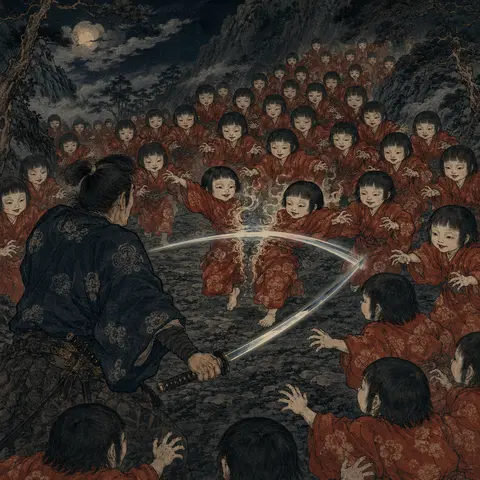
This version consolidates images of the Ipetam found across Ainu traditions. The blade rings of its own accord and shows hunger by the act described as “eating” stone or leather. Once drawn it will not rest until it sees blood, and tales say it may fly on its own to cut people. Its curse threatens households and kotan, inviting disaster beyond the owner’s will, so it is contained through rites and taboos or by sinking it in water. In Asahikawa and Kamikawa, after casting it into a bottomless bog, a rock in the shape of a sword is said to appear, tying requiem to place names and landscape origins. In Saru, a wit tale survives in which imitating the sword’s sound repels bandits, showing its fearsome name worked as a deterrent. In Kiritoi, Kushiro, an alias tale engraves taboo violation and harm into the sword’s very name, marking it as a remembered calamity object. Related types include the man-eating spear Ipe-op and the self-defense knife Sōsamusipe, suggesting a systematic view of baleful blades and weapons. This reconstruction avoids creative embellishment and adheres to regional records of the cursed sword.