YOKAI.JP

Traditional Yokai Encyclopedia

Yokai passed down through the ages

473 Yokai|13 Category|Page 18 of 20
Localization in Progress - More content available in Japanese version
View Japanese
Sort by: NameAscending
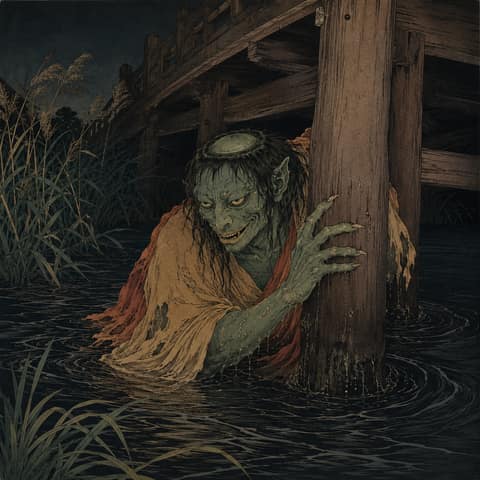
The Kesa-Monk of Igusa

The Kesa-Monk of Igusa

Uncommon

ee-GOO-sah no keh-SAH-boh

Folkloric Record Edition

Aquatic SpiritsSaitama

The Kesa-bō of Igusa is told as a kappa belonging to the local waters, marked by a monkly appearance symbolized by a priest’s kesa stole. Its pranks cause real harm, such as obstructing passage or adding weight, and at times tie into sacrificial notions surrounding the intestines. The listing of neighboring kappa names typifies kappa groups distributed along each water system, accompanied by ideas of mutual visits and marriage ties. The setting centers on the channels near Ochiai Bridge, where nighttime travel was shunned. Later records sometimes confuse it with examples from Miyagi Prefecture, but locally the tradition is firmly fixed under the name Igusa.

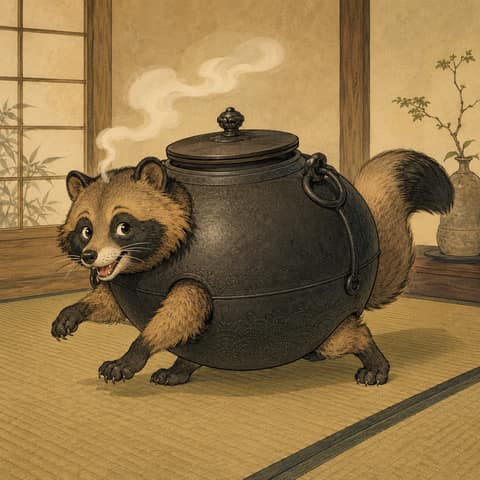
The Kettle of Morinji

The Kettle of Morinji

Uncommon

moh-RIN-jee no KAH-mah

Derived from the Legend of the Guardian Crane Kettle

Animal ShapeshiftersGunma

A portrayal based on the tale of the Guardian Crane at Morinji Temple in Jōshū. The ever-boiling teakettle symbolizes almsgiving and joy in the Dharma, and sharing tea with monks and visitors is understood as spreading virtue. The guardian is a long-lived tanuki who lives among humans while bound by Buddhist ties. When its true nature is exposed, it leaves the temple, but at parting uses illusion to show scenes of ancient battles and Buddhist rites, teaching people impermanence and the virtue of the Law. Later, this tradition split into two strands: one reshaped into the folktale Bunbuku Chagama with showy acrobatics, and one remaining within the temple’s origin legend. Locally, it is told in connection with the temple’s treasured kettle, influenced by tanuki worship, storytelling, and essays, yet its core reduces to two points: the inexhaustible hot water and the departing wise tanuki.

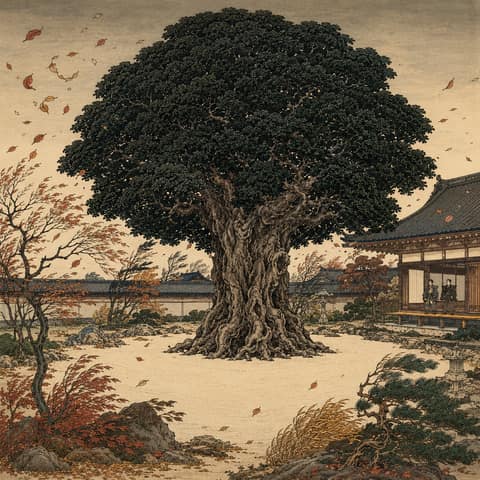
The Oak That Never Shed Its Leaves

The Oak That Never Shed Its Leaves

Uncommon

oh-chee-bah-NAH-kee SHEE-ee

Honjo Seven Mysteries – Traditional Lore Version

Natural Phenomena SpiritsTokyo

A recorded marvel revered and feared as the very phenomenon of an ancient chinkapin that shed no leaves. Understood less as a personified will and more as the ambience of the land or the work of a tree spirit, it is told alongside other Honjo Seven Mysteries such as Okehazubori and the Foot-Washing Mansion as an enigma that reveals no cause. Named in Mimibukuro and in local gazetteers and collections of strange tales, it is not remembered for direct harm but for an uncanny presence that keeps people away. It aligns with tree veneration and the notion of household guardian trees, with hyperbole like needing no sweeping of fallen leaves to emphasize the marvel. The identification of the actual tree is debated and unconfirmed.

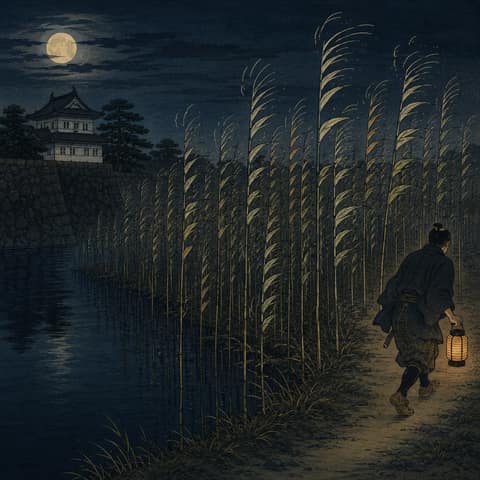
The One-Leaved Reed

The One-Leaved Reed

Uncommon

kah-tah-HAH no AH-shee

Honjo Seven Wonders – Traditional Tale

Weather & Calamity SpiritsTokyo

A classic Edo urban apparition that finds sacred presence in familiar natural anomalies. The single-bladed reed form signals a communal storytelling device that shares unease without fixing a cause. The anomaly is sensed less as a property of the plant than as an atmosphere of place, told alongside night silence and the sound of water. Memorial rites, posted placards, and small shrines are often noted as local pacification practices, and like other Seven Wonders (such as the ginkgo that never sheds its leaves), the tale pointedly withholds rational explanation and leaves the strangeness intact. Later embellishments personify people and incidents, but older accounts remain origin-unknown and phenomenon-focused.

The Seven Companions

The Seven Companions

Uncommon

shee-chee-neen DOH-gyoh

Collected Tradition Edition (Shikoku Type)

Ghosts & SpiritsKagawa

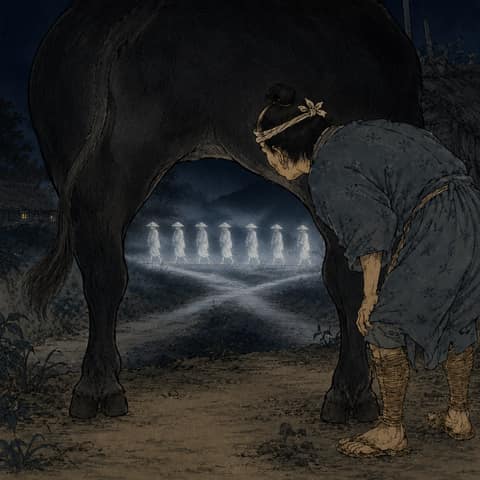
An amalgam of seven-in-a-row ghost tales found across Shikoku. Its core traits are threefold: seven figures advance in single file without a word, they appear at crossroads, on night roads, or at rainy dusk, and an encounter portends misfortune. Names, time of appearance, and garb vary by locale. In Sanuki they look human but are usually invisible, perceptible only through a ritual vantage—peering from beneath a cow’s hindquarters. A subtype limited to crossroads at the dead of night is called Shichi-nin Dōji, and certain once-busy junctions are remembered for their passage. The Shichi-nin Dōshi, who appear in rain wearing straw raincoats and hats, are linked to executed souls; a folk remedy to dispel the gloom after meeting them is to fan oneself with a winnowing basket. In Tokushima, seven child spirits accompanying the Headless Horse are said to have faded after Jizō statues were erected for their repose, reflecting a regional belief that memorial rites quell calamity. Though sometimes conflated with Shichi-nin Misaki, local names and functions differ; Shichi-nin Dōkō are identified by the outward feature of seven spirits marching in a line.

The Tsugaru Drum of Honjo

The Tsugaru Drum of Honjo

Uncommon

tsu-GAH-roo no TIE-koh

Bansho Seven Wonders – Traditional Lore Version

Household SpiritsTokyo

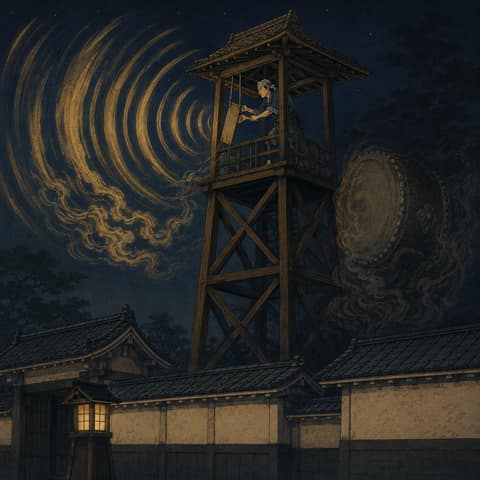
Told as an urban-legend-style ghost tale from Edo’s Honjo district, this curiosity lies in the pairing of objects and institutions rather than vivid supernatural feats. The phenomenon itself is scarcely described; the very adoption of a drum for duty is treated as uncanny. Shaped by the locale, samurai compound regulations, and a city prone to fires, the oddity of sound lingered in memory and became a tale. A variant recounts that striking a wooden clapper produced a drum’s sound, hinting at auditory error or transmission drift. Sources appear in local topographies and essays, and typically lack specific origins or named figures. Later creative retellings add ghosts of fire brigades or watchmen, but older lore is restrained, focusing on the strange pairing of residence and watchtower.

The Woman of Ikebukuro

The Woman of Ikebukuro

Uncommon

ee-keh-BOO-kroh no OHN-nah

Edo Folk Belief: The Woman from Ikebukuro

General ClassificationsTokyo

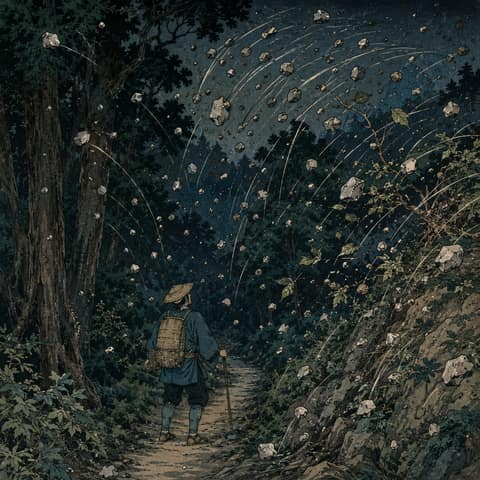
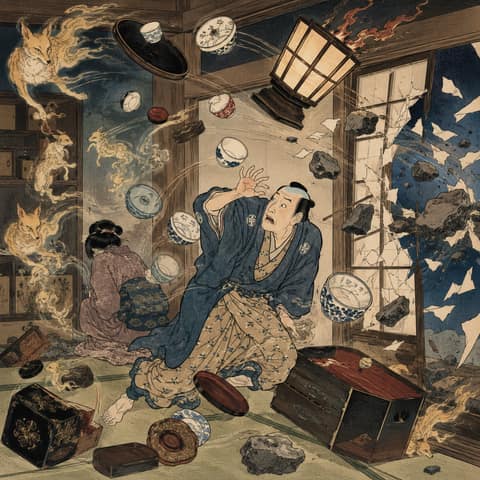
A late Edo period folk belief recounts that households employing a woman from Ikebukuro would suffer a barrage of noisy disturbances: sounds of thrown stones, damaged shutters, flying utensils and lanterns, and small fires flitting into the tatami room. Many versions begin with an affair between the master and a maid, and the phenomena cease once the maid is dismissed. Explanations vary, including obligations to the local tutelary deity, links to Osaki-possession tales from the Chichibu area, or simple human contrivance such as hoaxes and harassment. Rather than a single yokai individual, the term serves as a catch-all for disturbances tied to hiring women from certain locales, with parallel cases recorded for places like Ikejiri, Numabukuro, and Meguro.

Thousand-Wolf Pack

Thousand-Wolf Pack

Epic

SEHN-bee-kee OH-oh-kah-mee

Senbiki-Ōkami

Animal ShapeshiftersAcross Japan (Shikoku, Izumo, Echigo, etc.)

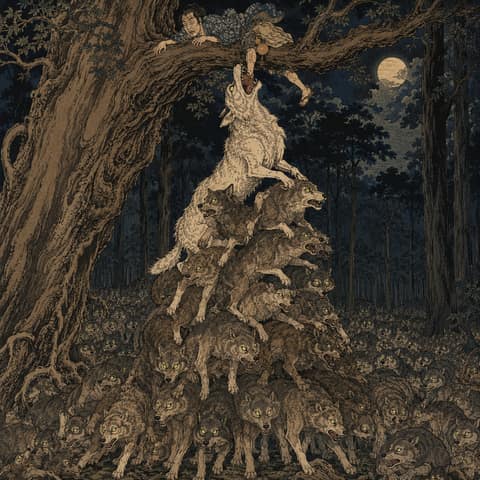
The traditional image of the Senbiki-Ōkami portrays not a lone wolf but the terror of a pack moving under command. Tales begin on a nighttime pass where a survivor escapes up a tree. The pack gains height through leaps and coordinated boosts, and when they cannot reach, they summon a chieftain or outside entities such as an old cat, an ogress, or the Blacksmith’s Wife. Those summoned are linked to in-home impostors disguised as family, and by morning the world bears traces—bloodstains, missing household vessels, wounds, or memorial steles—that anchor the tale in reality. Though the wolves’ behavior is exaggerated, older interpretations align it with knowledge of nocturnal habits and pack movement, and prayers, edged tools, and daybreak commonly mark the turning point. Depending on region, the chieftain appears as a white-maned great wolf, an old cat, or an ogress, with names like the Blacksmith’s Wife, Koike Hag, or Yasaburō Hag, yet the core pattern of tree-bound escape and summoning remains. Folklorically, the story links calamity lurking at borders—mountain passes, the hour before dawn—to shapeshifters within the home, often accompanied by memorial towers and place-name lore.

Thread-Spinning Maiden

Thread-Spinning Maiden

Uncommon

EE-toh-hee-kee MOO-soo-meh

Traditional Account

Mountain & Wilderness SpiritsTokushima

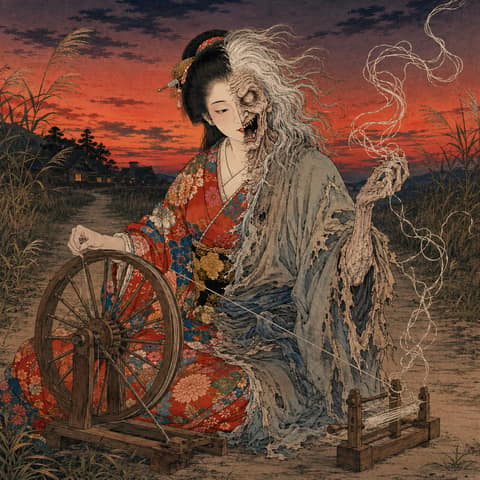
Based on records from Horie Village in Awa Province, this version organizes the image of the Itobiki-Musume as a young woman operating a spinning wheel by the roadside. The moment someone looks her way, she transforms into an old crone and bursts into loud laughter. No harm beyond revealing her true form is reported, and she neither touches nor pursues people. Stories most often place her from dusk to midnight in spots where foot traffic thins—village outskirts, field paths, and crossroads. Folklorically she belongs to roadside怪異 tales, told as a warning not to be deceived by looks and not to dawdle off one’s route. The trigger for the change is acts like “staring” or “approaching,” and the silent switch to an old-woman figure is the core of the fright. The spinning wheel is an everyday tool, and her realistic working motions heighten the uncanny shock of a chance encounter. Parallels exist outside the region, but the named example from Awa is the best known.

Three-Eyed, Eight-Faced

Three-Eyed, Eight-Faced

Uncommon

SAHN-meh YAH-zoo-rah

Tradition-Concordant Version: The Tosa Saramiyama Tale

Half-Human BeingsKochi

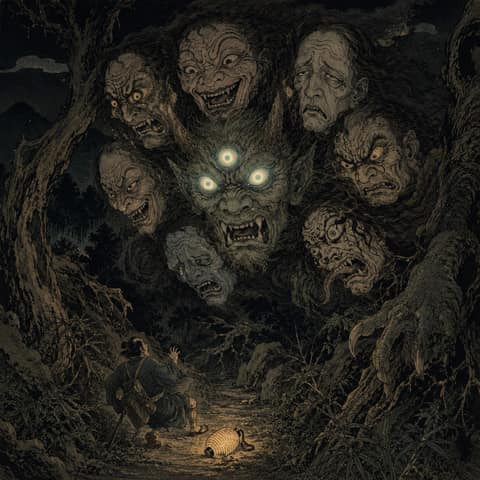
This version organizes the Saramiyama monster tale preserved around Takagawa in Tosayama Village, Tosa Province. Aside from the aberrant traits of three eyes and eight faces, its appearance is left undescribed, with only the enormity of its remains emphasized. Cast as a mountain demon that attacks passersby, the tale centers on pacifying the mountain and slaying it with fire under the leadership of a local notable. A ritual wand (gohei) is said to have endured amid the blaze, leaving traces in toponyms and legendary sites known as the Pacifying Stone and Pacifying Place. While linked by association to regional stories of multi-headed serpents, it is not directly identified with them, and the true nature of the three-eyed, eight-faced being remains unknown. The story conveys taboos against crossing mountain boundaries and the folk theme of calming with fire and purification, though details such as dates, identities, and specific rites are unclear in tradition.

Tofu-kozo

Tofu-kozo

Uncommon

tofu-kozo

The Edo Clown Yokai Born from Kibyoshi: Tofu-kozo

Humanoid Yokai / Half-human Half-yokaiTokyo

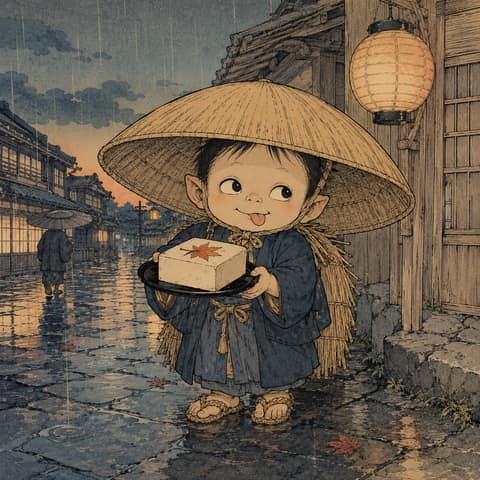
The Tofu-kozo is a character that embodies the sensibility of the late Edo period, which shifted *yokai* from 'objects of fear' to 'objects of affection and laughter'. While ancient Japanese and Chinese *yokai* were feared in dark tales and picture scrolls, the Tofu-kozo was born from the start as a character in printed entertainment books, intended not to frighten readers but to amuse them. The core of its form lies in the fixed iconography of 'hat, tofu, tray, and stuck-out tongue'. Rather than the invention of a single author, this became standardized as it was repeated and shared across printed books. Its very powerlessness—having no real abilities, causing no harm, and simply standing with tofu—ironically generated strong semiotic power. Visual traits such as the white of the tofu against the red of the maple stamp, and the disproportion between the child's body and the large hat, provided the foundation for its spin-off into toys and kite paintings. The Tofu-kozo is an entity that demonstrated early on that *yokai* could be detached from local beliefs and circulated as urban products and brands, and can be read as a distant archetype of modern mascots (*yuru-chara*) and the character business.

Tomokazuki

Tomokazuki

Uncommon

toh-moh-kah-ZOO-kee

Shima Coastal

Aquatic SpiritsMieShizuoka

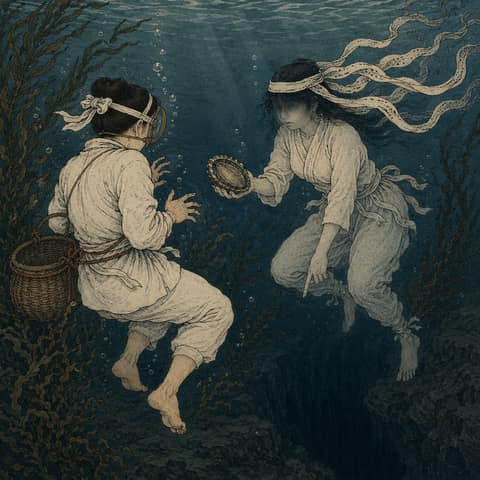
This version follows coastal ghost lore from Shima through Izu to Echizen centered on the idea of a diver’s double. It appears identical to the witness, notably with the tail of the headband hanging unusually long. It manifests in overcast or dim seas, approaches offering abalone or other shells, and lures victims toward the dark. Traditional countermeasures include keeping one’s gaze and routine steady, not accepting offerings with the leading hand, and using hand towels or garments marked with protective sigils, though results vary, and some tell of a net-like shroud being cast over them. Encounters skew toward those working alone, while many locales say group operations avert it. Some tell it as a revenant or sea-haunting apparition that draws people into the water, yet others long held it to be delirium or visions from prolonged diving and fatigue. Ama divers dyed Seiman-Doman patterns on clothing and towels for protection. In Echizen’s Anjima, it is said to move counter to expectations and cannot be clearly seen.

Trailing Boy

Trailing Boy

Uncommon

AH-toh-oh-ee koh-ZOHH

Trailing Boy Monk (Tradition-Faithful)

Mountain & Wilderness SpiritsKanagawa

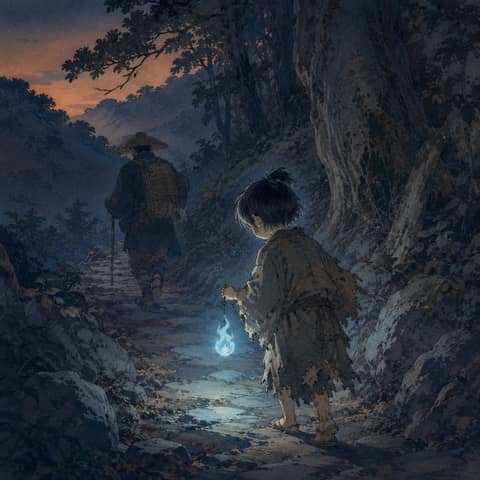
A version organized from folklore materials of a child-shaped mountain spirit seen in the eastern Tanzawa mountains. Generally harmless, it simply follows quietly behind travelers, yet at times steps ahead at forks to guide them onto the right path. It wears rough straw matting or homespun, sometimes pelts, blending into the forest’s shadow and vanishing when one turns back. It is said to appear most often in the afternoon, and at night to carry a small light like a lantern. Those who meet it repeatedly often think of lost children and leave rice balls, yams, sweets, or dried persimmons on rocks or stumps as offerings. Some accounts say it fades away as one nears the villages, others that it withdraws when called to at night, and none describe it as vengeful. Rooted in overlapping ideas of mountains and the dead, it stands as a symbol of the boundary nature of the mountain realm.

Treasure Ship

Treasure Ship

Divine

TAH-kah-rah-boo-neh

Traditional Version (Treasure Ship Print)

Deities & Divine SpiritsAcross Japan

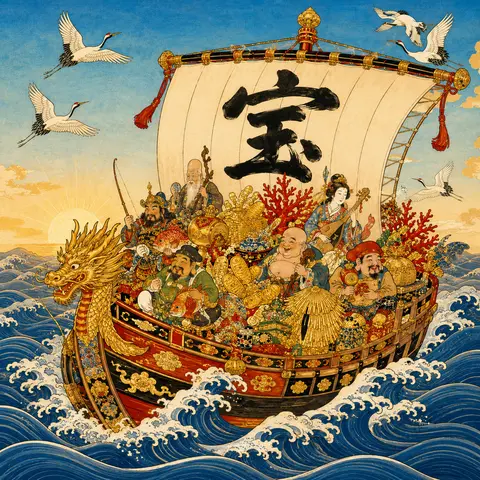
The Treasure Ship print traces back to boat images used to cast off bad dreams, circulated through urban and temple–shrine annual events. By the early modern period, designs commonly featured the Seven Lucky Gods and heaps of treasures, with auspicious characters on the sail to amplify good omens. Appending a palindrome verse tied it closely to first-dream traditions, preserving the logic of keeping a good dream and consigning a bad one to the river. While designs vary by region and publisher, the print uniquely combines two layers of meaning: inviting fortune and transferring or dispelling impurity. Folklorically, it links to New Year’s purification from year’s end through the first week, backed by its spread as an urban print commodity, ties to temple and shrine origin tales, and the vogue for Seven Lucky Gods as playful stand-ins.

Tsuchigumo (Earth Spider)

Tsuchigumo (Earth Spider)

Legendary

TSOO-chee-GOO-moh

Tsuchigumo of the Raikō Extermination Tale

General ClassificationsNaraKyoto

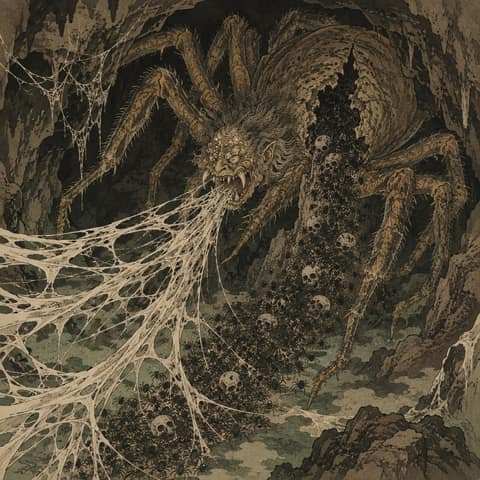
A yokai image fixed in medieval narratives: as Minamoto no Raikō lies ill, a monk-like apparition appears at his pillow. When struck, it flees leaving white blood, and following the trail leads to a mound or cave where a giant spider lurks. In Noh it calls itself “the ancient spirit of Mount Katsuragi,” while picture scrolls show it beguiling people with manifold shapeshifts and illusions. Its grotesque form—countless heads and swarms of small spiders bursting from its belly—has been read as a symbol of all manner of demons. Early modern joruri and kabuki inherited this line, tying it to the martial exploits of Raikō’s Four Heavenly Kings. Although the ancient term tsuchigumo once referred to local powers, that lineage diverges from the storybook yokai; only the name was carried over.

Tsukumogami

Tsukumogami

Legendary

tsoo-KOO-moh-gah-mee

Tsukumogami (Classical Depiction)

Household SpiritsMedieval Japan, chiefly the Kinai region

Rooted in Muromachi-period picture scrolls, this portrayal centers on tools and household objects that gain spirit through long use. When discarded carelessly, they bear resentment and cause disturbances, yet they can be calmed by Buddhist rites, prayers, or renewed respectful use, and may act protectively thereafter. The number of one hundred years is symbolic, expressing the accumulated time that grants spiritual potency. Their forms vary widely—humanoid, demonic, bestial—with everyday implements such as braziers, washbasins, and sake pourers often depicted transforming. Although the name spread less in the early modern era, tool-spirits continued to appear in Night Parade of One Hundred Demons imagery, reflecting attitudes toward tools and impermanence. Local names are not fixed, and sources chiefly trace to the Tsukumogami picture scrolls and old glosses. The tales avoid fanciful additions, serving as moral lessons urging people to cherish and respect their tools.

Tsurube-bi (Bucket Fire)

Tsurube-bi (Bucket Fire)

Uncommon

TSOO-roo-beh-bee

Traditional Aspect (Kaika Will-o’-Wisp)

Natural Phenomena SpiritsKyoto

A traditional reading of the Tsurube-bi based on Edo-period ghost tales and Sekien’s imagery. Told across Japan as a tree-born will-o’-wisp, its bluish-white fire-orbs dangle from branch tips and bob up and down like a well bucket’s pulley, misleading travelers. The flame is weaker than it looks and is said not to catch on clothes or vegetation. Early-modern accounts cite fire apparitions around Saiin in Kyoto, and later yokai encyclopedias file it as a will-o’-wisp akin to Tsurube-otoshi or as a separate kind. Sightings are said to peak on moonless or misty nights; when approached it slips away, when left it drifts back. A shadowed face sometimes appears, causing confusion with hitodama, yet it is remembered as a local, earthbound fire spirit.

Tsurube-otoshi

Tsurube-otoshi

Uncommon

つるべおとし

Severed Head Falling from Ancient Trees: Tsurube-otoshi

Monsters of Mountains and FieldsKyotoGifu

Academic Correction (Most Important Note for this Species): The monsters included in the "Mei" volume of Toriyama Sekien's *Konjaku Gazu Zoku Hyakki* (1779) are Nue, Itsumade, Jami, Moryo, Mujina, Nobusuma, Nozuchi, Tsuchigumo, Hihi, Dodomeki, Buruburu, Gaikotsu, Tenjo-sagari, Ohaguro-bettari, Okubi, Dodomeki, Kanedama, and Amanozako (18 entities in total), and Tsurube-otoshi is not included. What Sekien drew was the related yokai Tsurubebi, which was included in *Gazu Hyakki Yagyo* (1776) — the predecessor to Zoku Hyakki. The original text for Tsurubebi is Yamaoka Genrin's *Kokon Hyaku Monogatari Hyoban* (published in 1686; the "Tsurube-oroshi of Nishinooka" tale in Nishiyama, Kyoto), which theorized the strange phenomenon of a large tree's spirit turning into a fireball and descending from the tree on rainy nights using the Five Elements theory (Wood generates Fire). In other words, the "Yokai Tsurube-otoshi (a severed head or demon mask falling from a tree)" and "Sekien's Tsurubebi (a mysterious fire dropping from a large tree)" are separate lineages that diverged after the Showa era, and Sekien did not directly depict the former. No primary visual sources with the name "Tsurube-otoshi" from the Edo period exist, and it mainly appears as local folklore in Taisho period topographical records and folklore collections. This is a critical correction that must be specified to maintain the academic quality of yokai.jp, and the widespread "1779 Sekien iconification theory" should be explicitly denied. The primary records of Tsurube-otoshi are Taisho period local materials and folklore collections. The Kyoto regional study *Kuchidanba Kohishu* (a Taisho era collection of folklore from Minamikuwada and Funai Districts) serves as the core historical document, recording it as a local legend of mountain roads, passes, and old trees in the Chubu and Kinki regions. The fact that the primary source is not Edo period iconography but local folklore oral collection is a unique characteristic of this yokai, making it an exceptional case that does not fit the generalization that "yokai originate from Edo period iconification." The local folklore of Tsurube-otoshi is concentrated in the Chubu and Kinki regions: 1. Kyoto Prefecture — Hoki, Sogabe Village, Minamikuwada District (present-day Sogabe-cho, Kameoka City; drops from a kaya tree, laughs "Finished your night work? Shall I drop the bucket? Squeak, squeak" and rises again), Tera, Sogabe Village (a severed head descends from an old pine, devours people, and disappears for 2-3 days when full), Tomimoto Village, Funai District (present-day Yagi-cho, Nantan City; a pine tree covered in ivy), Tsuchida, Ooi Village (present-day Ooi-cho, Kameoka City; eats people) — documented in the Taisho period regional study *Kuchidanba Kohishu*. 2. Kuze Village, Ibi District, Gifu Prefecture (present-day Ibigawa-cho) — drops a bucket from a large tree that is dim even during the day. 3. Hikone City, Shiga Prefecture — drops a bucket from tree branches aiming at passersby. 4. Kuroe, Kainan City, Wakayama Prefecture — similar lore. 5. Tamba-Sasayama City, Hyogo Prefecture. 6. Mikawa mountainous region, Aichi Prefecture (folklore in Toyone Village, etc.). It has a geographic characteristic of concentrating around ancient trees (pine, kaya, cedar, zelkova) along mountain roads, passes, and shrine grounds in the Chubu and Kinki areas. Its behavior is bifurcated by region: The Kyoto lineage is predatory (eating people and staying full for 2-3 days), making it a lethal yokai; the Gifu-Shiga lineage is intimidating (only dropping a bucket to scare people), causing little real harm. The Kyoto lineage features a specific predatory pattern of "not appearing for 2-3 days when satiated," and was feared as a murderous monster rather than a mere scarer. On the other hand, the Gifu-Shiga lineage, as its name suggests, simply drops a "tsurube (well bucket)" from a tree to startle people, a relatively harmless yokai positioned between a "supernatural threat" and a "laughing matter." Despite sharing the name "Tsurube-otoshi," the entity itself varies significantly depending on the region, providing an excellent example of the regional diversity of local legends. The modern visual of a "red-faced, bearded, disheveled old man's head" depends heavily on Shigeru Mizuki's artwork and is not the original standard form in local folklore. The original form varies widely by region, splitting into three lineages: 1. A solitary severed head (Tera, Sogabe Village, Kyoto), 2. A formless monster that drops a well bucket itself (Gifu and Hikone, Shiga), and 3. A spirit type accompanied by laughter and speech (Hoki, Sogabe Village, Kyoto). The image of the "red severed head" was popularized through Shigeru Mizuki's manga and anime such as *GeGeGe no Kitaro* and *Akuma-kun*, becoming fixed as the modern general image, but from a folkloric perspective, the standard form changed pre- and post-Mizuki. This is also a perfect illustration of the decisive impact "Mizuki Yokai Culture" had on Japanese people's perception of yokai. The idiom "autumn days drop like a tsurube" (a metaphor comparing the rapid darkening of the autumn sunset to the motion of a well bucket and rope plunging down at once) has no direct lineage connection to the yokai Tsurube-otoshi. They share the same metaphorical source of "a well bucket = something that falls rapidly," but the idiom was established independently as a meteorological expression. However, the fact that the concept behind the yokai's naming (the three elements of falling speed, darkness, and surprise) stands on the same metaphorical foundation as the idiom is noteworthy in cultural history — demonstrating the richness of Japanese metaphorical culture, where an everyday tool like a "well bucket" evolved into both a meteorological phrase and a yokai name. Distinctions from similar yokai: 1. Tsurubebi (the mysterious fire dropping from a tree in Sekien's *Gazu Hyakki Yagyo*, which, as mentioned, is the Edo period origin lineage that diverged from Tsurube-otoshi in modern times), 2. Kodama (tree spirits in general; Tsurube-otoshi is an "individual monster dwelling in a specific ancient tree," a variant of the kodama lineage), 3. Kosoma (an acoustic supernatural phenomenon making axe and falling tree sounds in the mountains, different in nature from Tsurube-otoshi which primarily relies on visual dropping attacks), 4. Severed head lineages (Otoshikubi, Kubikireuma, etc.; they share the "head" aspect, but the Kyoto lineage's severed head in Tsurube-otoshi is an independent yokai entity, not a monster of decapitation). Toriyama Sekien's four-part yokai series consists of *Gazu Hyakki Yagyo* (1776) -> *Konjaku Gazu Zoku Hyakki* (1779) -> *Konjaku Hyakki Shui* (1781) -> *Hyakki Tsurezure Bukuro* (1784), and all images are publicly available on the National Diet Library's NDL Image Bank. Tsurubebi is included in the "In" volume of *Gazu Hyakki Yagyo*. When listing Tsurube-otoshi on yokai.jp, it should be clearly stated that typeOfSource = "Local folklore (Chubu/Kinki)" and firstAttestedSource = Taisho period *Kuchidanba Kohishu*, while explicitly denying the widespread misinformation of the "Edo period Sekien iconification theory." In modern yokai culture, it was popularized by Shigeru Mizuki's *Yokai Zukan* and the bronze statue on *Mizuki Shigeru Road* (Sakaiminato City, Tottori Prefecture), and appears as a Kyoto yokai in *GeGeGe no Kitaro* (3rd season VA: Masato Hirano, 5th season: Hisao Egawa) and *Nura: Rise of the Yokai Clan*. As an excellent example of a grassroots yokai originating from local oral tradition being popularized by Shigeru Mizuki's artwork, Tsurube-otoshi is an important case study showing the modernization mechanism of Japanese yokai culture — a fascinating yokai situated at the intersection of folklore studies, art history, and media theory, demonstrating a modern yokai circulation route from unillustrated Edo period local folklore to Taisho period oral collection, Mizuki's popularization, and modern anime and games.

Tōdaiki (Human Candelabrum)

Tōdaiki (Human Candelabrum)

Rare

toh-dai-kee

Setuwa Iconography Edition, after Sekien Toriyama

Ghosts & SpiritsUnknown (said to be in Tang China in the tales)

An edition based on visual readings of Toriyama Sekien’s Konjaku Hyakki Shūi and related images. Depicted as a human figure in Tang-style robes with a candle set upon a tray or stand on the head. Said to have had the voice destroyed by drugs and the body tattooed, composing poems in tears or fingertip blood in place of speech. Its true nature is not a monster per se but the tragic end of a person enslaved in a foreign land, giving it a strongly narrative character of human ethics and suffering, even while included in yokai catalogs. Details vary by source, yet the figure consistently stands in the night holding a light. Accounts of salvation or death are inconsistent and left unspecified.

Ubagabi (Old Woman’s Fire)

Ubagabi (Old Woman’s Fire)

Epic

OO-bah-gah-bee

Ubagabi (Traditional Accounts Version)

Natural Phenomena SpiritsOsakaKyoto

A reference version based on images of Ubagabi that appear frequently in Edo-period essays and ghost tales. In Kawachi, an old woman who stole oil from a shrine was said to become a ghostly fire after death, drifting around shrine approaches and village paths on rainy nights. In Tanba, it was tied to water calamities on the Hozu River, feared as lights that swarm over the water. It appears as an orange fireball about one shaku in size, at times bearing the face of an old woman or the shadow of a bird. Contact is an omen of misfortune, though accounts note it can be driven off by calling out or by taboo words. With moral contexts of stolen shrine oil, child abandonment tales, and water disasters behind it, the Ubagabi endured as a ghost-fire embodying regional taboos and faith.

Ubagami

Ubagami

Divine

Ubagami

Ubagami, the Old Goddess Who Saves the Women of Tateyama

Deity / Divine SpiritToyama

Ubagami is not a mere yōkai, but a divine entity embodying the very structure of Tateyama—a sacred mountain where Hell and the Pure Land coexist. In the Tateyama Mandala, Ubagami is depicted alongside underworld motifs such as Sai-no-Kawara (Children's Limbo), the Sanzu River, and the Blood Pool Hell. She possesses two faces: that of Datsueba, who judges the dead, and that of a savior who sends women off to the Pure Land. From the Middle Ages onward, the Blood Bowl Sutra (Ketsubonkyō) faith propagated the belief that women were destined to fall into the Blood Pool Hell due to the supposed impurity of childbirth. Amidst this profound terror, Ubagami functioned as the sole savior for female believers. It is said that the sixty-six statues lined up in the Ubadō of Ashikuraji reflect the "Sixty-Six Provinces Pilgrimage" (Rokujūrokubu), an ancient practice of dedicating one copy of the Lotus Sutra to each of Japan's sixty-six historical provinces. During the Nunobashi Kanjō-e, the experience of crossing the bridge blindfolded and praying in the darkness is nothing less than a ritualistic death and rebirth—letting one's earthly self die temporarily in order to be reborn anew before Ubagami. The tradition identifying her as the wife of Enma Daio creates a complementary dynamic: while the husband acts as the King of Hell who judges the dead, the wife, Ubagami, serves as the compassionate mother who saves women. This interplay brings a sense of yin-yang balance to the underworld cosmology of Tateyama.

Ubume (Ghost of a Dead Mother)

Ubume (Ghost of a Dead Mother)

Epic

OO-boo-meh

Ubume (Traditional Form)

Ghosts & SpiritsVarious regions of Japan (especially Tōhoku, Kantō, and Kyūshū)

A spirit formed from the regrets of a woman who died in childbirth, said to appear along night roads, crossroads, and riverbanks. Early modern tales and illustrated books depict her with blood soaking her lower body, cradling a baby and asking passersby to mind the child. Outcomes vary: the helper discovers they held a stone or Jizo statue, receives great strength or wealth as recompense, or suffers misfortune such as being bitten by the infant. Regional variants include Fukushima’s “Obo,” where distracting her with a strip of cloth is advised, and Kyushu’s “Ugume,” whose true nature is revealed at dawn. Edo scholars compared her with nocturnal bird-like portents in Chinese records and reasoned that the qi of those who die in childbirth becomes a yokai. Temple and shrine legends tell of salvation through nembutsu or daimoku, linking her to prayers for childrearing and safe delivery. Ubume is both feared and revered, a spiritual figure embodying a mother’s enduring love.

Umashika (Horse-Deer Yokai)

Umashika (Horse-Deer Yokai)

Uncommon

oo-MAH-shee-kah

Emaki-Conforming

Animal ShapeshiftersUnknown; chiefly attested in Edo-period picture scrolls

A version that preserves only the appearance seen in early modern picture scrolls. Key features are a horse-like face, cloven deer-like hooves, upturned eyeballs, clothing, and a stance with both forelegs braced. No behavior or abilities are recorded. The name is understood as a visual pun on the written word for “baka” (fool), and any allegory remains speculative. Later embellishments are avoided here; description is confined to the iconography.

Umibōzu (Sea Monk)

Umibōzu (Sea Monk)

Legendary

oo-mee-BOH-zoo

Umi-bōzu (Fishermen’s Lore)

Aquatic SpiritsNagasakiEhime

Umi-bōzu is a yokai said to embody the fear and unease sailors feel at sea. Its form is not fixed, sometimes appearing as a mere black shadow, other times rising from the waves as a colossal monk-like figure. Tales tell of it approaching boats and whispering, “Lend me oil,” and if given, it ignites flames and sinks the vessel. In more recent lore, it is said to collect sunken boats and nets and stack them on the seafloor, and at times appears holding a glowing bottle or lantern. Both a frightener of humans and a symbol of the sea’s mystery, it is regarded with awe.

Showing 409 - 432 of 473 yokai