YOKAI.JP

Traditional Yokai Encyclopedia

Yokai passed down through the ages

473 Yokai|13 Category|Page 4 of 20
Localization in Progress - More content available in Japanese version
View Japanese
Sort by: NameAscending
Enenra

Enenra

Epic

eh-NEHN-rah

Gossamer Smoke Sprite

Household SpiritsJapanese folklore

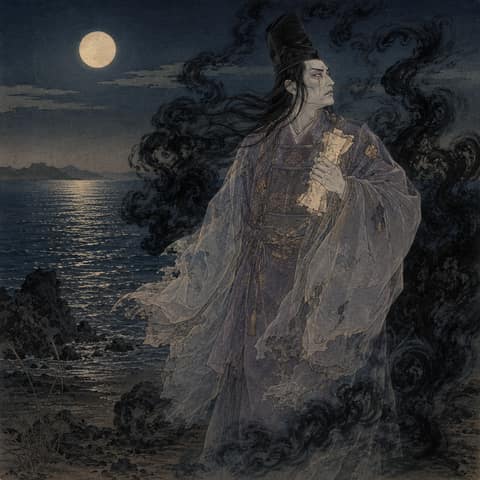
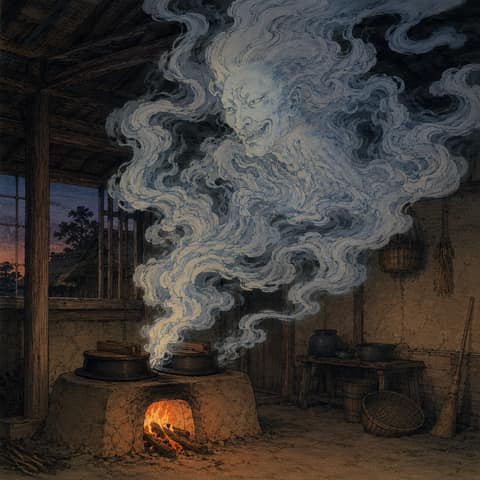
Based on Sekien’s imagery, this interpretation highlights smoke layered like thin cloth coalescing into a human face. Rather than causing harm, it is better told as a sign pointing out imbalances in a household’s energy and as a warning about fire handling, which aligns with folk beliefs. It holds no fixed form, shifting with wind and temperature, with faces appearing and vanishing according to the viewer’s state of mind.

Enkou

Enkou

Rare

enkou

The Hairy Kappa of Nanyo: Enkou

Water YokaiEhime

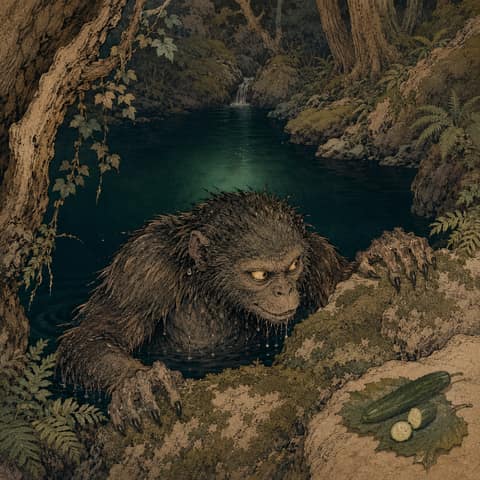
The *Enkou* is a representative variant from the Nanyo region, illustrating how the entity known as the *kappa* was spoken of with different forms and names depending on the region. Neither the dish nor the shell is prominent; instead, emphasis is placed on its hairy, monkey-like body, agile swimming, and its habitat in the deep pools of rivers. This image is formed by overlapping with the ecology of an actual beast, the Japanese river otter (*oso*). The legend of Mima Mugiusubuchi features the standard elements of *kappa* tales, such as sumo, cucumbers, *shirikodama*, and horse-pulling, while possessing a localized ending where it is tied to a stone mortar by a monk from Mantoku-ji Temple and reforms. 'Osogoe' on the Sadamisaki Peninsula and the Enkou Festival in Yawatahama convey that this water monster still breathes within place names and annual events today.

Epidemic God

Epidemic God

Epic

yahk-BYOH-gah-mee

Gyōekishin, Plague-Deity

Deities & Divine SpiritsHiroshimaKyoto

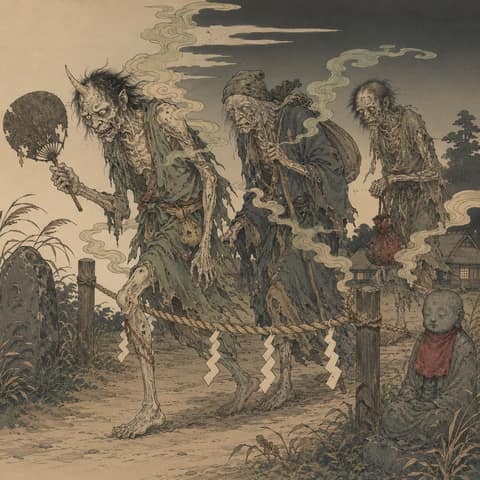
An archaic image of the plague deity recognized in both court ritual and folk belief. Usually unseen, it gains force at seasonal turnings and when blossoms fall, entering through village bounds, crossroads, and riverbanks, spreading illness by seizing on household impurity and neglect. In paintings it appears as bands of oni-like or uncanny figures on the move, while tales say it stands at the door as a traveling old man or woman, disliking lapses in almsgiving or proper etiquette. Communal countermeasures include boundary festivals, rites of purification, offerings, displaying talismans, and sending off dolls, with porridge or other set foods prepared on fixed dates to ward it away. Its forms and names are not fixed, appearing in step with local customs and annual rites, so it varies by region, yet it is always told in connection with practices that “set the boundary and purge defilement.”

Escorting Sparrow

Escorting Sparrow

Uncommon

oh-KOO-ree soo-ZOO-meh

Systematized Folklore Edition

Mountain & Wilderness SpiritsWakayama

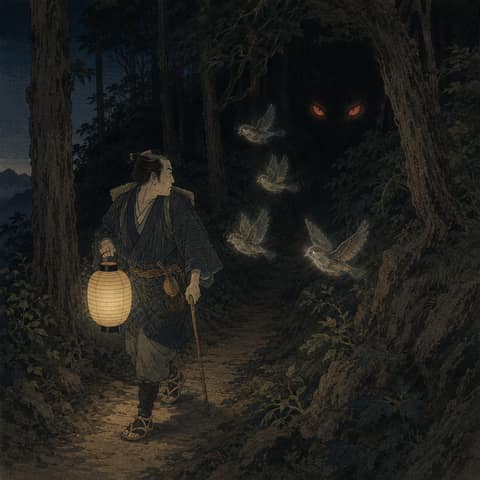
Okuri-suzume has been framed as a harbinger and ill omen warning of dangers on mountain roads. Its calls precede, and are said to lead into, appearances of wolves or the escorting wolf, forming a narrative that encourages careful footing and avoiding delays in the wilds. The name “kuzusuzume” aligned with the real bird Black-faced Bunting (Aoji) is recorded, though its supposed nocturnality is debated. Sightings of its form are scarce, leaving its appearance unsettled, and in parts of Nara it is conflated with the night sparrow. Stories place it around Myohosan in Wakayama, and it is said to draw near lantern light. More than a threat itself, the lore centers on its “foreboding call,” giving it a strong character as a sound-based apparition.

Eye Standoff

Eye Standoff

Rare

MEH-koo-RAH-beh

Sekien Iconography Standard

Ghosts & SpiritsHyogo

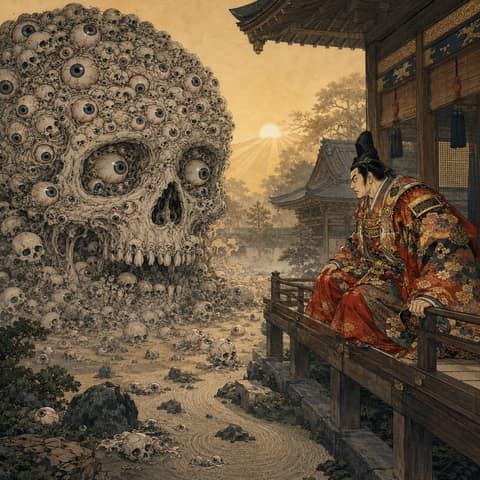
An image systematized from Toriyama Sekien’s iconography and the Heike Monogatari’s accounts of the uncanny. Multitudes of bones unite into a single giant skull, its countless sockets facing the living as if to pierce them. Individual dead bear no names; their fused gaze is read as a trial of the powerful. It appears most at daybreak or in hushed gardens, amplifying fear through sheer visual pressure. The countermeasure is to hold steady and return its gaze. Ritual banishments are poorly attested, and some speak of it as a kind of psychic vision. Said to be memory given form from mass deaths in war and upheaval, its size shifts with the onlooker’s nerve.

Female Tengu

Female Tengu

Uncommon

OHN-nah TEN-goo

Annotated Tradition Edition: Female Tengu

Mountain & Wilderness SpiritsTokyoYamanashi

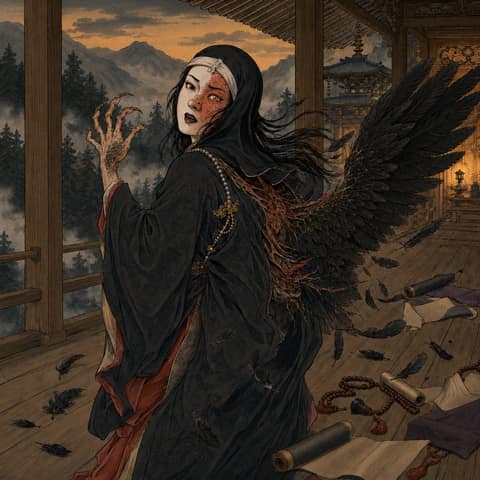
The Female Tengu is a strand within the broader image of tengu sporadically referenced in texts and oral lore. She is depicted in women’s attire such as kosode, light robes, or scarlet hakama, yet her back-borne wings and supernatural power mark her as a tengu. In The Tale of the Heike and its offshoots, the nun-tengu appears as a metamorphosis born from religious decline, providing a female counterpart to the monk-tengu. Edo-period mountain-encounter tales often stress prohibitions against women, noting the absence of female tengu, while river-tengu lore sporadically mentions married pairs or feminine features. Claims tracing their lineage to the goddess Amanozakoyahime appear in early modern natural-history writings but remain interpretive rather than doctrinal. Regional variation is great and no single image dominates, yet they share the general tengu attributes of might, illusion, and flight. Stripped of creative exaggeration, the Female Tengu is best seen as a projection of womanhood within the tengu world, with specific names and genealogies largely unknown.

Field Matchlock (Nodeppō)

Field Matchlock (Nodeppō)

Uncommon

noh-DEHP-poh

Canonical Folklore Version

Animal ShapeshiftersMountain forests of Japan’s northern provinces

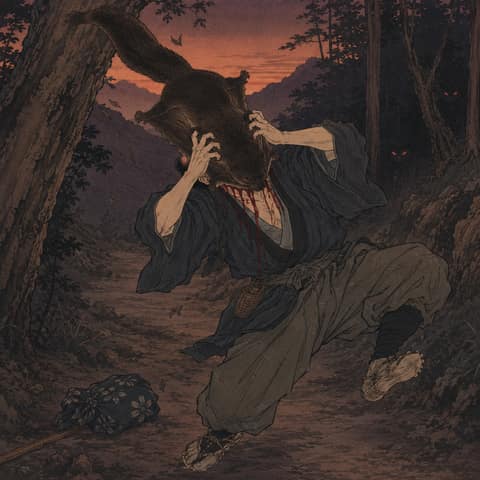
Based on images from illustrated Edo-period strange tales. It hides in northern mountains and fields and moves from twilight into early night. It appears as a small beast like a badger or a giant flying squirrel, and when attacking it blinds a person to sow confusion. Sources describe two modes: one covers the victim’s face with its whole body, the other spits a bat-like thing that clings to the face. Some accounts say it drinks blood, while later interpretations suggest it steals carried food while the victim’s sight is blocked. Historical conflation with badgers, tanuki, nobusuma, and bats led to shifting names and traits. A simple defense recorded is to keep rolled ear-shaped leaves in one’s bosom, though details vary by region and era. Avoids modern embellishment and follows classical picture compendia.

Fire of the Akuro-gami

Fire of the Akuro-gami

Uncommon

AH-koo-roh-gah-mee no HEE

Canonical Folklore Version

Natural Phenomena SpiritsMie

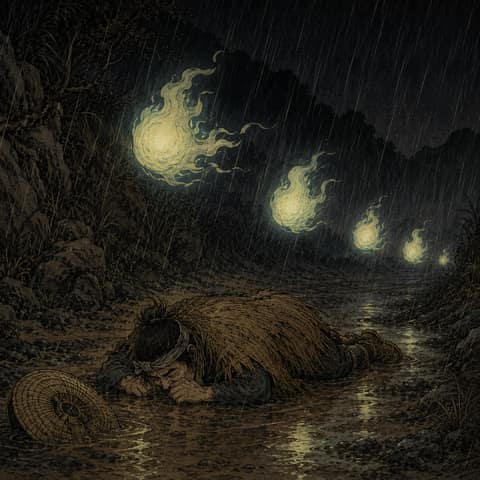
A figure based on Edo-period records. On rainy nights it drifts low, coming and going like a procession of lantern lights. Rather than misleading travelers, it was dreaded for bringing illness to anyone who drew near, and the only recourse was to lie flat on the ground until it passed. Local names vary, and it is classed as one type of strange fire from Ise Province. Its substance is unknown, it makes little sound, and reports note few sensory details such as heat or odor even at close range.

Fire-Quenching Crone

Fire-Quenching Crone

Rare

hee-KEH-shee-bah-bah

Sekien Iconography Edition

Half-Human BeingsEdo

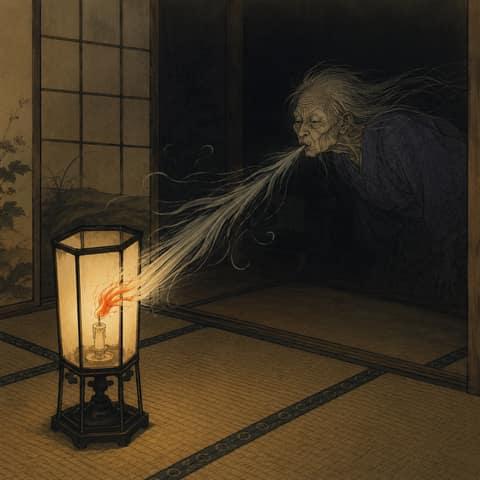
Anchored in Toriyama Sekien’s depiction of an old woman, this reading frames her as a being that bears Edo-period anxieties about fire use and the terrors of night. Fire was believed to purge impurity with a yang nature, yet accidental blazes became great calamities, so lamplight was strictly managed. The Fire-Dousing Crone personifies an “invisible hand” that presses upon daily vigilance. When a lamp at a banquet or in an inn’s parlor goes out, the event is narrated not as neglect or misfortune but as yokai intervention, symbolically restraining the vigor of flame. Sources vary on the name—“Fukkeshi,” “Fukikesh(i)”—all deriving from the act of blowing out a light. No tutelary deity or local origin tale is attached; references are mostly secondary, and in folklore taxonomy she sits as a variant of “lamp-light apparitions” or “parlor-room ghosts.”

Five-Limbed Face

Five-Limbed Face

Rare

goh-tai-MEN

Iconographic Tradition Version

Mountain & Wilderness SpiritsJapanese folklore

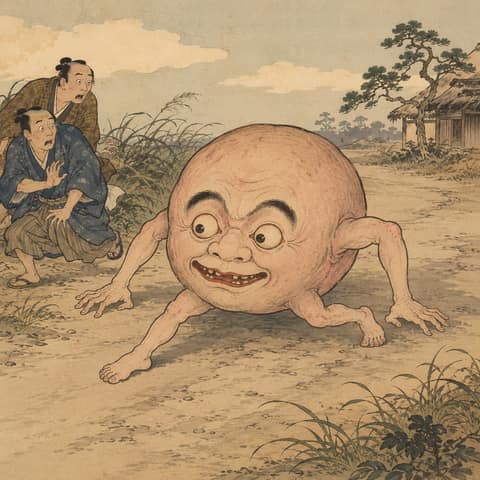
A version based on the recurring grotesque motif in Edo-period yokai picture scrolls: a head with limbs attached directly to it. Many sources lack captions, and names vary, such as “Gotaimen” and “People of the Lower Country.” The figure often stands bowlegged and sidesteps, heightening visual dissonance and comic effect. Folklorists debate whether such visual oddities caricature social decorum and misalignment, yet no direct oral tradition is recorded. This version prioritizes the repetition of the image and the spread of names, avoids attaching behavior or powers, and limits the setting to generic outdoor scenes. Later studies and commentaries are consulted, but attributes beyond primary sources are not added.

Foot-Washing Manor

Foot-Washing Manor

Uncommon

ah-shee-AH-rah-ee yah-SHEE-kee

Ashiarai Mansion (Edo Odd Tale Traditional Type)

Household SpiritsTokyo

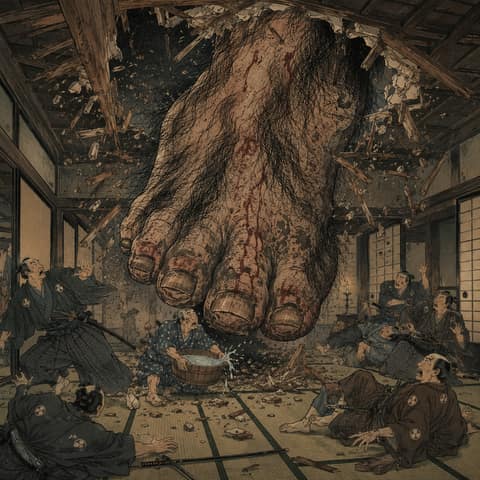
In Honjo, Edo, this house-bound tsukumogami-like apparition manifests as a single gigantic foot descending from the ceiling to demand washing. It speaks human words and subsides when the ritual act of washing is performed, aligning with household notions of purification. Its true identity is left undefined and has been variously told as demon, monster, beastly shapeshifter, or a transformed house deity. Though threatening, some variants include a protective role that crushes thieves, and tales warn that forced exorcism angers it, reflecting urban ghost lore that prizes proper response over rash banishment. Regional lore varies—ending after a house change, or requiring a woman to do the washing—but the core remains: only the foot appears, and washing makes it withdraw.

Fuguruma Yōhi (Letter-Carriage Enchantress)

Fuguruma Yōhi (Letter-Carriage Enchantress)

Rare

FOO-goo-ROO-mah YOH-hee

Iconographic Edition, Sekien Toriyama Source

Animated Objects & UndeadEdo period

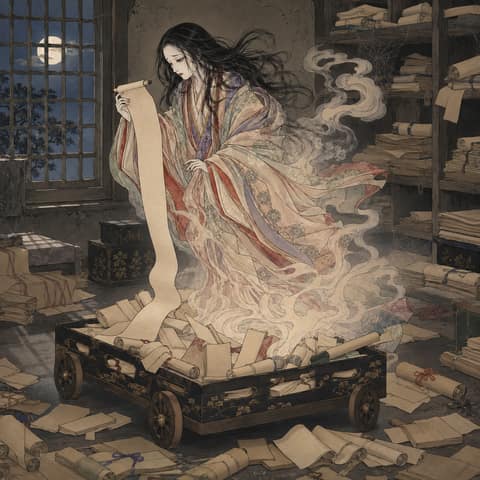
An interpretation grounded in the imagery and captions of Toriyama Sekien’s Hyakki Tsurezure Bukuro. The document cart was a conveyance for papers in the imperial court, temples, and aristocratic residences, kept ready for emergencies. The accumulated sentiments within long-kept love letters are thought to congeal and manifest as a lady-in-waiting–like apparition. With little basis in oral tradition, this is a conceptual yokai born of early modern literature and painting, more often told as a presence that displays and summons remorse than as one causing concrete harm. The customary name is Fumikuruma Yohi, though later sources sometimes confuse it with Fumikuruma Yoki.

Fujiwara no Chikata’s Four Oni

Fujiwara no Chikata’s Four Oni

Uncommon

fooj-ee-WAH-rah no chee-KAH-tah no yohn-kee

Taiheiki Tradition Version: The Four Oni

Demons & GiantsMieIwate

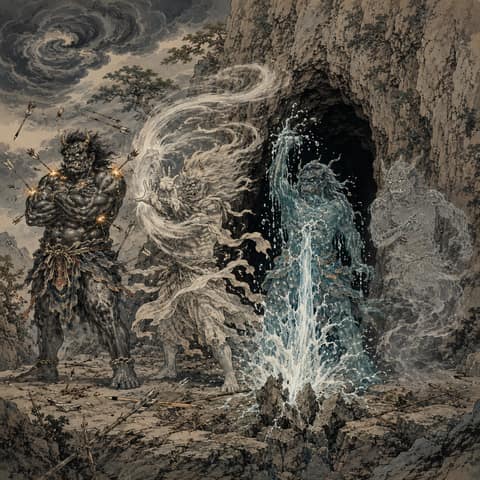
This version follows the Taiheiki, Book 16 “Affairs of Japan’s Enemies.” The Four Oni serve under Fujiwara no Chikata with clearly divided roles, complementing each other’s arts in battle. The Gold Oni forms the vanguard with a body that repels blades and arrows, the Wind Oni scatters ranks with gales, the Water Oni summons flood and torrent across any terrain, and the Hidden Oni erases form and presence to handle scouting and ambush. Their might is framed less as stratagem than as a tendency to yield before kotodama and prayer, epitomized by their dispersal through a waka by Ki no Asao. Later legends of Sakanoue no Tamuramaro and Kumano slayings alter their order and exploits, yet the core remains: four disparate powers combine to overmatch human effort, but bow to righteous words. The notion of ninja origins is a later reading; in folklore studies this is a case of war-epic demon tales binding to local toponymic lore. Creative variants abound, but this version keeps to gunki conventions and limits places and figures to sources within the epic.

Fujiwara-no-hirotsugu

Fujiwara-no-hirotsugu

Epic

fujiwara-no-hirotsugu

The Rebel Spirit That Foreshadowed the Goryo Belief

Spirit / GhostSaga

This version of Fujiwara-no-hirotsugu bears the political history before he became a vengeful spirit (onryo). He was not a monster from the beginning. While involved in central politics as a member of the Fujiwara clan, he was distanced to Dazaifu during political strife, and raised an army claiming criticism against Kibi no Makibi and Genbo. His onryo nature is born after that defeat. Hirotsugu's rebellion was an incident where the power struggle of the capital was moved to the military space of Kyushu. Dazaifu was a key point of diplomacy and military affairs, and the dissatisfaction of Hirotsugu placed there expanded beyond mere personal feelings. Gathering an army, being pursued, captured, and executed. The plot of the rebellion is short, but the spiritual shadow it leaves behind is long. What is important in this version is not to view an onryo as a "ghost that suddenly appears after death." In Japanese Goryo belief, divine aura is created by intertwining political injustice, regretful death, fears of plagues and disasters, and pacification rituals. Hirotsugu can be read as a figure who demonstrated the structure leading to Prince Sawara and Sugawara no Michizane at an early stage. In other words, he is a foreshadowing of the Goryo belief. The folklore related to Kagami Shrine shows the process of a central rebel turning into a regional divine spirit. The name of the person defeated in the capital remains in the land of Kyushu, pacified in rituals and folklore. The one removed from the center of history gains another center in a peripheral land. This reversal pairs well with YOKAI.JP's place articles. The connection with Genbo is a strong thread that turns Hirotsugu into a narrative. The story reading the later misfortune of the monk named as a political enemy as the work of Hirotsugu's spirit shows the imagination of onryo tales, separate from the confirmation of historical facts. Grudges do not return straight to the opponent, but are spoken of over time, wrapping in anxieties about politics, religion, and disease. In modern cards and diagnoses, it is better to express Hirotsugu as a pressure lingering between the lines of records, rather than a flashy monster. Rather than armor, the dark government offices of Dazaifu, the execution ground by the sea, the torn memorial, the shrine of Kagami, and a gaze turned toward the distant capital suit him better. He demonstrates the pattern of someone nearly erased by the victor's story returning to history as a spirit. Hirotsugu is worth writing about carefully precisely because his form as an onryo is not flashily fixed. An ambiguous spirit can be expressed not as thin documentation, but as a layer of history. The rebellion recorded in the official history, the rituals remaining in the region, and the connection with political enemies overlap little by little, becoming a pressure with an unclear outline. That is where his terror lies. In the group of Goryo belief pages, Hirotsugu is suited for both introduction and deep dives. Going to Prince Sawara reveals the tragedy of imperial succession; going to Sugawara no Michizane reveals the transformation into a god of learning; going to Taira no Masakado reveals the martial might of the eastern provinces. Placing Hirotsugu before them allows one to understand how onryo are born from political history over a longer timeline. If making this version into a card, rather than terrifyingly exaggerating the face, one would want to combine the torn memorial, the sea facing the distant capital, the Kagami Shrine, and the shadow of the subjugation army. Rather than a monstrous appearance, Hirotsugu is a spirit standing between record and memory. That modest darkness fits YOKAI.JP's profound onryo lineup.

Fukuro Mujina (Bag Badger)

Fukuro Mujina (Bag Badger)

Rare

FOO-koo-roh MOO-jee-nah

Annotated Iconography Edition (Seiyan-Toriyama Based)

Animated Objects & UndeadEdo period

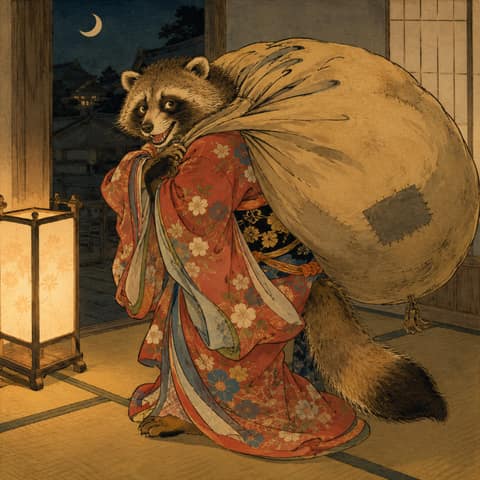
A version grounded in the image and brief annotation from Toriyama Sekien’s Hyakki Tsurezure Bukuro. It appears as a womanly mujina carrying a night-duty bag over her shoulder, yet from another angle the bag itself may be the yokai, with the porter’s pose serving as a metaphor. Its conduct lures people into rash judgments and lays bare the absurdity of empty speculation. Actual harm is slight, limited to confronting those who “rummage in the bag” of guesswork on night roads or in parlors and leaving them disgraced. True to picture-scroll lineage, no fixed era or locale is given, favoring witty identification and playful satire.

Funayūrei (Boat Ghosts)

Funayūrei (Boat Ghosts)

Epic

foo-nah-YOO-ray

Beggar of Teigo at Dan-no-ura

Aquatic SpiritsYamaguchiFukushima

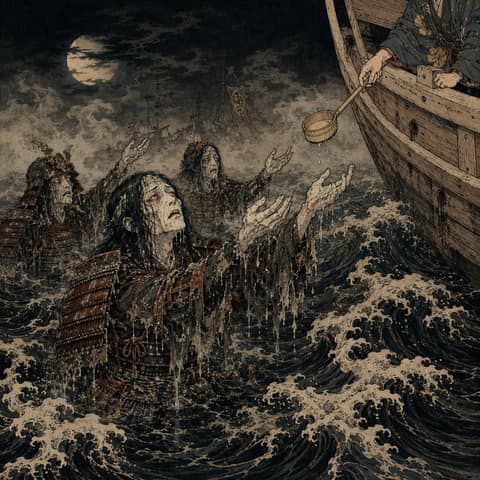
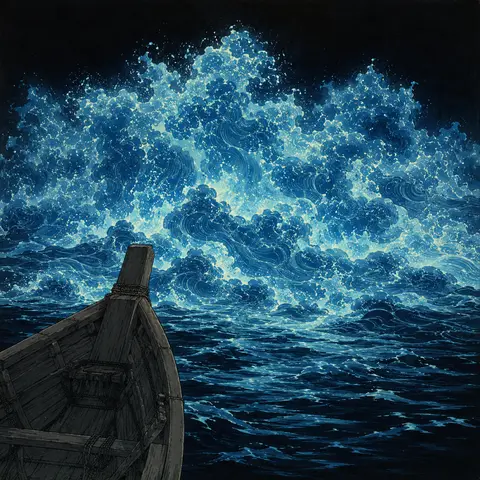
An uncanny variant of the funayurei said to be the ruined shades of the Taira clan sunk at the Battle of Dan-no-ura. On nights of shifting tides and sea mist in the western straits, they draw alongside a boat, armor dripping, and beg, “Give us a teigo ladle.” Their faces are pale, eyes reddened by salt, voices hoarse yet mannered with samurai courtesy. Keeping the discipline of their former camp, they form ranks even at sea, a herald calls out, and many hands clutch the gunwale. If given a ladle with an intact bottom, they silently bail seawater into the boat until it founders. Those who know the old ways cross the sea with bowls and ladles whose bottoms are pierced, tied ready at the rail. When the ghosts accept them, water runs through and does not stay aboard, and only the weight of their rancor scatters on the tide. Priests sometimes hold services, and then the shadow of war hats melts into the mist, chains of armor return to the sound of waves. They do not drown people at random but approach those ignorant of sea rites or proud souls who scorn the ocean, marking their own downfall upon the world. On the sixteenth of Obon, on equinoctial days, and on battle anniversaries, their tread comes nearest when the sea is unnaturally still, and ghostly fires line the surface like beacons, mirroring the fleets of old. Offerings of ash, rice cakes, incense and flowers, and dumplings soothe their fixation; cast them from the bow and a wave like a shirabyōshi’s sleeve returns once and pushes the boat onward. A hard stare may make them withdraw, not by force of gaze but because the living truly behold the dead and the knotted ki loosens. As Yamaoka Genrin told, their true form is congealed rancor, soot-like grudge given shape upon the current; when winds shift, sutras resound, and offerings sink, the loosened ki disperses into the sea. Thus this version of funayurei can be stilled not only by fear but by memorial rites. Sometimes the outline of a child appears among their ranks, its voice thinner still, never asking for “water,” only hooking small fingers over the rail. If you hear the faint chime of armor bells, correct your helm, take the Hayatomo Rapids on the slant, and let a murmured nembutsu ride the wind. The slayers’ spirits drifting in the western dark yield only to proper forms and compassion.

Funayūrei (Boat Ghosts)

Funayūrei (Boat Ghosts)

Epic

foo-nah-YOO-ray

Inada-Kase Boat Ghost

Aquatic SpiritsYamaguchiFukushima

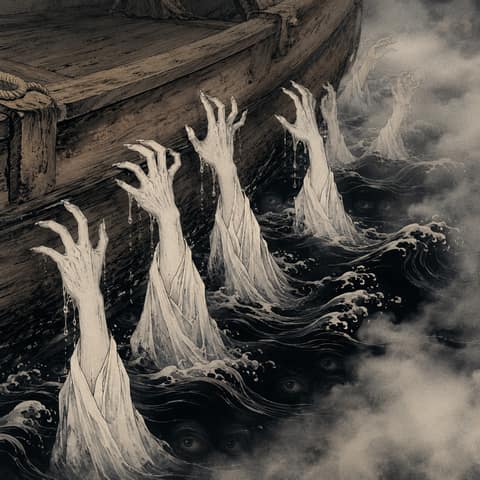
A variant of the boat ghost that appears with the call of “Inada-kase” along the Fukushima coast. On calm nights, in drifting fog, or before a squall, pale hands and wet sleeves line the gunwale, and a chill voice repeats “lend the inada” from the waves. The inada is a bailer ladle for scooping water from a boat; once lent, the spirit pours seawater back into the craft to sink it. It rarely shows its face head-on, the visage veiled in sea mist, only dripping cuffs and black eyes glinting in the lamp’s edge. Reasonable at heart yet tasked with judging neglect and breaches of maritime order, it favors the sixteenth day of Obon, the dark of the moon, and fishing grounds where memorial rites have lapsed. Traditional countermeasures say to hand over a ladle with its bottom removed; the spirit accepts out of courtesy, but the water spills back to the sea. A pinch of rice ball, hearth ash, or salt-purified rice cake cast with the words “this is an offering” also satisfies its claim. If met with turmoil or shouting, it flies into a rage, unseen hands weighing the oars, dimming the compass, and warping the tide lines. They are a host of the drowned, a balance of the sea, and a mirror of neglected tools and unkept rites. Thus fishers notch their bailer, tie a sprig of shiso or a straw, purify it, and bow to the boat spirit before setting out. Because the ghost returns borrowed tools to the sea, the ladle may wash ashore by morning crusted with salt flowers. On windless nights when the helm grows heavy and water sounds along the side, add no lights, raise no voice, and quietly offer the inada; then the spirit cannot fulfill its debt and slips away in shame.

Funayūrei (Boat Ghosts)

Funayūrei (Boat Ghosts)

Epic

foo-nah-YOO-ray

Murasa (Nigashio-Lodged of Tsuma Village)

Aquatic SpiritsYamaguchiFukushima

A variant of the funayurei recorded in Tsuma Village, Oki District, Shimane. On nocturnal seas, clusters of faint lights gathering are called Murasa. Locals call the countless drifting sea sparkle nigashio. When that flow blurs into a single round mass that pulses like a pale blue breath, it is feared not as mere sea gleam but as remnants of the drowned lodging in the tide, namely Murasa. It will suddenly gather before a bow to bar the way, dimly lighting the surface and throwing off the sense of course. If a boat rides over it, the light scatters at once to the four directions, shadows on deck and gunwale sway strangely, and though the helm bites, the hull feels as if spinning uselessly on the sea. Not individual ghosts grasping with limbs, but a swarm of lights stroking the hull and upsetting the rhythm of the waves to lure toward grounding, they say. Late at night, when the sea flashes “chik” bright as day for a beat and all falls still, villagers say one is “possessed by Murasa,” stop the rudder, lash a dagger or kitchen knife to a pole, and cut the surface three times. At the sound of blade parting tide, the light thins like unwinding thread and scatters back into ordinary nigashio. Local lore holds that passing a bottomless dipper or throwing rice balls or ash has little effect here, while quietly setting incense flowers or dumplings adrift makes the light keep its circle, skirt the boat, and open a path. Murasa raises no voice, nor demands a bailer. Yet on the sixteenth of Obon the rings double and triple, drawing near and away, harboring an inner dark like a ghost ship’s shadow. Working the sea then is forbidden, for even a veteran skipper is dazzled and drawn to the cape’s black rocks. Its color is cold yet clear, and when met with shouts and disorder it flickers as if with a thin smile. Before those who ravage or foul the sea, the ring narrows and only the water at one’s feet grows unnaturally bright, leaving no escape. Conversely, for those who mourn kin lost at sea and make offerings, it lays a guiding streak in the offshore dark and sets distant whitecaps in relief to lead to safe water veins. Thus Murasa is both a drowning ghost and a guiding ghostlight. On Tsuma’s shore, the custom remains on the first catch night to chant words that calm both sea gods and the dead, then cut the tide with a blade before casting the nets. The light cannot be scooped by hand, nor a voice seized, yet it readily dissolves its form in answer to the threefold cutting rite and quiet offerings, returning to mere nigashio.

Funayūrei (Boat Ghosts)

Funayūrei (Boat Ghosts)

Epic

foo-nah-YOO-ray

Ugume (Kyushu West Coast Variant)

Aquatic SpiritsYamaguchiFukushima

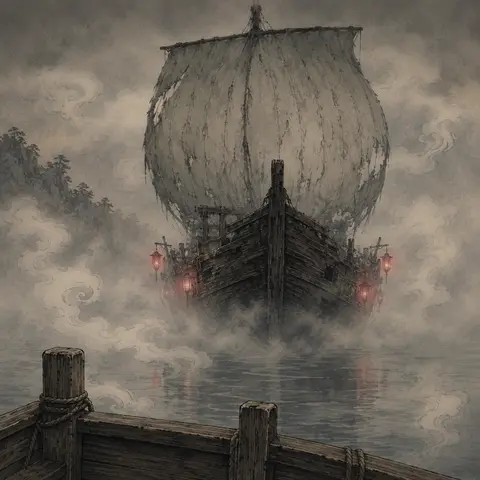
Across the west coast of Kyushu—especially from Hirado in Nagasaki to Amakusa and Goshoura Island—a variant of the funayurei is known as the Ugume. It appears in night fog or under a windless overcast stillness: an old sailboat with bellied sails despite no wind, or a small unmanned skiff, gliding up silently from behind. Its lights are faint, wavering along the gunwales like something between flame and fireflies. The closer it comes, the farther the sound of waves recedes; though the vessel seems to move forward, the surface of the sea slips backward. This is the sign of possession: cold water seeps into the bilge, oars grow heavy, and the compass drifts a hair off. The Ugume has no fixed form, sometimes turning into the silhouette of an island to lure boats, sometimes showing a non-existent cove offshore to run them aground. From the shadow of a rotted mast it will murmur, “Give me a bilge-scoop,” asking for a scoop or ladle to bail. One must hand over a scoop with a hole in the bottom; give a sound one by mistake and it will pour water over the gunwale without cease, weighing the boat down to sink. In Hirado they say a pinch of ash cast upon the sea will lift the fog. On Goshoura, one calls out “Dropping anchor!” throws a stone first, then casts the anchor—a ritual aligning words and action to tell what lies below, “We intend to stay here,” whereupon the Ugume loosens its hold. A thread of tobacco smoke will also thin it, sending it retreating toward the stern. Offerings include rice balls, rice cakes, and a small amount of ash, and special caution is urged on the sixteenth day of Obon. The Ugume are less indiscriminate vengeful ghosts than a host of those who slipped outside the sea’s order, drawn by lapses in shipboard manners, careless speech, or neglected greetings to the sea gods. If faced squarely, with proper names and rites observed, they slip back into the shadow of the tide. The fear that “it disguises itself as boats or islands” along Kyushu’s west coast reflects memories rooted in fickle currents and tangled shoals—an embodiment of losing one’s way at sea. Ugume also portend maritime misfortune; in fishing villages it is said that on nights they draw near, someone somewhere has lost the path home.

Funayūrei (Boat Ghosts)

Funayūrei (Boat Ghosts)

Epic

foo-nah-YOO-ray

Mouren Yassa, the Vengeful Sea Ghost (Tales of Choshi and Kaijo District)

Aquatic SpiritsYamaguchiFukushima

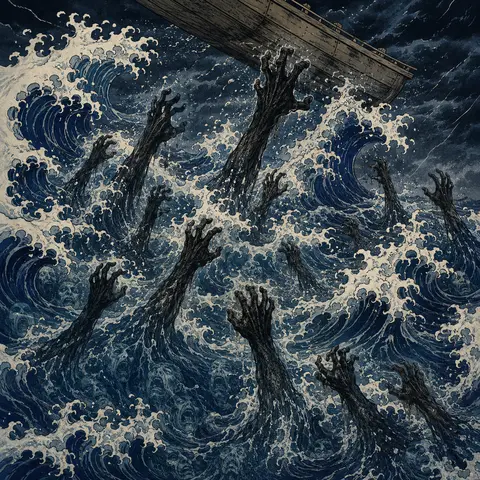
A variant of the funayurei remembered along the coast from Choshi City through the old Kaijo District. On stormy nights when fog smothers the sea and whitecaps rise, it approaches from the offshore dark chanting “mōren yassa mōren yassa” in the rhythm of oar beats. The voice rises and falls with wind and current, then stops just beneath the gunwale. A moment later a black dripping arm reaches up from the water and croaks, “Lend a scoop.” Locals gloss mōren as “restless dead,” inaga as “water ladle,” and yassa as the chant for bringing boats in line. When these three arrive together, it portends a surge of drowning souls trying to board. They are a collective of those lost to the sea who have no shore to return to, strongest on the 16th of Obon and on the monthly death-days of the unlaid. Their aim is to sink the boat and add new hands to their wet rail. With the borrowed ladle they tap in seawater, and to the yassa beat they shift the water’s weight toward the bilge until the boat is swallowed. Time-honored countermeasures are set. First, hand over a ladle with the bottom knocked out. Showing a vessel that takes from the sea but not the boat convinces the dead that “water will not enter the hull” and breaks their rhythm. Second, fix them with a stare and hold the boat still. Do not steer, face the wave crests, breathe short, and the swarm loses its heading and melts into the fog. Third, throw ash or rice balls. Ash, as the remnant of shore-fire, points a way home, and rice balls salted for the sea serve as an offering to calm the tide. In Choshi, the one who calls the first haul keeps a guarded tongue, for Mouren Yassa is keen to a skipper’s words. Taboos are strict: putting out to sea on Obon’s 16th, scorning the foghorn and not sounding it, or laughing with the tide-waiting torii at your back will summon them. Their form shifts: they may pace you as a ghost ship under a furled white sail, or press the prow like the shadow of an umibozu. Yet what lingers in the ear is always the beat of “mōren yassa,” and when it fades, the danger passes. Early modern picture books paint them as vengeful spirits, but elder fishers call them “the voice that restates the sea’s law.” If flowers or dumplings are set afloat at the shore, by morning the prow-weed is shed and net frays are stilled. The name later was written as “Fierce Spirits, Eight Calamities,” a dread title of wild might, but at root they are a drifting host. If you hear them offshore, knock out the ladle’s bottom, set your prow straight, and mind your words—that is the shorewise rule kept at Choshi.

Funayūrei (Boat Ghosts)

Funayūrei (Boat Ghosts)

Epic

foo-nah-YOO-ray

Namōrei, Black Little-Craft of Kosode

Aquatic SpiritsYamaguchiFukushima

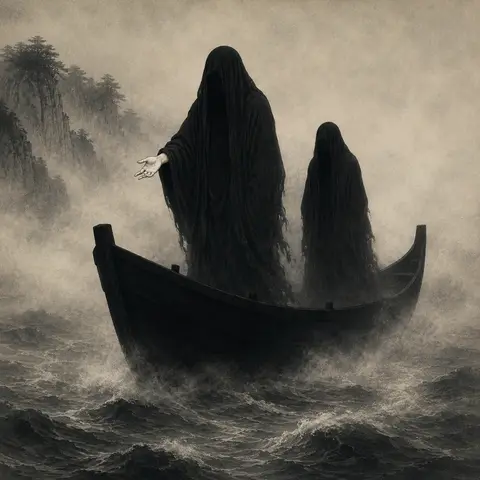
A variant of the funayurei from Kosode in Ube Village, Kunohe District, Iwate (now Kosode, Kuji City), whispered locally as the Namōrei. During night squalls or heavy sea fog, a small black-painted boat with a high stern and low prow appears soundlessly, as if running back along a tide line offshore. Its silhouette parts no waves, only blurs the surface like ink, and though no oar or sail is seen, it glides forward. One or several shadowy figures in glossy black garments stand along the gunwale, and only their voices slice through the wind. In a low, lingering tone they demand, “Hand over an oar,” or “Answer,” and if one replies, they at once sheer alongside and seize the other boat’s heading and helm. The Namōrei are the remnants of those who perished at sea and could not return home, craving oars and sculls—the “power to bring one back.” Elders warn that answering opens the mouth of one’s soul, and lending an oar is akin to yielding a boat’s lifeline. Thus in Kosode, when called from the sea at night, one must never respond, but either stand at the rail and glare steadily, or keep one’s hat brim pulled low in silence. The Namōrei are weak to the eye; met with a powerful gaze, they and their black boat melt into the tide fog. If they ask for an oar and are given a bottomless ladle, a split oar, or a holed bamboo scoop—“useless things”—their fixation breaks as seawater spills out at once. This is the widespread funayurei art of “passing the empty,” and along the Tohoku coast, refusing to answer and never handing over anything of substance were especially prized. The black boat appears when the stars hang low, on the sixteenth night of Obon, or when the offshore singing sands cry. White handprints multiplying on the rail and the gunwale growing heavy and low foretell their clinging approach. In contrast, scattering a pinch of rice or ash from one’s palm and sweeping it thrice to sea is said to dissolve the prints into the tide. In Kosode’s rocky coves, sailors shun picking up driftwood oars and loading them, and before setting out they tie a single thread to the oar’s handle to mark a “way home.” The Namōrei are keen to advantage, following slips of speech and bonds of lending to insinuate themselves, so banter and calling across boats are taboo. At a break in the morning fog the black craft vanishes at once, leaving only a chill tang of brine and dark water-spots on the rail. Those who see it refrain from offshore nets that year and offer incense, flowers, and dumplings to the beach deity, as old custom dictates.

Furaku-Furaku (The Dangling Lantern Spirit)

Furaku-Furaku (The Dangling Lantern Spirit)

Rare

boo-RAH-boo-RAH

Sekien Plate Standard

Animated Objects & UndeadJapanese folklore

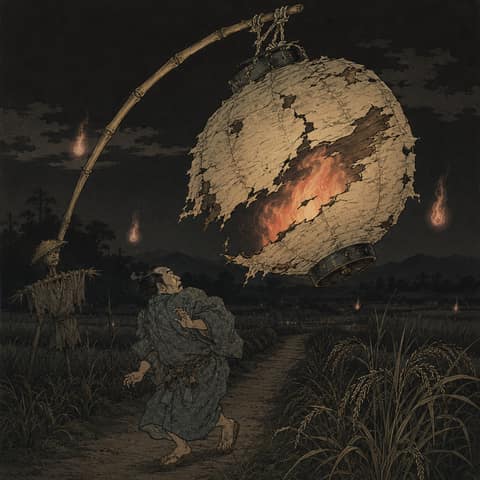
An arrangement of Furafurabu based on the depiction in Toriyama Sekien’s Hyakki Tsurezure Bukuro. The lantern is tied to bamboo, its torn paper resembling a mouth, tilting as it looms over the road. The scene evokes rice field ridges and scarecrows, and while the caption mentions “the lantern fire of Yamada,” it also muses that it might be foxfire. This yields competing readings—either a fox in disguise or a transformed implement—but since the volume files it among tool-spirits, understanding it as a tsukumogami is appropriate. The name varies between “Fufuraku” on the image and “Furakaku” in the catalog, though “Furafurabu” is generally accepted. No fixed local legends or concrete curse tales survive; it is received as a subtype of the generic lantern yōkai, a visual fright that startles travelers at night.

Furari-bi (Wandering Flame)

Furari-bi (Wandering Flame)

Rare

foo-RAH-ree-bee

Furari-bi

Natural Phenomena SpiritsJapanese folklore

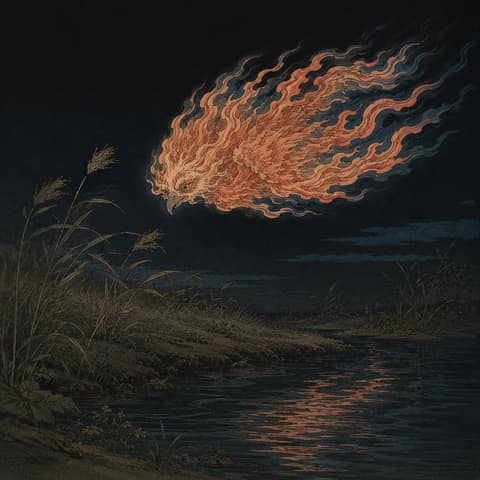
Based on Edo-period picture scrolls, this version standardizes Furari-bi as a bird-shaped eerie flame wreathed in fire. It behaves more like a phenomenon than a corporeal being, with sightings reported from dusk through midnight. Confirmed cases of causing harm are scarce, and it shares common will-o’-the-wisp traits such as vanishing when approached and reappearing when one retreats. In Toyama it is called “Burari-bi,” often explained as a ghostly fire born from grudges or the unclaimed dead, though interpretations vary by region. The avian visage in the iconography is ambivalent, serving as a symbolic sign of the soul’s metamorphosis.

Furisode-no-kai

Furisode-no-kai

Rare

furisode-no-kai

The Furisode That Burned Edo: The Furisode Fire

Dwelling / ObjectTokyo

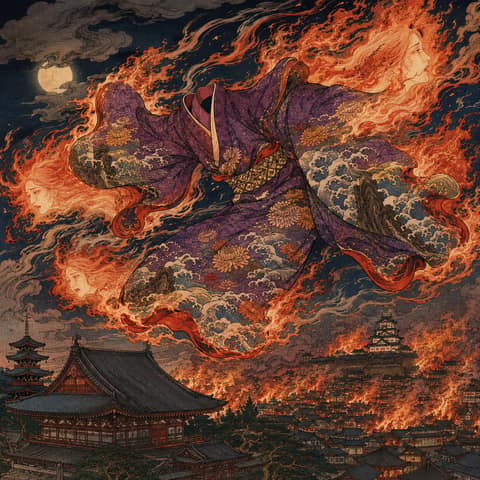
The *Furisode-no-kai* is characterized by the fact that it is an "anomaly where an object and a disaster become one," lacking the form of a specific yokai. Its core consists of a dual structure: on the inside, there is the curse of an object where a *furisode* imbued with the thoughts of the dead takes the life of its new owner (a passion akin to a *tsukumogami*); on the outside, there is the great disaster where the fire burning the *furisode* loses control and burns down the entire city. The former is a typical example of the many "cursed garments and mementos" tales in Edo, while the latter is the real historical tragedy of the Great Fire of Meireki. The originality of this ghost story lies in stitching the two together. For the residents of Edo, fires were the greatest terror. While praised as "Fires and brawls are the flowers of Edo," once a fire spread, the wooden cityscape easily turned to ashes. The *Furisode-no-kai* can be said to be a product of imagination unique to urban ghost stories, translating that terror into an easily digestible tale of a single garment's fate, giving a face and a reason to an indiscriminate disaster.

Showing 73 - 96 of 473 yokai