Yokai Encyclopedia

Encyclopedia of Japanese Yokai

112 Yokai|14 Category|Page 3 of 5
Localization in Progress - More content available in Japanese version
View Japanese
Sort by: NameAscending
Rare
  • Hoakari

    Hoakari

    Rare

    ほあかりのみこと

    The Storm-Summoning Wild Child: Hoakari

    Deities / Divine SpiritsHyogo

    Hoakari is the protagonist of the place-name origin myths recorded in the *Harima no Kuni Fudoki*. He is an *Aramiko* (wild divine child) whose very fierceness shaped the topography of central Harima. Ordered by his father, Onamuchi, to fetch water and then abandoned, Hoakari called upon winds and waves in a fit of rage, capsizing his father's ship. The scattered cargo—silkworms, a koto, a box, a boat, a jar, a helmet—fell to earth, granting names to Himeji-oka (Himeyama), Kotogami-oka, Hako-oka, and others, thus becoming the source of Himeji's place names. The essence of this deity lies in his duality: though a fierce god of destruction, his anger brought order and identity to the land. While sometimes equated with Amenohoakari of the Heavenly Grandson lineage, in Harima he is remembered as an indigenous divine child who commands the sea and the storms.

  • Horned Washbasin Hanzō

    Horned Washbasin Hanzō

    Rare

    TSOO-noh-HAHN-zoh

    Gazu-tan, Sekien Edition

    Animated Objects & UndeadKyoto Prefecture (associated tradition)

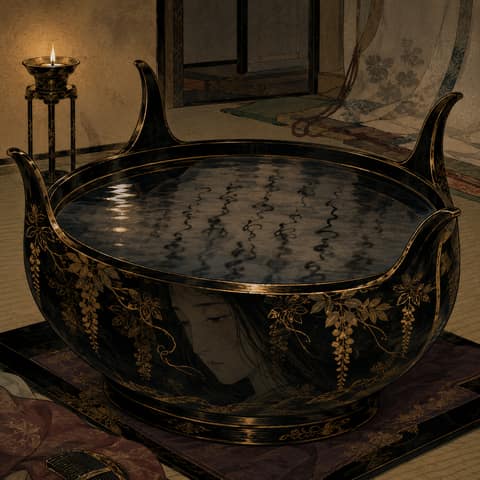
    An interpretation centered on Toriyama Sekien’s depiction of the horned washbasin figure. The rim of the jet-black basin rises like horns, and when lamplight is reflected on the clear surface, only deceitful characters added to a paper will blur and eventually dissolve away. As a tsukumogami of implements, it values human care and decorum, revealing its strange nature only when treated rudely. Rather than causing harm, it is said to expose hidden falsehoods. Echoing Noh and classical poetry, it is often shown alongside courtly cosmetics and writing instruments. Regional lore is scarce, with mentions largely confined to early modern picture compendia and encyclopedias.

  • Hossumori, the Fly-Whisk Guardian

    Hossumori, the Fly-Whisk Guardian

    Rare

    HOSS-soo-MOH-ree

    Sekien Iconography Standard

    Animated Objects & UndeadEdo period; derived from picture scrolls

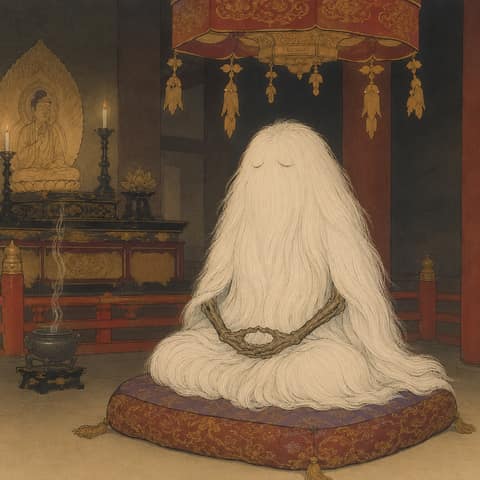
    Based on the tsukumogami of the fly-whisk as depicted in Toriyama Sekien’s Hyakki Tsurezure Bukuro. Seated cross-legged beneath a canopy, it embodies the purity of a ritual implement and the quietude of a spirit matured through long use. Strong Zen symbolism underlies it, with an allusion to “the Buddha-nature of the dog,” implying that Buddha-nature manifests beyond sentient and insentient distinctions. In China the fly-whisk was said to dispel demonic hindrances, leading to the idea of a tool-spirit that allows nothing to obstruct enlightenment. Though a tool-yokai, it is not told to cause disturbances like other Hyakki creatures; instead it sits in composure, contemplating its own nature. Its image is chiefly tied to places where ritual implements gather within temples—main halls, monks’ quarters, and storerooms—rather than to specific local legends.

  • Human-Faced Tree

    Human-Faced Tree

    Rare

    neen-MEN-joo

    Illustrated Compendium Tradition—Sekien Design Edition

    Natural Phenomena SpiritsUnknown; said in sources to grow in the distant land of Dashi ("Great Food" country) to the southwest

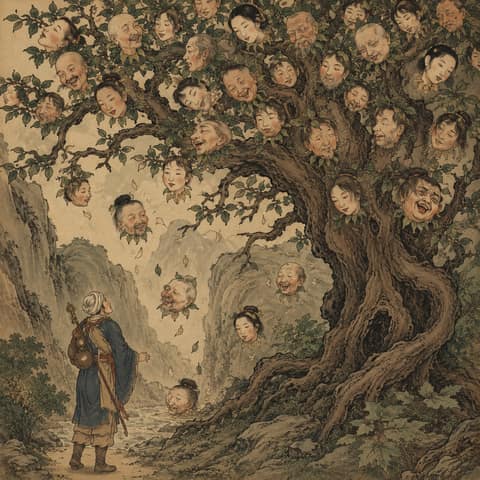
    Based on Edo-period natural history notes and shaped by Toriyama Sekien’s pictorial intent. It is a tree that grows thick in mountain valleys and bears blossoms at the tips of its branches that resemble human faces. The flowers do not understand human speech, but are said to smile at calls or sounds. When laughter overlaps, the petals lose strength and eventually wither and fall. In Japan it was received as a tale of foreign curiosities, lacking specific local toponyms or anecdotes. The faces vary from old to young, often depicted grinning with teeth as they sway in the wind. Its true nature is unclear—treated either as a plant spirit or a rare anomalous tree—and it was recorded more as a curiosity than a source of fear.

  • Hyakume (Hundred-Eyed Demon)

    Hyakume (Hundred-Eyed Demon)

    Rare

    HYAH-koo-meh

    Iconographic Origin, Modern Interpretation

    Half-Human BeingsJapanese folklore

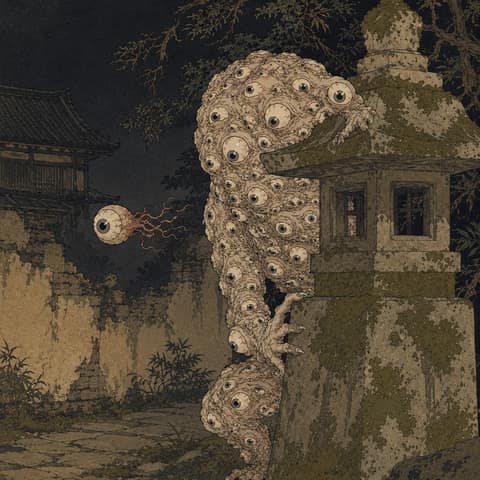
    Rooted in multi-eyed demon images circulated from late Edo to Meiji, this form was given traits by modern yokai compendia. It shuns bright light and hides in night’s cover, avoiding notice. When it senses people, it is said to detach a single eye to probe its surroundings, while the indeterminate mouth only heightens its eeriness. With no fixed locale of tradition, it is treated as a conceptual being known nationwide through the spread of its imagery.

  • Hyousunbo

    Hyousunbo

    Rare

    Hyousunbo

    The River Kappa of Hyuga: Hyousunbo

    Water ApparitionsMiyazaki

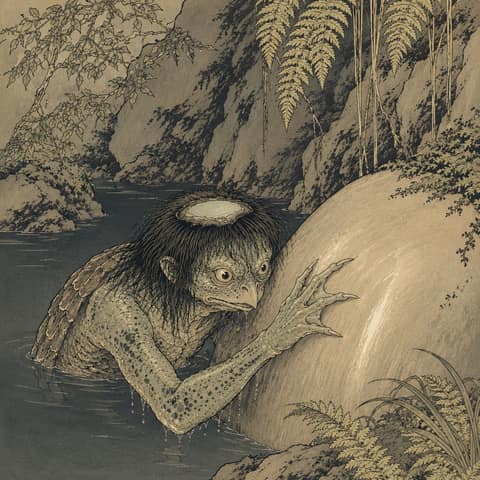
    Among the many kappa legends nationwide, the hyousunbo stands out as a water apparition of Hyuga renowned as "the kappa that keeps promises." Although a dangerous being that drags children playing in the river to their deaths, it made a pact with the villagers—"I will not take their lives until a certain rock rots away"—and faithfully touched the rock countless times to check on it, thereby polishing it smooth. The detail of this "Hyosubo Rock" transcends a simple ghost story, conveying the memory of a negotiation between humans and a water god. The belief in its seasonal migration—living in the river during spring and autumn and the mountains in winter—reflects the southern Kyushu folk view of kappa as avatars of water and mountain gods. The dedicatory sumo matches held annually at the Suijin-buchi of the Tsuboya River are remnants of local rituals to pacify a raging water god through wrestling. Connected to the garappa and kawantaro of southern Kyushu's kappa culture, the hyousunbo remains a unique entity with a name and legend native to Hyuga, telling the story of the boundary between water and humans.

  • Hyōtan Kozō (Gourd Boy)

    Hyōtan Kozō (Gourd Boy)

    Rare

    HYOH-tahn koh-ZOH

    Iconographic Tradition–Tsukumogami Interpretation

    Animated Objects & UndeadJapanese folklore

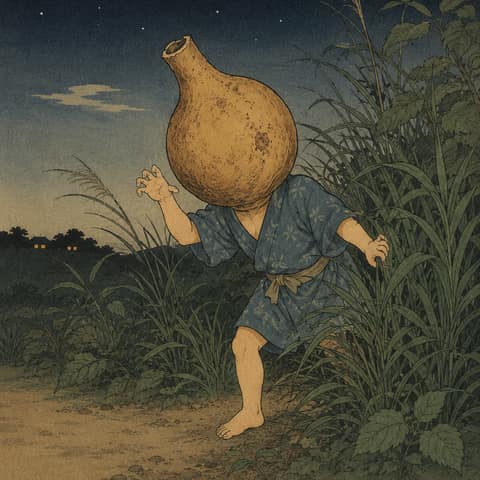
    An interpretation based on Toriyama Sekien’s Hyakki Tsurezure Bukuro and related Hyakki Yagyō iconography. Gourds served as containers for water or sake and as percussion in festivals, and after long use were believed to acquire spirit in line with the tsukumogami view. The Gourd Boy appears as a human figure with a gourd for a head, briefly emerging from a night path or from grass to make passersby flinch, and little more. Its nature, name, and any definite harm are not fixed in sources, and alongside utensil-yokai like the Mortar Monk it is read as an allegorical old tool given life. Local oral lore is scant, with paintings and later commentaries as the main sources.

  • Iyaya (Negaya)

    Iyaya (Negaya)

    Rare

    ee-YAH-yah

    Sekien Iconography Standard

    Household SpiritsUncertain; Japanese folklore

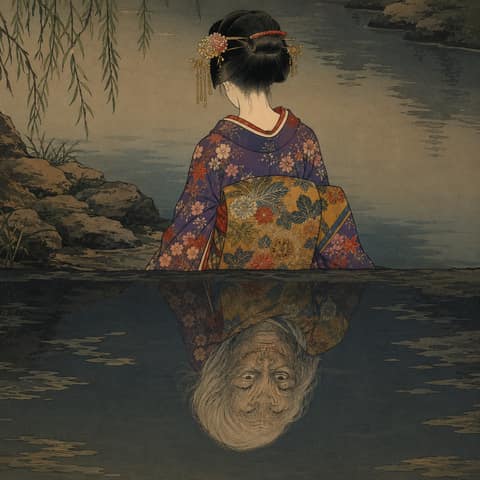
    Adheres strictly to Toriyama Sekien’s image and notes, avoiding later embellishments. The yokai is shown as the back view of a young woman standing by water, while the surface reflects the visage of an old man. The name draws on Dongfang Shuo’s “kaizai” expressions of wonder, suggesting Sekien likely fashioned an allegory. Youth and age, beauty and ugliness, front and back are opposed within a single frame, read as a design warning against being deceived by appearances. Firm oral traditions are scarce, so its character is defined largely through image interpretation. The readings iyaya or iyami vary by source, possibly evoking refusal or repulsion akin to “no,” but the literature offers no certainty.

  • Jami (Evil Miasma Spirit)

    Jami (Evil Miasma Spirit)

    Rare

    JAH-mee

    Iconographic Interpretation Version

    Half-Human BeingsChina

    This version organizes the image of the Jami as an example of Sekien aligning a Chinese-origin demonic concept within Japan’s yokai system. Its original sense is “pernicious enchantment,” classed among chimi, a noxious presence born from the gloom of mountains and wastelands that harms body and mind. Its form is not fixed in classical texts, and images function more as visualizations of an idea. The effects fall between illness and invisible curse—fever, hallucination, frenzy—sometimes triggered by contact with resentment or defilement. Countermeasures include bans, talismans, and wards; traditions speak of drawing a prison on the ground to summon and seal, binding it by asking its name, or transferring it into a vessel. In Japan it rarely became an object of distinct cult, often treated as a generic term alongside more-ryo. In folk terms it is distinguished from miasma, mononoke, and tsukumogami, a high-abstraction yokai appearing where the chill of wild places intersects with human grudge.

  • Kameosa

    Kameosa

    Rare

    KAH-meh-OH-sah

    Iseya Toriyama Plate Edition

    Animated Objects & UndeadEdo period

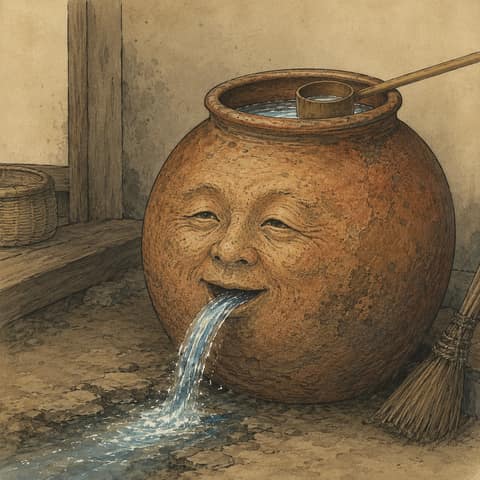
    An interpretation based on Toriyama Sekien’s Hyakki Tsurezurebukuro image and inscription. The water jar faces forward, its rim becomes the mouth, and patterns on the body are read as eyes and nose. The inscription pivots on the phrase “calamity turns to good fortune,” entrusting the vessel with the idea that blessings fill after adversity. Placed at the end of the volume to serve a congratulatory cadence, its nature is read as leaning more toward good than ill. Though grouped with tsukumogami familiar to early modern life, independent oral lore or怪談 are scarce. Later retellings expand the “inexhaustible when drawn” motif into control over water’s increase, decrease, and measured pouring, but the original is a symbolic painting with verse, and narrative deeds are limited.

  • Kanazuchibō

    Kanazuchibō

    Rare

    kah-nah-ZOO-chee-boh

    Iconographic Reconstruction (According to Tradition)

    Household SpiritsJapanese folklore

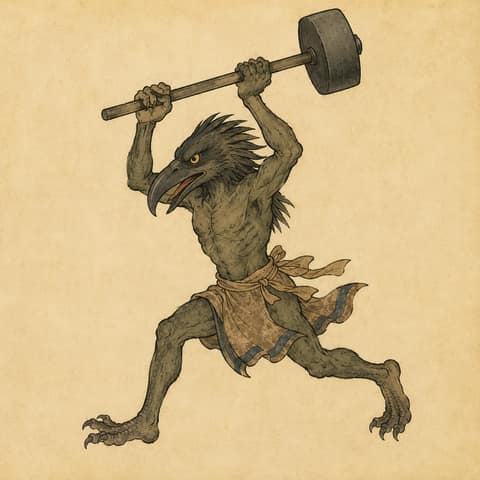
    Reconstructed after the iconography seen in the Matsui Library Hyakki Yagyō handscroll and other monster scrolls held by institutions such as the National Museum of Japanese History: a bird-faced figure brandishing a raised hammer. Following the sources, its name is noted as Kanezuchibō, with a comment on its affinity to the cognate form Daichiuchi; its deeds and origins remain unknown. While the hammer suggests a tool-turned-tsukumogami reading, no explicit statement in the sources confirms this. It is most often depicted as a member of a procession, one of the recurring motifs in Hyakki Yagyō imagery. Later metaphorical readings (e.g., caution or self-effacement) are treated as secondary interpretations and not conflated with the original tradition.

  • Kera-kera Woman

    Kera-kera Woman

    Rare

    keh-rah KEH-rah OHN-nah

    Sekien Illustrative Edition

    Ghosts & SpiritsJapanese folklore

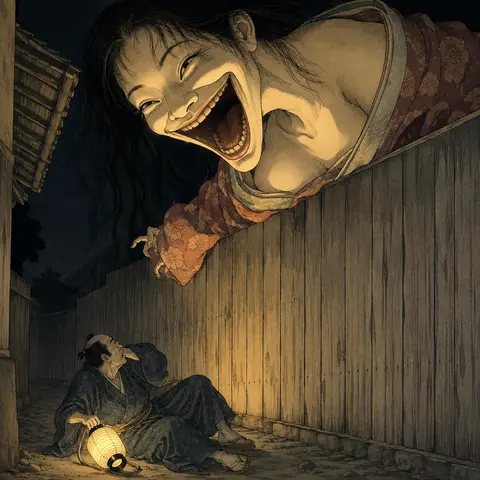
    This entry centers on Toriyama Sekien’s imagery, supplemented only minimally by the popular explanations found in modern yokai handbooks. Citing the anecdote of Song Yu of Chu, Sekien likened a woman laughing alluringly over a wall to the spirit of a wanton. The plate itself does not detail temperament, degree of harm, or methods of dispelling, offering only form and associative origin. Later commentators emphasize a dry laugh heard by one person alone on an empty road, framing it as a psychological apparition that provokes fear, shame, and unease. Tangible harm is rarely noted, sometimes limited to shock, freezing in place, or fainting. Its hauntings are not tied to a specific region, and are imagined wherever sightlines are blocked—along city walls, crossroads, or over hedges—though sources are not cited. Accordingly, this version keeps Sekien’s visual prompt at its core, treating confusion by laughter as an ancillary function.

  • Kinutanuki

    Kinutanuki

    Rare

    kee-noo-tah-NOO-kee

    Based on Sekien’s Illustrated Compendium

    Animated Objects & UndeadEdo (place of publication)

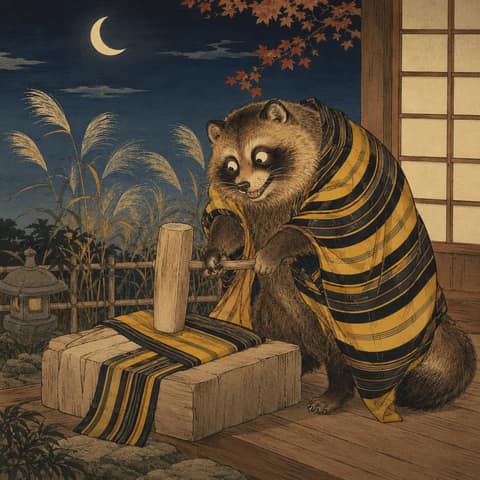
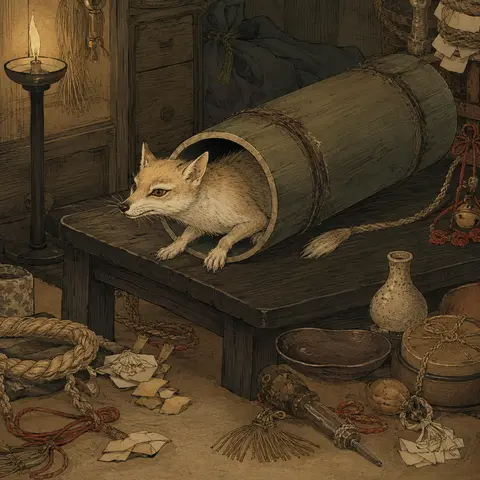
    The Silk Tanuki is a yokai born from printed books, a visual conceit that overlays vocabulary from Hachijo silk (Kihachijo) with tales of shape-shifting tanuki. In Sekien’s example, a tanuki draped in silk patterns is paired with a caption that evokes both the name Hachijo and popular lore of trickster tanuki. Independent oral traditions are scarce; later readings add the sound of fulling blocks and cloth-beating gestures, but these remain reinterpretations of the image. Its nature aligns with object-spirits and a mitate-based tsukumogami, more a crystallization of wordplay and design in print culture than a field-reported apparition. It is described as wearing the yellow-striped Kihachijo motif and revealing itself less by appearance than by nocturnal cloth-beating sounds, yet such traits are interpretive and no fixed image is established.

  • Koinryō

    Koinryō

    Rare

    koh-EEN-ryoh

    Edo Iconography Conformant

    Animated Objects & UndeadJapanese folklore

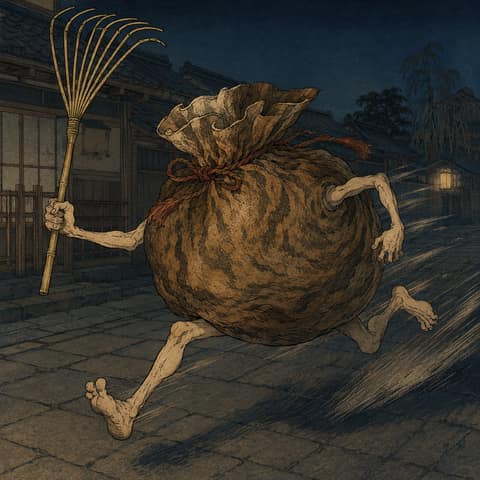
    A reconstructive reading based on Toriyama Sekien’s compositional layout and notes. The主体 is a leather coin pouch that, with age, has become a tsukumogami. Its rake-like implement echoes motifs from medieval picture scrolls and likely implies the act of sweeping up or gathering, though sources do not state this conclusively. It moves with great speed, dashing like a herald at the head of a procession, and is imagined merging with the motley ranks of the Night Parade of Haunted Tools. Its name suggests echoes of “tiger hide” and “inrō,” yet no citation is given and the origin remains unknown. No region-specific lore survives; from its placement alongside Yarikechō and Zenkamanasu within the work, it is understood as one among a group of antiquated implements. The entry avoids embellishment, limiting traits to Sekien’s notes and comparable iconography.

  • Kokuri Baba (Temple Kitchen Hag)

    Kokuri Baba (Temple Kitchen Hag)

    Rare

    KOH-koo-ree bah-BAH

    Sekien Iconography Version

    住居・器物Japanese folklore

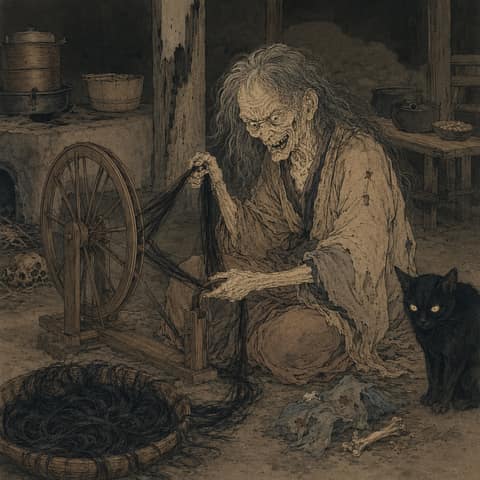
    An interpretation grounded in Toriyama Sekien’s Konjaku Hyakki Shūi depiction. Said to be the transformed bōnsō of the seventh prior abbot haunting the temple kitchen quarters, it steals offerings and money, digs up graves to braid hair into garments, and eats human flesh. Artwork pairs an old woman twisting thread with a cat, suggesting satire of clerical corruption and monastic lapses. The name “Kokuri” may pun on a word for something terrifying. Lacking a fixed regional distribution, it is chiefly known as a bookborne pictorial yokai. Rather than field sightings, it likely served as a moral warning and social satire aimed at temple society.

  • Korōka (Ancient Lantern Fire)

    Korōka (Ancient Lantern Fire)

    Rare

    koh-ROH-kah

    Sekien’s Koro-bi (Ancient Lantern-Fire)

    Household SpiritsJapanese folklore

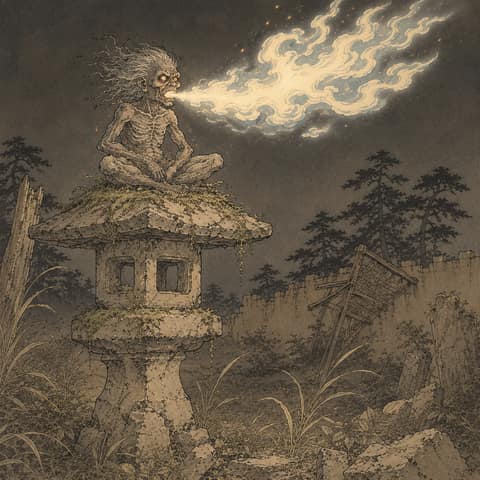
    A version reinterpreting Toriyama Sekien’s fusion of a stone lantern and will-o’-the-wisp, casting it as a fire spirit dwelling in the lantern. When old courtyard or temple lanterns go long unused, a thin flame is said to rise at night, flickering as if lingering over the places it once lit. Historically, Sekien’s illustration and note form the core record, with little tied to specific locales or figures. It influenced later ghostly retellings, but firsthand accounts are scarce, so it is treated as a symbolic yokai of “the memory of light.”

  • Kosame-bō (Little Rain Monk)

    Kosame-bō (Little Rain Monk)

    Rare

    koh-sah-meh-BOH

    Sekiens Iconography Edition

    Mountain & Wilderness SpiritsNara

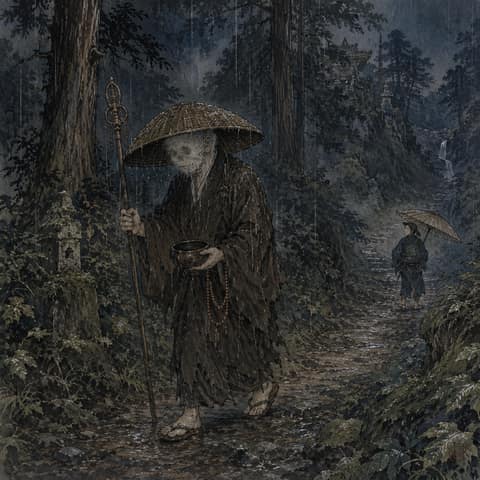
    A reconstruction based on Toriyama Sekien’s image and brief note. It appears as a small monk drenched by rain, emerging on rainy nights in the mountains. It softly asks passersby for offerings due to a monk, but refusal does not necessarily bring harm. Its place is tied to the sacred Shugendō ranges of Ōmine and Katsuragi, yet no verified lore links it to specific temples or persons. Later sources that say it begs for food or small coins likely simplify Sekien’s term “sairyō” (offerings), with little direct oral backing. Its wandering is said to occur only on fine-threaded rainy nights, and reports from clear nights or downpours are uncertain. Methods to banish or summon it are unknown, and meetings on mountain paths are told merely as fleeting oddities.

  • Kosodate Yurei

    Kosodate Yurei

    Rare

    kosodate-yurei

    The Mother's Ghost Raising Her Child in a Grave, Kosodate Yurei

    Yurei/WraithKyoto

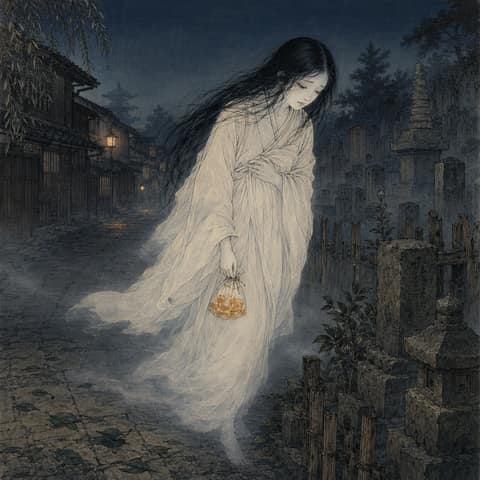
    The Kosodate Yurei is a ghost of a woman who gives birth in a grave after death, or is buried with a child in her womb, and appears to raise that child. The core of the supernatural phenomenon involves, firstly, the "birth in the grave" where the child survives in the earth, and secondly, the "phantom money" where the coins paid by the ghost turn into shikimi leaves or tree leaves the next morning. In the story of Rokudo-no-Tsuji in Kyoto, the plot follows the woman to the candy store, sees her disappear into the Toribeno cemetery, and upon digging, finds a baby sucking on candy. Unlike ghost tales of terrifying curses and revenge, the center of this story is strictly maternal love. The woman holds no grudge against the living; she only seeks to keep her child alive. The epilogue, where the rescued child later becomes a monk and accumulates high virtue, takes the form of the deceased mother's affection being sublimated into a Buddhist connection, resonating with the Jizo and funeral beliefs of the Higashiyama area. As with the candy from Minatoya Yurei Kosodate-ame Honpo, the fact that the legend continues to live on in connection with a real object is also a characteristic of this ghost.

  • Kotofurunushi

    Kotofurunushi

    Rare

    koh-toh-koh-roo-NOO-shee

    The Forgotten Tsukushi Koto, Kotofurunushi

    Tsukumogami / MukurogaiFukuoka Prefecture (Former Tsukushi Province / Spirit of a forgotten Koto)

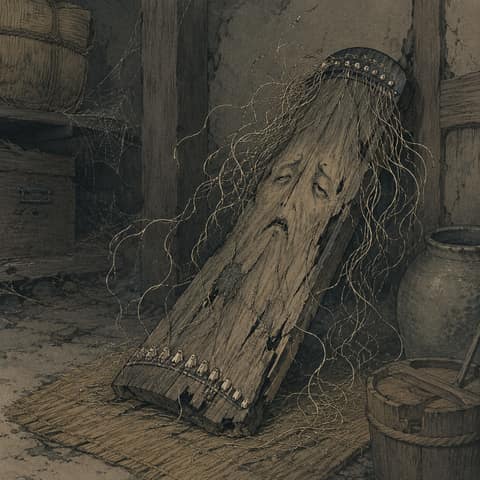
    This is the most orthodox and tragic interpretation of the Kotofurunushi, embodying the despair and sorrow of the "Tsukushi Koto" buried in the darkness of music history by the rise of the genius Yatsuhashi Kengyo. This Kotofurunushi is not a savage yokai that attacks and devours humans. Its true horror and melancholy unfold quietly deep within unvisited storehouses or ruined mansions late at night. In the darkness, the old koto—abandoned for years, cracked, and covered in dust—begins to tune itself without the help of any hands. Then, the countless snapped and frayed strings writhe like living creatures, or like the black hair of a vengeful female ghost, and begin to play the archaic, heavy, obsolete melodies of the "Tsukushi school" that modern humans can no longer comprehend. That tone, mixing the pride once loved by aristocrats and high priests with the raw despair of now being ignored by everyone, induces a heart-wrenching, intense nostalgia and psychological unease in anyone who hears it. The goal of the Kotofurunushi is not revenge, but the pure and maddening thirst of an instrument: "I just want someone to listen to my sound." Therefore, swords or talismans are not needed to appease this yokai. If someone who understands old music wipes the dust off this old koto, carefully restrings it, and affectionately plays its ancient tunes once more, its years of resentment will be sublimated as if it were an illusion, and the Kotofurunushi will revert to just being a masterpiece instrument. It is an entity that brilliantly expresses the cruel transitions of art and the uniquely Japanese affection for tools.

  • Kutsutsura

    Kutsutsura

    Rare

    koo-TSOO-TSOO-rah

    Iconographic Critical Edition

    Animated Objects & UndeadJapanese folklore

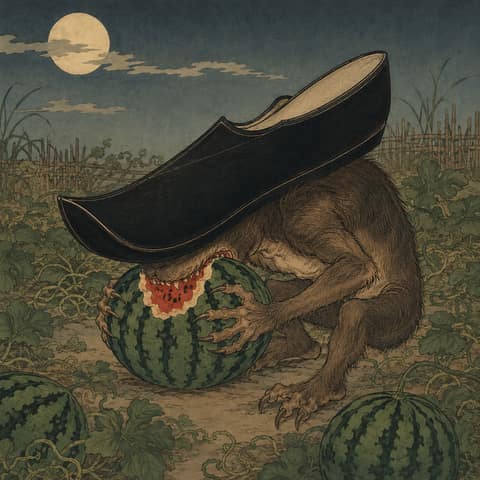
    A version organized from Toriyama Sekien’s anecdotes and imagery, presenting a beast-man figure bearing a symbolic clog (kutsu) to signify an animated implement. In Hyakki Tsurezure Bukuro, paired with the opposing page’s Long Crown, it allegorizes the proverb “Do not put on shoes in a melon patch, nor adjust your crown beneath a plum tree,” depicting caution against suspicion through a yokai image. No concrete sightings or harms are recorded; it is loosely linked to tales of creatures that eat melons in fields, and banishment is mentioned only via talismanic precedents. No firm association with specific Japanese locales is attested, and its design likely references Muromachi-period yokai scrolls featuring beast forms bearing shallow clogs.

  • Kyūsenbō

    Kyūsenbō

    Rare

    kyū-sen-bō

    The Grand Chief Who Commands the Kappa of Kyushu — Kyūsenbō

    Water SpiritsKumamotoFukuoka

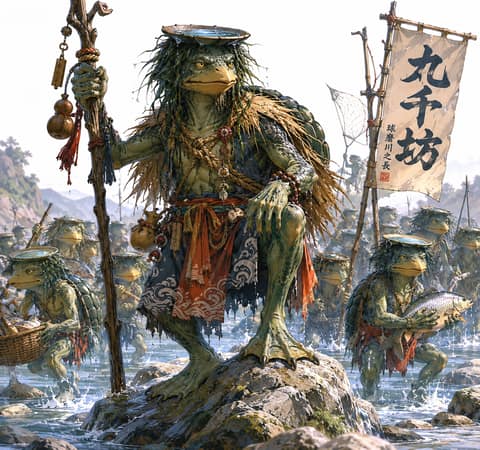
    This version looks closely at Kyūsenbō’s singular standing — less a single yokai than the chief of the whole kappa kind. The kappa is by nature a yokai that changes its name from place to place, told of scattered across the rivers of each region. Among them, Kyūsenbō is drawn as the “head” who governs nine thousand kappa across Kyushu with a single hand. This is unlike the fox’s tenko — a vertical ladder up which a single fox climbs through cultivation. The seat Kyūsenbō holds is a horizontal command over many kappa: in plain terms, the authority of a general over an army. That authority is tested in the contest with Katō Kiyomasa. The single battle handed down by the Honchō Zokugenshi reflects at once the kappa’s strength and its weakness. With nine thousand familiars in hand, he is yet helplessly defeated the moment he faces the monkey the kappa has dreaded since of old. The outcome is settled not by force of arms but by the logic of the natural enemy — and in this the kappa’s true nature is laid plainly bare. What comes after defeat is his turn toward the water-god. The Kyūsenbō who moved to the Chikugo River changed from a man-attacking demon into a guardian against flood. His bond of serving Suitengū at Kurume shows the kappa to be a being that bears both meanings at once — the peril of water and the bounty of water. The monument at the Place of the Kappa’s Arrival in Yatsushiro, the kappa masks of Suitengū, and the kappa clan Hino Ashihei founded in the Shōwa era — the tale of Kyūsenbō lives on still, from an Edo miscellany to the town-building of today, as a thread of memory the people of Kyushu have spun together with the river.

  • Long Crown

    Long Crown

    Rare

    oh-sah-KOH-buh-ree

    Iconographic Tradition Version

    Household SpiritsJapanese folklore

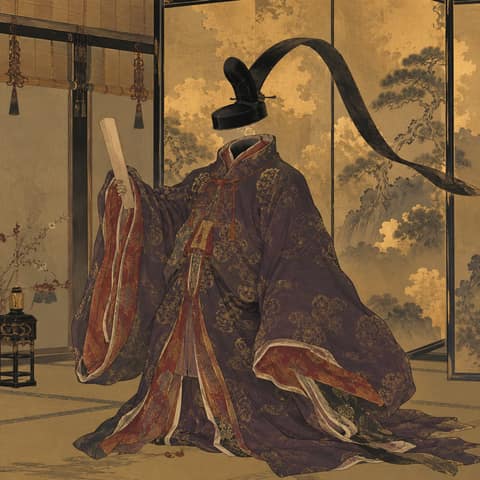
    Based on Sekien’s image and caption, the crown is shown as if it stands on its own and walks with proper manners, a satire aimed at minds fixated on authority. A crown should rightly regulate decorum and rank, yet when one refuses to remove it for selfish ends, the vessel is said to curse its master, gain form, and wander. Firsthand accounts are scarce; it appears mostly in paintings and texts as an unspoken warning, paired with Kutsuhō as a lesson in suspect behavior and knowing one’s proper place. Later artists like Yoshitoshi echoed this by adding a crown-spirit to Hyakki Yagyō processions. Among early modern aficionados, it was treated as an example of tsukumogami, in which ceremonial items like crowns and scepters acquire spirits as they age.

  • Misogoro

    Misogoro

    Rare

    みそごろう

    The Gentle Giant of the Shimabara Peninsula: Misogoro

    Oni / Giant ApparitionsNagasaki

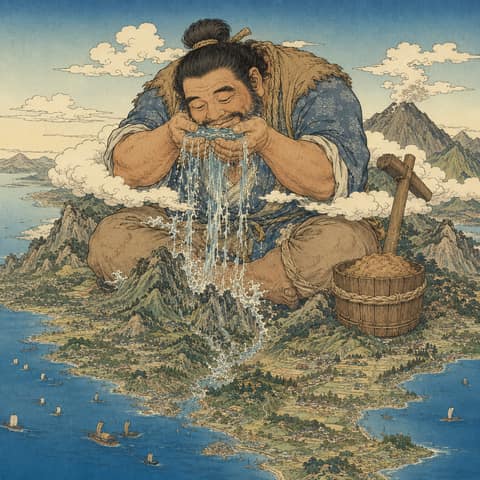
    Misogoro boasts a body so massive that he can sit on Mount Unzen and wash his face in the Ariake Sea, and his every movement is said to have carved the geography of the Shimabara Peninsula. His braced footprint on Mount Takaiwa became Suwa Pond, and the dirt he tossed aside while farming became Yushima (Dangoshima) Island. This chain of origin tales elevates him from a mere apparition to a creator-giant who birthed the peninsula's landscape. The extraordinary diet of licking four *to* of miso a day is a rustic narrative device measuring the giant's body against local staple goods, inseparably linked to the miso-brewing lifestyle of the peninsula. While belonging to the *Daidarabotchi* giant lineage, the unique aspect of the Shimabara version is that he is described with a mildness that helps people without malice. Today, he lives on as a symbol of local heritage in Minamishimabara City through statues and festivals.

  • Mokugyo Daruma

    Mokugyo Daruma

    Rare

    MOH-koo-gyoh dah-ROO-mah

    Iconographic Tradition, Sekien Lineage

    Animated Objects & UndeadJapanese folklore

    An interpretation of a tsukumogami rooted in Toriyama Sekien’s imagery, layering the sleepless symbolism of the wooden mokugyo with Daruma’s rigor of training. More often understood as a moral metaphor within temple culture than as a tale told to frighten. Some regions claim a mokugyo sounds on its own in the hall at night, but systematic oral tradition is scarce. Later artists such as Yoshitoshi followed the design, fixing the visage of a face upon a mokugyo seated on a round mat. It is positioned less as a source of terror than as a presence that sharpens the tension of practice.

Showing 49 - 72 of 112 yokai