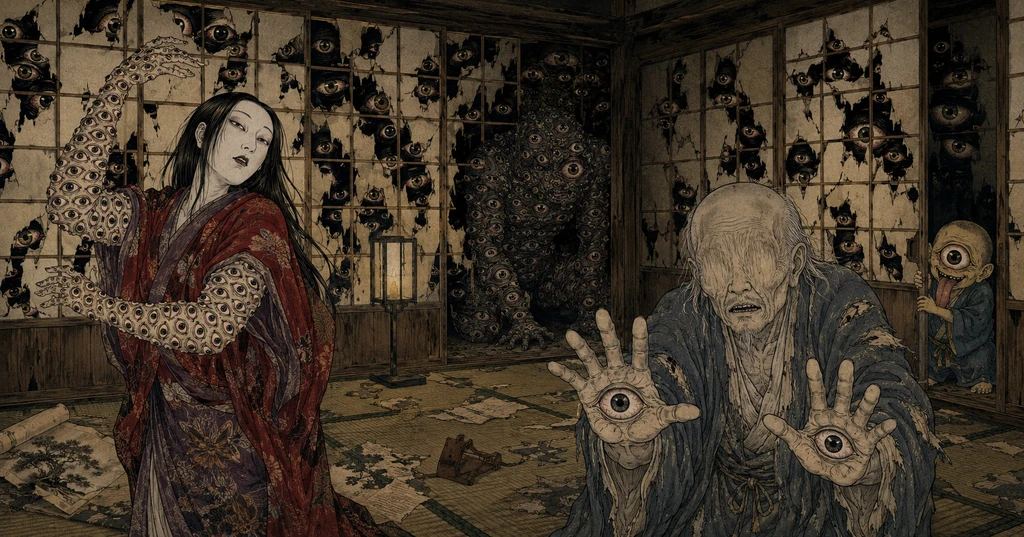
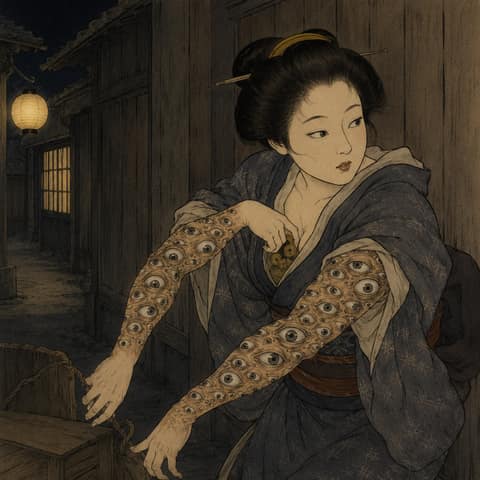
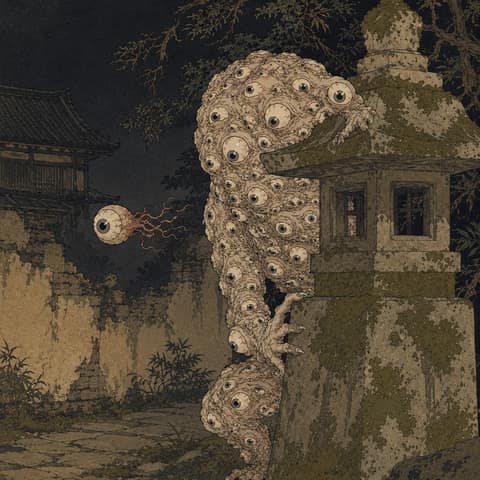
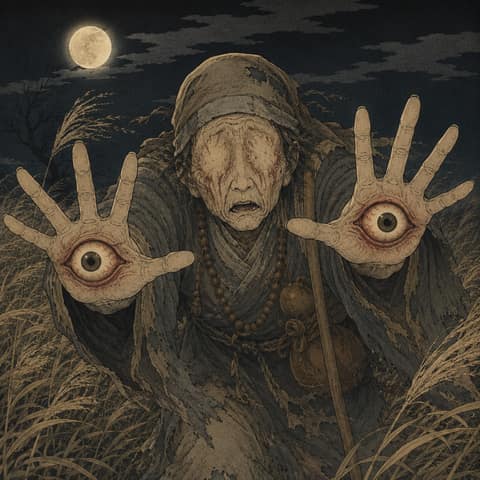
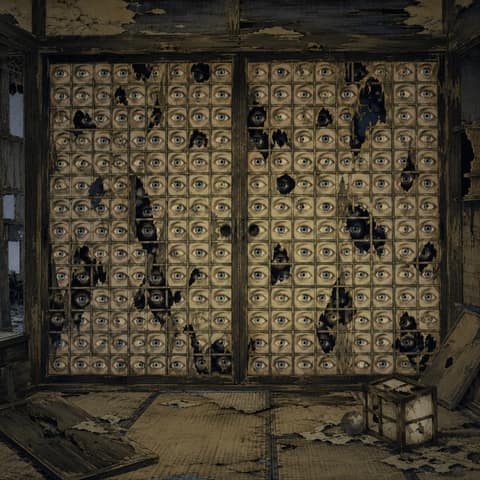
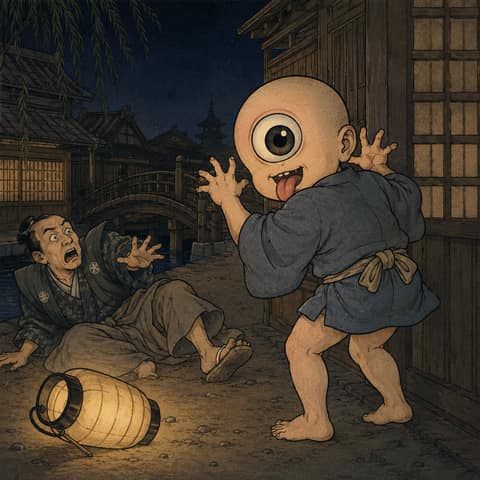
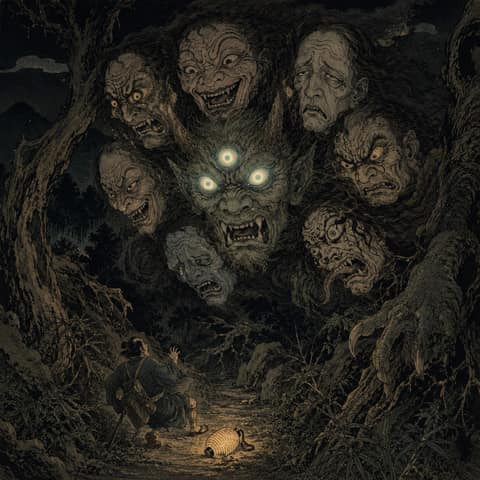
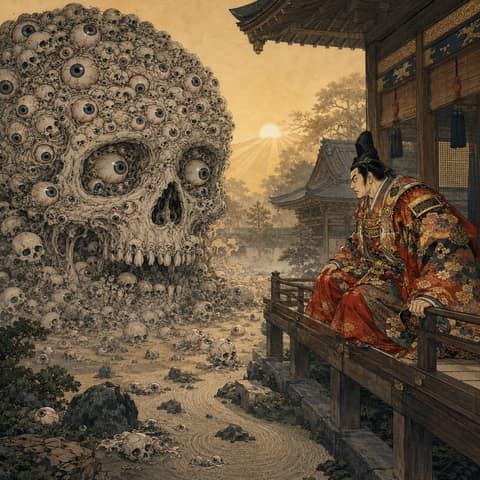
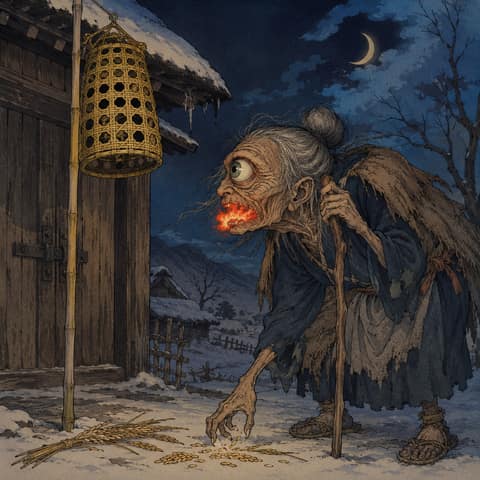
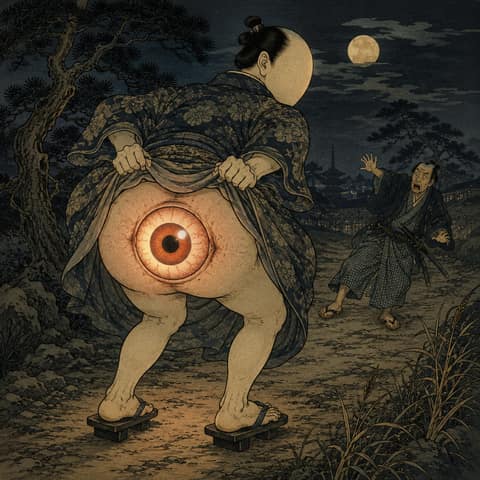
Rooted in multi-eyed demon images circulated from late Edo to Meiji, this form was given traits by modern yokai compendia. It shuns bright light and hides in night’s cover, avoiding notice. When it senses people, it is said to detach a single eye to probe its surroundings, while the indeterminate mouth only heightens its eeriness. With no fixed locale of tradition, it is treated as a conceptual being known nationwide through the spread of its imagery.
Character Profile
This section is our own creative profile for storytelling. It is not historical fact or scholarship.
Yokai Type - Traditional Yokai
Category - Half-Human Beings
Rarity - Rare
Personality - taciturn, relentless
Compatibility - dislikes those who meet its gaze
Abilities - scouting with a detached eyesight in darknessvigilance in multiple directions
Weaknesses - strong sunlight, the glare of bonfires and lamps
Habitat - shadows of temples and shrines, deep woods, back alleys on the town’s edge