

Satori

AdPractical Japan travel guides · 2jp.cc

Basic Description

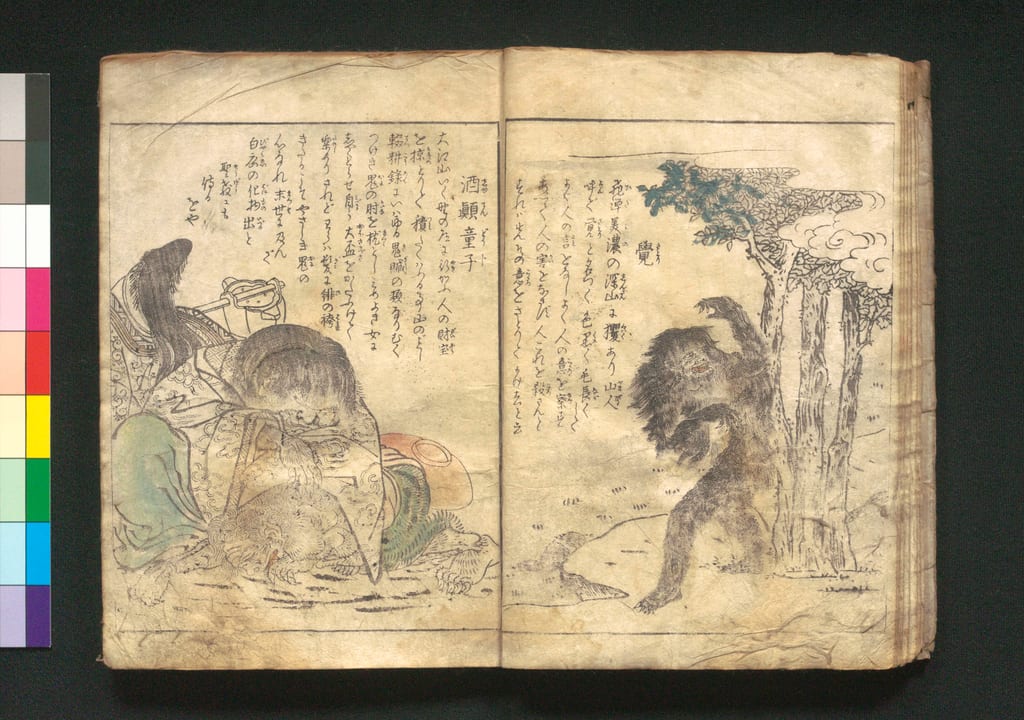
Satori (覚) is a mountain yokai said to read people's minds. Toriyama Sekien drew "Satori" in Konjaku gazu zoku hyakki (1779), with the caption: "In the deep mountains of Hida and Mino there is a kaku, which the mountain people call satori. It is dark in colour with long hair, speaks human language well and reads people's minds well. It does not set out to harm anyone; if someone means to kill it, it senses the intent first and runs away." In folktales from many regions it appears before someone warming themselves at a fire in a mountain hut or felling trees, and voices their thoughts one after another; but when a twig or chip of wood unexpectedly snaps up and strikes it, it takes fright and runs off.

Folklore & Legends

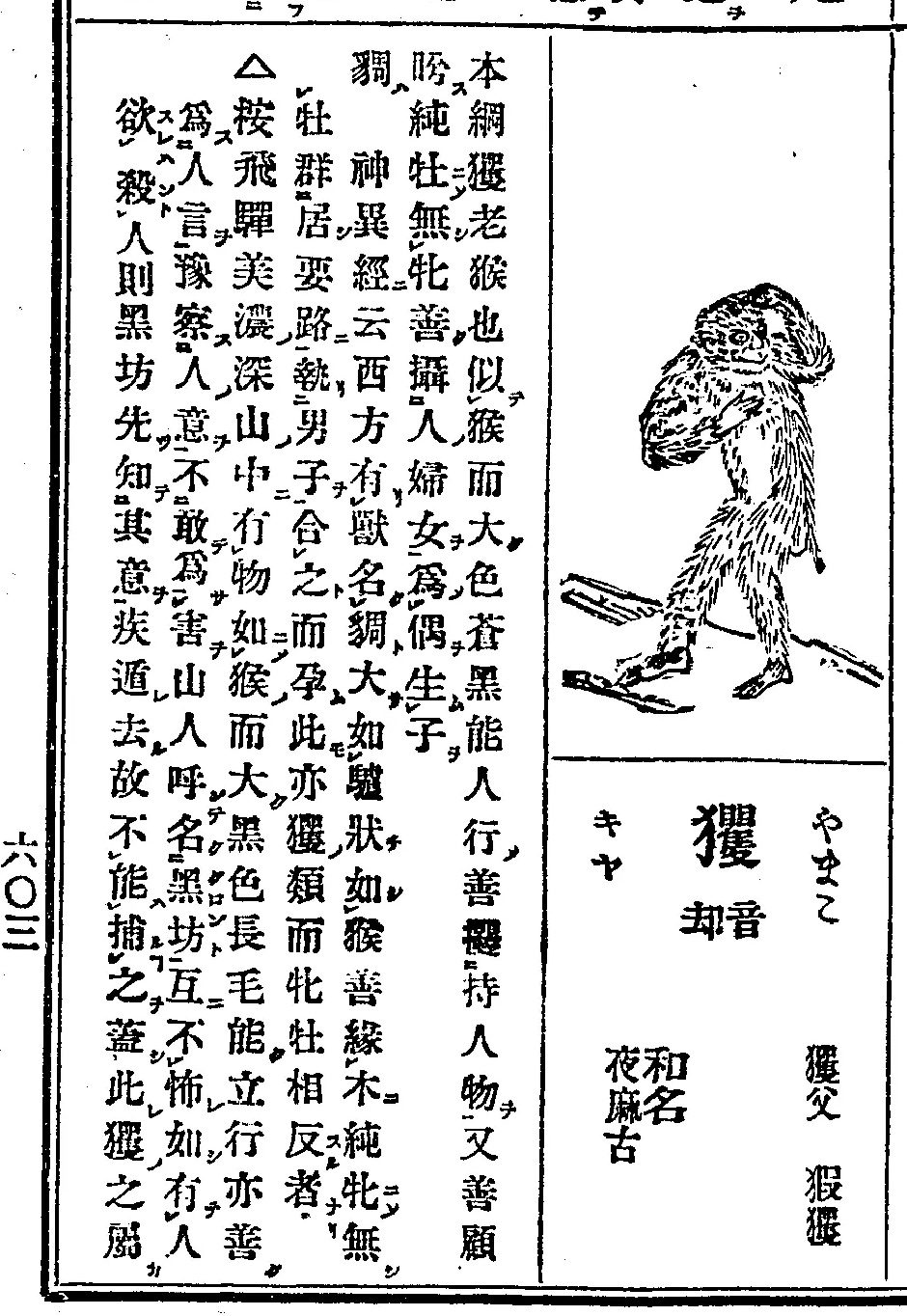
Almost the same account appears in the entry "kaku" (玃, yamako) in Book 40, "Primates", of Terajima Ryōan's Wakan sansai zue (1712). Ryōan first cites the Bencao gangmu, which calls the kaku an old monkey, then writes that in the deep mountains of Hida and Mino there is a creature like a monkey but larger, black with long hair, which walks upright, speaks human language well, reads people's intentions in advance and does them no harm; the mountain people call it kurobō. If someone means to kill it, the kurobō knows their intent first and makes off swiftly, so it cannot be caught. Ryōan suggests it may be a kind of kaku.

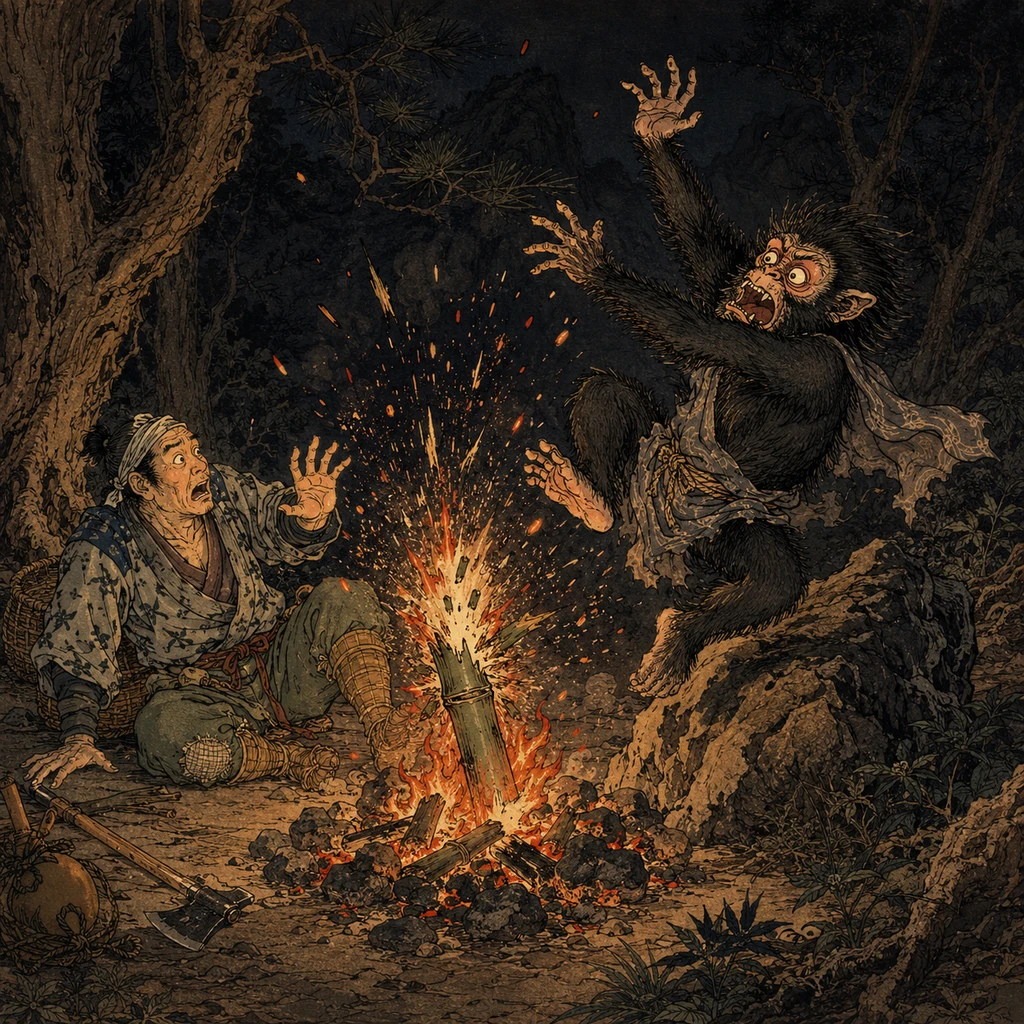
In folktales, satori reads the minds of people working in the mountains. A 1960 report from Minamiaizu District, Fukushima, tells of an old man warming himself by the fire in a mountain hut when a creature he could not make out came in and saw straight into his heart. When the old man snapped a stick of brushwood, it flew up and struck the creature, which took fright. In a 1927 report from Kitashitara District, Aichi, a satori-otoko comes up beside a woodsman at work and reads his thoughts, but when chips fly off the timber he is shaping, it is startled, says that humans do things it cannot foresee, and runs away. A 1933 report, also from Aichi, says that satori-otoko could see through anything a person was thinking, except which way the chips would fly from the tree a woodsman was felling.

At Shōji (now Fujikawaguchiko) in Yamanashi, the creature that lived on Mount Ōwada was called omoi. According to a 1973 report, as a woodcutter was felling a tree, omoi appeared, voiced his thoughts one after another and crept closer to seize and eat him. Just then his axe struck a knot in the wood, which shattered, and a fragment hit the creature in the eye and blinded it. The creature said, "What I don't think of is more frightening than what I do," and fled. Another story from Shōji tells of a charcoal burner toasting rice cakes in a mountain hut, when an old man he did not know came in and read his every thought; the charcoal burner broke a stick of firewood over his knee, a splinter of the knot hit the old man in the eye, and he fled leaving the same words.

In a 1927 report from Shūchi District, Shizuoka, a hunter who met a satori in the mountains grew frightened as his thoughts were read one after another, and took out a golden bullet to shoot it. Being no match for a golden bullet, the satori told him not to tell anyone of their meeting and went away. In Kitashitara District, Aichi, a man whose thoughts were read in the same way by a giant brought out a golden ball, and the giant fled, telling him never to speak of it.

Sometimes the name is attached to a tanuki. In a 1941 report from Kakunodate, Semboku, Akita, a tanuki came every night to warm itself at the house of a maker of snowshoes, until an overheated snowshoe hoop sprang open and struck it; the tanuki cried "Couldn't read that one!" and ran away. Yanagita Kunio wrote in "Yōkai meii" (1938) that the creature called satori sees into people's hearts.

In Sekien's picture, satori stands beneath a leafy tree, a long-haired monkey-like figure with one hand raised high and its mouth open.

ShōmadōYokai Soul Match

Are you anything like Satori?

From about ten questions, the mirror of Shōmadō reads your aura and shows you the one yokai, out of more than five hundred, closest to you.

Satori's aura
Satori's auraGentlenessDisciplineProtectivenessCompassionMelancholyJoyFuryMysteryPlayfulnessSpiritualDepthSerenity
  1. Mystery8.5
  2. Spiritual Depth7.5
  3. Serenity6.8

Yokai Cards1

Satori across multiple art-style decks

Card gallery

Detailed Analysis

Sekien's satori

The "Satori" of Toriyama Sekien's Konjaku gazu zoku hyakki (1779) is a long-haired, monkey-like figure standing beneath a leafy tree. The caption reads: "In the deep mountains of Hida and Mino there is a kaku, which the mountain people call satori. It is dark in colour with long hair, speaks human language well and reads people's minds well. It does not set out to harm anyone; if someone means to kill it, it senses the intent first and runs away."

Photograph of an open Japanese-bound book. The right page is "Satori": beside the trunk of a leafy tree, a monkey-like creature covered in long hair stands on two legs, one hand raised high above its head, its mouth open to show its teeth. At the top of the right page are the title "Satori", a drifting cloud to the left of the tree and a vertical caption at upper right. The left page is "Shuten-dōji": a figure with a huge head of shaggy hair, in a robe patterned with clouds, sleeps with arms folded and head bowed. Behind him sits a court lady with long black hair, holding a sake ewer, and a large vermilion sake cup lies nearby; the upper half of the left page carries a caption. A colour-reference strip appears at the left edge of the book.
Toriyama Sekien, Konjaku gazu zoku hyakki: "Satori"
"Satori" on the right page of Toriyama Sekien's Konjaku gazu zoku hyakki (1779). The caption says that in the deep mountains of Hida and Mino there is a kaku which the mountain people call satori. The left page is "Shuten-dōji". Edo-Tokyo Museum.
Toriyama Sekien, Konjaku gazu zoku hyakki, 1779, Edo-Tokyo Museum, via Kokusho Database

The kurobō of the Wakan sansai zue

The entry "kaku" in Book 40 of Terajima Ryōan's Wakan sansai zue (1712) says that in the deep mountains of Hida and Mino there is a creature like a monkey but larger, with long black hair, which walks upright, speaks human language and reads people's intentions in advance; the mountain people call it kurobō. If someone means to kill it, it knows first and flees, so it cannot be caught.

A section cut from a printed book page. In the upper right of a ruled frame is a picture of a long-haired, monkey-like beast standing on two legs, one arm over its head and the other hand held before its chest, looking out, with broken branches lying at its feet. In the frame below is the large character 玃 with reading glosses and several lines of small notes. The left half holds the main text in classical Chinese with Japanese reading marks, printed vertically, beginning "本綱玃老猴也" and including the lines "△按飛騨美濃深山中有物" and "山人呼名黒坊". The page number 603 is printed in the left margin.
Terajima Ryōan, Wakan sansai zue, Book 40: "Kaku"
The entry "kaku" in Book 40, "Primates", of Terajima Ryōan's Wakan sansai zue (Chūgai Shuppansha edition, 1901). After the triangle mark, Ryōan writes that the mountain people call a large black monkey-like creature of the deep mountains of Hida and Mino kurobō. National Diet Library.
Terajima Ryōan, Wakan sansai zue, Book 40, Chūgai Shuppansha, 1901, National Diet Library Digital Collections (PID 898184)
頁から「玃」の項だけを切り出した。

The mountain mind-reader

The satori of folktales appears before people warming themselves in mountain huts, woodsmen, charcoal burners and hunters, and voices their thoughts one after another (Fukushima, Shizuoka, Aichi, Yamanashi).

No match for the unexpected

When a fragment flies up as someone snaps brushwood or splits wood and hits it, satori takes fright and flees. The omoi of Shōji in Yamanashi says, "What I don't think of is more frightening than what I do," and the satori-otoko of Aichi says that humans do things it cannot foresee, before running off.

Character Profile

This section is our own creative profile for storytelling. It is not historical fact or scholarship.

Rarity
Epic
Personality
Speaks human language and says what people are thinking before they say it. Sekien writes that it does not set out to harm anyone.
Compatibility
Appears to people by the fire in mountain huts, woodsmen, charcoal burners and hunters.
Abilities
Voices people's thoughts one after anotherSpeaks human languageSenses an intent to kill and flees first
Weaknesses
The unexpected. When a twig or chip of wood snaps up and hits it, it takes fright and flees. One story says it is no match for a golden bullet.
Habitat
The deep mountains of Hida and Mino (Sekien); mountain huts and logging sites in Fukushima, Akita, Shizuoka, Aichi, Yamanashi and elsewhere
Sources & References

3
  1. 今昔画図続百鬼 上之巻「雨」「覚」 — 鳥山石燕(東京都江戸東京博物館蔵本(国書データベース), 安永8年(1779)) [図像資料]木の下に立つ毛の長い猿のような覚。詞書「飛騨美濃の深山に玃あり、山人呼で覚と名づく、色黒く毛長くして、よく人の言をなし、よく人の意を察す、あへて人の害をなさず、人これを殺さんとすれば、先その意をさとりてにげ去と云」。
  2. 怪異・妖怪伝承データベース「サトリ」「オモイ」ほか(各地の報告) — 国際日本文化研究センター(怪異・妖怪伝承データベース, 現行(原報告 1927〜1973)) [民俗資料データベース]0030198(福島県南会津郡、1960)山小屋で火に当たる爺様の心を見透かす化け物、柴がはねて当たりおびえる。2240140(愛知県北設楽郡、1927、早川孝太郎)サトリ男は杣の思うことを悟るが木片がはね飛ぶのに驚き「人間は悟りきれぬことをする」と逃げる。0900033(愛知県、1933)木片がどの方向に飛ぶかだけはわからない。0450007・0450008(山梨県精進、1973)大和田山のおもい、鉞が木の瘤に当たり破片が目に、「思うことよりも思わぬことのほうが怖い」。2240139(静岡県周智郡、1927)サトリのワッパ、黄金の弾丸。0160045(愛知県北設楽郡)大男、黄金の玉。1231163(秋田県角館町、1941)狸「サトリ兼ねた」。2180746(柳田国男「妖怪名彙」1938)サトリは人の心の中を見抜く。1810012(山梨県、1963)。
  3. 和漢三才図会 巻四十 寓類「玃」 — 寺島良安(中外出版社, 1712(明治34年〔1901〕中外出版社版)) [古典文献] Reference本綱を引き「玃老猴也、似猴而大、色蒼黒、能人行」。良安按「飛騨美濃深山中有物、如猴而大、黒色長毛、能立行、亦善爲人言、豫察人意、不敢爲害、山人呼名黒坊、互不怖、如有人欲殺人則黒坊先知其意、疾遁去、故不能捕之、蓋此玃之屬乎、不知純牝純牡之是非耳」。