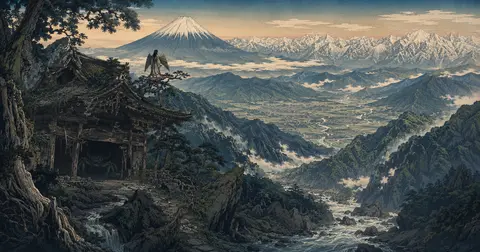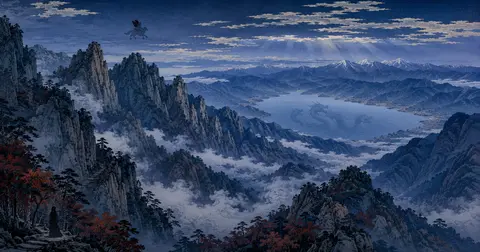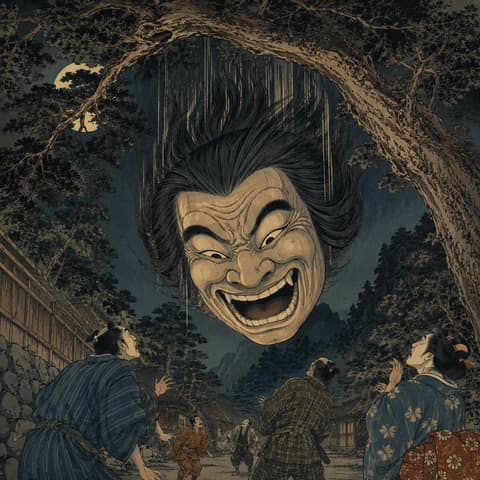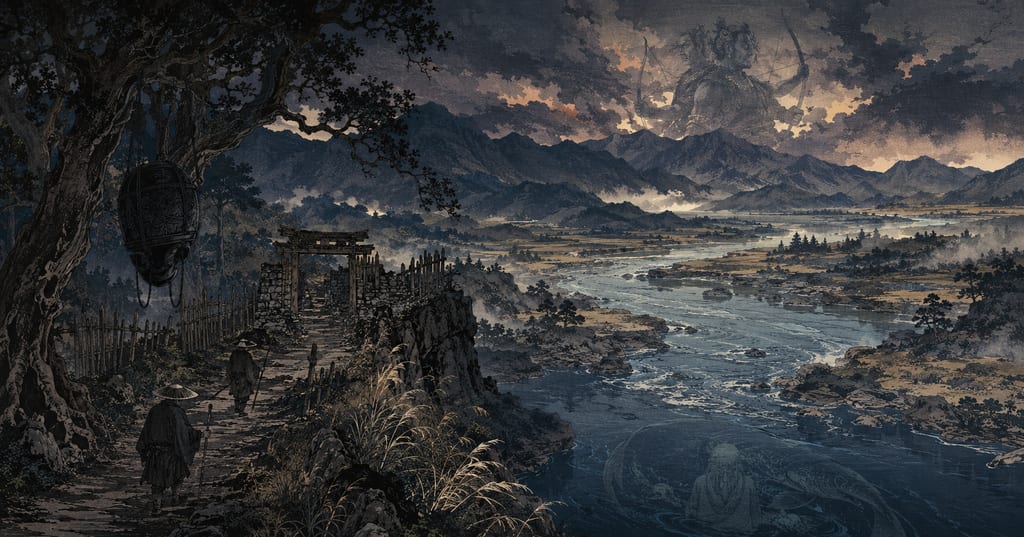
本州の中央、東山道がもっとも険しく狭まる地点に、古代日本を東と西に断ち切る関があった。美濃国 ── いまの岐阜県南部にあたるこの旧国は、北の飛騨が深山に閉ざされた孤立の国であったのに対し、長良川・揖斐川・木曽川という木曽三川が刻む濃尾平野の沃野を抱え、都と東国を結ぶ街道が貫く「通り道の国」であった。そして美濃を美濃たらしめたのが、東西の境に置かれた関ではなく、まさしく不破の関である。
この地理が、美濃の怪異の性格を決めた。深山の異形を畏れた飛騨に対し、川と街道とともに生きた美濃の人々が語ったのは、暮らしの倫理を問う怪であった。乱獲を戒める淵の主岩魚坊主、夕闇の古木から落ちかかる釣瓶落とし、そして飛騨と境を接する深山に潜む覚や、鉄と火を司る一目連。本記事は、東西を分かつ関の国・川の国としての古代美濃を背骨に、その地に伝わる怪異を辿る。なお美濃を含む岐阜県全体の妖怪文化は岐阜県の妖怪事典にまとめてある。
東西を分かつ不破関の国
美濃を語るには、まず一つの関から始めねばならない。現在の岐阜県不破郡関ケ原町 ── 東山道がもっとも狭く締まるこの隘路に、古代律令国家は不破関[1]を置いた。伊勢の鈴鹿関、越前の愛発関とともに「三関」を成し、都を東国の脅威から守る最前線である。考古調査と続日本紀の記録から、関の整備は八世紀初頭(和銅頃)、そして延暦八年(七八九)に三関停廃の詔によって廃されたことが知られている。
この地が東西の境であることを天下に知らしめたのが、天武天皇元年(六七二)の壬申の乱[1]である。皇位継承をめぐって大海人皇子と近江朝廷が争ったこの古代最大の内乱で、大海人皇子方は美濃の安八郡で兵を徴し、「不破道」を塞いで近江勢の東進を断った。日本書紀はこの不破道封鎖を勝利の大きな要因として描く。のちにこの関ヶ原は、慶長五年(一六〇〇)、徳川家康と石田三成が天下を分けて争う舞台ともなる。古代の壬申の乱と近世の関ヶ原 ── 千年近い時を隔てて、天下分け目の戦が二度ともこの地で起きたのは偶然ではない。ここが地形そのものによって、日本の東と西を切り分ける一点だったからである。
関の手前、不破郡垂井のあたりは、美濃の古代の中枢でもあった。美濃はもともと三野前国・三野後国・額田国に分かれ、それぞれ国造が治めたと伝わり、三野前国造[2]の本拠は不破郡(現在の垂井町)に置かれていた。律令制が敷かれると美濃国府もまた垂井町府中に営まれ、発掘によって政庁跡が確認されている。そして垂井の清らかな泉のほとりには、官設の紙屋があった。現存最古の紙とされる大宝二年(七〇二)の戸籍用紙は美濃・筑前・豊前で漉かれ、正倉院文書には美濃の紙[3]が記録されている。美濃和紙はやがて江戸期に障子紙の規格「美濃判」となり、その手漉きの技は今日ユネスコ無形文化遺産に名を連ねる。水の清さと紙の白さ ── 美濃は、川がもたらす豊かさの上に立つ国であった。
その水の恵みは、説話の世界にも刻まれている。養老郡(現在の養老町)には、貧しい孝子が父のために汲んだ山中の泉の水が酒であったという養老の滝[4]の伝説が残る。この孝行を聞いた元正天皇は美濃へ行幸し、滝を養老と名づけ、霊亀三年を養老元年(七一七)へと改元したと伝わる。古今著聞集や十訓抄に載るこの話は、養老寺縁起では孝子を源丞内と名指す。史実か潤色かは措くとして、美濃の水が天子の年号を変えるほどの霊性を帯びて語られたこと自体が、この国における水の特別さを物語っている。関が東西を分かち、川が暮らしを潤す ── この二つの地理が、美濃の怪異を育てる土壌となった。
川と淵の戒め ── 岩魚坊主
街道と関の国であると同時に、美濃は深い渓谷を多く抱える川の国でもある。長良川・揖斐川・木曽川の上流は、いずれも険しい山地を縫う清流であり、その淵には人の手の届かぬ深みがあった。そこに棲むと信じられたのが、淵の主である。
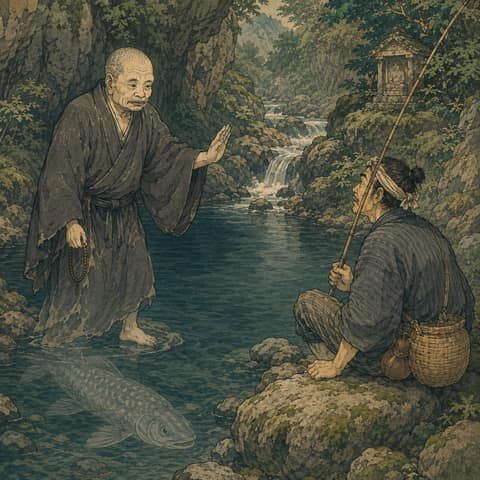
美濃の川の怪を代表するのが岩魚坊主だ。江戸後期、尾張藩士で奇談を好んだ三好想山が嘉永三年(一八五〇)に刊行した随筆『想山著聞奇集』[5]に、美濃国恵那郡 ── 現在の岐阜県中津川市の付知・加子母あたり ── に伝わる話として記される。ある村の若衆たちが谷川で毒もみ(毒を流して魚を一網打尽にする漁)をしようとしていると、見慣れぬ坊主が現れ、殺生をやめるようにと懇々と説教を始めた。若衆は坊主に団子や飯を振る舞ってその場をやり過ごす。ところが翌日、若衆が毒もみを始めると、人ほどもある大岩魚が腹を見せて浮かび上がった。その腹を割いてみると ── 中から、前日に坊主へ振る舞った団子と飯が出てきたのである。
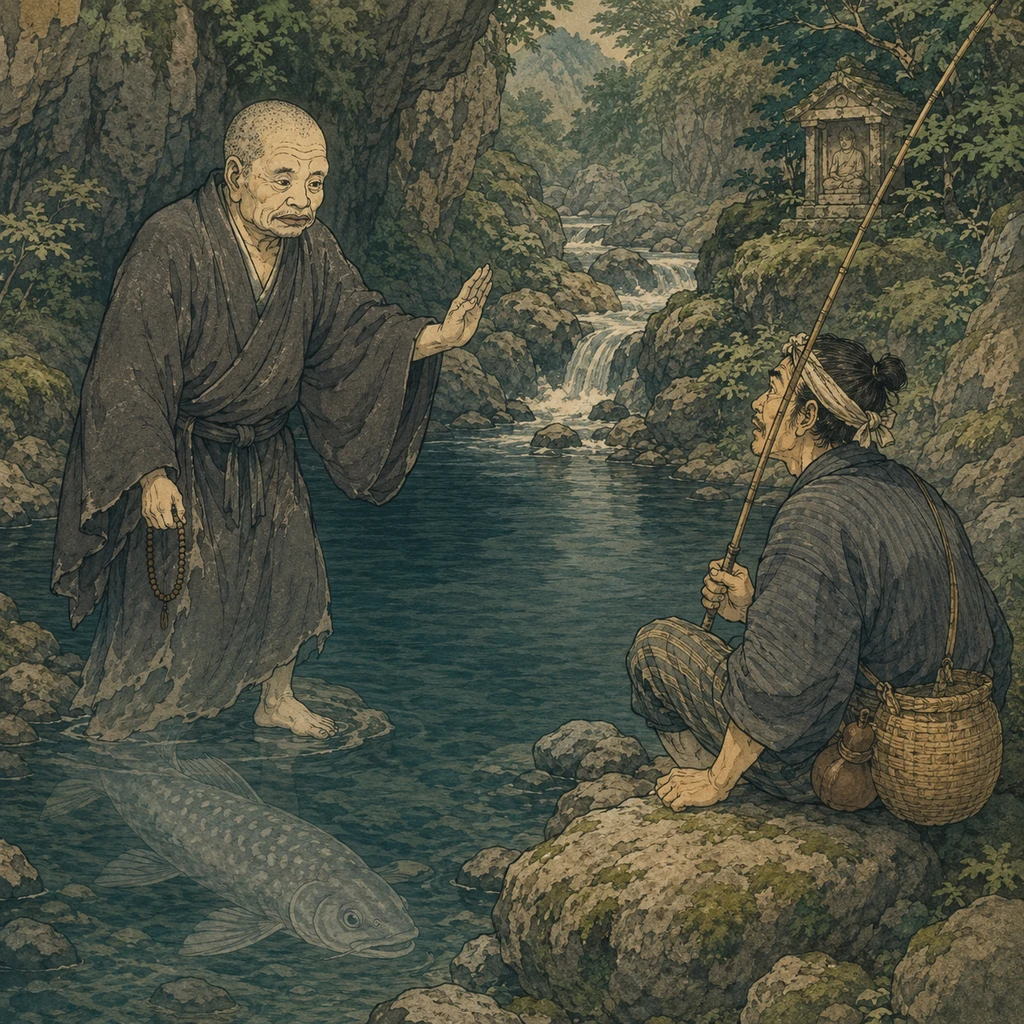
Iwanabōzu (Monk Trout)
Iwanabōzu is a waterside apparition said to be an aged, oversized char (iwana) that takes human form—often appearing as a Buddhist monk. It approaches anglers, scolds them for fishing on temple lands or chats amiably before leaving. Later, when a giant char is caught and cut open, rice, mochi, or other foods previously offered to the “monk” are found in its belly. Recorded in the Edo-period miscellany Sōzan Chobunki with an example from Ena District in Mino; similar tales are told in Fukushima, Tokyo, and elsewhere. The motif reflects awe toward water tutelary beings and a moral against needless killing.
Read more坊主の正体は、淵に棲む大岩魚 ── 川の主であった。長く生きた魚が人に化け、自らの命の危機を前に、人に殺生の非を説きに来たのだ。この話の妙は、化けた魚が決して人を祟らず、ただ静かに戒めるだけだという点にある。岩魚坊主は、淵という深みに棲む主への畏れと、無闇に命を奪う乱獲への戒めとが結びついた、川の倫理の体現者なのである。
この伝承の舞台となった恵那郡の付知・加子母は、いずれも木曽川の支流が刻む深い渓谷の村で、古来から良質な木材と清流の岩魚を産する林業・漁労の地であった。毒もみは一度に大量の魚を殺す効率のよい漁だが、それは淵の生態を根こそぎにする乱獲でもある。岩魚坊主の話が、ほかでもないこの地で、毒もみという具体的な漁法を名指して語られたことには、川の恵みで生きる村人自身が抱いた切実な自戒が透けている。怪が脅すのではなく、ただ「殺すな」と説き、振る舞われた団子を腹に残して死ぬ ── その慎ましさが、かえって読む者の胸を打つ。
同種の話は岩魚に限らず、ヤマメ・鰻・鱈などにも語られ、いずれも年経た魚が化けたものとされる。山深い渓流を多く抱える美濃から飛騨にかけての地で、こうした「淵の主」の伝承が濃く育ったのは、命を川に依存して暮らした人々の自戒の表れだろう。長良川の鵜飼に代表されるように、美濃は川と人の関わりがことのほか深い土地である。鵜という鳥を使ってまで鮎を獲るこの地で、一方では「獲りすぎるな」と諭す岩魚坊主が語られた ── 川の恵みを享受しながら、その恵みを枯らすことを恐れる感覚が、表裏一体でこの国の川辺に流れていたのである。
木の上から落ちる怪 ── 釣瓶落とし
川の怪が淵の深みに潜むなら、もう一つ、美濃の里には頭上から襲う怪がいた。夕暮れの大木の梢に潜み、下を人が通ると、まるで井戸の釣瓶を落とすように、突然どさりと落ちかかる釣瓶落としである。
美濃では、西濃の山あいにこの怪が伝わった。美濃国揖斐郡久瀬村津汲(現・揖斐川町)の伝承[6]では、津汲の薄暗い大木の上に釣瓶落としがいるとされた。巨大な生首のような姿で落ちてきて人を驚かせ、ときに食らうとも語られる、純粋な脅嚇型の怪である。昼でも日の差さぬ大木の下を、人々は足早に通り抜けたという。
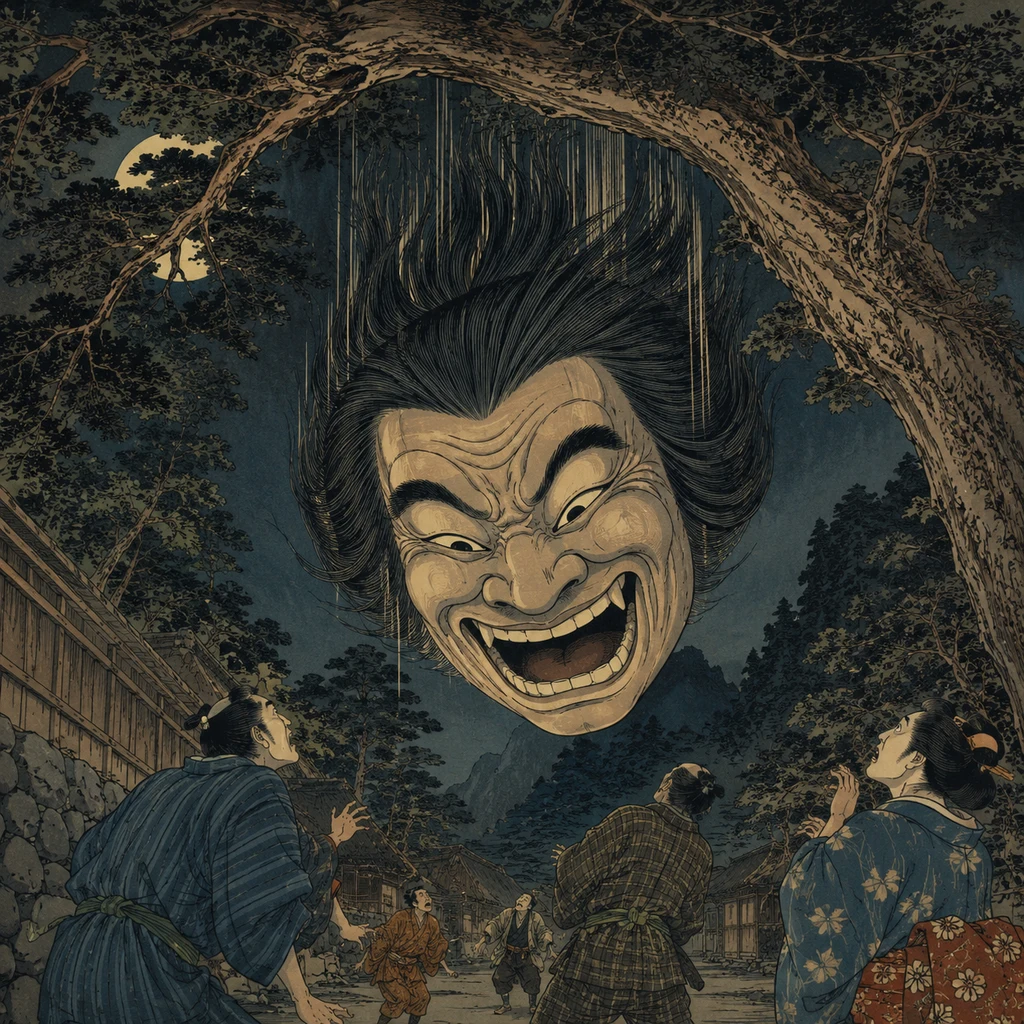
この釣瓶落としは、美濃が単独で抱える妖怪ではない。隣接する近江・山城・尾張と地続きに連なる「樹上から落ちる怪」の分布圏の一角を成している。京都の曽我部村では、釣瓶落としが榧(かや)の木から落ちてはゲラゲラと笑い、「夜業すんだか、釣瓶下ろそか」と唱えてまた木に登るという。街道で都とつながる美濃は、こうした畿内の怪異の語りが東へ伝わる通り道でもあった。飛騨が外界から隔てられた孤立の国だったのに対し、美濃は人と物と物語が行き交う交流の国 ── その地理の差が、妖怪の系統にもそのまま刻まれている。不破関が人と軍勢の関であったように、美濃の街道は怪異の語りをも東西に運んだのである。
なお、釣瓶落としについては近年、妖怪研究の側から重要な指摘がなされている。鳥山石燕の画集に「釣瓶落とし」が描かれているという通説がしばしば流布するが、石燕の『今昔画図続百鬼』にこの妖怪は載っていない[7]ことが一次史料の確認から明らかになっており、釣瓶落としはあくまで各地の口碑として伝わってきた在地の怪だというのである。揖斐郡津汲のように具体的な木と土地に結びついて語られたことこそ、この妖怪の本来の姿だ。名のある絵師の筆ではなく、村人が夕暮れの大木を見上げて感じた素朴な恐れ ── そこに釣瓶落としの真価がある。日が「釣瓶落とし」のようにすとんと暮れる秋の夕暮れ、薄暗い木の下を急いで通り抜けた人々の体感が、そのままこの怪の名になったのだろう。
山の心を読む覚と鍛冶の風神
濃尾平野の里と川を離れ、美濃の北辺 ── 飛騨と境を接する深山に分け入ると、そこには里の怪とは異なる、もっと根源的な畏れの怪が待っている。
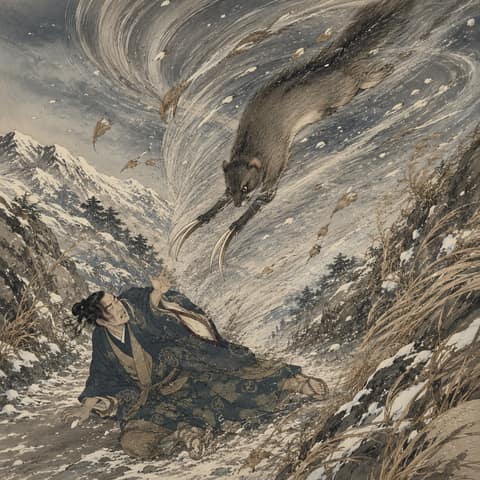
その筆頭が覚(さとり)だ。人の心を読む、ただその一点に特化した妖怪である。江戸期の絵師・鳥山石燕は『今昔画図続百鬼』[8]の中で、こう記している ── 「飛騨美濃の深山に玃(かく)あり。山人呼んで覚と名づく。色黒く毛長くして、よく人の言をなし、よく人の意を察す。あへて人の害をなさず」。注目すべきは、石燕がこの怪の住処を名指しで「飛騨美濃の深山」と書いたことだ。覚は全国の山に伝わる妖怪だが、その故郷として真っ先に挙げられた地名に、ほかならぬ美濃が含まれているのである。
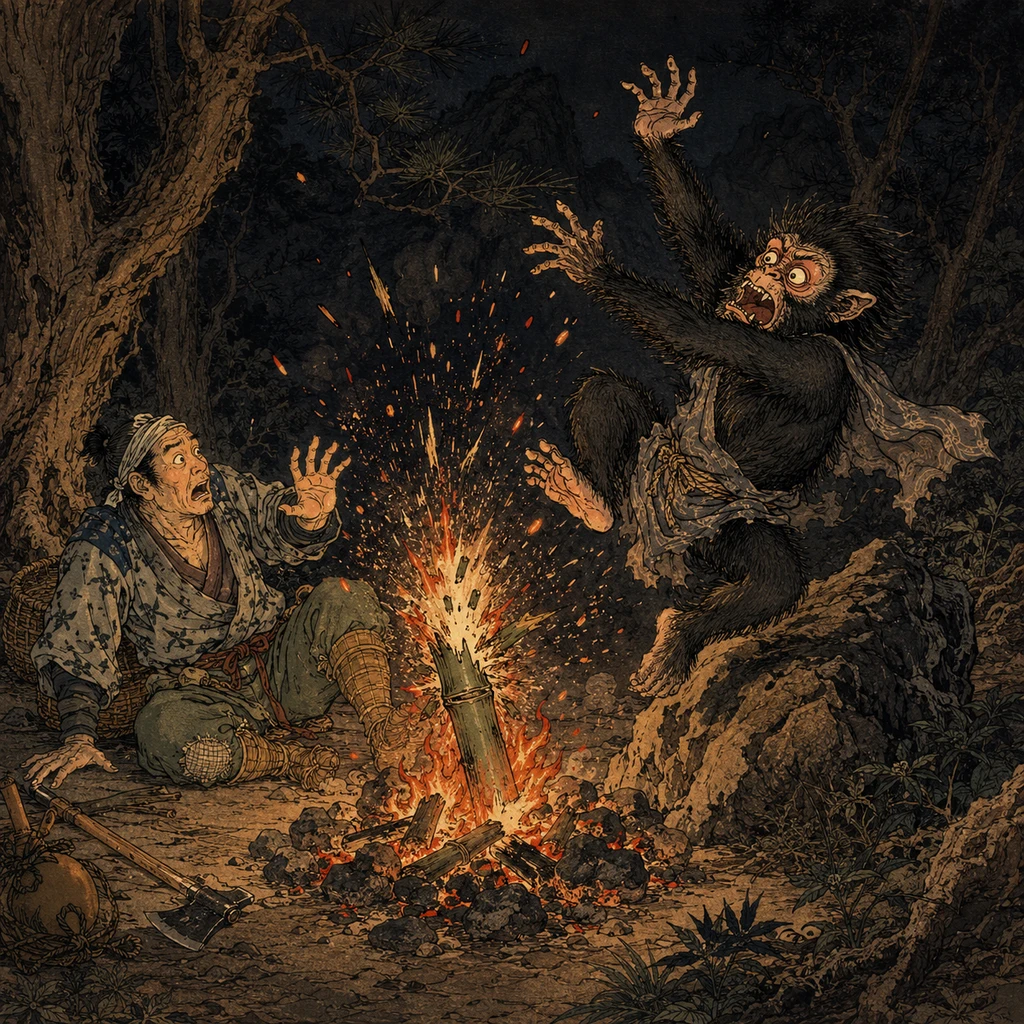
Satori
A mind-reading yokai recorded in the Edo-period scroll Konjaku Gazu Zoku Hyakki. Said to dwell in the remote mountains of Hida and Mino, it appears like a dark-skinned, shaggy, ape-like creature that understands human speech and speaks aloud a person’s inner thoughts. It does not wish to harm people, but if threatened with death it flees first. The creature has been linked to the "kaku/jué" (玃) of Chinese lore and to local tales of mind-reading mountain beings.
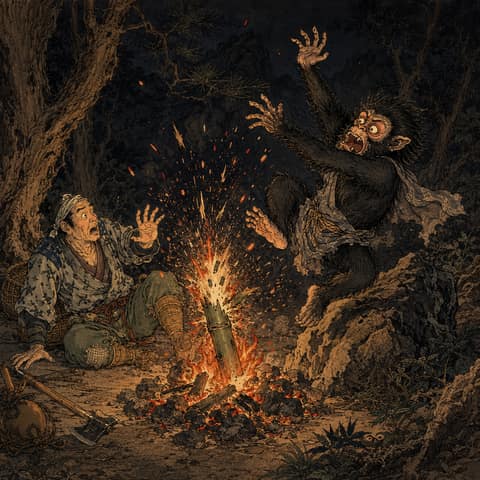
Read more覚をめぐる民話の型は、どこか哀しい滑稽さを帯びている。山小屋で寝泊まりする樵や猟師の前に、黒く毛深い化物が現れる。男が「逃げようか」と思えば「逃げようとしているな」と言い当て、「斧で打とうか」と思えば「斧で打つ気だな」と先に口にする。心の動きをことごとく読まれ、男は身動きが取れない。ところが ── 囲炉裏の薪がぱちんと爆ぜ、その破片が偶然に化物へ飛ぶ。思いがけぬ出来事に覚は驚き、「人間の心にないことをするから恐ろしい」と言い残して逃げ去る。人智を超えた読心の怪が、人の予測できぬ偶然にこそ敗れる ── この逆転に、山に対する畏れと、それでも生き延びる人間のしたたかさが同居している。石燕が覚を「玃」という字で呼んだことにも、この怪の本性がにじむ。玃は中国の古典で大型の猿の類を指す字であり、山中で人に最もよく似た獣 ── 猿 ── が人語を解するという不安を、そのまま形にしたものだ。
覚と並んで美濃の山に響くのが、鉄と火の神である。一目連は、隻眼の風神にして鍛冶の神だ。その淵源は天目一箇神[9]という古い鍛冶の祖神にあり、後に片目の龍神たる一目連と習合して、風雨を司る神となった。なぜ鍛冶の神が片目なのか ── そこには切実な現実がある。古代の鍛冶師は、炉の中で熔ける鉄の色を見極めるために片目を細めて火を見続け、ときに飛び散る火花と熱で片目の視力を失った。隻眼の神は、その職能の身体的代償が神格化されたものだと考えられている。
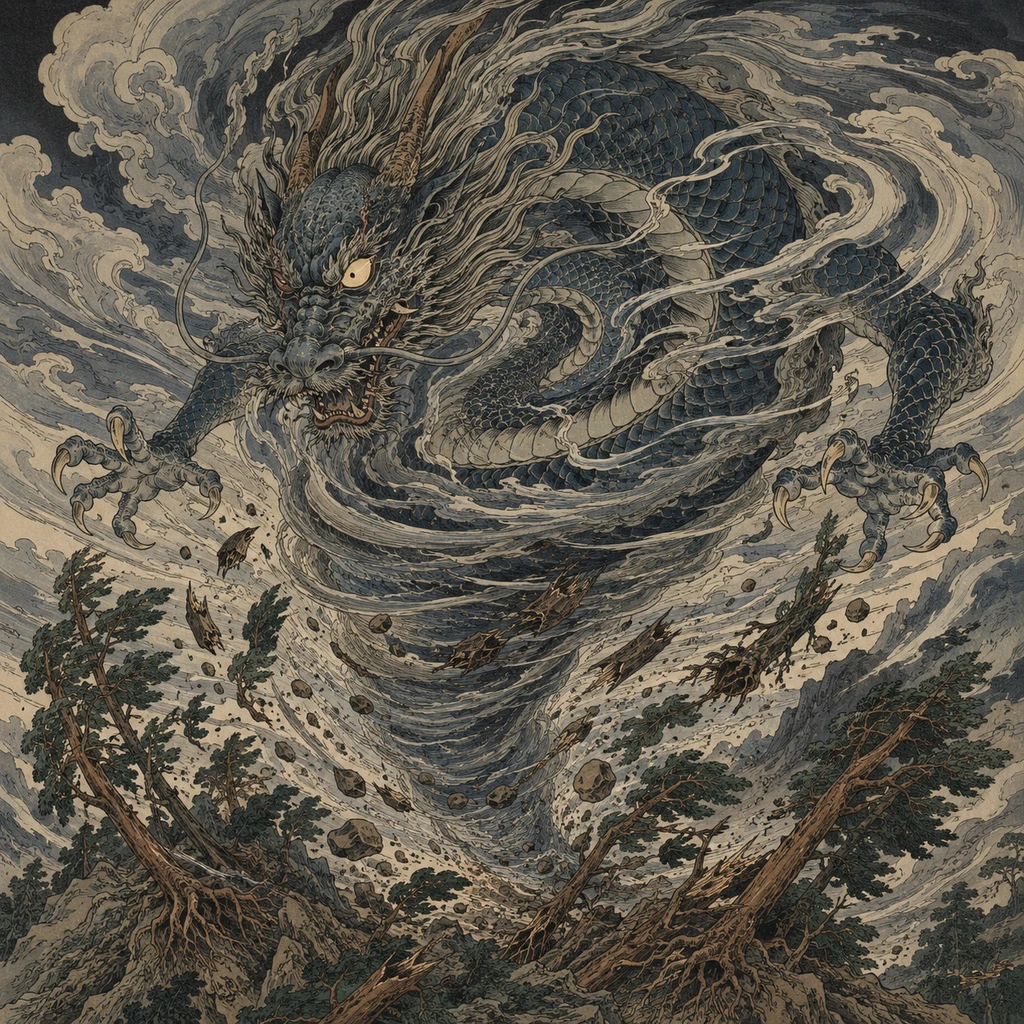
一目連を祀る本拠は伊勢国の多度大社別宮であり、美濃の地に固有の社があるわけではない。しかし隻眼の鍛冶神という観念は、美濃の風土と深く響き合う。美濃は古来、刀剣の名産地であった。とりわけ関(現在の関市)は、鎌倉末期から刀工が集い、備前・相州と並ぶ刀の三大産地の一つに数えられた地である。良質な水と松炭、そして鉄 ── 刀を鍛える条件のすべてが美濃の山と川に揃っていた。炉の火を片目で見つめ続けた鍛冶師たちの土地で、隻眼の風神の信仰が響いたのは自然なことだろう。風が炉の火をあおり、火が鉄を変える ── 一目連は、その風と火と鉄の連鎖を一身に体現した神なのである。
美濃と飛騨の境の異形 ── 両面宿儺
美濃の北辺をさらに辿ると、やがて飛騨との境にいたる。その境界に立つのが、岐阜の妖怪を代表する一体の異形 ── 両面宿儺である。
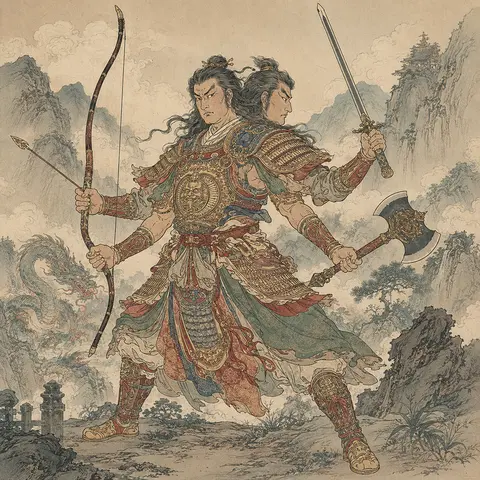
一つの胴体に背き合う二つの顔を持ち、それぞれに手足を備えたこの異形は、奈良時代の勅撰正史『日本書紀』巻第十一の仁徳天皇六十五年条[10]に記される。そこでは宿儺は朝廷の命に従わぬ賊として描かれ、仁徳天皇の遣わした難波根子武振熊命に討たれる。ところが飛騨の在地では、両面宿儺は討たれるべき賊ではなく、村を守り技を伝え毒龍を退治した英雄として、千光寺[11]などに開山の祖として祀られてきた。
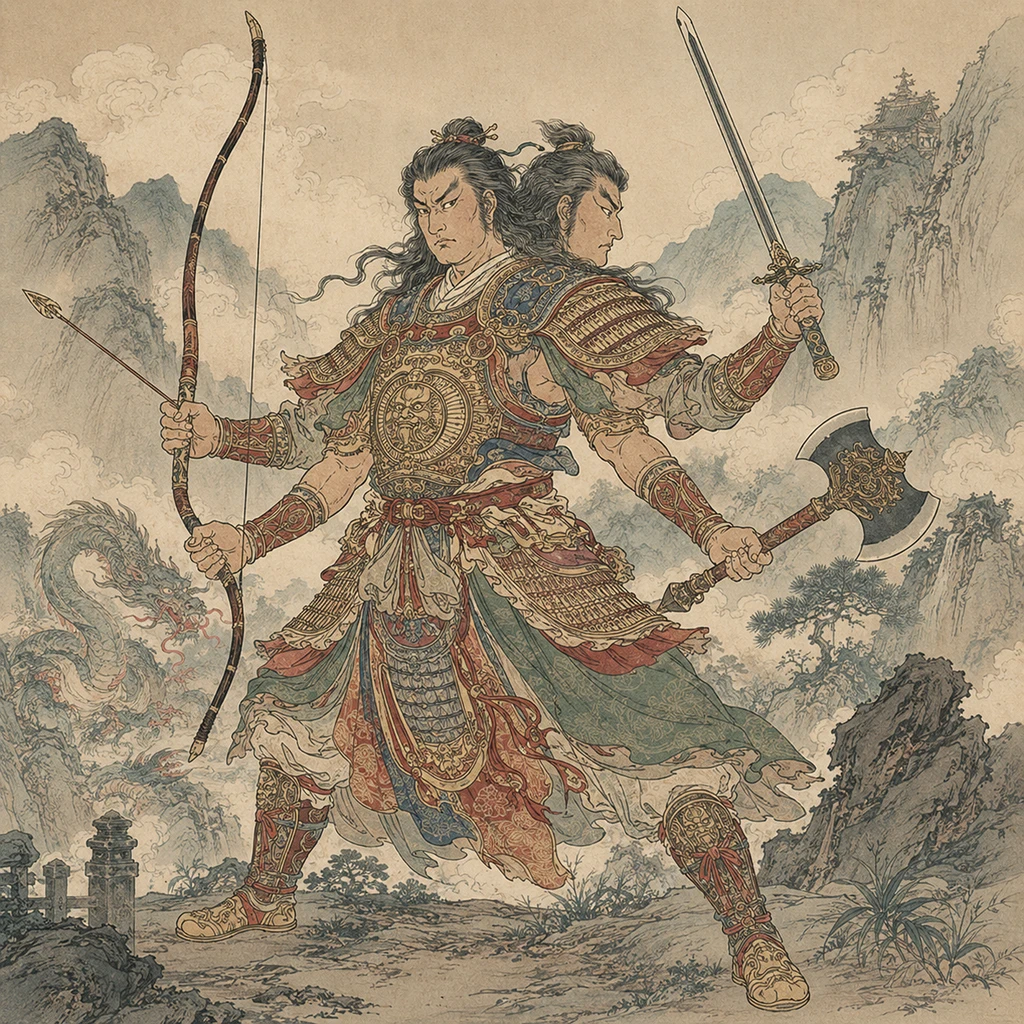
Ryōmen Sukuna
Ryōmen Sukuna is an extraordinary figure from Hida Province described in the Nihon Shoki and remembered in later Hida and Mino traditions as a temple founder, guardian of Buddhism, and dragon-defeating hero. Often presented today as an oni or monster, the entry for the sixty-fifth year of Emperor Nintoku in Book Eleven of the Nihon Shoki merely says, “In Hida Province there was a man named Sukuna”; it does not call him an oni, demon deity, or brigand. It says that he defied the imperial command and delighted in plundering the people, and that Naniwa no Neko Takefurukuma, an ancestor of Wani no Omi, put him to death. The chronicle thus portrays him as an adversary of imperial authority. The brief entry describes his body with unusual specificity: one torso bore two faces turned away from one another; their crowns met, leaving no nape; and each had hands and feet. He had knees but no backs of the knees or heels. Strong and agile, he wore swords at his sides and used bow and arrows with four hands. Four legs are a widespread interpretation of “each had hands and feet,” but the text does not explicitly state their number. This must be distinguished from later images with two faces, four arms, and two legs, and from Zenkyūji’s tradition of two faces, four hands, and four legs. Hida Senkōji still tells of Sukuna opening its mountain sanctuary in Emperor Nintoku’s reign. Its official history says he opened an ancient place of prayer later established as a Buddhist temple by Prince Shinnyo. At Zenkyūji, an appearance account says Sukuna emerged from a cave and became Eleven-Headed Kannon. At Nichiryūbu-ji in Mino, he drove away a divine dragon that harmed the people, founded the temple, and left a cypress staff that became the “Thousand-Cypress Tree.” These portraits come from temples and local communities, not the Nihon Shoki. Neither the adversary of official history nor the protective hero of regional tradition can simply be declared the sole truth. They are separated by a long span of time, and the dates when temple traditions were put into writing also need scrutiny. Yet one name has been retold as an extraordinary figure killed by imperial authority, a founder associated with Kannon, a dragon-defeating hero, and an object of devotion carved by Enkū. The two faces do not assign good and evil neatly to opposite sides; they let us see the different memories that different eras and storytellers attached to one name.
Read more中央の正史が「討伐された賊」と記し、在地が「開山の英雄」として祀る ── 両面宿儺という名そのものを体現するこの賊と英雄の二面性は、主に飛騨の語りの中で深く育まれてきた主題である。その物語の核心、千光寺や日龍峯寺をめぐる英雄譚の詳細は、深山の飛騨に密着した語りであり、ここでは岐阜県の妖怪事典に委ねたい。
美濃の側から両面宿儺を見るとき、興味深いのは、宿儺が毒龍を退けたと伝わる関市下之保の日龍峯寺が、まさに美濃に位置することである。飛騨が宿儺の出生と開山の地なら、美濃はその英雄譚が南へ展開した境界の地であった。そして、ここでも美濃は「境」の国としての性格を見せる。東西を分かつ不破関の南に対し、飛騨と美濃を分かつ北の山境 ── その境界線上に、賊とも英雄ともつかぬ異形が立っていたのだ。美濃という国は、東と西の境であると同時に、平野の里と深山の異界とを隔てる境でもあった。
関の国に潜む怪
古代美濃は、関の国であり、川の国であった。東山道が東西を断ち切る不破関の隘路に、壬申の乱と関ヶ原という二度の天下分け目が刻まれ、濃尾平野を潤す木曽三川が、紙の白さと鵜飼の篝火を育てた。その関と川の地理が、美濃の怪異の性格をかたちづくった。
川には、乱獲を戒める淵の主・岩魚坊主がいた。里の古木には、夕闇に乗じて落ちかかる釣瓶落としが潜んだ。いずれも、人を一方的に祟る異形ではなく、命を奪うことへの後ろめたさや、夕暮れの油断を突く戒めとして語られた、暮らしに寄り添う怪である。飛騨の深山が制御できぬものへの根源的な畏れを生んだのに対し、美濃の里と川は、人の倫理と日々の暮らしに根ざした怪を育てた。
そして北辺の山境には、心を読む覚、鉄と火の一目連、そして飛騨と境を接する両面宿儺がいた。これらは美濃が飛騨と接する境界で、深山の畏れと里の暮らしが交わる地帯の怪である。関ヶ原の古戦場に立ち、長良川の鵜飼の篝火を眺め、美濃和紙の白い一枚を透かして見るとき ── そのいずれの風景の奥にも、東と西を分かつこの国が千年を越えて語り継いできた怪の気配が、今も静かに息づいている。