YOKAI.JP
Mt. Oyama (Sagami) 雨を降らす天狗の山 ── 大山

大山伯耆坊·天狗·大山詣り。相模の霊峰

雨を降らす天狗の山 ── 大山

Mt. Oyama (Sagami) · おおやま

Also known as: 相模大山 / 大山阿夫利神社 / 伯耆坊
View on map

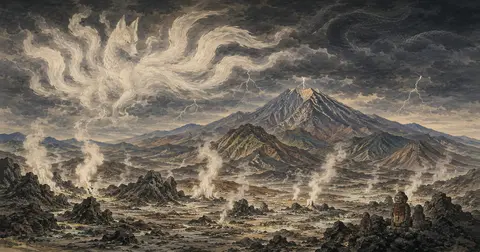
神奈川県、相模平野の西にそびえる大山(おおやま)。標高1252メートル、丹沢山地の東端に立つこの山は、富士に似た秀麗な三角形の山容で知られる。

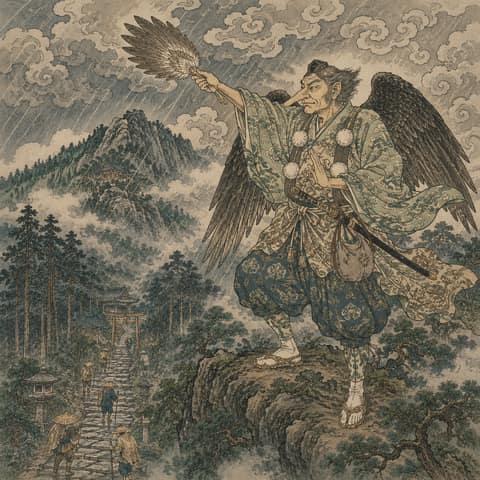
別名を「雨降山(あふりやま)」という。その名のとおり、雨を降らせる霊山として、古来、農民たちの篤い信仰を集めてきた。そして頂には巨岩の神が鎮まり、山には大天狗·大山伯耆坊(おおやまほうきぼう)が住まうと伝えられる。雨と岩と天狗 ── 相模の名峰に重なる信仰を、本稿はたどる。

相模の名峰、
大山

大山は、神奈川県の伊勢原市·秦野市·厚木市の境に位置する、標高1252メートルの山である。丹沢山地の東端にあって、相模平野からひときわよく目立つ三角形の山容をもち、別名を「阿夫利山(あふりやま)」「雨降山(あふりやま)」という

海からの湿った風が、相模平野をへてこの山にぶつかると、しばしば山頂に雲がかかり、雨を降らせる。「雨降山」の名は、この山がいかに雨と深く結びついてきたかを物語っている。水を恵む山であり、平野のどこからも仰ぐことのできる目印の山 ── 大山は、相模に生きる人々にとって、暮らしの中心にある霊峰であった。相模の人々は、富士山とこの大山を一対のものとしてとらえ、両山をあわせて参る「両詣り(りょうまいり)」を尊んだ。富士に登った者は大山にも詣でねば片参りになる、とまでいわれたという。

雨降りの神

大山の山頂には、巨大な岩石を御神体とする大山阿夫利神社(おおやまあふりじんじゃ)の本社が鎮座する。主祭神は大山祇神(おおやまつみのかみ)で、江戸時代までは「石尊(せきそん)大権現」と呼ばれていた。山そのもの、そして頂の巨岩を神とあおぐ、古い磐座(いわくら)信仰の姿がここにある。頂の巨岩を「石尊」と呼んで神とあおぐこの信仰は、文字や社殿が整う以前の、きわめて古い山岳信仰のかたちを今に伝えている。岩そのものに神が宿るという感覚は、日本人の自然信仰の最も根源的な層に属するものである。

阿夫利神社は雨乞いの神としても知られ、農民たちの信仰を集めた。中腹にある二重滝(ふたえのたき)は雨乞いの滝とされ、その聖なる水が、雨を願う儀式に用いられた。日照りが続くと、村々から代表が大山に登り、二重滝の水を竹筒に汲んで持ち帰って田にそそぎ、雨を願ったという。山の水を里へ運ぶこの営みは、大山が相模の農の、まさに水源として仰がれていたことを示している。日照りに苦しむ農民にとって、大山に祈ることは、まさに生死にかかわる切実な営みであった。雨を司る神への信仰が、この山の根幹をなしている。

大山詣りの賑わい

大山の信仰を語るうえで欠かせないのが、江戸時代に大流行した「大山詣り(おおやままいり)」である。

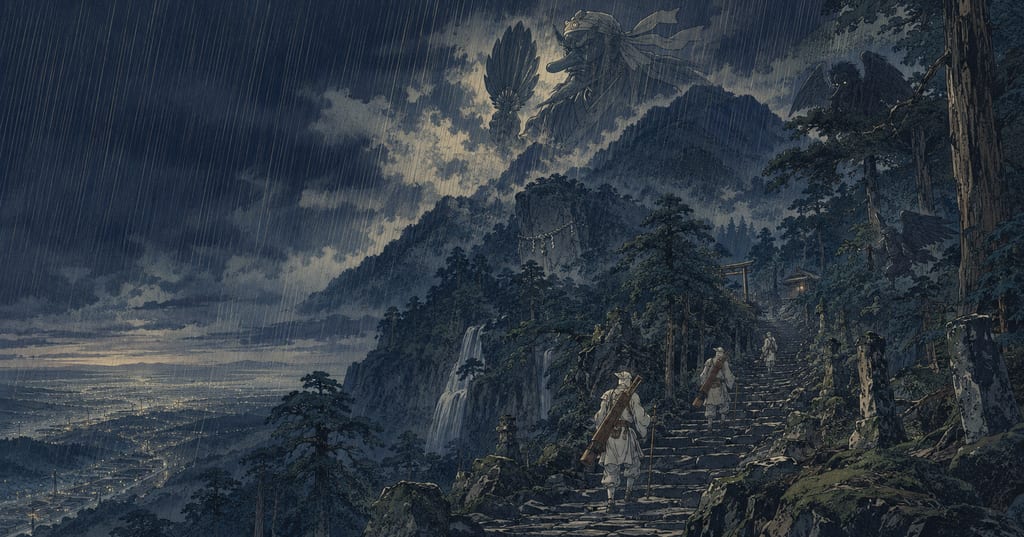
宝暦年間(1751〜1764年)ごろから、庶民による信仰登山が「大山講(おおやまこう)」として組織化され、江戸を中心に爆発的な人気を博した。参拝者が木製の太刀を奉納する「納め太刀」の風習も、元禄年間ごろから始まったとされる。江戸から大山へは「大山道(おおやまみち)」と呼ばれる街道がいくつも延び、参詣の人々が行き交った。夏の山開きの時期には、白装束に身を包んだ大山講の一行が、「懺悔懺悔(さんげさんげ)、六根清浄(ろっこんしょうじょう)」と唱えながら滝に打たれて身を清め、頂を目指した。納め太刀の風習は、源頼朝が刀を奉納したという由緒にちなむとされ、人々は願いを込めた木太刀を納め、代わりに先人の納めた太刀を持ち帰ったという。

講をつくって仲間と連れ立ち、大山に登って身を清め、帰りには江ノ島などにも足をのばす ── 大山詣りは、信仰と行楽をかねた、江戸庶民の一大レジャーであった。「大山詣り」は落語の演目にもなり、当時の賑わいぶりを今に伝えている。

天狗の棲む霊山

雨を恵み、巨岩を祀る大山は、同時に、天狗の棲む山でもあった。
Tengu

Tengu

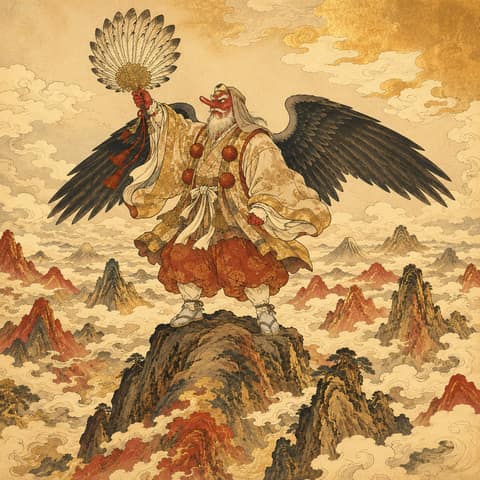
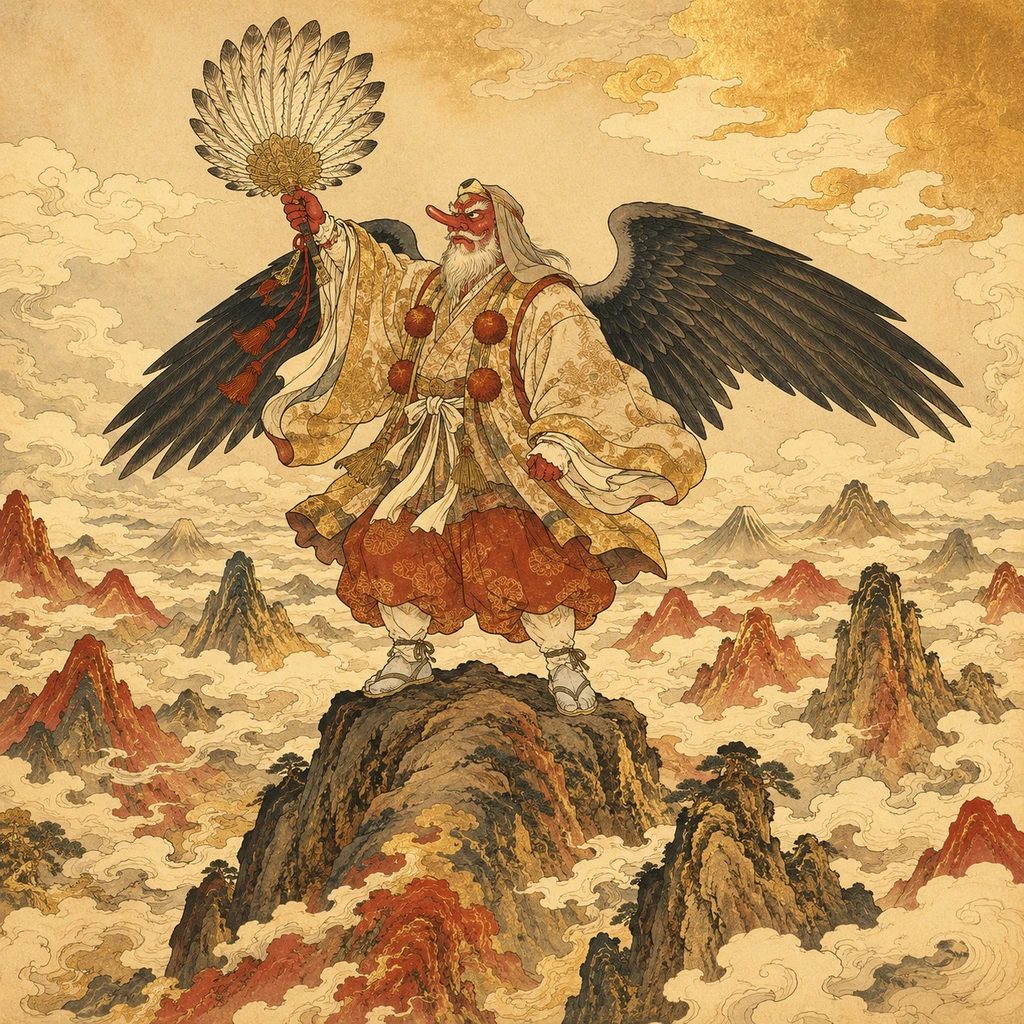
The tengu is a yokai and quasi-divine being said to dwell in the mountains of Japan, a lord of the heights inseparably bound to the yamabushi ascetics of Shugendō. Its forms fall broadly into two lineages. One is the long-nosed tengu, with a ruddy face and high nose, clad in the garb of a mountain ascetic, bearing a feather fan and one-toothed high clogs; the other is the crow tengu, with a crow's beak and wings, and beneath them follow lesser kin such as the leaf tengu and the wood-chip tengu. What was once conceived as a bird like a black kite hardened, over the medieval period, into the image of the long-nosed mountain ascetic. The tengu is at once a demon that obstructs the Buddhist Law and, once subdued, a guardian deity who protects it—this dual nature is the essence of the tengu. The notion that an arrogant high monk falls and becomes a tengu was bound to the Buddhist "way of the tengu," and was depicted as satire in late-Kamakura picture scrolls. Within mountain worship, on the other hand, the tengu was revered as guardian of the mountain and master of martial and magical arts, a being that tests or guides the practitioner. From Mount Kurama and Mount Atago in Kyoto onward, each of the sacred mountains of the realm was said to have its own great tengu, and the early-modern Tengu Sutra counts their number at forty-eight.

Read more

修験道の行場として開かれた大山には、深山の霊気のなか、超人的な力をもつ天狗が住むと信じられてきた。険しい峰と、巨岩を御神体とする磐座信仰、そして雨を呼ぶ神秘 ── そのすべてが、人ならぬ天狗の存在を、人々に確信させたのである。相模の大山は、京の愛宕山や鞍馬山と同じく、天狗信仰の一大霊地として知られていた。天狗とは、山の持つ目に見えぬ力が形をとった存在である。雨を呼び、巨岩に宿り、人を寄せつけぬ深山の霊気をたたえた大山が、天狗の住み処と見なされたのは、ごく自然なことであった。

大天狗·伯耆坊

大山に君臨する天狗の主が、大天狗·大山伯耆坊である。
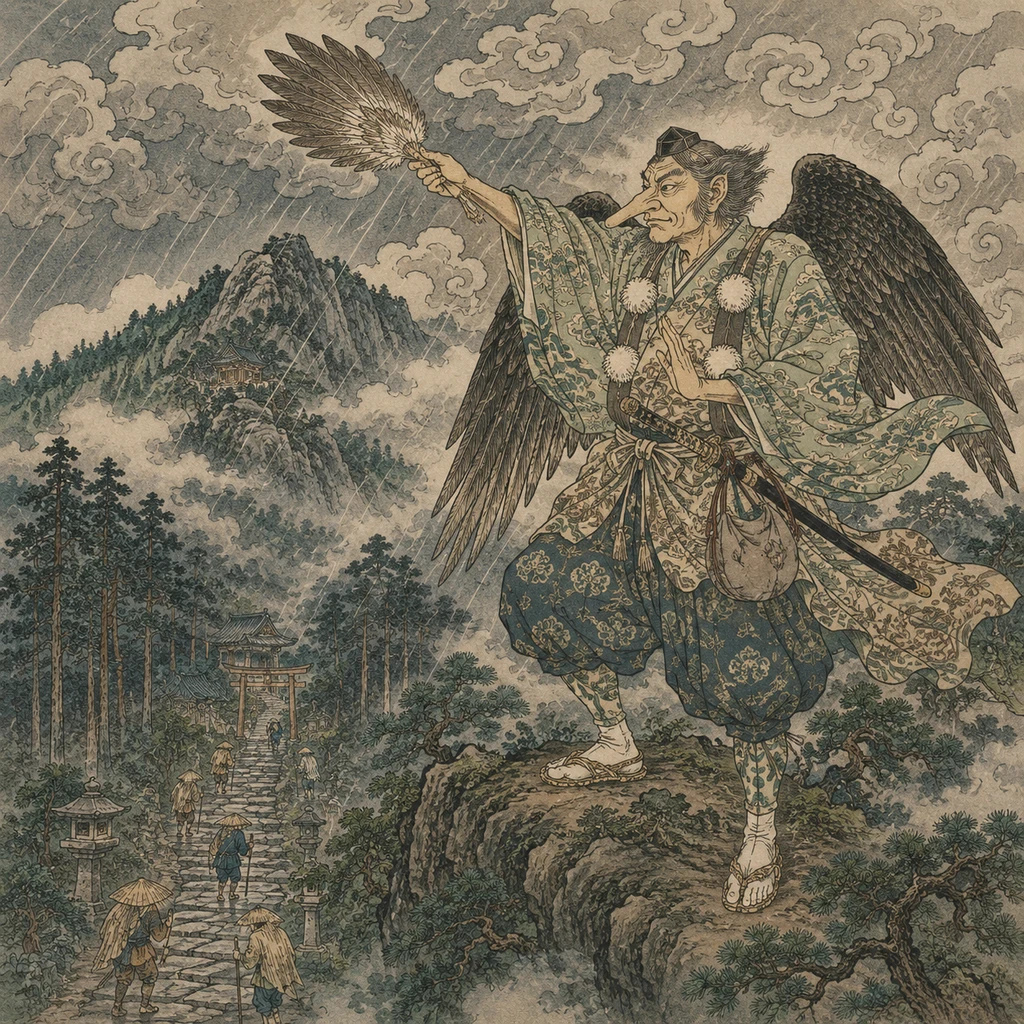
Ōyama Hōkibō

Ōyama Hōkibō

Ōyama Hōkibō is a great tengu enthroned on Mt. Ōyama in Sagami Province (also called Afuri-yama, the "Rain-falling Mountain"), and is counted among the Eight Great Tengu. His name appears as "Hōkibō of Ōyama" in the Muromachi Noh play Kurama Tengu. The Mt. Ōyama on which he sits is a sacred mountain reaching back to the ancient official histories. The Engishiki Jinmyōchō (927) lists the Afuri Shrine on its summit as an official shrine (shikinai-sha) of Sagami Province, showing that Ōyama's divinity had received state recognition in antiquity. The name Hōkibō is wreathed in a tradition of "seat transfer" within the tengu world. Mt. Ōyama of Sagami originally had a great tengu named Sagamibō, but he removed to Shiramine to console the spirit of the Retired Emperor Sutoku, exiled to Sanuki. Into the vacant seat of Sagami Ōyama, Hōkibō entered as successor from Mt. Daisen in Hōki Province (Tottori)—a paired structure set in order by Chigiri Kōsai of tengu scholarship. For this reason Ōyama Hōkibō and Shiramine Sagamibō are always told as a pair.

Read more

大山伯耆坊は、日本を代表する天狗を挙げる「八天狗(はちてんぐ)」の一つに数えられる大天狗である。その名の「伯耆」が示すとおり、もとは伯耆国(ほうきのくに、現在の鳥取県)の大山(だいせん)にいた天狗であったと伝わる。言い伝えによれば、相模の大山にいた先代の天狗·相模坊(さがみぼう)が、讃岐に流された崇徳上皇(すとくじょうこう)のもとへと去ったのち、空席となったこの山に、伯耆坊が移り住んだのだという。崇徳上皇と相模坊の物語は、上皇の眠る白峰に詳しい。先代の相模坊は、保元の乱に敗れて讃岐に流され、ついには日本最大の怨霊と化したと伝わる崇徳上皇に仕えるため、はるばる四国へと渡ったという。主を失った相模の大山に、遠く伯耆国から伯耆坊が招かれ、新たな山の主となったのである。天狗たちが山から山へと移り住むというこの伝承は、各地の天狗信仰が、一つの大きな世界としてつながっていたことを示している。

信仰の今

雨を降らせ、巨岩を祀り、天狗を抱く大山。その信仰は、今日もなお、相模の地に息づいている。

現在では、中腹までケーブルカーが通じ、大山阿夫利神社や大山寺へは、多くの参拝者·観光客が訪れる。山頂からは、相模湾や、晴れた日には遠く房総半島までを一望できる。大山のふもとは清らかな水に恵まれ、参拝者をもてなす豆腐料理でも知られる。かつて講の人々が精進料理として食した大山豆腐は、今も相模の名物として受け継がれている。雨乞いの霊山として農民が祈り、江戸の庶民が講を組んで登り、天狗が住むと恐れられた相模の名峰は、その豊かな信仰の記憶とともに、いまも丹沢の東に静かにそびえている。神奈川の妖怪と伝承の全体像は神奈川県の妖怪事典も参照されたい。
All yokai of Mt. Oyama (Sagami)2

Complete list of yokai linked to Mt. Oyama (Sagami), including those not featured in the article above.

  • Ōyama Hōkibō

    Ōyama Hōkibō

    Legendary

    Ōyama Hōkibō

    The Great Tengu of the Transferred Seat — Ōyama Hōkibō

    Mountain & Wilderness SpiritsMt. Ōyama, Sagami Province (Isehara, Kanagawa)

    The core of Ōyama Hōkibō lies in a tale of succession to a seat within the tengu world—the "seat transfer." Yet the Mt. Ōyama on which he sits was a sacred mountain established in antiquity, without need of the transfer legend. The Engishiki Jinmyōchō (927) ranks the Afuri Shrine among the official shrines of Sagami Province, showing that Ōyama's divinity was recognized by the ancient state. On the Buddhist side, the Ōyama-dera engi emaki depicts how Rōben—carried off by an eagle and raised in Nara—opened Ōyama-dera and enshrined Fudō Myōō (the Sagami version; a different work from the engi of Hōki's Daisen-ji). And in early-modern times the official gazetteer the Shinpen Sagami no Kuni Fudoki-kō (1841) conveys the summer ascent season and the bustle of pilgrims from many provinces. The manners of pilgrimage—purifying oneself at the waterfalls under a sendatsu's guidance before climbing—and the Ōyama confraternities everywhere: this density of faith gave Hōkibō, the successor tengu, the character of a guardian watching over the common people. The seat-transfer tradition overlays this sacred-mountain history. According to the arrangement of Chigiri Kōsai of tengu scholarship, Sagami Ōyama originally had a great tengu named Sagamibō. But when the Retired Emperor Sutoku—defeated in the Hōgen Rebellion (1156) and exiled to Sanuki—passed away, Sagamibō removed to Shiramine in Sanuki to console and guard his bitter spirit (= Shiramine Sagamibō). The one who succeeded to the vacant seat of Sagami Ōyama was Hōkibō, come from Mt. Daisen in Hōki. This symmetrical transfer—"Sagamibō to the west, Hōkibō to the east"—is a Chigiri-derived arrangement lacking explicit sources in the classical literature, and should be read not as historical fact but as lore that mirrors the notion that a tengu's seat is succeeded through mountain and bond (en) rather than being a fixed individual. Chanted as "Hōkibō of Ōyama" in the Muromachi Noh play Kurama Tengu, and standing among the forty-eight tengu of the Tengu-kyō, his seat continues to be remembered, together with this distinctive engi, as one of the Eight Great Tengu.

  • Tengu

    Tengu

    Legendary

    Tengu

    What Is a Tengu? An Overview of Types and Iconography

    Mountain & Wilderness SpiritsKyoto, Shiga, and Wakayama Prefectures (the seats of the great tengu on the various sacred mountains)

    This edition is not about a single seat on a particular sacred mountain, but a general treatise that thoroughly unravels "what a tengu is" from the history of its iconography and types. The individual traditions of each seat are left to the page of each great tengu. The form of the tengu is not uniform. The first type is the long-nosed tengu—ruddy face and high nose, clad in the ascetic's headcloth (tokin) and the suzukake robe, a feather fan in hand and one-toothed high clogs on the feet. The second is the crow tengu, with a crow's beak and wings, grasping a sword or a vajra staff. The third are the lesser tengu called leaf tengu and wood-chip tengu, held to be weak and numerous kin. Rather than a fixed classification, these reflect the breadth of the tengu image across eras and regions. The iconography shifted over time. The Heian-period tengu was first conceived as a bird like a black kite, and the image of the crow tengu retains that vestige. The long nose grows prominent only from the late Kamakura period; the Zegaibō Emaki depicts a scene in which a tengu that had disguised itself as a human has its nose lengthen as it returns to bird form. As for the origin of the long nose, there are theories that derive it from the high-nosed Jidō mask of gigaku and link the crow tengu to the Karura (Garuda) mask, and a view that sees the long nose as an iconographic vestige of a bird's beak—but none can be called settled doctrine. It was overlaid with the god Sarutahiko, described in the Nihon Shoki as having a nose seven hand-spans long, and the custom arose of using a tengu mask for the role of Sarutahiko in festivals. The tengu's dual nature is rooted in the Buddhist notion of the way of the tengu. Because it studies the Buddhist path it does not fall into hell, and because it handles heterodox arts it cannot reach paradise either—an intermediate state, and the one who falls there was held to be the arrogant monk. The Tengu Zōshi depicts this notion as satire of the monks of the seven great temples, yet Chigiri Kōsai too warns that the simplification "only arrogant monks become tengu" goes too far. Demon though it is, once subdued it turns to guardianship, and it was held that if a Shugendō practitioner recites the Tengu Sutra he may summon the tengu of the various provinces to grant his wishes—this amplitude between guardian and demon is the very core of the tengu. The certain medieval source for the grouping called the "Eight Great Tengu" lies in the libretto of the Muromachi-period Noh play Kurama Tengu. The passage in which the great tengu calls up the tengu of the provinces he commands in geographical order—"In Tsukushi, Buzenbō of Hiko-san; in the four provinces of Shikoku, Sagamibō of Shiramine; Hōkibō of Ōyama; Saburō of Iizuna… the host of Zenki of Ōmine, Takama of Katsuragi"—shows that the Eight Great Tengu were rooted in medieval belief and performing arts, not an Edo invention. Still, the composition wavers by source, with a variant that adds Hōkibō of Ishizuchi-san; it is no fixed roster.

Read on ── other regions