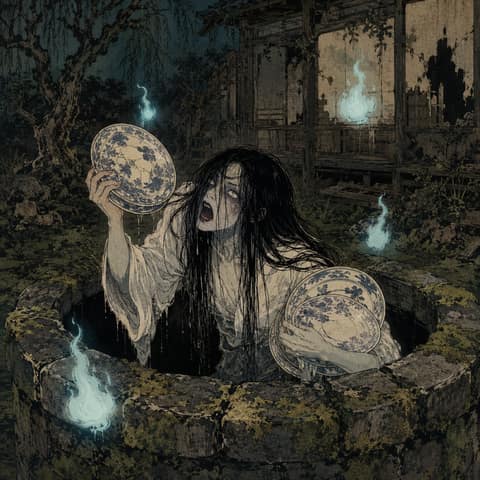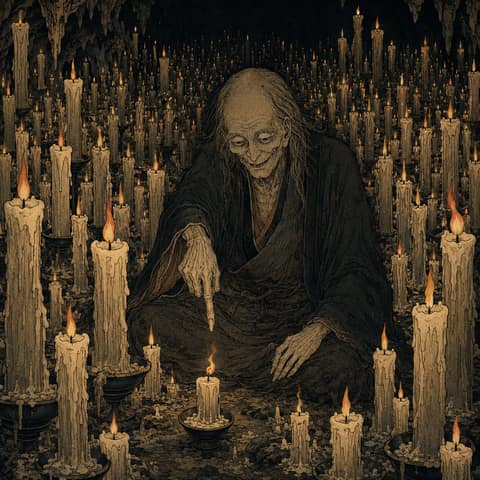
Oiwa
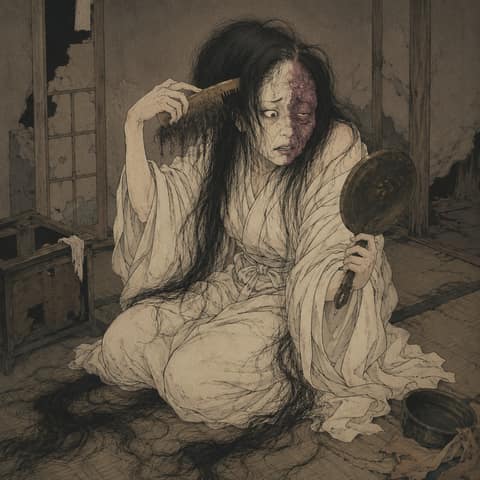
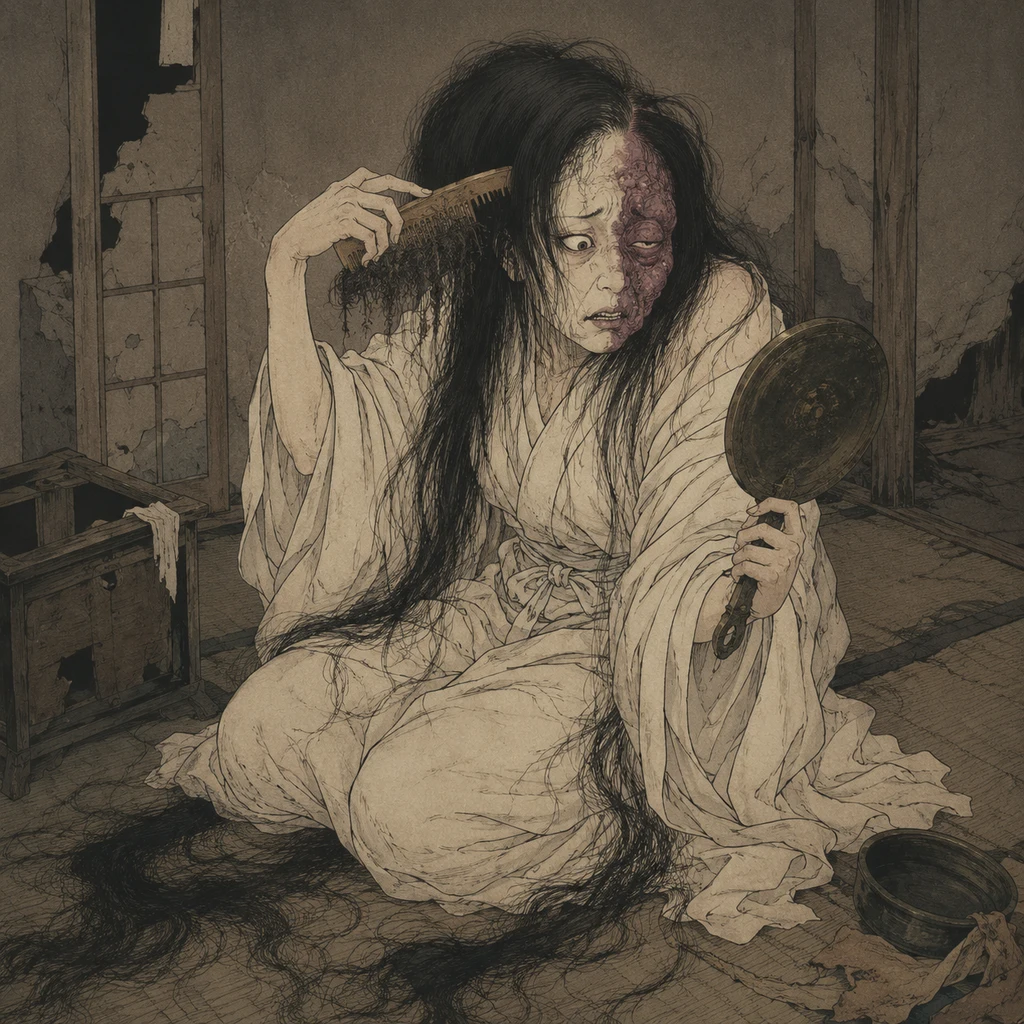
Oiwa is the protagonist of Japan's most widely known ghost story, renowned as a female ghost who was betrayed and poisoned by her husband, dying with a disfigured face and returning as a terrifying, vengeful spirit. However, this image is almost entirely a theatrical fabrication. In the kabuki play "Tokaido Yotsuya Kaidan" (written by Tsuruya Nanboku IV and premiered at the Edo Nakamura-za in 1825), the role of Oiwa was played by Onoe Kikugoro III. The iconic scenes—where she dies while combing her hair with half her face terribly swollen and decaying, washes ashore nailed to a wooden door, and later emerges from a burning lantern to torment her husband—established the archetype of the vengeful ghost Oiwa. Importantly, the real woman behind the legend was said to be the exact opposite. Oiwa (Tamiya Iwa), the wife of the Tamiya samurai family living in Samoncho, Yotsuya, was known as a devoted and faithful wife with a deeply loving marriage. She devoutly worshipped the family's Inari shrine and successfully restored her family's declining fortunes, making her an auspicious figure. The Oiwa Inari (Tamiya Inari) shrine dedicated to her was originally visited as a "god of luck that brings family prosperity." The name Oiwa stands upon the immense contrast between the historical virtuous wife and the vengeful spirit crafted by Nanboku two centuries later.
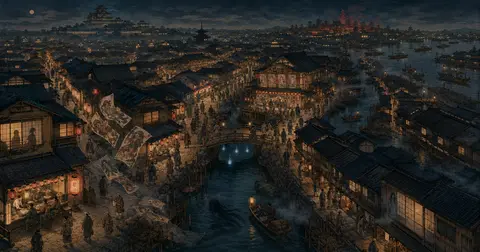
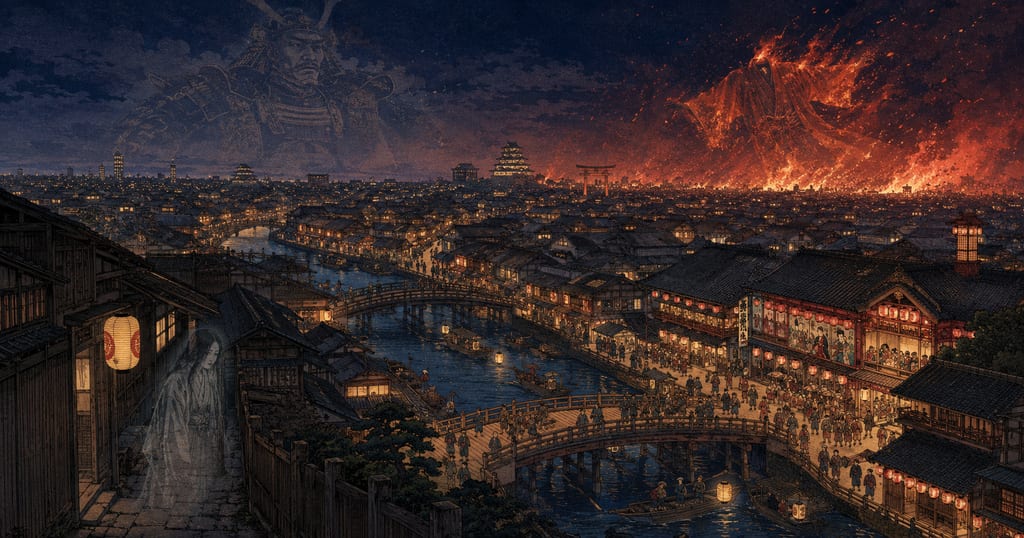
Read more江戸は、怪談を量産した都市である。十八世紀前半には人口百万を超え、当時の世界で最大級の都市となった江戸には、武家屋敷と長屋、堀と橋、芝居小屋と寄席、版元と古本屋が密集した。この稠密な人と紙と語りの集積こそが、怪異を次々に生み出す装置となった。京都の妖怪が宮廷の絵巻や御霊信仰のなかで語られたのに対し、江戸の怪異は歌舞伎の舞台、講談の高座、黄表紙の頁という大量流通のメディアで形を与えられ、増殖していった。
本記事の軸は一つ ── 出版と芝居が育てた都市怪談である。四谷の長屋から生まれたお岩は鶴屋南北の脚本で怨霊の頂点となり、皿屋敷のお菊は馬場文耕の講談台本で江戸版へ書き換えられ、豆腐小僧にいたっては黄表紙という娯楽本そのものから生まれた完全な商品キャラクターであった。火事と怨念、出版と芝居が結び合って怪異を生んだこの都市の姿を、江戸ゆかりの七体の妖怪で辿る。なお江戸全体を束ねる宏観は東京都の妖怪事典に譲り、ここでは「都市が怪談を作る仕組み」に焦点を絞る。
百万都市の闇 ── なぜ江戸は怪談を量産したのか
慶長8年(1603)に徳川家康が幕府を開いて以降、江戸は急速に膨張した。十八世紀前半には町方人口だけで五十万、武家を含めれば百万を超えたとされ、同時代のロンドンやパリと並ぶ巨大都市となった。人が集まれば闇も集まる。火事、疫病、刑場、貧窮、遊郭での死。江戸の日常はつねに死と隣り合わせであり、その死の記憶が無数の怪異譚を生んだ。
しかし江戸の怪談を特異なものにしたのは、死の多さそのものではなく、それを語り運ぶ仕組みの厚さである。寛文年間(1661-1673)に商業出版圏として独立した江戸では、板本・浮世絵・黄表紙が安価に大量流通し、芝居小屋では歌舞伎が、寄席では落語と講談が連日演じられた。怪異はこれらのメディアに乗って一夜のうちに市中へ広がり、語り直され、別の作者が脚色し、また広がる。江戸の都市怪談とは、この出版と芸能の循環装置が回し続けた集合的な創作物であった。
以下に見る怪異は、いずれもこの仕組みの産物である。歌舞伎が怨霊を作り(お岩)、講談が古い伝説を江戸版へ移植し(お菊)、火事の記憶が祟る器物を生み(振袖の怪)、黄表紙が無から愛嬌ある妖怪を発明し(豆腐小僧)、夜の市中の流言が新聞前夜のメディアで増幅され(髪切り)、明治の外国人作家が江戸の闇を英語へ翻訳した(むじな)。江戸の怪談は、つねに何らかの「媒体」を伴って立ち現れる。
祟り神となった坂東の英雄 ── 平将門
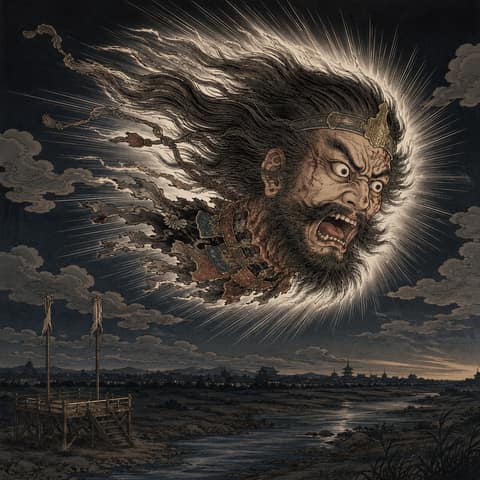
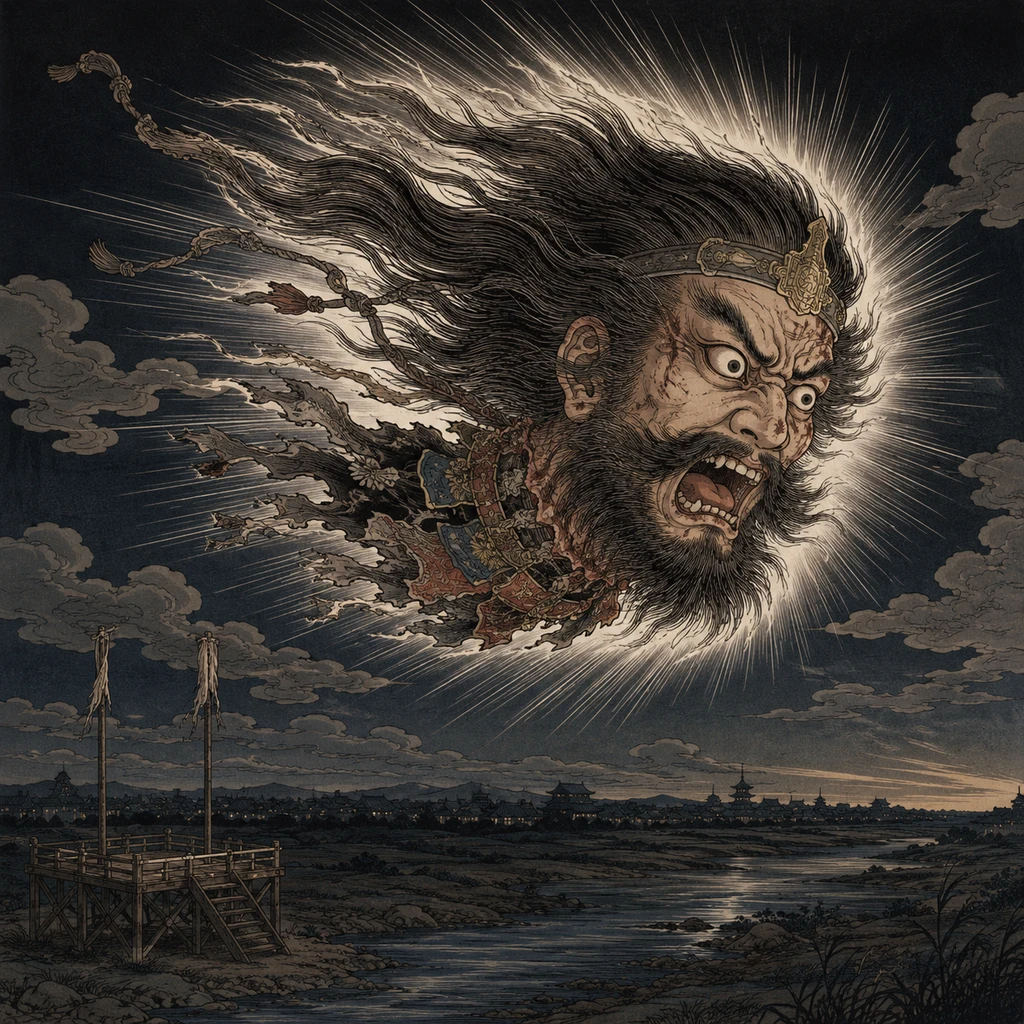
江戸という都市の地下には、一柱の怨霊が眠っている。承平・天慶の乱(935-940)で関東に独立勢力を築き、朝廷に反旗を翻して「新皇」を称した平将門である。藤原秀郷・平貞盛に討たれて京で梟首されたその首は、関東を慕って空を飛び帰ったと伝えられ、大手町の将門塚(千代田区)に祀られた。
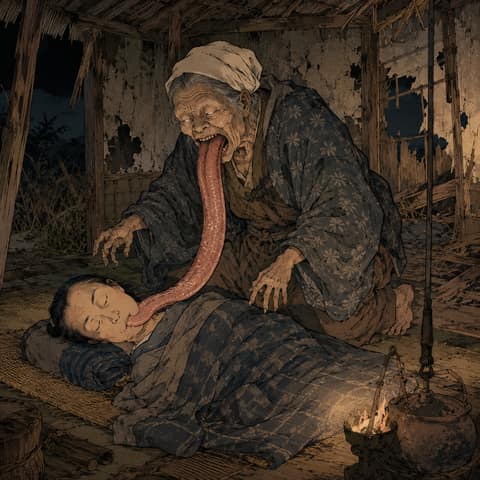
Taira no Masakado
Taira no Masakado was a warrior of the Kanmu-Taira line who held sway over the Bandō region in the mid-Heian period, a man who raised the banner of revolt against the court, styled himself "New Emperor" (Shinnō), and was struck down. After his death, the uncanny tales surrounding his severed head made him one of the most dreaded vengeful spirits in Japan, and in time he was enshrined as a guardian deity of the Kantō and a goryō god at shrines such as Kanda Myōjin. In the Jōhei and Tengyō years, Masakado rose from private feuds within his own clan, and in the second year of Tengyō (939) he overran the provincial seats of Hitachi and other Kantō provinces to subjugate the eastern lands, proclaiming an oracle of Hachiman Daibosatsu and styling himself New Emperor . But the following year, the third of Tengyō (940), he was shot in the forehead and killed in battle by the punitive army of Taira no Sadamori and Fujiwara no Hidesato (Tawara Tōda). His life is recounted in detail in the contemporary war chronicle Shōmonki. What made Masakado a yokai and a vengeful spirit was less the historical revolt itself than the legend of the head, told in later ages. The story that his head, exposed in the capital, would not rot and cried out night after night before flying off to the east is bound up with the dread of the Masakado Grave-Mound (the "Head Mound") at Ōtemachi in Tokyo, and transmits to this day the belief that to move it brings a curse. At Kanda Myōjin, by contrast, he is fervently revered as the great tutelary of Edo and a god of martial fortune and thriving commerce—embodying the two faces of a goryō god: curse and protection.
Read more将門の特異さは、彼が単なる過去の英雄ではなく、江戸という都市の守護と祟りの両面を担い続けてきた点にある。徳川の世にあって将門は神田明神(千代田区外神田)の祭神として迎えられ、江戸の総鎮守の核に据えられた。京都が菅原道真や崇徳院の怨霊を神社に「鎮めて終わらせる」のに対し、江戸は将門を祭礼のなかで「祝い続ける」。二年に一度の神田祭で町々を巡行する神輿は、祟り神を都市の活力へと反転させる装置であった。この将門塚と神田明神信仰の詳細は東京都の妖怪事典に譲るが、江戸の怪異文化の起点に、都市そのものへ食い込んだ巨大な怨霊が居ることは押さえておきたい。将門こそ、江戸が「祟りを生かす都市」であることを最初に示した存在である。
芝居が生んだ怨霊 ── お岩と四谷怪談
江戸の都市怪談の頂点に立つのが、四谷の長屋から生まれたお岩である。だがここで史実と虚構を厳しく分けておく必要がある。
Oiwa
Oiwa is the protagonist of Japan's most widely known ghost story, renowned as a female ghost who was betrayed and poisoned by her husband, dying with a disfigured face and returning as a terrifying, vengeful spirit. However, this image is almost entirely a theatrical fabrication. In the kabuki play "Tokaido Yotsuya Kaidan" (written by Tsuruya Nanboku IV and premiered at the Edo Nakamura-za in 1825), the role of Oiwa was played by Onoe Kikugoro III. The iconic scenes—where she dies while combing her hair with half her face terribly swollen and decaying, washes ashore nailed to a wooden door, and later emerges from a burning lantern to torment her husband—established the archetype of the vengeful ghost Oiwa. Importantly, the real woman behind the legend was said to be the exact opposite. Oiwa (Tamiya Iwa), the wife of the Tamiya samurai family living in Samoncho, Yotsuya, was known as a devoted and faithful wife with a deeply loving marriage. She devoutly worshipped the family's Inari shrine and successfully restored her family's declining fortunes, making her an auspicious figure. The Oiwa Inari (Tamiya Inari) shrine dedicated to her was originally visited as a "god of luck that brings family prosperity." The name Oiwa stands upon the immense contrast between the historical virtuous wife and the vengeful spirit crafted by Nanboku two centuries later.
Read more実在のお岩は、江戸城警備にあたる御先手組同心・田宮又左衛門の娘で、養子に迎えた夫・伊右衛門を支えて傾いた家計を再興した貞淑な妻であったと伝わる。彼女が篤く信仰した屋敷神の稲荷は田宮稲荷(現在の於岩稲荷田宮神社、新宿区四谷)として残り、お岩自身は寛永13年(1636)に世を去ったとされる。すなわち歴史上のお岩は、怨霊とはまったく無縁の善良な女性であった。
この穏やかなお岩を凄惨な怨霊へ変えたのが、芝居である。彼女の没後およそ二百年を経た文政8年(1825)7月、四世鶴屋南北作『東海道四谷怪談』[1]が江戸の中村座で初演された。『仮名手本忠臣蔵』の外伝として組まれたこの脚本では、夫・民谷伊右衛門に毒を盛られて顔を醜く爛れさせたお岩が、惨殺のすえ怨霊となって伊右衛門を破滅へ追い込む。三代目尾上菊五郎がお岩・小仏小平・佐藤与茂七を早替りで演じ、戸板返しや提灯抜けといった大仕掛けの演出が観客を熱狂させた。実在の貞女が、芝居の力でまったく別の怨霊へと作り変えられたのである。
ここに江戸都市怪談の本質がある ── 怪異は「起きた」のではなく「作られた」。それも興行という商業的動機のもとで。芝居がもたらした評判は実在の田宮稲荷へも逆流し、於岩稲荷は四谷怪談の聖地として多くの参詣者を集めた。お岩の墓は巣鴨の妙行寺に営まれ、現在も四谷怪談を演じる役者が公演前に参拝する慣わしが続く。虚構の怨霊が、実在の信仰と現代の演劇儀礼までを巻き込んでいる。
講談が移植した怪 ── お菊と江戸の皿屋敷
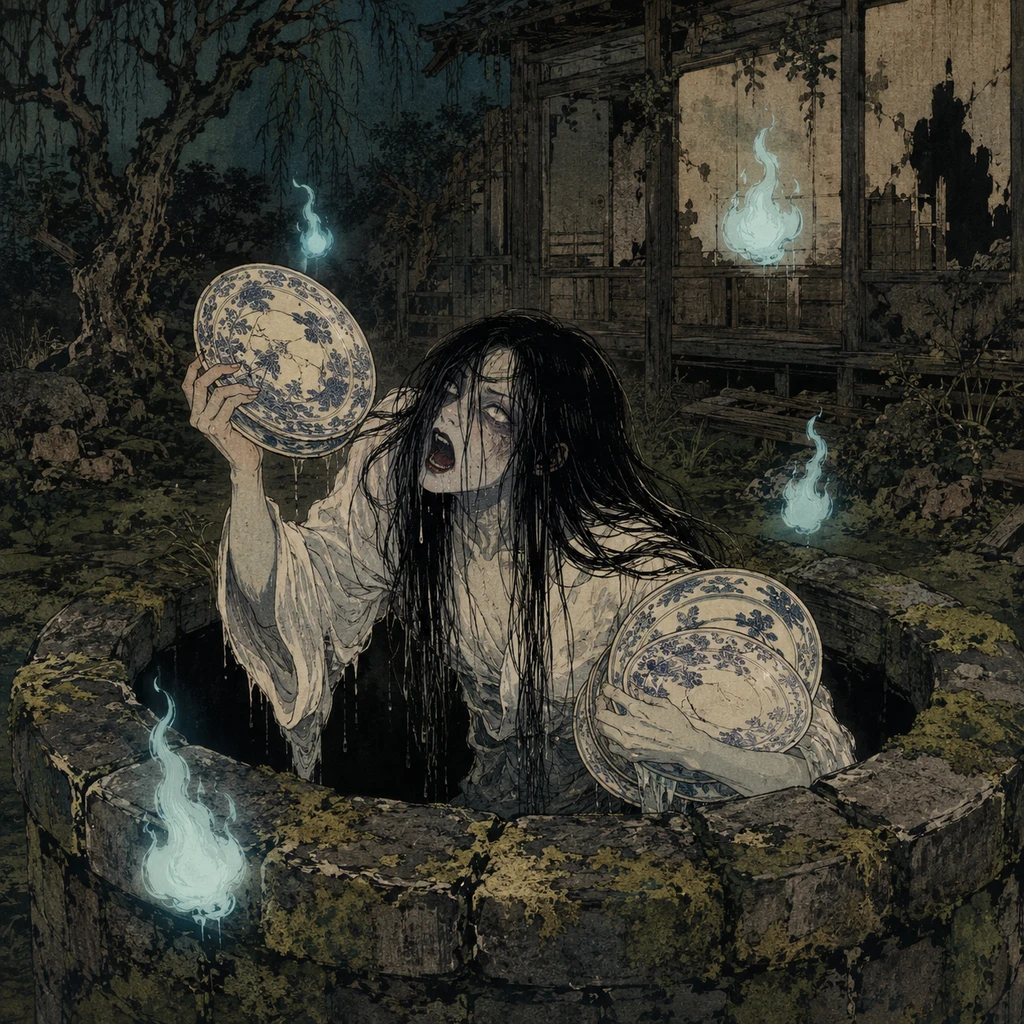
お岩が芝居の産物なら、お菊は講談の産物である。皿を割った(あるいは紛失させられた)咎で手討ちにされ、井戸に身を投げ、夜ごと「一枚……二枚……」と皿を数える女の怨霊 ── この皿屋敷譚は全国に分布するが、なかでも有名なのが播州皿屋敷と番町皿屋敷である。
姫路を舞台とする播州皿屋敷が古くからの系統であるのに対し、江戸の番町皿屋敷を文芸として確立したのは、講釈師・馬場文耕であった。文耕は宝暦8年(1758)に『皿屋敷弁疑録』[2]を著し、舞台を江戸の牛込・番町に置いて、旗本・青山主膳の屋敷で女中お菊が悲劇に見舞われる物語として書き上げた。これが講談「番町皿屋敷」の土台となり、江戸の地名と武家社会を背景にした独自の皿屋敷が成立する。
ここで誠実に留保しておくべきことがある。文耕の語りには青山主膳を火付盗賊改とする設定が含まれるが、これは実在の人物の生没年と整合せず、史実というより講談として整えられた創作と理解されている。皿屋敷譚はもともと各地に伝わる古い型であり、文耕はそれを江戸という都市の文脈へ移植・脚色したのである。一つの怪異が土地ごとに語り直され、講談という語りのメディアによって江戸版が誕生する ── これもまた、都市が怪談を作り変える仕組みの一例である。なお番町皿屋敷は後に岡本綺堂が近代戯曲として書き直し、皿を数える怪から人間の悲恋劇へと再々解釈されていく。
火と都市の怪(その一) ── 振袖の怪と明暦の大火
百万都市・江戸の最大の敵は火であった。木造の長屋が密集し、冬の乾いた北西風が吹きつける江戸では、ひとたび出火すれば瞬く間に町を焼き尽くす。「火事と喧嘩は江戸の華」という言葉が示すとおり、火事は江戸の日常そのものであり、その恐怖が祟る器物の怪を生んだ。
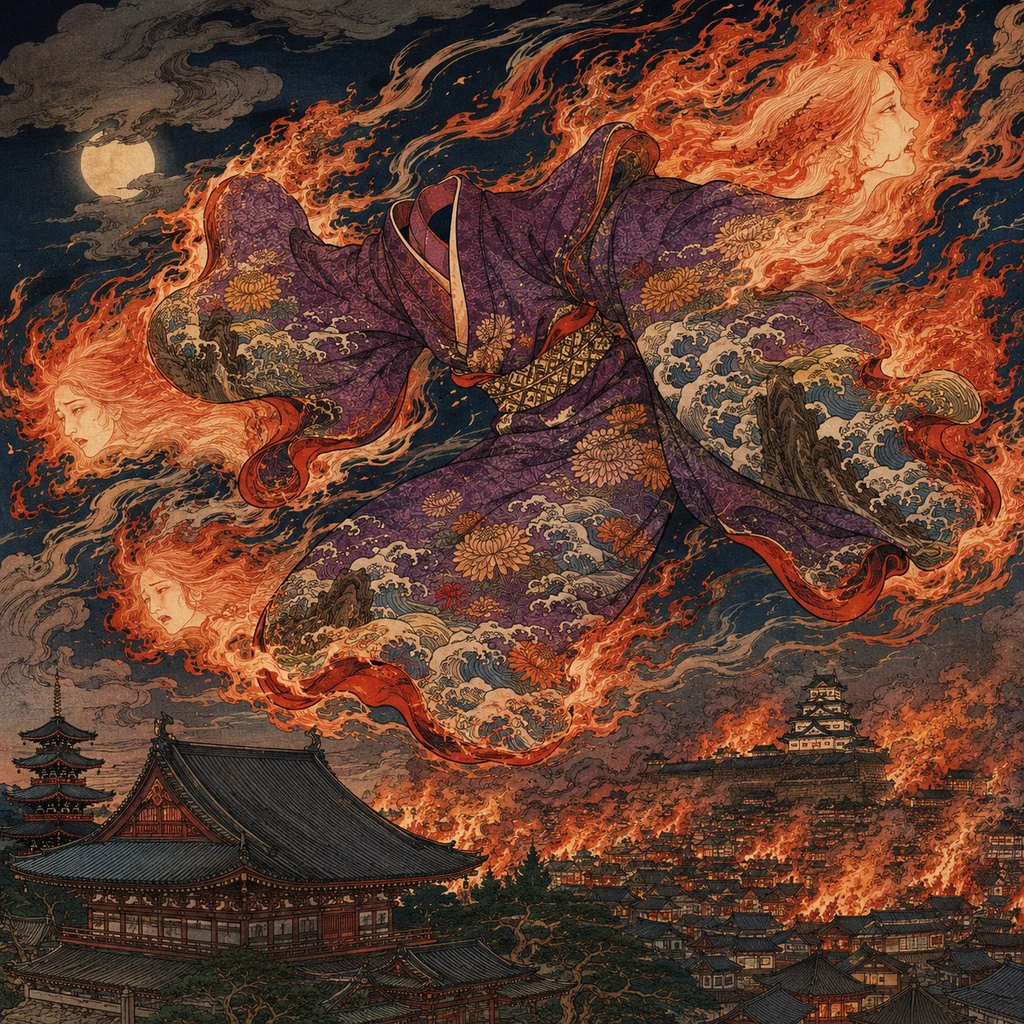
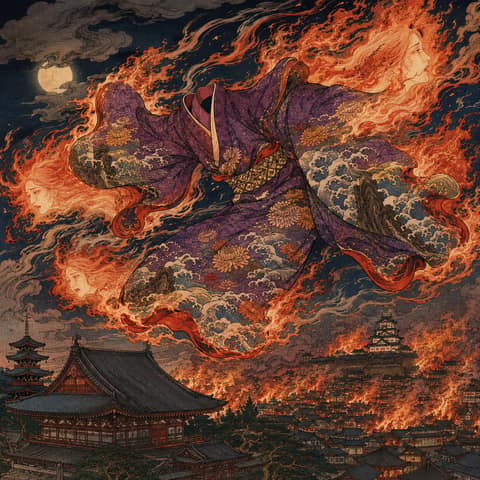
Furisode-no-kai
The *Furisode-no-kai* (Apparition of the Furisode / Furisode Fire) is an urban ghost story of Edo surrounding a single *furisode* (long-sleeved kimono) that is said to have successively claimed the lives of young girls. It is told that three girls who wore the same *furisode* died one after another on the exact same month and day of their respective years. When a temple tried to burn it to hold a memorial service, the burning *furisode* flew up in the violent wind, caught fire to the temple halls, and caused a massive conflagration that burned down most of Edo. This great fire is none other than the Great Fire of Meireki, which occurred in the first month of Meireki 3 (1657), burning most of the Edo cityscape, many daimyo mansions, and even the main keep of Edo Castle, resulting in an estimated 30,000 to 100,000 deaths; its popular name is the "Furisode Fire". The source of the fire is said to be Honmyoji Temple in Hongo Maruyama, and the tale of the *furisode*'s curse is inextricably linked to this legend of the fire's origin. It is simultaneously an apparition of an object that curses people, and an anomaly that condenses the memory of the disaster that burned the mega-city of Edo into a single garment.
Read more明暦3年(1657)正月、江戸の大半を焼き払い、十万人ともいわれる死者を出した明暦の大火[3]は、江戸時代最大の火災である。この大火には、後年振袖の怪として語られる凄絶な由来譚がまといついた。麻布の質屋の娘が、すれ違った美少年に一目惚れして恋煩いのすえに死ぬ。両親は娘を哀れみ、少年の衣と同じ模様の振袖を棺にかけた。やがて古着として売られたこの振袖は、翌年の同じ命日に別の娘の葬儀でまた寺へ納まり、さらに翌年もう一人の娘の葬儀で三たび同じ寺へ戻る。三人とも十七歳で同月同日に死んだという。
不吉を恐れた本郷・本妙寺の住職が供養のためこの振袖を火に投じたところ、折からの強風が炎の振袖を巻き上げ本堂へ燃え移り、やがて江戸市中を焼く大火となった ── これが「振袖火事」の名の由来とされる。ただしこの由来譚は、当時の火災記録には現れず、後世に語り継がれた伝説と考えられている。実際の出火原因は別にあるとみられるが、ここで重要なのは、江戸が未曾有の災厄をただの不運ではなく「祟る振袖」という怪異の物語へ昇華させた点である。恋に死んだ娘の怨念が器物に宿り、都市そのものを焼く ── 火事という都市の宿痾を、江戸人は怪談として引き受けた。
火と都市の怪(その二) ── 髪切りと夜の流言
火が大規模な災厄の怪を生んだのに対し、江戸の夜の街路は、ひそやかな身体の怪を生んだ。気づかぬうちに髪を切られているという怪異、髪切りである。

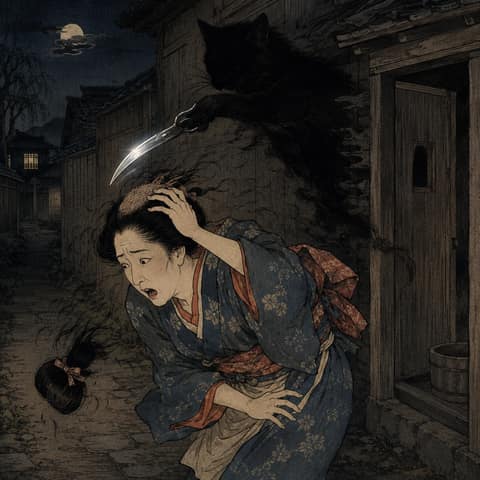
寛保年間(1741-1743)に編まれた怪談集『諸国里人談』[4]によれば、元禄初期に伊勢松坂と江戸の紺屋町(現・千代田区)で、夜道を歩く者が男女を問わず、知らぬ間に根元から髪を切り落とされる事件が相次いだという。被害者は髷の形はそのままに髪だけが抜け落ちており、いつ誰に切られたのかまったく気づかない。夜や厠のそばで不意に何かに触れられた、という証言だけが残った。
髪切りの正体については、中国の古典に倣って狐や狢の仕業とする説、髪結や鬘売が自らの商売のために仕組んだ自作自演とする説、髪切り虫という虫の所業とする説まで、さまざまに取り沙汰された。注目すべきは、確たる正体が突き止められぬまま、噂そのものが江戸市中を駆けめぐり増幅していった点である。十九世紀には歌川芳藤らによって髪切りの奇談[5]が刷物として売られ、流言が出版メディアと結びついて視覚化された。新聞以前の都市にあって、髪切りは口から口へ、そして刷物へと伝播する「都市伝説」の原型であった。原因不明の身体被害が匿名の怪へと象徴化される構造は、現代の都市伝説と寸分違わない。
出版が生んだ妖怪(その一) ── 黄表紙の道化、
豆腐小僧
ここまでの怪異は、なお背後に実在の人物や災厄や流言を持っていた。だが江戸の出版文化は、ついに何の伝承基盤も持たない、純粋に商品として設計された妖怪を生み出す。それが豆腐小僧である。
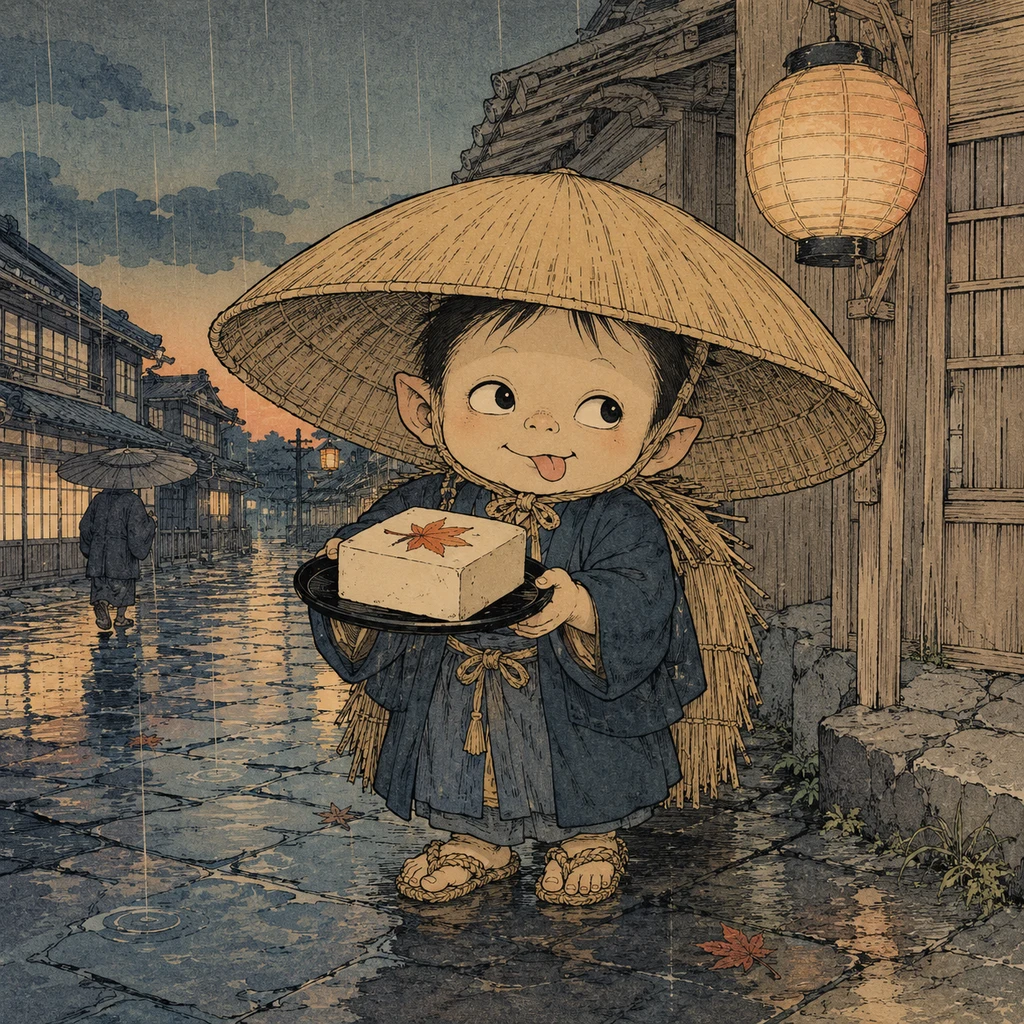
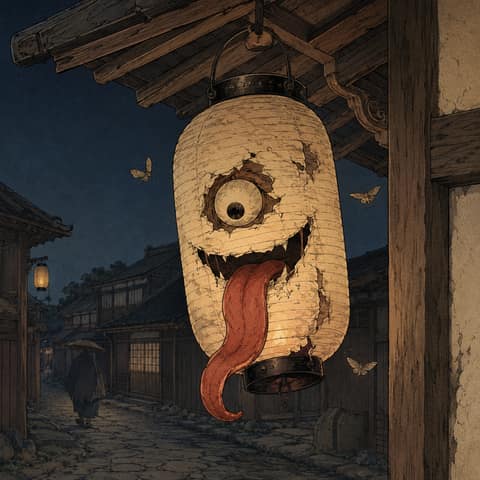
Tofu-kozo
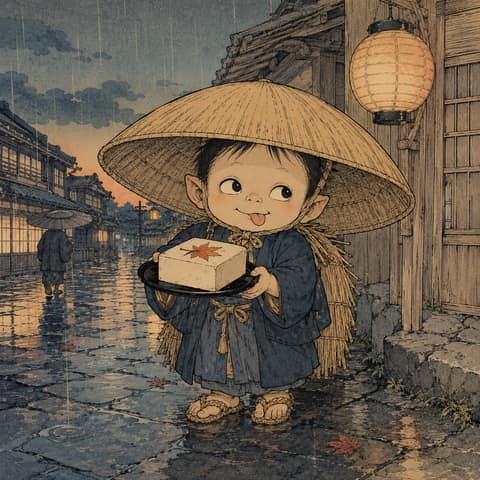
The *Tofu-kozo* (Tofu Boy) is a *yokai* that appears on rainy evenings in the guise of a child wearing a large sedge hat, holding a tray with a block of tofu stamped with a maple leaf design. However, it neither attacks nor bewitches people; it simply stands there holding the tofu. This un-*yokai*-like, goofy charm is its main feature, making it beloved by the people of the late Edo period. What is noteworthy is that its origin does not lie in ancient folklore, but in the publishing culture of Edo itself. During the Anei era (1770s), it suddenly appeared as a character in illustrated entertainment books such as *kibyoshi* and *kusazoshi*. Its first appearance is said to be in the *kibyoshi* *Yokai Shiuchi Hyobanki*. Yokai researchers such as Natsuhiko Kyogoku and Katsumi Tada position the Tofu-kozo as an early example of a 'character yokai' artificially created as a commercial product. In other words, the Tofu-kozo is not a monster that crawled out of the darkness of the countryside, but an Edo-born yokai spawned by the urban industry of publishing.
Read more豆腐小僧が初めて姿を見せるのは、安永年間(1772-1781)の黄表紙 ── 大人向けの絵入り娯楽本のなかである。恋川春町の『妖怪仕内評判記』[6](安永8年・1779頃)などに、「頭大ぶり」な子どもの妖怪として描かれた。編笠をかぶり、丸い盆に紅葉の型を押した豆腐を一丁載せて、雨のしとしと降る夕暮れの道端にぽつんと立っている。人のあとを付いて歩くことはあっても、特にひどい悪さはしない、愛嬌のある道化役であった。
豆腐小僧には、古い伝承も、祟りの由来も、初出文献以前の記録もない。あるのは黄表紙という娯楽メディア[7]のなかで作者が描き起こした造形だけである。妖怪研究者の京極夏彦は、この豆腐小僧を「キャラクター妖怪の元祖」と位置づける。すなわち、伝承から生まれた怪異ではなく、商業出版が消費のために発明したキャラクターの最初の例なのである。江戸後期、妖怪はもはや恐怖の対象であるだけでなく、双六や玩具絵、判じ物に登場する親しみある図像商品となっていた。豆腐小僧は、出版という仕組みそのものが妖怪を「生産」できるようになった時代の象徴である。後の水木しげるの妖怪キャラクター群、現代のゆるキャラ妖怪へと連なる系譜の、最初の一歩がここにある。
出版が生んだ妖怪(その二) ── 八雲が英語へ翻訳した江戸の闇、
むじな
江戸の都市怪談は、明治に入って思いがけない媒体に乗って世界へ運ばれた。英語である。明治37年(1904)、ラフカディオ・ハーン ── 帰化名・小泉八雲 ── が刊行した怪談集『Kwaidan』[8]の一篇「むじな(Mujina)」が、それであった。
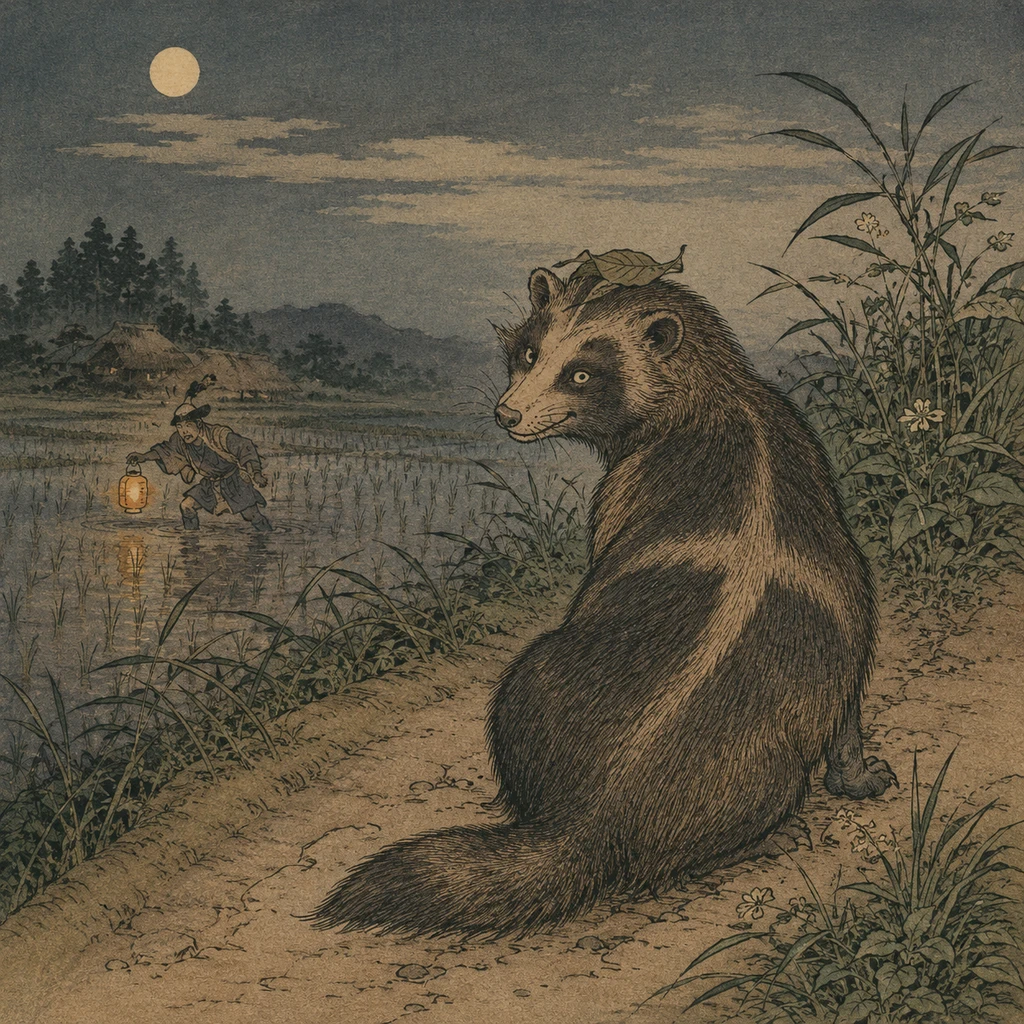
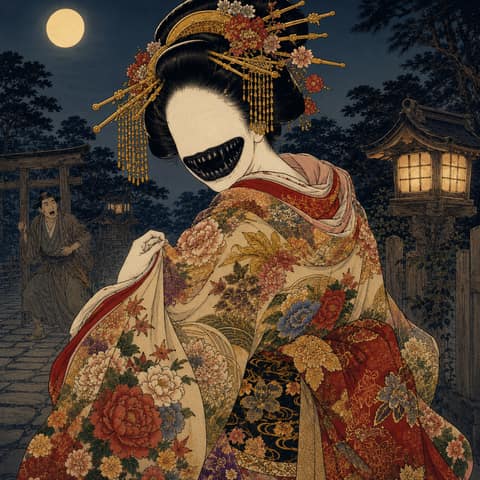
Mujina
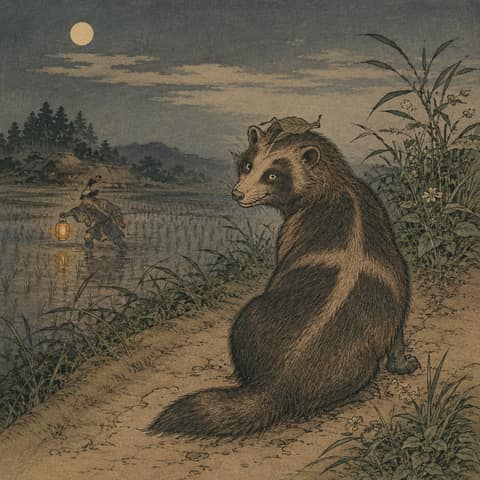
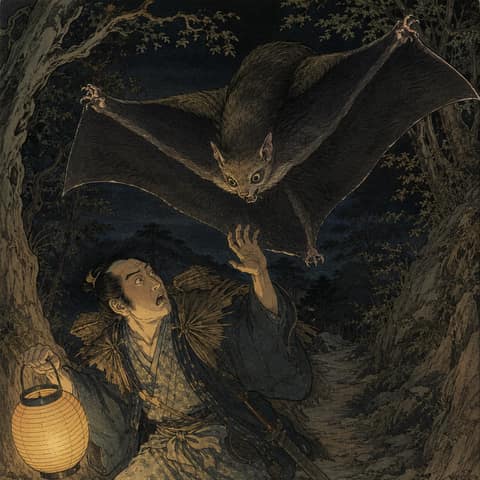
Mujina primarily refers to the Asian badger, though depending on region and era it can be conflated with raccoon dogs (tanuki) or masked palm civets. Since antiquity it’s told as a trickster beast that beguiles travelers at night—making roads or rivers seem different, and altering the appearance of food or places. The Nihon Shoki records a mujina taking human form and singing, and from the Edo period onward it stands beside foxes and tanuki as a leading shapeshifter in art and tales. Scholarly identification varies by region.
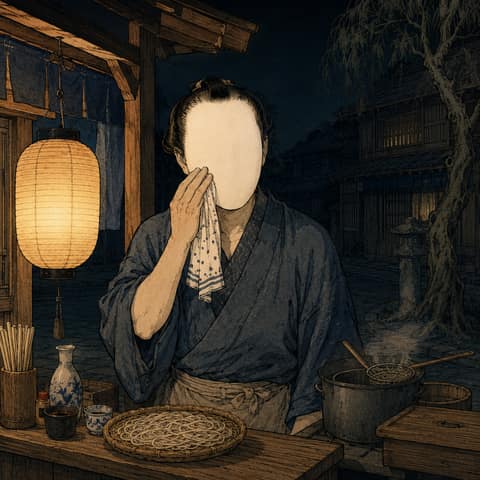
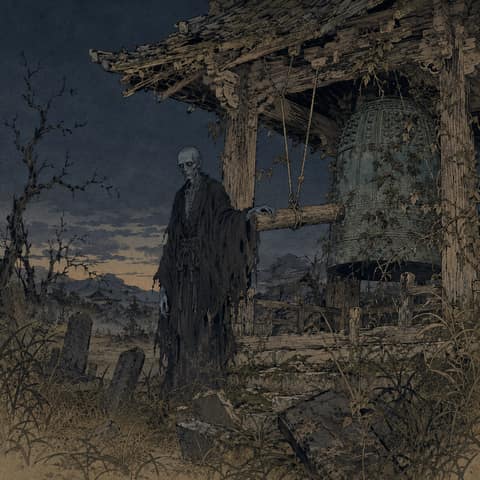
Read more物語の舞台は、赤坂と四谷のあいだ、外濠沿いの紀伊国坂(きのくにざか)である。ある夜、京橋の商人が坂を上っていくと、濠端でうずくまって泣く若い女がいた。案じて声をかけると、振り向いた女の顔には目も鼻も口もない ── つまりむじなが化けたのっぺらぼうであった。商人は仰天して逃げ、ようやく行き合った夜鳴き蕎麦の屋台にすがりつく。だが顛末を語る商人に、蕎麦屋がぬうっと顔を向けて「そのっぺらぼうは、こんな顔だったかい」と問う。蕎麦屋の顔もまた、のっぺらぼうであった ── 屋台の灯がふっと消え、商人は気を失う。
この「二度のオチ」で恐怖を畳みかける語りの構造は完成度が高く、夜鳴き蕎麦の屋台という江戸の都市風俗を舞台装置に取り込んでいる点で、まぎれもなく江戸都市怪談の系譜に連なる。八雲が妻・小泉セツらの口承から拾い上げたこの話は、本来は江戸の口承怪談であった。それが英語で書き直されたとき、「むじな」は日本のローカルな怪から、世界に通用するゴーストストーリーへと姿を変えた。江戸の闇が、出版という媒体を通じて国境を越えた瞬間である。
結び ── 都市が怪談を作る仕組み
江戸の妖怪を貫く一本の糸は、出版と芝居という媒体である。実在の貞女お岩は鶴屋南北の歌舞伎で怨霊となり、各地の皿屋敷は馬場文耕の講談で江戸版へ移植され、明暦の大火は祟る振袖の物語をまとい、夜の流言は刷物となって髪切りを増幅させ、黄表紙は伝承なき豆腐小僧を商品として発明し、江戸の口承怪談は小泉八雲の英語で世界へ運ばれた。そしてそのすべての地下には、都市そのものへ食い込んだ平将門という巨大な怨霊が横たわる。
京都が祟りを神社で鎮めて終わらせる都市だとすれば、江戸は祟りを芝居と版木と高座で広め、増やし、商品にし、ついには輸出する都市であった。百万都市の闇は、つねに何らかの媒体を伴って語られ、語られることによって増殖した。怪異が「起きる」のではなく「作られる」── この都市怪談の作法こそ、江戸が後世に遺した最大の発明である。江戸全体の妖怪文化の宏観は東京都の妖怪事典に譲るが、その核に「出版と芝居が育てた都市怪談」という独自の仕組みがあったことを、ここに記録しておきたい。