YOKAI.JP
Musashi Province 三国造が一つになった大地。武蔵国の妖怪事典

大口真神・ダイダラボッチ・牛鬼・見越入道・池袋の女。都となる前の関東平野の記憶

三国造が一つになった大地。
武蔵国の妖怪事典

Musashi Province · むさし

Also known as: 武州
View on map

Oguchi-no-magami

Oguchi-no-magami

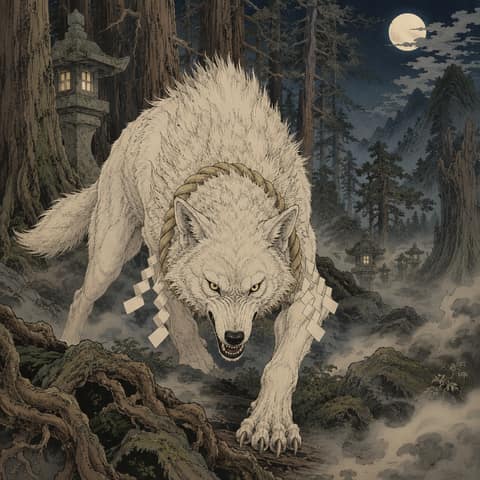
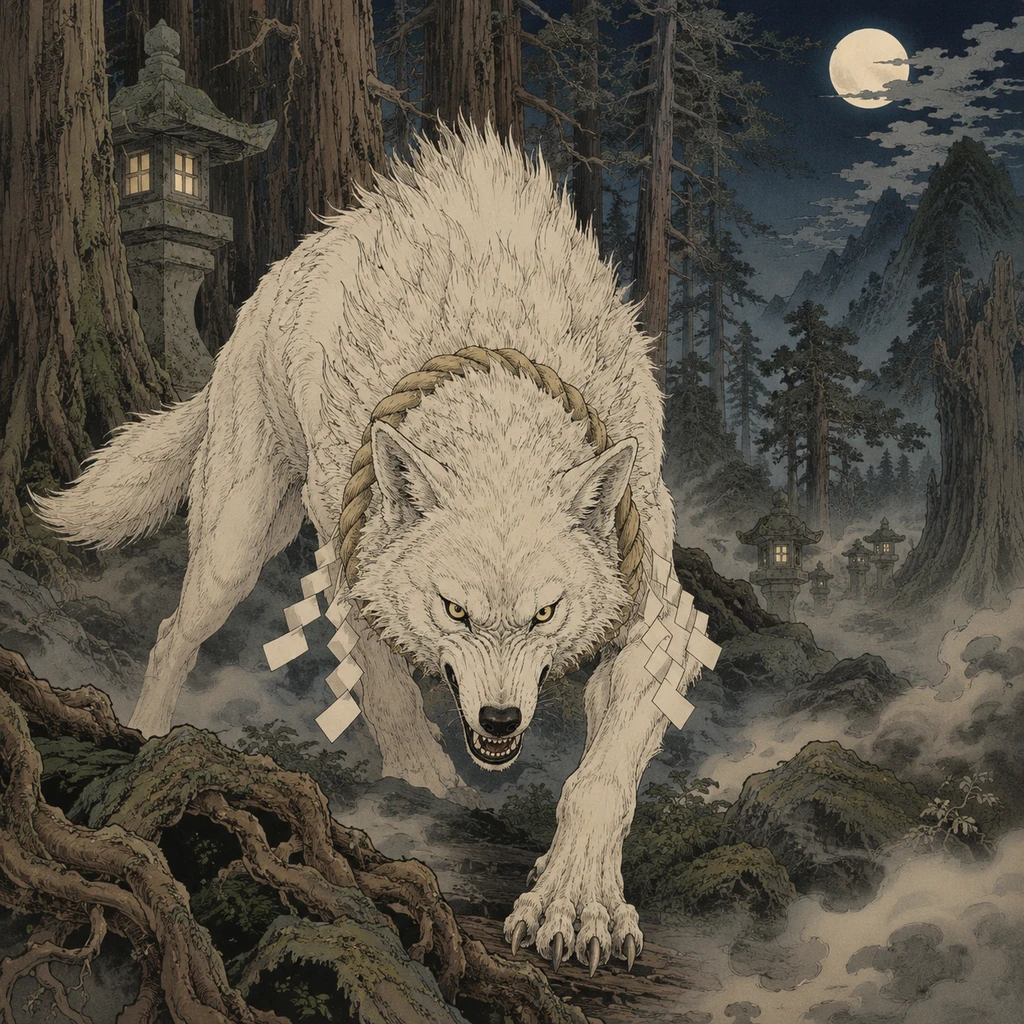
Oguchi-no-magami is a mountain deity born from the deification of the extinct Japanese wolf. It is also respectfully called "Oinu-sama" (Honorable Dog) or "Gokensoku-sama" (Honorable Divine Kin). "Makami" is an ancient name for the wolf, and its history is so old that it was sung of in Volume 8 of the *Man'yoshu* (Collection of Ten Thousand Leaves): "The snow falling on the plains of the great-mouthed true god". In the Asuka region of Yamato Province, there is a legend of the old wolf of the Makamigahara plains; the awe and reverence for a fierce beast that could devour humans was the source of its deification. At Mitsumine Shrine, nestled deep in the Chichibu mountains of Musashi Province, this wolf is worshipped as the divine messenger—or *gokensoku*—of the shrine's main deity, revered as a sacred beast that understands human speech and distinguishes good from evil. Believed to possess the power to ward off fire, theft, monsters, and possessing spirits, the faith in Oguchi-no-magami spread widely throughout the Kanto region from the early modern period onward.

Read more

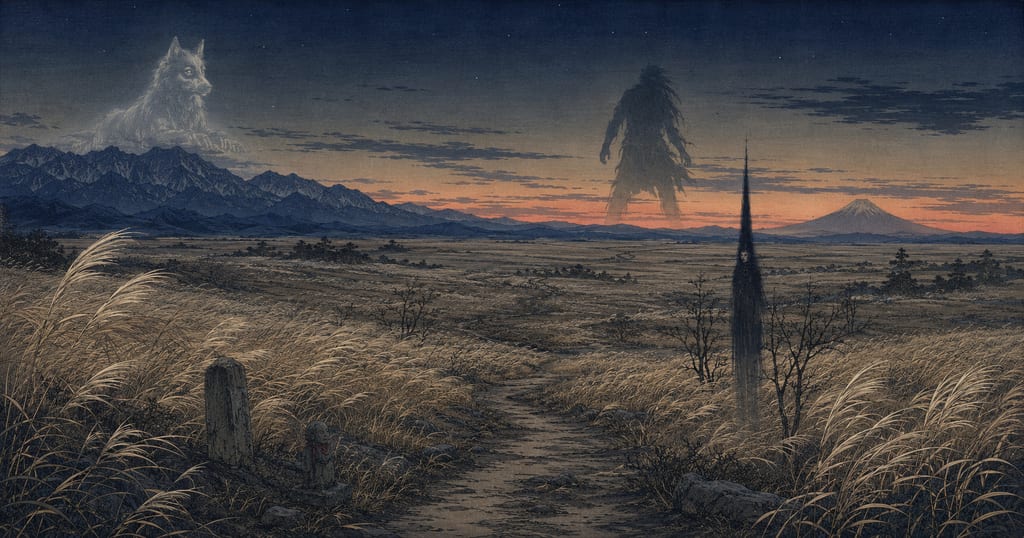
東京都と埼玉県、そして神奈川県東部の川崎・横浜。今でこそ別々の行政区画に分かれたこの広大な土地は、かつて一つの令制国であった。武蔵国 ── 海に面した荏原の浜から、武蔵野台地の雑木林を越え、奥秩父・奥多摩の山塊に至るまでを抱えた、関東でも屈指の大国である。妖怪を手がかりにこの国を眺めると、現代の県境では見えてこない一つの輪郭が浮かび上がる。それは、都となる前の関東平野そのものの記憶である。

武蔵国の妖怪は、この国がたどった歴史の地層をそのまま映している。山には日本武尊を導いたとされる狼神が祀られ、平野には地形を踏み均した巨人の足跡が残り、川辺の寺には牛鬼が現れ、夜道には見上げるほど高くなる入道が立ち、江戸近郊の村からは祟りをもたらす女中の俗信が生まれた。本稿は、東京都と埼玉県という二つの隣り合う県の記事が別々に語ってきた怪異を、それらが分かれる前の「一つの武蔵国」という枠組みのなかで結び直す試みである。江戸の都市怪談や秩父の山岳信仰の深部については東京都の妖怪事典埼玉県の妖怪事典に譲り、ここでは古代から中世にかけての、この国が一つだった頃の記憶に焦点を絞る。

三つの国造が合した武蔵

武蔵国の成り立ちは、そのまま「複数の地域が一つに束ねられる」物語である。律令制以前のこの地には、无邪志国造(むざしのくにのみやつこ)、胸刺国造(むなさしのくにのみやつこ)、そして西の山地を治めた知々夫国造(ちちぶのくにのみやつこ)という、二つあるいは三つの国造が並び立っていたと伝えられる[1]。六世紀には、国造の地位をめぐって笠原直(かさはらのあたい)の一族が争った武蔵国造の乱が起こったとされ、その後、七世紀の律令制の整備のなかで、これらの領域が統合されて令制国としての武蔵国が成立した。

統一された武蔵国は二十二の郡からなり、現在の埼玉県のほぼ全域、東京都の島嶼部を除く全域、そして神奈川県の川崎市と横浜市の大部分にまたがる広大な国であった[1]。荏原郡・豊島郡・多磨郡・入間郡・秩父郡といった郡名は、今も地名や駅名として東京と埼玉に散らばっている。海辺の品川・浅草から、台地の武蔵野、そして奥秩父の山々まで ── まったく異なる地形を一つの国号のもとに抱えていたことが、武蔵の妖怪文化に独特の幅を与えた。

国の中心は、和銅三年(七一〇年)頃に多磨郡、現在の東京都府中市に置かれた武蔵国府であった[1]。「府中」という地名そのものが、国府の所在地に由来する。その国府の中枢に鎮座するのが、武蔵国の総社・大國魂神社である。武蔵国内の一宮から六宮までの神々を合わせ祀ることから「六所宮(ろくしょのみや)」とも呼ばれ、主祭神の大國魂大神は出雲の大国主神と同神とされる、武蔵国の守り神である。国府の北方、現在の国分寺市には、天平十三年(七四一年)の国分寺建立の詔を承けて武蔵国分寺が建てられた。国を挙げた大伽藍であり、その礎石は今も史跡として残る。

中世に入ると、この国は武士の国としての顔を強める。平安後期から鎌倉・室町にかけて、武蔵国を本拠に近隣諸国へ勢力を伸ばした中小武士団の連合が武蔵七党と呼ばれた[3]。横山党・猪俣党・児玉党・西党・村山党などがこれに数えられ、その多くは武蔵守や武蔵介の系譜を引くと伝えられる。八王子の横山、本庄の児玉、日野の西党といった具合に、その名はやはり東京と埼玉の両方に刻まれている。妖怪が「夜道」や「淵」や「村」に棲むためには、まずそこに人が住み、道を通し、田を拓かねばならない。武蔵七党が開発したこの国の隅々こそが、後の怪異の舞台となっていく。

武蔵野を歩いた巨人 ── ダイダラボッチ

武蔵国の地形そのものを造ったとされる存在が、巨人ダイダラボッチである。関東平野は、柳田國男が「東京市は我日本の巨人伝説の一箇の中心地ということが出来る」と述べたほど、巨人譚の濃密な分布域であった。武蔵国は、その中心にあたる。
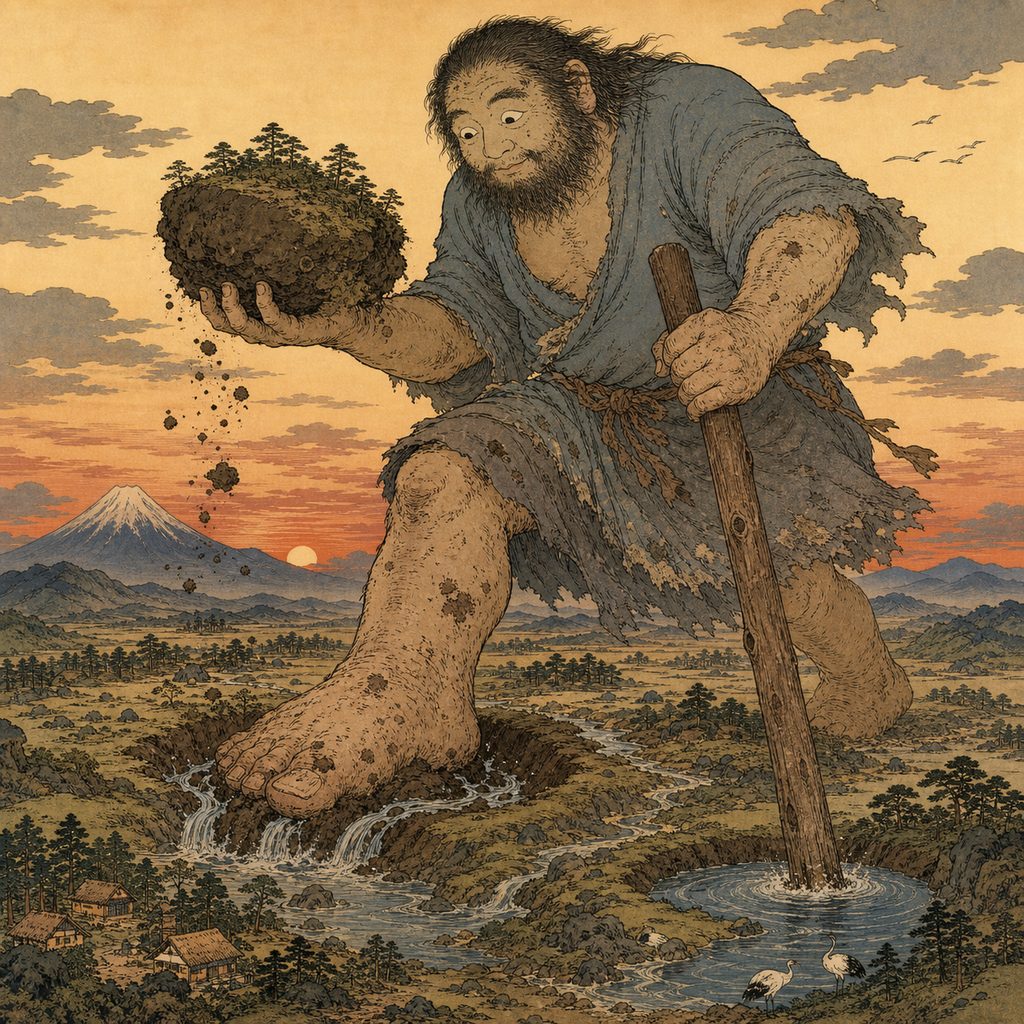
Daidarabotchi

Daidarabotchi

Daidarabotchi is one of the principal names in Japanese giant lore, used for stories that treat hollows, ponds, marshes, wells, mounds, and mountains as traces of a giant body. Across Kantō and Chūbu, the name varies by locality—Daidara-bō, Daidabotchi, Dairabotchi, and Deedarabotchi among them—and has also been written 大太法師 and 大多羅法師. These stories do not describe a single individual with an identical life and appearance everywhere; rather, they gather related explanations of local landscapes under similar names. What matters most is not the giant’s face or clothing but what his passage leaves behind. A step can sink the ground into a pond or marsh, a braced foot can heave it up, and soil carried or shaken from footwear can become a hill or mound. Mountains moved on a back, earth dug up and deposited elsewhere, a planted staff, and excretion join far-off mountains, sea, hollows, and springs to one immense body. The actions and implements are not shared by every place, however, and no countrywide account gives Daidarabotchi a settled morality, intelligence, or way of dealing with people. Ancient place tales in the *Hitachi no Kuni Fudoki* and *Harima no Kuni Fudoki* likewise explain terrain through the bodies, footprints, and excretion of enormous “people of antiquity” or “great men.” Their structure resembles later Daidarabotchi lore, but the ancient texts do not use his name. They do not prove an unchanged yokai surviving from antiquity; they are comparative evidence for the age of imagining landforms through a giant body.

Read more

ダイダラボッチは、山を背負って運び、踏んだ跡が沼や窪地になり、掘った土が山になったと語られる、国造りのスケールを持つ巨人である。富士山はこの巨人が掘り起こした土でできたとも伝えられる[4]。その足跡は、武蔵国の地名のなかに点々と刻まれている。最もよく知られるのが、世田谷区の代田(だいた)である。かつてこの地に右足の足跡のような大きな窪地があり、土地の人々がこれを「だいだらぼっち」と呼んだことが、やがて村名の「代田」になったと伝えられる[4]。「だいだら」の音が「代田」の二文字に縮められて地名として残った例である。

埼玉側にも同じ系譜の足跡が残る。さいたま市南区の太田窪は「おおたくぼ」ではなく「だいたくぼ」と読み、これもまたダイダラボッチの足跡に由来すると考えられている。武蔵国を横断するように、巨人の足跡が東京の代田から埼玉の太田窪まで点在しているわけである。窪地や沼を巨人の身体の痕跡として読み解くこの発想は、地形の由来を物語る「地名譚」の典型であり、柳田はこうした巨人信仰を、もとは国造りの神への信仰が零落したものとみた。出雲の国引き神話の神が綱で土地を引き寄せたように、武蔵の巨人もまた、台地と低地という地形の成り立ちを語るための古い記憶を負っている。

注目すべきは、この一体の巨人が、現代の県境を意に介さず武蔵野台地全体を歩き回っている点である。代田と太田窪の足跡は、東京と埼玉に分かれて語られながら、実は同じ一つの広野 ── 武蔵野 ── の上に残された痕跡なのだ。妖怪の足取りは、この国がかつて一つであったことを、地名のなかで今も証言している。なお、武蔵野の地形をめぐるより詳しい伝承は埼玉県の妖怪事典でも扱っている。

山に祀られた狼神 ── 大口真神

武蔵国の西の縁、奥秩父から奥多摩へと連なる山塊には、列島でも特異な信仰が息づいてきた。狼を神として祀る狼信仰である。その神格が大口真神、すなわち神格化されたニホンオオカミである。

Oguchi-no-magami

Oguchi-no-magami

Oguchi-no-magami is a mountain deity born from the deification of the extinct Japanese wolf. It is also respectfully called "Oinu-sama" (Honorable Dog) or "Gokensoku-sama" (Honorable Divine Kin). "Makami" is an ancient name for the wolf, and its history is so old that it was sung of in Volume 8 of the *Man'yoshu* (Collection of Ten Thousand Leaves): "The snow falling on the plains of the great-mouthed true god". In the Asuka region of Yamato Province, there is a legend of the old wolf of the Makamigahara plains; the awe and reverence for a fierce beast that could devour humans was the source of its deification. At Mitsumine Shrine, nestled deep in the Chichibu mountains of Musashi Province, this wolf is worshipped as the divine messenger—or *gokensoku*—of the shrine's main deity, revered as a sacred beast that understands human speech and distinguishes good from evil. Believed to possess the power to ward off fire, theft, monsters, and possessing spirits, the faith in Oguchi-no-magami spread widely throughout the Kanto region from the early modern period onward.

Read more

大口真神の名は驚くほど古い。『万葉集』巻八には、舎人娘子が「大口の真神の原にふる雪はいたくなふりそ家もあらなくに」と詠み、大和国飛鳥の真神原に、老狼を神格化した「真神」の名がすでに見える。その全国規模の古信仰が、ニホンオオカミの実棲息地であった武蔵国西部の山々で、御眷属(神の使い)として近世まで生きつづけた。

ここで武蔵国という枠組みが効いてくる。大口真神を御眷属として祀る聖地は、秩父と奥多摩の二か所に分かれて存在するからである。一つは、現在の埼玉県秩父市の三峯神社。もう一つは、現在の東京都青梅市、御岳山の山上に鎮座する武蔵御嶽神社である。いずれも、東征の途上で道に迷った日本武尊を白い狼が導いたという伝説を共有し、その狼を「お犬さま」「御神犬」として崇めてきた。県境で分ければ三峯は埼玉、御嶽は東京に属するが、武蔵国という古い枠で見れば、両者は同じ一つの山岳信仰圏の東西の核なのである。「武蔵御嶽」という社名そのものが、この神社が武蔵国の御嶽であることを今に伝えている。

御眷属を一年間家に借り受け、火難・盗難・憑きもの落としの守りとし、翌年あらためて拝借しなおす「御眷属拝借」の作法は、享保五年(一七二〇年)に三峯へ入った日光法印に始まると伝えられる[6]。江戸の昔、関東一円から講を組んでこれらの山へ詣でた人々にとって、作物を食い荒らす猪鹿を狼が追い払うという経験は日々の現実であり、信仰と実利は地続きだった。明治三十八年(一九〇五年)にニホンオオカミが絶滅種となってもなお、この狼神への信仰は山に残りつづけている。三峯の山犬信仰そのものの深部については埼玉県の妖怪事典に詳しい。武蔵国の視点が加えるのは、その同じ狼神が、奥多摩の御嶽にも東の核として祀られていたという、国全体を覆う信仰の広がりである。

浅草の川に現れた牛鬼

平野と山に挟まれた武蔵国の東辺、隅田川と浅草には、中世の正史が記録した一つの怪異がある。牛鬼である。
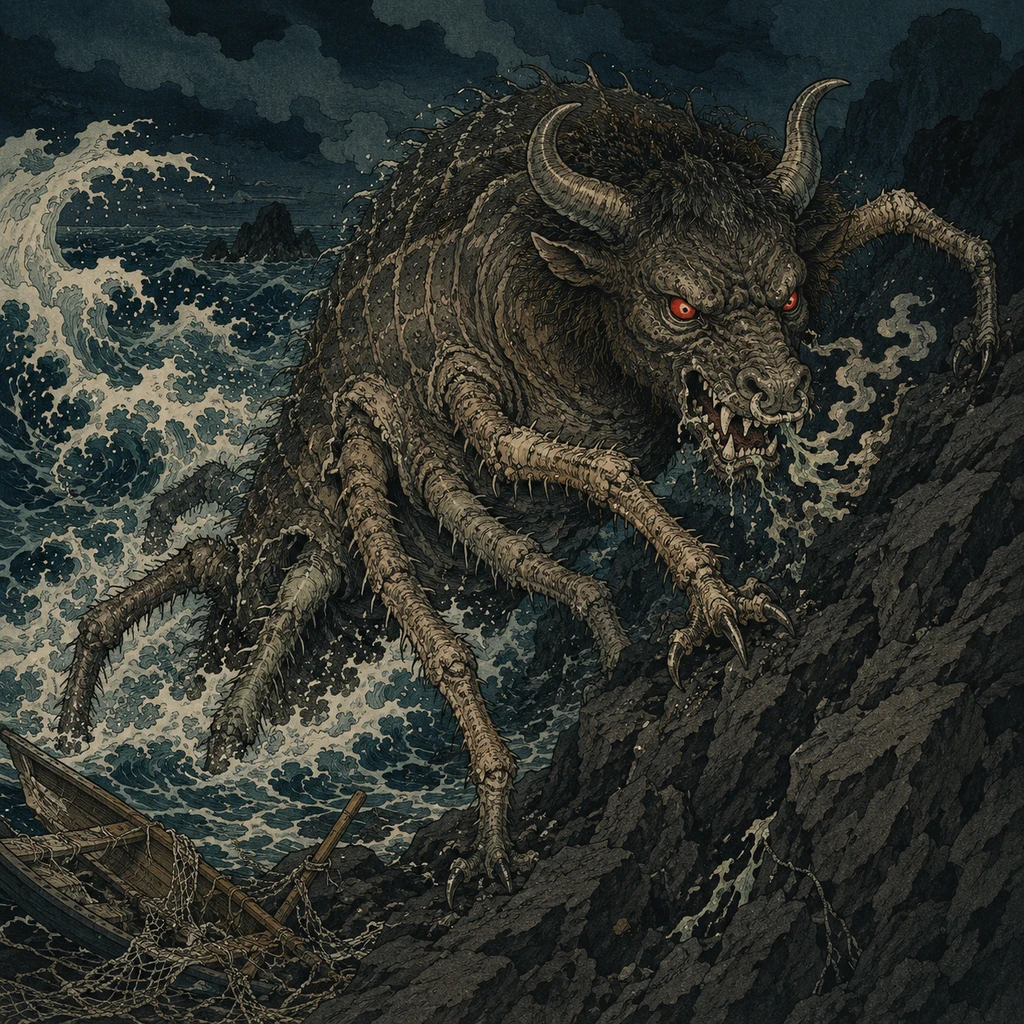
Ushi-oni

ushi-oni

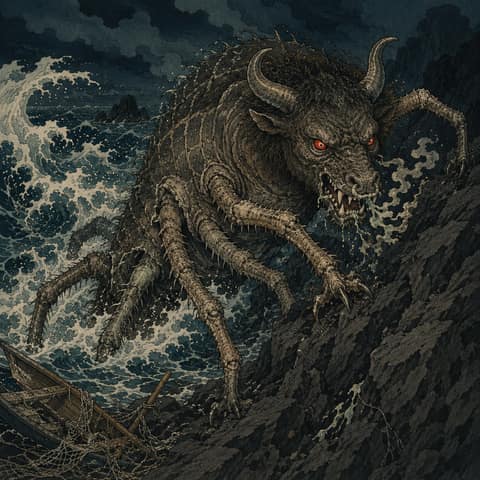
Ushi-oni appears chiefly on the coasts, in deep pools, and in the mountains of western Japan. It is among the fiercest and most numinous beings in the yokai tradition. Its body has no single form: some artists give it a bull's head on an oni's body, while others set the same head on the body of a spider. The Heian-period Pillow Book already names Ushi-oni among the things that inspire terror. Its most striking quality is a radical dual nature. In one guise, Ushi-oni is a cruel man-eater and bringer of disease that spreads poisonous breath without discrimination. In another, it leads a mikoshi procession and uses its tremendous force to drive away other evil spirits. Over time, a frightening presence in literature became part of regional worship and festival performance. Few yokai show so clearly how a destructive power could also be received as a guardian.

Read more

牛鬼は本来、西日本の海岸や淵に現れる、牛の頭に鬼や蜘蛛の胴を持つ獰猛な妖怪として知られる。だが、その牛鬼が武蔵国に現れたという記録が、鎌倉幕府の正史『吾妻鏡』に残されている。建長三年(一二五一年)三月、武蔵国浅草寺に牛のごとき異形のものが突然現れ、境内を走り回ったという。食堂に集っていた僧のうち二十四人が、その毒気にあてられて病に倒れ、七人が死亡したと記される。中世の正史が淡々と書きとめたこの一件は、古典文学に残る妖怪事件のなかでも屈指の生々しさを持つ。

この怪異は、後世の地誌のなかでさらに土地と結びつけられていく。文化・文政期に編まれた『新編武蔵風土記稿』は、建長の頃に浅草川(隅田川)から牛鬼のごときものが出現し、走り回った末に対岸の神社に飛び込んで忽然と姿を消したと記す。その神社こそ、向島の牛島神社 ── かつて「牛御前社」と呼ばれた本所の総鎮守である。牛鬼が落としていったものが、社宝の「牛玉(ごおう)」として伝えられた。獰猛な害悪としての牛鬼が、一度神社に祀り込まれることで、地域を守る神へと転じる ── 荒ぶる恐ろしいものほど、祀り上げれば強力な守護神になるという、日本の御霊信仰の文法がここにも働いている。

浅草寺そのものは推古天皇三十六年(六二八年)の草創を伝える武蔵国でも屈指の古刹であり、隅田川は古代から東国の水運の動脈であった。西国の海の怪であったはずの牛鬼が、なぜこの武蔵の川辺に現れたのか。確かなことは分からない。だが、水運によって西国の信仰や物語が東へ運ばれ、武蔵の川と寺に根を下ろした可能性は十分に考えられる。海なき内陸の印象が強い武蔵国だが、その東辺は確かに川と海に開かれており、そこから怪異もまた流れ込んできたのである。江戸期にこの一帯が本所として都市化し、本所七不思議のような都市怪談を生んでいく過程は東京都の妖怪事典に譲るが、その都市怪異の最も古い地層に、この中世の牛鬼が横たわっている。

夜道に立つ入道 ── 見越入道

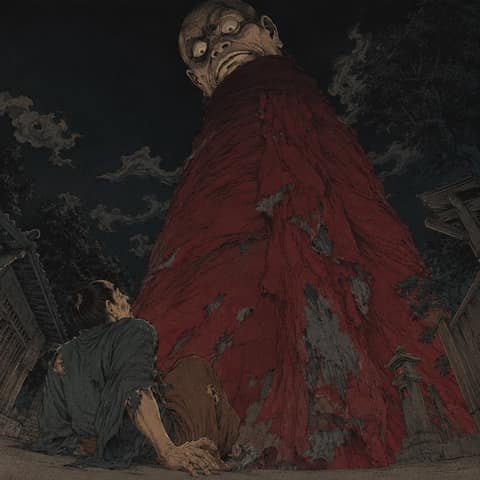
武蔵野の暗い一本道、月もない夜。背後にふと気配を感じて振り返ると、坂道の突き当たりに僧形の影が立っている。見上げれば見上げるほど際限なく高くなり、そのまま見つづければ命を落とすこともある ── それが見越入道である。
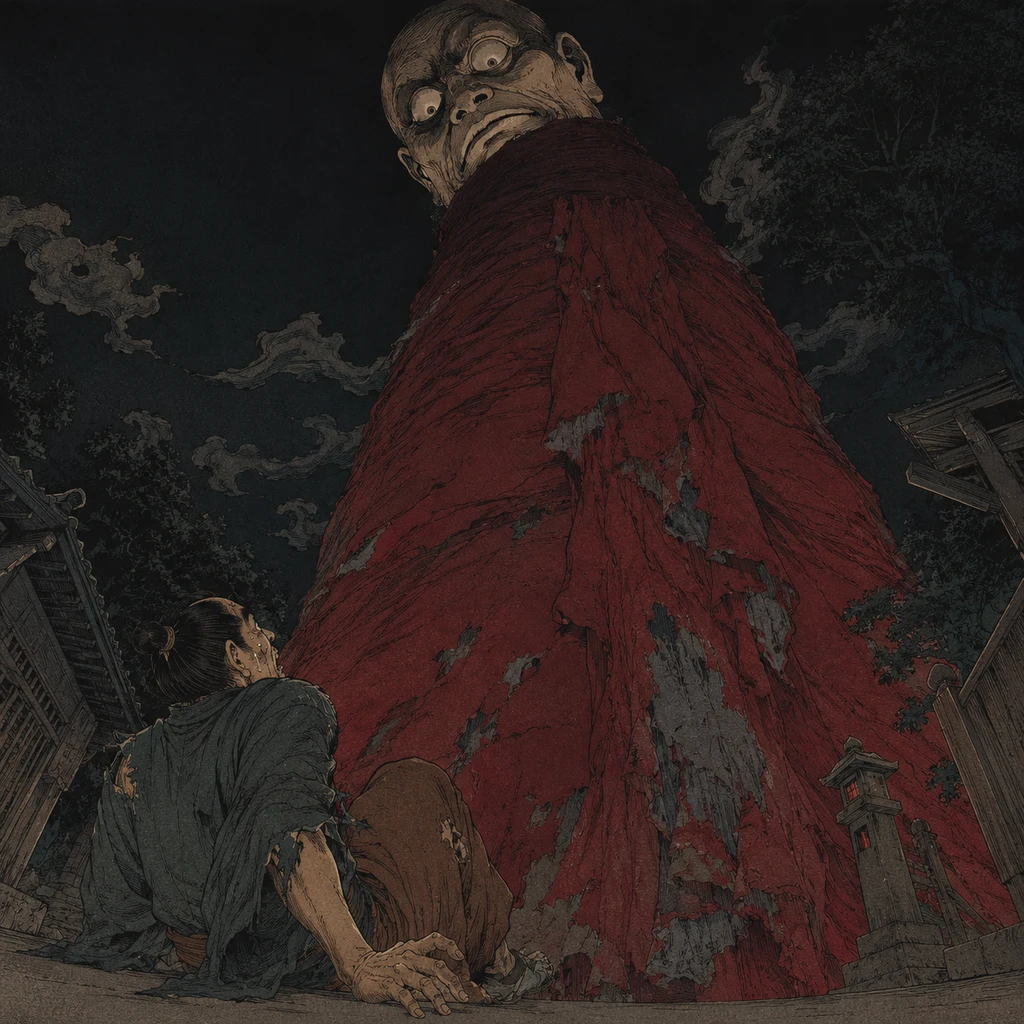
見越入道は、夜道や坂道、四つ辻、石橋のたもとに現れる入道型の怪である。見上げるほど大きくなることから「見上入道」「次第高」「伸び上がり」など、各地でさまざまな名で呼ばれた[11]。退け方も語り継がれており、相手より先に「見こした」と言い当てれば、すっと消えるとされる。文献では、貞享三年(一六八六年)の『古今百物語評判』に、この入道型の怪が狸の化けたものとして登場する。動物が化けたという説は各地に多く、福島ではイタチ、愛媛ではカワウソとも語られた。

この怪が武蔵国にふさわしいのは、その舞台が「人の通う夜道」だからである。武蔵野台地は、かつて見渡すかぎりの雑木林と萱野が広がり、村と村のあいだを細い一本道がつないでいた。街灯などない時代、その道を一人で歩く心細さ、背後にふと感じる気配、ふくらむ不安 ── そうした身体感覚そのものが、見越入道という形を取った。秩父の狼神が壮大な神格として山に屹立するのに対し、武蔵野の見越入道は、人の感覚の隙に滑り込む「気配の怪」である。同じ武蔵国のなかに、祀り上げる山の信仰と、言い当てて御する平野の知恵という、二つの異なる怪異との向き合い方が共存している。見越入道は、武蔵野の夜という巨大な闇が、人の視覚を通して結晶した存在だと言ってよい。

奉公の女がもたらす怪 ── 池袋の女

武蔵国の最後の一体は、山でも川でも夜道でもなく、人の暮らしのただなかから生まれた。江戸近郊の一つの村の名を負った怪 ── 池袋の女である。
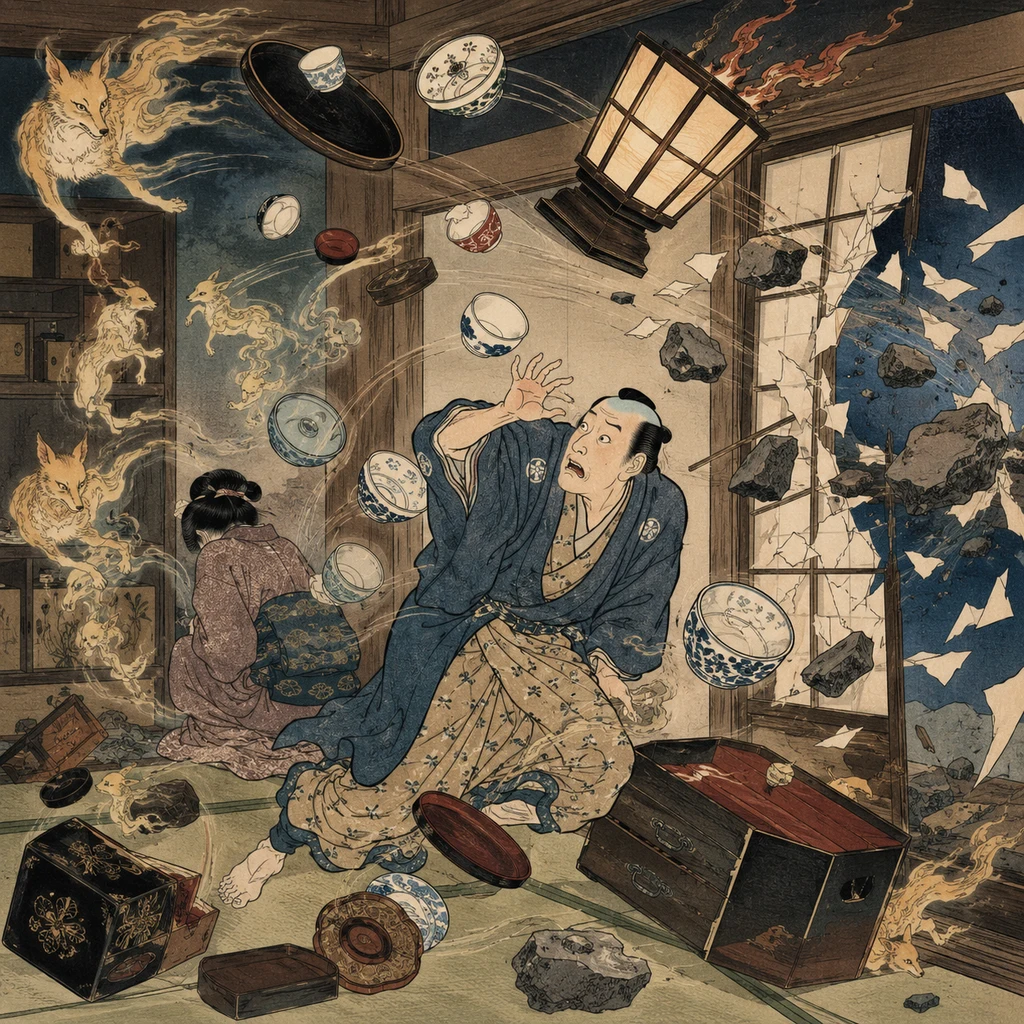
The Woman of Ikebukuro

ee-keh-BOO-kroh no OHN-nah

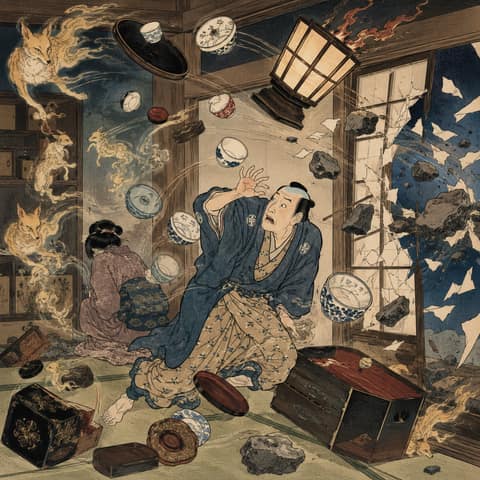
A late Edo-period folk belief: hiring a woman from Ikebukuro into another household would bring poltergeist-like disturbances—mysterious noises, thrown stones, and dishes or lanterns flying about. First recorded in Negishi Jin’e’s Mimibukuro (Kansei era), where hauntings followed a servant’s affair with a household member and ceased once she was dismissed. Similar tales are told of women from Ikejiri, Numabukuro, and Meguro, sometimes linked to the protection of their local tutelary deities or to the curse of osaki spirit-users.

Read more

寛政期(一七八九〜一八〇一年)に編まれた根岸鎮衛の随筆『耳袋』に、興味深い俗信が記録される。武蔵国豊島郡池袋村、現在の東京都豊島区にあたる村の出身の女を、江戸の屋敷で女中として雇うと、家内に怪音が響き、行灯や茶碗、臼までが飛び交う騒擾が起こるというのである。初出の話では、家人がこの下女と密通したのちに怪異が続き、下女を暇に出すと止んだという。西洋でいうポルターガイスト現象が、特定の村の出身者と結びつけて語られた点に、この俗信の独特の構造がある。

類話は池尻(世田谷)、沼袋(中野)、目黒など、いずれも江戸城下から見て周縁・郊外にあたる地名に広く分布する[14]。共通するのは「中心から見て周縁から来た者が、中心の秩序を乱す」という構図である。産土神が氏子を惜しむあまり、他所での色事に妖怪を遣わすという説明も伝えられ、自作自演説や報復説も近世の雑書に見える。江戸後期の都市意識 ── 中心は文明、周縁は怪異 ── が出身地への偏見と結びついて妖怪化した例であり、民俗学と差別研究の交点に位置する重要な事例である。

ここで「武蔵国」という枠が改めて意味を持つ。池袋も池尻も沼袋も目黒も、江戸から見れば「外」であったが、いずれももとは同じ武蔵国の村々である。都市江戸が肥大していく過程で、同じ国のはずの近郊の村々が「怪異の里」として他者化されていった ── 池袋の女は、武蔵国という一つの大地が、江戸という巨大都市の出現によって「中心」と「周縁」に引き裂かれていく、その断層線の上に立つ妖怪なのである。江戸の都市怪談としての池袋の女のさらなる文脈は東京都の妖怪事典で扱っている。

結び ── 一つだった国の記憶

武蔵国の妖怪をこうして辿ると、現代の県境では決して見えてこない一つの像が結ばれる。无邪志・胸刺・知々夫の三つの国造が合して一つになったこの大地は、海辺の浅草から武蔵野の台地、そして奥秩父・奥多摩の山塊までを抱える、地形の幅そのものを怪異の幅としていた。

山の縁には、日本武尊を導いた狼神・大口真神が、秩父三峯と武蔵御嶽という東西二つの核に祀られた。台地には、地形を踏み均した巨人ダイダラボッチの足跡が、代田から太田窪まで点々と残った。東辺の川には、西国から流れ来たかのような牛鬼が浅草寺に現れ、牛島神社に祀り込まれた。村と村をつなぐ夜道には、見上げるほど高くなる見越入道が立ち、江戸近郊の村からは、都市の周縁意識が生んだ池袋の女が現れた。狼神を祀り上げる山の信仰、巨人の足跡を地名に読む平野の記憶、害悪を神へと転じる御霊の文法、気配を言い当てて御する夜道の知恵、そして都市と周縁の断層が生む俗信 ── これらすべてが、かつて一つの国号のもとにあった。

今、その大地は東京都と埼玉県、そして神奈川県東部に分かれている。江戸の都市怪談の精緻な系譜は東京都の妖怪事典へ、秩父の山岳信仰と武蔵野の生活の怪は埼玉県の妖怪事典へと、それぞれ深く受け継がれた。だが、それらが分かれる前、これらの怪異はみな「武蔵」という一つの名を共有していた。都となる前の関東平野 ── その広野を吹き渡った風の記憶が、ここに挙げた五体の妖怪のなかに、今も静かに息づいている。
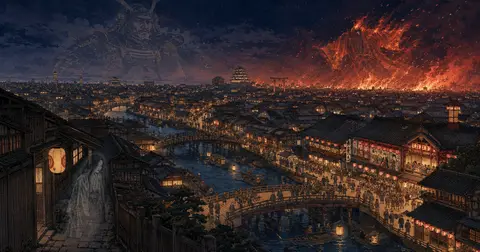
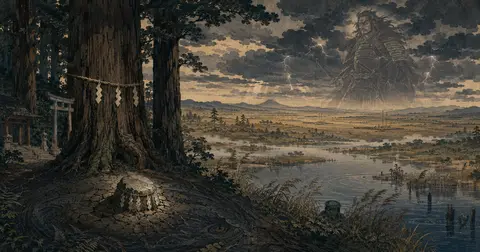
All yokai of Musashi Province6

Complete list of yokai linked to Musashi Province, including those not featured in the article above.

  • Oguchi-no-magami

    Oguchi-no-magami

    Divine

    Oguchi-no-magami

    The Divine Messenger of Chichibu Mitsumine: Oinu-sama

    Divine Spirits / DeitiesMitsumine Shrine (Present-day Mitsumine, Chichibu City, Saitama Prefecture) / Musashi Province

    Oguchi-no-magami is not merely a beastly yokai, but the crystallization of a faith that enshrined the Japanese wolf—a real, apex predator of the mountains—as a "True God." Centered around Mitsumine Shrine in Chichibu, Musashi Province, and extending to sanctuaries like Musashi Mitake Shrine and Hodosan Shrine, it is a guardian deity that permeates the wolf-worshipping sphere of the Kanto region. Its essence lies in "purification and exorcism." The fire that attacks a house, the thief that sneaks in, the evil spirits that possess people—the divine nature of a "watchdog" capable of sniffing out and driving away unseen disasters was strongly sought after by the commoners of the early modern period. The unique practice of *Gokensoku Haishaku* is an intense form of faith where the deity itself is welcomed into the home for a year. Through repeated cycles of returning and renewing the amulet, the bond between the deity and the household is maintained. The fact that an extinct beast is still treated as a god today demonstrates the deep-rooted strength of this faith.

  • Ushi-oni

    Ushi-oni

    Legendary

    ushi-oni

    Ushi-oni, the Bull-Headed Spider of the Deep

    Animal ShapeshifterCoasts from Shikoku and the Chūgoku region to Musashi, especially around the Seto Inland Sea

    Edo-period picture scrolls and modern yokai encyclopedias often give Ushi-oni its best-known form: a sea demon with the head of a bull and the body of a spider. The image joins a primal fear of dark, deep water to the spider's refusal to release anything caught in its web. Cattle were closely bound to farming and water control in older Japanese life, and could be revered as sacred animals, messengers of a water deity, or divine beings in their own right, as in the case of Gozu Tennō. One influential interpretation therefore sees the Ushi-oni lurking in a deep pool as the fallen form of a violent water deity—a power once worshiped and feared that became a yokai as its cult declined. This is no mindless beast. Ushi-oni can supposedly kill a person merely by licking their reflection, and it uses Nure-onna as bait before striking at a vulnerable victim. Such arbitrary, absolute power retains the character of a dangerous deity. Its resentment is strong enough to keep a severed body part moving, leaving an ordinary person almost no hope of resistance. People instead appealed to higher Buddhist powers such as Senju Kannon, or brought Ushi-oni itself into a festival at the head of the mikoshi procession. Properly received as an aramitama—a rough and violent divine spirit—its ferocity could be turned toward defending the town from other evils.

  • Mikoshi-nyūdō (Looming Priest)

    Mikoshi-nyūdō (Looming Priest)

    Epic

    mee-KOH-shee nyoo-DOH

    Mikoshi-nyūdō (Edo Kaidan Record Type)

    Demons & GiantsVarious regions of Japan (especially Kantō, Tōkai, Shinshū, and Chūgoku)

    An Edo-period anecdotal and ghost-story variant in which a giant priest-like figure blocks the night road, chilling the heart of anyone who looks up. In some regions it is treated as a plague-bringing deity that can cause fever or sudden death, and is taboo to step over. Its true nature is left unclear, sometimes taken as a disguise of a shape-shifting animal or a haunted object. Methods of banishment emphasize conduct unshaken by fear, such as calling it out by name, looking down on it, or pretending to measure its height.

  • Osaki-gitsune

    Osaki-gitsune

    Rare

    osaki-gitsune

    The Small Fox Clinging to Family Lineages: Osaki-gitsune

    Animal YokaiChichibu, Musashi Province (Present-day Chichibu region, Saitama Prefecture) / Kōzuke Province and Kōshinetsu region

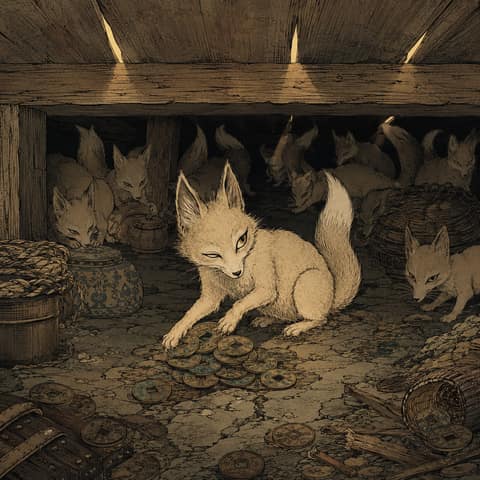
    In this version, we read the Osaki-gitsune as the "small fox clinging to family lineages." The terror of the Osaki-gitsune is not that it suddenly jumps out on a mountain path. Its terror lies in the fact that by being spoken of as possessing a house for generations—that the family is an "Osaki holder"—it completely alters the reputation of the entire family. The yokai does not appear before the individual; it rides upon the family name. The Osaki-gitsune functioned as an explanation for wealth. In village societies, when only a specific family became wealthy, the reason was sometimes spoken of not merely as effort or luck, but as the invisible power of a fox. This narrative contains both envy and fear. A wealthy family has power, but whether that power is legitimate is doubted. The Osaki-gitsune is an entity that translates economic imbalance into the form of a yokai. As an explanation for illness or possession, the Osaki-gitsune also played a major role. Unexplained ailments, sudden madness, and abnormal appetites were spoken of as fox possession, becoming subjects for prayers and exorcisms. Here, the fox does not just enter the sick person's body; it spreads the suspicion of "Who sent it?" and "Which family has it?" The belief in spirit possession expands bodily issues into issues of the family and the community. The proximity to the Kuda-gitsune enriches the reading of this version. Both are small fox spirits that possess houses and are tied to wealth and disease. However, while the Kuda-gitsune easily takes on the sorcerous image of bamboo tubes or Izuna magic, the Osaki-gitsune functions more strongly as a family's reputation. Whether they actually keep a fox cannot be confirmed. Even so, simply being said to "have it" sways marriage prospects and social interactions. The invisible fox has visible effects socially. The Osaki-gitsune in this version is less a yokai with the appearance of a small animal, and more a suspicion dwelling in a house. While the shape of its tail or the size of its body changes depending on the teller, the feeling that "there is something in that house" never disappears. The outline of the Osaki-gitsune is clearest when we shift our eyes from searching for yokai in the fields and mountains, to looking at family reputations. The power of the Osaki-gitsune lies not in visible possessions, but in the suspicion of invisible possession. Even without evidence of actually keeping a fox, if it is said that "that house has Osaki," the attitudes of those around them change. Before showing its form, the yokai begins to operate as a reputation. In this version, we read the Osaki-gitsune as a memory device of the village. A certain family has been rich since the old days, produces sick people, or is avoided in marriage. Such memories are bundled under the name of the fox. The Osaki-gitsune has the function of transforming individual incidents into the narrative of a single family lineage. Therefore, the cute image of a fox is insufficient for the Osaki-gitsune. Even though it is small, it sways the evaluation and future of a family. Though it is a fox yokai, what it truly bites into are human relationships. The small fox lurking in the house becomes largest in the eyes of the community. Precisely because it is invisible, this fox enters deep into the house. The fewer people who have seen its form, the harder it is to deny. Something no one can verify sways the judgments of marriage and association. The Osaki-gitsune demonstrates very sharply the process by which a yokai becomes a social fact. That slight invisibility is what makes the Osaki-gitsune remain for a long time.

  • Ohaguro-bettari

    Ohaguro-bettari

    Rare

    ohaguro-bettari

    Ohaguro-bettari, the black-toothed bridal face

    Humanlike and hybrid yokaiEdo (present-day Tokyo), in the late-Edo illustrated kaidan tradition

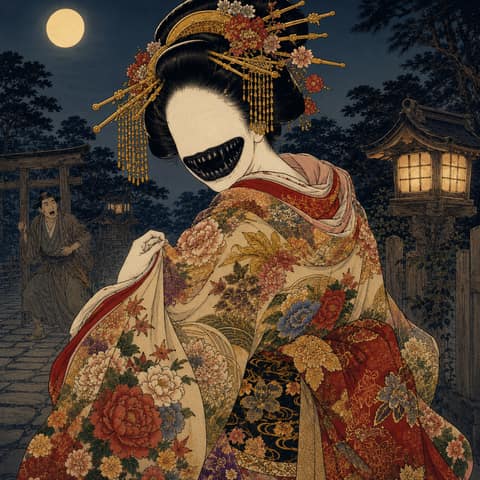
    The Ohaguro-bettari, taking the form of a bride's mask with blackened teeth, is a yokai whose encounter always begins with the gesture of hiding its face. The target first sees the figure of a beautiful woman, or perhaps someone who looks like a bride. The kimono, the downcast posture, the hidden visage. Natural human curiosity kicks in, a desire to verify the face lying beneath the formal attire. But that curiosity itself becomes the trap. As is often the case with the cluster of yokai in the "Ehon Hyakumonogatari", this monster establishes its terror not through lengthy explanations, but through the psychological drop between the moment before looking and the moment after. When the face is raised, the expected beautiful features are absent. There are no eyes, no nose—only a mouth. And within that mouth, the historical bodily adornment known as ohaguro manifests so thickly and darkly that it practically dominates the entire face. Tooth-blackening was originally a custom tied to beauty, maturity, and marriage, varying by era and social class. The Ohaguro-bettari does not erase these social meanings; rather, it amplifies them to an excess. That is why it is terrifying. The black teeth are not a "makeup failure"; they are a grotesque form where the makeup alone has consumed the face. The structure of this yokai is close to the Noppera-bo, yet distinct. A Noppera-bo renders the entire face blank. The Ohaguro-bettari leaves only a mouth within that blankness. The viewer searches for the other's eyes, but there are none. They search for the source of a voice, but there is only a mouth. The center of the face presses forward not as a place to read expressions, but as a black fissure. The tools humans use to comprehend a face are stripped away one by one, leaving only the "mouth" in grotesque excess. Its relationship with bridal attire is also vital. A bride's dress symbolizes blessing, family, union, and social approval. Yet when it appears as a yokai, that blessing becomes a trap of encounter. The gesture of hiding the face looks like modesty, but it is actually a curtain to draw the victim closer. Calling out, trying to see the face, stepping near. Once that sequence of actions is complete, the gaping maw of black teeth is revealed. In other words, the Ohaguro-bettari is not simply an ugly monster; it is a yokai that inverts etiquette and aesthetic consciousness itself. Late Edo-period ghost story picture books handled this inversion masterfully on the page. "Ehon Hyakumonogatari: Momoyanjin Yawa" combines text and illustration to give the reader both the "imagination before looking" and the "shock after seeing." The Ohaguro-bettari's strength lies precisely in this medium. One glance at the picture and it is understood immediately, but in the instant of understanding, the viewer is sharply reminded of why they tried to look at the face in the first place. The resonance of the word "bettari" (thickly plastered/smeared) in the Ohaguro-bettari's name also aids in reading the iconography. If the black teeth were merely dyed neatly, it would just be makeup. However, when called "bettari," the blackness takes on a density that sticks to the mouth, as if staining the entire face. Edo ghost stories conjure anomalies out of everyday language through such phonetic nuances. Just by attaching a word indicating excess to the name of a custom, the reader already begins to imagine something that is no ordinary bride. In the context of modern yokai relations, the Ohaguro-bettari stands alongside the Noppera-bo, Shirime, Kejoro, and Hone-onna as a "monster of face and attire." People judge others by looking at their face, and understand the situation by looking at their attire. Yet this yokai uses attire to provide false comfort, uses the face to betray expectations, and abnormally amplifies only the mouth. It uses the collapse of perception, not physical attack power, as its weapon. Because of this, it is not a grand boss to be exterminated, but remains as an unforgettable, single image of abnormality. The black-toothed bride's mask is a quiet, sharp mockery born when Edo aesthetics are flipped inside out in the dark. For this reason, when drawing this creature, simply making a scary face dilutes its essence. What is crucial is that it first succeeds as a beautiful figure in formal dress; next, there must be the tense pause of the hidden face; and finally, the sudden, explosive reveal of the missing eyes/nose and the gaping black-toothed mouth. The Ohaguro-bettari is a yokai that builds expectation before it builds terror, and possesses its greatest power only in the instant it betrays that expectation.

  • The Woman of Ikebukuro

    The Woman of Ikebukuro

    Uncommon

    ee-keh-BOO-kroh no OHN-nah

    Edo Folk Belief: The Woman from Ikebukuro

    General ClassificationsIkebukuro, Toshima District, Musashi Province (modern Toshima, Tokyo)

    A late Edo period folk belief recounts that households employing a woman from Ikebukuro would suffer a barrage of noisy disturbances: sounds of thrown stones, damaged shutters, flying utensils and lanterns, and small fires flitting into the tatami room. Many versions begin with an affair between the master and a maid, and the phenomena cease once the maid is dismissed. Explanations vary, including obligations to the local tutelary deity, links to Osaki-possession tales from the Chichibu area, or simple human contrivance such as hoaxes and harassment. Rather than a single yokai individual, the term serves as a catch-all for disturbances tied to hiring women from certain locales, with parallel cases recorded for places like Ikejiri, Numabukuro, and Meguro.

Read on ── other regions