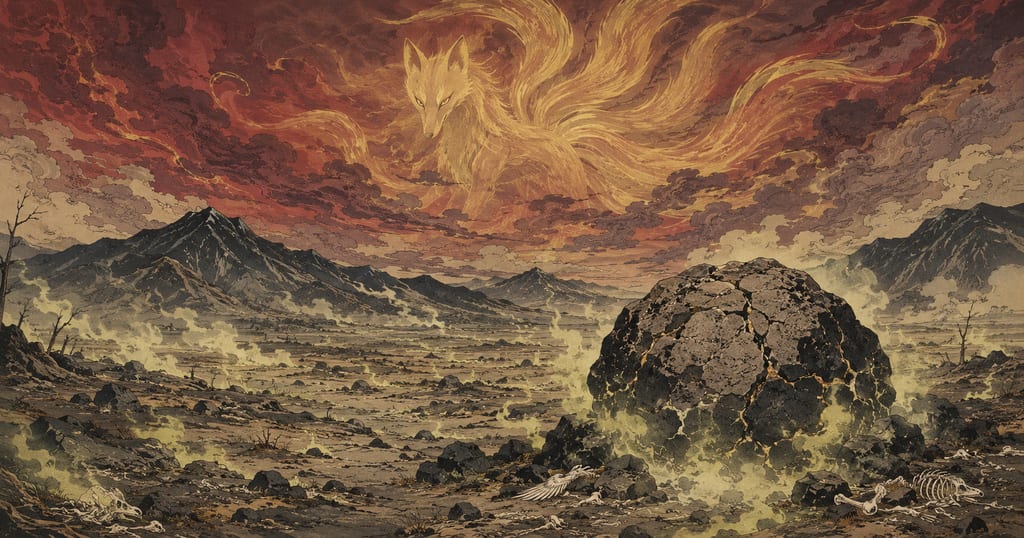
栃木県の北部、那須連山のふもとに広がる那須野(なすの)。今でこそ高原リゾートとして親しまれるこの地は、かつて、日本三大妖怪の一つにも数えられる金毛九尾の狐 ──「玉藻前(たまものまえ)」が、最期を遂げた原であった。
帝を誑(たぶら)かした絶世の美女、その正体は九つの尾をもつ妖狐だった。陰陽師に見破られ、都を追われた狐がたどり着いたのが、この那須野である。そして討たれた狐の怨念は、近づくものの命を奪う「殺生石(せっしょうせき)」と化した ── 本稿は、那須野に刻まれた九尾の狐の伝説をたどる。
那須野という原
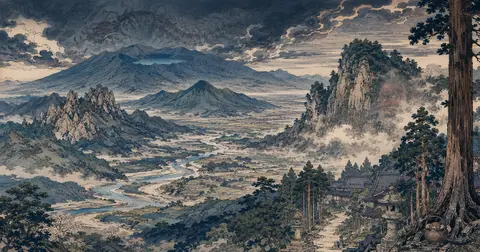
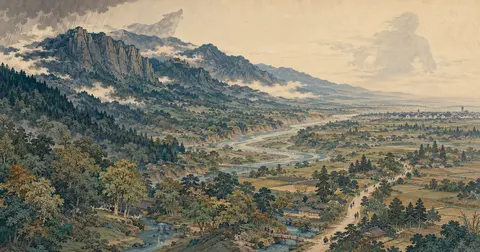
那須野は、那須岳(茶臼岳)を中心とする那須連山の南麓に広がる、広大な扇状地である。古くは人を寄せつけぬ荒野として知られ、その荒涼とした風景が、妖狐伝説の舞台にふさわしい陰影を与えてきた。
なかでも那須湯本温泉のほど近く、岩がごろごろと転がり、硫黄の匂いの立ちこめる一角がある。草木も生えず、鳥さえ落ちるというこの地こそ、九尾の狐が果てて石になったと伝わる「殺生石」のある場所である。賽(さい)の河原を思わせるその荒涼たる景観は、訪れる者に、いまもどこか不穏なものを感じさせる。那須野はまた、源平の昔に扇の的を射抜いた弓の名手·那須与一(なすのよいち)を生んだ地としても知られる。広い原野と、火山の恵みである温泉、そして荒ぶる毒石 ── 恵みと畏れの同居するこの土地柄が、那須野独特の伝説世界を育んできた。
玉藻前、
帝を誑かす
物語は、平安の都にさかのぼる。

Tamamo-no-Mae
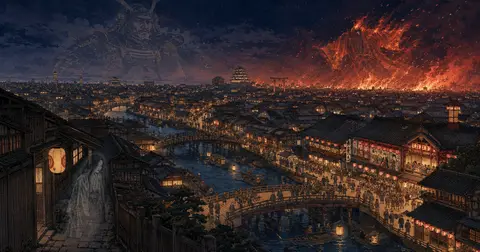
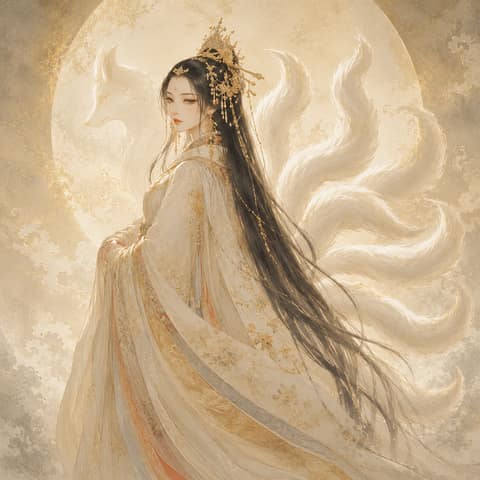
Tamamo-no-Mae is a beauty of unrivaled grace who, in the late Heian period, is said to have served the retired Emperor Toba. Her true form is held to be a nine-tailed fox, yet as a human, Tamamo-no-Mae has above all been remembered as a court lady of rare beauty and deep learning. Poetry and music were a given, but from Buddhist scripture to the old tales of India and China, she answered any question without hesitation, astonishing all at court. The name “Tamamo-no-Mae” carries a story of its own. One night, amid a banquet of poetry and music at the Seiryōden, a gust of wind snuffed out the lamps; in the darkness a dazzling light streamed from her body and lit the hall as bright as day. From this she came to be called “Tamamo-no-Mae,” meaning the lady of the jewel-like, glowing waterweed . Before that, it is said, she had been called Mikuzume. In time she drew all the emperor’s affection to herself, but when he fell ill from an unknown cause, her true nature began to be doubted.
Read more鳥羽上皇のもとに、玉藻前と呼ばれる美しい女房がいた。比類なき美貌と、いかなる問いにも答える博識で、上皇の寵愛を一身に集めていた[1]。玉藻前は、ただ美しいだけの女房ではなかった。あらゆる学問·詩歌·音曲に通じ、公卿たちのどんな難問にもよどみなく答えたという。その底知れぬ知性こそ、人ならぬものの証だったのかもしれない。だが、上皇がにわかに病に伏せると、その原因をめぐって、ある陰陽師が暗躍する。陰陽師·安倍泰成(あべのやすなり)は、上皇の病が玉藻前の仕業であると見抜いた。泰成が真言を唱えると、玉藻前は変身を解かれ、金毛九尾の狐の正体を現して、宮中から姿を消した[1]。
絶世の美女の正体が、九つの尾をもつ古狐であった ── この衝撃的な転換こそ、玉藻前伝説が長く人々を惹きつけてきた核心である。この九尾の狐は、古代中国やインドでも、殷を滅ぼした妲己(だっき)や、周の幽王の后·褒姒(ほうじ)などに化けて国を傾けた、と語られる[1]。海を越えて災いをなしてきた妖狐が、ついに日本の帝のもとに現れた、というのである。
九尾の狐、
那須野に追われる
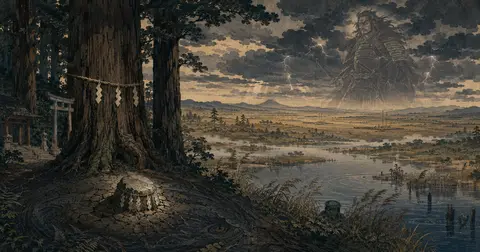
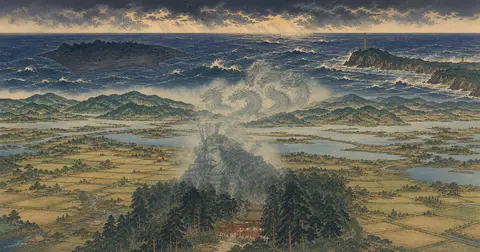
宮中を逃れた九尾の狐が逃げ込んだ先が、東国の那須野であった。

Nine-Tailed Fox
The Nine-Tailed Fox is a spirit-fox said to have lived so long and gathered so much power that its tail divided into nine. Yet the name does not simply mean a fox with many tails. In Japanese yokai imagery, the Nine-Tailed Fox is the largest and most complicated fox figure of all: it joins fox worship, Inari belief, fox possession, tales of beauties who unsettle royal power, and the narrative line that runs from Tamamo-no-Mae to the Sesshoseki killing stone. Its source lies in Chinese antiquity. In the Nanshan jing section of the Shan Hai Jing, Mount Qingqiu is home to a beast shaped like a fox, with nine tails, a cry like an infant, and a taste for human flesh. This fox is monstrous; yet in ancient China the nine-tailed fox could also be a propitious beast, an omen of peace. Later Chinese and Japanese texts layered the auspicious fox and the bewitching fox onto one another, turning the nine-tailed fox into both a sacred beast and a nation-ruining spirit. In Japan, fox lore spread in two directions. On one side stood the white fox, messenger of the Inari deity, guardian of fields, business, and household prosperity. According to Fushimi Inari Taisha, Inari descended on Mount Inari in 711, and the faith now extends to roughly thirty thousand shrines across Japan. On the other side stood the wild foxes and possessing spirits that deceive people, cling to households, or take hold of a region: yako, kuda-gitsune, osaki, izuna, and others. The Nine-Tailed Fox stands between these poles. It has the noble aura of a near-divine white fox, but also the danger of entering human society from within and shaking power itself. In Japan, the figure was fixed above all by the stories of Tamamo-no-Mae and the Sesshoseki. Tamamo-no-Mae is told as a peerless beauty loved by the retired Emperor Toba; exposed as a fox, she flees to Nasu, is slain, and becomes a poisonous stone. The three names are related, but they are not interchangeable. The Nine-Tailed Fox is the true form; Tamamo-no-Mae is the courtly incarnation; the Sesshoseki is what remains after death. Once those stages are joined, the fox is no longer just an animal that tricks humans. It becomes a great spirit-fox carrying beauty, intellect, politics, death, and pacification.
Read more放っておけば災いをなす妖狐を討つべく、朝廷は討伐軍を派遣する。三浦介義明(みうらのすけよしあき)·上総介広常(かずさのすけひろつね)らを将とし、軍師には正体を見破った安倍泰成が任じられた[1]。武士たちは那須野を取り囲み、知略を尽くして狐を追いつめていく。討伐は容易ではなかった。神通力を操る狐に、武士たちはたびたび翻弄されたと伝わる。一説には、動く的を射る訓練として犬を追い射る武芸「犬追物(いぬおうもの)」が、この狐退治の調練から始まったともいわれる。
そして、ついにその時が来る。三浦介の放った二本の矢が、狐の脇腹と首筋を貫き、上総介の長刀が斬りつけたことで、九尾の狐はついに息絶えた[1]。帝をも誑かした古狐の、壮絶な最期であった。だが ── 物語は、これで終わらない。狐の執念は、その亡骸とともに、那須野の地に深く沈んでいくのである。
殺生石となった怨念
討たれた九尾の狐の怨念は、消えることがなかった。

Killing Stone
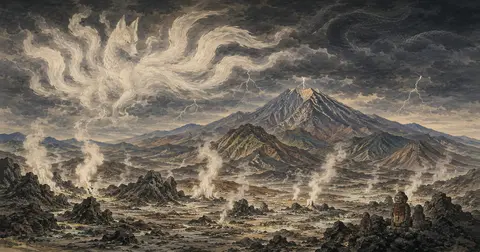
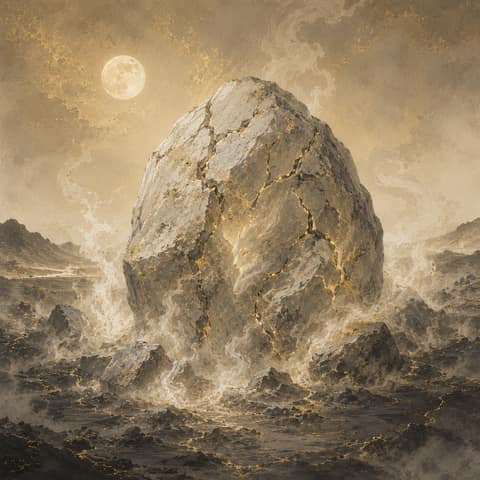
The Killing Stone is a great mass of lava beside the Nasu Yumoto hot springs in Tochigi Prefecture, long feared as a poison stone that takes the life of any creature that draws near. The whole area is a volcanic fumarole zone, where toxic volcanic gases such as hydrogen sulfide and sulfur dioxide vent ceaselessly from fissures in the ground. Because these gases are heavier than air and pool in hollows, birds, insects, and small beasts that venture near are poisoned and die. From this—a stone that kills living things—it came to be called the “Sesshōseki,” the Killing Stone. The barren, sulfur-reeking waste where no plant grows is called the Sai-no-Kawara, lined with countless Jizō statues. Matsuo Bashō, who visited in 1689, wrote in Oku no Hosomichi (The Narrow Road to the Deep North) that bees, butterflies, and the like lay dead in such heaps, killed by the poisonous fumes, that the color of the sand could not be seen. By legend, this stone is the transformed shape of the slain nine-tailed fox (Tamamo-no-Mae), though that tale is told in full elsewhere.
Read more九尾の狐が斃れたのち、その亡骸は巨大な毒石へと変じ、近づく人や鳥獣の命をことごとく奪うようになった。人々はこれを「殺生石」と名づけて恐れた[2]。生けるものを殺す石、という直截な名そのものが、人々の恐怖の深さを物語っている。その毒気の及ぶ範囲は広く、付近一帯は長く人の立ち入りを避けられてきた。妖狐の怨念が石に宿り、生あるものを殺しつづける ── その伝説には、討たれてなお消えぬ妖異への、深い畏れがこめられている。
興味深いのは、この伝説が、那須湯本に実在する自然現象に根ざしている点である。殺生石のある一帯は火山地帯で、硫化水素や亜硫酸ガスといった有毒な火山ガスが絶えず噴き出している。2022年12月にも、殺生石の付近でイノシシ八頭の死骸が見つかっている[2]。近づく生き物が次々と倒れるという伝説は、決して荒唐無稽な作り話ではなく、目に見えぬ毒気に対する、人々の経験的な実感から生まれたものだったのである。
玄翁和尚の済度
人々を苦しめつづけた殺生石も、やがて、ある高僧の手によって鎮められる。
室町時代の至徳2年(1385年)、玄翁(げんのう)和尚という名僧が、殺生石を打ち砕いて、その怨念を済度(さいど)したと伝わる[2]。法力をもって石を割り、狐の魂を成仏させたというのである。怨念を抱いた存在を打ち砕き、その魂を仏の道へ導く ── 玄翁和尚の済度は、武力による討伐とはまた異なる、仏教的な解決のかたちであった。狐は討たれただけでは鎮まらず、僧の祈りによってようやく成仏する。そこには、怨霊を恐れ、その鎮魂を切に願った中世の人々の心性が、よく表れている。砕けた殺生石の破片は、各地へと飛び散り、会津や美作など、遠く離れた土地にも「殺生石」の伝説が残ることになったと語られる。なお、堅いものを打ち砕く大きな金槌を「玄能(げんのう)」と呼ぶのは、この玄翁和尚の名にちなむともいわれている。
割れた殺生石、
今も
九尾の狐の伝説は、現代にいたってもなお、人々の関心を集めつづけている。
2022年3月、那須の殺生石が、自然に真っ二つに割れていることが確認され、大きな話題となった[2]。「封じられていた九尾の狐が解き放たれたのではないか」── そんな声がインターネット上を駆けめぐったのも、この石にまつわる伝説の根強さゆえであろう。
帝を誑かした絶世の美女、見破られて逃げた九尾の狐、近づくものを殺す毒石、そして高僧による済度 ── 那須野に伝わる玉藻前の物語は、美と妖、罪と罰、怨念と救済という、人の心をとらえてやまぬ主題を、一つの原野の風景のなかに凝縮している。荒涼たる殺生石の景は、その壮大な伝説を、いまも静かに語り伝えている。栃木の妖怪と伝承の全体像については栃木県の妖怪事典も併せて読まれたい。