YOKAI.JP

Shojo

しょうじょう

Shojo

Shojo

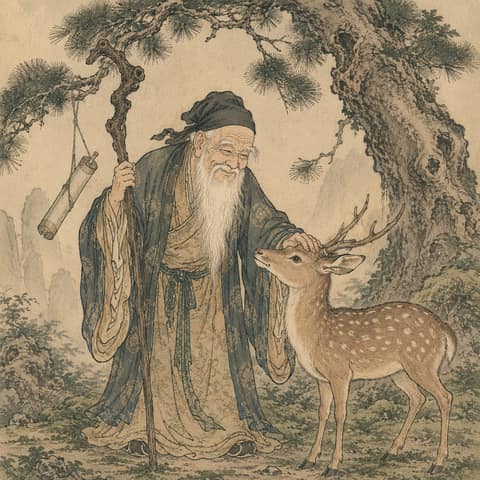
Their soul is listening — speak, and they will answer.

Basic Description

A legendary sacred beast appearing in Chinese classics such as the Classic of Mountains and Seas, Book of Rites, Chuci, Huainanzi, and Commentary on the Water Classic, possessing two lines of lore: a "beast capable of speech" and a "beast fond of wine and human blood". Terajima Ryoan's "Wakan Sansai Zue" (1712) clearly stated that "yellow hair is correct, and the red hair theory is a mistake", but in Japan, the image of "red hair and red face" became established due to the influence of Noh theater; this divergence between the original Chinese yellow hair and the uniquely Japanese red hair is of great interest in art history. The Noh play "Shojo" (established in the Muromachi period, author unknown, currently performed by all five schools as a fifth-group play, kiri-Noh, and celebratory Noh) is set in Tang China at the Xunyang River, telling the story of the wine merchant Kofu, who is granted an "inexhaustible wine jar" as a reward for his filial piety; it is famous for its highly advanced dance movements such as the chu-no-mai and midare. During the Edo period, it appeared in treasure ship paintings as an irregular type of the Seven Lucky Gods replacing Jurojin (first cited in Kita Sadakichi's "Study of the Gods of Fortune" in 1920), depicted by Hokusai, Kuniyoshi, and Yoshitoshi. In the "Shojo" giant doll festival of Nagoya, Arimatsu, and Tokai City (Edo period, first appearing in the "Narumi Festival Picture" in 1779), red Shojo dolls tap children to ward off summer diseases and epidemics. "Shojohi" (Shojo scarlet) is a red woolen cloth derived from Noh, highly prized by Sengoku warlords like Nobunaga, Hideyoshi, and Ieyasu for their jinbaori (surcoats). The slug `shojo` uses the Hepburn romanization with omitted macrons, standard in the English-speaking world.

Folklore & Legends

The origins of the Shojo lie in two lineages of lore from Chinese classics. ① The "Speaking Beast" Lineage — In the "Quli" section of the "Book of Rites", it is stated: "The parrot can speak, but it still belongs to the birds; the shojo can speak, but it still belongs to the beasts" (a moralistic quote meaning that even if it understands human speech, it does not transcend the realm of beasts). The "Erya" describes it as "small and fond of howling," while the "Classic of Mountains and Seas" states: "On Mount Zhaoyao, there is a beast whose shape resembles a macaque with white ears; it crouches to walk and runs like a human. Its name is xingxing (=shojo), and eating it makes one a good runner." ② The "Beast Fond of Wine and Blood" Lineage — The "Commentary on the Water Classic" notes that the shojo of Pingdao County in Jiaozhi "looks like a yellow dog or a badger, has a human face with regular features, is good at talking with people, and its voice is as beautiful as a fine woman's." The "Lüshi Chunqiu" considers "the lips of the shojo" a great delicacy, while Li Shizhen's "Bencao Gangmu" (1596) details it as a creature from Jiaozhi (modern-day northern Vietnam) with a human face, beast's body, yellow hair, and a fondness for wine. The modern associations with the orangutan or palm civet are later identifications; academically, the classical shojo is best understood not as a real animal but as a composite image of a legendary sacred beast.

Its introduction to Japan occurred before the Middle Ages via Chinese texts and Buddhist scriptures. The "Wamyō Ruijushō" (10th century) introduced it as a "speaking beast" citing the "Erya", and it appeared indirectly in the "Konjaku Monogatarishu". Terajima Ryoan's "Wakan Sansai Zue" (1712) was groundbreaking — it explicitly pointed out that "yellow hair is correct, and the 'red hair' theory circulating in Japan is mistaken." Nevertheless, the image of "red hair" became entrenched in Japan due to the influence of Noh theater, a divergence that forms an interesting point of debate in art history and folklore. The uniquely Japanese image of red hair flowed backward from Noh costumes and became fixed.

The Noh play "Shojo" (established in the Muromachi period, author unknown) is a current repertoire piece for all five schools, and is one of the most beloved plays, serving as a fifth-group play and kiri-Noh. Set at the Xunyang River in Tang China, it tells the story of Kofu, a filial son who sells wine in the village of Yangzi, and succeeds after a dream revelation. A red-faced customer who frequents Kofu's shop daily introduces himself as the "Shojo who lives in the sea." Waiting at the Xunyang River on a moonlit night, the Shojo appears, drinks wine, performs a dance, and bestows an "inexhaustible wine jar" — a celebratory theme of rewarding filial piety. The play fuses sources like the "Tang Guo Shi Bu", the "Chuci" (The Fisherman), and Li Bai's poem about the Xunyang River. The costume features a red wig, red Karaori robe, scarlet divided skirts, and a dedicated Shojo mask (painted red, with a smiling mouth and eyes). Its highlight is the "chu-no-mai" dance, or the special performance (kogaki) "midare" — a highly advanced technique where the performer glides over the water with erratic, flowing steps.

In the Edo period, because Jurojin and Fukurokuju of the Seven Lucky Gods were identical, a variant Seven Lucky Gods circulated where Jurojin was replaced by the Shojo. Kita Sadakichi's "Study of the Gods of Fortune" (1920) cites primary sources like the "Genroku Gorui Setsuyo", making it academically robust. This variant form also appears in treasure ship paintings by Hokusai, Kuniyoshi, and Yoshitoshi.

A "Shojo" giant doll festival has been passed down since the mid-Edo period in Arimatsu and Tokai City in Nagoya. Spreading along the old Tokaido highway, it already appeared in the "Narumi Festival Picture" of 1779. Giant red Shojo dolls chase children, and being tapped by one is believed to ward off summer diseases and epidemics. There are also local legends across the country, such as oral traditions of small Shojo appearing at sea in Toyama, or a ship-ghost variant demanding "give me a barrel" in Yamaguchi.

"Shojohi" (Shojo scarlet) is a deep crimson color originating from the red costumes of the Noh play "Shojo". Though popularly called the "color of Shojo's blood," the actual dye was cochineal/kermes, and the "Shojo's blood" is merely a myth. Scarlet woolen cloth imported via the Nanban trade in the late Muromachi to early Edo periods was highly prized by Sengoku warlords for their surcoats. During the Edo period, it was such a rare luxury that the shogunate would confiscate it from merchants, making it a symbol of martial prowess and authority.

In modern times, it appeared in Hayao Miyazaki's "Princess Mononoke" (1997) as the "sages of the forest," trying to replant trees to restore the forest but unable to keep up with humans, begging San to "let us eat humans, we want human strength". The red image of the Shojo is also inherited in biological names like the fruit fly (Drosophila, named for its attraction to alcohol), the Shojo dragonfly, and the Shojo-bakama flower.

Related Yokai

Yokai deeply tied to this one in legend.

Kindred1

Detailed Analysis

The origins of the Shojo lie in two lineages of lore from Chinese classics. ① The "Speaking Beast" Lineage — In the "Quli" section of the "Book of Rites", it is stated: "The parrot can speak, but it still belongs to the birds; the shojo can speak, but it still belongs to the beasts" (a moralistic quote meaning that even if it understands human speech, it does not transcend the realm of beasts). The "Erya" describes it as "small and fond of howling," while the "Classic of Mountains and Seas" states: "On Mount Zhaoyao, there is a beast whose shape resembles a macaque with white ears; it crouches to walk and runs like a human. Its name is xingxing (=shojo), and eating it makes one a good runner." ② The "Beast Fond of Wine and Blood" Lineage — The "Commentary on the Water Classic" notes that the shojo of Pingdao County in Jiaozhi "looks like a yellow dog or a badger, has a human face with regular features, is good at talking with people, and its voice is as beautiful as a fine woman's." The "Lüshi Chunqiu" considers "the lips of the shojo" a great delicacy, while Li Shizhen's "Bencao Gangmu" (1596) details it as a creature from Jiaozhi (modern-day northern Vietnam) with a human face, beast's body, yellow hair, and a fondness for wine. The modern associations with the orangutan or palm civet are later identifications; academically, the classical shojo is best understood not as a real animal but as a composite image of a legendary sacred beast.

Its introduction to Japan occurred before the Middle Ages via Chinese texts and Buddhist scriptures. The "Wamyō Ruijushō" (10th century) introduced it as a "speaking beast" citing the "Erya", and it appeared indirectly in the "Konjaku Monogatarishu". Terajima Ryoan's "Wakan Sansai Zue" (1712) was groundbreaking — it explicitly pointed out that "yellow hair is correct, and the 'red hair' theory circulating in Japan is mistaken." Nevertheless, the image of "red hair" became entrenched in Japan due to the influence of Noh theater, a divergence that forms an interesting point of debate in art history and folklore. The uniquely Japanese image of red hair flowed backward from Noh costumes and became fixed.

The Noh play "Shojo" (established in the Muromachi period, author unknown) is a current repertoire piece for all five schools, and is one of the most beloved plays, serving as a fifth-group play and kiri-Noh. Set at the Xunyang River in Tang China, it tells the story of Kofu, a filial son who sells wine in the village of Yangzi, and succeeds after a dream revelation. A red-faced customer who frequents Kofu's shop daily introduces himself as the "Shojo who lives in the sea." Waiting at the Xunyang River on a moonlit night, the Shojo appears, drinks wine, performs a dance, and bestows an "inexhaustible wine jar" — a celebratory theme of rewarding filial piety. The play fuses sources like the "Tang Guo Shi Bu", the "Chuci" (The Fisherman), and Li Bai's poem about the Xunyang River. The costume features a red wig, red Karaori robe, scarlet divided skirts, and a dedicated Shojo mask (painted red, with a smiling mouth and eyes). Its highlight is the "chu-no-mai" dance, or the special performance (kogaki) "midare" — a highly advanced technique where the performer glides over the water with erratic, flowing steps.

In the Edo period, because Jurojin and Fukurokuju of the Seven Lucky Gods were identical, a variant Seven Lucky Gods circulated where Jurojin was replaced by the Shojo. Kita Sadakichi's "Study of the Gods of Fortune" (1920) cites primary sources like the "Genroku Gorui Setsuyo", making it academically robust. This variant form also appears in treasure ship paintings by Hokusai, Kuniyoshi, and Yoshitoshi.

A "Shojo" giant doll festival has been passed down since the mid-Edo period in Arimatsu and Tokai City in Nagoya. Spreading along the old Tokaido highway, it already appeared in the "Narumi Festival Picture" of 1779. Giant red Shojo dolls chase children, and being tapped by one is believed to ward off summer diseases and epidemics. There are also local legends across the country, such as oral traditions of small Shojo appearing at sea in Toyama, or a ship-ghost variant demanding "give me a barrel" in Yamaguchi.

"Shojohi" (Shojo scarlet) is a deep crimson color originating from the red costumes of the Noh play "Shojo". Though popularly called the "color of Shojo's blood," the actual dye was cochineal/kermes, and the "Shojo's blood" is merely a myth. Scarlet woolen cloth imported via the Nanban trade in the late Muromachi to early Edo periods was highly prized by Sengoku warlords for their surcoats. During the Edo period, it was such a rare luxury that the shogunate would confiscate it from merchants, making it a symbol of martial prowess and authority.

In modern times, it appeared in Hayao Miyazaki's "Princess Mononoke" (1997) as the "sages of the forest," trying to replant trees to restore the forest but unable to keep up with humans, begging San to "let us eat humans, we want human strength". The red image of the Shojo is also inherited in biological names like the fruit fly (Drosophila, named for its attraction to alcohol), the Shojo dragonfly, and the Shojo-bakama flower.

Character Profile

This section is our own creative profile for storytelling. It is not historical fact or scholarship.

Category
Animal Yokai
Rarity
Rare
Personality
Bright, cheerful, and a lover of wine. Living in the sea or the Xunyang River, it appears on moonlit nights to dance—a mysterious yet endearing strange beast. To those who are dutiful to their parents, it generously bestows an inexhaustible jar of wine.
Compatibility
High compatibility with people in the brewing, restaurant, Noh, Kabuki, and traditional performing arts industries. Also suited for those praying for filial virtue, children's health, and protection against epidemics (from the Shojo culture of Arimatsu and Tokai City).
Abilities
Inexhaustible wine jarNoh midare dance / gliding over waterAbility to understand human speechRed hair = divine power against smallpoxWarding off summer diseases and epidemics (Arimatsu Shojo dolls)Rewarding filial children
Weaknesses
Gets drunk easily and reveals its true nature when drinking too much. The dual nature of its origins: "yellow hair originally, Japanese red hair derived from Noh."
Habitat
China: Xunyang River, Jiaozhi (classics) / Noh stage / Festivals in Arimatsu and Tokai City / Local folklore across Japan (Toyama, Yamaguchi, etc.) / Shojohi dyeing culture / Treasure ship paintings / Modern anime.
🔮Yokai Compatibility Test

For more detailed information and diagnosis results about Wine-loving Red-haired Beast, Noh Master of Dance, Shojo, please click here.

Sources & References

6
  1. 猩猩·中国古典出典 (山海経·礼記·楚辞·淮南子·水経注)先秦~六朝中国古典群(古典·能楽·民俗·美術史, 先秦~6 世紀) [古典文献·能楽·民俗·美術史]『礼記』 曲礼上·『爾雅』 釈獣·『山海経』 南山経·『淮南子』·『水経注』·『呂氏春秋』·『本草綱目』 等。 能言獣系統·酒人血好獣系統の二系統伝承。 ベトナム北部·交趾の南方異獣描写。
  2. 『和漢三才図会』 猩猩条 (寺島良安 1712)寺島良安(古典·能楽·民俗·美術史, 1712) [古典文献·能楽·民俗·美術史]江戸期百科事典。 猩猩条で「黄毛が正しく、 当時日本流通の紅髪説は誤り」 と明記。 中国原典考証と日本俗信の乖離を指摘する重要な学術記録。
  3. 能『猩々』 (室町期·全五流現行五番目物·切能)作者不詳·室町期成立(古典·能楽·民俗·美術史, 室町期 (15 世紀)) [古典文献·能楽·民俗·美術史]観世·宝生·金春·金剛·喜多の全五流現行祝言能。 唐土潯陽江·楊子の里·孝子高風·汲めど尽きぬ酒壺。 装束は赤頭·赤面·猩々面。 中之舞·乱 (みだれ) の高度な舞所作。
  4. 七福神変則型·寿老人代替の猩々 (喜田貞吉『福神研究』 1920)喜田貞吉(古典·能楽·民俗·美術史, 1920) [古典文献·能楽·民俗·美術史]『福神研究』 p.80 で「元禄の合類節用には、 寿老人の代りに猩々」 と一次資料を提示。 寿老人·福禄寿同体異名の重複解消の変則型として江戸期に流通。 北斎·国芳·芳年の宝船絵にも見える。
  5. 名古屋·有松·東海市の猩々大人形祭礼 (1779 年初出)鳴海八幡社祭礼·円光庵『鳴海祭礼図』(古典·能楽·民俗·美術史, 1779) [古典文献·能楽·民俗·美術史]江戸中期から続く赤い猩々大人形 (高さ 2-3m) が子供を叩く疫除信仰。 旧東海道·知多街道沿いの伝播。 安永 8 年 (1779) 鳴海祭礼図に初出。 赤色=疱瘡除けの民俗と接続。
  6. 猩々緋·南蛮貿易由来の深紅羅紗戦国~江戸初期·南蛮貿易史(古典·能楽·民俗·美術史, 室町末~江戸初期) [古典文献·能楽·民俗·美術史]赤紫みの強い深紅。 能『猩々』 赤装束由来の色名だが、 実染料はコチニール·ケルメス (中南米/地中海介殻虫)。 信長·秀吉·家康らの陣羽織·南蛮甲冑で珍重。 小早川秀秋陣羽織 (東博·重文)。

Interested in this type of yokai?

Discover the yokai most similar to your personality with our yokai diagnosis

Start Yokai Diagnosis

Meet your guardian yokai at the shrine

Draw an omikuji fortune and discover the yokai watching over you today.