YOKAI.JP
Ryūgū (the Dragon Palace) 海の彼方の異界 ── 竜宮

浦島太郎·乙姫·玉手箱·綿津見。時の流れぬ海神の宮

海の彼方の異界 ── 竜宮

Ryūgū (the Dragon Palace) · りゅうぐう

Also known as: 竜宮城 / 龍宮

海のはるか彼方、あるいは深い海の底に、時の流れぬ宮殿があるという ──「竜宮(りゅうぐう)」である。亀に導かれた浦島太郎が歓待を受け、山幸彦が失くした釣り針を求めて訪ねた、海神の住まう異界。

そこで過ごすひとときは夢のように甘く、しかし戻ってみれば、地上では幾百年もの歳月が流れている。死者の国·黄泉が地の底の暗い異界であるとすれば、竜宮は、海の彼方に憧れられた、もう一つの異界であった。本稿は、日本人が海の向こうに思い描いた、この夢の宮殿をたどる。

海の底の宮殿

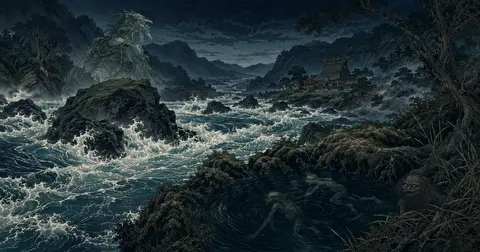
竜宮とは、海の神が住まうとされる、水中の宮殿である。「わたつみのみや(綿津見の宮)」とも呼ばれ、「わたつみ」は海の神霊を意味する。『古事記』『日本書紀』にも登場する、海神の居所の名である

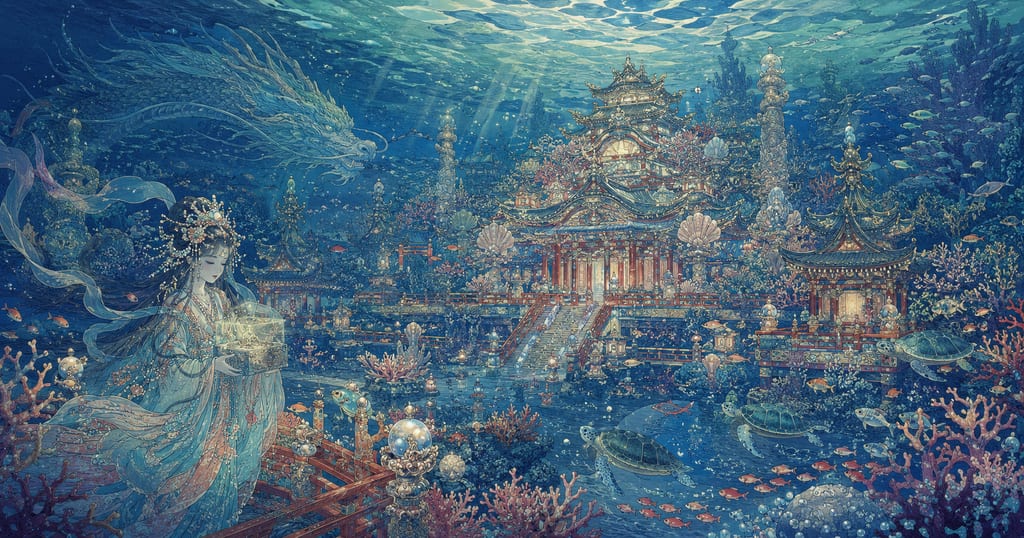
その宮のあるじは、海を統べる龍王(りゅうおう)であり、また、龍王の娘とされる乙姫(おとひめ)である。竜宮は仏教的な世界観のなかで海中の異界として位置づけられ、その内と外とでは時間の流れが異なり、訪れた者に宝物を与える場として語られた。陸の世界の理(ことわり)が通じない、海の彼方の楽土 ── それが竜宮であった。後世の『御伽草子』などに描かれる竜宮城は、金銀珊瑚で飾られ、四方にそれぞれ春夏秋冬の景色が広がる絢爛たる宮殿とされる。鯛や鮃(ひらめ)が舞い踊って訪れた者をもてなすそのさまは、海の底に夢見られた極楽さながらであった。

浦島子の物語

竜宮を語るうえで、誰もが思い浮かべるのが「浦島太郎」の物語であろう。だが、その原型は、私たちのよく知る昔話よりも、はるかに古い。今日広く親しまれている物語では、浦島太郎は、子どもたちにいじめられていた亀を助けたお礼に、竜宮城へと招かれる。

浦島の伝説は、八世紀に成立した『丹後国風土記逸文』に「水江浦嶼子(みずのえのうらのしまこ)」として最も詳しく記され、『日本書紀』では雄略天皇22年(478年)秋七月の条に、『万葉集』巻九には高橋虫麻呂の長歌として、それぞれ記録されている。実に千三百年をさかのぼる、息の長い物語なのである。

興味深いのは、古い物語の姿が、今のものとはかなり異なる点である。古代の文献では、浦島子が訪れる異界は「竜宮」ではなく、「蓬莱(とこよのくに)」「常世(とこよ)」と呼ばれていた。また、彼を導く亀は「亀比女(かめひめ)」── すなわち、美しい女性に姿を変える、異界の姫そのものであった。海亀と乙姫は、もとは一つの存在だったのである。竜宮という華やかな呼び名が定着するのは、室町時代の『御伽草子』を待たねばならない。

玉手箱と、
時の隔たり

浦島の物語が、千年を越えて人々の心をとらえてきたのは、その結末の哀しさゆえであろう。

竜宮での夢のような日々を終え、故郷へ帰った浦島を待っていたのは、見知らぬ世界であった。地上では、すでに何百年もの歳月が流れていたのである。竜宮と地上とで、時の流れがまったく異なっていた── これは、竜宮が人の世とは隔絶した異界であることの、何よりの証であった。

そして、あの「玉手箱」である。古い物語では「玉匣(たまくしげ)」と呼ばれたこの箱を、開けてはならぬという禁を破って開けたとき、『丹後国風土記』では、美しい姿が雲とともに天へと飛び去ったと記される。白髪の老人になるという結末は、後世に加えられたものである。開けてはならぬ箱、破られる禁忌 ── 異界から持ち帰った宝が、人の世では災いに転じる。そこには、人が越えてはならぬ境界への、古い畏れが込められている。「開けてはならない」という禁を、人がついに破ってしまう ── この「禁忌(タブー)」の型は、イザナギが黄泉で見てはならぬ妻の姿を見てしまう神話とも通じ、日本の神話·昔話にくり返し現れる、普遍的なモチーフである。

山幸彦の、
海神の宮

竜宮を訪れたのは、浦島だけではない。日本神話の根幹をなす「海幸彦·山幸彦」の物語にも、海神の宮は重要な舞台として現れる。

『古事記』では、山幸彦が兄·海幸彦の大切な釣り針を失くし、それを探し求めて海神の住む「綿津見神宮(わたつみのかみのみや)」を訪ねる。そこで山幸彦は海神の娘·豊玉姫(とよたまひめ)と結ばれ、釣り針と、潮の満ち引きを操る霊力を得て帰還する。山幸彦はその力で兄·海幸彦を従わせ、その子孫からは初代天皇とされる神武天皇が生まれたと神話は語る。海神の宮で得た力が、皇統の起源にまで結びつけられているのである。この海神の宮こそ、のちに竜宮と重ね合わされていくものであった。古事記の「綿津見神宮」は、中世以降、「龍宮」「龍宮城」と呼ばれるようになっていった。神話の海神の宮と、昔話の竜宮城は、こうして一つに溶け合っていったのである。

常世への、
憧れ

黄泉が、誰もが必ず行きつく死の国として畏れられたのに対し、竜宮は、選ばれた者だけが束の間おとずれる、憧れの異界であった。豊かな宝に満ち、老いも死もなく、美しい姫が住まう ── それは、海の向こうに楽土を夢見た、古代の人々の願いそのものであった。海のかなたに理想郷を求めるこの心は、のちに観音の浄土を目指す補陀落渡海や、南の島々に伝わる「ニライカナイ」の信仰にも、形を変えて流れこんでいく。

四方を海に囲まれた島国に生きる人々にとって、水平線の彼方は、つねに未知への想像をかきたてる場所でありつづけた。そこに時の流れぬ宮殿を思い描いた心は、亀に乗って海を渡る浦島の姿となって、今も語り継がれている。地の底の黄泉と、海の彼方の竜宮 ── 日本人は、生の世界の外側に、二つの対照的な異界を思い描いてきた。死を見つめる黄泉の物語とあわせて読むとき、竜宮の物語は、いっそうあざやかにその輪郭をあらわすだろう。
All yokai of Ryūgū (the Dragon Palace)3

Complete list of yokai linked to Ryūgū (the Dragon Palace), including those not featured in the article above.

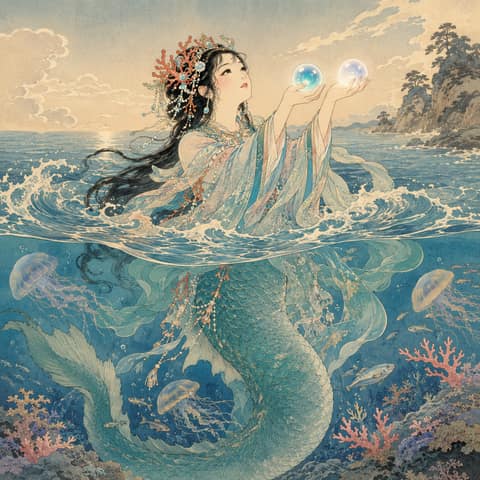
  • Toyotama-hime

    Toyotama-hime

    Divine

    とよたまひめ

    Grandmother of the Imperial Line

    Divine Spirit / Sea DeityJapanese Mythology / Kojiki / Nihon Shoki

    Taking the form of a giant shark (eight-fathom wani) in the *Kojiki* and a dragon in the *Nihon Shoki*, she is the grandmother of the first emperor and the maternal origin of the seafaring Azumi clan. A sacred deep-sea shrine maiden symbolizing pearls, whose legends live on in Udo Jingu's Breast Rock and Watadzumi Shrine.

  • Ryūjin

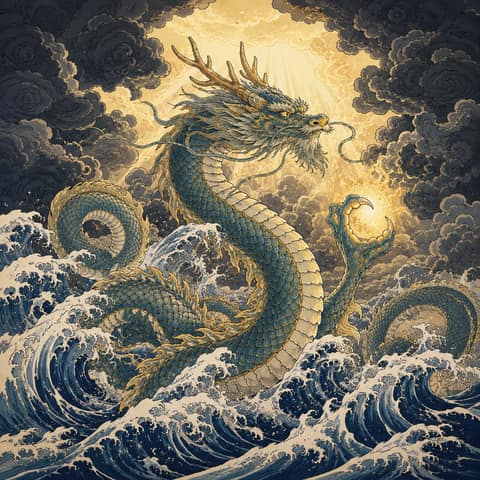
    Ryūjin

    Divine

    ryūjin

    Ryūjin, the Water God Who Stills the Storm

    Water and Dragon DeityWater-deity traditions throughout Japan, with distinct Ryūjin legends at Enoshima, Kifune, Togakushi, Hakone, Mount Miwa, and elsewhere

    As the water god who stills storms, Ryūjin stands at the meeting of sea and sky and holds the weather in divine power. Fishers, sailors, and rice-growing communities all prayed to this god in moments of need. That power has two edges: timely rain can nourish a field, while great waves and violent wind can break a ship. People therefore developed rites not simply to obtain power from Ryūjin, but to soothe the raging aspect of water and invite its life-giving one. The sea god's greatest treasures are the tide-flowing and tide-ebbing jewels, which command the rise and retreat of the sea. Yamasachi-hiko receives the pair from the sea god, uses one to overwhelm his elder brother with water, and the other to draw it away and save him. Their control of the tide expresses the heart of Ryūjin's authority. Coastal shrines received prayers for calm weather and a rich catch; inland rites sought rain, offered black horses in drought, or lowered offerings into deep pools. Legends from Lake Ashi and other waters in which a monk subdues a dragon and transforms it into a guardian preserve the close bond between fear and reverence. Ryūjin's role as lord of the Dragon Palace grows from the same divinity of water. Beyond the sea or beneath it lies a realm of wealth and a different measure of time. A visitor may return with treasure, or carry away years that cannot be recovered, as Urashima Tarō does when he opens the jeweled box. Ryūjin is therefore not merely a fabulous beast but the deification of water itself, the source on which life and death both depend. To still the storm is also to renew the fragile covenant between human beings and the natural world.

  • Ryujashin

    Ryujashin

    Rare

    ryujashin

    Ryuja-sama, the Guiding Messenger of the Kamiari Festival

    Divine Spirit / DeityIzumo Taisha (Present-day Taisha-cho, Izumo City, Shimane Prefecture) - Divine messenger of the Kamiari Festival. Welcomed from the sea during the Kamimukae ritual at Inasa Beach.

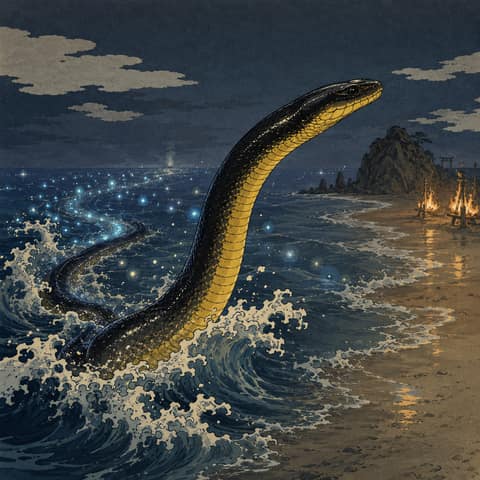
    Ryujashin occupies a unique position as a "divine messenger" functioning within the specific ritual context of Izumo's Kamiari Festival. While general dragon gods (composite water deities governing water, rain, and the sea) are based on nationwide rain-making and rain-stopping beliefs, Ryujashin is strictly a functional deity acting as the guide for the eight million gods, limited to the Kamiari rituals of shrines like Izumo Taisha and Sada Shrine. Its essence is not an abstract concept of faith, but a real marine animal—the yellow-bellied sea snake—that actually washes ashore on the Izumo coast in late autumn. The perfect alignment of a natural phenomenon (warm-water sea snakes drifting on the Tsushima Current) with mythological time (the gathering of gods in the Kamiari month) forms the core of a rare seasonal ritual. The washed-ashore individuals are dedicated to the Grand Shrine, and through the Ryuja-ko of Izumo Taishakyo, it developed into an independent object of worship, with talismans distributed to the common people for protection against fire, water disasters, theft, and for good fortune. By visiting from the Eternal Land and the otherworld beyond the sea, it embodies the ancient worldview that saw Izumo as a passageway to the otherworld.

Read on ── other regions