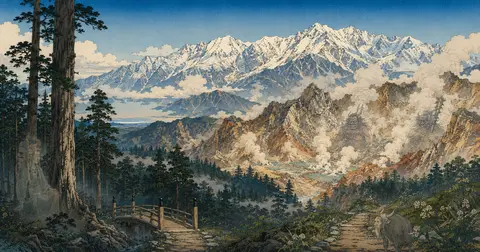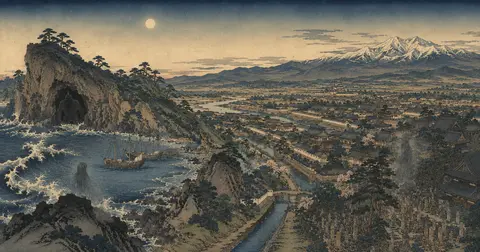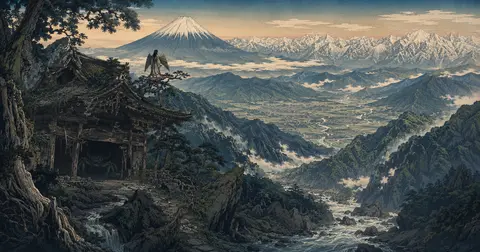
信州の山ふところ、長野市の西の奥に、「鬼無里(きなさ)」という、字面からして謎めいた里がある。裾花川の源流域に沿って開けた、周囲を山々に囲まれた小さな盆地 ── ここはかつて上水内郡鬼無里村と呼ばれ、二〇〇五年に長野市へ編入された山里である。鬼が「無い」里と書いてきなさと読ませる。この地名そのものが、ひとつの伝説なのだ。
なぜ「鬼が無い」のか。それは、かつてここに鬼が居たからにほかならない。鬼無里には、鬼の消えた理由を語る伝承が二つある。ひとつは天武天皇の遷都計画を阻んだ在地の鬼を討ち果たしたという遷都伝説、もうひとつは都を追われ鬼女と化した貴女・紅葉が平維茂(たいらのこれもち)に討たれたという紅葉伝説である。鬼が討たれて消えたから鬼無里 ── 由来は二つに分かれながら、どちらも「鬼の不在」を地名に刻む点で響き合う。山に追われ、討たれた者を地名として留めおくこの語り口は、国譲りに敗れた神を軍神として祀る長野県の山国・信濃らしい想像力の延長線上にある。この記事では、鬼の消えた里という地名そのものを軸に、二つの伝説とそこに棲んだ妖異をたどっていきたい。
鬼の消えた里という地名
「鬼無里」が全国でも指折りの難読地名であることは、地元も自認するところだ。鬼が無い里と書いてきなさ ── このねじれた読みの裏には、二系統の由来譚がある。
ひとつは古代の遷都伝承に発する説で、こちらは年代の点で有力とされる。天武天皇の頃にこの地で鬼が討たれて「鬼が居無くなった里」となり、もとの水無瀬(みなせ)[1]という古名から鬼無里へ改められたという。延暦年間(七八二〜八〇五年)に水無瀬村から鬼無里村へ改称したと伝える地誌の記録もあり、これは鬼女紅葉の物語が結びつく天暦年間(十世紀半ば)よりも古い。つまり地名としての鬼無里は、紅葉が生まれるより前から存在していたとみるのが筋が通る。ただし鬼無里の名が文献に確実にあらわれるのは室町期の長禄二年(一四五八)であり、延暦改称はあくまで伝承として留保しておくのが正しい。
もうひとつが紅葉伝説に基づく説で、鬼女と化した紅葉が討たれた結果「鬼の無い里」になったとする。こちらは年代的には後発だが、地元でもっとも親しまれ語られてきた由来である。ふたつの説は競合するというより、古い遷都伝承の地名に、後世の紅葉伝説が新たな意味を上書きしていったと見るのが穏当だろう。鬼無里という一語が、千数百年のあいだに二度、鬼の記憶を呼び込んだのである。
一夜で山を築いた鬼 ── 遷都伝説
まず古い方の伝説、一夜山(いちやさん)の鬼から見ていこう。
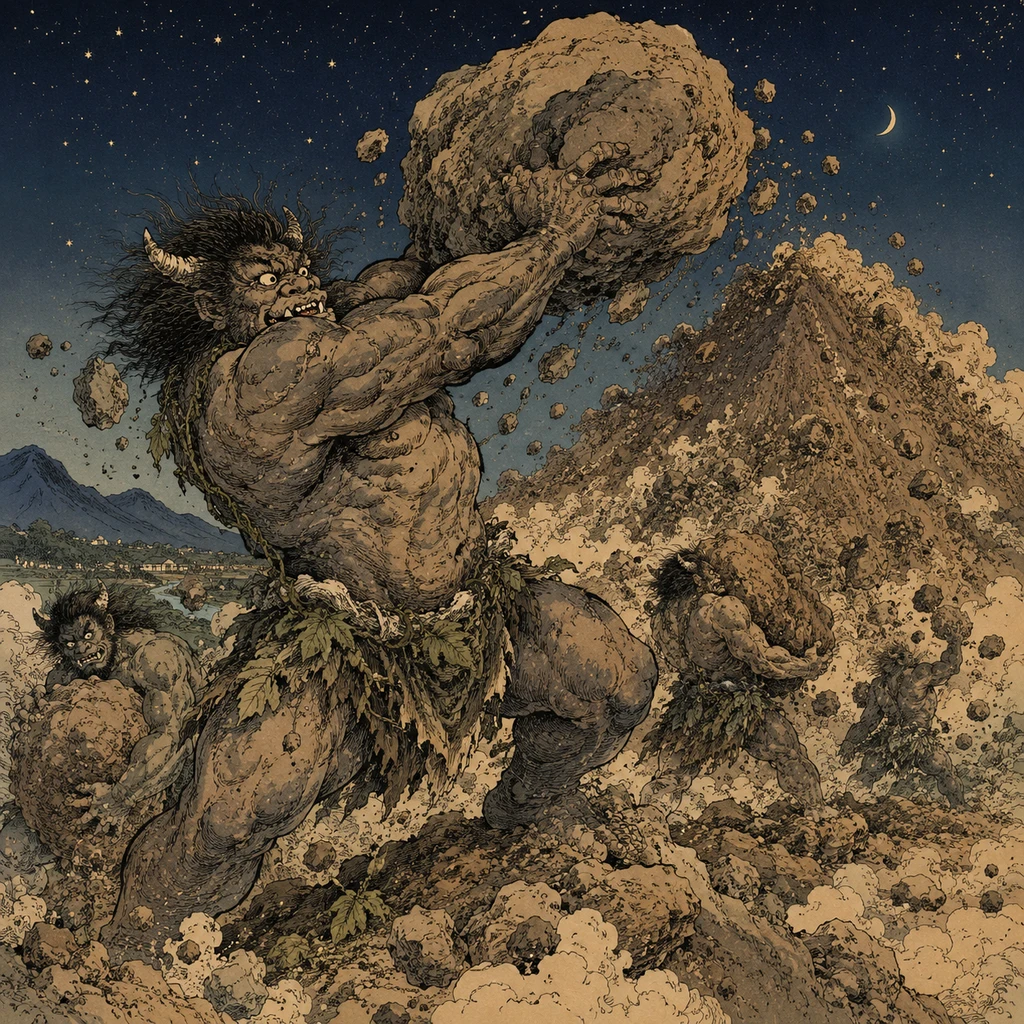
Demons of Mt. Ichiya
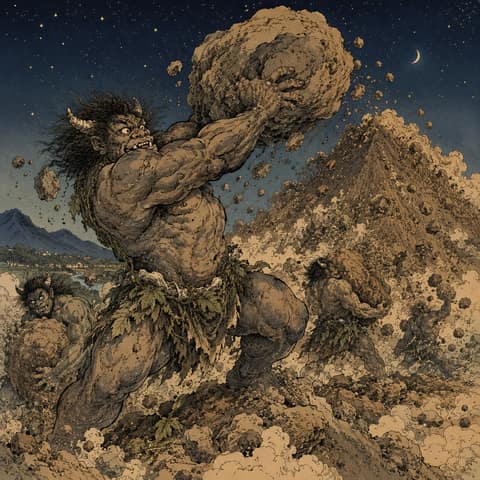
The *Demons of Mt. Ichiya* (*Ichiyazan no Oni*) are demons said to have inhabited Minase in Shinano Province (present-day Kinasa, Nagano City), and are the main figures in a capital relocation legend that explains the origin of the place name *Kinasa* (Village with No Demons). During the Hakuho era, Emperor Tenmu planned to establish a new capital in Shinano, and his envoy, Prince Mino, selected this basin as a candidate site. The indigenous demons, learning of this, feared that 'if a capital is built, we will lose our home', and overnight they built a mountain in the center of the basin to block the flatland, thus thwarting the relocation. The iconic conical mountain of Kinasa that is said to have appeared at this time is Mt. Ichiya (One-Night Mountain). Enraged that the capital relocation was prevented, Emperor Tenmu dispatched Abe no Hirafu to strike down the demons. Because the demons were exterminated and it became a 'village where demons are no more', it is said that the land formerly called Minase was renamed Kinasa (= Village with No Demons). Alongside the theory of the origin of the place name based on the Momiji Legend—which regards the demoness Momiji as the 'demon'—this is another prominent origin tale. Its distinct feature lies in depicting the demons as a local existence resisting the central capital relocation plan.
Read more白鳳の頃、奈良に都を置いた天武天皇が、信濃への新京の造営を思い立った。使いとして遣わされた美濃王(みののおおきみ)らがこの地を巡検し、戸隠までひらける平坦な盆地を新京の候補地に選んだと伝わる。ところがこの地には古くから鬼どもが棲んでいた。都ができれば己の棲み家が奪われると恐れた鬼たちは、遷都を阻むため、一夜のうちに盆地の中央へ山を築いて平地を塞いでしまった ── そうして出現したのが、鬼無里の象徴ともいえる円錐形の一夜山[1]だという。
遷都が頓挫したことに怒った天武天皇は、阿倍比羅夫(あべのひらふ)を遣わして鬼を討たせた。鬼が退治されて居無くなったため、この地は鬼無里と呼ばれるようになった ── これが遷都系の地名由来譚である。鬼女紅葉を鬼とみなす紅葉系の由来と違い、こちらの鬼は中央の遷都計画に抗う在地の存在として描かれる。一夜で山を築くという造山譚は、巨人や鬼の超人的な力を語る話型として全国に分布するが、鬼無里のそれはこれを地名起源・遷都伝承と固く結びつけている点に独自性がある。
この鬼を、文字どおりの怪物ではなく、律令国家の中央集権に容易には従わなかった在地勢力 ── いわゆる「まつろわぬ者」の記憶を後世に鬼の姿で語り直したもの、とみる見方もある。一夜山一帯は今では北アルプスを望む登山の地として親しまれ、伝説の鬼を訪ねて山に分け入る人も少なくない。鬼が築いたとされるこの山は、今では北アルプス展望の登山地として知られる、伝説の生きた舞台である。
貴女が鬼女になるまで ── 紅葉狩
次に、後発でありながら鬼無里でもっとも愛されてきた紅葉伝説に移ろう。
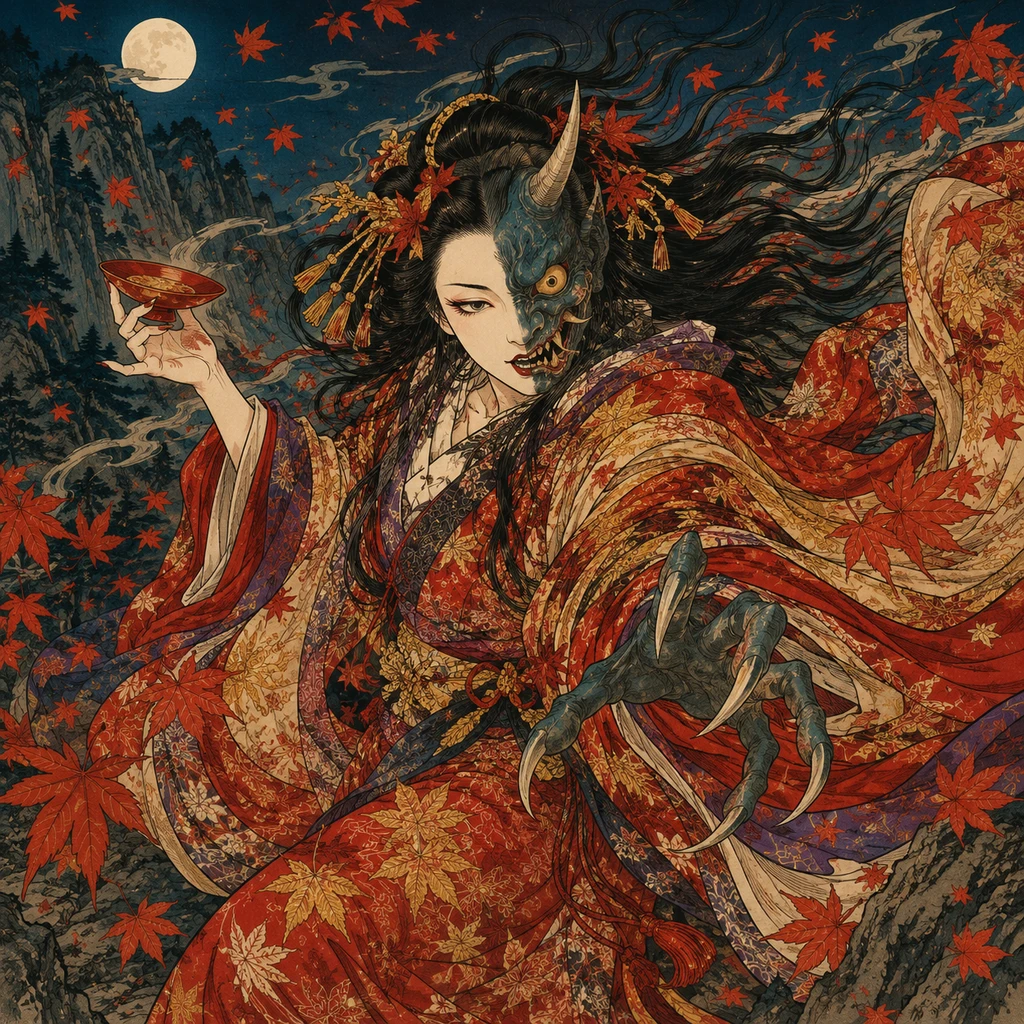
Momijigari (The Demon of the Maple Viewing)
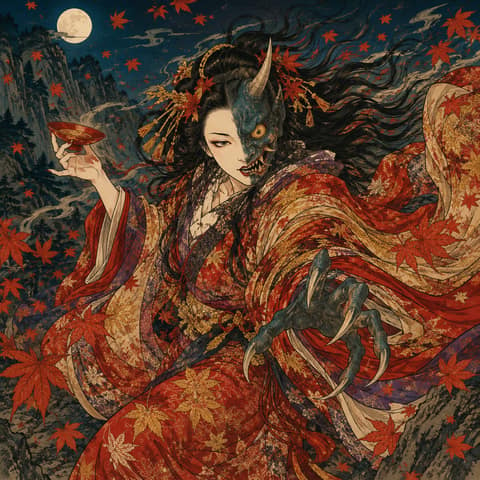
“Momijigari” is the title and theme of a famous tale, widely preserved in medieval and later performing arts and literature, in which the warrior Taira no Koremochi slays a demoness dwelling on Mount Togakushi in Shinano. In Noh, joruri, and kabuki, elegant ladies enjoying the autumn maples are revealed to be the demoness Momiji; aided by divine protection, the warrior sees through the disguise and defeats her. Best known as the title of stage works, the demoness image formed where local legend and the theater tradition intersected.
Read more平安の頃、紅葉(もみじ)という高貴な女性が、京の都から水無瀬 ── 鬼無里の古名 ── へ追放されてきた。里人は彼女を慕い、紅葉は昼には村の子らに読み書きを教え、機織りや京の雅(みやび)を伝えたという。やがて朝廷から討伐の対象とされ、勅命を受けた信濃守平維茂によって討たれた ── これが地元に伝わる紅葉の物語の骨格である。
ただし、今日広く知られる「会津の伴氏の子孫として生まれ、呉葉(くれは)と名乗って京に上り、源経基に寵愛され、第六天魔王の力を授かった鬼女」という詳細な筋立ては、その大半が後世の創作である。これらは明治十九年(一八八六)刊の実録物『北向山霊験記戸隠山鬼女紅葉退治之伝』[2]によって整えられ、明治三十六年(一九〇三)の版以降、現在流布する紅葉像の典拠となった比較的新しい物語にほかならない。もっとも古い層では、戸隠を開いた行者が九頭・龍尾の鬼を退治したと語られるにすぎず、討たれる鬼が「女性」であるという設定すら、後の能や歌舞伎を経て形づくられたものと考えられている。
その能こそ、室町後期に観世小次郎信光が作ったとされる謡曲『紅葉狩』[3]である。戸隠山中で紅葉狩りに興じる美女の一行に誘われ、酒に酔って眠り込んだ維茂の夢枕に八幡の神が立ち、女の正体が鬼であると告げて神剣を授ける ── 鬼能の名曲として今も舞われるこの作品は、紅葉を「鬼女」として確立した源流のひとつだ。さらに明治二十年(一八八七)、河竹黙阿弥が新歌舞伎十八番の舞踊劇『紅葉狩』[4]に仕立てたことで、鬼女紅葉の像は近代の舞台を通じて全国に知れわたった。謡曲・実録・歌舞伎と媒体を渡りながら、紅葉の物語はしだいに豊かに、そして禍々しく彩られていったのである。
- Momijigari (The Demon of the Maple Viewing)moh-MEE-jee-GAH-ree
 Taira no Koremochitaira-no-koremochi
- Demons of Mt. Ichiyaichiyazan-no-oni
興味深いのは、鬼無里に伝わる紅葉が、戸隠側で語られる凶悪な鬼女像とは裏腹に、里に文化をもたらした恩人として慕われている点だ。里の中心にある松巌寺(しょうがんじ)には、紅葉の守護仏と伝わる木仏が祀られ、境内には紅葉とその一族の墓があるとされる。討たれた鬼女が、その地では尊崇の対象として残る ── 討たれた者がなお何かを遺すというこの両義性は、敗れた神を祀る信濃の語りそのものである。戸隠の険しい岩稜を舞台とする鬼女紅葉の物語そのものは、長野県の妖怪事典や信濃国の記事で戸隠の聖地として深く扱っているため、ここではその深掘りを譲り、鬼無里という里の側からの紅葉像に光を当てた。
鬼を討った将軍 ── 平維茂
鬼女紅葉を討った平維茂もまた、紅葉伝説に欠かせない一柱の主役である。
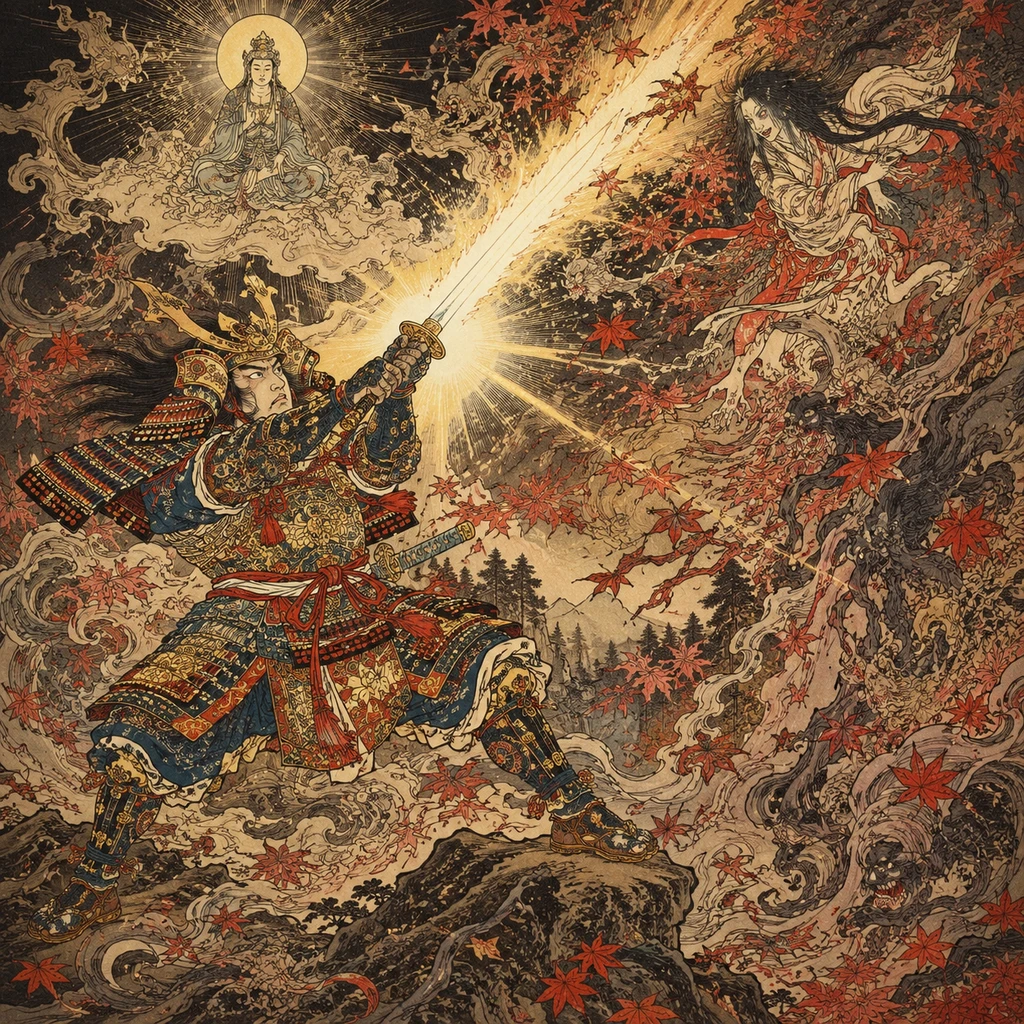
Taira no Koremochi
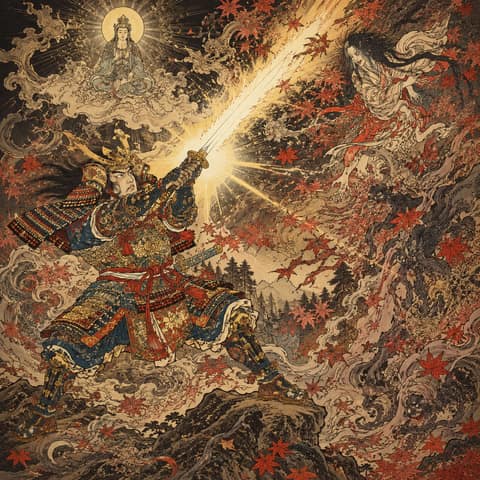
Taira no Koremochi is a historical warlord of the Kanmu Taira clan from the mid-Heian period, remembered in legend as the demon-slaying hero who vanquished the demoness Momiji of Togakushi in Shinano. Known by the alias 'Yogo no Shogun' (General of the Fifteenth) because he adopted the fifteenth son of his uncle, he forms a typical archetype of the warrior who subjugates demons with the divine protection of buddhas and deities, alongside figures like Sakanoue no Tamuramaro and Minamoto no Yorimitsu. The core of the Momiji legend centers on the plot where Koremochi, ordered by the Imperial Court to subjugate the demoness Momiji nesting in Mt. Togakushi, struggles against her dark magic. Driven into a corner, Koremochi confined himself to Kitamuki Kannon in Bessho Onsen to pray for the dispersal of the demonic thief, and received a demon-conquering short sword from an old monk (or old man) who appeared in a divine dream. In the rematch, Momiji's illusions were rendered ineffective, and it is said that Koremochi struck down the demoness on Mt. Arakura with this divinely bestowed sword. He well embodies the standard pattern of a demon-slaying hero tale: subduing an enemy beyond human intellect not only through martial valor but through prayers to the divine.
Read more平維茂は平安時代中期に実在した桓武平氏の武将で、陸奥守平繁盛の子、伯父である平貞盛の養子となった人物とされる。貞盛が多くの養子をとり、維茂がその十五番目であったことから、十を超えた余りの五を意味する「余五(よご)」、のちに将軍となったことから「余五将軍」と呼ばれたと伝えられる。鎮守府将軍・信濃守の任にあったとされ、坂上田村麻呂や源頼光と並ぶ、神仏の加護を得て鬼を平らげる武人像の典型をなす。
伝説では、戸隠山に巣くう鬼女紅葉の討伐を命じられた維茂が、その妖術に苦戦するという筋立てが核となる。窮した維茂は別所温泉の北向観音(きたむきかんのん)[5]に十七日間参籠して妖賊退散を祈願し、霊夢に現れた老僧から降魔の小剣を授かる。再戦では紅葉の幻術がもはや通じず、維茂はこの神授の剣で荒倉山に鬼女を討ち取ったと伝える。武勇のみならず、神仏への祈りによって人智を超えた敵を制するという、鬼退治英雄譚の定型をよく体現している。
ここで注目したいのは、加護する神仏が物語によって入れ替わることだ。室町後期の謡曲『紅葉狩』[3]では維茂の夢枕に立つのは八幡の神であり、神剣を授けるのも八幡である。ところが明治の実録物『北向山霊験記戸隠山鬼女紅葉退治之伝』[2]では、加護の役を別所温泉の北向観音が担う。これは編者が別所周辺にゆかりの人物で、観音霊場としての別所を顕彰し参詣を呼ぶ意図があったためと考えられる。同じ英雄譚が、土地の都合によって加護神を組み替えてゆく ── 伝説が生きて変化するさまを、これほど鮮やかに示す例も少ない。上田市別所には維茂を祀る将軍塚が残り、戸隠で十七もの傷を負って別所で湯治したが力尽きたとも伝えられる。鬼を討った将軍は、自らもまた鬼との死闘に倒れたのである。
京を映した山里 ── 谷の都
鬼無里を歩いて誰もが驚くのが、この小さな山里に、まるで都をそっくり写したような地名がいくつも残っていることだ。
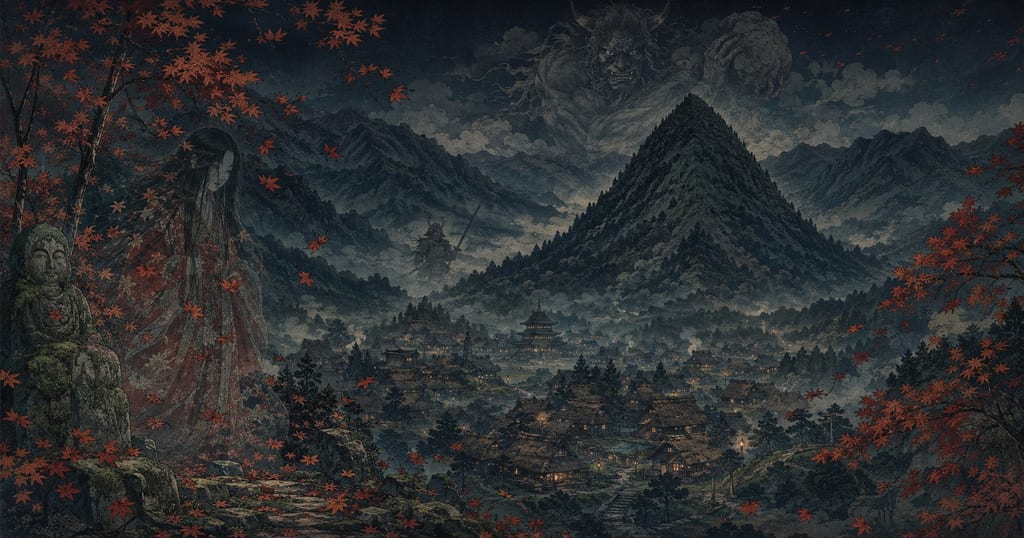
天神川と裾花川に挟まれた両岸には、東京(ひがしきょう)・西京(にしきょう)という地区名が今も生きている。東京には「東京二条」「東京三条」「東京四条」「東京五条」といった小字が連なり、両京地区には内裏屋敷(だいりやしき)、加茂神社、春日神社、加茂川、高雄といった、平安京を偲ばせる地名がそろう。山あいの谷に、まるごと縮図のような京が嵌め込まれているのだ。鬼無里が「谷の都」と呼ばれるゆえんである。
これらの京由来地名にも、二つの説が重なる。ひとつは遷都伝説に結びつける見方で、天武天皇の新京候補地であったことの地誌的記憶として、京を模した地名が刻まれたとする。実際、内裏屋敷跡[1]からは礎石とともに、黒曜石や九〜十世紀の土器、製鉄の痕跡である鉄滓が出土したと伝えられ、この地に古代の集落・祭祀の場があったことを思わせる。もうひとつは紅葉伝説に結びつける情緒的な見方で、都を恋しがる紅葉のために、里の長(おさ)が平安京にちなんだ地名を里じゅうに名づけて慰めたという ── 加茂や東京・西京・二条・四条といった地名は、こうして追放された貴女に都の幻を見せるために生まれた、というのである。
考証としては、これらの京由来地名がいつ・誰によって名づけられたかを確定する史料はなく、遷都伝説・紅葉伝説のいずれが先かも断じがたい。確かなのは、鬼無里という土地が、古くから「ここはかつて都になりかけた」あるいは「都の貴女が流れ着いた」という記憶を地名に編み込み、それを世代を越えて語り継いできたという一点である。
こうして鬼無里をたどってくると、ひとつの土地に二つの鬼の物語が重なっていることに気づく。中央の遷都を阻んで討たれた在地の鬼と、都を追われ鬼女と化して討たれた貴女 ── 立場も時代も異なる二つの「鬼」が、同じ里の名に「不在」として刻まれている。そして討たれたはずの紅葉は、松巌寺の守護仏として、谷の都の地名として、いまもこの里に生きつづけている。鬼が無いと書いて鬼無里と読ませるこの地名は、鬼を消し去ったのではなく、消えた鬼の記憶を里じゅうに留めおくための器なのである。信濃のほかの妖異とあわせて、その想像力の核を長野県の妖怪事典でさらにたどることができる。