肥前国(ひぜんのくに)は、いまの佐賀県と長崎県をあわせた古代の一国である。もとは肥後とひとつづきの「肥国(ひのくに)」── すなわち火の国だった。七世紀の末、この火の国は都に近い側の肥前(ひのみちのくち)と、遠い側の肥後(ひのみちのしり)とに分かたれ、肥前国が立つ。その名の由来を、奈良時代初期に編まれた『肥前国風土記』[1]は、夜の山に天から火が降りた怪異の記憶として書きとめている。火の国 ── 肥前は、その起こりからして怪火を名に負った土地なのである。
地理を見れば、肥前は二つの海にはさまれている。北は朝鮮半島・大陸へ開けた荒い外海・玄界灘。南は干満差が日本最大級にもなる遠浅の泥海・有明海。そのあいだに佐賀平野が低く横たわり、多良岳(たらだけ)の山塊が両海をへだてる。北の海には松浦(まつら)の海の武士団が割拠し、南の海には景行天皇を導いた不知火が灯った。海と火と古代の記憶 ── 本稿は、現代県としての佐賀県の妖怪事典と長崎県の妖怪事典が個別の怪を深く語るのに対し、その両県の母胎である「火の国・松浦の海」という古代肥前の地層をたどり、そこに像を結んだ四つの妖異を訪ねていく。
火の国・肥前という古代
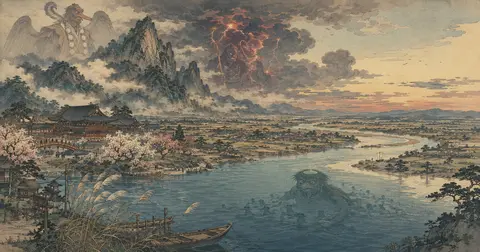
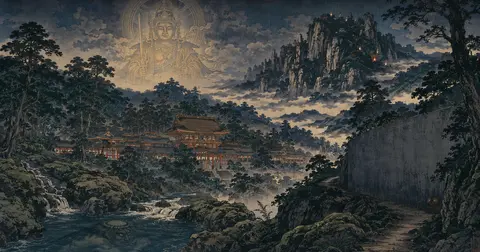
肥前国の妖怪を理解するには、まずこの国が「火の国」であったことから始めねばならない。『肥前国風土記』[1]によれば、肥前はもと肥後と合わせて一つの国であり、のちに前後に分けられた。風土記が語る国名の由来はこうである ── 崇神天皇の御代、肥国の益城(ましき)に打猿(うちさる)・頸猿(くびさる)という二人の土蜘蛛が一八〇余人を率いて朝命に背いた。天皇は火の君の祖・健緒組(たけおぐみ)に討伐を命じ、健緒組が土蜘蛛をことごとく平らげて国を巡視したところ、夜、八代郡の白髪山に宿った折に天から火が燃え下り、おのずと山を焼いた。健緒組がこの不思議を奏上すると、天皇は「火の下った国は火の国と呼ぶがよい」と告げ、健緒組に火の君の姓を賜って治めさせた。
火が天から降って国の名となる ── この始原の怪火の記憶が、のちに肥前・肥後を貫く「火」の主題の根になった。風土記はまた、各郡の地名起源を語るなかで、しばしば土蜘蛛や女首長(おんなしゅちょう)の物語を交える。中央の王権に従わぬ在地の者を「土蜘蛛」と呼ぶこの記述群は、古代肥前が朝廷から見て辺境の、まつろわぬ異形の住む地と意識されていたことを示している。妖怪以前の「異類の記憶」が、すでに八世紀の公的な地誌に書きこまれているのである。
肥前の北辺・松浦の地名にも、古い物語が宿る。『古事記』[2]は、神功皇后が筑紫の末羅県(まつらのあがた)・玉島の里の河のほとりで食事をした折、四月の上旬に裳(も)の糸を抜いて飯粒を餌とし、河の年魚(あゆ)を釣ったと伝える。以来、四月になると女たちが裳の糸で鮎を釣る習わしが続いたという。この珍(めず)らしい出来事から、土地を「梅豆羅(めずら)の国」と呼び、それが訛って「松浦」になったと説話は語る ── もっとも『魏志倭人伝』はすでに弥生期にこの地を「末蘆国」と記しており、地名は神功皇后より古い。後付けの地名起源譚であるにせよ、皇后の伝説を呼び寄せるだけの磁力が、古代から松浦の海にはあった。
そしてその松浦の海を、中世には武士団が支配する。嵯峨源氏の末流を称する一族が平安後期から土着し、やがて松浦党(まつらとう)[3]── 松浦四十八党とも呼ばれる連合を形成した。大陸・半島に近いという地の利から、彼らは武装した交易者となり、水軍となり、ときに海賊とも目された。源平の海戦に加わり、文永・弘安の二度の元寇では元軍の船に奇襲を仕掛けて応戦した。海に生き、海で戦い、海の彼方の異国と渡り合う ── 松浦党の存在は、肥前北辺の海がどれほど外界に開かれ、どれほど荒々しい場であったかを物語る。その海から、姿なき海の怪が立ち上がる。
不知火の海 ── 景行天皇の神話
火の国の名を決定づけたのは、風土記の健緒組の話だけではない。より広く知られるのは、『日本書紀』景行紀[4]の伝える、もうひとつの火の物語である。
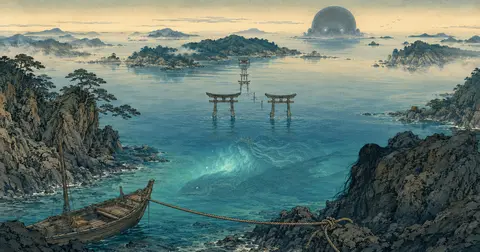
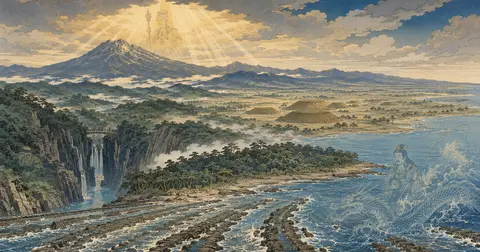
景行天皇が熊襲(くまそ)を平定して筑紫の国々を巡ったとき、葦北(あしきた)から船出して火の国へ渡ろうとした。海上で日が暮れ、夜の闇に方角を見失う。そのとき、はるか遠くに赤々と燃える火が一つ現れた。天皇はその火を目あてに舵を取らせ、船は無事に岸へたどり着く。上陸して土地の者に「あれは誰が灯した火か」と問うても、誰一人として知る者がない。誰も知らぬ火 ── そこからこの火を「不知火(しらぬひ)」と名づけ、火の国の名の由来にも結びつけられた、と書紀は記す。
火が天皇を導き、その火を誰も知らぬ。この神話の構図こそ、有明海・八代海に近世まで語りつがれた怪火・不知火の原型である。不知火は旧暦八月一日(八朔)前後の風弱い夜、沖に親火が生じ、それが左右に分かれて数を増し、横一線に連なって現れる現象として恐れられた。近づこうとすれば遠ざかり、海面近くからは見えにくく高所からよく見える ── 漁師たちはこれを尋常ならぬものと信じ、その夜の出漁を忌んだ。神話に淵源をもつ火が、千数百年を経て漁村の暦のなかに降りてきたのである。今日では大気の異常屈折による蜃気楼の一種と解されているが、その火が「火の国」という一国の名を生んだという来歴は、肥前・肥後という旧国の地層に深く刻まれている。
この不知火が近世の有明海ぞいで具体的にどう語られ、八代海の永尾剱神社でいかに観望されたかは、現代県の佐賀県の妖怪事典が詳しく扱う。ここで押さえておきたいのは、肥前という旧国そのものが、その始まりにおいて「火に導かれて開かれた国」だったという一点である。土地の名に怪火が刻まれた国 ── それが古代肥前の出発点だった。
玄界灘の海の怪 ── 磯撫で
火の物語が南の有明海に属するとすれば、北の玄界灘・松浦の海が生んだのは、姿を見せぬ海の怪である。荒い外海と、その海で生きる松浦の船乗りたちの恐れが、一匹の怪魚に結晶した。
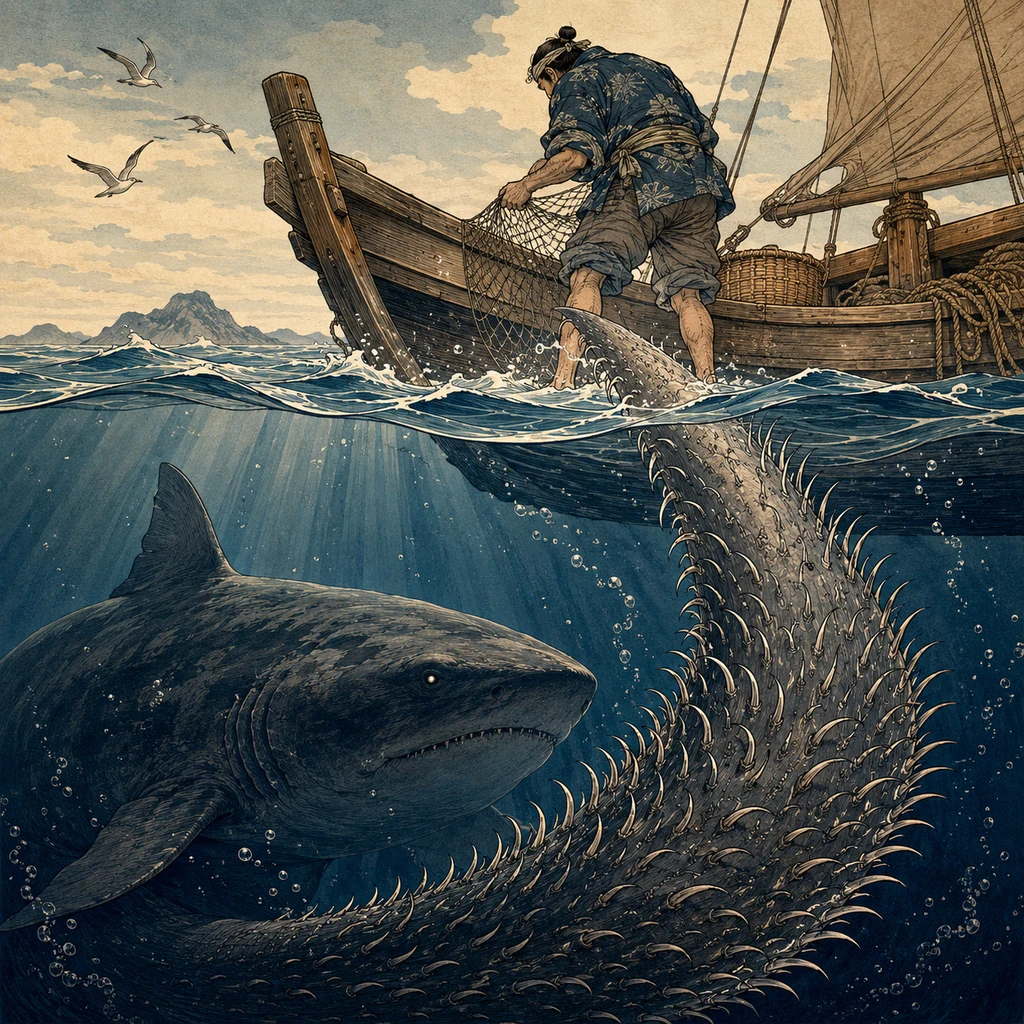
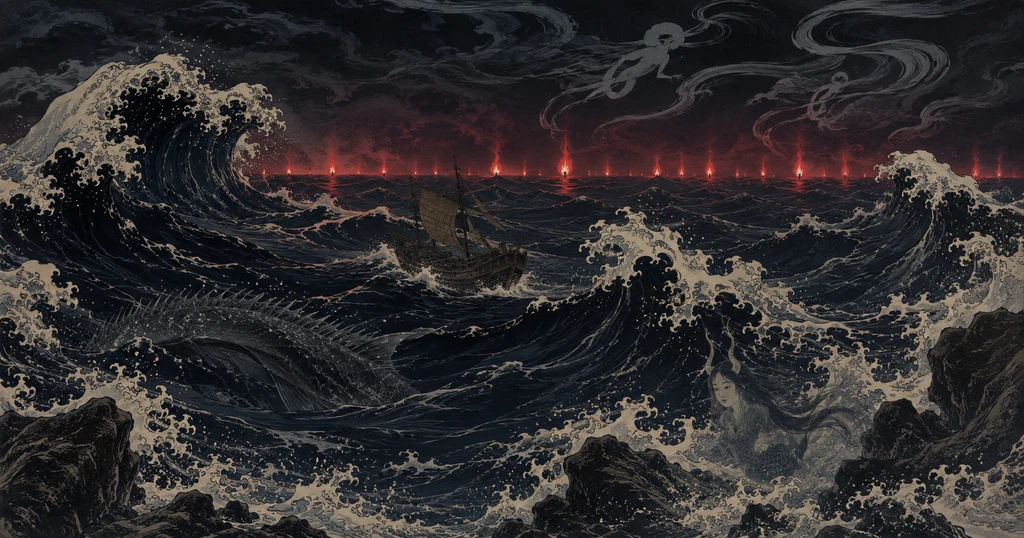
Isonade
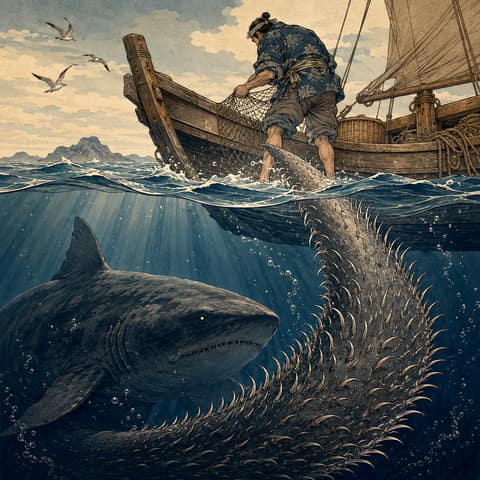
Isonade is a sea monster of western Japan. Its body resembles a shark, but its tail fin is said to bristle with countless fine spines. It appears when the north wind blows hard, approaching as lightly as a hand passing over the water. Without showing itself, it hooks people from the deck with its barbed tail, drags them into the sea, and swallows them. Edo-period collections of strange tales, including Ehon Hyaku Monogatari, and works of natural history both record the creature. Its name is said to come either from the way it 'strokes' the surface or from the deceptively slight movement with which it takes a victim. For sailors, Isonade embodied a maritime disaster almost impossible to prevent.
Read more磯撫で(いそなで)は、外見はサメに似るが、尾びれに無数の細かい針を備えるとされる海の怪である。北風が強く吹く折に現れ、海面を撫でるように音もなく近づき、人目につかぬまま尾の針で船上の人を引っ掛けて海中へ落とし、呑み込むという。肥前松浦では、海の色がふと変わり、仰ぐような風を感じたとき、すでに磯撫での尾が海面に現れている前触れとされた。姿は人を襲う刹那まで見えず、気づいた時には尾の針に絡め取られている ── この「見えなさ」こそが、磯撫でを海難そのものの擬人化に近いものにしている。
この怪を後世に伝えたのは、天保12年(1841)の桃山人作・竹原春泉斎画『絵本百物語(桃山人夜話)』[5]である。同書は「礒撫(磯撫で)」の名を肥前松浦の沖に結びつけ、その姿をフカ(大鮫)に擬し、尾を上げて船人を撫で海へ引き込むと描いた。古い本草書には巨口鰐(おおぐちわに)の名でも見え、三重県熊野地方では海辺の変死に際し「磯撫でに撫でられた」と語られた例もある。だが、その名と最も濃い縁をもつのは、絵師たちが描いた西海 ── ほかでもない肥前松浦の沖だった。
なぜ松浦の海がこの怪を呼んだのか。それは、ここが大陸・半島へ向けて船を出しつづけた外海だったからにほかならない。松浦党が水軍として外洋を駆け、漁民が荒い玄界灘へ漕ぎ出す土地では、北風の日の海難は日常の恐怖だった。突風に船が傾き、人が波にさらわれて二度と帰らぬ ── その不可解で理不尽な消失を、人びとは「海面を撫でて人を連れ去る、姿なきサメ」のかたちに像を結んだ。磯撫では、火の国の南の不知火と対をなす、北の海の妖異である。一方は人を導く火、もう一方は人をさらう魚 ── 肥前を挟む二つの海は、ちょうど正反対の海の怪を生み出したのである。
田と川の河童 ── ひょうすべ
海から内陸へ目を転じよう。佐賀平野を縦横に走る川と、低湿の田の世界には、九州ならではの毛深い河童 ── ひょうすべが棲んでいた。

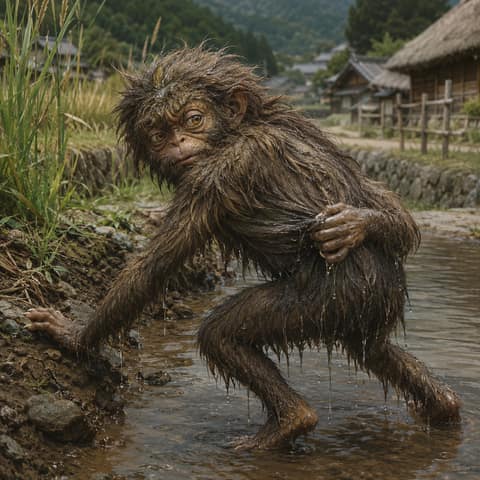
Hyōsube
Hyōsube is a hairy, water-dwelling yokai found throughout the Kyushu region. Counted as kin to the kappa—or at least a close relative—it is said to move back and forth between the rivers and the mountains around the equinox. Its name is traced to its birdlike cry of "hyō-hyō." It is fond of eggplant, and in some areas the custom of offering the season's first eggplant still survives. The best-known stories tell of it slipping into a household bath to soak, leaving the water afterward thick with floating body hair; anyone who lays eyes on it, they say, falls ill with fever.
Read moreひょうすべ(へうすへ)は、河童と同類、あるいは近い仲間とされる毛深い妖怪である。「ヒョーヒョー」と鳥のように鳴くことから名がついたといい、彼岸のころには川から山へと行き来するとも伝わる。佐賀や長崎では、河童をガワッパ・ガアタロと呼ぶ一方、ひょうすべ・ヒョウスボなどさまざまに呼び分け、その境界はしばしば入り混じった。茄子(なす)を好み、初物の茄子を供えて機嫌をとる習俗が一部に残った。もっとも知られるのが、湯と馬にまつわる祟りの話型である。毛深いひょうすべが浸かったあとの風呂の湯には大量の体毛が浮き、その湯に馬が触れて死んだ、湯を抜いた者が祟られて馬を殺された、という話が各地に伝わる。
肥前でこの河童が特別なのは、確かな縁起と祀る場所をもつ点にある。肥前の軍記『北肥戦誌』[6]の伝えるところでは、その名は「兵主部(ひょうすべ)」── すなわち兵部(つわものべ)に支配された者の意で、天平年間の春日大社造営の折に職人が秘術で命を吹き込んだ人形が、用済みののち川へ捨てられて河童と化したものという。橘氏の祖が勅命を受けてこれを鎮め、以来ひょうすべと呼ばれた。後世、橘氏の末裔・橘公業(たちばなのきんなり)が嘉禎3年(1237)に伊予から肥前武雄へ移り住んで潮見城を築いた際、ひょうすべもまた主に従い、潮見川へ移ってきたと語られる。武雄市の潮見神社は、その河童を祀る社として知られる。妖怪が、人形から生まれ、武家の移住に従って土地を移り、ついには社に祀られる ── この縁起のもつ具体性こそ、ひょうすべが肥前の暮らしにどれほど深く根を張っていたかの証である。
「見ただけで必ず死ぬ」といった過激な言い方は後世の誇張で、本来は家のなかの衛生や禁忌、そして田の神信仰と結びついて穏やかに語られた、暮らしのそばの妖怪だった。彼岸に川と山を行き来するという伝えは、水神でありながら田の神・山の神とも通じる、農の循環の守り手としての性格をうかがわせる。火の国の海に磯撫でが棲んだとすれば、その内陸の田と川には、退治される害でありながら土地を見守る神でもある、両義の河童が棲んでいたのである。
龍宮の予言姫 ── 神社姫
ふたたび肥前の海へ。だが今度は、人をさらう怪ではなく、人に未来を告げる怪である。災いを予言し、その姿を写し見ることで難を逃れさせるという予言獣 ── 神社姫が、肥前の浜に現れた。
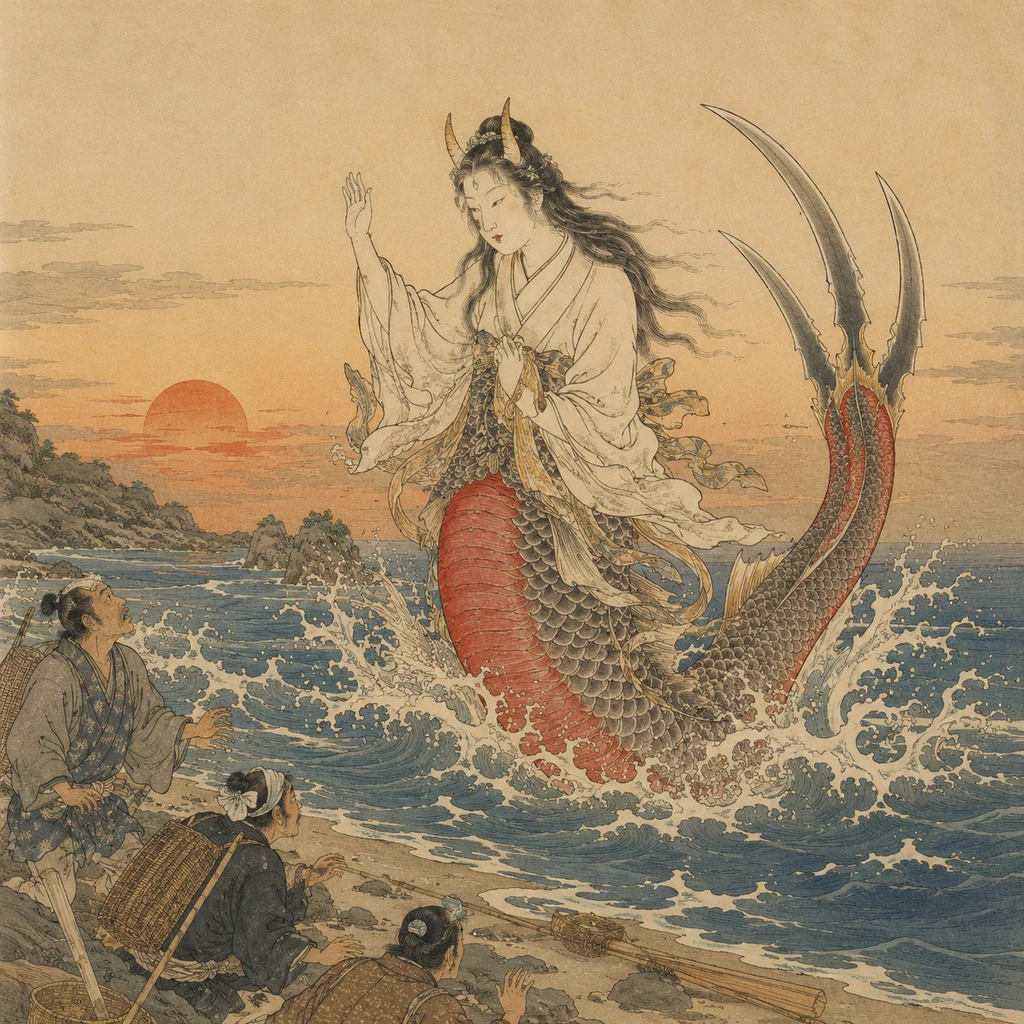
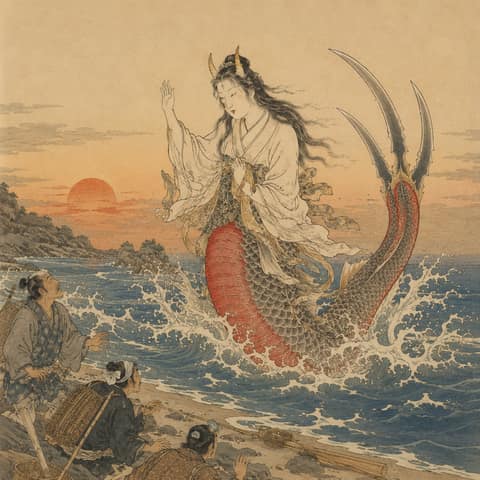
Jinja-hime
Jinja-hime is a prophetic, mermaid-like creature said to have appeared on the coast of Hizen Province in the late Edo period. It has a human face and a fish's body, with a red belly, two horns, and a tail divided into three sword-shaped points. Calling itself 'Jinja-hime, a messenger from the Dragon Palace,' it announced that a widespread illness known as korori would follow a time of abundant harvests. It also declared that anyone who viewed a copy of its image could escape the calamity and gain long life. Wording from printed sheets and copied pictures survives in records such as Waga Koromo, and the images were displayed in homes as protective charms.
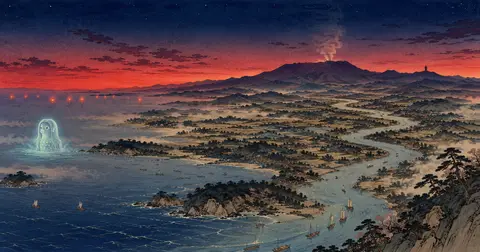
Read more加藤曳尾庵の随筆『我衣』[7]によれば、文政2年(1819)4月、肥前の浜に全長二丈余(約六メートル)の異魚が現れた。顔は人、体は魚、腹は紅色、二本の角と三つ叉の剣形の尾をもつ。自らを「龍宮よりの使者・神社姫」と名乗り、向こう七年の豊作と、その後に流行する病「ころり」を予言し、わが姿を写した絵を見れば疫を避け長寿を得られると告げて去ったという。「ころり」は急激に人を死に至らしめる流行病で、のちのコレラや赤痢を思わせる。この文言と図は瓦版として板行され、行商の手で各地へ広まり、護符として家々の柱や戸口に掲げられた。類例として平戸の「姫魚」、越後の「大神社姫」「人魚之図」などがあり、いずれも出現と予言、そして写し絵の効験を唱える点で共通する。
神社姫が妖怪史において重要なのは、それが疫病退散の妖怪として近年世界的に再注目されたアマビエの、約四半世紀前を行く先行例だという点である。出現を告げ、豊凶と疫病を予言し、写し絵に効験を宿す ── この予言獣の型は、弘化3年(1846)に肥後の海に現れたとされるアマビエへと受け継がれていく。アマビエが肥後(熊本)なら、神社姫はその隣、肥前(佐賀・長崎)の海から生まれた。かつて一つの火の国だった肥前と肥後の海が、予言する海の女怪を続けて世に送り出したことになる ── これは偶然ではあるまい。海の彼方に龍宮があり、そこから使者が訪れて未来を告げるという信仰は、半島と大陸へ開けた九州西岸の沿岸文化に深く根ざしている。
その古い海の信仰が、近世の商業出版という新しい器を得て、疫病という人びとの最大の不安を妖怪のかたちで流通させた。文政2年の浜は史料の上では「肥前」とのみ記され、平戸沖とする伝えもある。佐賀・長崎の県境にまたがる肥前の海全体が、この姫の故郷だといってよい。予言獣としての神社姫がアマビエへ連なる系譜の細部は、現代県の佐賀県の妖怪事典がさらに詳しく辿っている。
盆に吹く精霊風
最後に、姿をもたない妖異を一つ。肥前の海辺、とりわけ長崎の島嶼にかけては、盆に吹く不吉の風 ── 精霊風が伝わる。
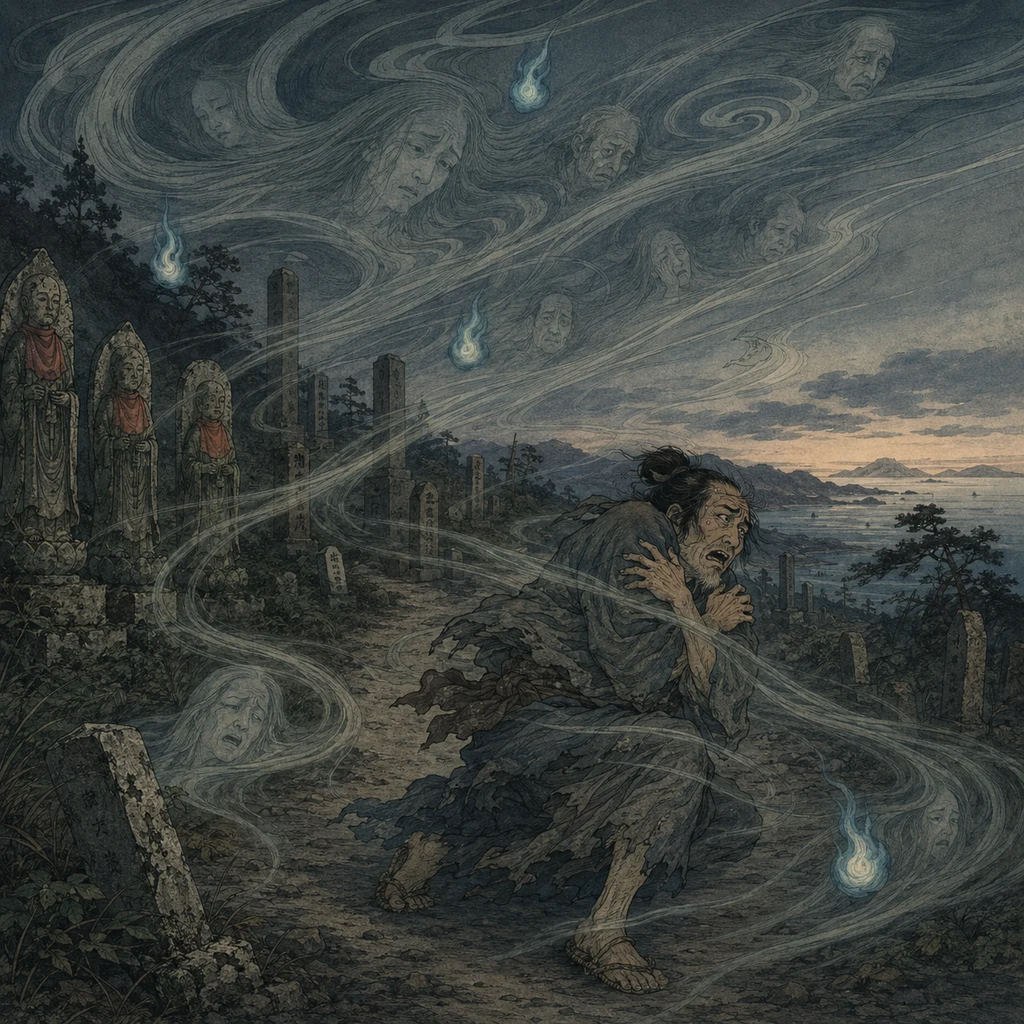
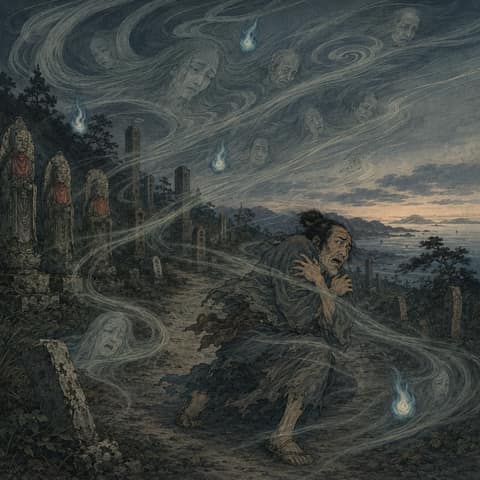
Shōrōkaze (Spirit-Wind)
Shōrōkaze, the “spirit-wind,” is a baleful breeze said to blow on the morning of the sixteenth day of Obon. It has no visible form, yet those struck by it were feared to suffer sudden fever, chills, or dizziness. Here “shōrō” means the spirits of the dead in Buddhist usage, and the wind is understood as the current that carries the departing souls at Obon. In the Goto Islands, people traditionally avoid graves and grave paths on this day to ward off spiritual harm.
Read more精霊風(しょうろうかぜ)は、盆の十六日の朝に吹くとされる風である。実体はなく、当たると急な発熱や悪寒、ふらつきといった災厄を招くと畏れられた。ここでの「精霊(しょうろう)」は、仏教でいう死者の霊を指す。盆に帰っていた死者の霊が、十六日にあの世へ戻る ── その霊を運ぶ風が精霊風だと解されたのである。だから人びとはこの日、霊の通り道を避けた。五島では墓や墓道へ近づかない忌みが守られ、壱岐では病をもたらす風を死霊風・生霊風と呼び分け、生霊風は胸苦しさを生むという例も報告されている。風そのものが、見えない霊の往来の痕跡として受けとめられていたのである。
各地に魔風と総称される信仰があり、清川ダシやヤマジ、一目連の風のように、局地的な突風が災厄の由来と解された例は全国に珍しくない。だが精霊風が際立つのは、それが盆という死者と生者が往き来する暦の節目に、ぴたりと重ねられている点である。火の国の海に灯る不知火、その海から現れる神社姫、玄界灘で人を撫でる磯撫で、川辺のひょうすべ ── 古代肥前の妖怪はみな海と水と土地に棲んだが、精霊風はそのなかでただ一つ、空間ではなく時間の境界に吹く風として、この系譜を静かに締めくくる。
結び ── 火の国の地層に立つ怪
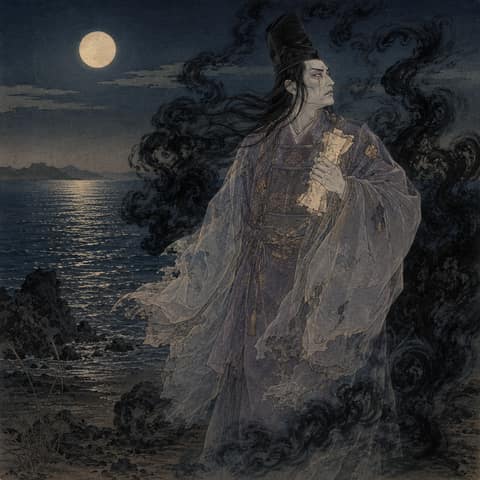
こうして古代肥前の四つの妖異を並べると、一本の軸が見えてくる。すべては「火の国・松浦の海」という旧国の地層の上に立っている。風土記が天降る火に名づけた火の国、書紀の不知火が景行天皇を導いた海、神功皇后の鮎釣りと松浦党の水軍が往き来した外海 ── その古代の記憶のなかに、玄界灘の磯撫で、佐賀平野の田と川のひょうすべ、龍宮の使者・神社姫、盆の精霊風が、それぞれの位置を占めている。
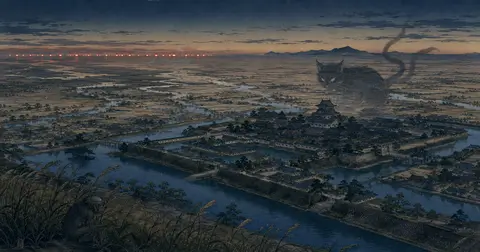
肥前は七世紀の末に肥後と分かたれ、近世には佐賀(鍋島)と長崎(対外貿易の窓)という、性格の異なる二つの世界へと枝分かれしていった。化け猫が騒いだ佐賀城の奥座敷も、豊玉姫が龍に還った対馬の海宮も、もとはこの一つの火の国から育った枝である。現代県のそれぞれの怪は佐賀県の妖怪事典と長崎県の妖怪事典が深く語る。だがその根をたどれば、いつも「火に導かれて開かれた国」── 古代肥前の海と火の記憶に行き着く。妖怪を訪ねることは、土地の最も古い名と、その名を生んだ怪火の記憶を読みなおすことにほかならない。