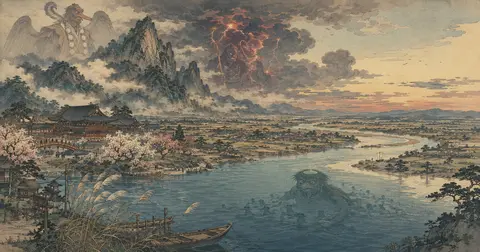
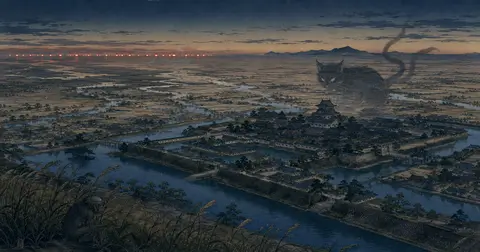
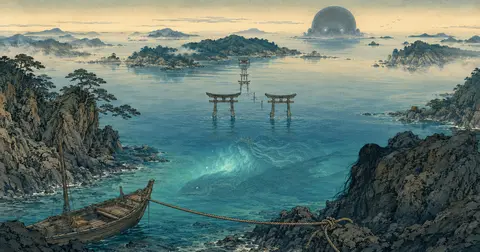
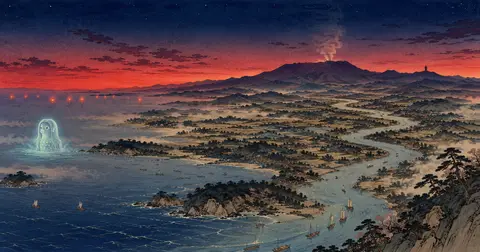
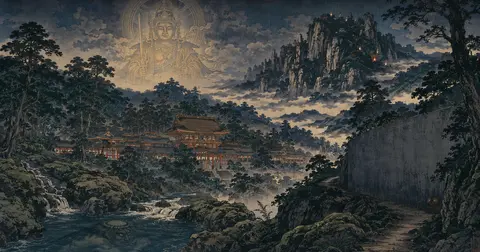
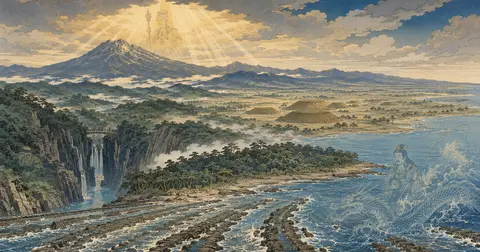
筑前国は、いまの福岡県北西部にあたる旧国である。上位の福岡県の妖怪事典では、大宰府の怨霊、英彦山の天狗、筑後川の河童までを「中央と辺境のあいだ」という大きな軸で束ねている。ここでは視野を筑前に絞り、玄界灘に開いた海の神話と、九州の山へ入り込む小さな怪を読む。
中心になるのは、神功皇后と山童である。神功皇后は、香椎で神託を受け、海を渡り、宇美で応神天皇を産んだと語られる神話的皇后であり、八幡信仰の母神的な神格でもある。山童は、筑前や五島列島にいると古典に記され、河童が山へ移ったものとも考えられた山の童である。ひとりは国家神話の光の中に立ち、もうひとりは山小屋の塩や握り飯の気配に紛れる。だが両者は、海から陸へ、水から山へ、境を越える存在として筑前国を照らしている。
筑前は、
海を正面に受ける国である
筑前国を考えるとき、まず見たいのは海である。博多湾、香椎、箱崎、宗像へ連なる北部九州の海岸は、古代から大陸と向き合う入口だった。大宰府が西海道を統べる官衙として置かれたことは福岡県記事で扱った通りだが、筑前の神話はそれよりさらに古い層で、海を渡る力、帰ってくる力、胎内に皇子を宿したまま国境を越える力を語る。
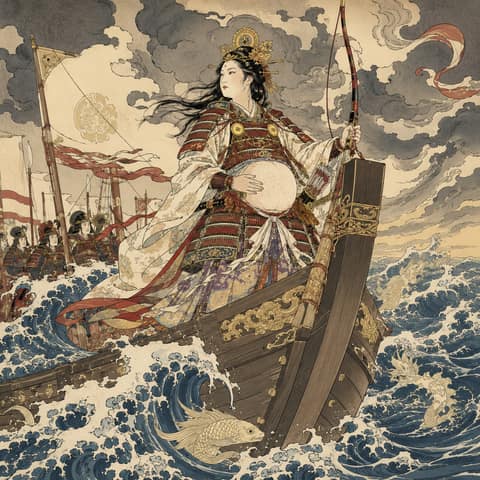
その中心に立つのが神功皇后である。『日本書紀』神功皇后紀は、仲哀天皇の死、神託、遠征、応神天皇の誕生を国家的な叙事としてまとめる[1]。史実としてそのまま読むのではなく、古代王権が北部九州の海をどのように想像したかを読むべき物語である。筑前にとって重要なのは、神功皇后が単なる遠征譚の主人公ではなく、香椎・宇美・筥崎という土地の信仰をつなぐ軸になっていることだ。
香椎宮の由緒では、仲哀天皇が筑紫へ下り橿日宮に坐したこと、神功皇后がその遺志を継ぎ、神祇の教えを受けて国内を平定し、船団を率いたことが語られる[2]。ここでの皇后は、武威の人であると同時に、夫を祀り、神託を受け、海上安全や安産の信仰へつながる神霊である。筑前の海は、軍事と祭祀、喪と出産が同じ線上に並ぶ場所だった。
神功皇后、
香椎から宇美へ
神功皇后の筑前性をもっとも強く感じさせるのは、香椎から宇美へ移る物語である。香椎宮は、仲哀天皇九年に神功皇后が祠を建て仲哀天皇を祀ったのが起源とされ、神功皇后の宮は養老七年の神託により造営が始まり、神亀元年に竣工したと伝える[2]。神話上の出来事と奈良時代の社殿造営が重なり、香椎は「夫婦の宮」として記憶される。
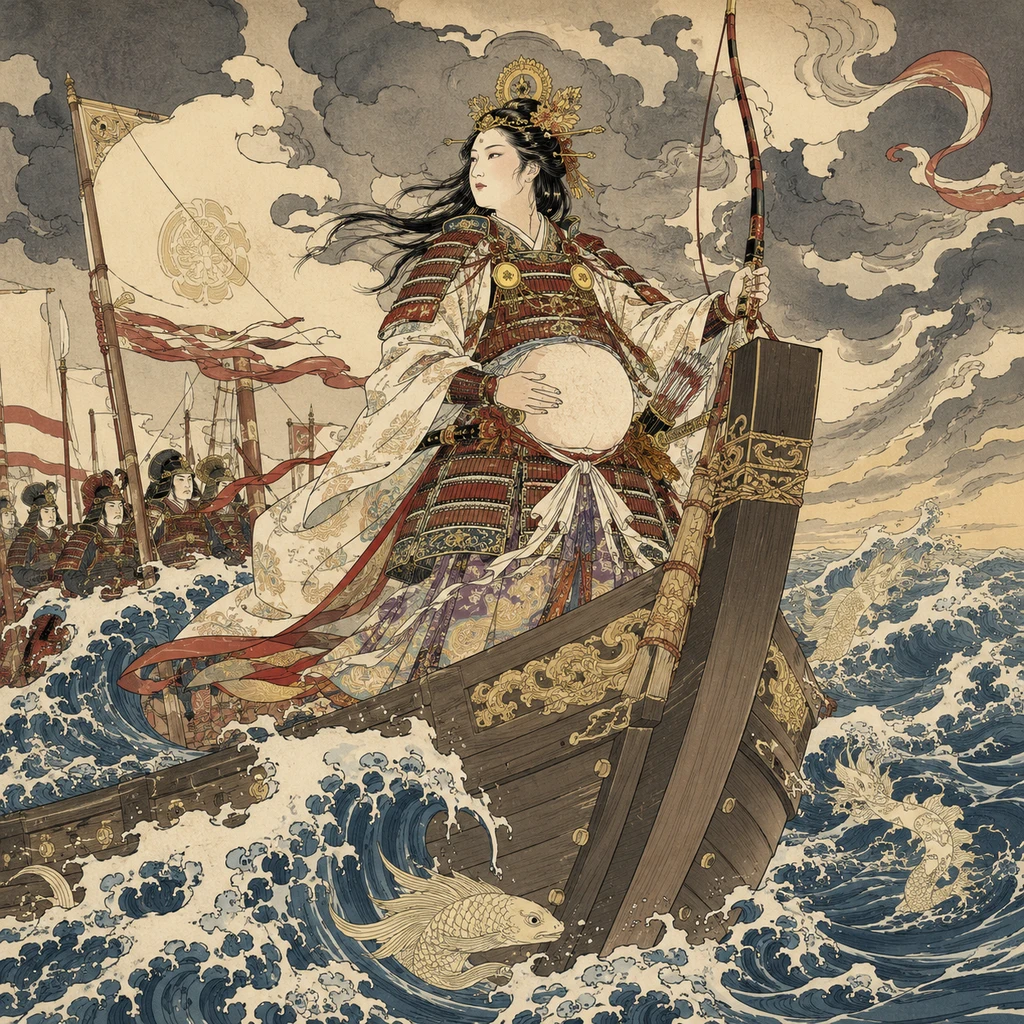
Jingu-kogo
Empress Jingu (Jingu-kogo) is a legendary empress described in the Kiki mythologies who received divine oracles and led an army after the death of Emperor Chuai, tied to the tales of the conquest of the Three Han States (Sankan Seibatsu) and the birth of Emperor Ojin. Rather than her historicity as a historical figure, the core lies in her mythological power as someone possessed by gods, moving the nation, and going on an expedition while carrying a prince in her womb. In the Hachiman belief, she became an important deity along with Emperor Ojin, bearing a complex symbolism of motherhood, military might, seafaring, and national protection. In the "Kojiki," there is a scene where Empress Jingu fishes for sweetfish (ayu) at Matsura to divine an auspicious sign for the conquest, showing depictions related to the sea and divination. In the "Nihon Shoki," the divine oracles, expedition, return, and birth of the prince are organized as a more national epic. Layering these two, Empress Jingu is a human empress, yet possesses three faces: a shaman queen who receives divine will, a commander who leads an army, and a mother who carries the future emperor. In later ages, she was deified in belief spheres such as Sumiyoshi-no-kami, Hachiman-no-kami, Kashii-gu, and Usa Jingu, and was spoken of in the contexts of samurai warrior protection, seafaring, safe childbirth, and national peace. On YOKAI.JP, it is more natural to position her as a "Deity / Divine Spirit" rather than a yokai, connecting her with the Hachiman gods or the three Sumiyoshi deities. It is necessary to avoid asserting historical facts while carefully treating her presence in folklore, her body that receives oracles, and the military mythology of crossing the sea. Empress Jingu possesses the danger of a "person driven by gods" rather than yokai-like terror. The moment a divine oracle is received, the boundary between human judgment and divine will blurs. Because she is a mother, a ruler, and simultaneously a shamaness, speaking of only one aspect is insufficient. That is the reason for setting up her page as a deity rather than simply a historical figure.
Read more宇美八幡宮は、応神天皇降誕の聖地として神功皇后を語る。公式由緒は、『日本書紀』に「筑紫の蚊田」で誉田天皇を産んだとあること、『古事記』に御子の生地を宇彌と名づけたとあることを引き、蚊田の邑が宇美へつながったと説明する[3]。さらに、皇后が槐の木の枝にすがって応神天皇を安産したこと、境内に子安の木、産湯の水、胞衣ヶ浦などの伝説地が残ることも伝える[3]。
ここで神功皇后は、海を渡る軍事神話の人から、出産と育児を守る母神へと姿を変える。『古事記』には松浦で鮎を釣り吉兆を得る場面もあり、神功皇后の物語には水辺の占い、航海、出産が繰り返し現れる[4]。筑前の神功皇后とは、海を越えた後に、陸の産所で新しい神を生む存在なのである。
八幡信仰の入口としての筥崎
神功皇后の物語は、応神天皇を通じて八幡信仰へ流れ込む。八幡三神は、応神天皇、神功皇后、比売神を軸に理解されることが多く、皇后は八幡信仰の母神的な位置を占める[5]。この構造が筑前で強く見える場所が筥崎宮である。
筥崎宮の公式由緒は、宇佐・石清水とともに日本三大八幡宮に数えられること、主祭神を応神天皇とし、神功皇后・玉依姫命を祀ることを記す[6]。また、古録では延喜二十一年に醍醐天皇が神勅により「敵国降伏」の宸筆を下賜し、延長元年に筑前大分宮から遷座したとされる[6]。後世、元寇と「神風」の記憶も重なり、筥崎は海の外から来る危機に対する祈りの場となった。
香椎、宇美、筥崎を一続きに見ると、筑前の神功皇后像ははっきりする。香椎では神託と喪、宇美では出産、筥崎では八幡と外敵鎮護。ひとりの皇后の物語が、筑前の海岸と内陸を結び、母神・軍神・航海守護の複合的な信仰へ育っていく。妖怪事典の中では「神霊・神格」として扱うべき存在だが、その輪郭には、異界の声を身体に受けて国を動かすという妖怪的な危うさもある。
山童、
川から山へ移る小さな怪
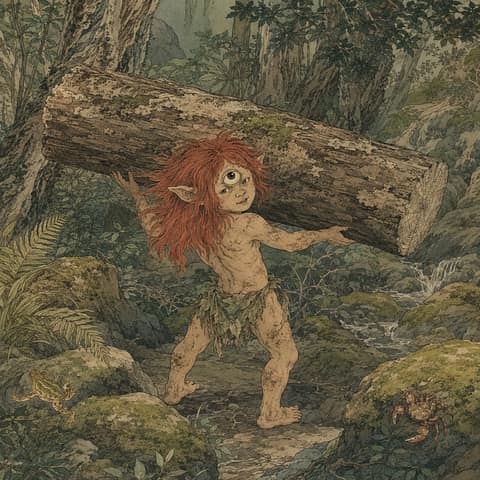
筑前国のもう一体は、神功皇后とはまったく違う光の中にいる。山童である。寺島良安『和漢三才図会』は、山童のいる土地として筑前国や五島列島を挙げ、姿は十歳ほどの童に似て、赤い長髪が目を覆い、犬のような耳を持ち、鼻の上に一つ目があると述べる[7]。山中の小屋に現れ、塩を盗み、蟹や蛙を好むという描写は、国家神話とは対照的に、山仕事の現場に近い。
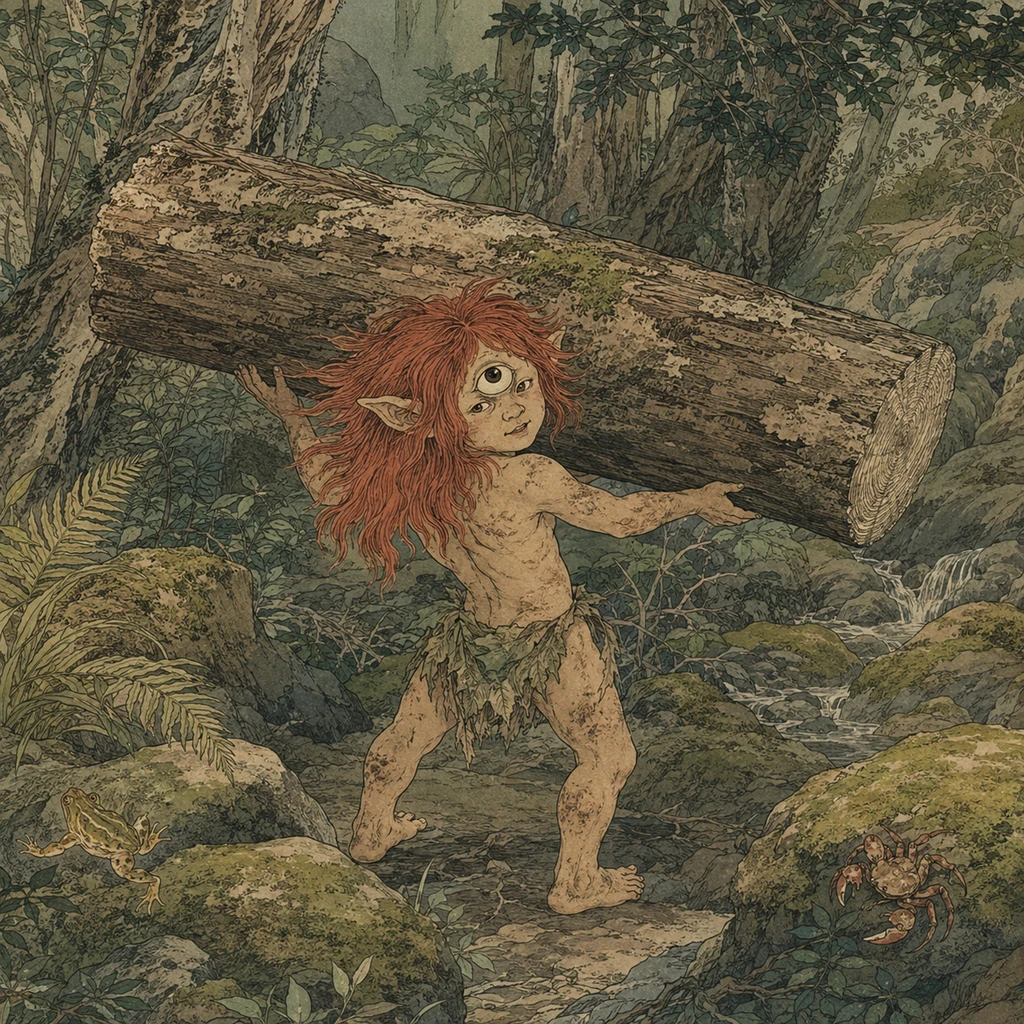
Yamawaro
The *Yamawaro* (Mountain Child) is a mountain monster, sometimes said to have one eye and one leg, passed down as dwelling in the mountains of Kyushu. Terajima Ryoan's *Wakan Sansai Zue* (1712) records that *Yamawaro* exist in Chikuzen Province (Fukuoka Prefecture) and the Goto Islands, describing them as resembling humans with round faces, long red hair covering their eyes, pointed dog-like ears, and a single eye on their nose. Said to be about the height of a ten-year-old child, they appear in mountain huts to steal salt and are fond of eating crabs and frogs. While they help with woodcutting and charcoal-making, demanding sake or rice balls in return, they are also known for their mischievous nature—challenging people to sumo wrestling, playing tricks on livestock, and entering baths without permission. The tradition that kappa move to the mountains and transform into Yamawaro is widely distributed across Kyushu.
Read more山童で重要なのは、河童との関係である。九州では、川のガラッパや河童が季節になると山へ入り、山童になるという去来の伝承が広く語られる。国際日本文化研究センターの怪異・妖怪伝承データベースにも、ガラッパ・河童・山童の関係を示す採集例が見える[8]。柳田國男『山島民譚集』も、河童が水辺と山を移る信仰を「河童の渡り」として考えた[9]。
筑前の山童は、単独の珍獣というより、水と山の境を動く存在である。春には川へ、秋には山へ。川筋と山道を同じ霊的な通路として感じる生活感覚が、山童という小さな姿に結ばれた。山で人の仕事を手伝うこともあれば、相撲を挑み、塩や握り飯を求め、約束を破れば祟るともいう。人里に近く、しかし完全には人間にならない。そこが山童の怖さであり、可笑しさでもある。
母神と童、
二つの境越え
神功皇后と山童を同じ筑前国に置くと、意外な対照が生まれる。神功皇后は、海を越えて帰り、皇子を産む。山童は、川から山へ移り、童の姿で人里の近くに現れる。どちらも境を越える存在だが、片方は国家神話の中心へ昇り、もう片方は山仕事の端に残る。
さらに、どちらにも「子ども」の気配がある。神功皇后は応神天皇を胎内に宿し、宇美で産む母である。山童は、十歳ほどの童とされる小さな山の怪である。筑前では、神聖な出産の物語と、山中に現れる子ども姿の怪が、別々の階層で土地の記憶を支えている。宇美八幡宮の子安信仰が生命の安全を祈るなら、山童の伝承は山仕事の約束と禁忌を守らせる。片方は産む力、もう片方は山で迷わせる力である。
この対照は、筑前国の広がりそのものでもある。玄界灘に向かう香椎・箱崎の海、内陸へ入る宇美、さらに山地へ続く道。海から陸へ、陸から山へ。神功皇后の神話はその大きな線を堂々と進み、山童はその線の脇で小さく笑う。筑前の妖怪文化は、派手な都の怪ではなく、海を渡る神話と山に入る民俗が同居するところに面白さがある。
結び
筑前国の妖怪を読むことは、北部九州の入口を読むことでもある。香椎では神託が降り、宇美では皇子が生まれ、筥崎では八幡の祈りが海の外へ向けられる。そこに立つ神功皇后は、歴史上の人物というより、海・出産・国家守護を一身に結ぶ神話的な身体である。
一方、山童はその反対側にいる。水辺の河童が山へ移ったような小さな怪で、山小屋の塩、蟹や蛙、仕事の手伝いといたずらの間に生きている。神功皇后が筑前の海を大きな神話へ開くなら、山童は筑前の山を日々の民俗へ閉じ込める。
海を渡る母神と、山へ入る童。大きさも格式も違う二つの存在を並べることで、筑前国はよく見える。ここは外へ開く海の国であり、同時に、山の小さな約束を忘れない国でもあった。