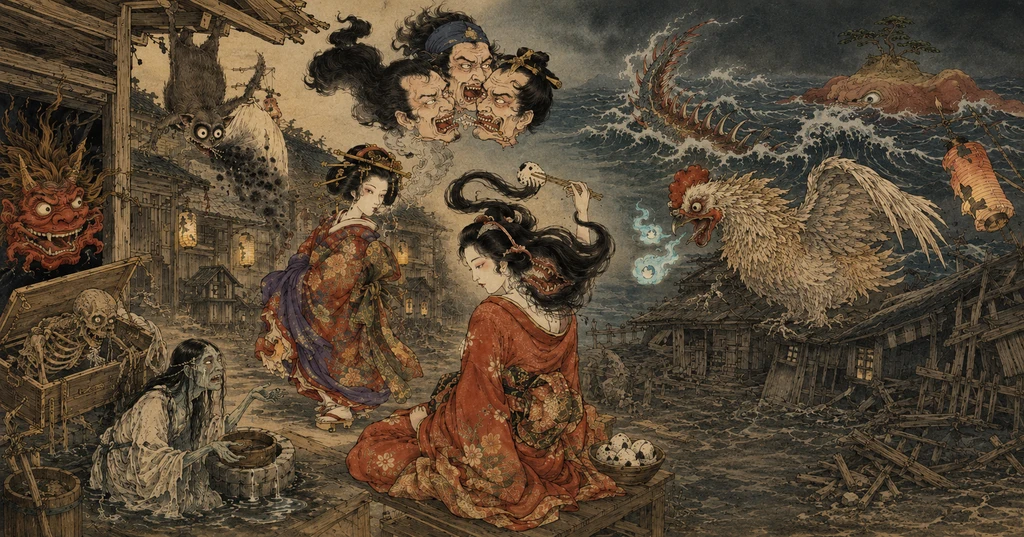
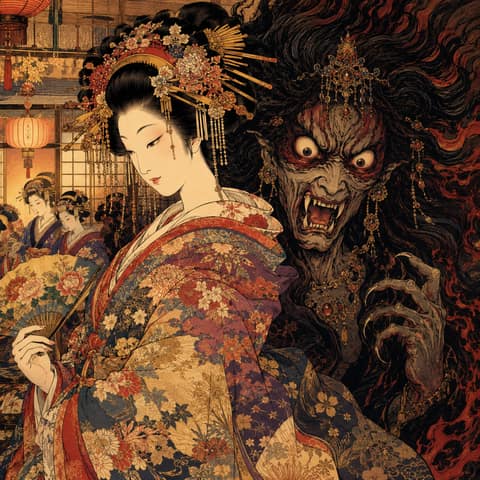
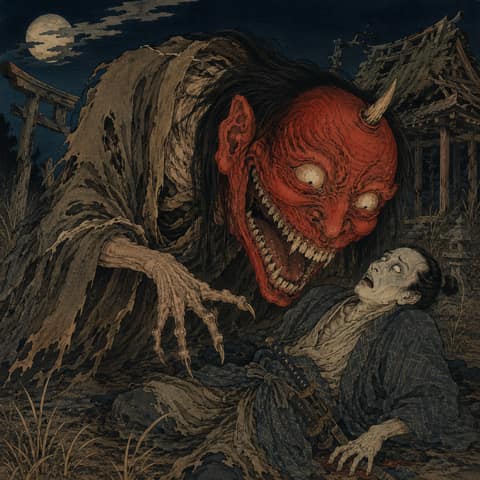

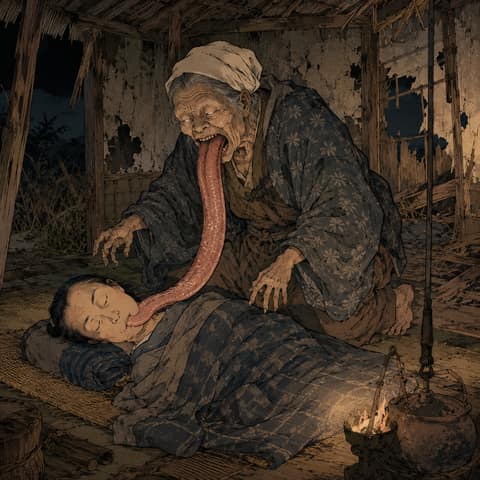
In early modern tales, the Vermilion Tray is depicted as a red-faced monk-like figure, appearing as an accomplice of the Long-Tongued Crone or showing its visage alone, reappearing to unnerve and harm people. The name varies between “Watcher of Necks” and “Vermilion Tray,” commonly read as Shunoban. Classic illustrations and yokai prints note a red face, horns, a split mouth, and a fiery aura, though details differ by source. Encounters occur mainly at night at shrine gates, in wastelands, and in tumbledown shacks, and the harm is told as loss of spirit leading to fainting, lingering illness, or death. Reports span regions such as Aizu and Echigo, not as a fixed local deity but as a circulating tale-type of the uncanny.
Character Profile
This section is our own creative profile for storytelling. It is not historical fact or scholarship.
Yokai Type - Traditional Yokai
Category - Ghosts & Spirits
Rarity - Uncommon
Personality - startles people, threatens and intimidates
Compatibility - bad with travelers, bad with those walking night roads
Abilities - displays a terrifying visage to shock victimsbelieved to weaken a person’s soul and spiritappears in concert with other monsters such as the Long-Tongued Crone
Weaknesses - may vanish when struck with a weapon though details are uncertain, said to disperse at daybreak
Habitat - dilapidated shacks in the wilds, shrine fronts and approach paths, deserted night roads