YOKAI.JP

Yokai Encyclopedia

Encyclopedia of Japanese Yokai

6 Yokai|14 Category|Page 1 of 1
Localization in Progress - More content available in Japanese version
View Japanese
Sort by: NameAscending
天候・災異
  • Great Catfish

    Great Catfish

    Epic

    oh-nah-MAH-zoo

    Traditional Version: The Great Catfish Subdued by the Keystone

    Weather & Calamity SpiritsIbaraki

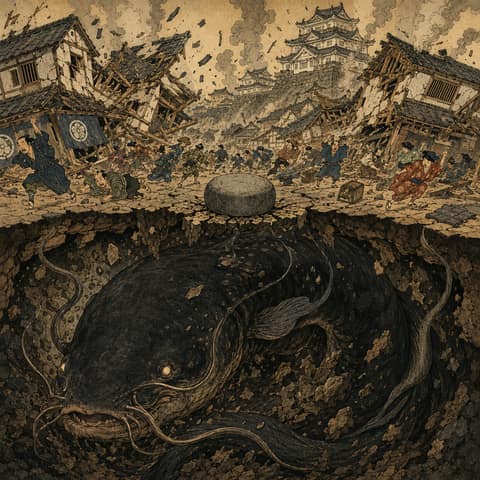
    An image based on the early modern belief that a great catfish causes earthquakes and is held down by the keystones of Kashima and Katori Shrines. The ancient notion of an underworld dragon-serpent was reworked in early modern urban society into imagery for interpreting disasters and critiquing the times. After the Ansei Earthquake, many namazu-e prints were published, adding allegories of recovery and debt relief. Here the great catfish lies in the subterranean mud, at times shuddering to cause quakes, yet is pacified when pressed by the keystone. Regional lore links it to origin tales of stones, landforms, and river courses, serving as markers of shrine-temple origins and local spiritual power. It appears in early modern documents, broadsides, and origin tales without fixed personal names or lineage, told as a symbolic personification of earthquakes rather than an observed creature, with a yokai framework for interpreting calamities at its core.
  • Hiyori-bō (Fair-Weather Monk)

    Hiyori-bō (Fair-Weather Monk)

    Rare

    hee-YOH-ree-boh

    Sekien’s Illustrated Edition: Hiyori-bō

    Weather & Calamity SpiritsIbaraki

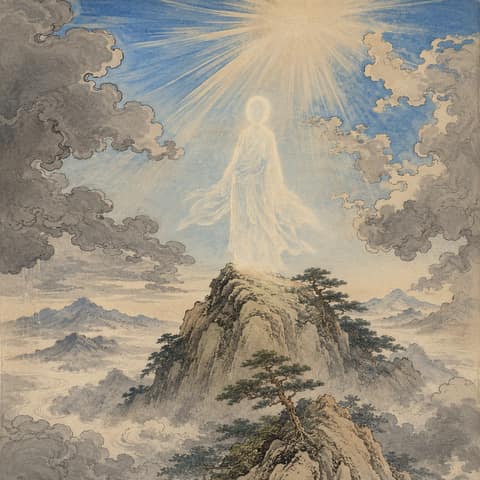
    An interpretation based on Toriyama Sekien’s image in Konjaku Gazu Zoku Hyakki of a yokai that governs fair weather. Said to be sighted in the mountains during sunny days and absent when it rains. Historical field lore is scant; the figure seems to layer folk weather prayers (teru-teru-bōzu, hiyori-bōzu) and the image of weather-working ascetics or monks onto a yokai form. Identification with Chinese drought deities is a modern scholarly view without direct evidence. Thus its form is told as a simple monk-like silhouette, a symbolic bearer of prayer for clear skies and the act of watching for good weather.

  • Rain Woman

    Rain Woman

    Epic

    AH-meh-ON-nah

    Rain-Summoning Female Spirit

    Weather & Calamity SpiritsNagano

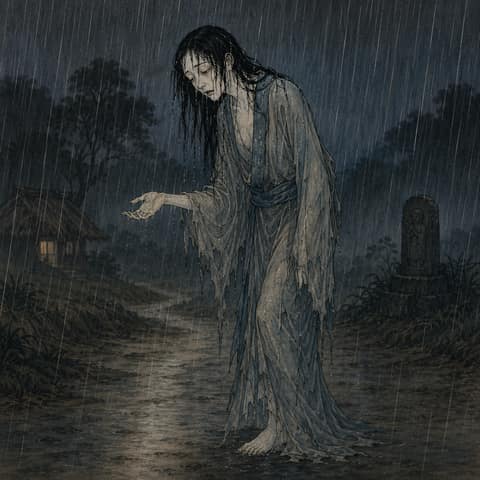
    In historical sources, Ame-onna first appears in Toriyama Sekien’s illustrations, though his entry leans on an allegory from Chu, leaving the standalone monster image faint. In oral traditions nationwide two types stand out. One is a female apparition on rainy nights that targets children (such as Shinshu’s “Ame-onba”), with motifs like approaching crying children on night roads and carrying a sack. The other is a numinous being that summons rain in drought, tied to rain-invoking rites and shrine prayers, venerated as a symbol of blessed showers. Rather than contradicting each other, these reflect a folk reading of rain’s dual gifts and perils. From early modern times, a nickname meaning “one who brings rain” also stuck to individuals, but that is a social label, not a yokai image. Sources vary widely by region, and many tales leave names and citations unspecified.

  • Shōrōkaze (Spirit-Wind)

    Shōrōkaze (Spirit-Wind)

    Uncommon

    SHOH-roh-kah-zeh

    Spirit Wind (Folkloric Version)

    Weather & Calamity SpiritsSaga

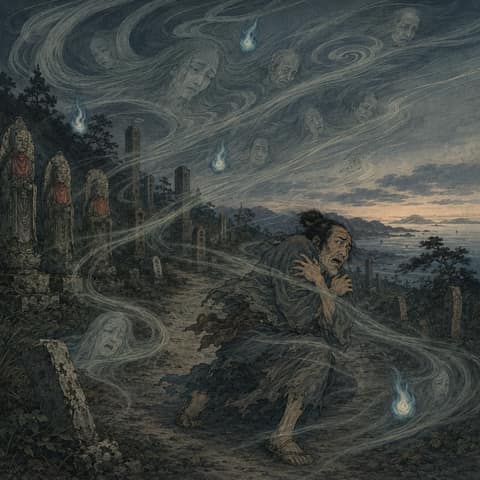
    Spirit Wind is spoken of as an invisible wind that brings sudden chills, fever, and lightheadedness to those it touches. Its timing on the morning of the sixteenth day of Bon is emphasized, and the “spirits” here are the souls of ancestors or the unconnected dead. The wind is understood as carrying the aura of spirits crossing the boundary between return and departure. In the Goto Islands, people strictly avoid graves and grave roads on that day and refrain from going out. On Iki Island, illness is seen as a possessing wind, with graveyard-origin termed dead-spirit wind and grievance-origin termed living-spirit wind. It aligns with regional beliefs in malign winds, where seasonal fatigue and sudden gusts intersect with folk explanations and are remembered as spirit afflictions. It is not told as a yokai with active malice, but as a taboo that warns of misfortune for those who mistake the date or place.

  • Taiba, the Horse-Killing Wind

    Taiba, the Horse-Killing Wind

    Uncommon

    TAI-bah

    Taiba (Traditional Record Edition)

    Weather & Calamity SpiritsVarious regions across Honshu and Shikoku

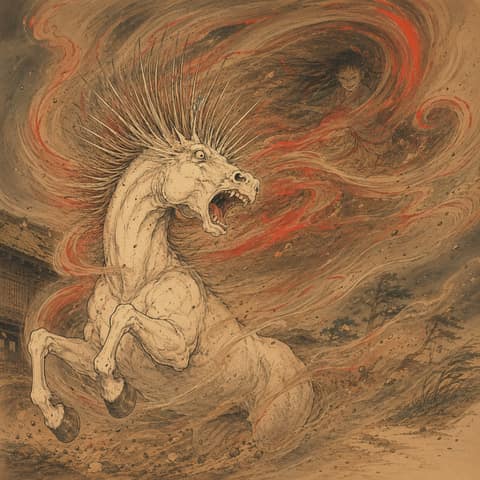
    Taiba is recorded as a sudden apparition arriving with wind and blowing sand. It appears from April to July, especially May to June, and travelers were warned on days that shift between sun and cloud. Accounts vary by region regarding the victim horse’s coat and sex: in Mino white horses were targeted, in Enshu chestnut and bay, while old women and mares were said to be spared. Eyewitnesses tell of each mane hair standing on end, a red gleam shining, and when the horse collapses the wind falls still. The Owari and Mino “Giba” is regarded as a personification of Taiba, a small girl who descends from the sky, ensnares a horse, then vanishes with a smile; the chosen horse spins rightward several times and dies. Folk countermeasures include covering the horse’s neck with cloth, fitting deerfly-proof belly guards or bells, and in emergencies letting a little blood from the ear, needling the center of the tailbone, or cutting the air ahead with a sword while reciting the Komyo Mantra. Temples and shrines fostered prayers for quelling horse-plagues, and talismans to horse deities and belly wraps were used as Taiba wards.

  • The One-Leaved Reed

    The One-Leaved Reed

    Uncommon

    kah-tah-HAH no AH-shee

    Honjo Seven Wonders – Traditional Tale

    Weather & Calamity SpiritsTokyo

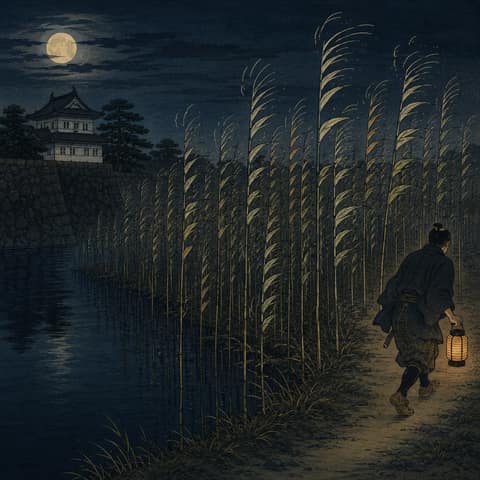
    A classic Edo urban apparition that finds sacred presence in familiar natural anomalies. The single-bladed reed form signals a communal storytelling device that shares unease without fixing a cause. The anomaly is sensed less as a property of the plant than as an atmosphere of place, told alongside night silence and the sound of water. Memorial rites, posted placards, and small shrines are often noted as local pacification practices, and like other Seven Wonders (such as the ginkgo that never sheds its leaves), the tale pointedly withholds rational explanation and leaves the strangeness intact. Later embellishments personify people and incidents, but older accounts remain origin-unknown and phenomenon-focused.

Showing 1 - 6 of 6 yokai