YOKAI.JP
Awa Province (Shikoku) 麻と忌部の古国。阿波国の妖怪事典

粟国・長国から阿波へ。天日鷲命の麻、剣山の神剣、麻桶の毛と吉野川の獣たち

麻と忌部の古国。
阿波国の妖怪事典

Awa Province (Shikoku) · あわ

Also known as: 阿州
View on map

本州の妖怪が狐に化かされるなら、四国の阿波(あわ)は狸の国である ── そう語られてきた。だが、その狸が義に殉じて大明神となり、化け猫が恨みを晴らして福の神となる阿波の怪の世界の、さらにその下には、もう一枚の古い地層が横たわっている。狸合戦の天保よりはるか以前、ここはまだ「粟(あわ)の国」と「長(なが)の国」に分かれた、麻(あさ)と穀(かじ)を植える忌部(いんべ)の古国であった。

令制国としての阿波は、その忌部の記憶のうえに立っている。麻を植えた一族が国の名を生み、神を祀る桶が妖となり、平家の神剣が山の名となった ── 阿波国の妖怪を語るには、まずこの古層へ降りていかねばならない。現代の徳島県全体に広がる狸文化の宏観は徳島県の妖怪事典に譲り、ここでは令制国・阿波の古い貌、すなわち忌部と麻の国に根を張った怪たちをたずねたい。

粟国と長国 ── 阿波という名の古層

阿波国の古さは、まずその名にあらわれている。古代、いまの徳島県北部は粟(あわ)の産地であったことから「粟国」と呼ばれ、南部は「長国」と称された。やがて律令制のもとでこの二つが統合され、ひとつの国を成す。さらに和銅六年(七一三年)、元明天皇の好字令(こうじれい)── 一字の地名を縁起のよい二字に改めよという令 ── によって、「粟」は同音の「阿波」へと書き改められた。いまに伝わる国名は、このとき定まったのである。

「粟」と「長」── 穀物の名と、長く伸びる地の名。阿波という国号そのものが、農耕と開拓の記憶を刻んでいる。そして、その開拓を担ったと伝えられるのが、忌部氏(いんべうじ)であった。忌部とは、朝廷の祭祀に用いる神具や幣帛(へいはく)を調える、神事専門の氏族である。平安初期、その一族の斎部広成(いんべのひろなり)が大同二年(八〇七年)に『古語拾遺(こごしゅうい)』を著し、自家の由緒を朝廷に訴えた。この一巻が、阿波という土地の神話的な来歴を、いまに伝える最古層の文献となっている。

麻と忌部の国 ── 大麻比古神社と安房へ渡った一族

『古語拾遺』によれば、忌部氏の遠祖・天富命(あめのとみのみこと)は、よき土地を求めて阿波の斎部(いんべ)を率い、ここに麻と穀(かじのき、楮のこと)を植えたという。麻の最もよく茂った地はのちに麻植郡(おえぐん、現·吉野川市と美馬市の一部)と呼ばれ、その郡名は阿波忌部に由来すると伝わる。阿波忌部の祖神は天日鷲命(あめのひわしのみこと)── 麻植神(おえのかみ)とも称される、繊維と織物の神である。吉野川市山崎の忌部神社(いんべじんじゃ)は、延喜式にも載るこの天日鷲命を祀る古社だ。

阿波忌部を語るうえで欠かせないのが、鳴門市大麻町(おおあさちょう)に鎮座する大麻比古神社(おおあさひこじんじゃ)である。延長五年(九二七年)成立の『延喜式』に名神大社として列し、阿波国の一宮に数えられたこの社は、忌部の祖神を祀り、社名の「大麻」そのものが、この国が麻の国であったことを今日に伝えている。文献上は『日本三代実録』貞観元年(八五九年)の記事に初めて見え、社伝はその創建を神武天皇の御代にまで遡らせる ── ただしこれは伝承であり、史実としての創建年代は定かでない。

この麻の一族の物語には、海を越える壮大な続きがある。『古語拾遺』は、天富命がさらによき麻の地を求め、阿波の斎部の一部を率いて東国へ渡ったと記す。一行は黒潮に乗って房総半島の南端に上陸し、その地にも麻と穀を植えた。麻がよく育ったので、麻の古語「総(ふさ)」をとってその地を総国(ふさのくに)と呼び、阿波の斎部が住み着いた一帯は、母なる国の名にちなんで安房(あわ)と名づけられた ── これが、四国の阿波と房総の安房という、同じ「あわ」を名にもつ二国のつながりの由来である。安房国(現·千葉県南部)には、天富命が祖神・天太玉命(あめのふとだまのみこと)を祀って創建したと伝わる安房神社が、いまも鎮座する。麻を植える一族が、ひとつの「あわ」から、海の彼方にもうひとつの「あわ」を生んだ ── 阿波という国の古層には、こうした開拓神話が分かちがたく織りこまれているのである。

Hair in the Hemp Bucket

ah-sah-OH-keh-no-keh

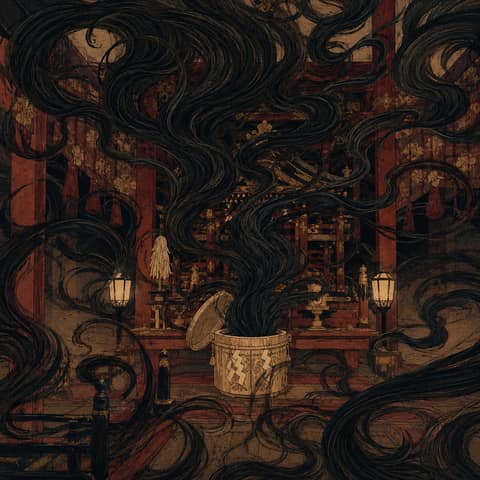
A strange phenomenon preserved at a shrine in Kamo Village, Awa Province. The entity is said to be hair kept as a sacred object inside a hemp bucket. When the deity’s heart is unsettled, the hair lengthens, pushes up the lid, and emerges. It can coil around people and squeeze with crushing force. Villagers reportedly warded it off by conducting proper rites to soothe the deity. The chief source is the old text Ashū Kiji Zatsuwa.

Read more

麻の国・阿波だからこそ生まれた妖が、麻桶の毛(あさおけのけ)だ。江戸の絵師・鳥山石燕(とりやませきえん)が安永十年(一七八一年)の『今昔百鬼拾遺』に「麻桶毛」として描いたこの怪は、もとをたどれば阿波の地に根ざしている。三好郡加茂村(現·三好市)の彌都比売(やつひめ)神社では、神体として、麻を納める桶に毛が籠められていた。神の心が穏やかでないとき、その毛が桶からするすると伸び出して人に巻きつき、これを締め上げるという。ふだんは桶のなかで静まりかえった神聖な毛が、神意を察したかのように妖と化す ── 神体という最も尊いものが、最も恐ろしい怪へと転じうるという逆説を、この妖はそのまま体現している。

徳島の古書『阿州奇事雑話(あしゅうきじざつわ)』には、この毛の働きが具体に記されている── 社の祠に忍び込んで盗品を分けあっていた山賊たちを、桶から伸びた毛が人数分に裂けてそれぞれに巻きつき、締め上げたというのだ。罰を下す神意が、髪の毛というかたちをとって顕れる。麻は、藍と並ぶ阿波の特産であった。神に捧げる清浄な繊維をたくわえる麻桶は、それ自体が神聖な器である。その器に宿る霊が不正を裁く ── 麻桶の毛は、忌部の国・阿波の生業(なりわい)と信仰が分かちがたく結びついていたことの、何よりの証なのである。狐でも狸でもない、麻という一国の生業そのものから立ちのぼった、阿波ならではの妖といえる。

吉野川と藍の地 ── 川辺に立つ獣たち

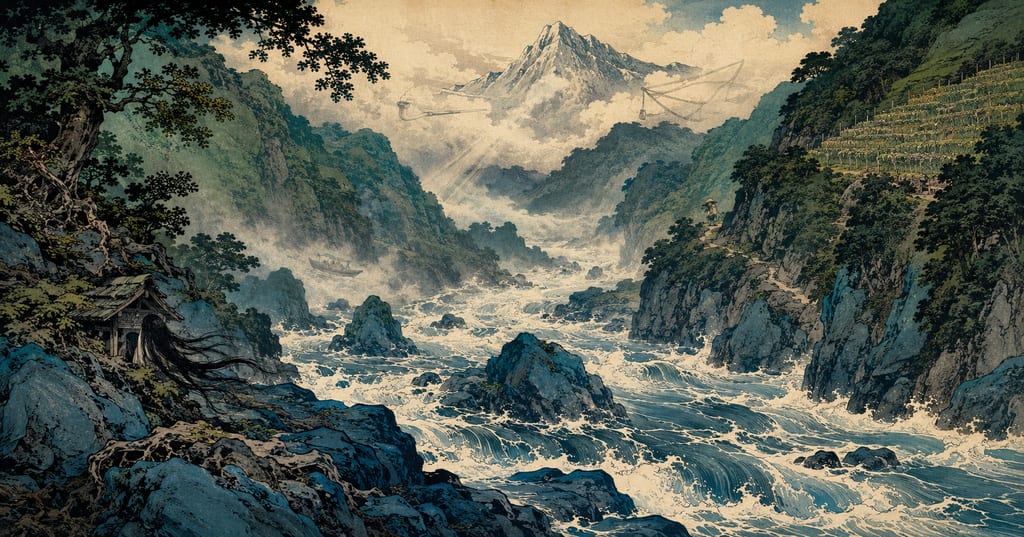
阿波の地理の背骨は、四国山地を割って東へ流れる吉野川(よしのがわ)である。「四国三郎」の異名をもつこの暴れ川は、たびたび氾濫しては流域に肥沃な土を運び、その土が忌部の麻を、のちには阿波藍(あわあい)を育てた。藍の取引は文安二年(一四四五年)の『兵庫北関入船納帳』にすでに見え、天正十三年(一五八五年)に阿波の領主となった蜂須賀家政(はちすかいえまさ)が藍作を奨励すると、「阿波二十五万石、藍五十万石」とまで称される日本最大の藍産地へと育っていった。麻から藍へ ── 阿波の富は、つねに吉野川の水とともにあった。

その川辺と峡谷は、獣たちの棲みかでもあった。
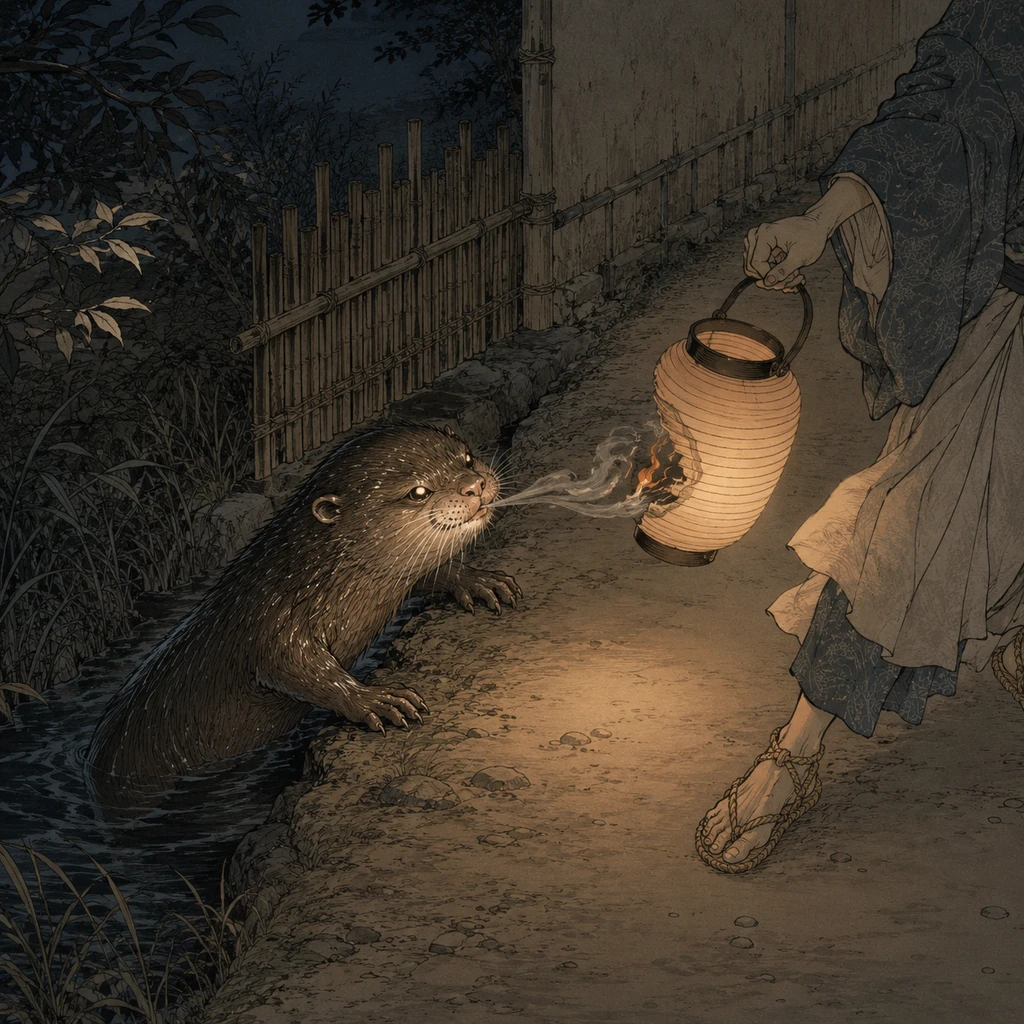
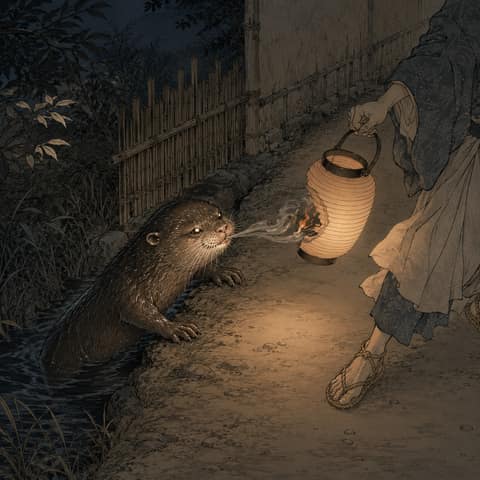
吉野川をはじめ阿波の川には、かつてニホンカワウソが数多く棲んでいた。長く生きた獣は化けると信じられ、阿波ではカワウソが小僧や美女に化けて夜道の人を化かしたと伝わる ── いわば水辺に棲む狐狸である。捕らえた魚を頭に載せて子どもに化け、道行く人に問いかけてきたともいう。だが乱獲と環境の変化でその数は激減し、昭和五十四年(一九七九年)に高知県で目撃されたのを最後に姿を消し、平成二十四年(二〇一二年)には絶滅が宣言された。化けて人を騙したと恐れられた獣は、いまや幻となった ── カワウソの怪は、失われた四国の川の豊かさを伝える最後の記憶でもある。

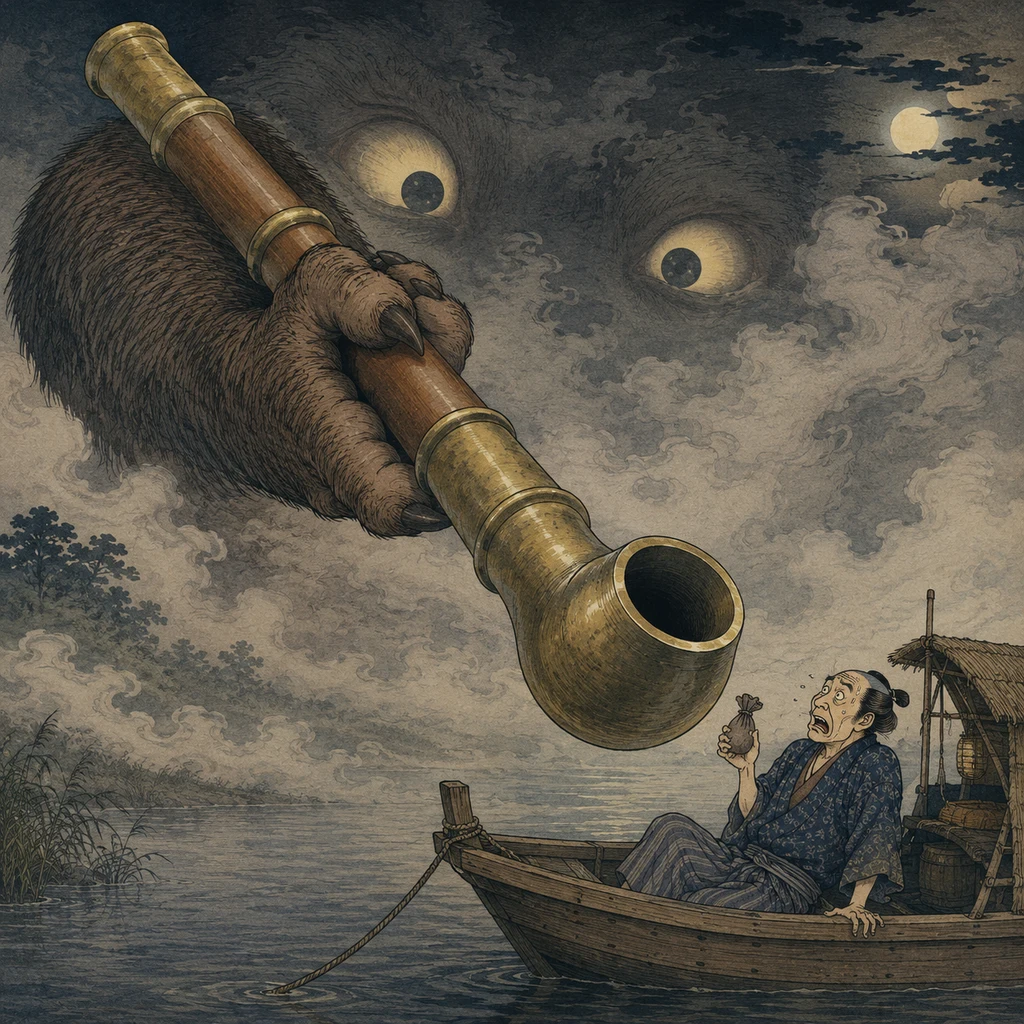
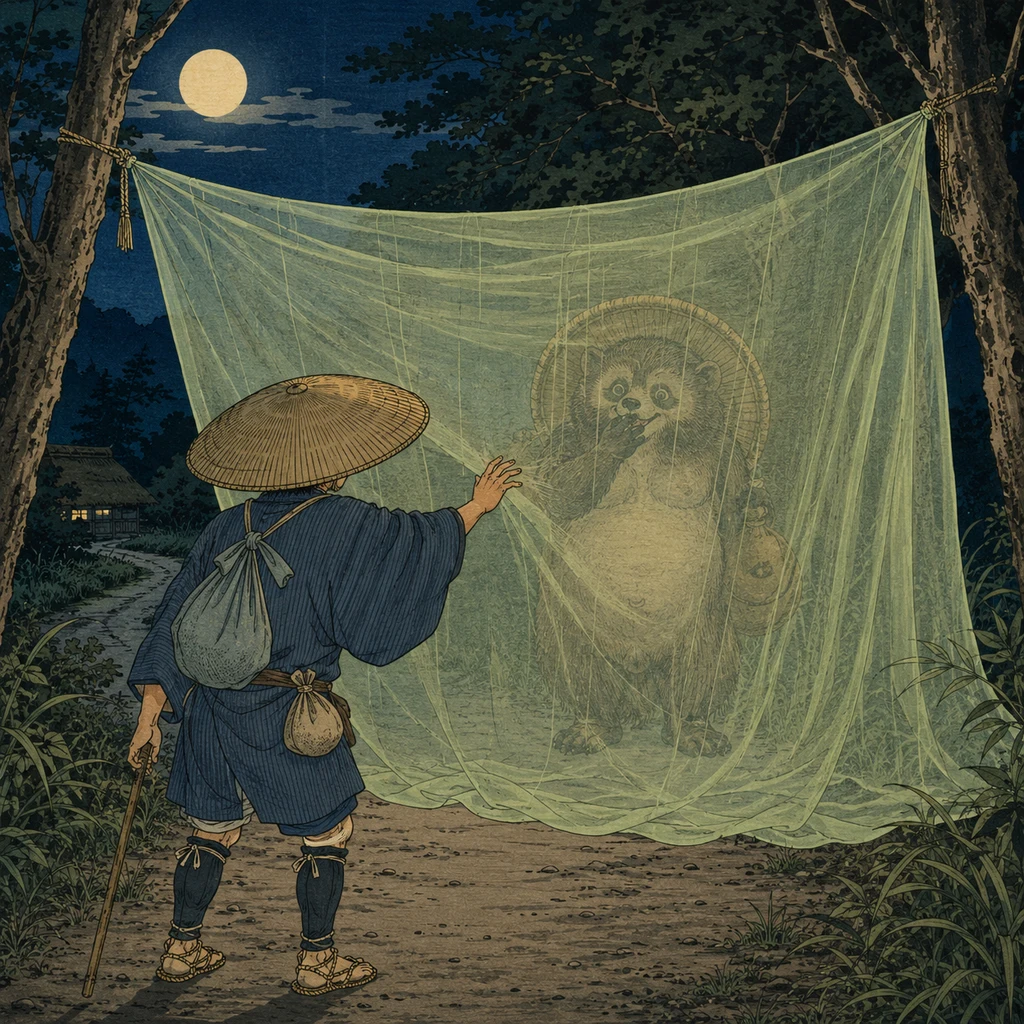
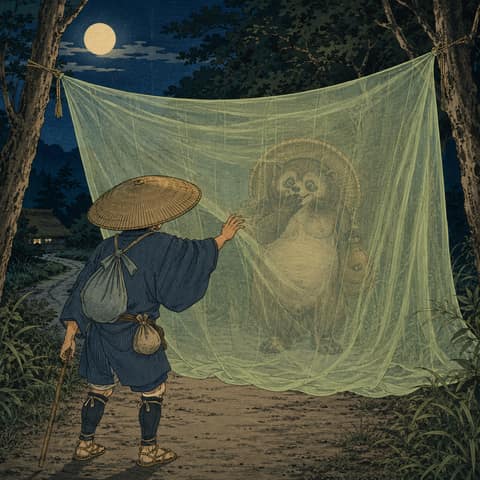
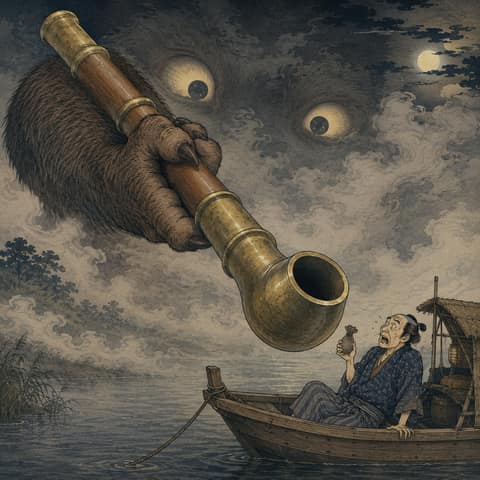
獣の化けるさまは、徳島出身の民俗学者・笠井新也(かさいしんや)が昭和二年(一九二七年)の『阿波の狸の話』に詳しく書きとめた。三好郡の吉野川、青石瀬(あおいしせ)では、夜舟を停めた船頭の前に大煙管(おおぎせる)が巨大な煙管を差し出し、煙草を求める。詰めても詰めても足りぬほどの量で、応じきれないと舟を転覆させたという。青石瀬という名は、吉野川がもたらす青石(緑泥片岩)の瀬を指す ── 妖は、川そのものの地形に貼りついて語られた。一方、美馬(みま)の三ツ島に出る蚊帳吊り狸(かやつりだぬき)は、夜道に蚊帳を吊って見せ、まくり上げるとまた中に蚊帳、その奥にもまた蚊帳 ── と果てしなく続き、旅人を一晩じゅう歩かせて疲れさせた。これらの怪が、美馬・三好という吉野川中流の具体の地名に結びついている点が肝心だ。阿波の獣の妖は「どこかの山の化け物」ではなく、「あの淵の、あの瀬の、名を持つ一匹」として語られたのである。

名を持つ古狸たち ── 化かしの芸の古層
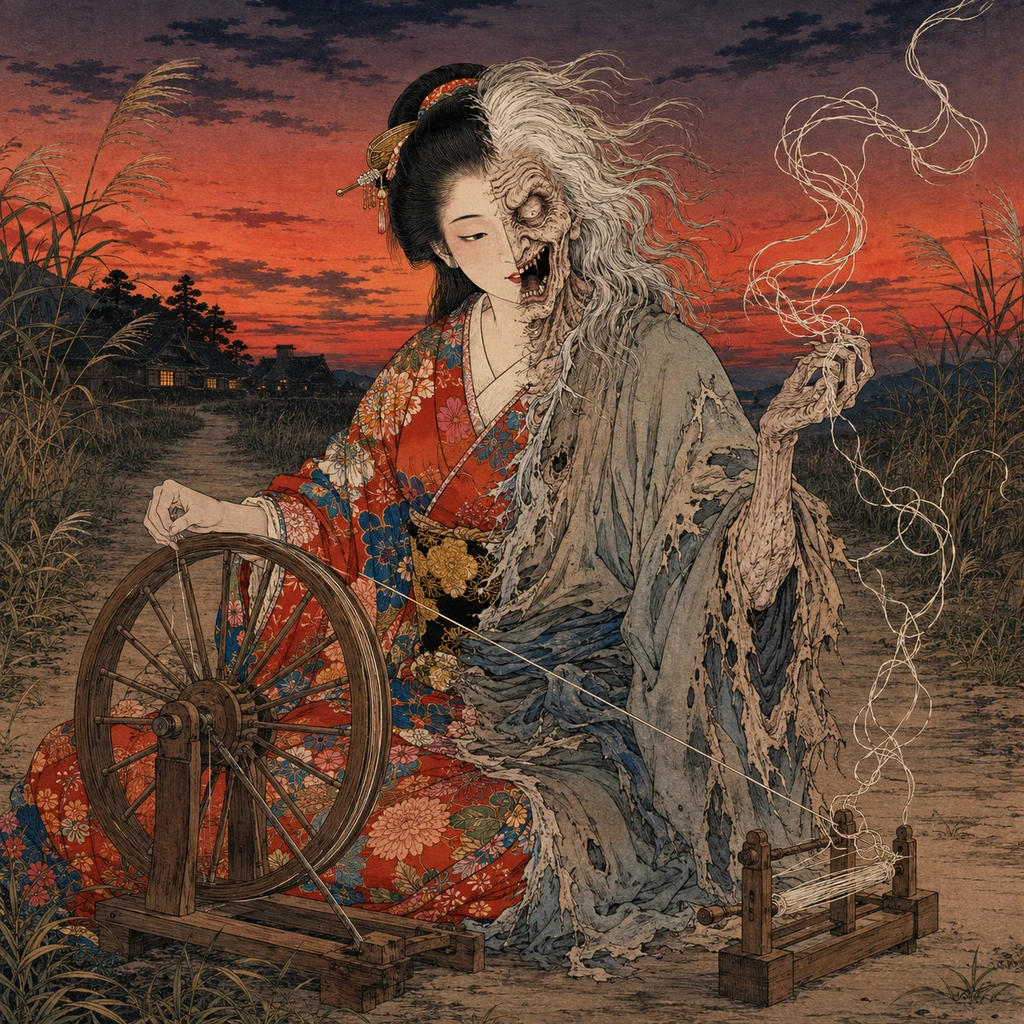
Thread-Spinning Maiden

EE-toh-hee-kee MOO-soo-meh

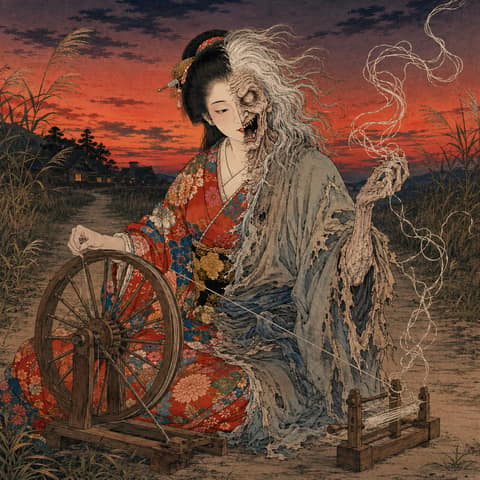
A yokai that appears by the roadside as a young woman spinning thread on a wheel. If passersby are entranced by her beauty, she suddenly turns into a white-haired crone and bursts into loud laughter, shocking them. The striking, instantaneous transformation is her hallmark. No concrete harm is recorded; she is told of as a roadside surprise. Her name comes from her spinning motion, and the legend is rooted in Awa Province.

Read more

吉野川の流域は、狸たちの舞台でもあった。板野郡堀江村(現·鳴門市)の道端では、美しく糸を引く糸引き娘(いとひきむすめ)に見惚れていると、娘がふいに白髪の老婆に変じ、高笑いして人を驚かせたと伝わる。糸を紡ぐ娘という、麻と織物の国・阿波らしい姿で人を惑わすこの怪もまた、笠井新也が一つひとつに土地と名を添えて記録した名狸の一群に属している。店先の小僧に化けて品物をくすねる小僧狸、夜道で傘を差しかけてくる傘差し狸、白い徳利に化けて転がる白徳利 ── 阿波の狸は、いずれも具体の村と淵に根ざした固有名で語られた。

これら名を持つ古狸が、近世に金長(きんちょう)と六右衛門(ろくえもん)の壮大な合戦譚へと編まれてゆくのだが、その物語は天保以降の新しい層に属する。狸が義に殉じて正一位の神階を得る阿波狸合戦の顛末は、すでに徳島県の妖怪事典で詳しく語った。ここで見ておきたいのは、合戦譚という華やかな大伽藍を支えていたのが、こうした一匹一匹の小さな化かし話の堆積であったということだ。土地に根ざした無数の固有名の狸がいたからこそ、それらを束ねる「合戦」という物語が成り立ちえた。古層があってこその、近世の花だったのである。

祖谷と剣山 ── 山の古信仰と怪

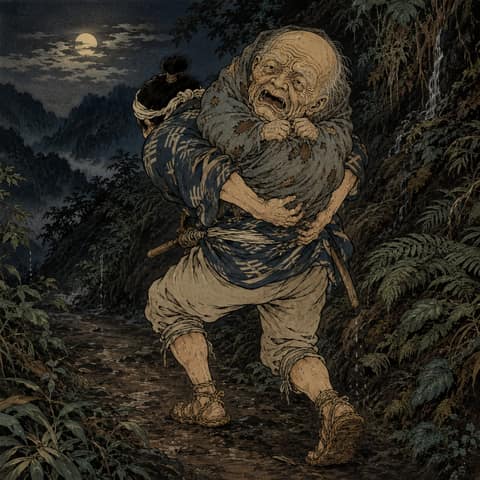
吉野川を上流へ遡れば、四国山地の最も深い懐、大歩危(おおぼけ)・祖谷(いや、現·三好市)へ至る。平家の落人伝説とかずら橋で知られるこの秘境は、子泣き爺(こなきじじい、児啼爺)の故郷と伝わる土地だ。民俗学者・武田明が昭和十三年(一九三八年)に雑誌『民間伝承』へ報告したもともとの姿は、山道で赤子のような泣き声をあげるだけの怪であった。原地として記されたのは三好郡三名村(みなそん)字平(たいら)── 深い谷あいの集落である。山の夜道に響く赤子の声は、谷を渡る風の音や鳥獣の鳴き声を、孤独な旅人が聞き違えたものだったかもしれない。それを「子泣き爺」という一個の怪に結晶させたところに、山の闇と向きあってきた人々の想像力がある。「抱き上げると石のように重くなって人を押し潰す」という重量増加の趣向は後世に加わり、これを善玉として全国に広めたのは水木しげるの『ゲゲゲの鬼太郎』であった ── 原伝承と近代の創作とが、子泣き爺には幾重にも積み重なっている。

祖谷のさらに奥にそびえるのが、剣山(つるぎさん)である。標高一九五五メートル、西日本第二の高峰にして、古来、修験道(しゅげんどう)の山として山岳信仰の対象であった。この山は、もとは石立山(いしだてやま)あるいは太郎笈(たろうぎゅう)と呼ばれていたという。それが「剣山」と称されるようになったのは、屋島の戦いに敗れた平家が幼い安徳天皇を奉じてこの地へ落ち延び、三種の神器のひとつ、宝剣を山頂の宝蔵石(ほうぞうせき)の下に納めた ── という伝説に由来すると語られる。山頂には剣山本宮宝蔵石神社が鎮座し、巨岩・宝蔵石そのものを神体として祀る。壇ノ浦で入水したはずの安徳天皇が密かに生き延びたという秘話と、神剣を呑んだ霊峰という古い信仰とが、この山では分かちがたく溶けあっている。

特定の説話に結晶する以前の、深い山がもたらす漠とした畏怖こそが、阿波の山の怪の母胎であった。年を経た猫が美しい娘に化けるという猫娘(ねこむすめ)の話も、阿波の里には伝わる。山の獣は獲物であると同時に、いつ化生に転じるとも知れぬ畏れの対象であった。忌部が麻を植えた里から一歩奥へ、吉野川の源へと分け入れば、そこには国家の神話にも記録の妖にも回収されきらない、山そのものの古い気配が、いまも濃く漂っているのである。

麻と狸 ── 阿波という古層

粟と長の二国が統べられて阿波となり、忌部が麻を植えて国の名と神社の名を生み、その一族が海を渡って房総に安房を開いた。麻桶に神威が宿って妖となり、吉野川の瀬と淵には名を持つ獣がひそみ、源流の剣山には平家の神剣が眠る ── 令制国・阿波の妖怪は、狸合戦という近世の華やかな物語の、さらに下にある古い地層から立ちのぼってくる。

天日鷲命の麻、大麻比古神社の社名、彌都比売神社の麻桶 ── 阿波の怪の根には、つねに麻と忌部の記憶が透けて見える。やがてこの古層のうえに、狸が義に殉じて神となる近世の物語が花開くのだが、その宏観の貌は徳島県の妖怪事典にゆずろう。忌部の麻と平家の剣を底に沈めた令制国・阿波 ── それが、徳島という現代の県名の下に横たわる、もうひとつの古い貌である。
All yokai of Awa Province (Shikoku)8

Complete list of yokai linked to Awa Province (Shikoku), including those not featured in the article above.

  • Ogetsuhime-no-Kami

    Ogetsuhime-no-Kami

    Divine

    おおげつひめのかみ

    Ogetsuhime-no-Kami, the Food Goddess of Awa Who Bears the Five Grains from Her Body

    神霊・神格Awa Province (Present-day Tokushima Prefecture, Awa no Kuni)

    The fascination of Ogetsuhime lies in how land, food, and body are superimposed onto a single name. In the "Birth of the Land" in the *Kojiki*, Awa Province—one face of the island of Iyo-no-Futana—is named Ogetsuhime, acting as Ogetsuhime as the name of Awa Province. In the "Birth of the Gods," Ogetsuhime-no-Kami is born. Then, in the episode of Susanoo's banishment, she produces food from her body and is killed, giving rise to the five grains and silkworms. This overlapping indicates that ancient storytellers felt the land not merely as a map, but as a body that generates food. Awa Province is read not just as a place name, but as the name of a food goddess. Her feast begins from the exact opposite of pure, pristine sacred offerings. Asked for food, Ogetsuhime produces various items from her nose, mouth, and rectum, and cooks them to serve—providing food from the nose, mouth, and rectum. Here, the body's orifices are simultaneously places of defilement and the gates through which food enters the world. That Susanoo viewed this as filthy was not simply a misunderstanding; it expresses a fundamental revulsion toward food being too close to the body. Food sustains life, but its roots touch flesh, blood, and excretion. Ogetsuhime offers it without erasing this uncomfortable proximity. Through her murder, the deity's body transforms into a catalog of seeds. Silkworms grow from her head, rice seeds from both eyes, millet from both ears, adzuki beans from her nose, wheat from her genitals, and soybeans from her rectum—forming seeds generated from body parts. This is a grotesque corpse transformation, yet it perfectly illustrates how agricultural societies perceived food. Seeds do not come from nothing. They appear as what remains after something is broken, torn apart, and dies. By having Kami-musubi have these seeds collected, the corpse is not merely a loss, but is transferred into a cultivatable future. Placed alongside Ukemochi-no-Kami, Ogetsuhime's outline becomes starker. Ukemochi in the *Nihon Shoki* is killed by Tsukuyomi, and Amaterasu incorporates what grew from her corpse into the order of agriculture and sericulture—the origin of the five grains and sericulture from Ukemochi. There, even the separation of day and night is narrated. In Ogetsuhime's case, the murderer is Susanoo, and the story is placed at the turning point where the narrative moves from Takamagahara to Izumo. Rather than in the silence of the moon god, the seeds of food are placed in the void just before the banished, violent god heads for the earth. Because of this difference, Ogetsuhime leans much more deeply toward the beginning of the land and agriculture than toward cosmology. As Kokugakuin's commentary points out, this story is difficult to connect directly with the surrounding context, leading to the theory that it was originally a separate tradition added episodically—the theory of episodic placement. However, this very "inserted" quality tells of the myth's function. After the Heavenly Rock Cave, and before Susanoo fully enters the Izumo story, the *Kojiki* places a small, dark story about the origin of food. Before entering the heroic tales of land-creation, a world where humans could eat was necessary first. In the crevices of the story, Ogetsuhime prepares the conditions for earthly life. Her figure appearing in the genealogy of O-toshi-no-Kami also cannot be overlooked. With Haya-mato-no-Kami, Ogetsuhime gives birth to Wakayamakui, Wakatoshi, Wakasaname, Mizumaki, Natsutakatsuhi, Akibime, Kukutoshi, and Kukiki-wakamuro-tsunane—her eight child deities with Haya-mato-no-Kami. This genealogy, lining up names associated with mountains, years, summer, autumn, and kuzu roots, prevents her from remaining merely a god killed once. Even after birthing the origin of grains, she supports the time of the food world as a mother goddess expanding into the seasons of the mountains, the cycle of crops, and year-round fertility. From the perspective of comparative mythology, Ogetsuhime has long been read as a Hainuwele-type myth. Kokugakuin introduces the typology where various crops generate from a corpse, and notes the similarities between the myth of the girl Hainuwele from Seram Island in Indonesia and the Kojiki/Nihon Shoki myths of Ogetsuhime and Ukemochi—a comparison with Hainuwele-type myths. However, this comparison does not mean "it's simple to equate because it's foreign." Kokugakuin cautions that limiting the origin to one region is difficult due to the reality of pre-Kiki traditions and the limitations of data. What is important is that the sensation of staple foods being born from a dead body became a powerful form to narrate the origin of agriculture across the world. The myth of Ogetsuhime does not narrate food solely as a bright blessing. Food is something to be grateful for, but it is also something that comes out of a body. Seeds open up the future, but they are also born from a corpse. The land feeds people, but it is carved with the name of the food goddess, Awa Province. Ogetsuhime is a deity who embraces all the defilement, death, dry fields, mountains, and seasons that lie behind eating. That is exactly why her fertility is not merely gentle. It is a strong fertility close to the soil, offered from the boundaries of the nose, mouth, and rectum, sprouting from a murdered body.

  • Konaki-jiji

    Konaki-jiji

    Legendary

    konaki-jiji

    The Crying Old Man of Tokushima: Konaki-jiji

    山野の怪阿波国·三好市山城町(現·徳島県) ── 柳田國男『妖怪談義』、現代の発祥地認定

    The Folkloric Cliché of the "Crying Baby on a Mountain Path". While the basic overview outlines the structure of the Konaki-jiji legend, this deep dive probes the dark undercurrents of the "crying baby on a mountain path" cliché. Historically, in Japan's rugged mountainous regions, practices like infanticide (mabiki), child abandonment, and high infant mortality rates cast a long, daily shadow over village life. Experiencing auditory hallucinations of a baby crying on a lonely mountain road was a universally shared psychological trauma among these communities. This is exactly why legends of the *Ubume* (the ghost of a woman who died in childbirth) are distributed so widely across the country. Hearing an infant's cry at liminal spaces—mountain passes, riverbanks, or forest paths—serves as the foundational, deep-rooted material for ghost stories across Japan. The Konaki-jiji is Shikoku's unique, composite yokai, created by welding this primal auditory fear to the "form of an old man" and the "crushing weight" motif. Kunio Yanagita's Structural Methodology. The methodological genius of Kunio Yanagita's *Yokai Dangi* (1956) lies not in treating a yokai in isolation, but in reading it structurally alongside its relatives. By aligning the Konaki-jiji's "getting heavier" mechanic with the *Obariyon* and the *Ubume*, Yanagita illuminated a developmental history: the fusion of the primal "crying baby" archetype with the later addition of the "crushing weight" narrative. This comparative approach became the gold standard for post-war folkloristics, heavily influencing later yokai scholars like Kazuhiko Komatsu and Noboru Miyata. The Gogya-naki and the Shikoku Folklore Sphere. The fact that "Gogya-naki"—a cousin of the Konaki-jiji—is distributed entirely across Shikoku highlights the uniqueness of the island's folkloric sphere. In Mima District, Tokushima, records detail a Gogya-naki that hops through the mountains on one leg, its cries powerful enough to trigger earthquakes; Yanagita rightly identified this as identical to the Konaki-jiji. Shikoku's mountain folklore possesses traits distinct from Honshu (the central highlands) and Kyushu (sacred mountain cults). It forms a highly complex religious ecosystem where Shugendo (mountain asceticism), the 88-Temple Pilgrimage, and indigenous Shinto are stacked in multiple layers. The Konaki-jiji is a direct product of this intense Shikoku mountain folklore. The "Real-Life Old Man" Theory and the Mechanics of Monsterification. The local account recorded by historian Masahiro Takita—suggesting that a real, eccentric old man used to mimic baby cries—is highly suggestive when analyzing how yokai are born. The phenomenon where a marginalized villager with abnormal behavior (due to mental illness, isolation, or dementia) is sublimated into a yokai legend over several generations is seen throughout Japan. "Yokai" often function as social devices used to process and mythologize a community's memory of its peripheral members (the elderly, beggars, foreigners, or the disabled). The local Konaki-jiji lore is a rare case that brings this folkloric mechanism to the surface, offering prime material for reading yokai studies through the lens of social history. Shigeru Mizuki's Post-War Yokai Revival Movement. Shigeru Mizuki (1922-2015) was the driving force behind the revival of yokai culture in post-war Japan. Through *GeGeGe no Kitaro* (serialized prominently in Weekly Shonen Magazine from 1968), he elevated half-forgotten, hyper-local folklore into household names across the nation. Within the Kitaro family, the Konaki-jiji was reconstructed as a "good-natured yokai from Tokushima," gaining massive popularity as a bearded, staff-wielding elder in a monk's robe. The transformation of the Konaki-jiji from a malicious, crushing murderer in local folklore to an agent of justice in modern pop culture is a subject of intense academic debate, serving as a prime example of how an author's intervention can fundamentally alter the DNA of a traditional legend. Regional Revitalization and Applied Yokai Studies. In 2001, Yamashiro Town in Tokushima (the legend's birthplace) erected a stone statue of the Konaki-jiji, kickstarting its regional branding as a "Yokai Village." Through initiatives like yokai haunted houses, mascots, and stamp rallies, post-war folkloristics successfully transitioned from an academic discipline into an engine for regional economic growth and tourism. This represents a classic structural model: local yokai (like Ittan-momen in Kagoshima, Sunakake-baba in Nara, and Nurikabe) gain national fame via *Kitaro*, only to be re-imported back to their hometowns as cultural capital for regional revitalization. The Modern History: From Local Lore → Kitaro Fame → Regional Tourism. The modern history of the Konaki-jiji perfectly maps the typical trajectory of Japanese yokai culture. It traces a three-stage cultural metamorphosis: an entity that was merely oral folklore in one specific region before the war, achieves national celebrity through Mizuki's manga in the post-war era, and finally flows back into its birthplace to be monetized as a tourism asset. This exact path is shared by several core members of the Kitaro family. It proves that the Konaki-jiji is not merely a "fairy tale from the past," but a yokai that actively embodies the ongoing, modern processes of cultural production and regional identity building.

  • Kawauso (Otter Yokai)

    Kawauso (Otter Yokai)

    Epic

    kah-wah-OO-soh

    Tradition-Based Transforming Otter

    Animal ShapeshiftersRiverbanks and wetlands across Japan

    A rendition based on records and oral tales of the shape-shifting otter. It mimics human speech, but its intonation and sentence endings sound off, and when pressed with questions it gives nonsensical replies. Its guises range from a beautiful woman to a child or a monk, distracting passersby and misleading them with tricks such as snuffing lanterns, inviting people to wrestle, or making stones and tree roots appear human. In some regions it overlaps with kappa lore, possessing great strength in water and luring victims to look upward to gain advantage. In the context of spirit possession, it is feared for sapping a person’s vitality and inducing lethargy. While violent episodes are recorded, most encounters amount to threats or pranks.

  • Mosquito-Net-Hanging Tanuki

    Mosquito-Net-Hanging Tanuki

    Uncommon

    kah-yah-TSOO-ree dah-NOO-kee

    Mosquito-Net-Hanging Tanuki (Traditional Tale)

    Animal ShapeshiftersMima City, Tokushima Prefecture (former Minoshima Village, Mainakajima)

    A classic example of illusion craft attributed to the tanuki of Awa. It presents indoor furnishings incongruously outdoors and compels the target to keep “lifting” or “peeking,” eroding their sense of direction and time. The number thirty-six is sometimes linked to shugendō numerology, but local tales give no strict rationale, instead advising a practical countermeasure: stay calm and brace the belly. It causes no harm, and at dawn the spell breaks and the path appears as if nothing happened.

  • Thread-Spinning Maiden

    Thread-Spinning Maiden

    Uncommon

    EE-toh-hee-kee MOO-soo-meh

    Traditional Account

    Mountain & Wilderness SpiritsHorie Village, Itano District, Awa Province (modern Naruto City, Tokushima Prefecture)

    Based on records from Horie Village in Awa Province, this version organizes the image of the Itobiki-Musume as a young woman operating a spinning wheel by the roadside. The moment someone looks her way, she transforms into an old crone and bursts into loud laughter. No harm beyond revealing her true form is reported, and she neither touches nor pursues people. Stories most often place her from dusk to midnight in spots where foot traffic thins—village outskirts, field paths, and crossroads. Folklorically she belongs to roadside怪異 tales, told as a warning not to be deceived by looks and not to dawdle off one’s route. The trigger for the change is acts like “staring” or “approaching,” and the silent switch to an old-woman figure is the core of the fright. The spinning wheel is an everyday tool, and her realistic working motions heighten the uncanny shock of a chance encounter. Parallels exist outside the region, but the named example from Awa is the best known.

  • The Great Kiseru

    The Great Kiseru

    Uncommon

    oh-oh-gee-SEH-roo

    The Great Pipe of Awa (Aoiishise Variant)

    Animal ShapeshiftersAwa Province (Keida, Mishō Village, Miyoshi District; present-day Tokushima Prefecture)

    A waterside bake-danuki tale tied to the Aoiishise shallows of the Yoshino River in Awa Province. At midnight, when a boat moors, a colossal pipe is offered and an enormous amount of shredded tobacco is demanded. The motif of a shape that begs tobacco, found across Japan, merges here with Awa’s tanuki beliefs, forming a folk pattern in which lack of offerings brings curse or calamity. The quantity is said to reach ten forty-momme bags—impossible to carry—serving as a practical warning against overnight mooring at the rapids. If the pipe is fully packed, it departs without harm, reflecting a folk sense of boundaries, bargains, and payment. Its form is rarely described, often only a giant hand and pipe are perceived. Boats are threatened by sounds and waves, sometimes said to sink, turning fear of careless conduct aboard and the night waters into story. It warns against excessive curiosity and negligence while transmitting the geographic dangers of the shallows.

  • Cat Maiden

    Cat Maiden

    Uncommon

    NEH-koh-moo-SOO-meh

    Cat-Girl of Early Modern Sideshow and Eyewitness Reports

    Half-Human BeingsEdo, Kamigata (Kyoto–Osaka), Awa Province (modern Tokushima)

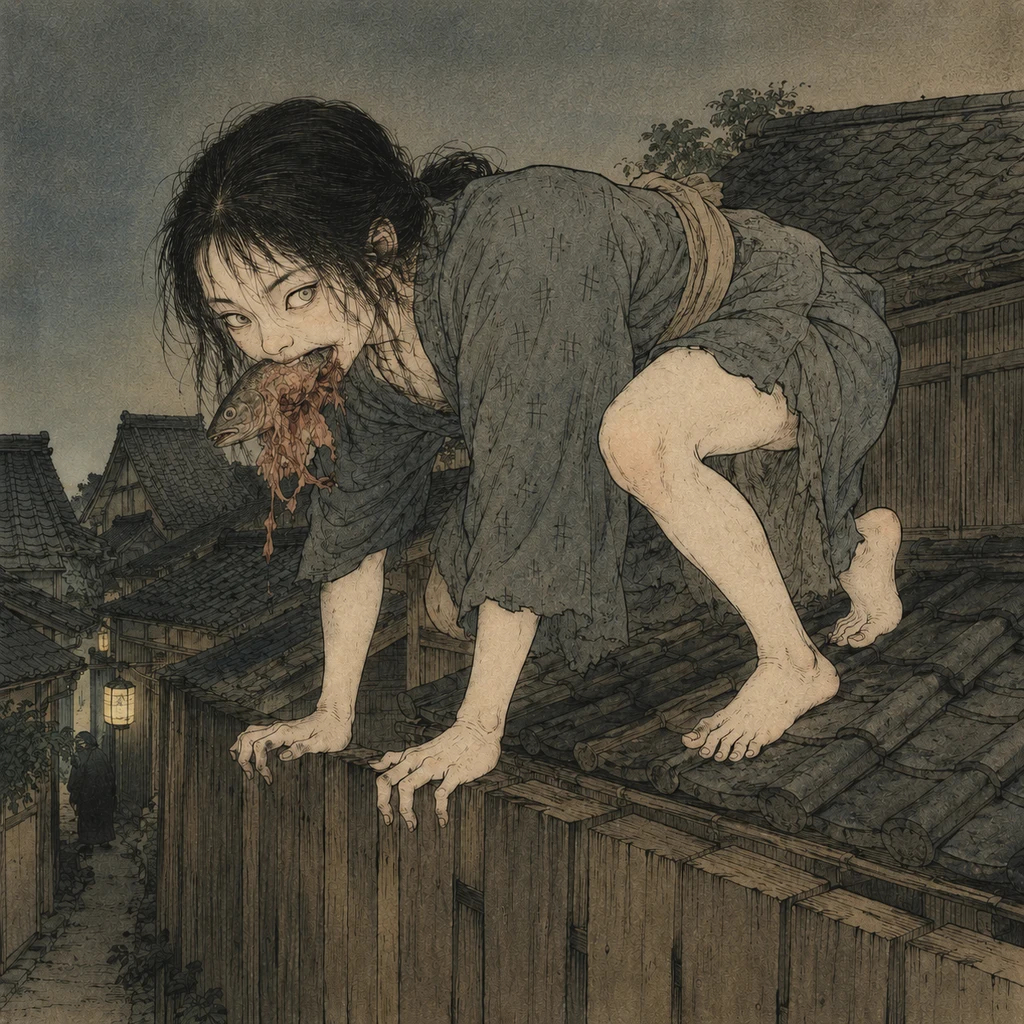
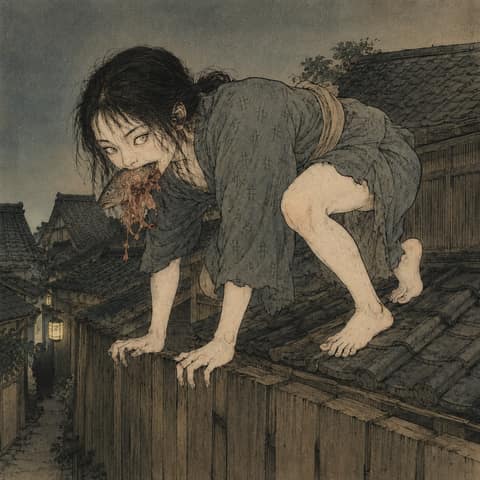
    The cat-girl refers to accounts of human oddities in early modern urban sideshows and reportage, describing feline tastes (fondness for fish entrails, chasing rats), movements (traversing walls and rooftops), and mannerisms (likened to a rough, tongue-like texture). In the Horyaku and Meiwa eras, she was occasionally billed in Asakusa and similar venues, but her fame was short-lived, and even amid the An’ei and Tenmei vogue she never became a major headline act. In yomihon and kyoka collections she appears as a curiosity under labels like “cat-girl” or “licking woman,” not as a transforming yokai. Late Edo miscellanies include an anecdote of a girl near Ushigome praised for catching rats, material that reflects community responses to rodent damage, a taste for spectacle, and the gaze cast upon the strange.

  • Hair in the Hemp Bucket

    Hair in the Hemp Bucket

    Uncommon

    ah-sah-OH-keh-no-keh

    Traditional Record Edition (Awa Curious Tales)

    Household SpiritsAwa Province (Kamo Village, Miyoshi District; present-day Tokushima Prefecture)

    Based on an old Awa record. Hair kept in a hemp bucket acts as part of the deity’s body or a manifestation of divine power, restraining anyone who disrupts shrine order. It is understood to activate within the shrine precincts rather than roaming independently. The core image is hair that quietly elongates, splits into strands, and entangles targets one by one, reacting to acts like defilement or theft rather than attacking onlookers indiscriminately. Shigeru Mizuki depicted it as a massive hair mass under the name “Asaokege,” but the actual tradition emphasizes function over appearance. Often read as a symbol of in-shrine norms encouraging observance of faith and taboos.

Read on ── other regions