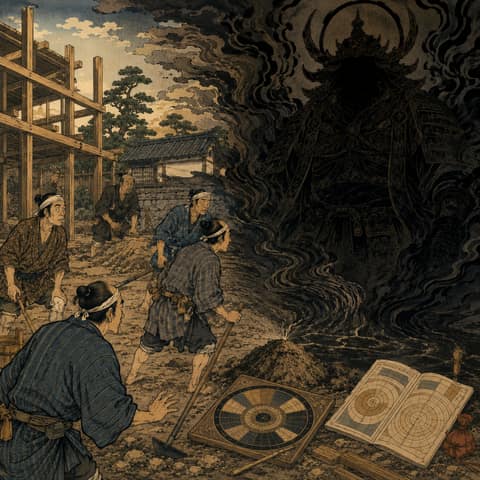
備中国は、いまの岡山県西部にあたる旧国である。上位の岡山県の妖怪事典では、温羅と鳴釜、桃太郎の原郷、美作の猿神、備讃灘の海の怪を大きく束ねている。このページでは、その吉備全体の物語から一歩内側へ入り、姿をもつ怪物ではなく、方角そのものとして恐れられた神を見る。金神である。
金神は、暦と方位の中に現れる凶神で、家を建てる、土を動かす、移転する、旅立つといった行為を「その方角は犯してはならない」と止める。ところが備中国浅口郡大谷村では、この恐れられた金神が、近世末から近代にかけて天地金乃神という救済の神へ受け直される。備中国の妖怪文化はここで、鬼退治や怪異遭遇ではなく、恐怖の神を祀り直す宗教史として立ち上がる。
Konjin
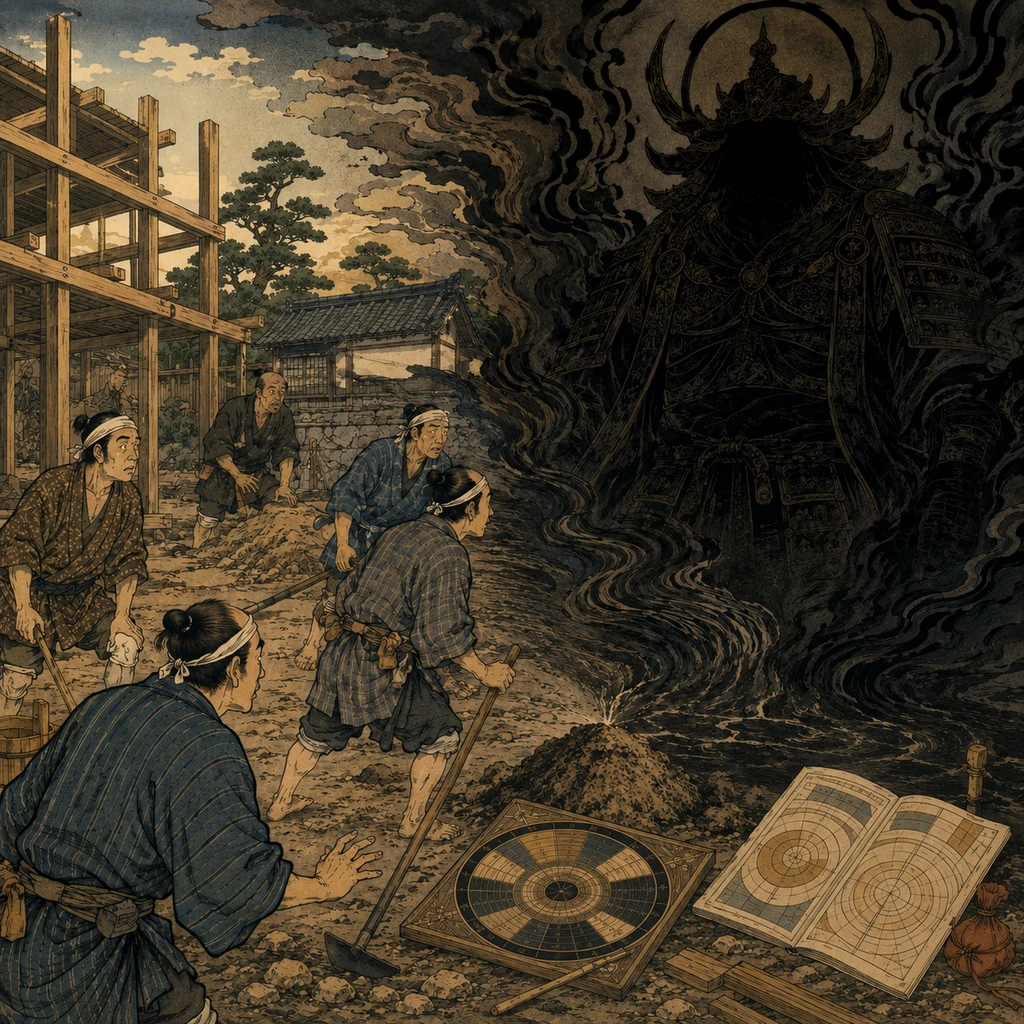
Konjin is an inauspicious god feared in Onmyodo and folk calendar directional beliefs, a deity who bound human lives not as a visible monster, but as an "unviolable direction." According to the calendar, it was taboo to undertake construction, moving, marriage, travel, or earth-moving activities toward Konjin's location; violating this would bring calamity to the household. Although sometimes confused with Kojin—the rough deity of the hearth and homestead—Konjin's core lies not inside the house, but in the taboos of time and direction. Like the Demon Gate (Kimon), directional avoidance (Katai-gae), and directional warding (Kata-yoke), Konjin belongs to an Onmyodo worldview that interprets space through forces of fortune and misfortune. The terror of this deity lay not in manifesting before one's eyes, but in the fact that illness, fire, and misfortune occurring after a move or construction were interpreted as "because Konjin was violated." In folklore vocabulary, Konjin is recorded as a taboo deity concerning house building and auspicious days. On the other hand, from the end of the early modern period to the modern era, the terrifying Konjin was reinterpreted in the Konkokyo religion as a deity of salvation, Tenchi Kane No Kami. Konjin demonstrates a massive transformation in Japanese religious history: simultaneously a deity of dreaded inauspicious directions to be avoided, and a god of terror inverted into the center of faith.
Read more備中を読む鍵は、
怪の姿ではなく方角である
備中国の記事で金神を扱う時、まず割り切らなければならないことがある。金神は、山道に立つ大男でも、海から現れる怪魚でもない。人の前に姿を現すより先に、暦の上で方角を塞ぐ。地図に描かれた道そのものは同じでも、今日その方角へ進んでよいのか、土を動かしてよいのか、家を建て替えてよいのかを変えてしまう神である。
国立国会図書館の暦解説にある方位神の説明は、暦が日付だけでなく方角の吉凶を読む道具であったことを示す[1]。金神もその世界に属する。家普請、移転、井戸掘り、婚礼、旅立ちのように、家や身体の位置を大きく動かす行為は、方角と日柄に照らして慎重に扱われた。
この意味で金神は、備中という旧国の妖怪としては少し特殊である。もともとは全国の民間暦に流通した方位神であり、備中だけに閉じた存在ではない。だが、備中国浅口郡大谷村では、この方位禁忌の神が金光教の信仰史と深く結びついた。全国の凶神が、一つの村で「避ける神」から「向き合う神」へ変わったのである。
金神とは何を止める神か
金神の怖さは、直接襲ってくることではない。あとから起きた不幸を、方角を犯した結果として説明できてしまう点にある。家を建てたあとに病人が出る。移転のあとに家族を失う。土を掘ったあとに火事が起きる。そのとき人は、あの普請で金神の方を犯したのではないか、と過去の行動を読み直す。
『綜合日本民俗語彙』にも、金神は家普請や日柄に関わる禁忌神として記録される[2]。この神は、災いを起こす怪物というより、災いの意味を組み立てる枠組みだった。原因の見えない不幸に対し、暦と方角は「なぜそうなったか」を語る言葉を与える。
「金神七殺」という強い言い方は、その恐れの濃さをよく示している。実際に七人を殺すと数えるよりも、禁忌を犯せば一家に及ぶほど重い災厄が来る、という警告として働いた。金神は、目に見えない線を生活の中に引く。人はその線を越えないように、日取りを変え、方違えをし、祈祷を求める。怪異は外から来るのではなく、生活の予定表そのものに潜んでいた。
浅口郡大谷村で起きた反転
備中国の記事が金神を扱う理由は、浅口郡大谷村にある。金光教の公式サイトによれば、教祖・生神金光大神は文化十一年、備中国占見村、現在の岡山県浅口市金光町に生まれた[3]。文政八年には隣村の大谷村の川手家へ養子に入り、文治郎と名を改めた。ここが、金神信仰が近代宗教へ反転していく舞台になる。
公式の教祖伝は、相次ぐ家族の死と自身の大病を大きな転機として語る。安政二年、四十二歳の大患の際、祈祷の場で神がかりがあり、過去の建築移転について金神への無礼が指摘されたとされる[3]。文治郎は、日柄や方角を人一倍守ってきたにもかかわらず、なお自分にはどの方角へ無礼をしたか分からない、と詫びた。ここで重要なのは、彼が禁忌をただ守る側から、神そのものに向き合う側へ移ったことである。
安政六年、文治郎は神からの頼みを受け、農業をやめて取次に専念したとされる。金光教の沿革は、この日を立教として記録する[4]。恐れられた金神を遠ざけるのではなく、人と神との関係を取り次ぐ場が大谷に生まれる。備中国の金神は、ここで単なる凶方位の神ではなく、村の一軒の家から始まる信仰の中心へ変わる。
天地金乃神という読み替え
金光教では、あらゆるものを生かし育む天地の働きを天地金乃神と称える[5]。この表現は、民間暦で恐れられた金神を、そのまま恐怖の対象として残すのではなく、天地全体の大きな働きとして受け直す方向を示している。
この転換は、妖怪文化の観点から見ても大きい。多くの怪異は、退治されるか、封じられるか、避けられる。だが金神の場合、最も恐ろしいものを信仰の中心へ置き直すことで、凶神が救済の神へ転じる。これは、怪を消すのではなく、怪の意味を変える営みである。
金光教の信仰では、神と人をつなぐ取次が中心に置かれる[6]。ここでも、金神の性格はよく反転している。かつて金神は、人の移動や普請を止める神だった。金光教では、人は神に願い、神の願いを受け取り、助かる道を求める。止める神から、取り次がれる神へ。方角を塞いでいた力が、人と神を結ぶ働きへ読み替えられていく。
備中国という場所の重み
もし金神を全国の方位神としてだけ扱うなら、備中国の記事で深く書く理由は薄い。だが、備中国浅口郡の大谷村は、金神をめぐる宗教史の転換点である。金光教本部は現在も岡山県浅口市金光町大谷にあり、公式サイトは本部教庁の所在地を同地に置く[7]。方位禁忌の神が、今も参拝と取次の空間を持っている。
ここで、上位の岡山県記事が扱う温羅や鳴釜と響き合う。温羅は退治された鬼神であり、首が釜の下で唸り続け、やがて吉凶を告げる神事へ転じた。金神もまた、恐れられた凶神でありながら、備中の地で信仰の中心へ転じた。岡山の怪異は、征服された者、恐れられた者、祟るとされた者を、そのまま消さず、吉凶を告げる力や救済の力へ組み替える。
備中国の金神は、その系譜の中で読める。怪物の姿はない。しかし、方角を変え、日取りを変え、家の動きを変える力があった。そして浅口大谷では、その恐れを避け続けるのではなく、神と人の関係として正面から受け止めた。ここに、備中国だけの金神の輪郭がある。
結び
備中国の妖怪を金神から読むと、妖怪や神格が必ずしも姿を必要としないことが分かる。金神は、暦に記され、方角に潜み、普請や移転や旅立ちを止める。見えないから弱いのではない。見えないからこそ、生活のあらゆる決断に入り込む。
しかし備中国浅口郡大谷村では、その恐怖が別の道を開いた。金神への無礼とされた苦難を通じて、川手文治郎は神に向き合い、やがて取次へ進む。凶方位の神は、天地金乃神として受け直され、避ける対象から救いを願う対象へ転じた。備中国の妖怪事典に金神が立つ理由は、ここにある。方角を塞ぐ神が、同じ土地で人の進む道を開く神へ変わったからである。