Tanuki
One Step Beyond Seven: The Tanuki's Eight Transformations
Animal shapeshifterAcross Japan, with bake-danuki legends especially concentrated in western Japan
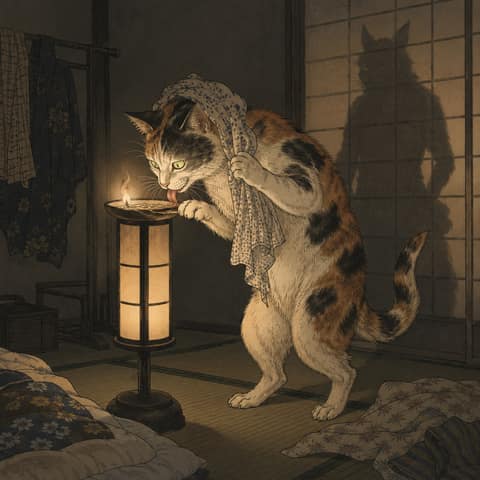
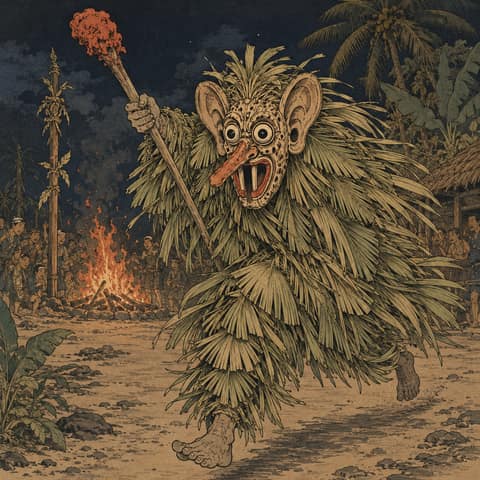
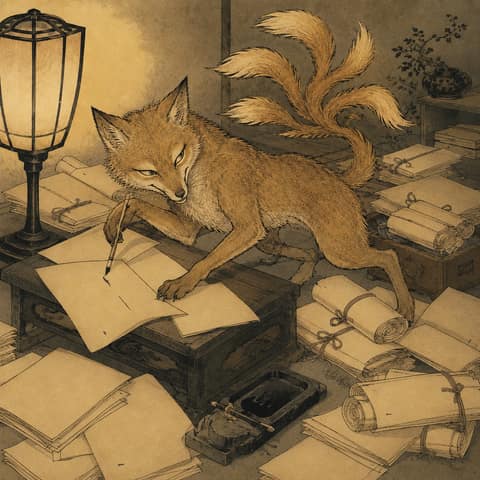
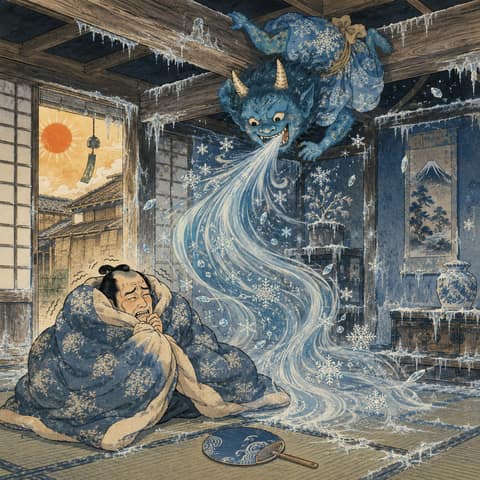
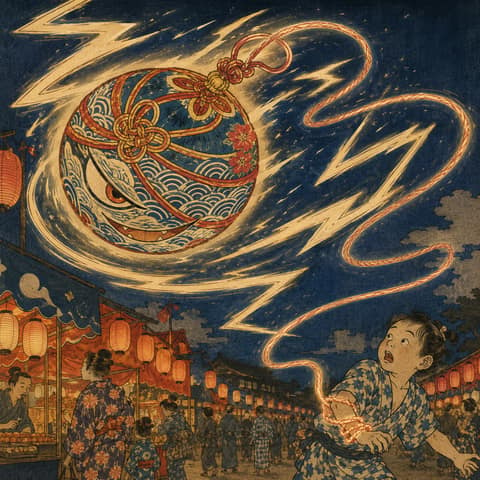
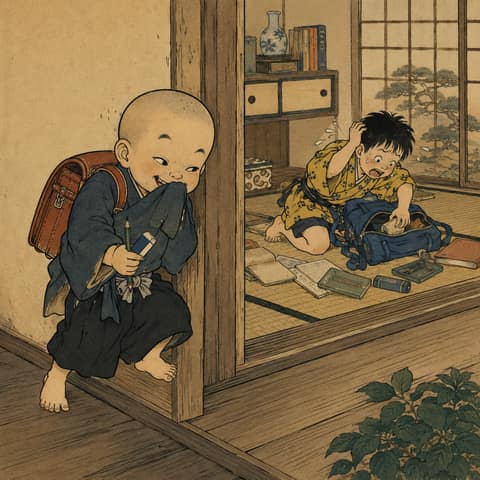
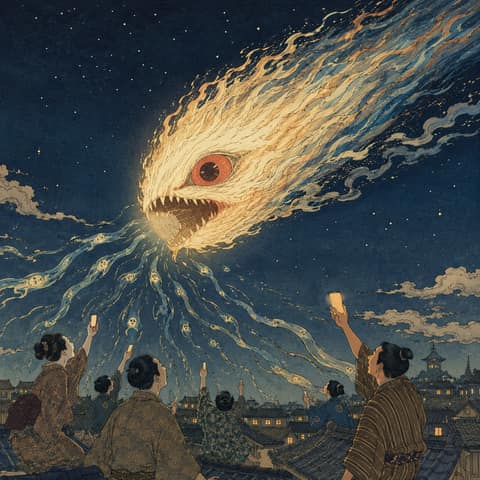
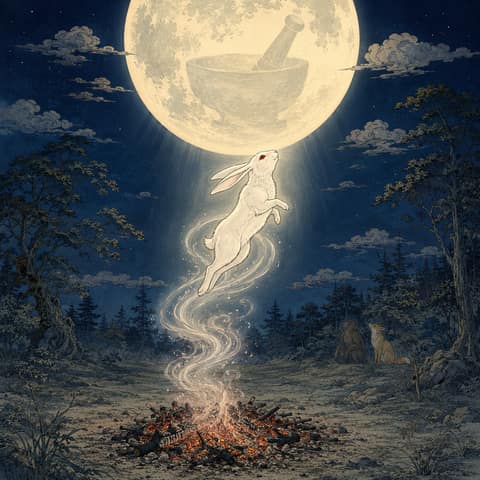
What "fox seven, tanuki eight" means. "Foxes have seven transformations, tanuki have eight" is a familiar Japanese proverb. It says that tanuki surpass foxes by one degree of shapeshifting. An expanded saying, "fox seven, tanuki eight, otter nine, cat ten," orders animal magic into a ladder. Konjaku Monogatari-shu, volume 27, tale 22, where an aged tanuki becomes a demon, expresses the same idea: long-lived beasts awaken stronger powers. Named old tanuki such as Kincho, Danzaburo, Tasaburo, Shibaemon, and Inugami Gyobu may even become daimyojin.
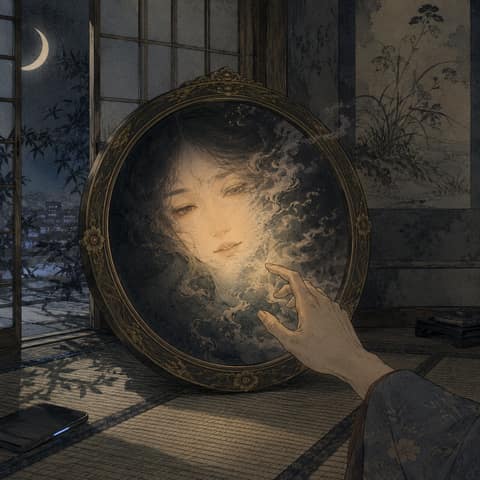
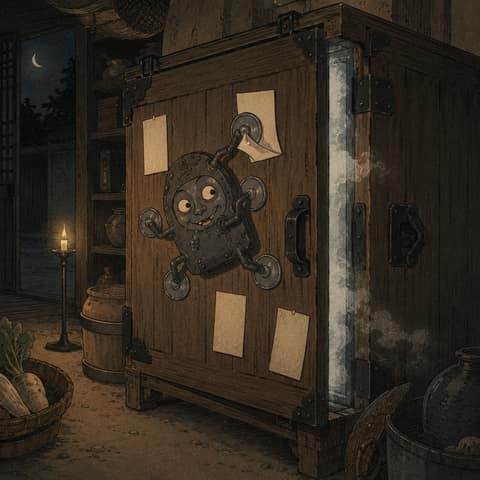
The eight-mat scrotum and Edo humor. The tanuki's scrotum is not biology but urban comedy. Edo goldbeaters were said to wrap a small amount of gold in tanuki skin and hammer it out to the size of eight tatami mats. Utagawa Kuniyoshi turned that joke into images of umbrellas, nets, rooms, shamisen, and sumo rings; Tsukioka Yoshitoshi moved toward the uncanny atmosphere of the Morinji kettle. Low-city caricature and temple ghost story together formed the early modern visual tanuki.
Three Famous Tanuki and Three Great Legends. The two sets are often mixed up. Japan's Three Famous Tanuki are Danzaburo, Tasaburo, and Shibaemon. The Three Great Tanuki Legends are Inugami Gyobu, Bunbuku Chagama of Morinji, and the Shojoji tanuki-bayashi tale. The Awa Tanuki War, centered on Kincho and Rokuemon and mediated by Tasaburo, belongs to another stream made famous through kodan storytelling and film.
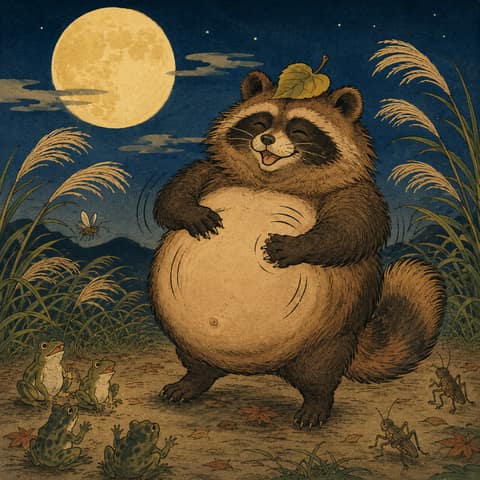
The eight auspicious signs of Shigaraki tanuki. Shigaraki tanuki's eight auspicious signs read the statue's hat, eyes, smile, flask, account book, belly, money bag, and tail as blessings for business: avoiding misfortune, watching carefully, welcoming customers, having food and drink, keeping trust, staying calm, gaining wealth, and finishing well. In effect, postwar merchant ethics were projected onto a round, friendly tanuki body. Pom Poko, with tanuki driven out by development, shows the other side of the same postwar consumer society that put Shigaraki tanuki at shop doors.
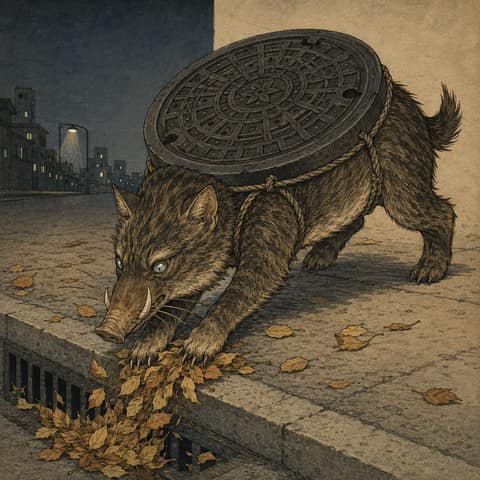
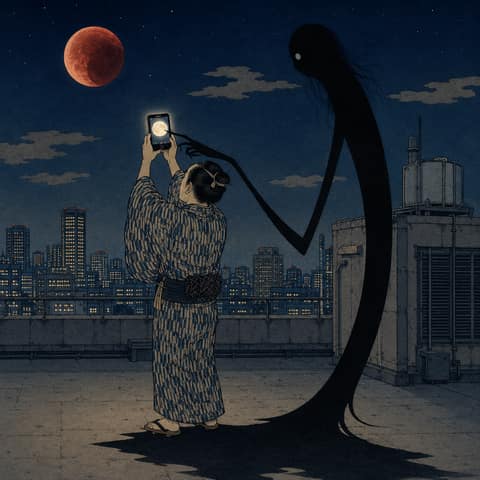
Why tanuki survive. Pom Poko from 1994 makes tanuki displaced local spirits under Tama New Town development and brings together famous tanuki, including Inugami Gyobu. The Eccentric Family from 2007 imagines Kyoto as a city where tanuki, humans, tengu, and foxes overlap. The tanuki endures because it changes with each period: Edo joke, Meiji image, postwar business charm, modern urban fantasy.