

Tamamo-no-MaeTamamo-no-Mae, the Nine-Tailed Fox Beloved of Emperor Toba
Tamamo-no-Mae
Detailed Description
This version turns to the events leading up to Tamamo-no-Mae’s unmasking and defeat. When the retired Emperor Toba’s illness grew at last grave, the onmyōji Abe no Yasunari (modeled on the historical Abe no Yasuchika), ordered to divine the cause, named Tamamo-no-Mae herself as its source. As Yasunari performed rites at court and cornered her, Tamamo-no-Mae could no longer hold her human shape; revealing her fox form, she fled eastward from the capital.
The place she fled to was the Nasu Plain in Shimotsuke Province (the area around present-day Nasu in Tochigi Prefecture[1]). To subdue the spirit-fox lurking in the wilds and harming people and livestock, the court dispatched warriors of the eastern provinces, Kazusa-no-suke Hirotsune and Miura-no-suke Yoshiaki. The warriors surrounded the plain, drove the fox out, and at last brought it down with arrows, so the tradition runs. The names of these warriors who slew Tamamo-no-Mae overlap with those of real Bandō warriors of the Genpei era—an intriguing case of legend and history told as one.
In the story, Tamamo-no-Mae has usually been drawn as the very type of the “beauty who topples nations”—one who, through her beauty and wit, works her way to the summit of the realm and brings it down from within. Yet at the same time, once slain, she was enshrined in a small sanctuary and worshipped as a deity. Dreadful spirit-fox though she is, one cannot help being drawn to her. It is precisely this duality that keeps Tamamo-no-Mae from ending as a mere villain and makes her a figure beloved for ages.
Source Information
種類全体の出典reference
絵本三国妖婦伝
著者: 高井蘭山
年代: 1803-1805
出版社: (江戸期読本)
種類全体の出典primary
玉藻前曦袂
著者: 浪岡鯨児・浅田一鳥・安田蛙文ほか
年代: 1751
出版社: (人形浄瑠璃・豊竹座初演)
種類全体の出典primary
玉藻稲荷神社 縁起
出版社: 栃木県大田原市
種類全体の出典reference
玉藻の草子
著者: 著者不詳
年代: 室町時代
出版社: (御伽草子)
種類全体の出典primary
玉藻前はいつから九尾の狐になったのか
著者: 寺島修一
年代: 2018
出版社: 武庫川女子大学
種類全体の出典primary
今昔画図続百鬼「逢魔時」
著者: 鳥山石燕
年代: 安永8年(1779)
出版社: 江戸東京博物館所蔵・国文学研究資料館国書データベース
種類全体の出典primary
神明鏡
年代: 天文9年(1540年)
参照: p.66
Personality
She wins hearts with wit and beauty, yet hides a cold resolve that will corrode even the emperor to reach her ends. Graceful and gentle on the surface, within she harbors an obsession that nothing can bend.
Compatibility
The seat of power, the elegant court; her strength is said to grow the nearer she is to human pride and desire
Abilities & Skills
Weaknesses
Her true nature is exposed by the prayers and divination of the onmyōji / the consecrations and subjugation rites of the gods and buddhas / her true form is reflected on water or in a mirror
Collection Inclusion
This yokai is included in the following collections:
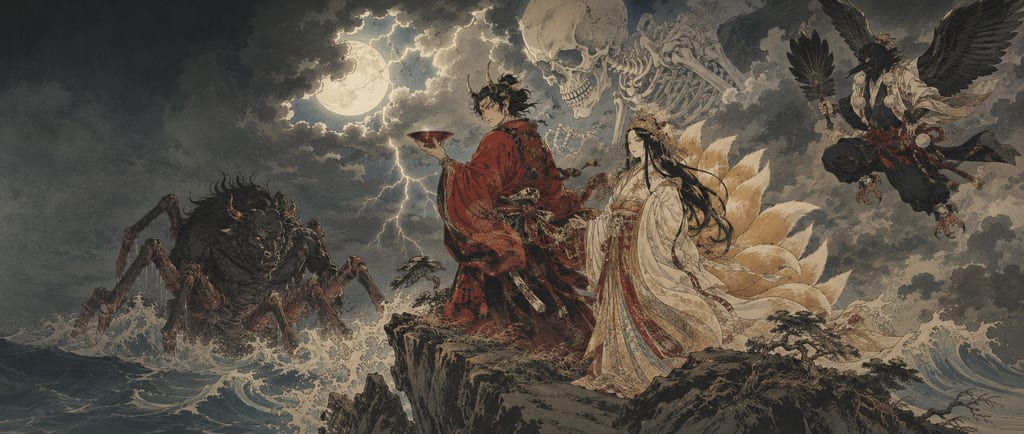
Cool Yokai | Japanese Folklore through Power, Speed, and Monstrous Beauty
Discover 68 cool yokai like Shuten-doji, Tengu, and Nine-Tailed Fox. Explore their charm through power, speed, majestic presence, monstrous beauty, and folklore.
有名な妖怪|日本を代表する妖怪・鬼・怪異
鬼、河童、天狗、雪女、座敷童子、ぬらりひょんなど、日本で有名な妖怪を一覧で紹介。古典、地域伝承、妖怪画、現代文化から知名度の背景をたどります。
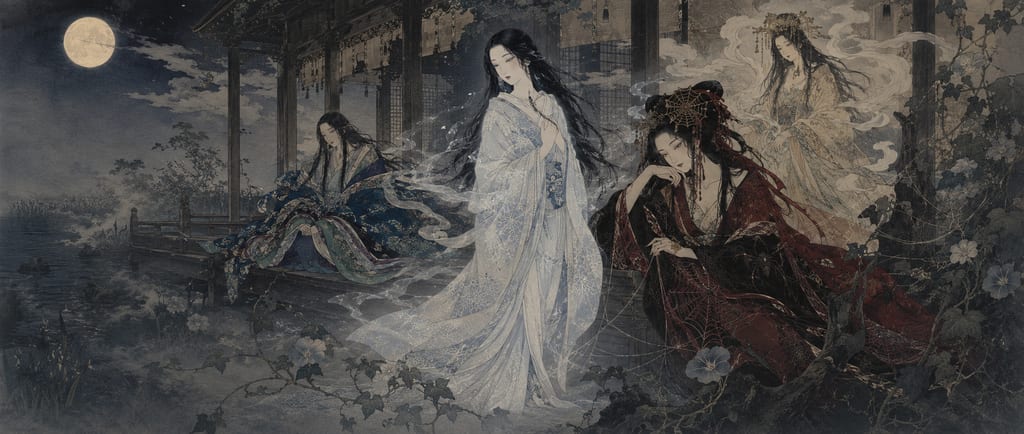
Beautiful Yokai
Discover Japan’s “beautiful yokai,” from the Snow Woman to Tamamo-no-Mae—seductive spirits whose tragic legends reveal another face of folklore.
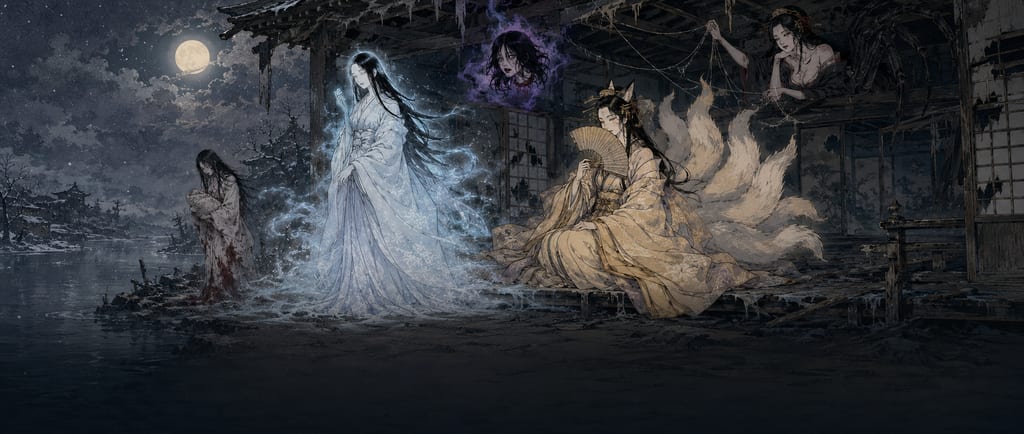
Female Yokai | Yokai, Demon Women, and Ghostly Women
An introduction to Japanese female yokai like Yuki-onna, Ubume, Jorogumo, and Kuchisake-onna, exploring their diverse origins and stories.
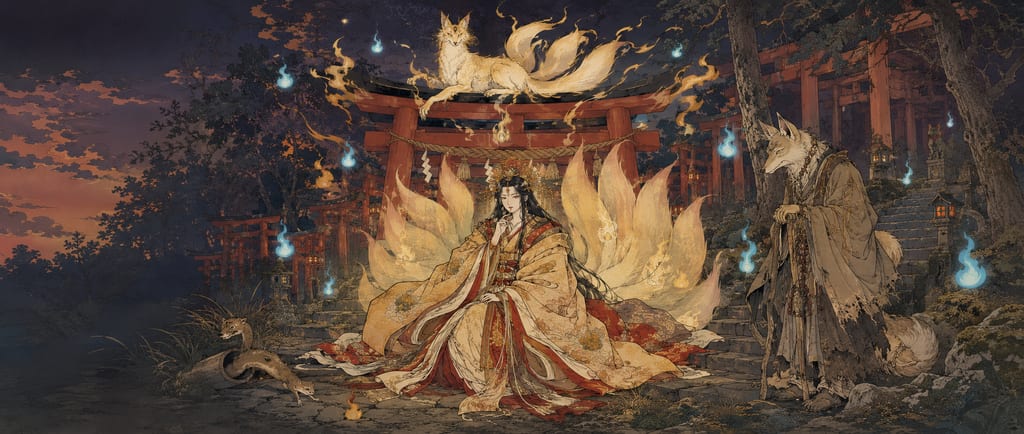
Tales of the Fox
A curated look at fox yokai across Japan, from the Nine-Tailed Fox and Tamamo-no-Mae to rich local lore and uncanny kitsune tales.
診断評価
妖怪バウンダリー・タイプ指標
いたずら濃度
3.0high: 戯 low: 護
📝 メモ
美女に化けて君寵を得、妖気で病ませ幻術で惑わす。
変化適応
3.0high: 化 low: 定
📝 メモ
九尾狐が絶世の美女に化ける変化能力が核心である。
夜話度
1.0high: 夜 low: 昼
📝 メモ
狐妖の怪異性はあるが、夜限定の出没ではない。
情の深さ
2.0high: 縁 low: 境
📝 メモ
鳥羽院の寵愛を利用し、宮中への執念と逃走の物語を持つ。
結界強度
0.0high: 律 low: 流
📝 メモ
宮中から那須野へ移る流動性が強く、縄張り守護は薄い。
表舞台圧
3.0high: 表 low: 影
📝 メモ
宮中の寵姫として表舞台に立ち、正体暴露後も那須野で大事件化する。
妖怪相性診断
喜び
2.5喜びと楽しさの程度
📝 メモ
享楽・策謀の愉悦は示唆されるが、喜びを前面に出す描写は少ない。
怒り
7.5怒りの激しさの程度
📝 メモ
討伐に対し暴威をふるい、怨念が殺生石として残るなど怒りの強度が高い。
慈悲深い
1.5慈悲深さの程度
📝 メモ
教訓譚では権勢と欺瞞の象徴で、慈悲の発露は乏しい。
憂鬱
4.5憂鬱で思慮深い程度
📝 メモ
退治後の怨霊化や供養譚に哀切が滲むが、物語の主調ではない。
静寂
3.0内なる平静の程度
📝 メモ
冷然さはあるが内的平安というより計略と執念が前面。
いたずら好き
3.0いたずら好きで活発な程度
📝 メモ
狐譚特有の戯れはあるが、本伝承は悪性と策謀が中心で軽い悪戯性は低め。
やさしい
1.0やさしく親しみやすい程度
📝 メモ
宮廷で人心を惑わし病禍をもたらす存在として描かれ、親和・温和性は低い。
厳格
6.0厳格で真面目な程度
📝 メモ
冷然・執念深く目的遂行に厳格な面がうかがえるが、規律的道徳性とは異なる。
守護的
1.5他者を守る傾向
📝 メモ
守護的役割はほぼなく、退治譚の敵役。稀に供養縁起で鎮まりの説もあるが周縁的。
神秘的
9.0神秘的で不思議な程度
📝 メモ
絶世の美女の仮面と九尾の正体、幻術・惑乱、殺生石伝承など神秘性が極めて高い。
霊性の深さ
8.5精神的境界の深さ
📝 メモ
陰陽道・仏法・退治儀礼・霊石譚と深く結節し、宗教的・霊的層が厚い。
Similar Yokai
Yokai with similar personality and characteristics to Tamamo-no-Mae, the Nine-Tailed Fox Beloved of Emperor Toba

Opposite Yokai
Yokai with opposite personality and characteristics to Tamamo-no-Mae, the Nine-Tailed Fox Beloved of Emperor Toba
🔮Test your compatibility with Tamamo-no-Mae now!
Analyze your personality and values to get a detailed compatibility rating with this yokai.
Free, simple, and results in just minutes.