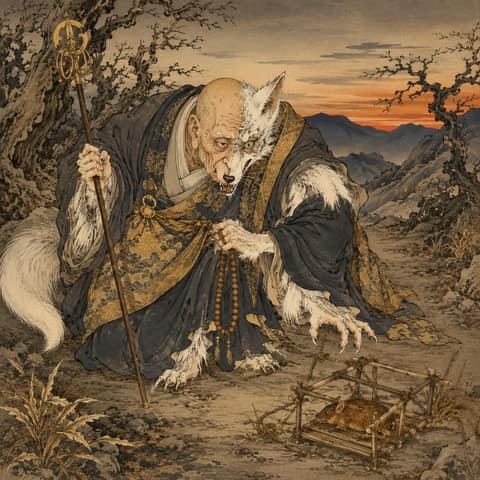
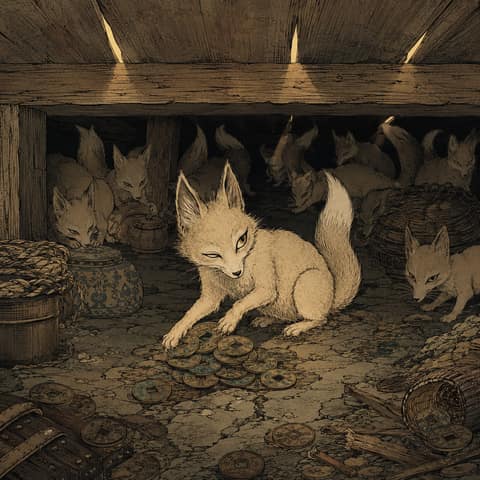
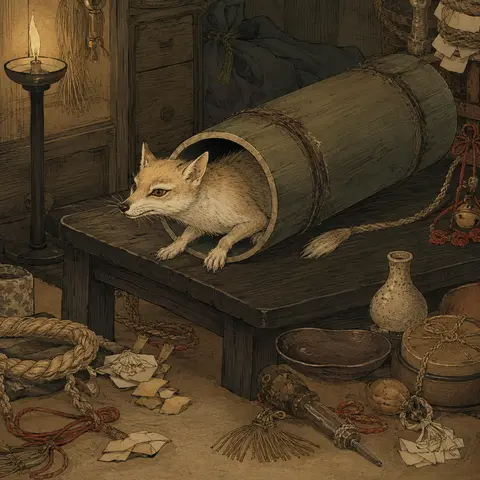
管狐・オサキ狐。甲信の山村にまとわりつく憑き物狐の民俗

山国の家筋に潜む狐。甲斐国の妖怪事典

Kai Province·かい
View on map

甲斐国は、現在の山梨県にほぼ重なる旧国である。富士山、南アルプス、八ヶ岳、奥秩父の山々に囲まれた海なき山国で、県全体の記事では山梨県の妖怪事典が蟹坊主・小豆洗い・女天狗を中心に、寺・谷川・霊山の怪を描いている。このページでは視線をもう少し狭め、甲斐国に掛かる二体の憑き物狐、管狐とオサキ狐を読む。

どちらも「甲斐だけの妖怪」ではない。管狐は信濃を中心とする中部山地の狐霊として語られ、オサキ狐は秩父・上州・甲信越の家筋伝承に深く関わる。だが甲斐国は、その二つが交差する場所だった。峠を越えて信濃・武蔵・上野とつながる山国の村々では、狐は野山を走る獣である以上に、家の内部へ入り込み、富や病や婚姻の評判を動かす見えない力として想像された。

山梨県記事から、甲斐国記事へ

山梨県全体を語るなら、長源寺の蟹坊主、谷川に音を残す小豆洗い、川辺に立つ女天狗がよく似合う。いずれも山国の地形から直接に生まれた怪であり、寺・沢・霊山という「場所」が強い。だが甲斐国の旧国記事で扱う管狐とオサキ狐は、もう少し見えにくい。決まった寺や淵に出るのではなく、家の中、噂の中、婚姻の相談の中に現れる。

甲斐は閉じた土地であると同時に、峠の土地でもあった。西は信濃へ、東は武蔵・相模へ、北は上野方面へ、南は駿河へ抜ける。塩や物資が山道を越え、人も信仰も噂も移動した。管狐とオサキ狐は、まさにその山道を通って広がるタイプの妖怪である。どこか一つの村に固定されるより、甲信越から関東山地へまたがる憑き物信仰の網の中で、土地ごとの名と性格を帯びた。

だから甲斐国の狐を読むには、「出た場所」だけを探しても足りない。見るべきなのは、狐がどのように家筋へ貼りつき、富の説明となり、病の原因となり、縁談の障害となったかである。ここでの狐は、夜道で人を化かす一回きりの狐ではない。家の奥に潜み、代々いると噂され、共同体の視線を変えてしまう狐である。

管の中の狐、家の中の欲望

管狐は、竹筒や管に入るほど小さい狐霊として語られる。『綜合日本民俗語彙』系の民俗語彙では、狐霊が家に憑き、主人に使役され、富や病に関わる憑き物として整理されている[1]。甲斐国に掛かる管狐も、信濃を中心とする甲信の山地信仰と切り離せない。山を越えれば信濃、盆地の向こうには富士北麓。そうした山国の接続の中で、小さな狐霊は移動した。
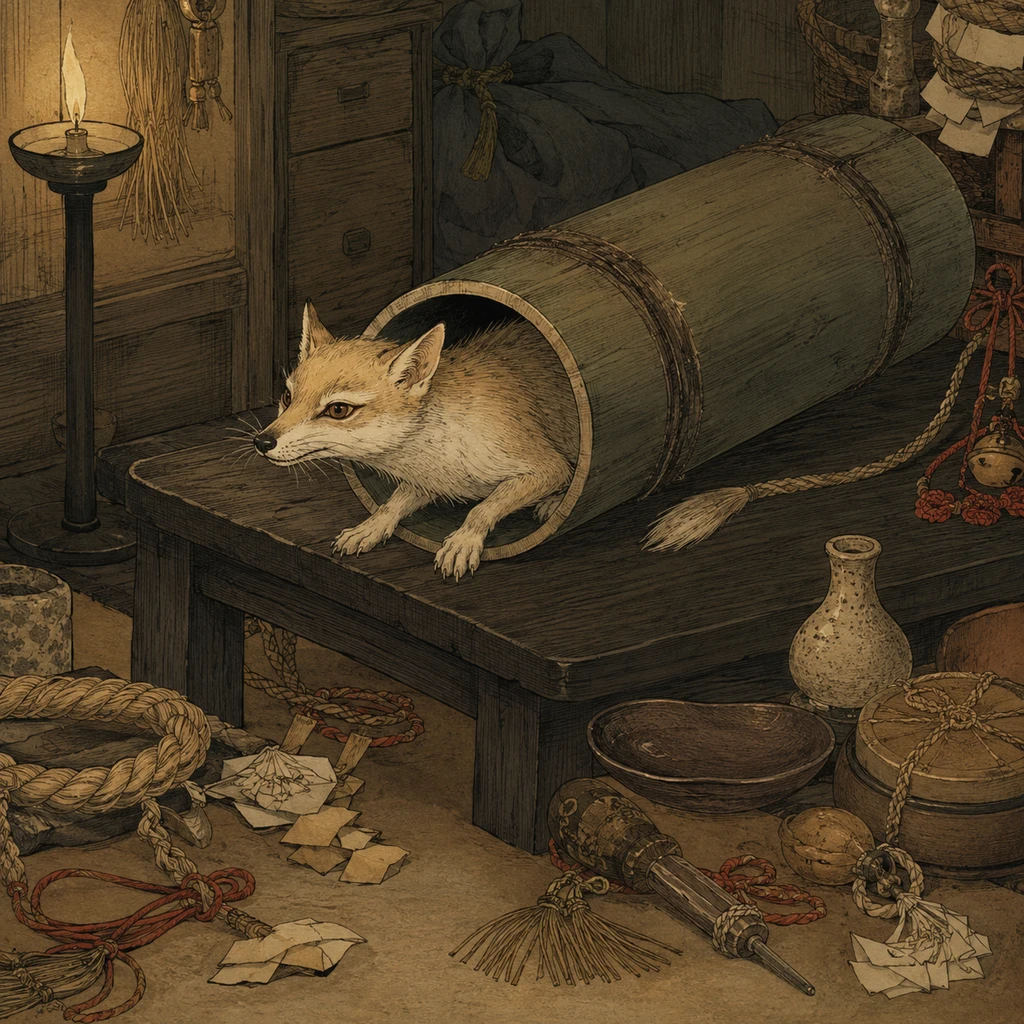
Kuda-gitsune

kuda-gitsune

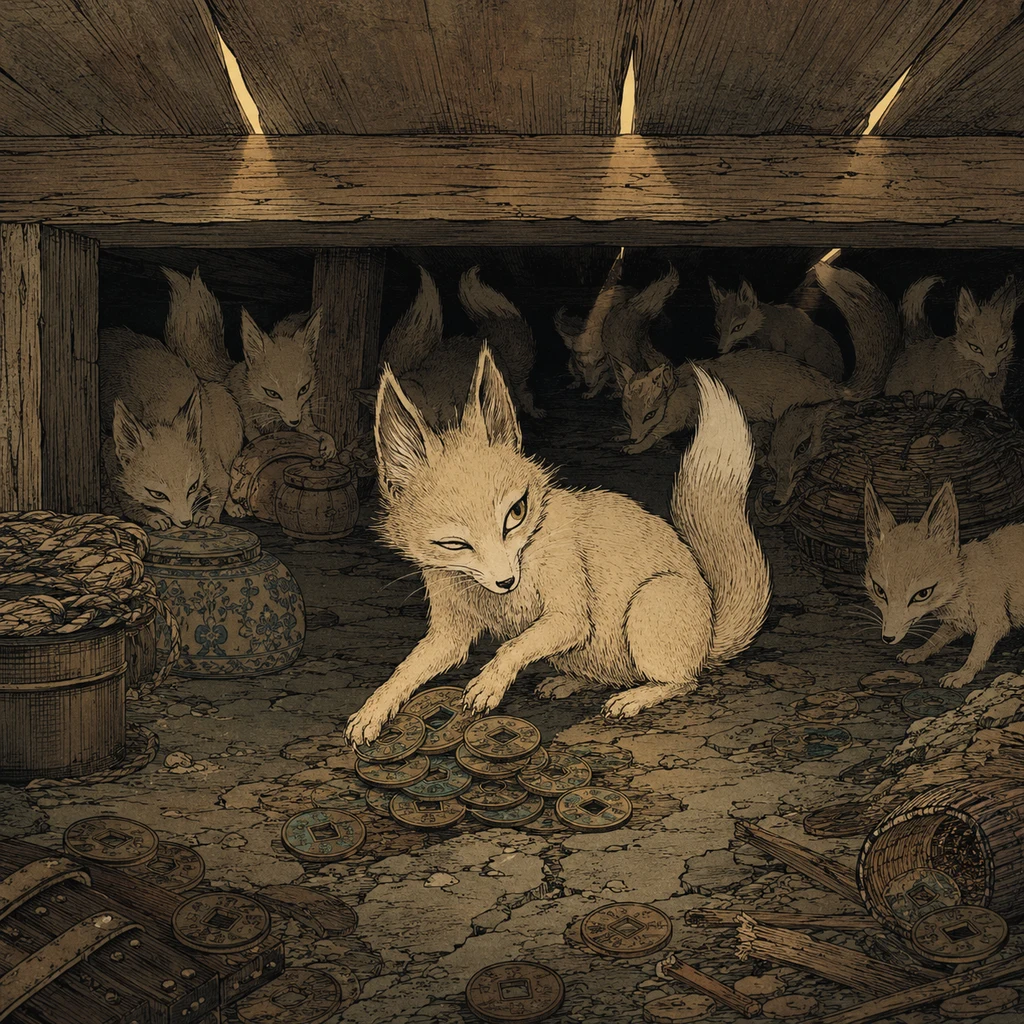
The Kuda-gitsune (pipe fox) is an animal spirit possession (tsukimono) in the central mountainous regions, depicted as a fox spirit small enough to fit inside a bamboo tube or pipe. Centered in Shinano, it overlaps with the concepts of Izuna magic, fox tamers, and possessed lineages (tsukimono-suji). It was believed to be kept by a master to possess other families, bringing illness or wealth. Rather than running through fields and mountains like an ordinary fox, it lurks in tubes, under floorboards, in storage rooms, between the folds of clothing, and within the rumors of family lineages. Being small and difficult to see is what supports this fox's power. Unlike the foxes revered as divine messengers of Inari, the Kuda-gitsune is a fox spirit deeply attached to households and human desire. Families that possessed one became wealthy, but were feared by their surroundings, leading to avoidance in marriage and social relations. Like the Inugami, Osaki-gitsune, and Yako, the belief in spirit possession was not an individual ghost story, but functioned as a social mechanism to explain family reputation, unequal distribution of wealth, and illnesses of unknown cause. The Kuda-gitsune is not merely a small animal in a bamboo tube; it is the very gaze of the community declaring, "That family holds an invisible fox." The defining feature of this fox is that its form as a yokai is inseparable from its social function. More than whether a small fox actually existed, being regarded as a "family holding a Kuda-gitsune" drove wealth, illness, marriage, and prayers. The Kuda-gitsune is a representative spirit possession demonstrating the process by which an invisible spirit transforms into a household's reputation.

Read more

管狐の恐ろしさは、姿の奇怪さよりも「所有できる霊」である点にある。竹筒に入れられるなら、人はそれを持ち運べる。命じられるなら、他家へ憑かせることができる。富を呼ぶなら、それは家を栄えさせる。だが同時に、周囲からは「あの家は管狐を持つ」と疑われる。狐は財産の影になる。なぜあの家だけが富むのか。なぜこの病は治らないのか。そうした説明しづらい不均衡が、管狐という名で語られた。

村上健司『妖怪事典』も、管狐やオサキ狐を犬神などと並ぶ憑き物信仰の一種として扱い、家筋・富・病・差別と結びつく側面を整理している[2]。この点は、今日の読者には慎重に伝える必要がある。憑き物狐の伝承は面白い怪談であると同時に、現実には特定の家を避ける、縁談を断る、病人や家族を偏見の目で見る、といった社会的な傷を伴った。管狐は小さいが、その噂は家一軒を包み込むほど大きかった。

甲斐国で管狐を読む意義は、まさにここにある。海の怪や山の巨怪のように目立たないかわりに、家の中へ入り込む。山国の村落では、外からの情報も物資も限られ、家同士の評判が生活を左右した。だから見えない狐は、見える獣以上に強い力を持った。管狐とは、竹筒の中の狐であると同時に、共同体が抱えた欲望と疑念を収める管でもあった。

オサキ狐、筋として続く狐

オサキ狐は、関東から甲信越にかけて語られた小狐の憑き物である。秩父を主軸に、上野・信濃・甲斐へ広がる家筋伝承として記録される。姿は一定しない。鼬や鼠ほどの小獣とも、尾に特徴を持つ狐とも、目に見えない狐霊ともいう。だが本質は、個体の姿ではなく「オサキ持ち」「オサキ筋」という評判にあった[1]

Osaki-gitsune

osaki-gitsune

The Osaki-gitsune is a small fox spirit possession spoken of from the Kanto through the Koshinetsu regions, strongly tied to the concepts of "Osaki-mochi" (Osaki holders) and "Osaki-suji" (Osaki lineages) that possess specific households generation after generation. Its form is variously described as a small beast like a weasel or mouse, a fox with distinct tail features, or an invisible fox spirit, and is never fixed. However, its essence lies not in its physical appearance, but in being imagined as an invisible possession clinging to a family lineage. The Osaki-gitsune is a fox spirit that simultaneously generates a family's prosperity and the community's suspicion. Families holding it were said to become wealthy, but that wealth was feared as unnatural, sometimes leading to the family being avoided in marriage and social relations. Like the Kuda-gitsune and Inugami, it is a type of spirit possession belief, but the Osaki took root particularly deeply in the village societies from the Kanto mountains to Koshinetsu, functioning as a family's reputation. The yokai is not a one-time incident of a fox bewitching someone; the long memory that "something has been in that family for generations" is the true habitat of the Osaki-gitsune. The key to understanding this fox lies in its continuity as a "lineage" rather than as an individual yokai. The Osaki does not end with a one-night sighting; it was spoken of as something attached to a house for generations. Therefore, the terror lies not in the moment of encounter, but is amplified over the long timeframes of bloodlines, marriage, property, and reputation.

Read more

管狐が「管に入る」「使役する」というイメージを持つのに対し、オサキ狐はより家筋へ貼りつく。ある家が富む。ある家と縁組を避ける。病や不和が続く。そこに「オサキがいる」という言葉が差し込まれる。狐は見える場所に立つのではなく、人びとの判断の背後に潜む。誰かが直接見たかどうかより、「そういう家だ」と噂されること自体が怪異を成立させるのである。

この意味で、オサキ狐は退治しにくい。普通の妖怪なら、正体を見破り、退治し、供養すれば物語は終わる。しかしオサキ狐は、評判として残る。祈祷で一人の憑き物を落としても、家筋への疑いが残れば、狐は別の形で生き延びる。甲斐国のような山国では、家と家の距離が近く、村落内の記憶が長く保たれる。噂は山道を越えて隣国へも伝わるが、同時に一つの村の中で何代も沈殿した。オサキ狐は、その沈殿した評判の妖怪である。

オサキ狐と管狐は、完全に切り分けられるものではない。どちらも小さな狐霊で、富と病に関わり、家筋をめぐる恐れを生む。地域によって名が変わり、性格が混ざり合うこともある。だからこそ、甲斐国の記事では両者を対にして読むのがよい。管狐は「所有される霊」として、オサキ狐は「筋として続く霊」として、同じ憑き物狐の二つの相を示している。

憑き物狐は、なぜ山国に似合うのか

甲斐国の狐を考えるとき、山国という地形は単なる背景ではない。山に囲まれた盆地と谷の村々では、人の移動は峠に制限され、同じ家同士の関係が濃くなる。外から見れば閉じているが、峠を越えれば信濃・武蔵・上野へつながる。閉鎖性と流通性が同時にある。この条件が、憑き物狐のような「噂として移動し、家に定着する妖怪」によく合っていた。

管狐もオサキ狐も、戦場や祭礼のような大きな舞台を必要としない。必要なのは、家の評判を気にする共同体であり、富の偏りを説明したい視線であり、病や不運の原因を外へ置きたい心理である。甲斐の山村では、山林・畑・水・婚姻・相続が家の存続を左右した。そこに、見えない狐が「理由」として入り込む余地があった。

また狐という動物そのものも、山国の境界にふさわしい。狐は人里の近くにも山にもいる。完全な野生ではなく、完全な家畜でもない。稲荷信仰では神の使いとして敬われる一方、民間では人を化かし、家へ憑き、病を起こすともされた。神と怪、山と里、富と災い。そのどちらにも寄れる曖昧さが、狐を憑き物の主役にした。

結び

甲斐国の管狐とオサキ狐は、派手な妖怪ではない。巨大な姿で現れるわけでも、古戦場の怨霊として名を残すわけでもない。むしろ、見えないこと、小さいこと、家の中にいることが力である。

山梨県の記事が山国の寺・谷川・霊山に現れる怪を描くなら、甲斐国の記事は、その同じ山国の家の奥に潜む怪を描く。管狐は欲望を入れる管として、オサキ狐は評判として続く筋として、人びとの暮らしにまとわりついた。そこには、妖怪を楽しむだけでは済まない、共同体の不安と偏見の歴史も含まれている。

だからこそ、甲斐国の狐を読むことは、山国の民俗を内側から読むことでもある。山に囲まれた土地で、人は何を恐れ、何をうらやみ、何を説明したかったのか。管狐とオサキ狐は、その答えを小さな狐の姿で示している。見えない狐は、山国の家々の奥で、いまも静かに尾を引いている。


All yokai of Kai Province2

Complete list of yokai linked to Kai Province, including those not featured in the article above.

  • Osaki-gitsune

    Osaki-gitsune

    Rare

    osaki-gitsune

    The Small Fox Clinging to Family Lineages: Osaki-gitsune

    Animal YokaiChichibu, Musashi Province (Present-day Chichibu region, Saitama Prefecture) / Kōzuke Province and Kōshinetsu region

    In this version, we read the Osaki-gitsune as the "small fox clinging to family lineages." The terror of the Osaki-gitsune is not that it suddenly jumps out on a mountain path. Its terror lies in the fact that by being spoken of as possessing a house for generations—that the family is an "Osaki holder"—it completely alters the reputation of the entire family. The yokai does not appear before the individual; it rides upon the family name. The Osaki-gitsune functioned as an explanation for wealth. In village societies, when only a specific family became wealthy, the reason was sometimes spoken of not merely as effort or luck, but as the invisible power of a fox. This narrative contains both envy and fear. A wealthy family has power, but whether that power is legitimate is doubted. The Osaki-gitsune is an entity that translates economic imbalance into the form of a yokai. As an explanation for illness or possession, the Osaki-gitsune also played a major role. Unexplained ailments, sudden madness, and abnormal appetites were spoken of as fox possession, becoming subjects for prayers and exorcisms. Here, the fox does not just enter the sick person's body; it spreads the suspicion of "Who sent it?" and "Which family has it?" The belief in spirit possession expands bodily issues into issues of the family and the community. The proximity to the Kuda-gitsune enriches the reading of this version. Both are small fox spirits that possess houses and are tied to wealth and disease. However, while the Kuda-gitsune easily takes on the sorcerous image of bamboo tubes or Izuna magic, the Osaki-gitsune functions more strongly as a family's reputation. Whether they actually keep a fox cannot be confirmed. Even so, simply being said to "have it" sways marriage prospects and social interactions. The invisible fox has visible effects socially. The Osaki-gitsune in this version is less a yokai with the appearance of a small animal, and more a suspicion dwelling in a house. While the shape of its tail or the size of its body changes depending on the teller, the feeling that "there is something in that house" never disappears. The outline of the Osaki-gitsune is clearest when we shift our eyes from searching for yokai in the fields and mountains, to looking at family reputations. The power of the Osaki-gitsune lies not in visible possessions, but in the suspicion of invisible possession. Even without evidence of actually keeping a fox, if it is said that "that house has Osaki," the attitudes of those around them change. Before showing its form, the yokai begins to operate as a reputation. In this version, we read the Osaki-gitsune as a memory device of the village. A certain family has been rich since the old days, produces sick people, or is avoided in marriage. Such memories are bundled under the name of the fox. The Osaki-gitsune has the function of transforming individual incidents into the narrative of a single family lineage. Therefore, the cute image of a fox is insufficient for the Osaki-gitsune. Even though it is small, it sways the evaluation and future of a family. Though it is a fox yokai, what it truly bites into are human relationships. The small fox lurking in the house becomes largest in the eyes of the community. Precisely because it is invisible, this fox enters deep into the house. The fewer people who have seen its form, the harder it is to deny. Something no one can verify sways the judgments of marriage and association. The Osaki-gitsune demonstrates very sharply the process by which a yokai becomes a social fact. That slight invisibility is what makes the Osaki-gitsune remain for a long time.

  • Kuda-gitsune

    Kuda-gitsune

    Rare

    kuda-gitsune

    The Possessing Fox Lurking in a Bamboo Tube: Kuda-gitsune

    Animal YokaiCentral mountains centered around Shinano Province (Present-day Nagano Prefecture) / Kai Province

    In this version, we read the Kuda-gitsune as the "commanded fox lurking in a bamboo tube." The smallness of the Kuda-gitsune is not just its appearance. Because it is small enough to fit in a tube, it can be carried around. Because it can hide under the floorboards or in the storage room, it becomes a family secret. Because it is out of public sight, the rumors that "it possessed another family," "it called in wealth," or "it sent an illness" can take hold. Being small is precisely its power to slip into the cracks of society. The premise of a commanded fox spirit distances the Kuda-gitsune from the Inari fox. While Inari foxes are often enshrined as divine messengers, the Kuda-gitsune is spoken of as a tool carrying human desire. While moving on its master's orders, it simultaneously affixes the reputation of a "possessed lineage" (tsukimono-suji) to that master's household. The power to bring profit is also the power to invite suspicion. The more the Kuda-gitsune fulfills human wishes, the murkier it makes human relationships. The Kuda-gitsune as an explanation for illness is folklorically significant. When unknown diseases, sudden madness, or abnormal appetites occurred, it was sometimes said that a fox had possessed the person. This is an explanation from an era outside modern medicine, but simultaneously the language expressing tension between households. The questions of "Who sent it?" and "Which family has the fox?" drag not only the sick person but the entire community into the fray. The relationship with Izuna magic strengthens the sorcerous nature of the Kuda-gitsune. In the belief spheres of Izuna Gongen and fox users, the imagination of commanding tiny fox spirits overlapped with mountain asceticism and magical power. Here, the Kuda-gitsune is not a wild fox, but a spiritual familiar placed under a practitioner's management. The container of the bamboo tube symbolizes this dominant relationship. Foxes are confined, carried, and dispatched to wherever necessary. The Kuda-gitsune in this version is not a cute little fox, but a fox serving as a family secret. Though its form is small, its impact is immense. Wealth, illness, marriage, reputation, and prayers revolve around a single fox spirit. Therefore, when reading the Kuda-gitsune, we must look at it not just as an animal yokai, but as a mechanism through which village society named invisible imbalances. The tube of the Kuda-gitsune is a symbol of domination. The imagination of shrinking a spirit, putting it in a container, and taking it out when needed perfectly expresses the human desire to possess invisible power. However, the spirit that was supposed to be possessed eventually turns the household itself into an object of suspicion. The Kuda-gitsune brings profit to its user while eating away at their reputation. In this version, we also read the Kuda-gitsune as the "reverse side of wealth." When there is wealth that cannot be explained by effort or luck, people imagine a secret spirit behind it. Tales of foxes carrying wealth are words mixed with envy and caution. Families possessing them are envied and shunned at the same time. The Kuda-gitsune brings profit and isolation together. Furthermore, the Kuda-gitsune is a spirit at exceptionally close range, even among foxes. It is not encountered in the wild mountains, but resides under the floorboards of the house or inside a tube. It is not in a distant otherworld, but lurking in the storage spaces of daily life. This proximity is the creepiness of the Kuda-gitsune. Because it is small, it is overlooked, and because it is overlooked, it can slip in anywhere. Reading the Kuda-gitsune is also reading what it means to "possess a fox." Holding a spirit might bring profit, but from that moment, the owner is also possessed by the spirit. The Kuda-gitsune shows that the more people desire secret power, the more they are bound by that secret.

Read on ── other regions