
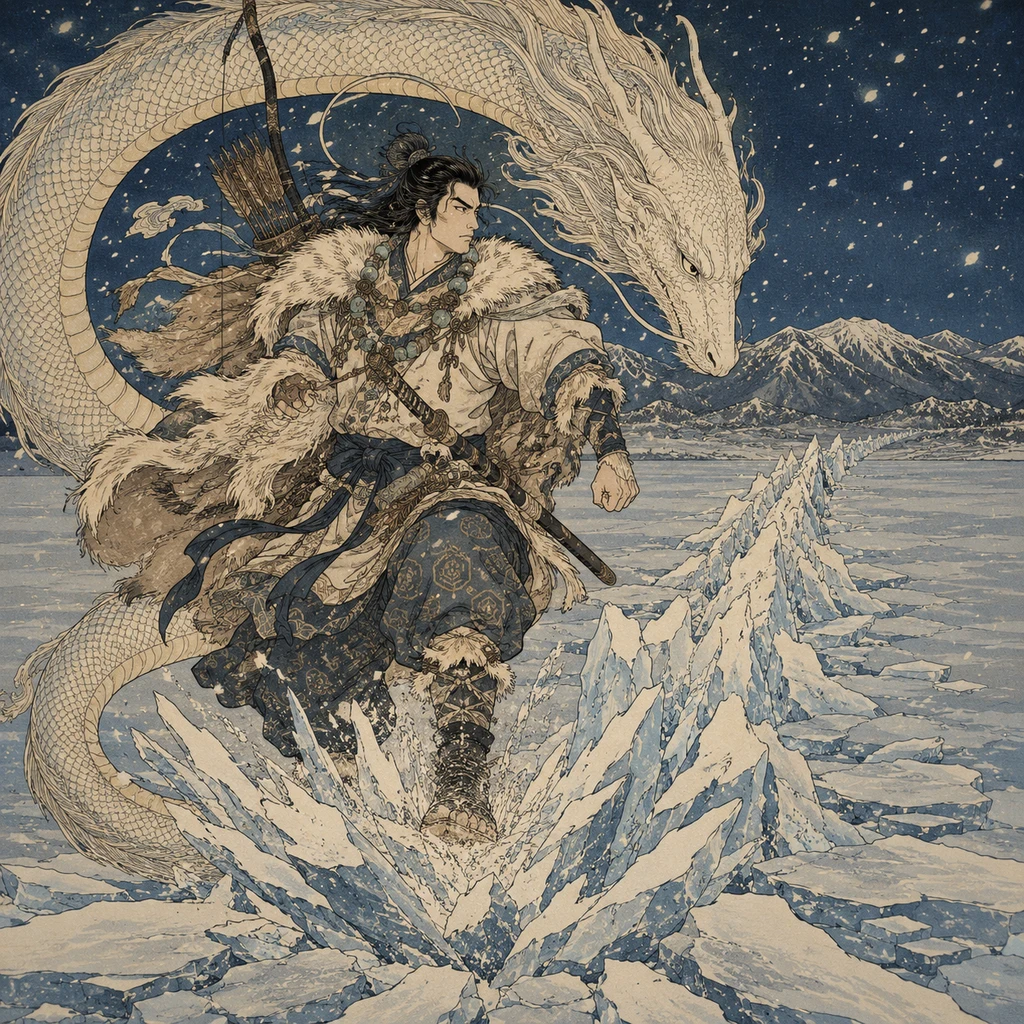
Takeminakata-no-KamiTakeminakata-no-Kami, the Fierce God of Water and War Residing in Lake Suwa
takeminakata
Detailed Description
To read Takeminakata-no-Kami deeply, it is crucial not to treat the defeat in the *Kojiki* and the victory of Suwa Daimyojin as separate stories. In the Kuni-yuzuri myth, Takeminakata-no-Kami challenges Takemikazuchi-no-Kami to a test of strength, is defeated, and pursued to the Sea of Suwa. Kokugakuin cites a theory that interprets this scene as refusing to submit to the words of Takemikazuchi-no-Kami, and provoking another kind of contest through a test of strength[1]. In other words, he is a god who did not obey the command of Heaven with words, but responded with the power of his body. The defeat is not a sign of this god's weakness, but evidence that he touched the order of the world with strength.
Upon entering Suwa, that defeat shifts into a narrative of local integration. Suwa Taisha narrates that Takeminakata-no-Kami moved from Izumo to Suwa, building and ruling Shinano Province—Takeminakata-no-Kami moved from Izumo to Suwa[2]. Kokugakuin introduces that the *Suwa Daimyojin Ekotoba* states he defeated the original god of Suwa, Moriya-no-Kami, and enshrined himself. Here, there is a composition where a god arriving from the central myth overlaps with the old gods and rituals of Suwa. Takeminakata-no-Kami is not merely a god who fled to Suwa. He collided with the land of Suwa itself, settled there, and changed into a god called by the name of the land.
The divine character of Suwa Daimyojin is strong as a god of wind and water. Suwa Taisha explains Takeminakata-no-Kami as a god worshipped since ancient times for governing rain and wind, and as a tutelary god of agriculture, hunting, seafaring, and contests—tutelary god of agriculture, hunting, seafaring, and contests[3]. These four are not disjointed. Rain and wind dictate rice farming; lakes and rivers support transportation and fishing; mountains serve as hunting grounds; and contests relate not only to warriors but to negotiations with nature. Takeminakata-no-Kami was worshipped as a god who reconnects fierce nature to human life.
The Omiwatari makes this reconnection visible. According to Nagano Prefecture's explanation, when Lake Suwa completely freezes over, the ice cracks and forms high, mountain-like ridges of ice. This path is considered to be the trail left by the male god of the Kamisha, Takeminakata-no-Mikoto, visiting the female god of the Shimosha, Yasakatome-no-Mikoto—the path where the male god visited the female god[4]. Furthermore, in the Miwatari ritual, the direction and shape of that path are used to divine crops, social conditions, and climate rainfall. The ice is not just a natural phenomenon; it is the movement of a god, becoming letters that read the future of the land.
In the Onbashira Festival, Takeminakata-no-Kami's power manifests as the movement of trees and people. The explanation of the Onbashira Festival by Suwa Taisha states that it is a festival where sixteen massive fir trees are hauled and erected at the four corners of the four shrines' precincts, and that a sacred *nagikama* harboring a divine spirit is struck into them to recognize them as sacred trees—sacred nagikama said to harbor a divine spirit[5]. The pillars are dragged purely by human strength, without the use of carts or rollers. Here, divine power is not a quiet interiority, but is renewed as a giant tree moving from the mountain to the village, the bodies of parishioners taking on danger, and the pillars standing at the four corners of the shrine. The god of Suwa is periodically re-erected.
Beliefs about hunting and meat-eating also connect the fierceness of this god to daily life. Suwa Taisha recounts that even in eras when taking life was considered a sin, the people of Suwa received the divine talisman of O-Suwa-sama and were permitted to eat venison to survive—eating venison to survive[3]. This is not so much a denial of Buddhist taboos as it is a mechanism where the god assumes the reality of a mountain province. Takeminakata-no-Kami is not a god who grants only clean fertility. He protects the life of the land by embracing hunts involving blood, sacrifices, the winter lake, and the danger of massive trees.
Finally, the system of the Ohori, a living god (arahitogami), is crucial. Suwa City explains the Ohori as the yorishiro of Suwa Myojin, and the priest who stood at the apex of the Suwa shrines as a living god—the yorishiro and living god of Suwa Myojin[6]. In the faith of Takeminakata-no-Kami, god does not solely exist in distant myth, but dwells in the human body, the system of the shrine, and the roles of festivals. The god defeated in the Kuni-yuzuri stands at the center of politics and ritual in Suwa through a living god. This inversion is the deepest allure of Takeminakata-no-Kami.
Source Information
種類全体の出典primary
建御名方神 – 國學院大學「古典文化学」事業 神名データベース
著者: 國學院大學「古典文化学」事業
出版社: 國學院大學
種類全体の出典primary
諏訪湖の御神渡り(おみわたり)
著者: 長野県諏訪地域振興局
出版社: 長野県
種類全体の出典primary
式年造営御柱大祭
著者: 諏訪大社
出版社: 信濃國一之宮諏訪大社
種類全体の出典primary
諏訪上社 大祝諏方家住宅 ── そこには諏訪の現人神がいた
著者: 諏訪市
出版社: 諏訪市公式ホームページ
種類全体の出典primary
諏訪信仰全国分布·1.1 万社
著者: 近代~現代神社調査
年代: 現代
出版社: 神道·神社史·武家史
種類全体の出典primary
諏訪大社の歴史と神話
著者: 諏訪大社
出版社: 信濃國一之宮諏訪大社
種類全体の出典primary
諏訪信仰について
著者: 諏訪大社
出版社: 信濃國一之宮諏訪大社
種類全体の出典primary
諏訪大社·四社構成 (上社本宮·前宮·下社秋宮·春宮)
著者: 社伝·『先代旧事本紀』
年代: 神武 18 年伝承·縄文期~
出版社: 神道·神社史·武家史
種類全体の出典primary
武田信玄·諏訪明神信仰
著者: 戦国期武家史
年代: 1521-1573
出版社: 神道·神社史·武家史
種類全体の出典primary
建御名方神·国譲り神話
著者: 『古事記』 上巻·『先代旧事本紀』
年代: 712~
出版社: 神道·神社史·武家史
バージョン固有出典 (諏訪湖に鎮まる風水軍神・建御名方神)primary
建御名方神 – 國學院大學「古典文化学」事業 神名データベース
著者: 國學院大學「古典文化学」事業
出版社: 國學院大學
バージョン固有出典 (諏訪湖に鎮まる風水軍神・建御名方神)primary
諏訪湖の御神渡り(おみわたり)
著者: 長野県諏訪地域振興局
出版社: 長野県
バージョン固有出典 (諏訪湖に鎮まる風水軍神・建御名方神)primary
式年造営御柱大祭
著者: 諏訪大社
出版社: 信濃國一之宮諏訪大社
バージョン固有出典 (諏訪湖に鎮まる風水軍神・建御名方神)primary
諏訪上社 大祝諏方家住宅 ── そこには諏訪の現人神がいた
著者: 諏訪市
出版社: 諏訪市公式ホームページ
バージョン固有出典 (諏訪湖に鎮まる風水軍神・建御名方神)primary
諏訪大社の歴史と神話
著者: 諏訪大社
出版社: 信濃國一之宮諏訪大社
バージョン固有出典 (諏訪湖に鎮まる風水軍神・建御名方神)primary
諏訪信仰について
著者: 諏訪大社
出版社: 信濃國一之宮諏訪大社
Personality
A fierce divine character who tests strength head-on, taking root in the land even if defeated. He consolidates wind, rain, lakes, hunting, agriculture, contests, and rituals, transforming power from the outside into local guardianship.
Compatibility
Highly compatible with those drawn to contests, hunting, agriculture, wind and rain, watersides, regional independence, and ancient rituals. Prefers the sensation of living alongside a nature fraught with danger over abstract tranquility.
Abilities & Skills
Weaknesses
The layers of his classical origins and the local Suwa faith are complex; reducing him simply to a defeated god, a god of war, or a dragon god loses his essence. His connection to the land of Suwa is immensely strong; stripped of that context, only his roughness remains.
診断評価
妖怪バウンダリー・タイプ指標
いたずら濃度
-2.0high: 戯 low: 護
📝 メモ
諏訪の民と自然の営みを守る責任感が強い
変化適応
2.0high: 化 low: 定
📝 メモ
龍神・水神・軍神として多層的に変容する
夜話度
0.0high: 夜 low: 昼
📝 メモ
嵐や祭祀の神で夜出現は中心でない
情の深さ
2.0high: 縁 low: 境
📝 メモ
諏訪の土地と民への庇護、敗北神話の情念を持つ
結界強度
3.0high: 律 low: 流
📝 メモ
諏訪から出ない誓約に縛られる領域神
表舞台圧
3.0high: 表 low: 影
📝 メモ
中央権威に抗う軍神・水神として荒々しく表に立つ
妖怪相性診断
喜び
3.0喜びと楽しさの程度
📝 メモ
過酷な自然や武士の闘争に関わるため、純粋な喜びの側面は薄い
怒り
9.0怒りの激しさの程度
📝 メモ
風雨を呼ぶ龍神であり、建御雷神に最後まで抗った猛々しい戦意と武神の怒りを持つ
慈悲深い
6.0慈悲深さの程度
📝 メモ
殺生を免罪する「諏訪の勘文」によって、生きるために狩猟する民衆を救済した
憂鬱
7.0憂鬱で思慮深い程度
📝 メモ
国譲りで敗北し諏訪の地から出られないという、悲劇性と制約を背負う
静寂
3.0内なる平静の程度
📝 メモ
荒ぶる軍神であり、御神渡りなど激しい自然現象を引き起こす
いたずら好き
2.0いたずら好きで活発な程度
📝 メモ
熾烈な信仰の対象であり、遊び心や軽薄さは見られない
やさしい
4.0やさしく親しみやすい程度
📝 メモ
基本は猛々しいが、厳しい山国の人々の生活を支える一面もある
厳格
8.0厳格で真面目な程度
📝 メモ
軍神としての厳しい掟と、強大な力による土着神の平定
守護的
9.0他者を守る傾向
📝 メモ
武田信玄など数多くの武将から戦勝の神として絶大な守護を期待された
神秘的
8.0神秘的で不思議な程度
📝 メモ
本殿を持たない自然崇拝や御柱祭など、古代の神秘性を色濃く残す
霊性の深さ
9.0精神的境界の深さ
📝 メモ
古代ミシャグジ信仰などアニミズムの古層と深く結びついた圧倒的な霊性
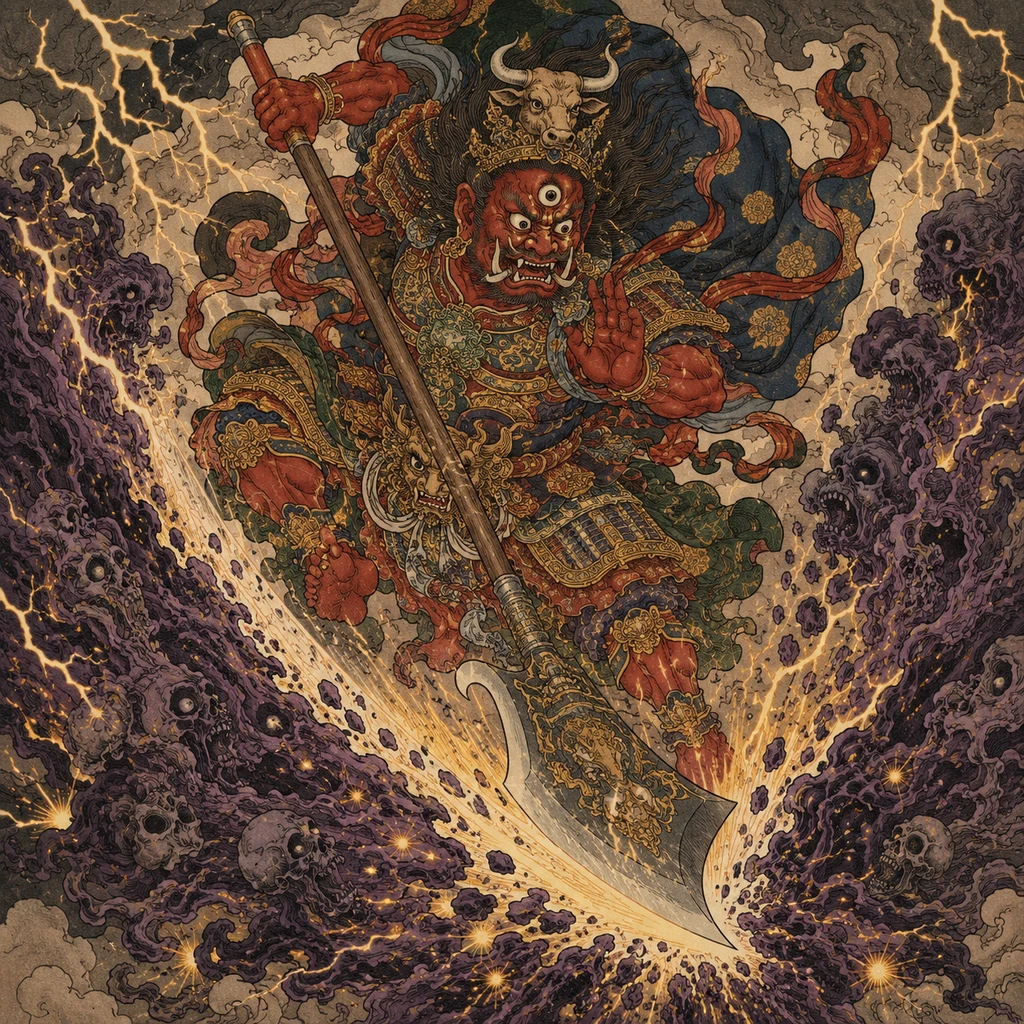
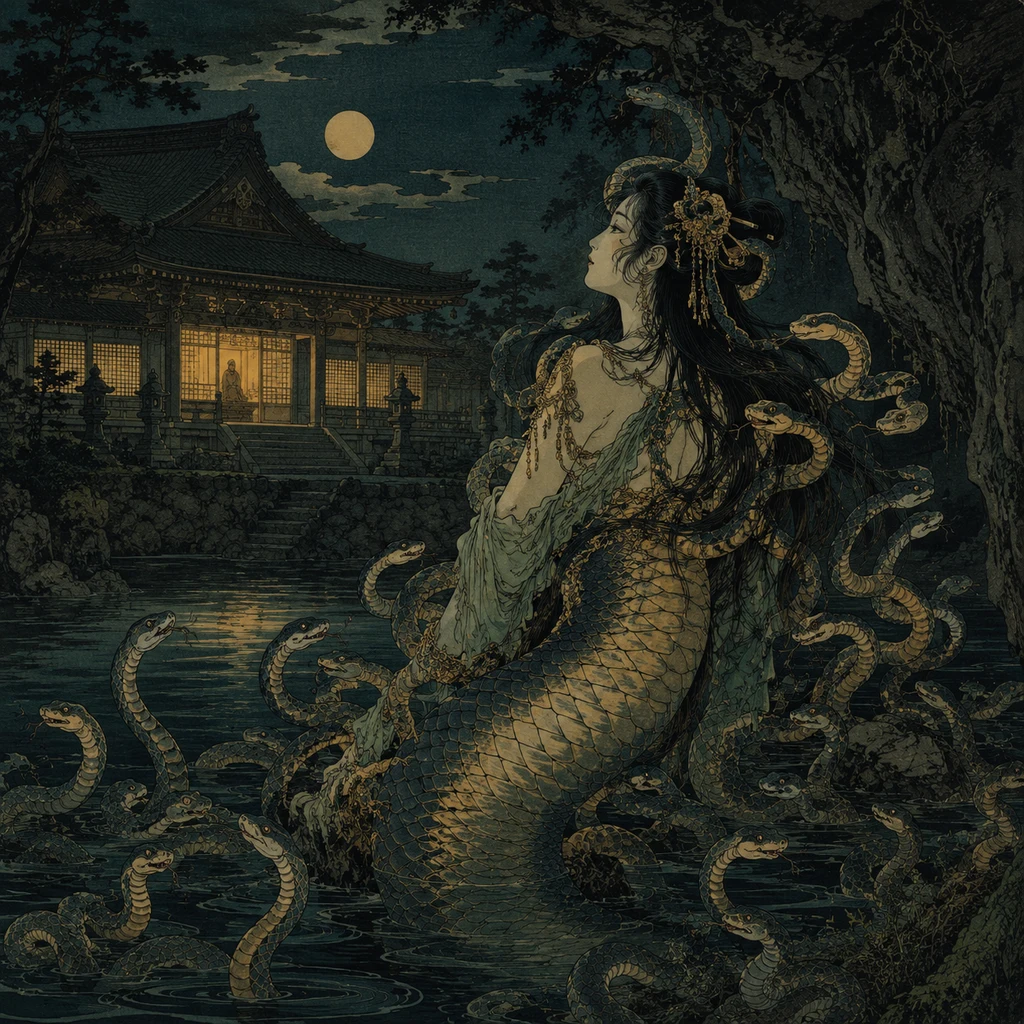
Similar Yokai
Yokai with similar personality and characteristics to Takeminakata-no-Kami, the Fierce God of Water and War Residing in Lake Suwa
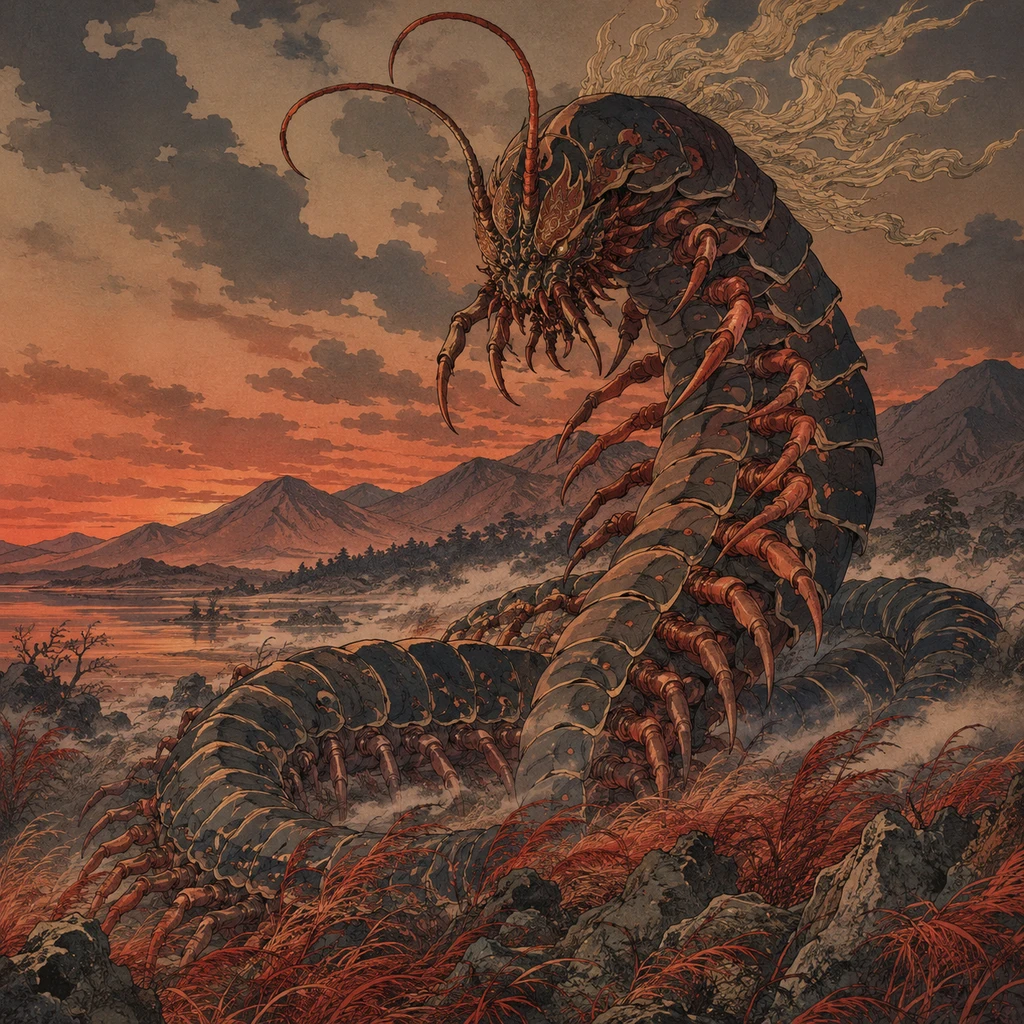
Opposite Yokai
Yokai with opposite personality and characteristics to Takeminakata-no-Kami, the Fierce God of Water and War Residing in Lake Suwa
🔮Test your compatibility with Takeminakata-no-Kami now!
Analyze your personality and values to get a detailed compatibility rating with this yokai.
Free, simple, and results in just minutes.
Like this yokai?
Visit a shrine to discover your guardian yokai