
InariInari, King of Faiths for Bountiful Harvests and Prosperous Business
いなりのかみ
Detailed Description
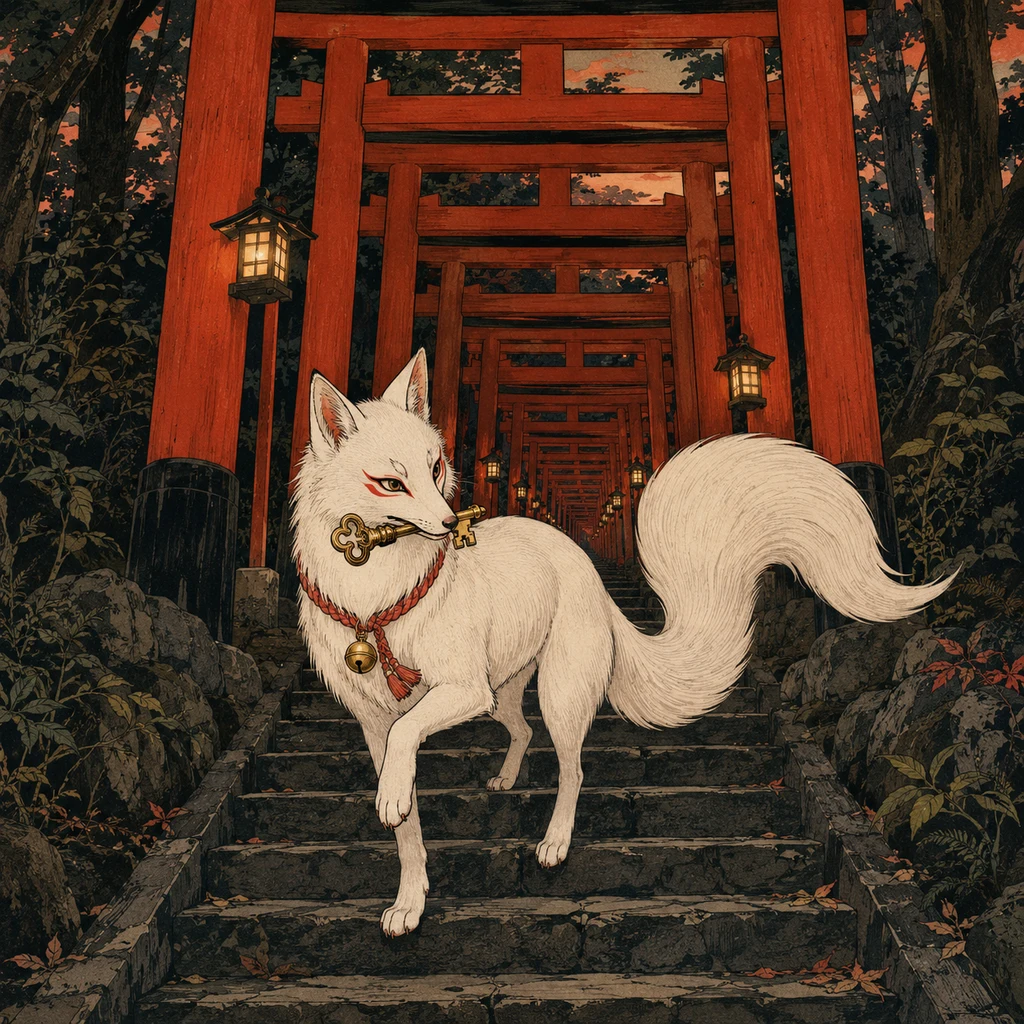
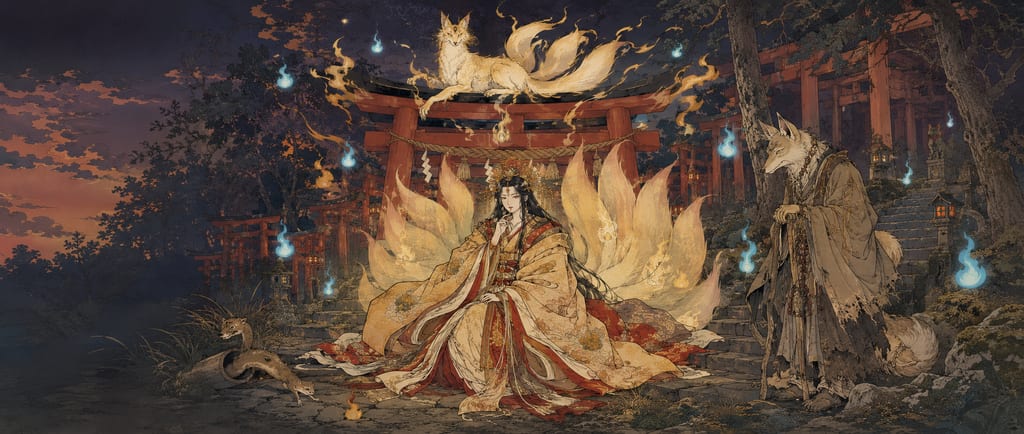
The principal deity of Inari, Ukanomitama-no-Kami (also known as Ukanomitama-no-Mikoto)[1], is a goddess of grain and food appearing in the first volume of the "Kojiki" (712). The name combines "Uka" (ancient word for food) and "Mitama" (spirit), preserving its simple folk origin as the "personification of spiritual power dwelling in grains." The head shrine, Fushimi Inari Taisha[2] (Mount Inari, Kii County, Yamashiro Province; present-day Fushimi Ward, Kyoto), originated on the first Day of the Horse in February 711. It was founded when Hata-no-Irogu, head of the Hata clan (an immigrant clan who pioneered the Kyoto basin and Fushimi area)[3], shot an arrow at a target made of mochi (rice cake). In a miraculous event, the mochi transformed into a white swan, flew away, and sprouted rice plants where it landed on the mountain peak, prompting the enshrinement of three deities (according to a lost text of the "Yamashiro no Kuni Fudoki"). The three deities were Ukanomitama-no-Okami (the main deity), Satahikoo-no-Okami, and Omiyanome-no-Okami; later, Tanaka-no-Okami and Shi-no-Okami were added to collectively form the five Inari Okami. For its rapid expansion in faith after the Heian period, its connection with To-ji Temple, the head temple of Shingon Esoteric Buddhism, played a decisive role. Starting with the legend of Kukai seeking Inari's cooperation when constructing To-ji, Shingon Buddhism and the Inari faith became deeply intertwined, leading to a syncretism with the Indian esoteric female demon Dakini-ten (Ḍākinī)[4]. Originally a "man-eating female yaksha," Dakini-ten softened as she passed through Tibet and China to Japan, becoming depicted as a "celestial maiden riding a white fox," and was eventually identified with Inari. This established a unique lineage of Buddhist Inari (Toyokawa Inari/Myogon-ji founded in Aichi in 1441, Saijo Inari/Myokyo-ji founded in Okayama in the 1300s, etc.), coexisting with the Shinto Inari (Fushimi lineage). During the Edo period, a massive boom occurred where people of all classes—samurai, townspeople, and farmers—enshrined Inari in small shrines on their properties as household deities. It became so widespread that a famous senryu poem listed "Iseya, Inari, and dog poop" as the most commonly seen things in Edo. Modern Inari shrines are estimated at about 32,000[5] (2,900 head shrines + branch shrines + household shrines), making it Japan's largest belief system by number of shrines. The relationship with foxes requires careful attention. While Fushimi Inari Taisha officially clarifies that "the fox is a divine messenger (familiar) of the Inari deity, not the deity itself," in folklore, many regions treat the fox itself as the Inari deity. This "fox deity faith" from the Edo period onward remains the mainstream of folk belief today. The messenger foxes are called "Byakko" (white foxes) and are traditionally depicted holding one of four items in their mouths: a jewel, a key, a rice sheaf, or a scroll. The jewel represents divine virtue, the key opens the spiritual granary, the rice sheaf represents grain, and the scroll signifies Buddhist scriptures. The main prayers are for bountiful harvests, prosperous business, family safety, fire prevention, and warding off epidemics. Especially since the Edo period, as it became a merchant household deity, prosperous business and financial fortune have become the primary focus. Today, this practice has spread to corporate and storefront altars (even small shrines on commercial building rooftops) and roadside shrines, embedding itself deeply in Japanese society across the four tiers of shrines, temples, residences, and corporations. The annual Hatsu-uma Matsuri (Festival of the First Day of the Horse)[6] in February marks the descent of the Inari deity and is celebrated grandly at Inari shrines nationwide.
Source Information
種類全体の出典primary
荼枳尼天 (Ḍākinī) 信仰史
著者: 密教·中国仏教研究
年代: インド密教~日本中世
出版社: 伝統文献·宗教史
種類全体の出典primary
伏見稲荷大社·稲荷大神勧請縁起 (『山城国風土記』逸文)
著者: 奈良~平安期編纂
年代: 8 世紀
出版社: 伝統文献·宗教史
種類全体の出典primary
秦氏 (はたうじ) 渡来系氏族研究
著者: 日本古代史·考古学
年代: 5-9 世紀
出版社: 伝統文献·宗教史
種類全体の出典primary
初午祭 (二月初午·稲荷大神降臨日)
著者: 伝統年中行事
年代: 奈良期~
出版社: 伝統文献·宗教史
種類全体の出典primary
稲荷信仰の総覧
著者: 近世~現代の民俗·宗教統計
年代: 現代
出版社: 伝統文献·宗教史
種類全体の出典primary
宇迦之御魂神 (倉稲魂命)
著者: 『古事記』『日本書紀』
年代: 712·720
出版社: 伝統文献·宗教史
Personality
A serene, maternal deity governing prosperity. Rather than being strict, she possesses a temperament that stays close to the daily lives of the common people.
Compatibility
Highly compatible with those praying for prosperous business and financial fortune, those seeking family safety and household protection, and those desiring the blessings of grains and agriculture.
Abilities & Skills
Weaknesses
Folk beliefs warn of curses if an "O-Inari-san" is treated disrespectfully; neglecting or removing a household Inari shrine is said to result in continuous misfortune. Prayers solely for commercial gain are also popularly believed to result in being "bewitched by foxes."
Collection Inclusion
This yokai is included in the following collections:
診断評価
妖怪バウンダリー・タイプ指標
いたずら濃度
-3.0high: 戯 low: 護
📝 メモ
五穀豊穣、商売繁盛、家内安全を司る守護神である
変化適応
1.0high: 化 low: 定
📝 メモ
狐使いと荼枳尼天習合で姿の幅はあるが、主祭神自体は安定する
夜話度
0.0high: 夜 low: 昼
📝 メモ
狐や密教習合はあるが、夜の出没を核心としない
情の深さ
2.0high: 縁 low: 境
📝 メモ
商家、屋敷、日々の生活に寄り添う神格として密着する
結界強度
2.0high: 律 low: 流
📝 メモ
屋敷神や路傍祠として家と商いの境界を守る
表舞台圧
2.0high: 表 low: 影
📝 メモ
全国の稲荷社と屋敷稲荷に広く祀られる信仰王である
妖怪相性診断
喜び
9.0喜びと楽しさの程度
📝 メモ
五穀豊穣と繁栄という生きる喜びをもたらす。
怒り
2.0怒りの激しさの程度
📝 メモ
豊穣の恵みが中心であり、怒りや祟りの側面は少ない。
慈悲深い
9.0慈悲深さの程度
📝 メモ
無数の庶民の細やかな願いを分け隔てなく叶える深い慈悲。
憂鬱
2.0憂鬱で思慮深い程度
📝 メモ
生命力に溢れる女神格であり憂鬱さはない。
静寂
8.0内なる平静の程度
📝 メモ
静謐で安定した母性神格。
いたずら好き
4.0いたずら好きで活発な程度
📝 メモ
狐の使いを通じた庶民的な親しみやすさを持つ。
やさしい
10.0やさしく親しみやすい程度
📝 メモ
すべてを育む母性としての絶大な優しさ。
厳格
3.0厳格で真面目な程度
📝 メモ
厳しく罰するよりも庶民の願いに広く寄り添う。
守護的
10.0他者を守る傾向
📝 メモ
日々の糧と商売の繁盛を力強く守護する。
神秘的
7.0神秘的で不思議な程度
📝 メモ
眷属の狐などを介した異界的な広がりと神秘。
霊性の深さ
8.0精神的境界の深さ
📝 メモ
穀物と生命の根源的なエネルギーの擬人化。
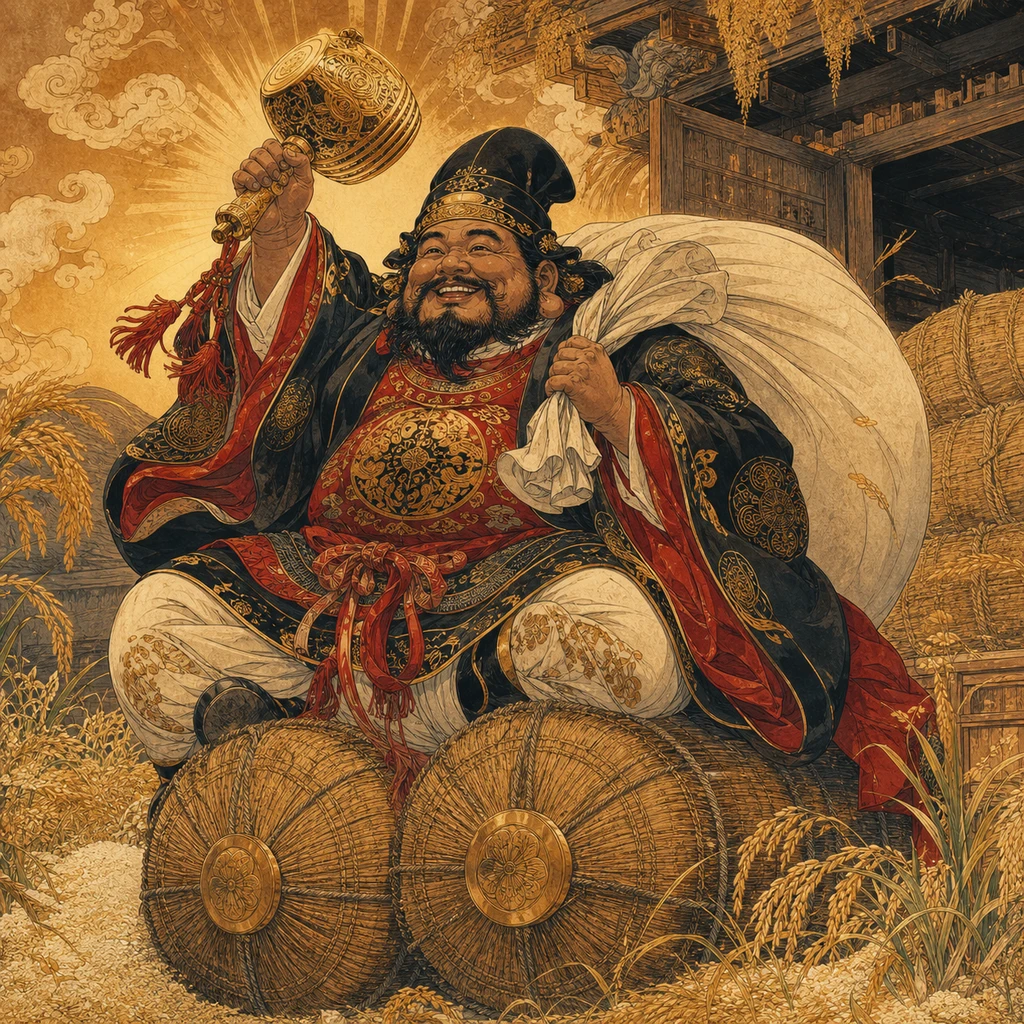
Similar Yokai
Yokai with similar personality and characteristics to Inari, King of Faiths for Bountiful Harvests and Prosperous Business
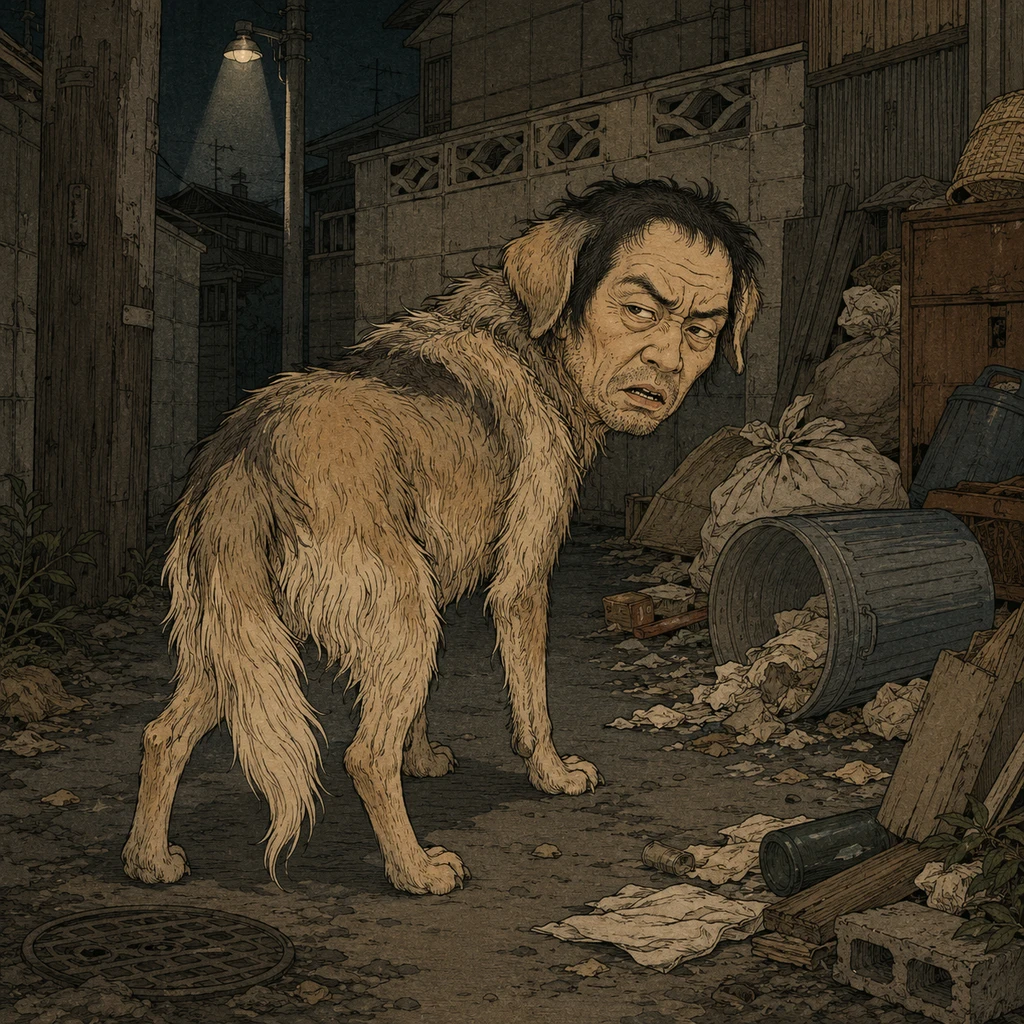
Opposite Yokai
Yokai with opposite personality and characteristics to Inari, King of Faiths for Bountiful Harvests and Prosperous Business


🔮Test your compatibility with Inari now!
Analyze your personality and values to get a detailed compatibility rating with this yokai.
Free, simple, and results in just minutes.