
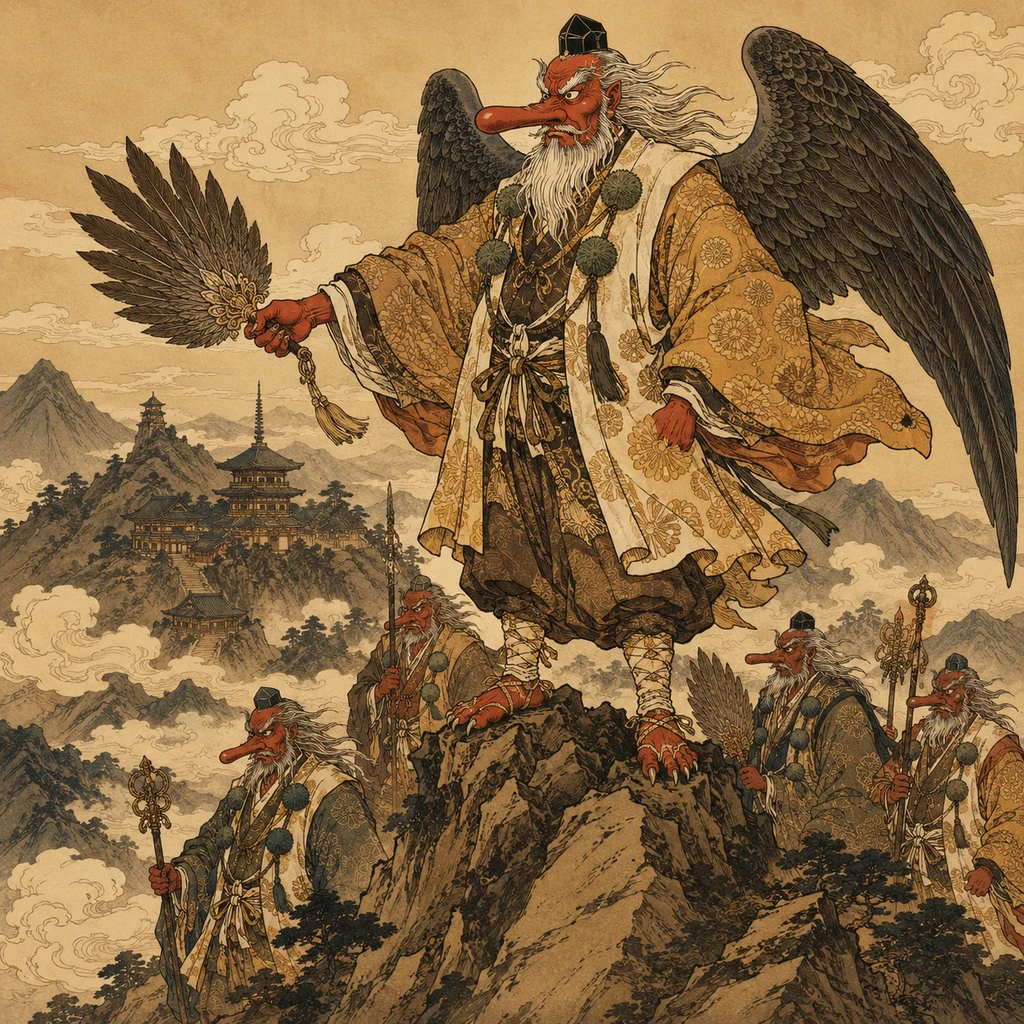
Hiko-san BuzenbōChief of the Tengu of Kyūshū — Hiko-san Buzenbō
Hiko-san Buzenbō
Detailed Description
The key to reading Hiko-san Buzenbō lies in Hikosan—the vast sacred site that is one of the three great centers of Shugendō in Japan—and in the tengu's character of two faces, reward and punishment.
The history of Hikosan Shugendō issues from the Nara-period monk Hōren[1]. Taking as founder this monk, whom the Shoku Nihongi records as having been granted forty chō of field in Buzen Province in the third year of Taihō (703), Hikosan grew into a great center of Shugendō ranking with the Dewa Sanzan and Ōmine. The name of Buzenbō appears with certainty in the Kamakura-period engi the Hikosan Ruki (1213)[2]. This work likens the forty-nine grottoes bored into the peaks of Hikosan to Miroku's Tosotsu Heaven and made the eighteenth the "Buzen-kutsu," the seat of Buzenbō. This very system of grottoes is the matrix of the faith in Buzenbō as chief of the tengu of Kyūshū. The Edo-period scale of the "Three Thousand Eight Hundred Bō of Hikosan" tells of this sacred site's prosperity.
What characterizes the tengu Buzenbō is the sternness of his reward and punishment. As the history of Takasumi Shrine[3] transmits, upon those of greedy and evil heart he carries off children and sets fire to houses in chastisement. Conversely, the wishes of the upright and deeply devout he hears and grants, and them he guards. These two faces of reward and punishment symbolize, as a tengu's judgment, the strict precepts that a Shugendō mountain imposes and the grace shown to those who keep them. The dread of a child-snatching tengu and the faith of parents praying for their children's safety were the front and back of one and the same Buzenbō.
The separation of Shintō and Buddhism in the first year of Meiji and the prohibition of Shugendō in Meiji 5 (1872) scattered the yamabushi of Hikosan and dismantled the world of the three thousand eight hundred bō. The institution of Shugendō was lost, but the tengu faith of Buzenbō lives on at Takasumi Shrine; chanted in the Muromachi Noh play Kurama Tengu[4] and standing among the forty-eight tengu of the Tengu-kyō[5] as the great tengu of Kyūshū, he is still feared as one who sits upon the peak of Hikosan. Chigiri Kōsai[6] of tengu scholarship, too, placed him within the system of the great tengu of the many mountains.
Source Information
種類全体の出典primary
天狗の研究
著者: 知切光歳
年代: 1975
出版社: 大陸書房
種類全体の出典primary
彦山流記
著者: (英彦山の縁起)
年代: 1213
出版社: (鎌倉期の修験縁起)
種類全体の出典primary
鞍馬天狗(謡曲)
著者: 宮増(伝)
年代: 室町期
出版社: (能・五番目物)
種類全体の出典primary
続日本紀
著者: 菅野真道ほか
年代: 延暦16年 (797)
出版社: (勅撰の正史)
種類全体の出典primary
高住神社由緒
著者: (高住神社)
年代: 近世〜
出版社: (旧豊前坊、英彦山)
種類全体の出典primary
天狗経
著者: (密教系祈祷秘経)
年代: 江戸中期
出版社: (修験の祈祷経典)
Personality
Stern, with reward and punishment made plain. On those of evil heart he visits chastisement without mercy; on the deeply devout he sheds protection without stint.
Compatibility
Those of deep faith and upright heart; ascetics who revere Hikosan; parents who pray for their children's safety
Abilities & Skills
Weaknesses
He turns away the faithless and the evil-hearted (= lends them no power) / Decline through the separation of Shintō and Buddhism and the prohibition of Shugendō / Restraint by the orthodox dharma
診断評価
妖怪バウンダリー・タイプ指標
いたずら濃度
1.0high: 戯 low: 護
📝 メモ
守護もするが、邪心ある者には子さらいや火の罰を下す
変化適応
2.0high: 化 low: 定
📝 メモ
火と風を操り配下天狗を動かす山岳神通を持つ
夜話度
1.0high: 夜 low: 昼
📝 メモ
天狗・修験山の怪気はあるが時刻限定ではない
情の深さ
-2.0high: 縁 low: 境
📝 メモ
個人の情より英彦山の霊域と天狗秩序に属する
結界強度
3.0high: 律 low: 流
📝 メモ
英彦山の霊域・修験窟・高住神社を守る
表舞台圧
3.0high: 表 low: 影
📝 メモ
九州天狗の頭目として賞罰を下す大天狗
妖怪相性診断
喜び
1.5喜びと楽しさの程度
📝 メモ
喜悦や遊興を示す記述は乏しく、厳粛な在り方が中心。
怒り
8.0怒りの激しさの程度
📝 メモ
欲深く邪な者に対し容赦ない懲罰(放火・子攫い)を行う点から憤怒相が強い。
慈悲深い
5.0慈悲深さの程度
📝 メモ
信心篤き者には願いを聞く慈性がある一方、罰も峻厳で平均すると中程度。
憂鬱
3.5憂鬱で思慮深い程度
📝 メモ
憂愁を示す直接の描写は少ないが、修験と裁きの重みからやや沈鬱な気配はある。
静寂
6.5内なる平静の程度
📝 メモ
霊場の守護者としての静けさ・威厳があるが、罰する側面が強く極端な静謐一辺倒ではない。
いたずら好き
1.0いたずら好きで活発な程度
📝 メモ
天狗の悪戯性よりも棟梁としての厳格・裁きが前面で、戯れはほぼ見られない。
やさしい
2.0やさしく親しみやすい程度
📝 メモ
賞罰の峻厳さが強調され、親しみやすさは低い。子をさらう伝承もあり柔和さは乏しい。
厳格
9.5厳格で真面目な程度
📝 メモ
賞罰明白・戒律的・峻厳と明言。修験の規律を体現する存在。
守護的
8.5他者を守る傾向
📝 メモ
心正しき者や修験者、子を守護する明確な加護伝承がある。英彦山鎮護の役割も大。
神秘的
9.0神秘的で不思議な程度
📝 メモ
英彦山四十九窟・修験道・大天狗の神威など霊域性と秘儀性が濃厚。
霊性の深さ
9.5精神的境界の深さ
📝 メモ
日本三大修験道の霊場英彦山の大天狗で、窟=兜率天対応、祭祀・由緒・文献の重層性が極めて深い。
Similar Yokai
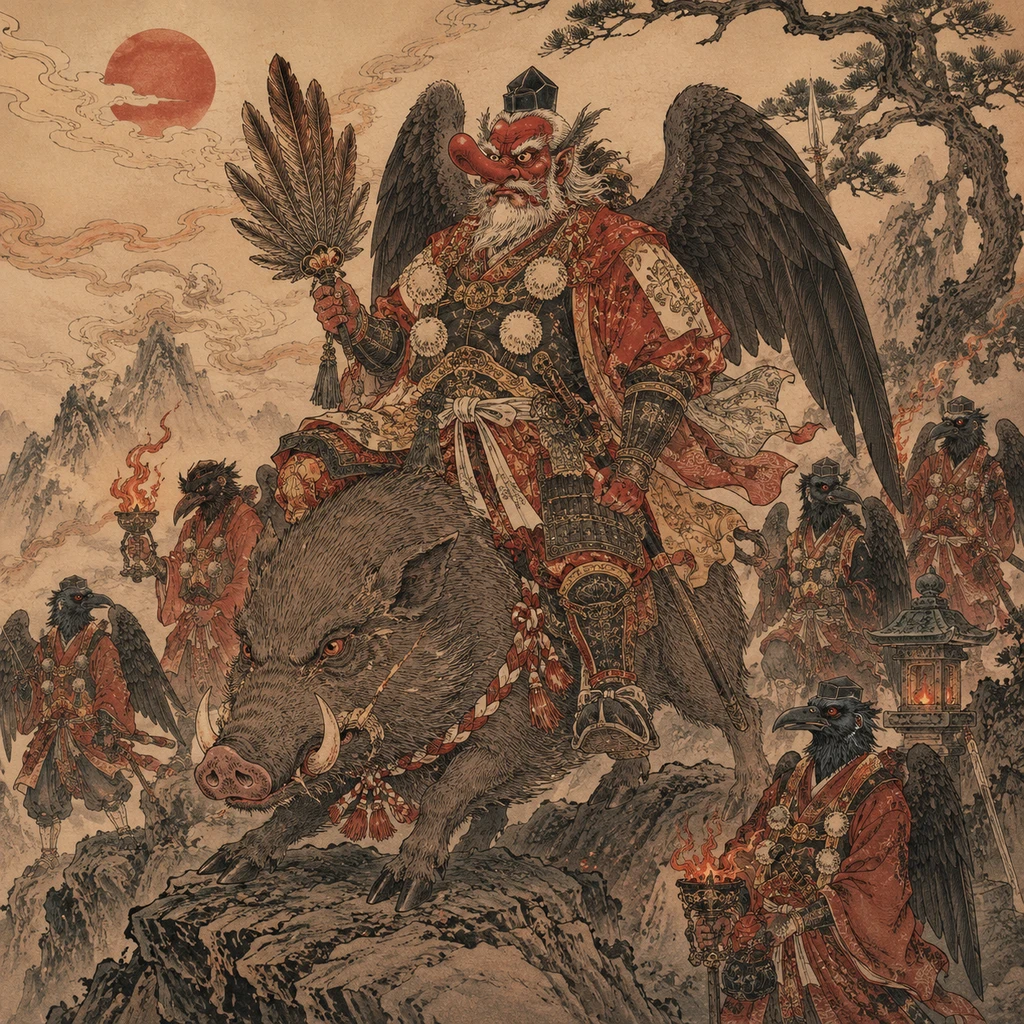
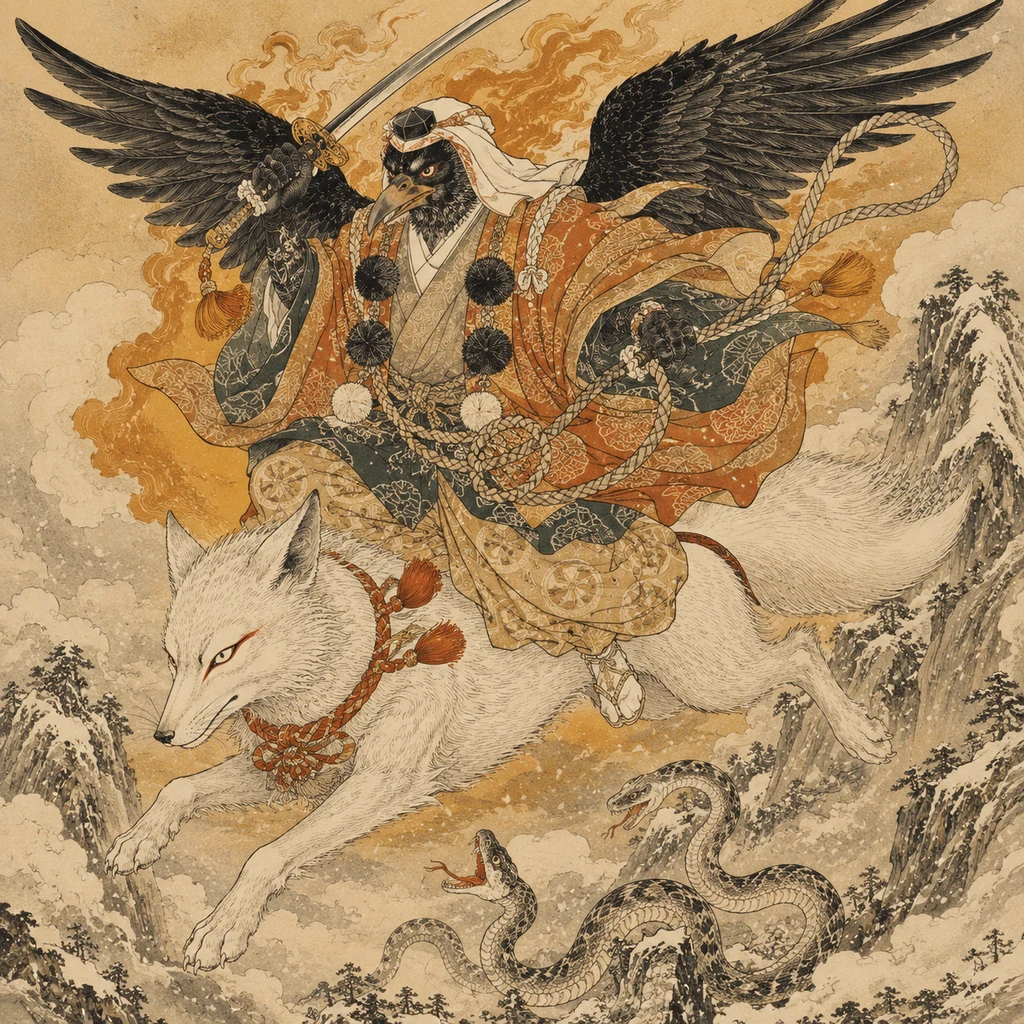
Yokai with similar personality and characteristics to Chief of the Tengu of Kyūshū — Hiko-san Buzenbō

Opposite Yokai
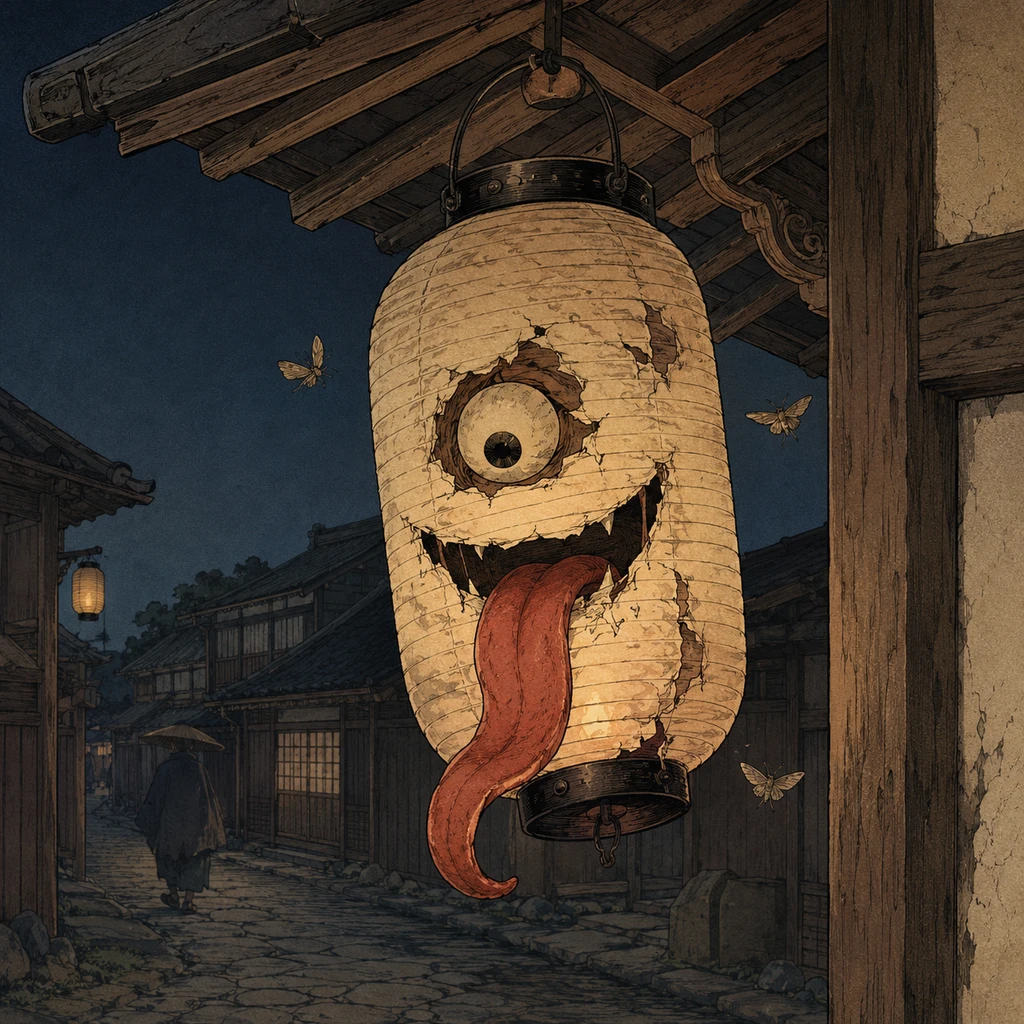
Yokai with opposite personality and characteristics to Chief of the Tengu of Kyūshū — Hiko-san Buzenbō
🔮Test your compatibility with Hiko-san Buzenbō now!
Analyze your personality and values to get a detailed compatibility rating with this yokai.
Free, simple, and results in just minutes.
Like this yokai?
Visit a shrine to discover your guardian yokai