YOKAI.JP

Mount Tateshinaたてしなやま

2 yokai rooted in Mount Tateshina. Explore the legends tied to this land.

Also known as: 立科山
  • Koga Saburo

    Koga Saburo

    Legendary

    Koga Saburo

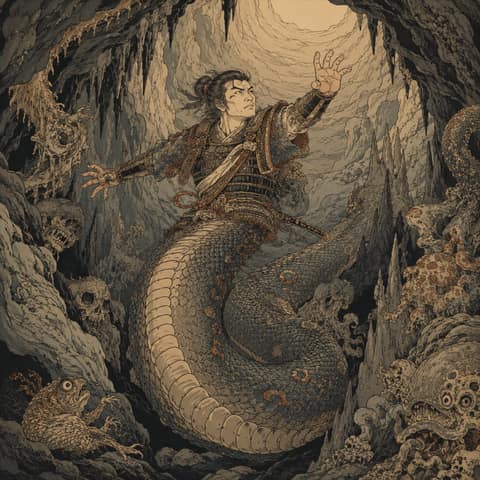
    Koga Saburo, the Serpent Deity of the Underworld

    Half-Human / Half-YokaiKoka District, Omi Province (around present-day Koka City, Shiga Prefecture) / Mount Tateshina (present-day Nagano Prefecture) / Suwa Taisha

    The fascination of the Koga Saburo legend lies not merely in its heroic epic, but in how it explains the origins of Suwa Myojin as "the return of a mortal who fell underground." Unlike Takeminakata-no-Kami from the Kojiki, who retreats to Suwa as the defeated figure in the myth of the transfer of the land, Koga Saburo travels from Omi to Shinano, falls into the underworld through a cave on Mount Tateshina, and returns as a serpent. The deity of Suwa does not simply descend from the heavens, nor does it merely arrive from central mythology; it manifests by passing through mountain caves, subterranean kingdoms, and the body of a snake. This narrative beautifully weaves together the elements of Suwa worship—water, mountains, dragons, serpents, hunting, and the syncretism of Shinto and Buddhism—into a single tale. This is precisely why it is meaningful to establish Koga Saburo as a distinct figure alongside the official enshrined deity Takeminakata.
  • Yuki-onna

    Yuki-onna

    Legendary

    Yuki-onna

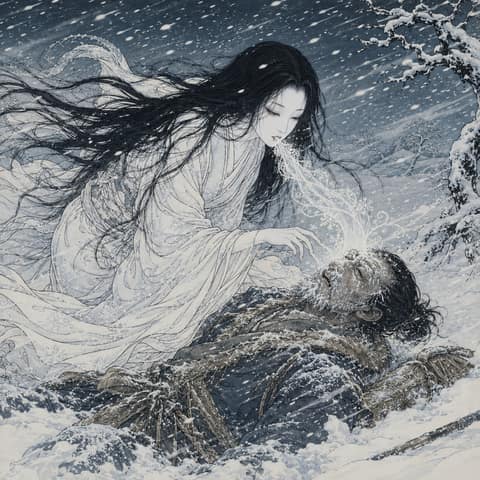
    Yuki-onna in Snowy Landscapes and Variant Traditions

    Natural Phenomena & Nature SpiritsThroughout Japan; Echigo Province (present-day Niigata Prefecture); former Chōfu Village in Nishitama District (now part of Ōme, Tokyo)

    Yuki-onna is a broad name for female apparitions that appear on snowy nights and mountain roads. An early use of the word appears in the 1642 *Takatsukuba*, and regional traditions include a harmless snow spirit who makes bridges, a woman who leaves bloody footprints, and a figure invoked in child-minding words. The familiar image of white breath, Oyuki as a wife, and a broken secret became widely known through Lafcadio Hearn’s *Kwaidan* (1904).