YOKAI.JP
Uwajima 鬼牛の駆ける海。宇和島・宇和海の妖怪事典

牛鬼・和霊・海坊主・猿猴。御霊と鬼牛が練り歩く南予の海辺

鬼牛の駆ける海。
宇和島・宇和海の妖怪事典

Uwajima · うわじま

Also known as: 宇和海
View on map

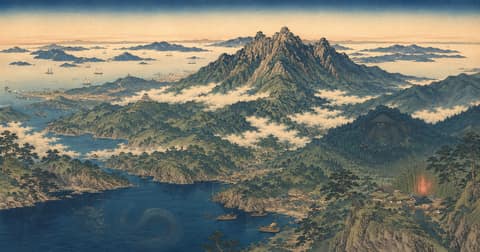
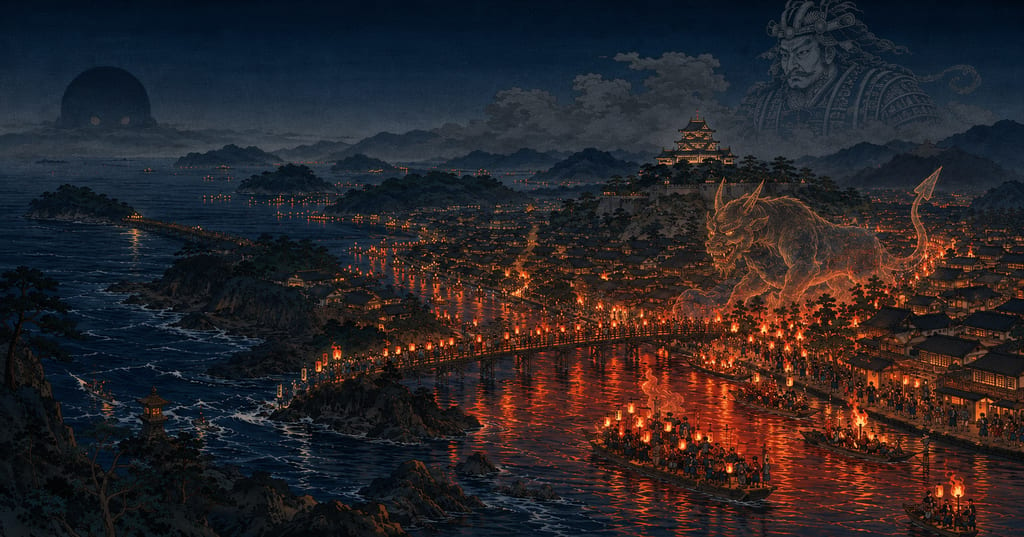
宇和島 ── 愛媛県の南西部、いわゆる南予の中心であり、その目の前には豊後水道に開けた宇和海が広がる。海岸線は深く切れ込んだリアス式で、入江と半島が複雑に入り組み、温かい急潮と冷たい底入り潮が交互に流れ込むこの海は、古来より屈指の好漁場であった[1]。今もハマチや真珠の養殖筏が湾を埋め、愛媛は真珠生産で全国一を誇る。豊かな海の幸と、その海がいつ牙を剥くか知れぬ恐ろしさ ── 宇和海の妖怪は、まさにこの両面から生まれた。

この地の怪異を貫く軸は、海辺の漁村と御霊の祭である。中世には藤原純友が宇和海の島を拠点に海賊大将軍を称し[2]、近世には伊達家が宇和島藩の城下を築いた[3]。その城下では、家老の非業の死が御霊神を生み、その御霊を鎮める夏祭りに、首の長い巨大な鬼牛が練り歩く。海の巨怪も、川辺の河童も、すべては海と川に生きた南予の人々の暮らしと信仰のなかにある。本稿は宇和島・宇和海という一つの土地に絞り、その怪異を史料の辿れる範囲で読み解く。愛媛全体の妖怪文化は愛媛県の妖怪事典に譲り、ここでは南予の海辺だけを深く歩く。

宇和海の漁村と伊達の城下 ── 宇和島という土地

妖怪を読む前に、宇和島という土地の輪郭を描いておきたい。怪異はその土地の歴史と地理から生まれる。どんな海に面し、どんな人の営みが積み重なってきたかを知らずに、南予の怪は読めない。

宇和島は四国の南西の隅、九州との間に開けた豊後水道の内懐、宇和海に面する。沿岸は深く入り組んだリアス式海岸で、切り立った半島と深い湾が幾重にも連なる[1]。この複雑な地形こそが宇和海の豊かさの源だ。温暖な気候のもと、外海から差し込む温かい急潮と、湾の底を巡る栄養豊かな冷たい潮が交互に流れ込み、魚を育てる。古代・中世からイワシ漁などの漁業が盛んで、近代には真珠・ハマチ・マダイの養殖、いりこやじゃこ天といった水産加工が南予を支える基幹産業へと育った。

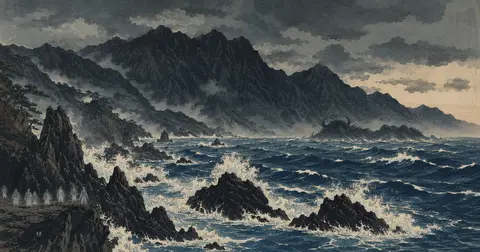
だが、この海は恵みと同時に死をもたらす。深い湾は逃げ場が乏しく、外海の時化はたちまち入江に押し寄せる。漁を生業とする海村にとって、海は生計の場であると同時に、いつ命を奪うか知れぬ場でもあった。宇和海の海坊主や、磯辺に現れる怪異の伝承は、この「海と隣り合わせの死」を抜きには語れない。

歴史を遡れば、宇和海は早くから人と船の往来の舞台であった。十世紀、伊予掾として赴任した藤原純友は、任期を終えても都に帰らず、宇和海最大の島・日振島を拠点に海賊衆を率いたと伝わる[2]。風待ち潮待ちに適し、北上する船を見張りやすいこの島から、純友は瀬戸内一帯を席巻し、関東の平将門と並んで「海賊大将軍」と称された。承平天慶の乱と呼ばれるこの反乱は天慶四年(九四一)に鎮圧されるが、宇和海が古来、海を行き交う者たちの要衝だった事実をこの一件はよく物語る。

時代は下って近世、この地に城下町を築いたのが伊達家である。慶長十九年(一六一四)、伊達政宗の長男秀宗が伊予宇和郡十万石を分知され、宇和島藩が立藩した[3]。政宗は秀宗に五十七騎と称される家臣団を付けて送り出し、その筆頭家老が、のちに宇和島最大の御霊となる山家清兵衛公頼であった。仙台から遠く西国の海辺へ移った伊達の家臣団 ── その内部で起きた悲劇が、この土地の妖怪文化の核心へと我々を導く。

御霊と鬼牛の祭 ── 和霊と牛鬼

宇和島の妖怪文化の中心には、一つの祭がある。和霊大祭、通称うわじま牛鬼まつりだ。この祭で出会う二つの存在 ── 祀られる御霊と、町を練り歩く鬼牛 ── が、南予の怪異の精髄をなす。まずは祭そのものの起こりとなった、一人の家老の死から見ていきたい。
Warei

warei

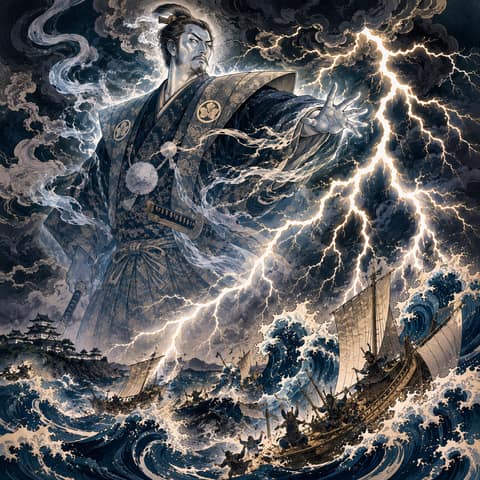
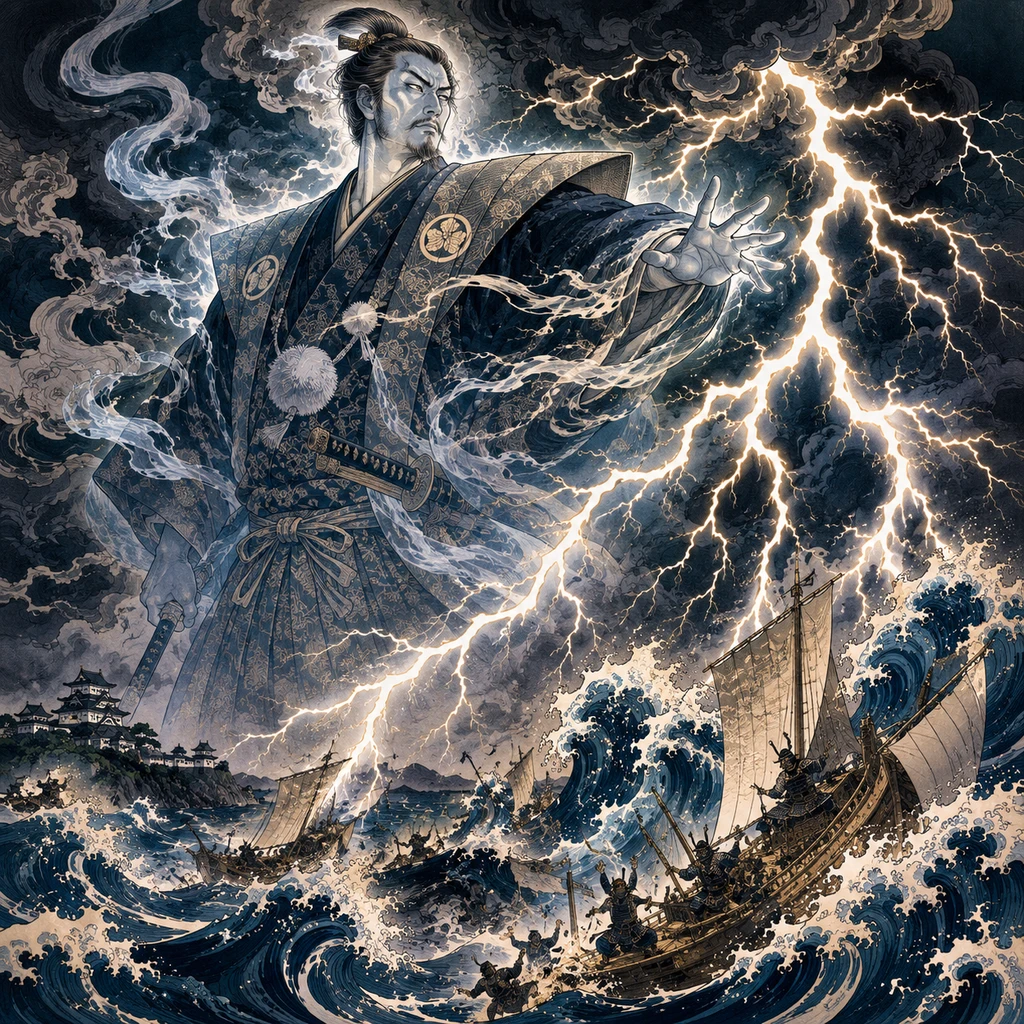
The *Warei* is the *goryo* (vengeful or honorable spirit) of Yamaga Seibee Kinyori, the chief retainer of the Uwajima Domain. Seibee served as the head retainer and chief magistrate under the first domain lord, Date Hidemune, devoting himself to the reform of domain administration. However, due to the false accusations of jealous domain samurais, his residence was attacked in the 6th year of Genna (1620), and he was brutally murdered along with his sons (an event known as the Warei Disturbance). Afterwards, those involved in the assassination died unnatural deaths one after another from lightning strikes and shipwrecks. Fearing Seibee's curse, the people enshrined him as a *goryo*. It is a classic early modern example of *goryo* belief, where the grudge of one who died an unnatural death becomes a cursing spirit, and is eventually pacified and enshrined to transform into a guardian deity.

Read more

和霊とは、宇和島藩の家老山家清兵衛公頼の御霊である。清兵衛は初代藩主伊達秀宗のもとで筆頭家老・総奉行をつとめ、財政の苦しい新藩の藩政改革に尽くした。だが元和六年(一六二〇)六月二十九日の雨の夜、その屋敷が襲撃され、清兵衛は子息らとともに惨殺される[4]。背景には、大坂城の石垣普請の報告をめぐる桜田元親との対立と、その讒言があったと伝わる。政宗が大坂築城の費えを案じて付けた重臣が、藩内の政争のなかで非業の死を遂げたのだ。

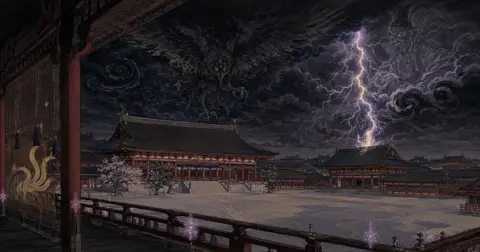
事件はそれだけでは終わらなかった。清兵衛の死後、暗殺に関わったとされる者たちが落雷や海難で次々と変死し、宇和島には飢饉・台風・地震といった災異が相次いだ[5]。人々はこれを清兵衛の怨霊の祟りと畏れた。無実の重臣を闇に葬った負い目が、災いのたびに「あれは清兵衛の祟りだ」という語りを呼んだのだろう。やがて藩は霊を鎮めにかかる。承応二年(一六五三)、二代藩主の代に清兵衛の無実が認められて社が営まれ、享保十六年(一七三一)に現在の和霊神社が創建された[6]。怨霊は鎮められて「和霊さま」となり、漁業と産業を守る神へと転じる。その信仰は四国を越えて九州・中国地方まで広がり、昭和五十七年(一九八二)時点で全国に百五十九社の分社を数えたという[5]

非業の死を遂げた者の怨念が、祟りなす霊となり、鎮め祀られて守護神へと転じる ── 菅原道真や平将門と同じ、御霊信仰の論理がここにある。和霊は、その近世における最も整った典型例の一つだ。そして、この御霊を鎮める夏祭りの主役こそ、宇和島を代表するもう一つの怪異、牛鬼である。
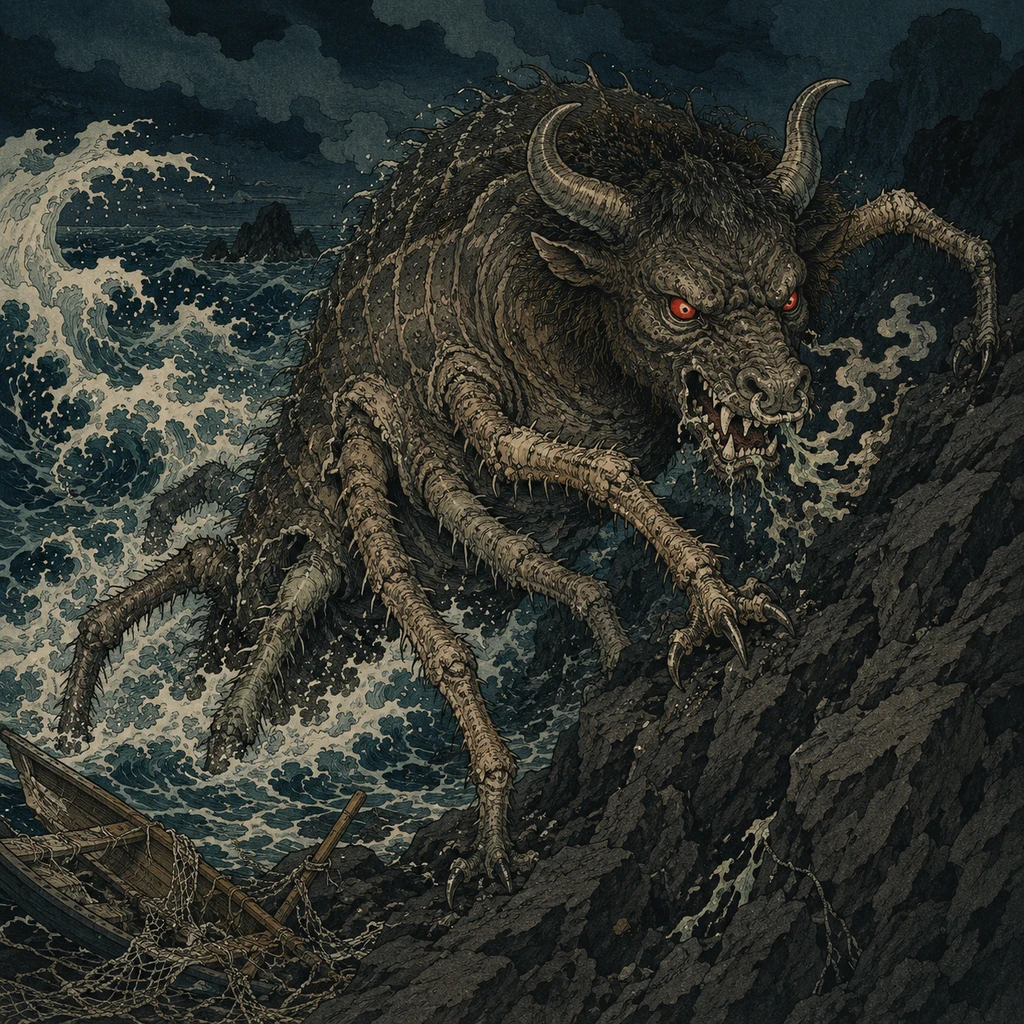
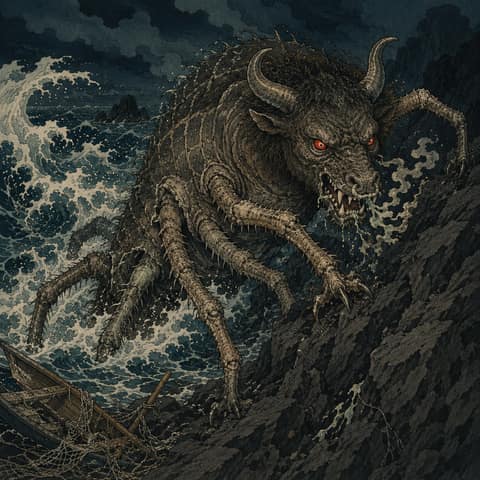
牛鬼は、牛の頭に鬼の胴、あるいは蜘蛛の胴に牛の首という異形で語られる西日本屈指の凶妖だ。古くは平安期の『枕草子』が「おそろしきもの」として名を挙げ、各地で無差別に人を喰らい毒気を撒く疫病神として恐れられた。ところが宇和島では、この荒ぶる鬼が祭礼の主役へと劇的に転じている ── これこそ南予の牛鬼を語る上で最も重要な点だ。

和霊大祭は毎年七月二十二日から二十四日に営まれ、その町を練り歩くのが牛鬼の練物である[8]。全長五、六メートルにも及ぶこの山車は、鬼のような面に長い首を高々と伸ばし、赤い布やシュロで覆った牛の胴、剣にも似た尾を持つ。担ぎ手が長い首を激しく振り回しながら町々を巡り、悪疫や邪気を祓って歩く。祭の山場は二十四日夜の「走り込み」だ。海上を渡御した三基の神輿が、和霊神社前を流れる須賀川へ勢いよく駆け込み、提灯と歓声が夏の夜を埋める[9]。この鬼牛は宇和島だけのものではなく、南予各地の秋祭りにも登場する、地域全体の祭礼のシンボルとなっている。

ここで史実と伝承を分けておきたい。牛鬼の山車の由来として、豊臣秀吉の朝鮮出兵の際に加藤清正が敵を威圧するために用いた牛革張りの攻城具にさかのぼる、という説が地元で語られる。だがこれは伝承であって史実ではない[10]。実際には、祭礼の牛鬼が南予の神社祭礼に登場するようになったのは江戸中期、一七〇〇年代半ば以降と推定され、現存最古の確かな史料は天明四年(一七八四)の「牛鬼練物仕成諸入用人数面付帳」である[10]。荒ぶる悪鬼の名と造形が、いつしか祭礼の魔祓いの役を担うようになった ── その転換が起きたのは、案外新しい近世のことなのだ。

注目すべきは、この祭に二重の御霊信仰の論理が生きていることである。祭神の山家清兵衛は、非業の死を遂げた怨霊を祀り上げて守護神とした御霊だ。そして祭の主役の牛鬼は、人を喰らう凶悪な鬼を祭礼の場に取り込み、その威圧と呪力で邪気を祓う守り手へと変えたものだ。「荒ぶるものほど、一度祀り上げれば強い守護神になる」という同じ論理が、祭神と練物の双方に、二重に貫かれている。宇和島の夏は、その論理が町ぐるみで演じられる三日間なのである。

宇和海の巨怪 ── 海坊主

御霊と鬼牛の祭から、目を海そのものへ転じよう。宇和海に生きた漁師たちが何より恐れたのは、海面の底から立ち上がる名もなき巨怪 ── 海坊主であった。
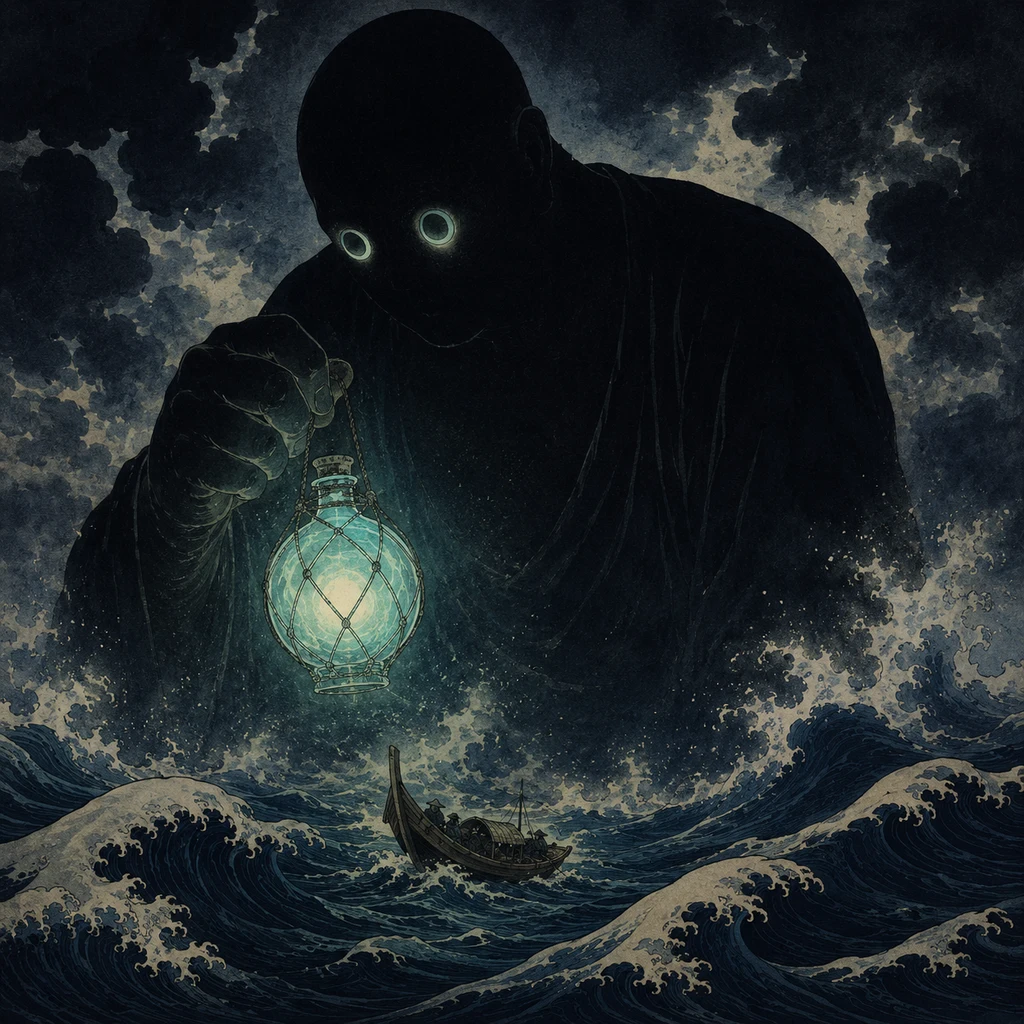
Umibōzu

umibōzu

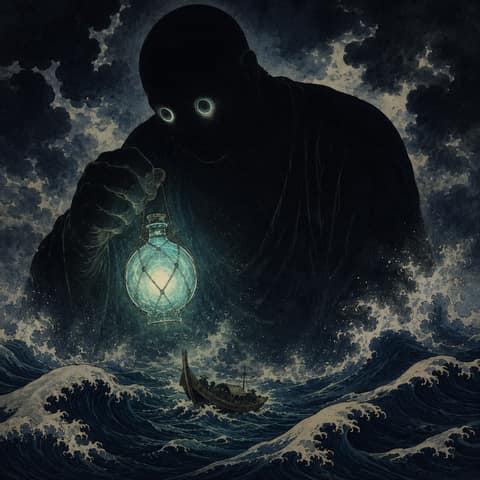
Umibōzu is a maritime apparition known along coasts throughout Japan and long feared especially by fishers. A calm sea is said to heave without warning, becoming an immense black shadow or the bald form of a Buddhist monk that blocks a vessel's path. Accounts rarely show a whole body; most describe only a head and shoulders rising above the water. It appears at night or in heavy seas, overturning boats and dragging people into the depths. Edo-period sources including the Wakan Sansai Zue (1712) and the Butsurui Shōko (1775) also record the name of a giant apparition standing at sea.

Read more

海坊主は、穏やかだった海面が突如盛り上がり、黒い坊主頭の巨体となって船の行く手に立ちはだかるとされる海上の怪異だ。全身が見えることは稀で、海面に頭や肩だけを突き出した姿で語られる。夜の海や時化の最中に現れ、船を転覆させ、海底へ引きずり込むと信じられた。『和漢三才図会』(一七一二年)など江戸期の文献にも海上の巨怪の名がみえ、その伝承は五島列島から愛媛・岡山・鳥取・和歌山・宮城まで、全国の漁村に広く分布する。宇和海の漁師たちもまた、この巨怪を恐れた。

愛媛に伝わる海坊主は、「柄杓を貸せ」と迫る話型を持つ。海坊主が「水を飲みたい」と柄杓を求め、正直に渡すと、それで海水を汲み入れて船を沈めにかかる。逃れる手はただ一つ ── 底を抜いた柄杓を渡すことだ。汲んでも汲んでも水が落ちるので、海坊主は船を沈められない。人智で海の怪を出し抜くこの機転の話型は、対馬や九州など各地の海坊主譚と共通し、漁師の知恵が物語の核をなしている。一方で、宇和海をはさんだ越智郡の大島などには、河童のように漁師へ相撲を挑む海坊主の記録もあり、同じ名の怪が地域ごとに異なる顔を見せる。

海坊主は、輪郭の定まった一個の妖怪というより、「海そのものの底知れぬ恐怖」が人の形を借りて現れたものと言うべきだろう。正体を溺死者の亡霊とする説、生贄を求めて零落した竜神・海神とする説が語られてきたのも、その茫漠とした恐怖ゆえだ。穏やかだった海面が前触れもなく盛り上がるという描写は、突然の時化や高波という、宇和海の漁師が日常的に直面した死の危険そのものである。深く入り組んだリアス式の湾は、ひとたび時化れば逃げ場に乏しい。海坊主の伝承は、この豊かな漁場が同時に死と隣り合わせの場でもあったことの、民俗的な記録なのだ。なお鳥山石燕は海坊主そのものは描かなかったが、海上に立つ盲僧姿の海座頭を『画図百鬼夜行』に収めており、近世の妖怪画にも海への畏れが繰り返し像を結んでいる。

川辺の河童 ── 猿猴とオソ

海の怪から川辺へ。宇和島の妖怪を語って最後に欠かせないのが、南予の河童 ── 猿猴である。標準的な皿と甲羅の河童像とは少し違う、この地ならではの姿をした水の怪だ。
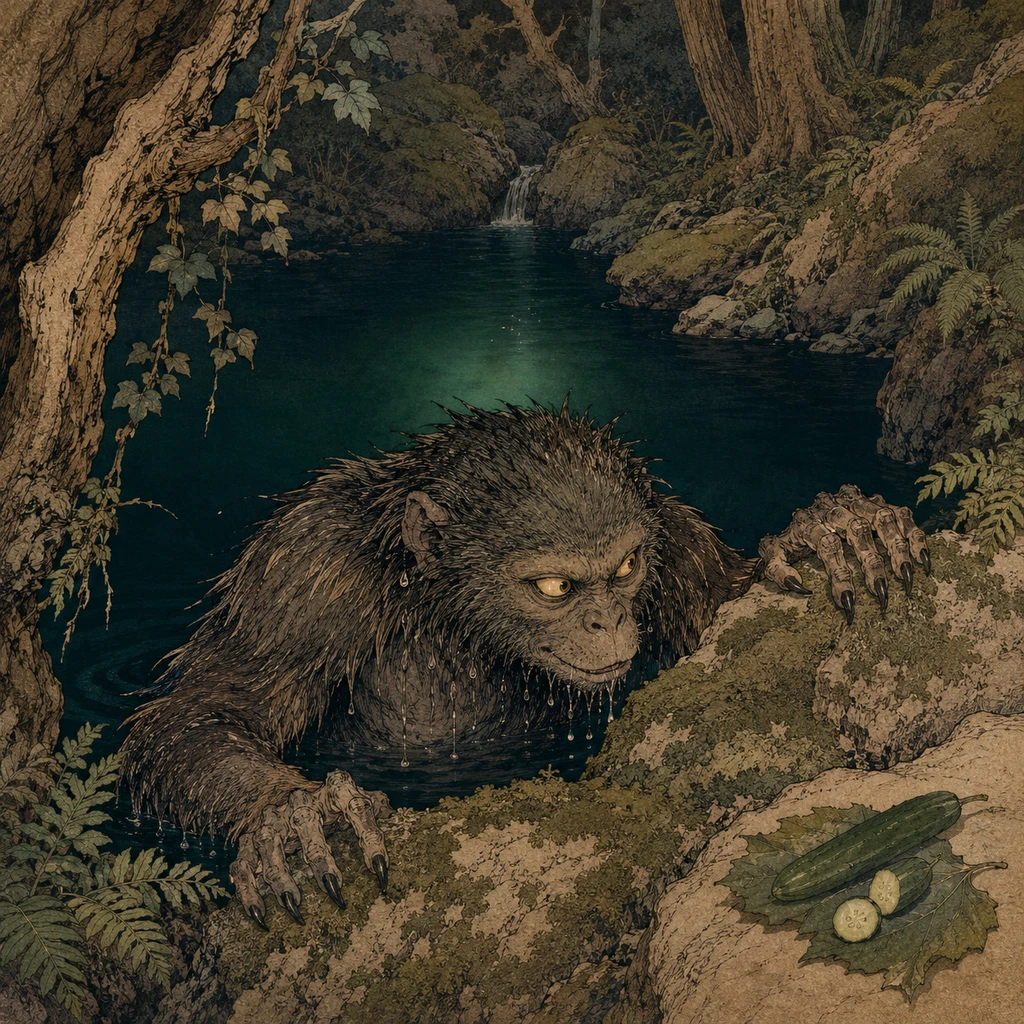
Enkou

enkou

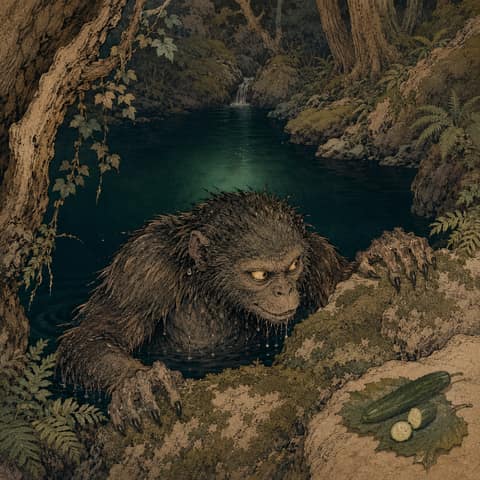
The *Enkou* is a dialect name for the *kappa* primarily used in the Nanyo region of Ehime Prefecture, as well as western Shikoku and the western Chugoku region. Unlike the standard *kappa* image with a dish on its head and a shell on its back, as its name (literally 'monkey') suggests, it is characterized by a body completely covered in hair and a monkey-like appearance, and is said to run agilely along the water's edge. In Ehime, besides *Enko* and *Enkou*, it is also called *Oso*, a name thought to originate from the overlapping of the *kappa* image with the ecology of the Japanese river otter (*oso*), which swims swiftly along the waterside. Dwelling in the deep pools of rivers, it comes ashore at night to play pranks on people, challenge them to sumo wrestling, exhibit a fondness for cucumbers, and drag children and horses into the water to extract their *shirikodama* (a mythical ball said to reside in the anus), fully inheriting the original nature of the *kappa*.

Read more

猿猴(えんこう)は、愛媛県南予をはじめ四国西部・中国地方西部で河童を指す方言名である。その名のとおり全身が毛におおわれ、猿のような姿で語られるのが特徴で、敏捷に水辺を駆けると伝わる[12]。愛媛では「エンコ」「エンコウ」のほか「オソ」とも呼ばれる。この「オソ」という呼称は、水辺をすばやく泳ぐニホンカワウソ(獺・オソ)の生態が河童像と重ね合わされたものと考えられている[13]。川の深い淵に棲み、夜になると陸へ上がって人にいたずらをし、相撲を挑み、胡瓜を好み、子どもや馬を水へ引き込んで尻子玉を抜くといった、河童本来の性格をそのまま受け継ぐ。

具体的な伝承の地が残っているのも南予の猿猴の魅力だ。宇和島市三間町の三間川には、川が大きく屈曲する元宗の麦臼渕(むぎうすぶち)に猿猴が棲んだという話が伝わる。子どもに相撲を挑み、胡瓜を盗み食いし、幼児を川へ引きずり込んで尻子玉を抜き、馬まで水中へ引き込んだといい、最後は満徳寺の僧に捕らえられて石臼につながれ、以後いたずらをやめて改心したと語られる[14]。河童が僧に捕らえられて詫び証文を入れる、あるいは改心するという筋立ては全国の河童譚に共通するが、それが宇和島の具体的な淵と寺の名を伴って語られるところに、この地の伝承の手触りがある。

南予の海辺へ目を移すと、猿猴は「オソ」の名で別の顔を見せる。佐田岬半島の三崎町串には、オソが海岸を渡ったとされる「オソゴエ(オソ越え)」の地名が残り、八幡浜市穴井では旧暦四月五日に「エンコウ祭」が河童祭の一種として営まれてきた[13]。河童が川だけでなく海辺にも現れ、地名や祭礼として暮らしに刻まれている ── これは、川と海が陸の暮らしと分かちがたく結びついた南予ならではの姿だ。

そして、これらの猿猴・オソ伝承の多くは、一九五〇年代頃まで南予の川に生きていたニホンカワウソの記憶と分かちがたく結びついている。すばやく泳ぎ、夜に陸へ上がり、ときに人里へ姿を見せた実在の獣が、河童という想像上の怪と重なり合い、淵の主としての猿猴像を育てた。今やニホンカワウソは絶滅したとされるが、その面影は猿猴という妖怪のなかに、あるいはオソという呼び名のなかに、確かに生き残っているのである。

結び ── 海と川のあわいに立つ南予の怪

非業の死から御霊神となった和霊、その御霊を鎮める夏祭りに首を振る牛鬼、宇和海の底から立ち上がる海坊主、川辺の淵に棲む猿猴 ── 宇和島・宇和海の妖怪は、いずれも海と川に生きた南予の漁村と、伊達の城下の歴史から生まれてきた。リアス式の豊かな海は恵みと死を同時にもたらし、城下の政争は怨霊を生み、その怨霊を鎮める祭が荒ぶる鬼牛を守り手に変えた。海と川と人の暮らしが交わるところに、これらの怪異は立っている。

そしてこれらは、過ぎ去った迷信ではない。和霊神社には今も「和霊さま」を慕う参拝が絶えず、宇和島の夏には牛鬼が町を練り歩き、須賀川へ神輿が駆け込む。三間の淵には河童の話が語り継がれ、佐田岬にはオソの地名が残る。宇和海の怪たちは、南予という土地の歴史と地理と暮らしを映しながら、姿を変えてなお、この海辺に息づいているのである。愛媛全体の妖怪文化のなかでの位置づけは、愛媛県の妖怪事典もあわせて読まれたい。
All yokai of Uwajima5

Complete list of yokai linked to Uwajima, including those not featured in the article above.

  • Umibōzu

    Umibōzu

    Legendary

    umibōzu

    The Umibōzu That Whispers, “Lend Me Oil”

    Aquatic YokaiCoasts of Chūgoku, Shikoku, and Kyūshū—especially the Gotō Islands, Uwajima, Mukatsuku in Nagato, the Bisan Seto, and the San'in shoreline

    Umibōzu is often understood as a yokai born from the fear and unease of people at sea. It has no single fixed form: sometimes it is no more than a black shadow, while in other stories it rises from the water as a colossal monk. One well-known variant has it draw close to a boat and whisper, “Lend me oil.” If the crew complies, it is said to kindle a fire and sink the vessel. Later variants add different details. Some say it has a collector's habit, gathering wrecked boats and fishing nets and piling them on the seabed; others describe it appearing with a glowing bottle or lantern in hand. It frightens those who meet it, yet it also stands for the unfathomable mystery of the sea and is regarded with awe as well as fear.

  • Ushi-oni

    Ushi-oni

    Legendary

    ushi-oni

    Ushi-oni, the Bull-Headed Spider of the Deep

    Animal ShapeshifterCoasts from Shikoku and the Chūgoku region to Musashi, especially around the Seto Inland Sea

    Edo-period picture scrolls and modern yokai encyclopedias often give Ushi-oni its best-known form: a sea demon with the head of a bull and the body of a spider. The image joins a primal fear of dark, deep water to the spider's refusal to release anything caught in its web. Cattle were closely bound to farming and water control in older Japanese life, and could be revered as sacred animals, messengers of a water deity, or divine beings in their own right, as in the case of Gozu Tennō. One influential interpretation therefore sees the Ushi-oni lurking in a deep pool as the fallen form of a violent water deity—a power once worshiped and feared that became a yokai as its cult declined. This is no mindless beast. Ushi-oni can supposedly kill a person merely by licking their reflection, and it uses Nure-onna as bait before striking at a vulnerable victim. Such arbitrary, absolute power retains the character of a dangerous deity. Its resentment is strong enough to keep a severed body part moving, leaving an ordinary person almost no hope of resistance. People instead appealed to higher Buddhist powers such as Senju Kannon, or brought Ushi-oni itself into a festival at the head of the mikoshi procession. Properly received as an aramitama—a rough and violent divine spirit—its ferocity could be turned toward defending the town from other evils.

  • Warei

    Warei

    Epic

    warei

    The Goryo of Uwajima: Yamaga Seibee Kinyori

    Spirit / GhostUwajima (Present-day Uwajima City, Ehime Prefecture) / Warei Shrine

    The *Warei* is an entity that embodies the dynamics of *goryo* belief—where a vengeful spirit transforms into an honorable spirit (*goryo*) and then into a guardian deity—within the early modern history of Uwajima. In life, Yamaga Seibee was a retainer who devoted himself to the reform of domain administration. His unnatural death (the Warei Disturbance) and the subsequent chain of lightning strikes and shipwrecks that struck the participants gave people a tangible sense of a curse. The spirit, initially enshrined out of awe and fear, reversed its nature when his innocence was publicly recognized, acquiring the divinity of 'Warei-sama' protecting fishing and industry. The herd of *Ushi-oni* that parades in the Warei Festival at Warei Shrine is a ritual device to comfort and pacify this *goryo*, showing how monsters (*ushi-oni*) and spirits (*warei*) are inextricably linked in Uwajima's festivals.

  • Enkou

    Enkou

    Rare

    enkou

    The Hairy Kappa of Nanyo: Enkou

    Water YokaiNanyo (Present-day southwestern Ehime Prefecture) / Mima Mugiusubuchi (Present-day Mima-cho, Uwajima City, Ehime Prefecture) / Sadamisaki Peninsula

    The *Enkou* is a representative variant from the Nanyo region, illustrating how the entity known as the *kappa* was spoken of with different forms and names depending on the region. Neither the dish nor the shell is prominent; instead, emphasis is placed on its hairy, monkey-like body, agile swimming, and its habitat in the deep pools of rivers. This image is formed by overlapping with the ecology of an actual beast, the Japanese river otter (*oso*). The legend of Mima Mugiusubuchi features the standard elements of *kappa* tales, such as sumo, cucumbers, *shirikodama*, and horse-pulling, while possessing a localized ending where it is tied to a stone mortar by a monk from Mantoku-ji Temple and reforms. 'Osogoe' on the Sadamisaki Peninsula and the Enkou Festival in Yawatahama convey that this water monster still breathes within place names and annual events today.

  • Hari-onago

    Hari-onago

    Rare

    hari-onago

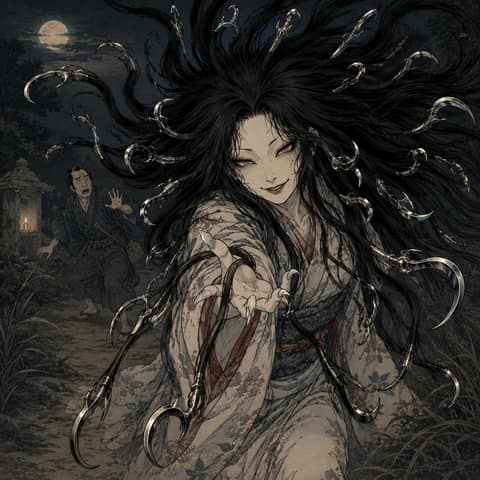
    Hari-onago, the hook-haired woman of Uwajima’s night roads

    Humanlike and hybrid yokaiUwajima region in southern Ehime Prefecture

    When viewing the Hari-onna as the "hook-haired woman of the Uwajima night roads," the fear of this yokai is not just that "her hair becomes a weapon." What appears first is the form of a beautiful woman; she does not threaten her victim from afar, but builds a connection by offering a smile. When smiled at by a stranger on a dark road, a person might smile back as a greeting. The Hari-onna takes that small response as a signal to undo her hair and expose the hooks. The anomaly only begins to move after waiting for the victim's reaction. The design of having fishhook-like barbs at the ends of her hair is so clear that it practically explains the name Hari-onna (Needle Woman). Needles are for piercing, but here they function at the tips of her hair to snag. They are not blades for cutting, but hooks for entangling those who flee. Disheveled hair is a sign of disorder and terror, and at the same time, it is the reversal of a beautiful woman's hair instantly changing into a capturing tool. Even though her hair was seen as part of her face and adornment, the moment she draws near, it becomes external hands that seize the victim's body. Treating the location in detail, the Hari-onna can be read as a yokai of the night roads in the Uwajima region, southern Ehime Prefecture. The official explanation on Mizuki Shigeru Road lists the location as the Uwajima region, Ehime Prefecture, and general summaries also append the name of Sakuraoka in the former Johen Town. However, the Hari-onna is not a yokai fixed to a specific shrine or ancient battlefield. Her location is the living sphere of the "Uwajima region," and her scene is the night road. Therefore, it is best to place the Uwajima region as the main axis on the map, and explain the details in the text. Rather than forcing a pin into an unverified point, positioning her as a mystery encountered on the roads of Nanyo fits this yokai better. When speaking of the Hari-onna, one cannot avoid the overlap with the Nure-onago. The Nure-onago is also known as a female yokai who smiles at people and stalks those who respond. Kenji Murakami states that because the traits of the Hari-onna are common with the Nure-onago of the Uwajima region, it is possible that Shigeru Mizuki emphasized the traits of the Nure-onago to create the "Hari-onna." This observation does not diminish the value of the Hari-onna. Rather, it is a prime example showing how a yokai is renamed and visually sharpened within an illustrated encyclopedia. If the Nure-onago is a yokai of smiles and obsession, the Hari-onna is a yokai given a memorable form in a single stroke with her "hooked hair." Comparing her to similar yokai makes the Hari-onna's position easy to see. The Iso-onna is spoken of as a female yokai who attacks people with her hair on the beach, and the Nure-onna is tied to the waterside and the grotesque form of a snake's body. The Kuchisake-onna creates modern urban horror through a question and facial reversal. The Ohaguro-bettari reveals a faceless visage with blackened teeth from beneath beautiful attire. The Hari-onna sits somewhere in between; she does not tear her face itself, but transforms her hair. She does not carry the strong presence of the sea like waterside female monsters, nor is she as modern as urban legends. She is a yokai who stands on the night roads of Nanyo with nothing but a smile and her hair. For this reason, keeping her description free from excessive added abilities makes it stronger. Explanations of her sucking massive amounts of blood, devouring souls, or flying around cities might be possible as later creative works, but they are not the core directly supported by the materials. Her solid outline consists of a woman's appearance, a smile, hooked hair, snagging and dragging men away, and the location of the Uwajima region. With smaller yokai, keeping this outline intact retains their scariness. The Hari-onna is a brief, sharp female yokai who makes victims realize—in the instant they return a friendly expression on a night road—that their expression was the very signal for her to capture them.

Read on ── other regions