Ubagami
Ubagami
Ubagami, the Old Goddess Who Saves the Women of Tateyama
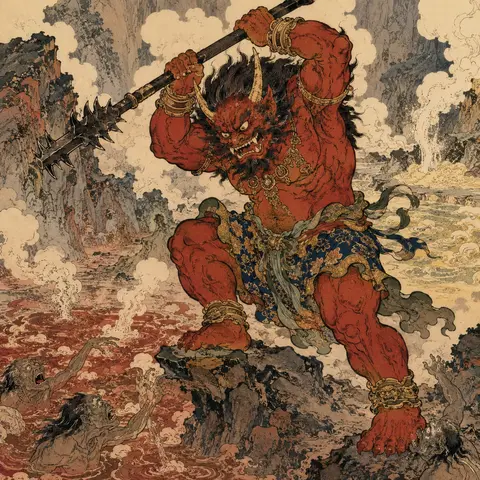
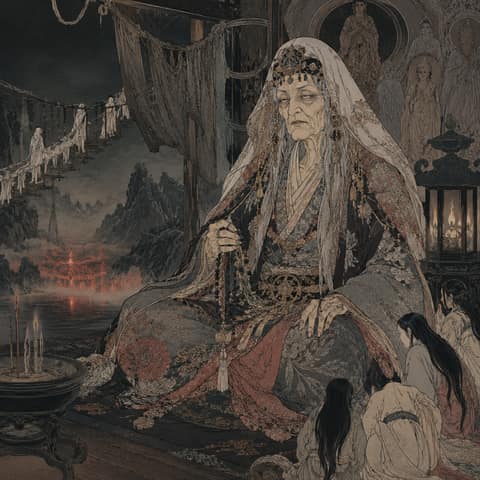
Ubagami is not a mere yōkai, but a divine entity embodying the very structure of Tateyama—a sacred mountain where Hell and the Pure Land coexist. In the Tateyama Mandala, Ubagami is depicted alongside underworld motifs such as Sai-no-Kawara (Children's Limbo), the Sanzu River, and the Blood Pool Hell. She possesses two faces: that of Datsueba, who judges the dead, and that of a savior who sends women off to the Pure Land. From the Middle Ages onward, the Blood Bowl Sutra (Ketsubonkyō) faith propagated the belief that women were destined to fall into the Blood Pool Hell due to the supposed impurity of childbirth. Amidst this profound terror, Ubagami functioned as the sole savior for female believers. It is said that the sixty-six statues lined up in the Ubadō of Ashikuraji reflect the "Sixty-Six Provinces Pilgrimage" (Rokujūrokubu), an ancient practice of dedicating one copy of the Lotus Sutra to each of Japan's sixty-six historical provinces. During the Nunobashi Kanjō-e, the experience of crossing the bridge blindfolded and praying in the darkness is nothing less than a ritualistic death and rebirth—letting one's earthly self die temporarily in order to be reborn anew before Ubagami. The tradition identifying her as the wife of Enma Daio creates a complementary dynamic: while the husband acts as the King of Hell who judges the dead, the wife, Ubagami, serves as the compassionate mother who saves women. This interplay brings a sense of yin-yang balance to the underworld cosmology of Tateyama.