Hiko-san Buzenbō
Hiko-san Buzenbō
Chief of the Tengu of Kyūshū — Hiko-san Buzenbō
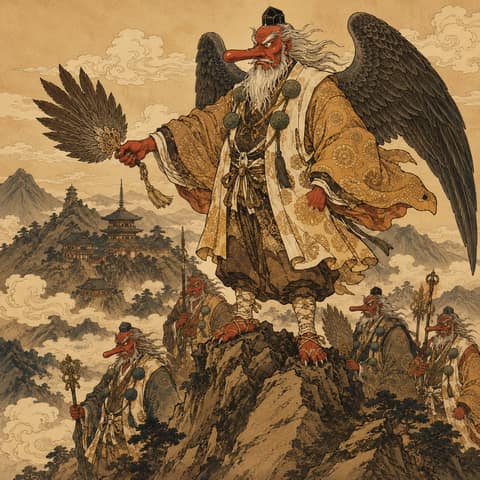
The key to reading Hiko-san Buzenbō lies in Hikosan—the vast sacred site that is one of the three great centers of Shugendō in Japan—and in the tengu's character of two faces, reward and punishment. The history of Hikosan Shugendō issues from the Nara-period monk Hōren. Taking as founder this monk, whom the Shoku Nihongi records as having been granted forty chō of field in Buzen Province in the third year of Taihō (703), Hikosan grew into a great center of Shugendō ranking with the Dewa Sanzan and Ōmine. The name of Buzenbō appears with certainty in the Kamakura-period engi the Hikosan Ruki (1213). This work likens the forty-nine grottoes bored into the peaks of Hikosan to Miroku's Tosotsu Heaven and made the eighteenth the "Buzen-kutsu," the seat of Buzenbō. This very system of grottoes is the matrix of the faith in Buzenbō as chief of the tengu of Kyūshū. The Edo-period scale of the "Three Thousand Eight Hundred Bō of Hikosan" tells of this sacred site's prosperity. What characterizes the tengu Buzenbō is the sternness of his reward and punishment. As the history of Takasumi Shrine transmits, upon those of greedy and evil heart he carries off children and sets fire to houses in chastisement. Conversely, the wishes of the upright and deeply devout he hears and grants, and them he guards. These two faces of reward and punishment symbolize, as a tengu's judgment, the strict precepts that a Shugendō mountain imposes and the grace shown to those who keep them. The dread of a child-snatching tengu and the faith of parents praying for their children's safety were the front and back of one and the same Buzenbō. The separation of Shintō and Buddhism in the first year of Meiji and the prohibition of Shugendō in Meiji 5 (1872) scattered the yamabushi of Hikosan and dismantled the world of the three thousand eight hundred bō. The institution of Shugendō was lost, but the tengu faith of Buzenbō lives on at Takasumi Shrine; chanted in the Muromachi Noh play Kurama Tengu and standing among the forty-eight tengu of the Tengu-kyō as the great tengu of Kyūshū, he is still feared as one who sits upon the peak of Hikosan. Chigiri Kōsai of tengu scholarship, too, placed him within the system of the great tengu of the many mountains.