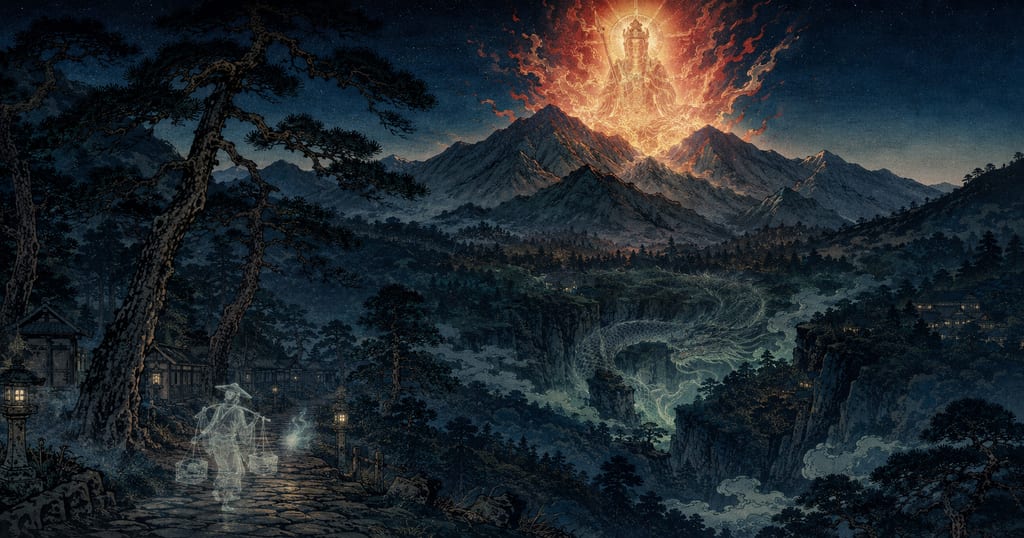
鈴鹿山脈の西麓、近江と伊勢を画する山なみのふところに、甲賀(こうか)の盆地はある。北に三上から続く湖南の丘陵、東に鈴鹿の高峰、その間を野洲川と杣川(そまがわ)が刻んだ谷あいに、水口・甲南・甲賀・土山・信楽の里が点在する。都にも近いが都ではなく、伊勢へ抜ける街道はあるが大きな城下は育たなかった ── この「奥まった山郷」という地形こそが、甲賀の妖怪と神々のかたちを決めている。滋賀県の妖怪事典が琵琶湖を中心に湖国全体の怪を束ねるのに対し、甲賀の怪は山と街道と薬と忍びという、この盆地だけの結び目から読み解かねばならない。
甲賀を貫く一本の糸を探すなら、それは「忍びと薬と狸」である。飯道山(はんどうさん)の修験が忍術を育て、その忍びが売り歩いた合薬(あわせぐすり)が近代の製薬郷を生み、信楽の土が化け狸を福の神に変えた。神もまた、この土地では火の光とともに山に降り、武士たちの盟約を見守った。地の底をめぐって蛇身となった領主の子、雨夜の松に灯る行商人の怨火、覗く者を戒める火の車輪 ── 甲賀の怪は、いずれも山深い盆地に生きた人々の暮らしと信仰から、まっすぐに立ちのぼってくる。
忍びと薬と狸の郷・甲賀
甲賀という土地の性格は、戦国期の「甲賀郡中惣(こうかぐんちゅうそう)」という自治のかたちに、よく表れている。強大な領主が郡全体を支配するのではなく、俗に甲賀五十三家と呼ばれた小領主たちが、合議によって地域の案件を決めた ── 全国でもまれな寄合(よりあい)の自治である[1]。長享元年(一四八七年)、室町幕府九代将軍・足利義尚が近江守護の六角氏を討とうとした「鈎(まがり)の陣」で、甲賀の地侍たちは六角方に味方し、山郷を知り尽くしたゲリラ戦で幕府の大軍を悩ませた。この地の利と団結が、のちに「甲賀流忍術」として語られる技の母胎となる。
その忍びの技を養った場所が、甲賀と信楽の境にそびえる飯道山であった。標高六六四メートルのこの山は、古くから修験道の行場であり、巨岩奇石をめぐる険しい行道(ぎょうどう)が、山伏たちの心身を鍛えた[2]。山中を駆け、薬草を識(し)り、火を扱い、呪法を心得る ── 修験者の山岳修行で培われた身体技法と知識が、そのまま忍びの術へと流れこんだと考えられている[2]。甲賀の忍術が、ただの戦闘技術ではなく、どこか宗教的な神秘の匂いをまとうのは、その根が山の信仰にあるからだ。
そして忍びは、薬を売り歩いた。山で覚えた薬草の知識をもとに合薬をこしらえ、行商人や旅人に身をやつして諸国をめぐる ── 情報収集と生計を兼ねたこの生業が、明治の世になると「甲賀の売薬(ばいやく)」という地場産業に結実する。忍術の伝書には、忍びが薬草を栽培し、みずから調合してさまざまな薬を作ったことが記され、行商に身をやつして諸国を巡る手立ては、忍びの常套でもあった。もともと飯道山の山伏が護符を配って歩いた配札の習いが、薬を運ぶ生業へと姿を変えたとも語られる。明治後期には製薬業者五十一、薬種商百十、行商人四百余を数え、甲賀は富山・奈良と並ぶ配置薬の三大産地に育った[3]。明治十七年(一八八四年)に護符の配布が禁じられると、忍びの末裔たちは配置薬一本へと業をしぼっていき、今も甲賀に製薬会社が多いのは、その流れを継いだからだと語られる。山と薬と忍び ── この三つは、甲賀では分かちがたく一つに結ばれている。
火光の神 ── 油日大明神と甲賀の総社
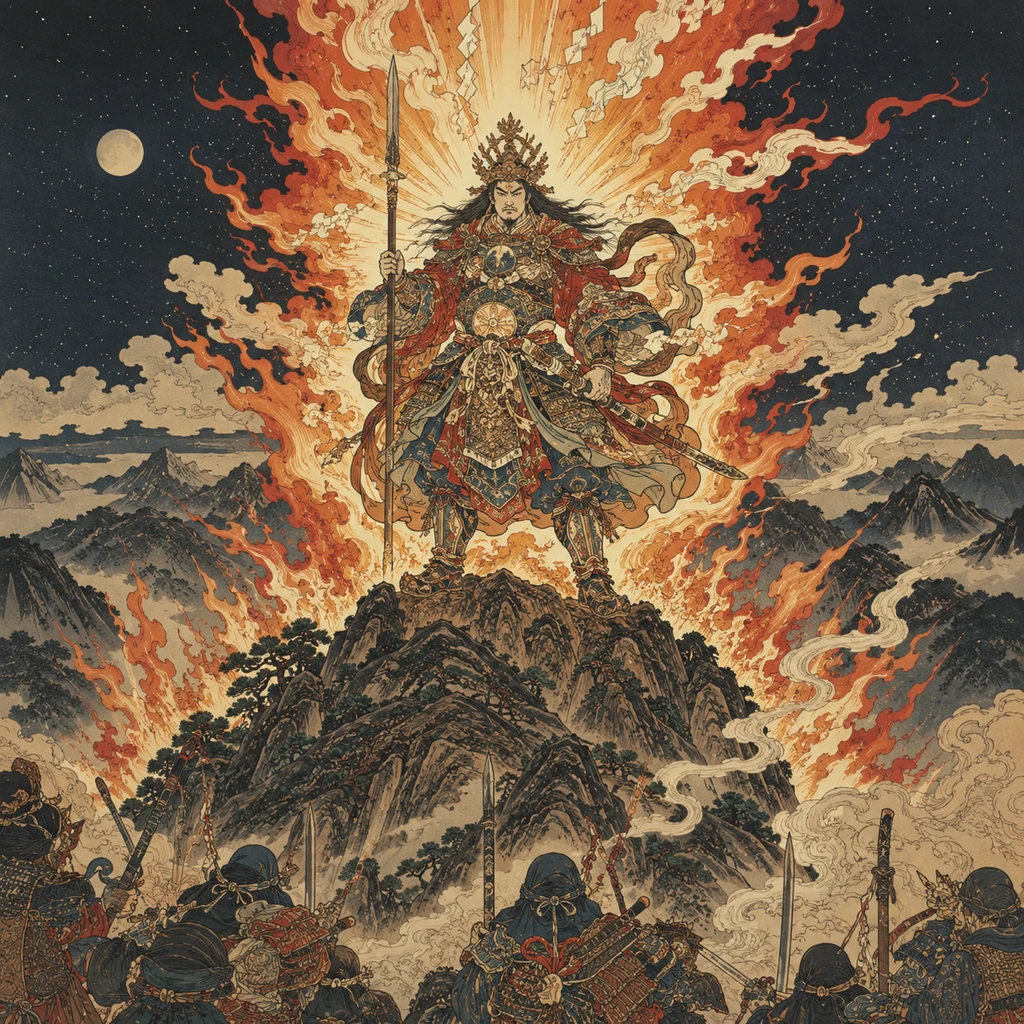
Aburahi-daimyojin
Aburahi-daimyojin is the enshrined deity of Aburahi Shrine, situated at the foot of Mount Aburahi, a sacred peak in Koka District, Omi Province. It is a deity worshipped as the god of oil and fire. According to shrine legend, a deity descended upon the summit of Mount Aburahi emitting a light like burning oil, and the name "Aburahi" (Oil Sun/Fire) originated from this auspicious sign. At the summit stands the Take Shrine, where the water goddess Mitsuhanome-no-kami is enshrined, preserving an ancient form of mountain worship that reveres Mount Aburahi itself as a sacred body (shintaisan). Records show that the deity of Aburahi received the Junior Fifth Rank, Lower Grade in the first year of the Gangyo era (877) during the Heian period, indicating it has been an ancient shrine revered since long before that time.
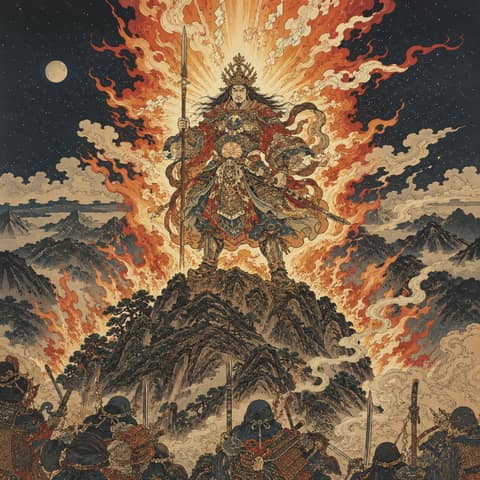
Read more甲賀の精神的な中心に立つのが、甲賀町油日に鎮座する油日神社と、その背後にそびえる神体山・油日岳である。社伝は、油の火のような光を放ちながら神が油日岳の山上に降臨し、その瑞祥(ずいしょう)から「油日」の名が起こったと伝える[4]。山上を神の坐(ま)す処とあおぐこの形は、人が社殿を建てて神を迎えるより古い、山そのものを神体とする山岳信仰の名残りである。平安期の元慶元年(八七七年)に油日神が従五位下を授かった記録があり、甲賀でも指折りの古社であることがわかる[4]。
- Aburahi-daimyojinあぶらひだいみょうじん
 Koga SaburoKoga Saburo
 Jiosenbiじおうせんび
 Katawaguruma (One-Wheeled Carriage)kah-tah-wah-GOO-roo-mah
油日大明神が興味深いのは、降臨の火光・聖徳太子の縁起・甲賀武士の総社という、三つの顔を一柱に重ねている点である。社伝は聖徳太子の創建と伝え、中世には甲賀地域随一の名社「甲賀の総社」と仰がれた[5]。先に触れた甲賀郡中惣の地侍たちは、この社を寄合と結集の場とし、聖徳太子を軍神とあおいだ。油日神社の境内は、その自治の記憶を伝える「甲賀郡中惣遺跡群」の一つとして国の史跡に指定されている[1]。尾張藩に仕えた甲賀者の子孫に伝わる古文書のうち、忍びたちが交わした起請文「盟文之事」にも油日大明神の名が挙がり、この神が忍びの者たちの誓いの対象であったことをうかがわせる[6]。火を司り、灯火や火薬を扱う者を守る神格は、近世以降、油業界の信仰も集めた[5]。山頂の岳神社には水神の罔象女神(みつはのめのかみ)がまつられ、油日岳そのものを神体山とあおぐ古い形を今にとどめている[5]。火の神を麓に、水の神を頂に置くこの配置は、火薬と水、攻めと守りの両方を知らねば生きられなかった忍びの里の感覚と、どこか響きあっているようにも見える。降臨の火光、神体山、軍神、火と油の守り神 ── これだけの性格が一柱に凝縮するところに、忍びの郷・甲賀が育てた特異な神のかたちが見える。
地底をめぐった領主 ── 甲賀三郎
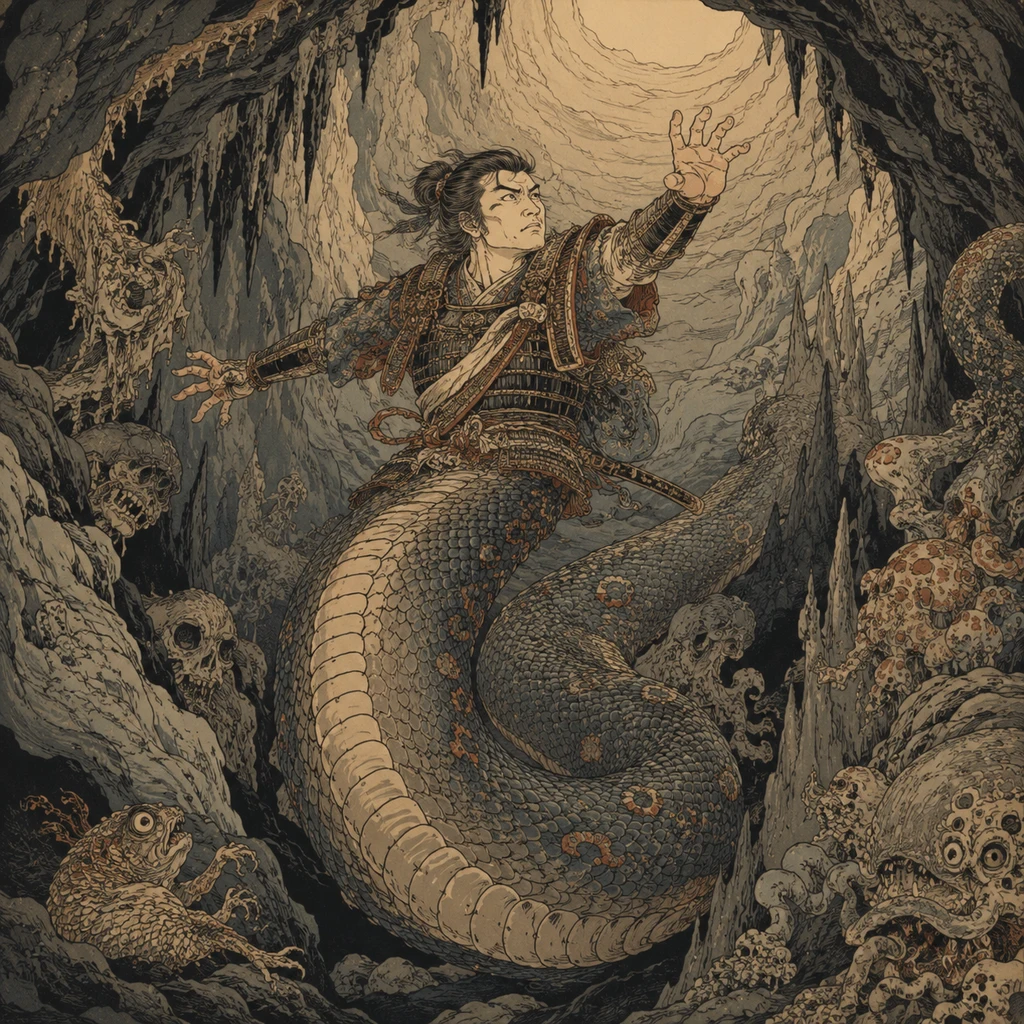
Koga Saburo
Koga Saburo is the protagonist of a medieval Japanese legend found in the "Origins of Suwa" chapter of the Shintosho, recounting an epic subterranean journey and his transformation into a serpent. Described as the third son of a powerful family in the Koka District of Omi Province, he enters a deep cave in Mount Tateshina in Shinano Province while searching for his missing wife, Princess Kasuga, only to be trapped underground due to his older brother's jealousy. After a long and arduous wandering through the subterranean otherworld, he finally returns to the surface, but his body has transformed into that of a giant serpent or dragon, ultimately linking him to the worship of the Suwa Upper Shrine's deity. Rather than conflating him with Takeminakata-no-Kami from the Kojiki, Koga Saburo is best understood as the product of an alternate medieval Suwa origin myth—an archetypal story of "a warrior who attains godhood by passing through the form of a serpent".
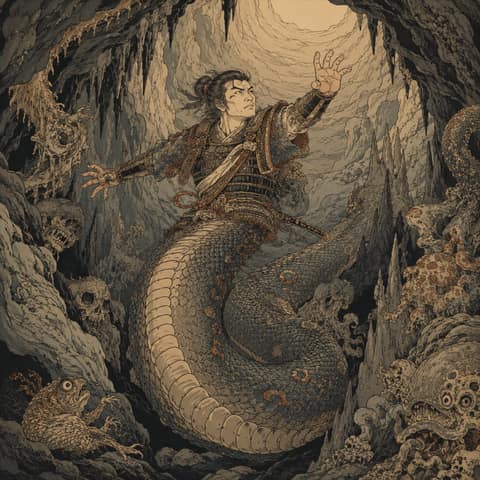
Read more甲賀の名を全国の説話史に刻んだのが、甲賀三郎の物語である。中世の説話集『神道集』の「諏訪縁起の事」系によれば、甲賀の有力者の三男・三郎は、信濃国の蓼科山(たてしなやま)の人穴に分け入って妻を探すうち、兄の嫉妬によって地の底に閉じこめられてしまう[7]。地下の異郷を長く巡った末にようやく地上へ帰り着くが、その身はすでに蛇、あるいは龍の姿に変じており、やがて諏訪上社の明神へと結びつけられる。武士が地底を経て蛇体となり、神へと昇る ── この壮大な転生譚の出発点が、甲賀の地に置かれているのである。滋賀県の妖怪事典では地底巡りの筋を宏観に紹介したが、ここではこの物語が甲賀でどう読み継がれたかに目を向けたい。
甲賀三郎を、古事記の建御名方神(たけみなかたのかみ)とは別系統の、中世諏訪縁起が生んだ「人が異界を経て神に至る」物語型として見るのがよい。妻の春日姫を伊吹山で天狗にさらわれた三郎が、信濃の人穴を伝って地底の異郷へ降り、兄に綱を切られて取り残される ── その筋立ては、伊吹・蓼科・諏訪という広い地理を結びながら、しかし主人公の出自を一貫して甲賀の領主の子に据えている。地底では維縵(いかん)国の王女と契りつつもなお地上を恋い、鹿の生肝でこしらえた餅を食べて長い帰路をたどったと語られる異界の描写は、山と穴に満ちた甲賀の地形が育てた想像力を思わせる。研究の世界でもこの伝説は注目されてきた。青木京子は太宰治『魚服記』の素材論のなかで、甲賀三郎を「龍になった甲賀三郎」伝説として論じ[8]、多ヶ谷有子は地底・異界・敵対者・帰還という構造に着目し、これを国際的な説話分類のAT三〇一型に属するものとして比較研究の対象にしている[9]。地の底に七十二もの国があったと語る雄大な異界観は、日本の異郷譚のなかでも際立っている。近世には『甲賀三郎窟物語』[10]として浄瑠璃にも仕立てられ、諏訪の神話にとどまらず、甲賀・伊賀・芸能の領域へと広がっていった[10]。山に囲まれた甲賀の盆地が、地の底という究極の異界へ通じる入口として想像されたことに、この土地の地霊(ちれい)めいた奥行きが感じられる。甲賀三郎の物語が、近江の一領主の伝承にとどまらず、遠く諏訪の神格や国際説話の型にまで届いていくのは、地に潜って蛇となり神へと甦るという主題が、人の生き死にと再生をめぐる根源的な想像力に触れているからだろう。山深い盆地に生きた人々が、地の底にもう一つの国を夢見たこと ── その夢の跡が、甲賀三郎という名のもとに残されている。
夜道の火と車輪 ── 地黄煎火と片輪車
山の神と説話の英雄が甲賀の「表」だとすれば、街道の夜道に転がる怪火と火の車輪は、その「裏」である。どちらも、人の往来する道のほとりに棲みついた、土俗の怪だ。
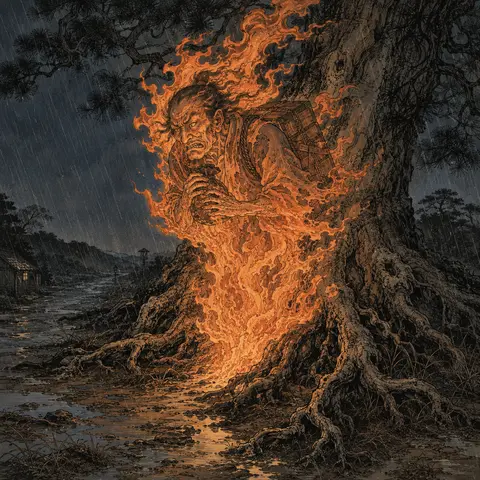
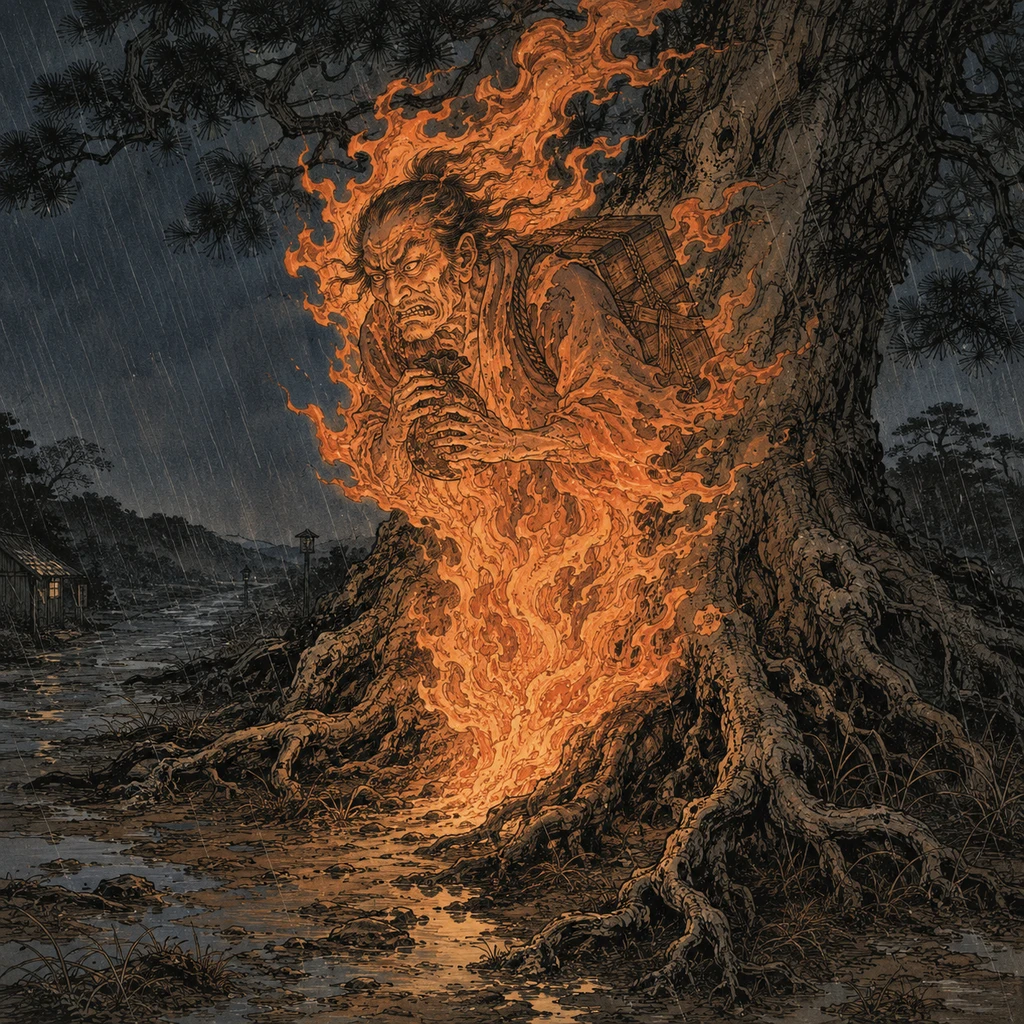
Jiosenbi
Jiosenbi (lit. Jiosen Fire) is a mysterious fire said to appear at Izuminawate in Minakuchi, Omi Province. Jiosen was a candy-like sweet made by boiling down the roots of the Rehmannia plant (Jio), sold by peddlers during the Edo period as a confection that doubled as medicine. Legend has it that a man who made his living selling Jiosen was murdered at Izuminawate by bandits after his savings. His obsession with his money and his deep regret turned into a mysterious fire on rainy nights, floating and flying around a large tree called the Hizagashira Pine. Rather than the fire itself, the focus on the peddler's delusion transforming into fire shows the cause-and-effect narrative typical of early modern ghost fire tales.
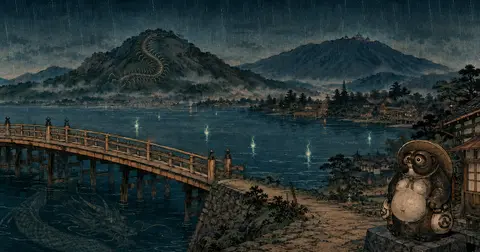
Read more地黄煎火(じおうせんび)は、近江国水口の泉縄手(いずみなわて)に出るとされた怪火である。地黄煎とは、地黄(ジオウ)の根を煎じて練った飴状の甘味で、江戸期には薬を兼ねた菓子として売り歩かれた ── 薬の郷・甲賀らしい品である。速水春暁斎(はやみしゅんぎょうさい)の絵本『絵本小夜時雨(えほんさよしぐれ)』(享和年間)によれば、その地黄煎を商って暮らしていた男が、貯えた銭をねらう盗賊に泉縄手で殺され、金への執着と無念が、雨の降る夜の怪火となって、膝頭松(ひざがしらまつ)という大木のあたりを漂い飛ぶようになったと伝える[11]。挿絵では、単なる火の玉ではなく、松の根方から立ちのぼる地黄煎売りの大きな幻影として描かれることもあり、被害者の妄執が火と人影の双方に現れるところに、この怪のすごみがある。
舞台の水口は、東海道五十三次の宿場町であった。膝頭松の並ぶ街道筋を、薬を負った行商人や旅人が日々行き交う ── そんな日常のすぐ裏に、行き倒れや辻斬りや盗賊といった旅の不安が貼りついていた。地黄煎火は、その不安を、地黄煎売りという身近な行商人の死に重ねて語った怪火だと読める。火そのものよりも、銭を奪われて死んだ男の妄念が火に転じたという因果のかたちに、近世怪火譚らしい人間くささが宿っている。隣りあう土山宿(つちやまじゅく)もまた、鈴鹿峠を控えた東海道の難所の宿で、「坂は照る照る鈴鹿は曇る」と歌われた峠越えの不安が、街道筋にいくつもの怪異を呼んだ。甲賀の怪火は、湖辺ではなく、こうした山あいの街道に灯るところに、この盆地ならではの色がある。
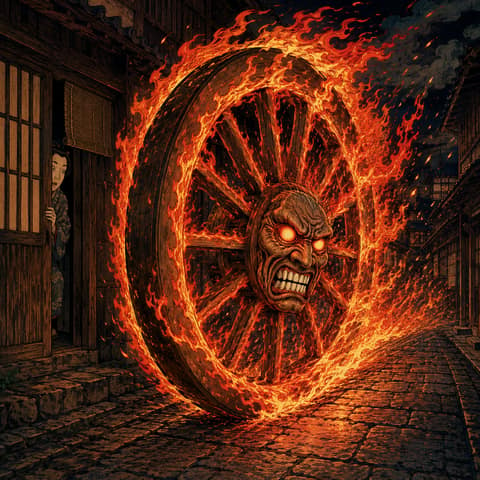
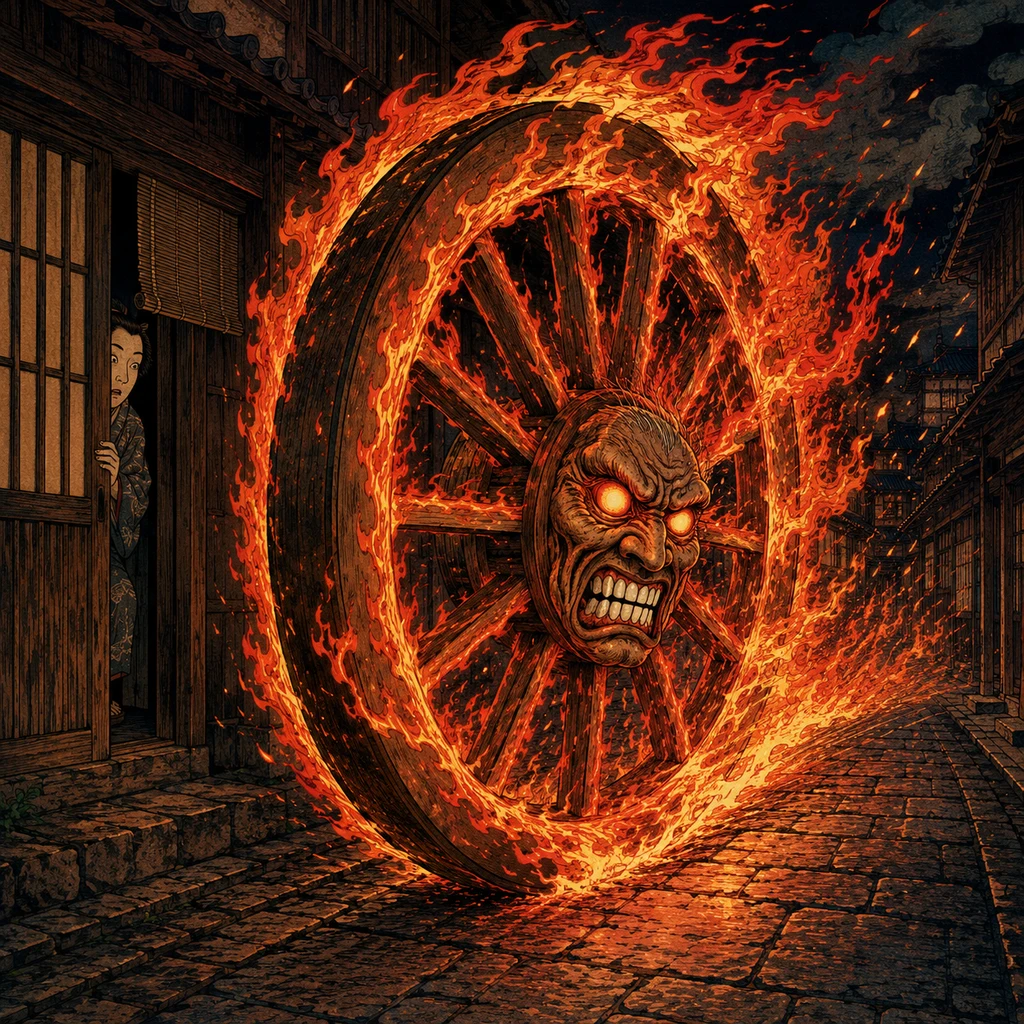
Katawaguruma (One-Wheeled Carriage)
Katawaguruma is a night apparition of a single ox-cart wheel wreathed in flames, racing down dark roads with a human face glaring from its hub. Recorded in early Edo-period kaidan and essays, it was feared to bring misfortune to those who saw it—and even to those who merely gossiped about it. Accounts differ on whether the face is male or female. Sightings are tied to Kyoto and Omi, and the creature appears in contemporary paintings. Scholars often discuss its connection to the wheel-demon Wanyūdō.
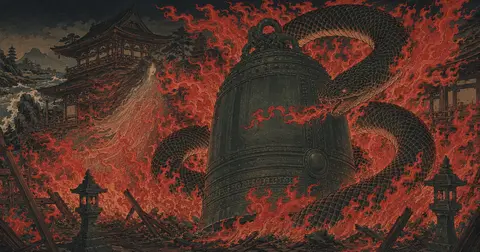
Read moreもう一つ、甲賀の夜道を轟(ごう)と転がるのが片輪車(かたわぐるま)である。炎に包まれた牛車の片輪だけが夜道を駆け、車輪の中心に人の顔が現れるという怪で、見た者・覗いた者に災いが及ぶ、あるいは噂するだけでも祟ると畏れられた[12]。この怪が面白いのは、京の話型と甲賀の話型とで、語り口がはっきり分かれている点だ。延宝五年(一六七七年)刊の『諸国百物語』[13]では、京の東洞院(ひがしのとういん)に火の片輪車が現れ、車輪中央の凄まじい男面が小児の足をくわえて「我を見るより我が子を見よ」と叫び、覗き見た女の子の足が裂かれていたとする[13]。覗いた者を容赦なく罰する、恐ろしいだけの怪である。
ところが、寛保三年(一七四三年)刊の『諸国里人談』[12]が伝える近江国甲賀郡の片輪車は、まるで違う後味を残す。ここでは女の乗る片輪車が夜ごと徘徊し、これを覗いた女が我が子をさらわれてしまう。だが嘆いた母が「罪科(つみとが)は我にこそあれ小車(おぐるま)のやるかたわかぬ子をばかくしそ(罪は私にあるのです、行き場のないこの子だけは隠さないでください)」という和歌を戸口に貼ると、翌夜あらわれた片輪車はこれを詠み上げ、「やさしの者かな」と子を返して姿を消したという[12]。男面が子を奪う京の話型と、女が乗り和歌で子を取り戻す甲賀の話型 ── 同じ怪が、土地を移ると、これほど対照的な物語をまとう。一首の歌で恐ろしい怪が鎮まるという甲賀の語りには、言葉の力を信じ、怪とすら歌を通わせようとした、山郷の人々のやさしさが透けて見える。鳥山石燕が同じ説話から描いた輪入道(わにゅうどう)とは、もともと同一系統の異形だと考えられている。
信楽の狸と忍術 ── 怪が福になる土地
甲賀の南、信楽(しがらき)の谷は、日本六古窯(ろっこよう)の一つに数えられる焼物の里である。聖武天皇の紫香楽宮(しがらきのみや)が置かれた古い土地で、良質の陶土に恵まれ、中世から壺や甕(かめ)を焼いてきた。その信楽が今、全国に知られるのは、店先に立つ愛嬌(あいきょう)ある狸の置物のおかげだろう。
信楽焼の狸は、古典の化け狸そのものではなく、商売繁盛の縁起物として近代に育った造形である。明治期から狸の置物を好んで作っていた京都・清水の陶工、藤原銕造(ふじわらてつぞう)が、昭和十年ごろ信楽へ移り住んだことが、その始まりとされる[14]。全国に名が広まる契機となったのは、昭和二十六年(一九五一年)、戦後巡幸の昭和天皇が信楽を訪れた折、沿道に日の丸の小旗を持たせた狸の置物がずらりと並べられ、その情景に心を動かした天皇が御製を詠んだという逸話が新聞で報じられたことだった[14]。(滋賀県の妖怪事典に、笠と徳利と通帳を提げた「八相縁起(はっそうえんぎ)」の意味を詳しく記したので、そちらも参照されたい。)
信楽の狸が広く愛されたのには、土地の事情もある。良質の陶土と、登り窯を支える里山の薪、そして都にも伊勢にも通じる街道 ── 焼物を運び、売りさばく流通の道が、この谷には早くから通っていた。化け狸という古い土俗の信仰と、近代の縁起物としての造形とが、信楽の土の上で出会い、笠をかぶり徳利を提げた愛嬌ある姿に結晶したのである。人を化かしてきたはずの狸が、いまは店先で福を招いて立っている ── これは、甲賀という土地の怪との付き合い方を、よく象徴している。地の底をめぐった領主は神となり、雨夜の怨火は哀れな行商人の物語として語り継がれ、恐ろしい火の車輪は一首の和歌で子を返した。そして山の修験は忍びを生み、忍びの薬は郷の産業となった。甲賀の怪は、恐れられたまま放置されるのではなく、神に、物語に、縁起物に、生業へと姿を変えて、人々の暮らしのなかへ繰りこまれていく。鈴鹿の山に抱かれたこの盆地では、神と妖怪と人とが、いつも同じ谷あいで隣りあって生きてきた。甲賀の妖怪をたずねることは、忍びと薬と狸の郷の、その奥行きをたずねることにほかならない。