Kurozuka
kurozuka
The Tragedy of Adachigahara: The Hag of Kurozuka
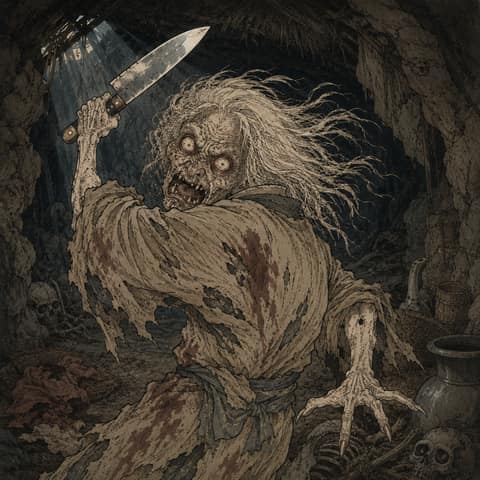
The Embodiment of the Abyss of "Karma". Kurozuka (Iwate) is not merely a flesh-eating monster lurking in the mountains. Originally a refined wet nurse for Kyoto aristocrats, she resorted to the madness of murder to cure her mistress's illness, only to plunge into utter insanity and devolve into a demon after unwittingly killing her own daughter. This sequence of events is Japanese literature and theater's most harrowing depiction of "maternal devotion gone rogue," "blind loyalty," and the "inescapable retribution of karma." Her image, brandishing a butcher knife, radiates not just monstrous terror, but the bottomless sorrow and despair of a human toyed with by the cruelty of fate. The "Taboo of Looking" and the Boundary to the Otherworld. In the Kurozuka legend, the taboo of "do not look into the inner room" plays a pivotal role. The front room of the hut represents the "mundane human space," while the inner room is the "otherworld of death and demons" filled with white bones. The moment the traveling monk breaks the taboo, everyday reality collapses, exposing the "monstrous abnormality" hidden within the old woman. This is a perfect medieval adaptation of the ancient Japanese mythic motif of "forbidden viewing" (like Izanagi looking at Izanami in the underworld), symbolizing how terrifyingly fragile the boundary between human and demon, life and death, truly is. Immortal Rebirth Through Art and Tourism. Continuously reinterpreted across Noh, Joruri, Kabuki, and Ukiyo-e (such as Yoshitoshi's bloody prints), Kurozuka established itself as a core repertoire of Japanese theater history. In the modern era, it remains vividly alive as an "active folklore" through works like Baku Yumemakura's *Onmyoji*, Osamu Tezuka's manga, and the tourism efforts in Nihonmatsu City, Fukushima (Adachigahara Furusato Village, Kurozuka Historical Site). Kurozuka has transcended a simple ghost story, elevating into an eternal symbol exploring the philosophical question of the "demonic nature lurking within the human heart."