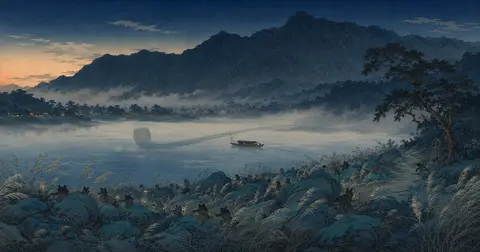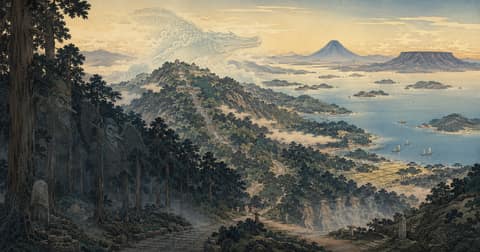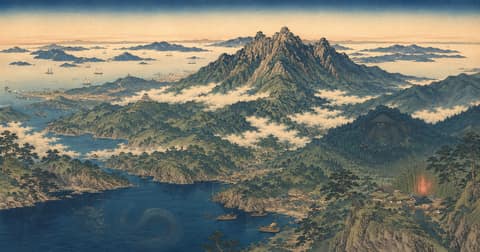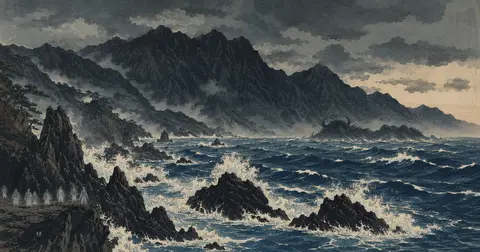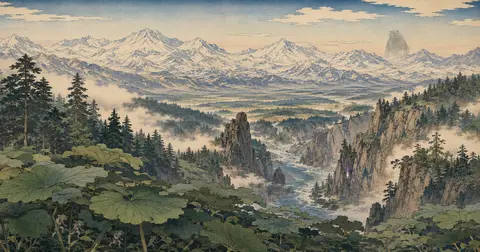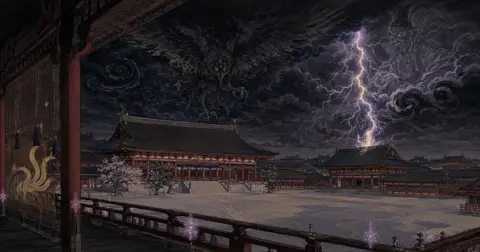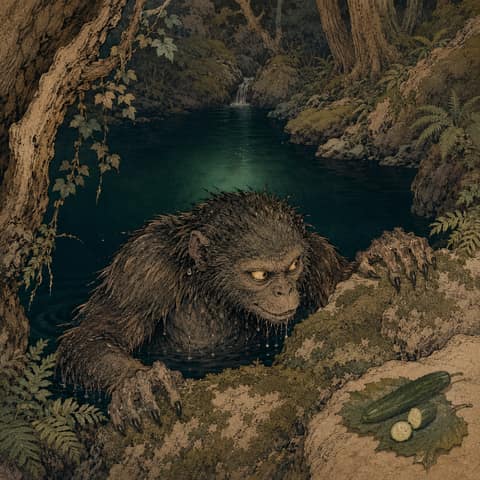
伊予 ── 四国の北西に開けた、瀬戸内海と宇和海に挟まれた古い国の名である。律令の昔、伊余国造の地に久味・風速・怒麻・小市の四つの国造領を併せて伊予国は成立した。その国府は越智郡、いまの今治の地に置かれ、天平の詔のもと伊予国分寺が建てられて、四国きっての文物の集まる国となった。だが伊予を伊予たらしめているのは、役所や寺よりもむしろ一つの湯である。松山の東、伊佐爾波の岡のふもとに、神代から湧き続けると伝わる道後の湯がある。
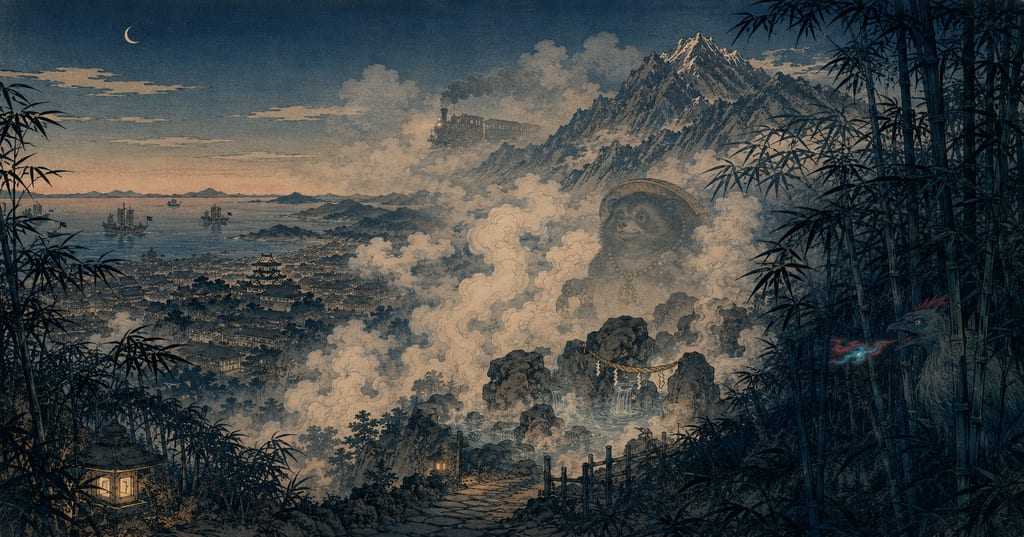
この国の怪異を貫く軸は、湯と海である。神が病を癒した最古の湯、皇族が幾度も行幸した聖なる泉、瀬戸内を駆けた水軍の祈り、西日本最高峰にこもった行者の声 ── 古代から人が絶えず往き来したこの地に、火を吐く怪鳥も、八百八匹を率いる古狸も、文明開化の鉄路に化けた獣も生まれた。現代の愛媛県の妖怪文化を一望する事典は別に編んだ。本稿はその源流、令制国・伊予という古い地層を、道後の湯と瀬戸内の海を手がかりに掘り下げる。県全体の宏観は愛媛県の妖怪事典に譲り、ここでは古代伊予の記憶に分け入りたい。
道後の湯と瀬戸内の古代伊予
伊予の歴史を語るなら、まず道後温泉から始めねばならない。有馬・白浜とともに日本三古湯の一つに数えられるこの湯は、文献に名を残す日本最古級の温泉である。そしてその起源は、史実より前、神話の時代にさかのぼる。
『伊予国風土記』の逸文は、出雲から伊予へ渡った大国主命と少彦名命[1]の物語を伝える。旅の途中、相棒の少彦名命が急病に倒れたとき、大国主命は大分の速見の湯を海底に管を通して道後へ導き、ちいさな少彦名命を手のひらに載せて湯に浸した。神はたちまち元気を取り戻し、喜びのあまり傍らの石の上で踊ったという。その石は「玉の石」として今も道後の湯のかたわらに祀られ、道後温泉本館の湯釜には二神の姿が彫り込まれている。神が神を癒した湯 ── これが伊予の聖性の原点である。
歴史の層に入っても、この湯の格は高い。同じく『伊予国風土記』逸文は、法興六年(五九六年とされる)に厩戸皇子すなわち聖徳太子が病の療養に道後を訪れ、伊佐爾波の岡に登って碑文を遺したと記す。これがいわゆる伊予湯岡碑(道後湯之岡碑)[2]だが、碑の現物はついに発見されておらず、太子来湯そのものも文献の伝承の域を出ない。確証と伝承を分けて言えば ── 神話の湯治譚も太子の碑も「そう伝わる」話であって、考古学的に裏づけられた史実ではない。ただ『日本書紀』には景行天皇から舒明天皇・斉明天皇・中大兄皇子に至る幾人もの皇族行幸が記され、古代の中央権力がこの西国の湯を繰り返し志向したことは、ほぼ動かない。聖なる湯という観念が、はるか古代から伊予という土地に刻まれていたのである。
律令の伊予は、こうした聖なる湯を抱えながら、行政の地でもあった。国府は越智郡、いまの今治の地に置かれたとされる。正確な所在地は今も特定されていないが、天平十三年(七四一)の聖武天皇の詔を受けて建てられた伊予国分寺が今治市国分に現存し、その周辺が国府域だったと考えられている。伊予国そのものは、古代の伊余国造の領域に、久味・風速・怒麻・小市の四国造の地を併せて成り立った。複数の小さな国造の地が一つの令制国へまとめられた ── この多元的な出自が、後の伊予に海・山・町それぞれに異なる怪異を抱え込ませる素地になったとも読める。
その湯のほとりに本拠を据えたのが、伊予を中世まで支配した豪族河野氏[3]である。河野氏は古代豪族越智氏の流れを汲み、風早郡河野郷を出自として、室町期には道後に湯築城を築いて伊予守護の座に就いた。源平合戦では河野通信が源頼朝に与して伊勢平氏と戦い、蒙古襲来のときには河野通有が「河野の後築地」として知られる勇将ぶりで名を馳せた。時宗を開いた一遍上人が、この河野一族の出であることもよく知られる。湯と城と信仰が一つの土地に重なる ── 道後とは、伊予の権力と聖性が交わる結節点だったのだ。古代伊予の地形と歴史を踏まえたうえで、いよいよこの国の怪異へ分け入ろう。
火を吐く怪鳥 ── 波山
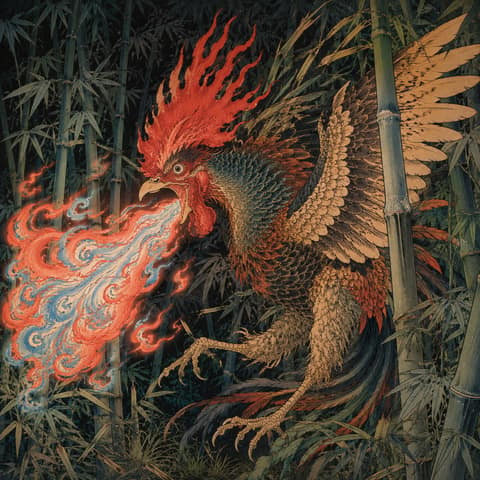
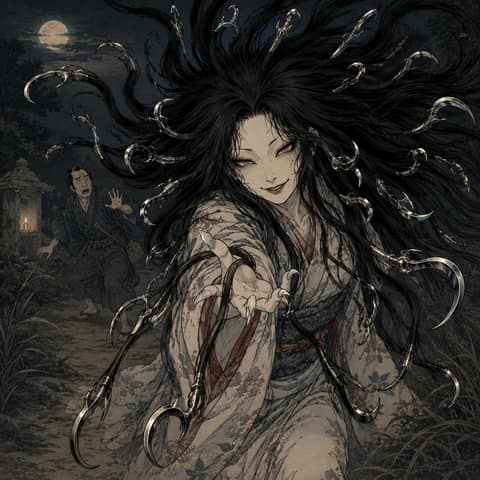
伊予の山深い竹薮には、口から火を吐く赤い鳥が棲むという。波山である。
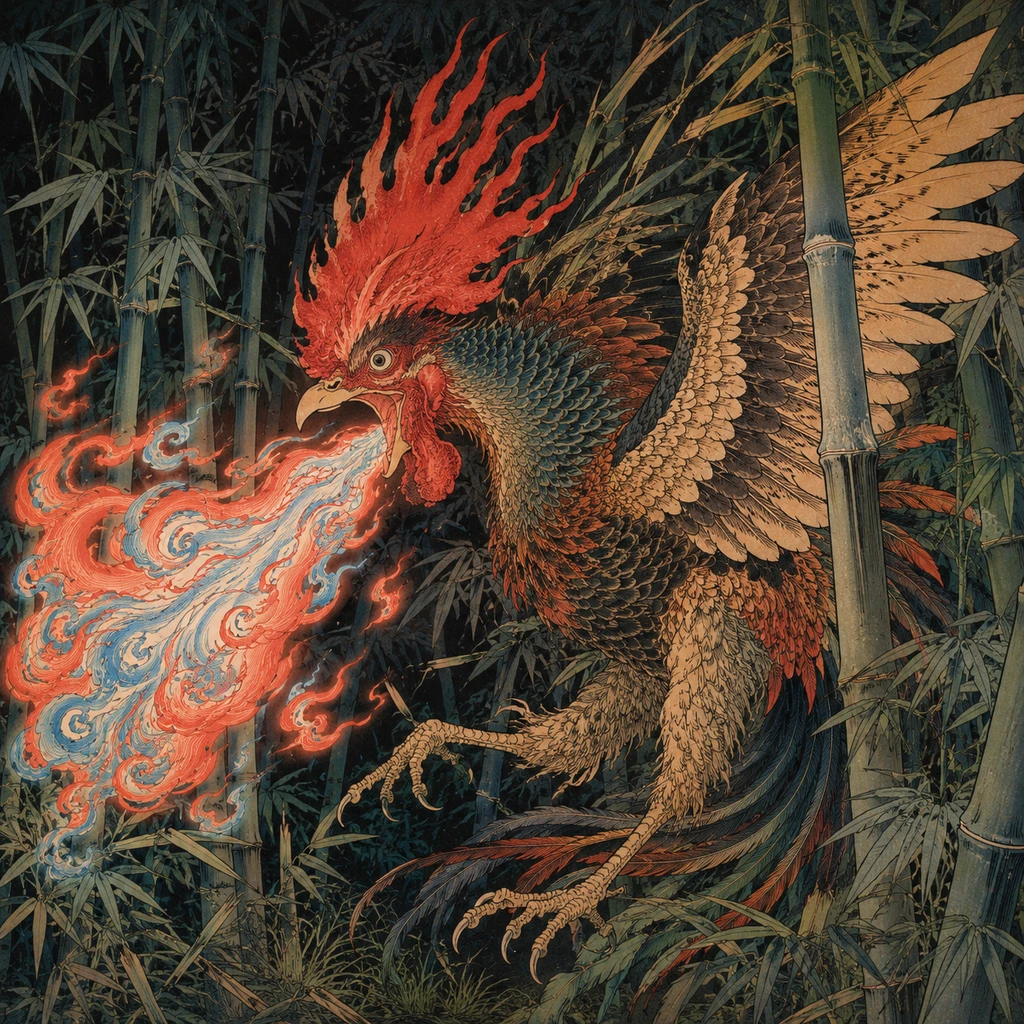
Basan
Basan is a phantom bird from Iyo, also called Basabasa or the Dog Phoenix. It sports a red comb and breathes vivid red fire, yet the flames are like foxfire—cold and unable to burn. Said to lurk in deep bamboo groves, it rarely shows itself. On late nights it may swoop over villages with a loud rustling of wings, only to vanish at once. It startles people but causes no harm. Edo-period curiosa and picture scrolls record its image and traits.
Read more波山は伊予に固有の怪鳥で、婆娑婆娑・犬鳳凰とも呼ばれる。赤い大きな鶏冠を持ち、口から赤々とした火を吐く。だがその火は狐火の類で熱を伴わず、物を焼くことはない。普段は山奥の竹薮に潜んで人前に出ることは稀だが、深夜、村里へ飛来して「ばさばさ」と大きな羽音を立てる。物音に気づいた者が戸口から覗くと、音と光だけを残して忽然と掻き消えるという。害がないため、山里の人々はこれを波山の仕業と畏れつつも、ただ追い払うにとどめたと伝える。「波山」「婆娑婆娑」という名そのものが、この羽音に由来すると説明される。
この怪鳥が後世に広く知られたのは、天保十二年(一八四一)刊の『絵本百物語(桃山人夜話)』[4]に、桃山人の文と竹原春泉の図で「波山」が収められたことによる。江戸の奇談集が伊予の地方伝承をすくい上げ、図像とともに全国へ伝えたのである。地方の山里の幻が中央の出版文化に拾われて像を結んだ ── 古代から畿内と往き来した伊予という土地の、文物流通の縮図がここにも見える。
波山が興味深いのは、それが「危害を加えないこと」を本質とする妖怪だという点にある。多くの怪が人を害し、あるいは祟るのに対し、波山はただ羽音と冷たい火だけを残して消える。竹薮という、人里と山との境界をなす空間に棲むのも示唆的だ。竹薮は里の暮らしに近いが、夜には闇に沈んで人を寄せつけない。その境界の闇に、害はないが正体の知れぬものを置く ── そこに、夜の不可解な物音や光を「何ものかの仕業」として受け止めずにいられなかった、古い伊予の山里の心性が見える。実害なき怪が、ただ羽音と火だけで長く語り継がれてきたところにこそ、人の想像力が夜の闇に与えた最も純粋な形が現れている。
八百八狸の総帥 ── 隠神刑部
伊予の妖怪を語って外せないのが、松山の化け狸たちである。城下町という人の世のすぐ隣で、狸たちは人を化かし、時に城を護ったと語られた。
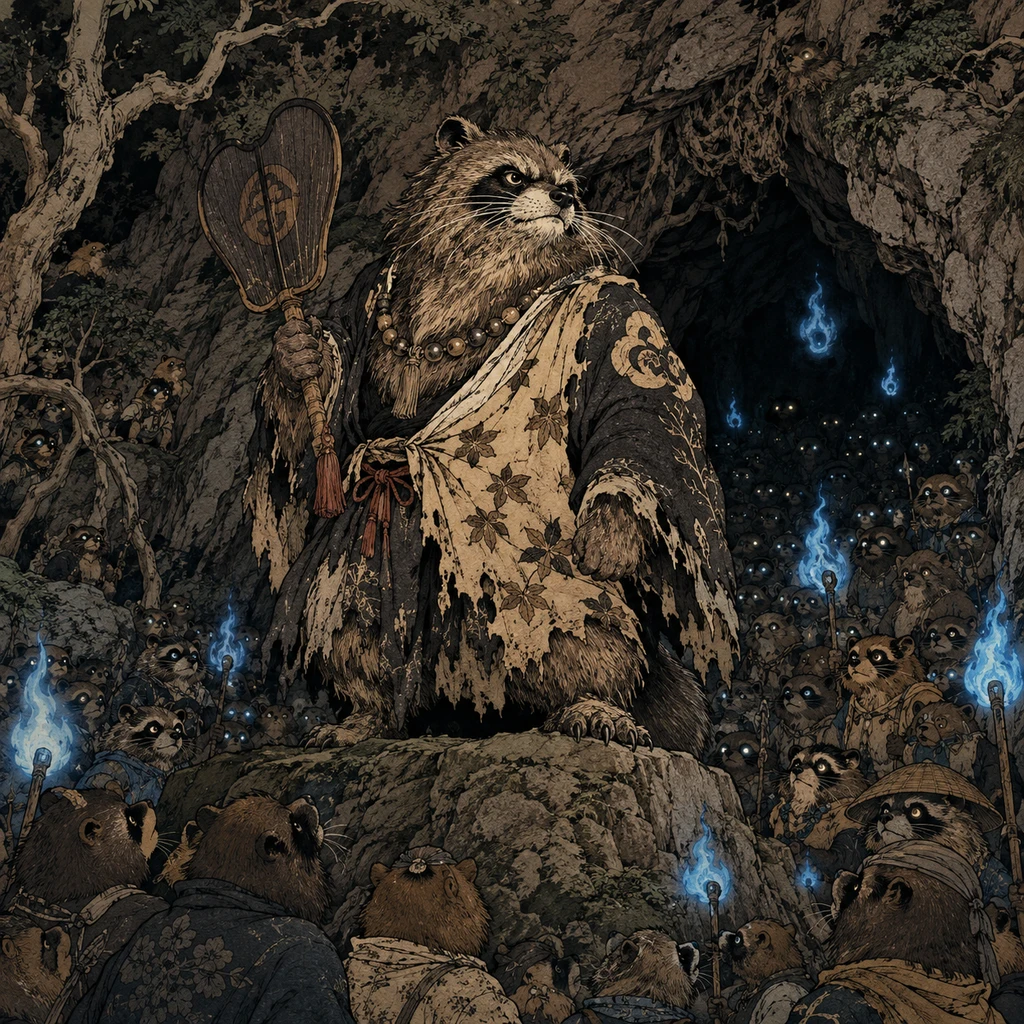
Inugami Gyōbu
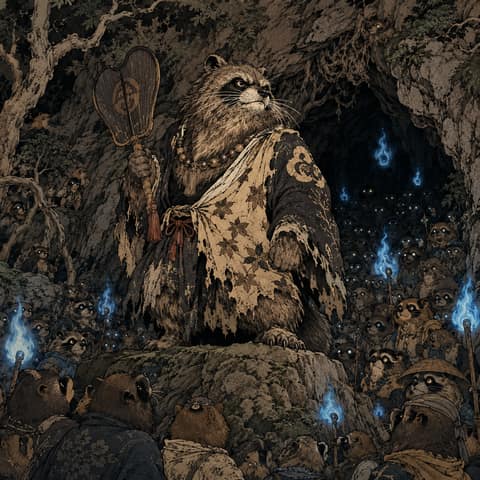
The chief of the shape-shifting tanuki in the Matsuyama region of Iyo. Said to dwell in a rock grotto on Mt. Kuma and to have acted as a guardian of Matsuyama Castle, he commands as many as 808 followers. The title “Gyōbu” was reportedly bestowed by the castle lord’s ancestor, and townspeople and retainers revered him. Popularized in late Edo-period storytelling, he appears in The Tale of the 808 Tanuki of the Matsuyama Disturbance as the tanuki leader who works sorcery and causes wondrous phenomena.
Read moreその総領が隠神刑部である。久万山の古い岩屋に棲み、八百八匹の眷属を率いて松山城下を護ったと語られ、その数から八百八狸とも呼ばれる。佐渡の団三郎狸、淡路の芝右衛門狸とともに日本三大狸の一つに数えられる大狸だ。三大狸がいずれも島嶼や城下といった、海と人の世が接する土地に出るのは偶然ではあるまい。瀬戸内の海と城下が背中合わせの伊予は、まさに化け狸を育む格好の土地だった。
ただし、ここで史実と虚構を厳しく分けておかねばならない。隠神刑部の物語は、古来の素朴な民間伝承というより、江戸末期の講談で大きく膨らんだ創作層の厚い伝承である。物語では、享保期の松山藩のお家騒動を題材に、藩政を揺るがす怪異を化け狸の隠神刑部が幻術で次々と起こす。これに対し、宇佐八幡の加護ある神杖を授かった藩士稲生武太夫が刑部を戒め、ついに八百八狸ともども久万山の岩屋に封じたとする筋が広く知られる。物語の素地となったのは文化二年(一八〇五)の実録『伊予名草』とされ、これを幕末の講釈師田辺南龍が狸・妖怪の物語『松山騒動八百八狸物語』[5]に仕立て直したと伝わる。
つまり隠神刑部の像は、史実のお家騒動という芯に、講談という語りの肉が幾重にも付いて成ったものなのだ。武太夫の関与の有無や封印の経緯にも異伝が多く、史実と虚構の境目はもはや判然としない。だが、封じられたと伝わる久万山の岩屋は山口霊神として今も松山市久谷の地に祀られ、参拝者を集めている。物語が語りを呼び、語りが聖地を生み、聖地が信仰を集める ── 妖怪が土地に根を張る過程そのものが、ここに見て取れる。隠神刑部と松山八百八狸の全体像は愛媛県の妖怪事典で詳しく扱った。本稿はその物語が古代以来の「狸の都・伊予」という地層の上に咲いた花であることを確かめるにとどめたい。
文明に化けた狸 ── 偽汽車
化け狸の伝承は近代に入っても消えなかった。むしろ新しい文明の利器に姿を変えて生き延びた。その典型が偽汽車である。
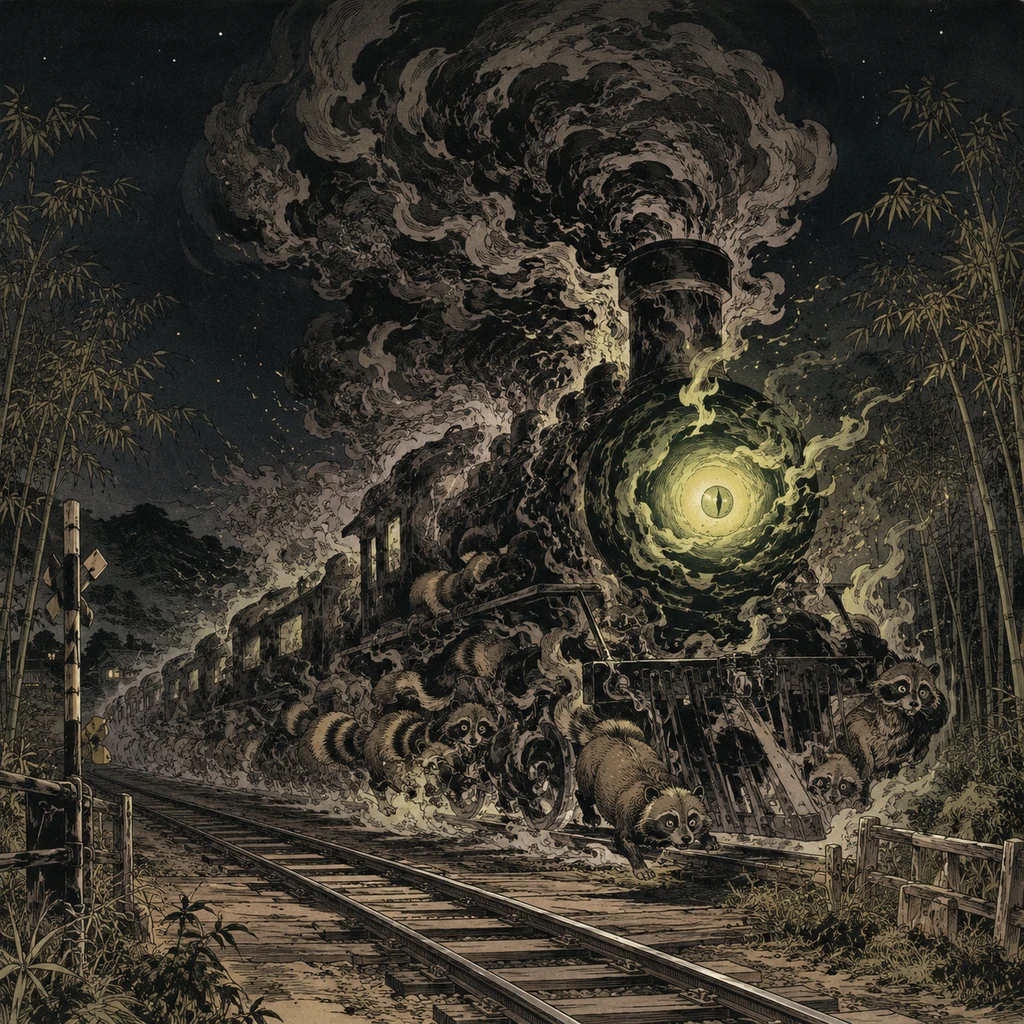
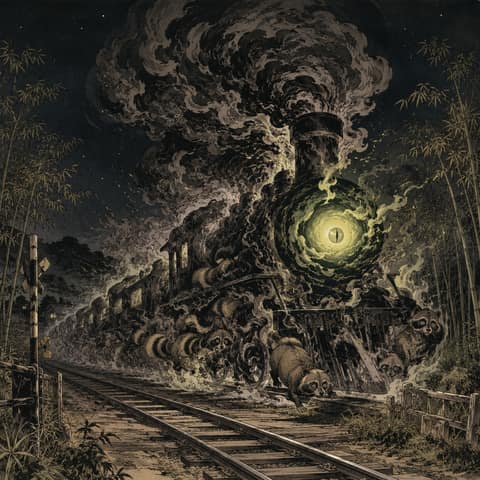
偽汽車は、蒸気機関車の普及期に各地で語られた怪である。明治期、線路上に実在しない汽車が前方から迫り、衝突寸前に掻き消えるという話が各地に現れた。多くは狐や狸、ことに狢が汽車に化けて人を惑わすと解され、消失したあと線路脇で獣の轢死体が見つかるという筋立てを伴う。夜の山野に響く新奇な汽笛や走行音を、獣の仕業と受け止めた民俗的想像力が、この怪を呼んだとされる。
伊予松山では、この偽汽車もまた当地の狸文化に取り込まれた。八百八狸の都らしく、文明開化の象徴である近代の鉄路さえ狸の舞台となったのである。地元には、軽便鉄道に化けて通行人を驚かせたという狸の話が伝わる。なお松山では、明治四十四年(一九一一)の松山電気軌道開業や昭和九年(一九三四)の伊予鉄道複線化の工事の際に、狸の祠や由緒ある樹木が影響を受けたという出来事も記録されており、近代化の現場と狸の伝承が現実に交差していたことがうかがえる。ただし「どの神社のどの狸が汽車に化けたか」という具体までは異伝が多く、確証をもって一つに定めることはできない。確かなのは、未知の鉄路を慣れ親しんだ狸の怪異の枠で受け止めた、という伊予の民俗的心性である。
偽汽車という怪は、伝統的な妖怪観が近代をどう消化したかを示す、またとない一例だ。古代の湯から皇族を迎え、中世に水軍が海を渡り、近世に城下で狸が舞った伊予は、近代になっても新奇な文明を妖怪の物語へ呑み込み続けた。怪異を生み続けるこの土地の生命力が、蒸気機関車という未知の存在を前にしても、いささかも衰えなかったことを、偽汽車は教えている。
水軍と霊峰石鎚
最後に、伊予の海と山へ目を向けたい。怪異を直接生んだわけではないが、この地の信仰の地形を語らずして、伊予の妖怪は読めない。
海では、瀬戸内を駆けた水軍の祈りが土地に染み込んでいる。河野氏に従う村上水軍[6]は、能島・来島・因島の三家からなり、芸予諸島の潮流を知り尽くして瀬戸内の制海権を握った。彼らが篤く崇めたのが、大三島に鎮まる伊予国一宮・大山祇神社である。山の神でありながら海上の安全を守る神として祀られたこの社には、源氏・平氏から全国の武将までが武具甲冑を奉納し、河野氏の家紋「隅切折敷縮三文字」は大山祇神社の社紋に由来すると伝わる。山を航海の目印とし、海上から山の神を仰いだ瀬戸内の民にとって、山と海はもともと一続きの霊域だった。この自然観こそ、海の怪を山の神格と地続きで語る伊予の妖怪文化の土台である。大三島の大山祇神と海の怪の詳細は愛媛県の妖怪事典に委ねる。
山では、県境にそびえる西日本最高峰・石鎚山(標高一九八二メートル)が、古代以来の修験の霊場として行者を集めてきた。日本七霊山の一つに数えられ、役行者が開き、弘法大師空海も修行したと伝わるこの山には、石鎚蔵王権現が祀られ、いまも夏のお山開きには白装束の信者が垂直に近い鎖場を登る。山頂は、最高峰の天狗岳、頂上社のある弥山、南尖峰の一連の峰からなり、その険しさそのものが行場とされた。鎖場の巨大な鉄鎖は江戸期以前から修行者のために掛けられたと伝わり、岩壁にすがって登る所作そのものが、俗世から神域へ身を移す行であった。山そのものを神体とするこの霊峰は、人ならざるものが住まう異界として、伊予の人々の心の奥に長くそびえてきた。火を吐く怪鳥・波山が山奥の竹薮に棲むと語られたのも、八百八匹の狸が久万山の岩屋にこもると信じられたのも、こうした「山は神と怪のものである」という古い感覚があってこそだろう。海の彼方に山の神を仰ぎ、山の奥に怪を見た ── 伊予の妖怪は、この海と山に挟まれた古い信仰の地形のなかから生まれてきたのである。
道後の神話の湯、皇族の行幸、水軍が仰いだ海の山の神、行者がこもった霊峰石鎚 ── 古代伊予は、聖なるものと怪なるものが分かちがたく絡み合う土地だった。火を吐く鳥も、八百八匹を率いる古狸も、汽車に化けた獣も、その古い地層の上に咲いた花である。現代の愛媛県へと続くこの国の怪異の全貌は愛媛県の妖怪事典に編んだ。本稿が辿ったのは、その源にある令制国・伊予の、湯と海の記憶である。