YOKAI.JP
Summer Kaidan
Yokai Cards

151 cards

Summer Kaidan

A Bon Night with Yokai

Contemporary Japanese matsuri photography in the lineage of Mika Ninagawa, Rinko Kawauchi, and Kishin Shinoyama. Cinestill 800T tungsten warmth, paper lanterns aglow, the western sky still tinged blue. Yatai smoke, indigo yukata, vermilion goldfish — yokai standing among the lively crowd at the same temperature as the humans around them.

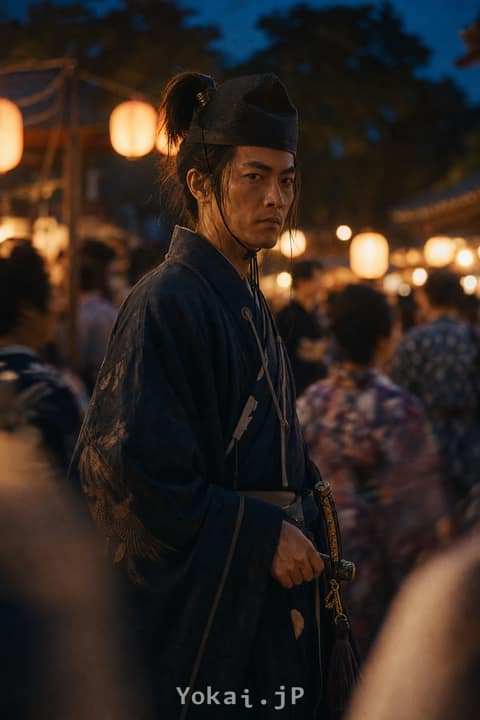
Taira no Koremochi — Summer Kaidan

Taira no Koremochitaira-no-koremochi

General Yogo in the Festival Crowd

On a shrine approach blurred with lantern light, a man in blue robes rests a hand on the sword at his waist. The cords of his eboshi fall against his cheek, and only his turning eyes have drifted away from the crowd. Taira no Koremochi is remembered as the warrior who defeated the oni woman Momiji of Togakushi in Shinano. Even a hero granted a sword by gods and buddhas is quiet and alone on the night before.

View card
Onmoraki — Summer Kaidan

Onmorakiohn-moh-RAH-kee

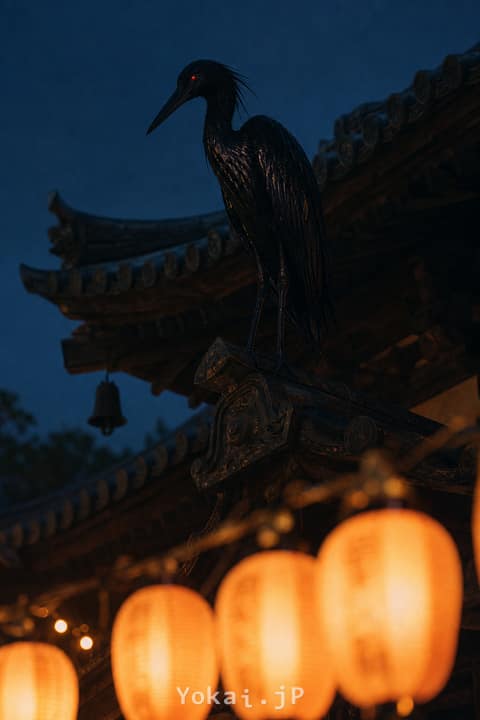
A Red Eye on the Tiled Roof

At the edge of a tiled roof, a black bird perches on thin legs. Its long beak, ragged feathers, and one red-glowing eye look down at the round lantern lights below. Onmoraki is said to be a bird born from the aura of a newly dead body, appearing when rites for the dead have stalled. Above the bustle, only the temple roof seems cold.

View card
Ushi-oni — Summer Kaidan

Ushi-oniushi-oni

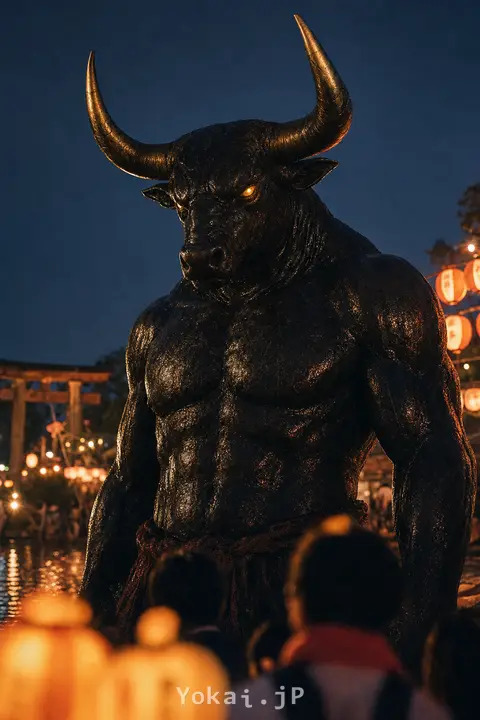
The Ushioni’s Chest at the Water’s Edge

In a plaza by the water, a huge body with the head of an ox stands upright. Its wet black chest and great horns catch the lantern light, while the heads of onlookers sink small in the foreground. Ushioni is a ferocious yokai that devours people, yet in festivals it can also lead the procession as a force that drives evil away. Here is the border where terror turns into protection.

View card
Akki (Malevolent Oni) — Summer Kaidan

Akki (Malevolent Oni)AHK-kee

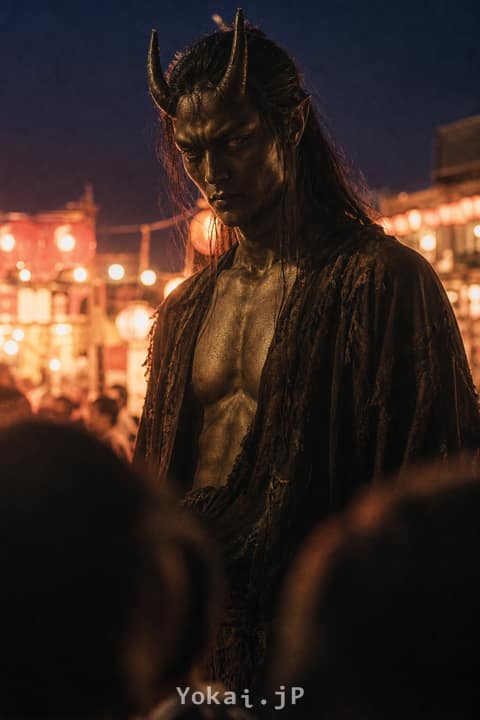
A Black Akki in the Lantern Street

With rows of lanterns behind it, an oni with black, wet-looking skin looks down over the crowd. Festival-red light clings to its two horns, pointed ears, and the torn cloth at its shoulders. Akki was feared as a collective name for oni that bring sickness and disaster. The shadow meant to be subdued is standing tonight in the middle of the shrine approach.

View card
Isonade — Summer Kaidan

Isonadeisonade

A Black Back Brushing the Harbor Lights

On the harbor water, the food-stall lights tremble in long vertical streaks, and a black back passes just below the quay. Wet spines stand in a row; only the distant lamps bleed into the water. Isonade is a shark-like uncanny fish said to snatch people from boats with the fine needles on its tail. The quieter it seems to stroke the sea’s surface, the closer it is to too late.

View card
Momijigari (The Demon of the Maple Viewing) — Summer Kaidan

Momijigari (The Demon of the Maple Viewing)moh-MEE-jee-GAH-ree

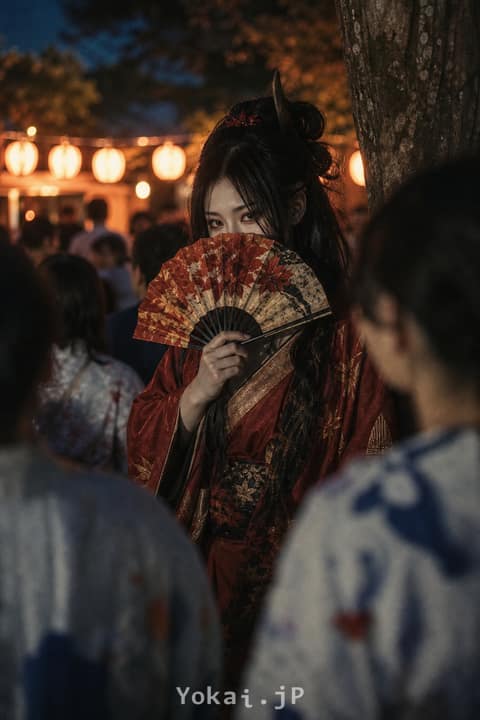
One Horn Behind a Maple Fan

Beside a tree trunk, a woman in a red uchikake raises a maple-patterned fan to her mouth. A single black horn rises from her head, and between festival lanterns and the flow of people, only her eyes shine straight ahead. In the tale of Momijigari, the beautiful women out for a mountain revel eventually reveal themselves as oni women. Behind the dazzling sleeves, the feast turns inside out into an exorcism.

View card
Otoroshi — Summer Kaidan

Otoroshioh-toh-ROH-shee

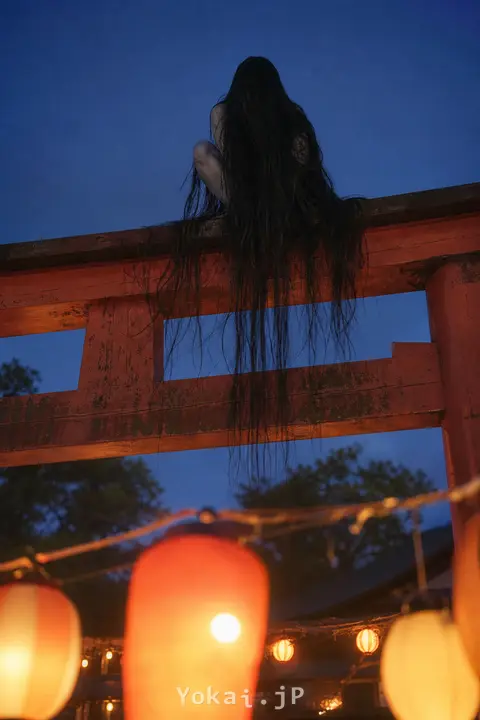
A Shaggy Shadow on the Torii

On the cap beam of a vermilion torii, a shadow sits as if hugging its knees. Its face is buried in long black hair; only the lantern light below stains the wood grain red. Otoroshi is the shaggy apparition drawn in picture scrolls atop shrine gates. Its nature remains unknown; only the sound of its name lingers in the night wind.

View card
Majimun — Summer Kaidan

Majimunmajimun

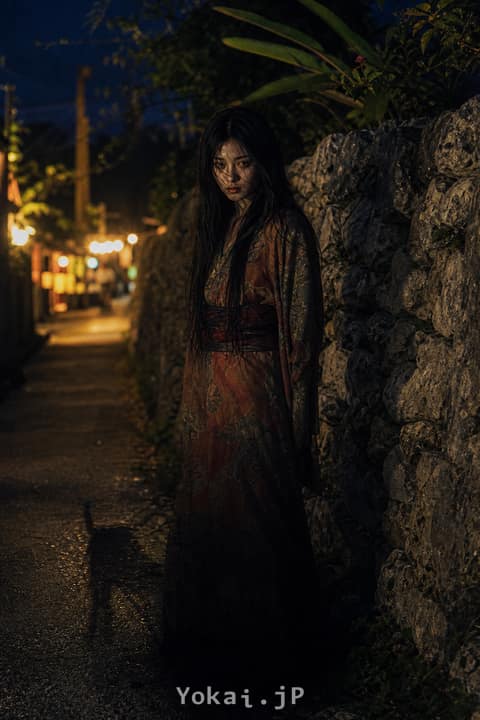
Majimun in the Stone-Walled Lane

On a narrow path along a stone wall, a woman with wet hair is standing. The lanterns behind her are far away, while the rough stone hollows and dense plant shadows press the night close. Majimun is the Okinawan and Amami name for many kinds of malign beings, from dead spirits to animals to old implements. The warning not to let one pass between your legs is the detail that still feels raw.

View card
Yomotsushikome — Summer Kaidan

Yomotsushikomeよもつしこめ

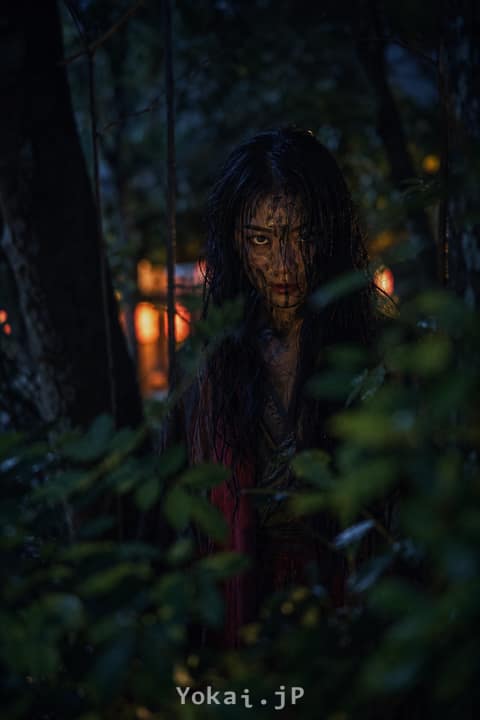
Yomotsushikome Beyond the Wet Thicket

Between the leaves of a damp forest, the mud-smeared face of a woman looks this way. Black hair clings to her cheeks, and only the lantern deeper in the trees blurs red. Yomotsushikome are the female demon-spirits of the underworld who pursued Izanagi as he fled the land of Yomi. The pursuers delayed by grapes and bamboo shoots still seem to remain beyond the brush.

View card
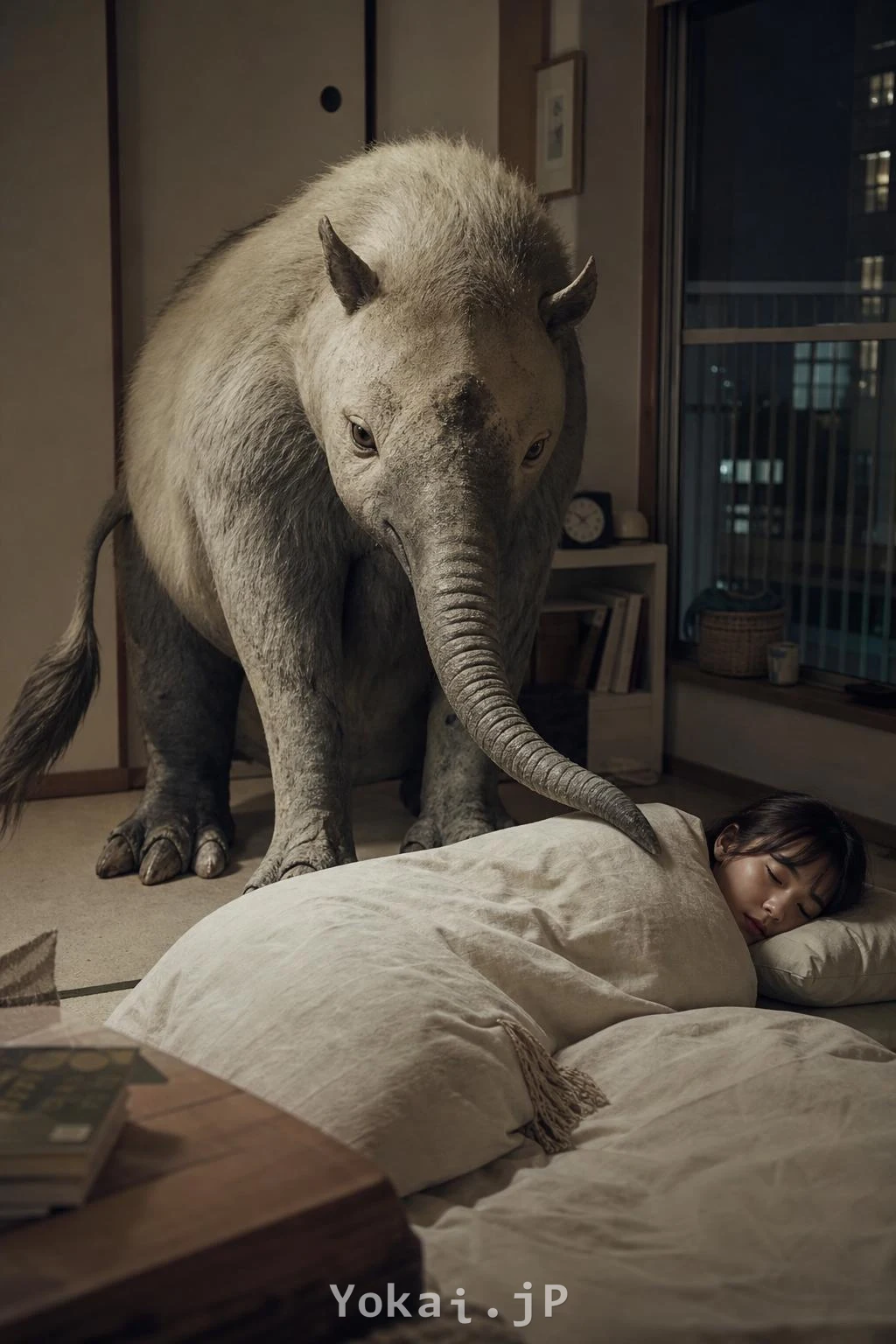
Shichinin Misaki — Summer Kaidan

Shichinin Misakishichinin-misaki

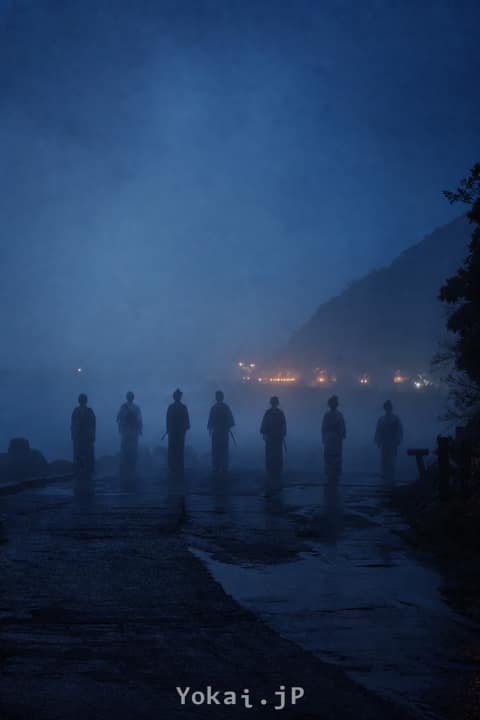
Seven Shadows on the Blue-Mist Road

At the end of a wet road, seven human silhouettes stand at even intervals in the blue mist. Puddles gleam black at their feet, and only the lights of a distant shore remain faintly visible. Shichinin Misaki are a band of dead spirits who always appear as seven. When they kill one person, one spirit drops out, and the victim takes that place in the line. Those who meet them are said to collapse with high fever and be drawn toward death.

View card
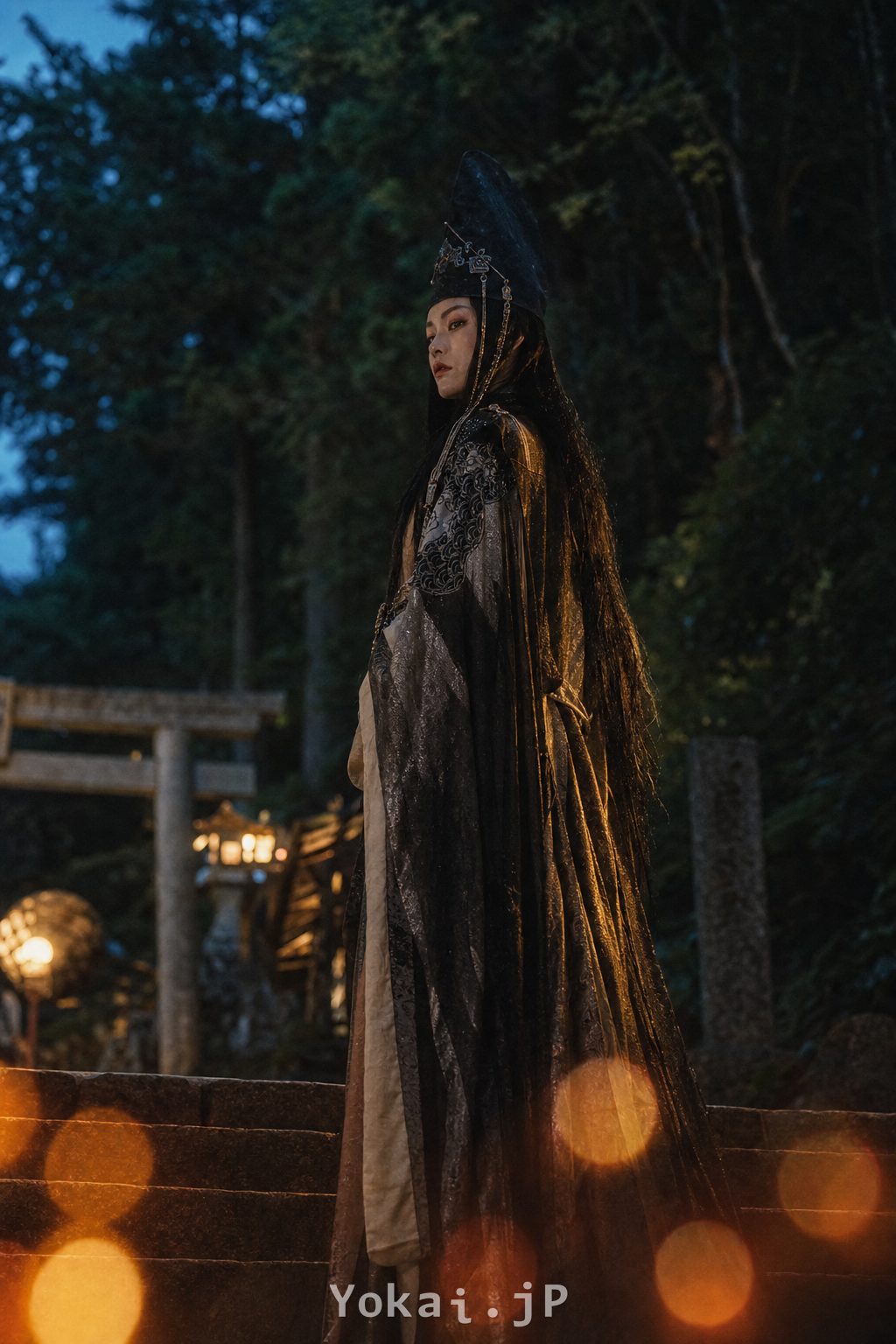
Suzuka Gozen — Summer Kaidan

Suzuka Gozenすずかごぜん

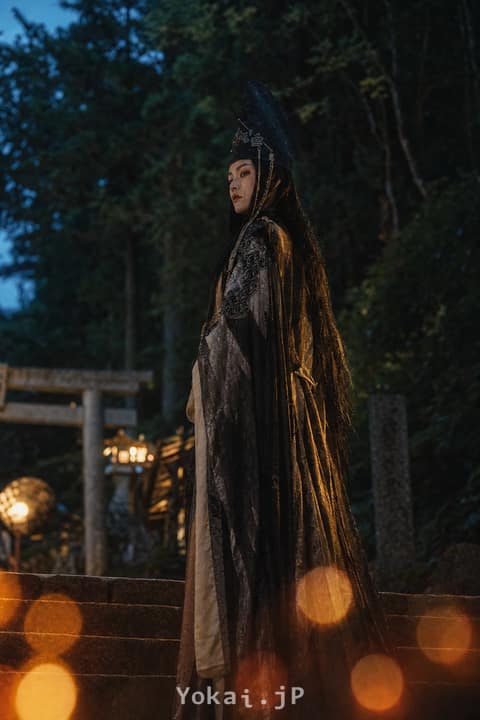
Suzuka Gozen in Black on the Shrine Steps

On the stone steps of a shrine, a woman in a black eboshi and long black robes stands in profile. The forest has sunk into evening shadow; behind her, only the torii and lanterns glow low in the dark. Suzuka Gozen is a goddess dwelling at Suzuka Pass, and a figure who also wears memories of demon woman and bandit. On the border between the capital and the eastern provinces, she hides the face that protects travelers and the face that tests them in the same sleeve.

View card
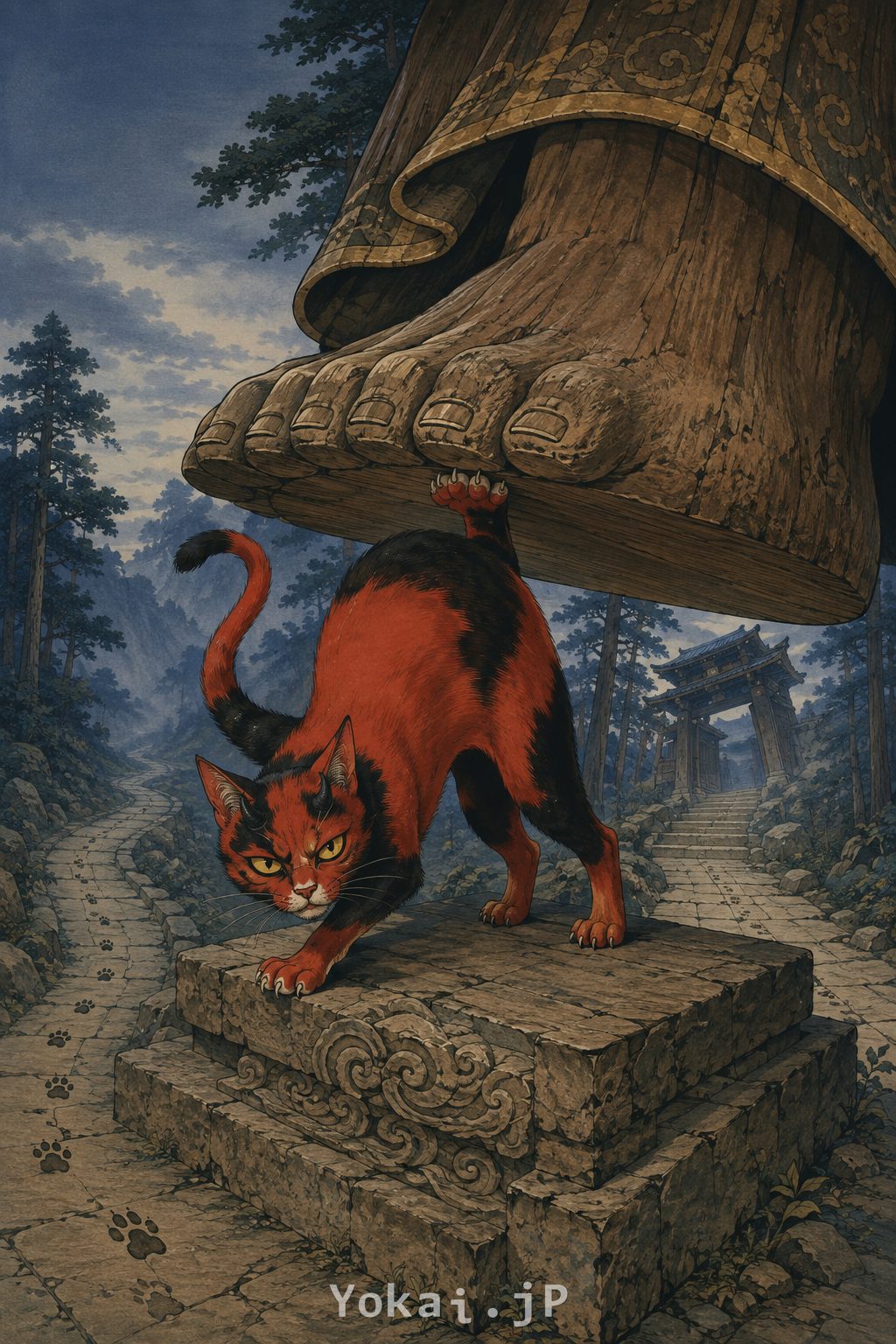
Kiyohime — Summer Kaidan

Kiyohimeきよひめ

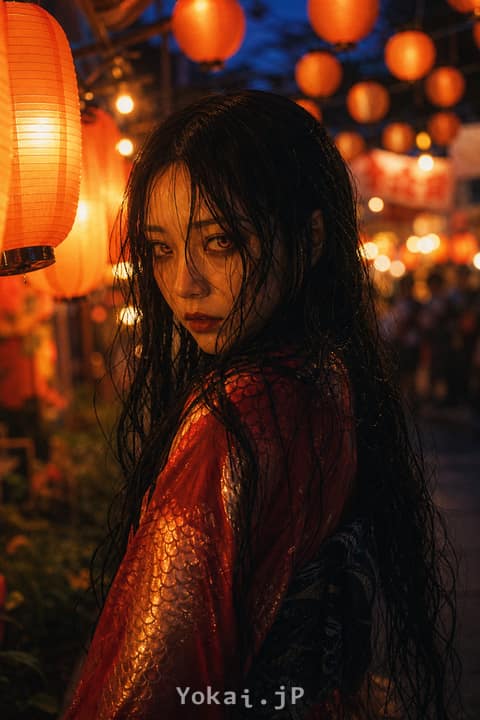
Kiyohime’s Wet Serpent Robe Under the Lanterns

Beneath rows of red lanterns, a woman with drenched black hair looks back over her shoulder. Shopfront orange, hot with reflection, glows across her red robe, which shines like scales. Kiyohime is the woman who, convinced a promise had been broken, became a serpent and coiled herself around the bell of Dojoji Temple. Even amid the brightness of the festival, only her eyes still seem to have come straight across the river.

View card
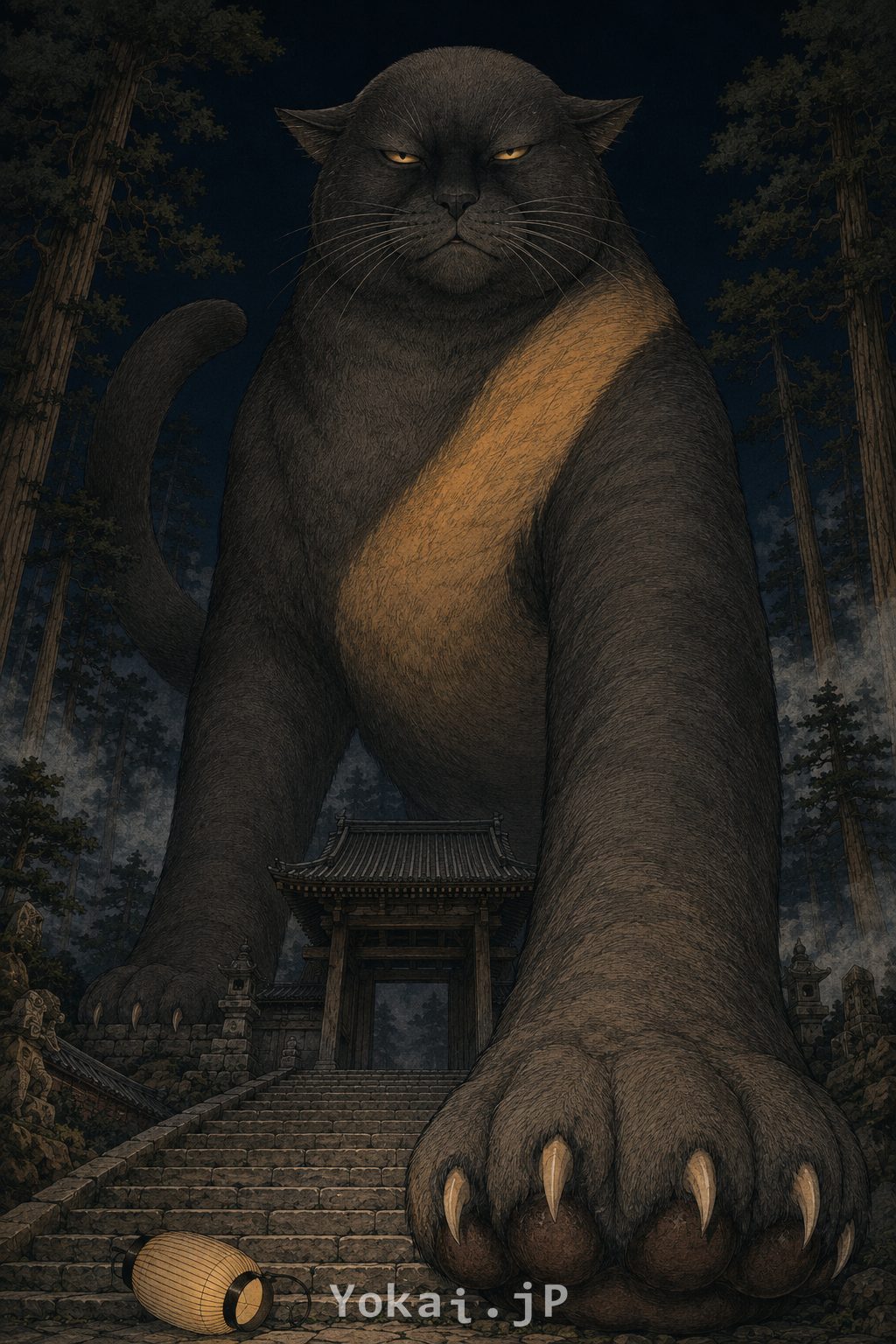
Akamata Kuromata — Summer Kaidan

Akamata KuromataAkamata Kuromata

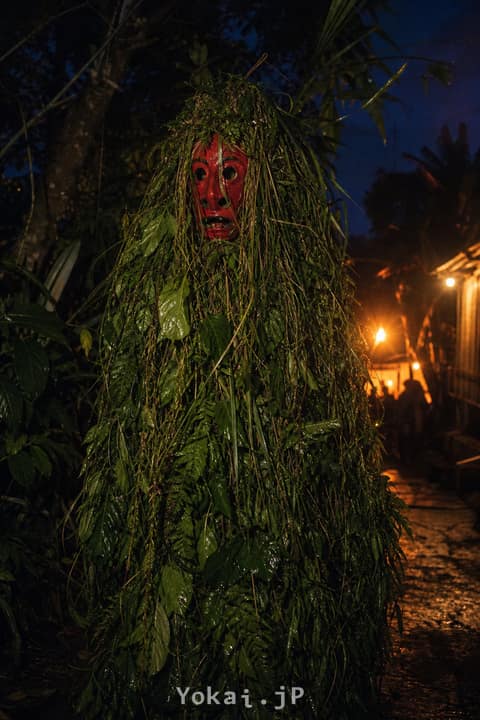
The Red Visiting God in Wet Leaves

Wet green vines cover the body from head to foot; only a red mask floats in the dark. At the far end of a southern lane, a torch burns, and rain light still clings to the tips of the leaves. Akamata and Kuromata are grass-clad deities who arrive for the Yaeyama harvest festival. Said to emerge from an otherworld beneath the earth, their true form is, by nature, known only to those permitted to see it.

View card
Umibōzu — Summer Kaidan

Umibōzuumibōzu

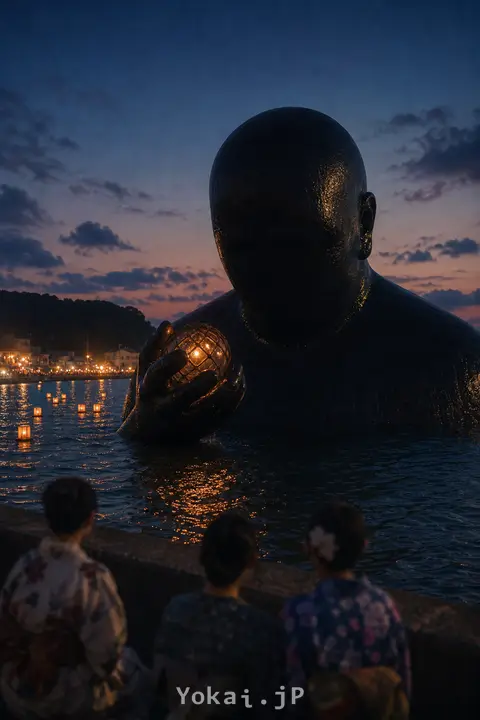
A Black Shaven Head Peers into the Harbor

Lanterns float in the twilight harbor, and before children in yukata, a black, wet, shaven head rises from the sea up to its shoulders. Only the round light cupped in its palms looks warm. Umibozu were feared by fishermen as beings that swelled up from the night sea and blocked a boat’s path. Nothing feels more unfathomable than the stillness with which it peers into the festival lights.

View card
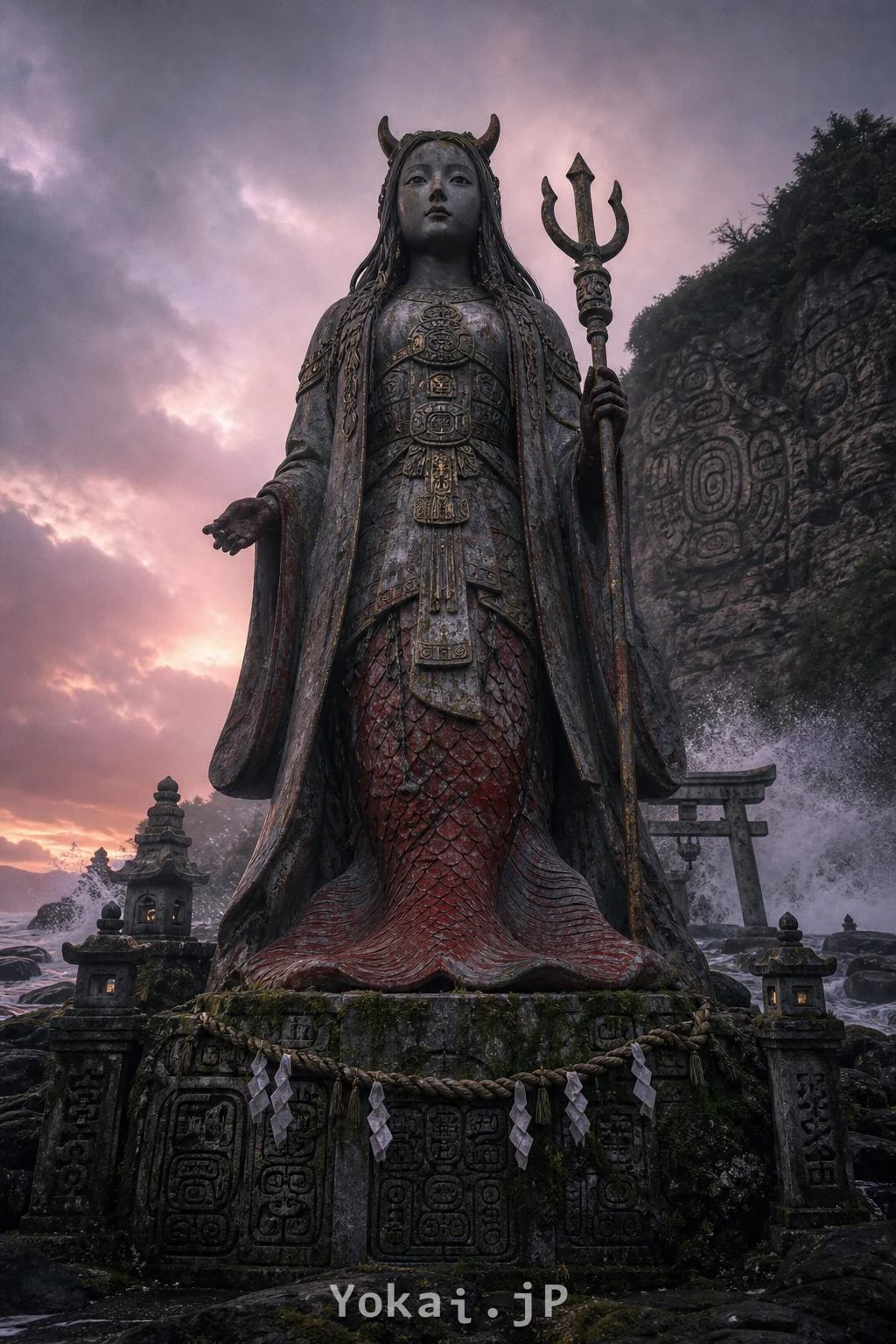
Nekomata — Summer Kaidan

Nekomataneh-koh-MAH-tah

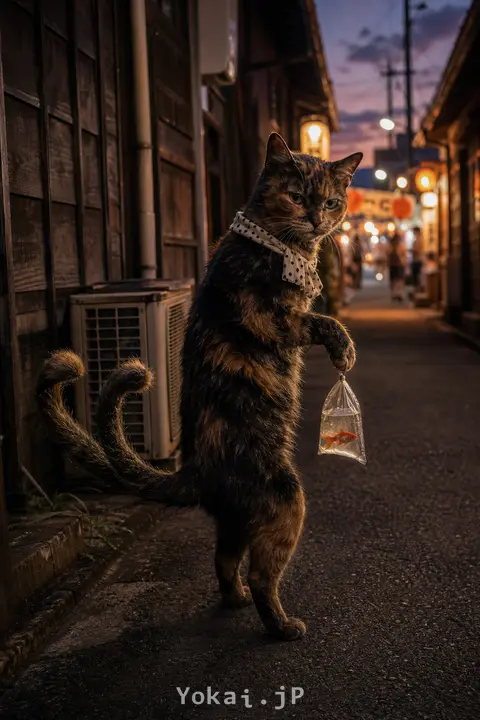
The Old Cat with a Goldfish Bag

At dusk in a narrow lane, before a wooden wall, an old calico cat stands on two legs. It wears a polka-dot tenugui and carries a bag with a goldfish in one paw. The festival lights behind it fall out of focus. They say a cat kept for many years may split its tail in two and become a nekomata, crossing the threshold between inside and out. With the look of someone merely taking one fish home, it sizes us up.

View card
Ryōmen Sukuna — Summer Kaidan

Ryōmen SukunaRyōmen Sukuna

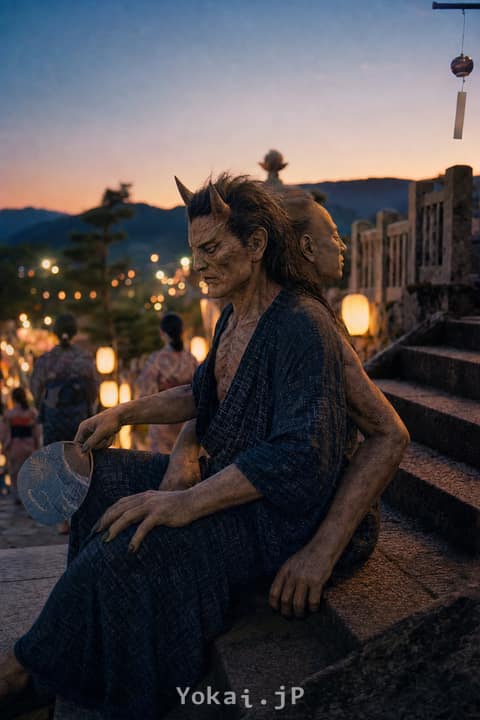
Ryomen-sukuna Seated on the Stone Steps

On stone steps lit by sunset, a man with two faces, front and back, sits at rest. The horned face looks toward the town; the face on his back turns elsewhere. In his hand is a round fan. In the Nihon Shoki, Ryomen-sukuna is the unruly demon-god of Hida; in local tradition, he is also a hero who slew a dragon. In the festival glow across his back, neither name has disappeared.

View card
Shadow Woman — Summer Kaidan

Shadow WomanKAH-geh-OHN-nah

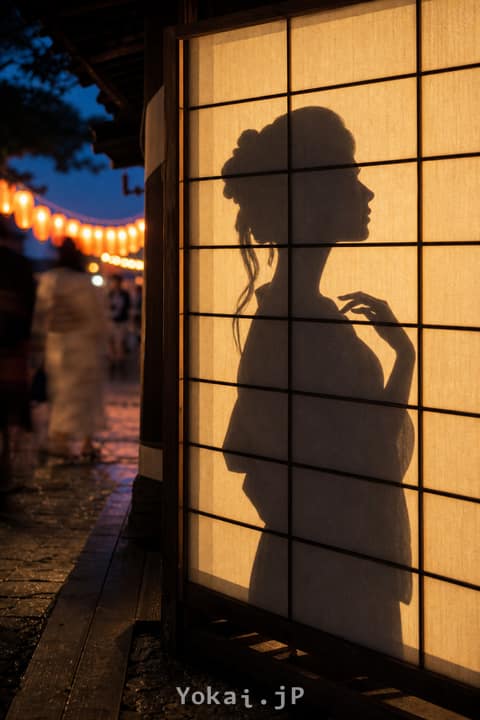
Kage-onna’s Profile on the Shoji

On a single bright shoji screen, the shadow of a woman’s profile appears with unnerving clarity. Outside in the lane, lanterns run in a row, and festivalgoers drift in a soft blur along the wet stone pavement. Kage-onna is the apparition of a woman’s shadow alone, appearing by moonlight on the shoji of a house haunted by a mononoke. Because she never shows a body, the night stops just before the hand reaches to slide the door open.

View card
Rain Woman — Summer Kaidan

Rain WomanAH-meh-ON-nah

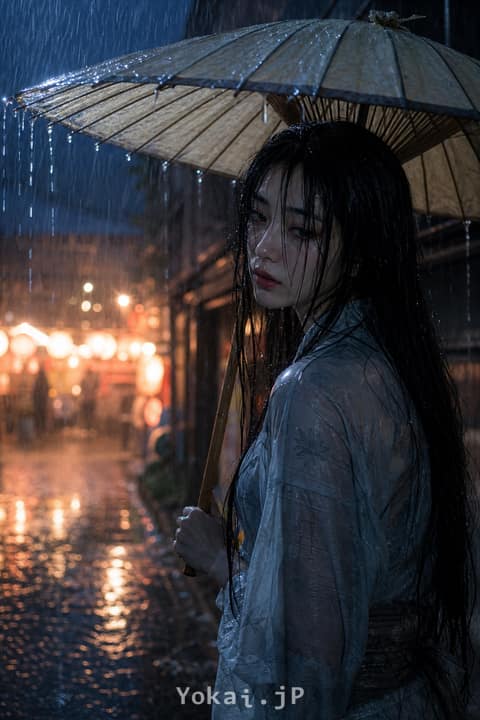
Ame-onna Beneath a Rain-Soaked Umbrella

In an alley under hard rain, drops fall from the rim of a drenched wagasa. Long black hair and a thin kimono cling to her skin, while distant lantern light bleeds across the stone pavement. Ame-onna is told of both as a woman who summons rain and as a spirit who brings mercy in drought. There are darker tales, too, of children stolen away; from this single glance, blessing and misfortune cannot be told apart.

View card
Amenosagume — Summer Kaidan

Amenosagumeah-meh-noh-sah-GOO-meh

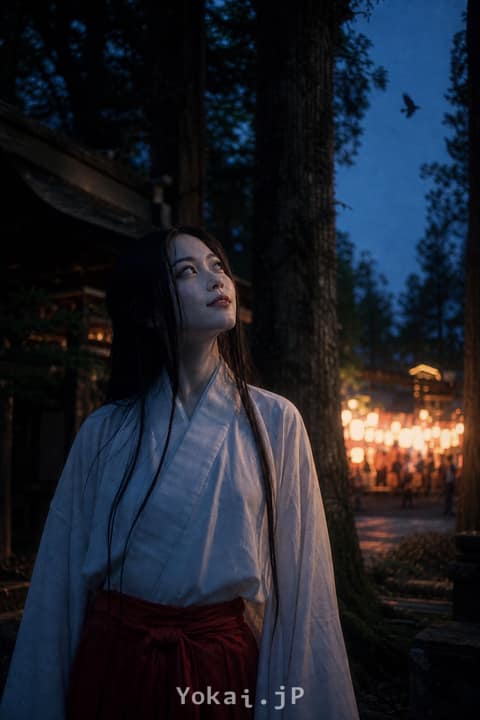
Amenosagume Looks to the Bird

In the shrine grounds, where cedar trunks stand dark, a woman in white robes and red hakama looks up at the sky. The lanterns behind her blur into a festive haze; against the blue above, a single black bird is cut cleanly into silhouette. Amenosagume is the goddess who read the voices of birds and their omens, then carried word to Ame-no-Wakahiko. Her speech tipped events toward the killing of heaven’s messenger. The power to hear can be more frightening than the clamor of a festival.

View card
Bone Woman — Summer Kaidan

Bone WomanHOH-neh-ON-nah

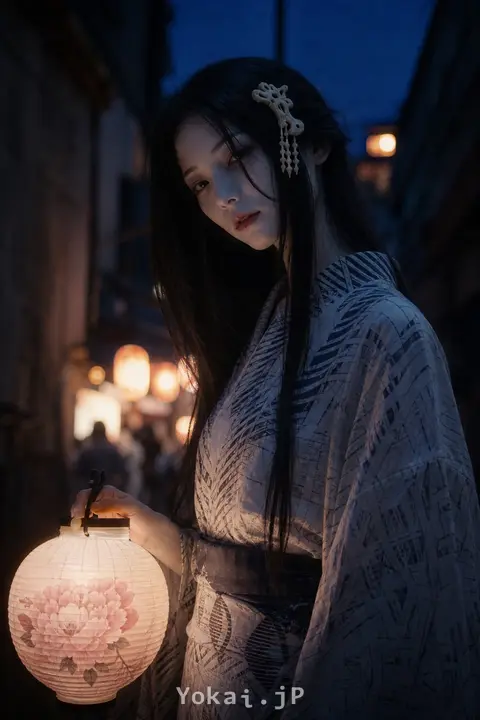
Hone-onna with a Peony Lantern

In the blue dark of a narrow lane, a woman in a white yukata holds a peony lantern. Only the bone-like hair ornament and her lowered gaze rise into the light. Hone-onna belongs to the lineage of Botan Dōrō, the Peony Lantern: a tryst-haunting apparition who appears as a beauty but is in truth white bone. The closer the flower light comes, the finer the line between love and death becomes.

View card
Seven-Fathom Wife — Summer Kaidan

Seven-Fathom WifeNAH-nah-hee-roh NYOH-boh

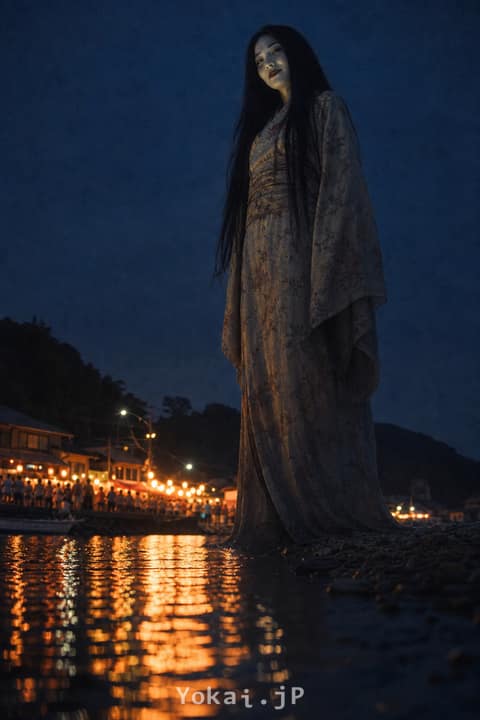
The Seven-Fathom Wife Above the Harbor

On a waterside stone, a giant woman in a long gray robe stands. The houses and rows of lanterns across the water are small, and the orange of the summer festival trembles on the wet surface. Nanahiro Nyōbō, the Seven-Fathom Wife, is told of in Izumo, Oki, and Hōki as a woman of towering height or a long neck. She is said to smile at people by the sea or on mountain paths and lead them astray, though from this distance it is hard to tell whether it is a smile or a shadow.

View card
Kera-kera Woman — Summer Kaidan

Kera-kera Womankeh-rah KEH-rah OHN-nah

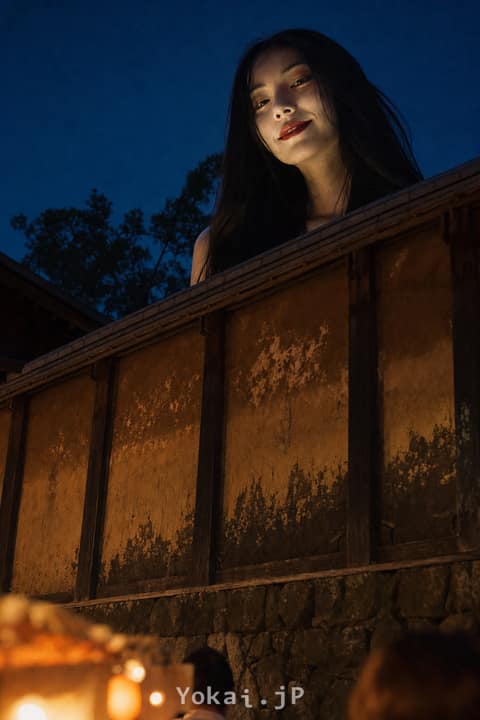
A Cackle from the Top of the Wall

From atop an old earthen wall, a long-haired woman looks down at us. With the blue evening sky and trees behind her, light from below warms only her cheeks and red mouth. Kerakera-onna was drawn by Sekien as a female spirit who laughs loudly over a wall and unsettles the human heart. The voice cannot be photographed, yet the angle of that mouth alone makes the road a little harder to retrace.

View card
Female Tengu — Summer Kaidan

Female TenguOHN-nah TEN-goo

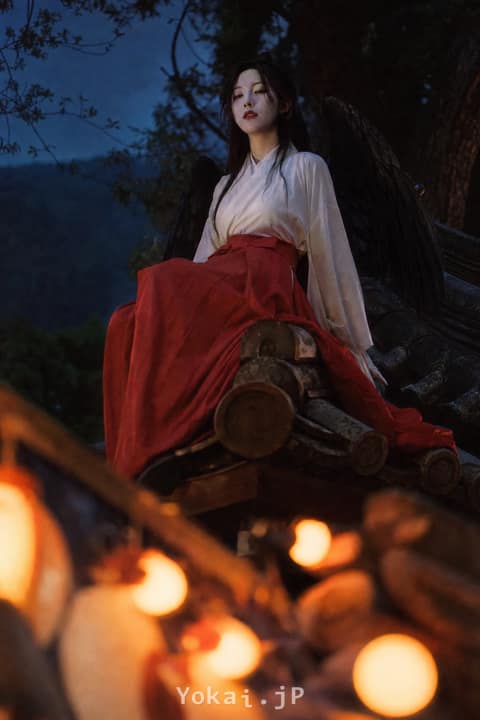
Onna-Tengu on the Tiled Roof

Against a darkening mountain ridge and black branches, a woman in scarlet hakama and a sheer white robe sits on a tiled roof. Only the festival lanterns in front blur orange, lifting the black wings at her back into view. Onna-tengu are female-form tengu, only rarely spoken of around sacred mountains. They are pictured with makeup, scarlet hakama, and wings; the more silently they sit above human lights, the deeper the night on the mountain side becomes.

View card
Yukijoro — Summer Kaidan

Yukijoroゆきじょろう

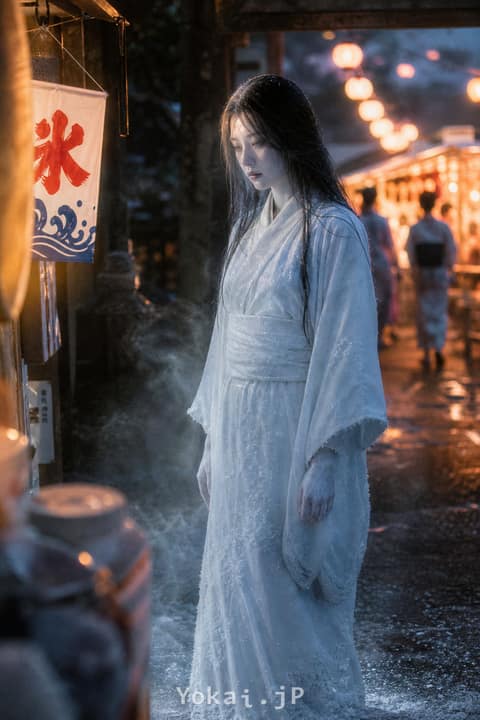
Yukijorō Before the Ice Banner

Beside a red banner marked “ice,” a woman in white stands in front of a wet food stall. Cold smoke gathers at her feet; only the lanterns behind her still feel like summer. Yukijorō, as told in Yamagata, is a white woman who asks for shelter on a snowy night. She is also said to be a princess who descended from the moon and could not return, so coolness turns into loneliness.

View card
Kyūsenbō — Summer Kaidan

Kyūsenbōkyū-sen-bō

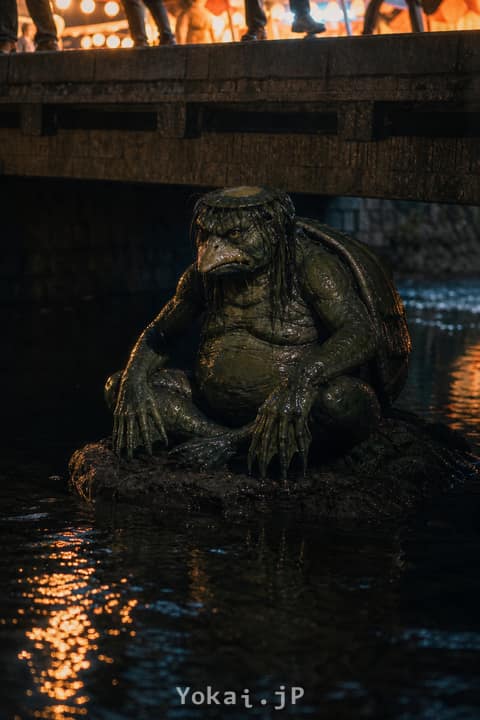
Kyūsenbō, Kappa Chief Beneath the Bridge

On the dark water under a bridge, a slick kappa sits on a rock. The dish on its head, its shell, and its long fingers return the festival lights above in a dull sheen. Kyūsenbō is the chief who leads nine thousand kappa of Kyushu. Tradition says he moved from the Kuma River to the Chikugo River, and later became an attendant of a water deity who prevents drownings.

View card
Tenko — Summer Kaidan

TenkoTenko

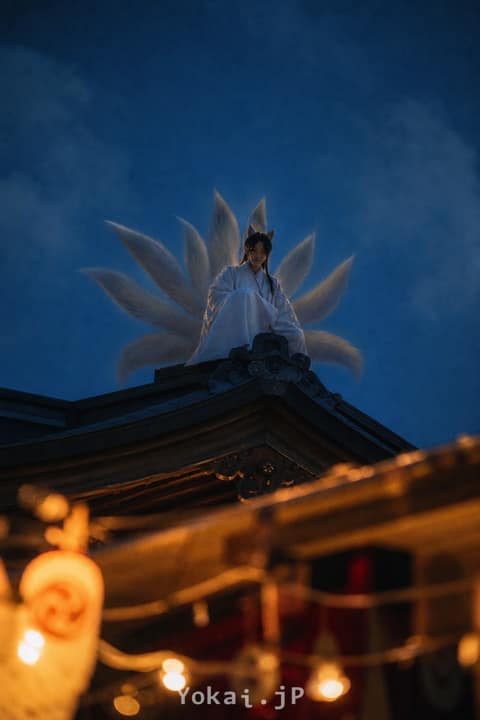
Nine-Tailed Tenko on the Roof Ridge

Above the festival lights, a white-robed figure with fox ears sits on the ridge of a shrine roof. Behind it, nine tails show through the blue night air, and the face is quietly lowered. Tenko is the highest order of yōko, a spirit fox said to reach the heavens after a thousand years. It can see across a thousand leagues, and keeps the kind of distance that does not entangle itself carelessly with people.

View card
Yamata no Orochi — Summer Kaidan

Yamata no OrochiYamata no Orochi

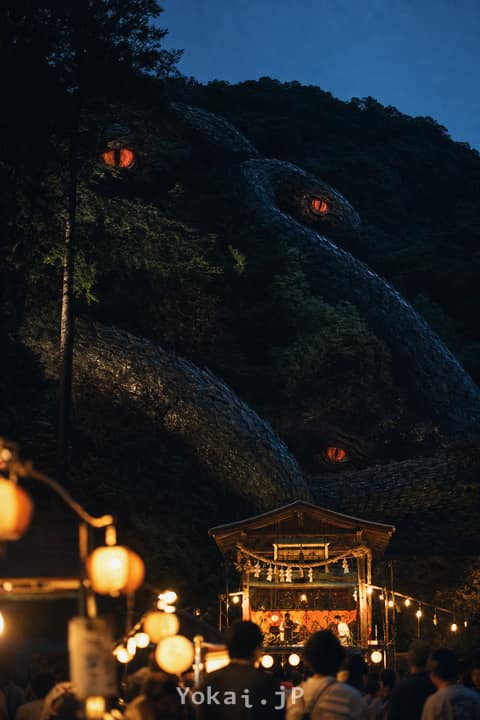
The Great Serpent Over the Summer Stage

From the black ridgeline of the mountain, multiple scaly necks thrust forward. Below, the tiny stage, lanterns, and human silhouettes are all looked down on by red eyes. Yamata no Orochi was the serpent deity said to have lived in Izumo’s Hii River. Its eight-headed, eight-tailed body was cut down by Susanoo, and from its tail came the sword Kusanagi.

View card
Inari — Summer Kaidan

Inariいなりのかみ

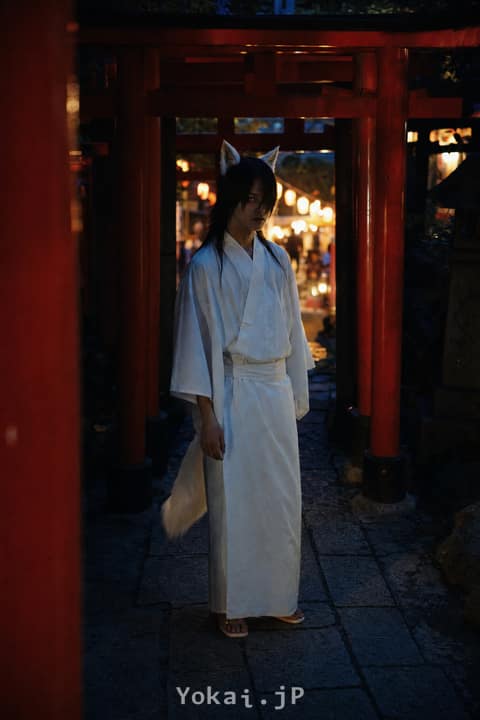
A White Divine Messenger Among Vermilion Torii

Inside the ranks of vermilion torii, a white-robed figure stands on the wet stone paving. Only the fox ears and tail rise out of the dark, while festival lights blur in the distance. Inari is a deity of grain and food. The fox is not the god itself but a divine messenger; on the night approach, even that boundary sinks into red shadow.

View card
Boze — Summer Kaidan

BozeBoze

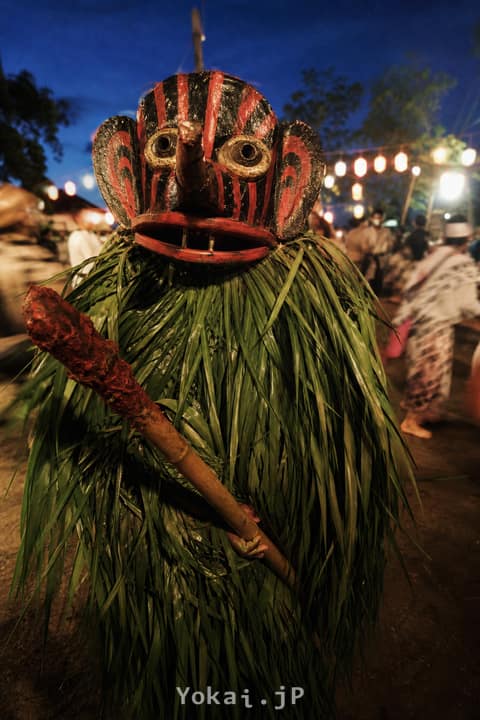
Boze Mask in the Blue Dusk

Under a blue evening sky, the huge eyes and nose of a red-black mask press close. The figure wears a garment of wet leaves and grips a red-earth-colored staff. Boze of Akusekijima is a visiting deity who appears at the end of Bon. Charged with driving away the evil spirits and impurity clinging to people, it gives the festival heat a rougher edge.

View card
Yokkabu-i — Summer Kaidan

Yokkabu-iYokkabu-i

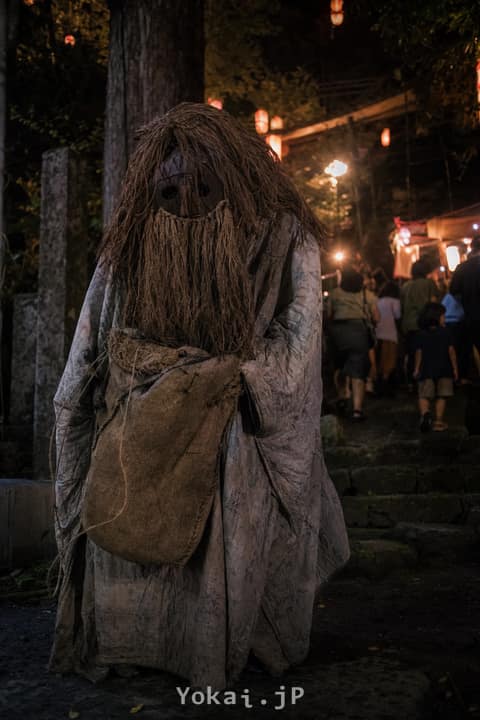
Yokkabu-i with a Burlap Sack on the Shrine Steps

Beside the stone steps of a shrine, a mask of windmill-palm whiskers and black holes turns toward us. In front of the worn night robe, a large burlap sack hangs heavily. Yokkabu-i comes to the water deity festival in Takahashi, Kinpō-chō, as an incarnation of Garappa. It frightens children to warn them away from drowning, and brings protection from illness and harm.

View card

Recent comments

Browse other decks