Summer Kaidan
Yokai Cards

151 cards

Summer Kaidan

A Bon Night with Yokai

Contemporary Japanese matsuri photography in the lineage of Mika Ninagawa, Rinko Kawauchi, and Kishin Shinoyama. Cinestill 800T tungsten warmth, paper lanterns aglow, the western sky still tinged blue. Yatai smoke, indigo yukata, vermilion goldfish — yokai standing among the lively crowd at the same temperature as the humans around them.

The Great Kiseru — Summer Kaidan

The Great Kiseruoh-oh-gee-SEH-roo

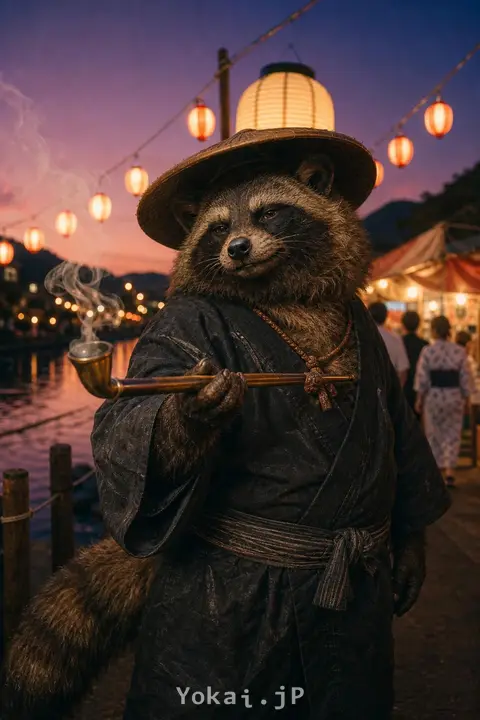
A Tanuki Offers Smoke at the Evening River

Along the sunset river, a straw-hatted tanuki holds out a long tobacco pipe toward us. White smoke loosens from the bowl and drifts slowly between the food-stall lights and the trembling water. The Ōgiseru Tanuki of Aoishise in Awa is said to have asked for tobacco from those who stopped their boats. If they could not pack the pipe full, a capsize might follow, so that charming gesture is not nearly as trustworthy as it looks.

View card
Seiryū (Azure Dragon) — Summer Kaidan

Seiryū (Azure Dragon)Seiryū

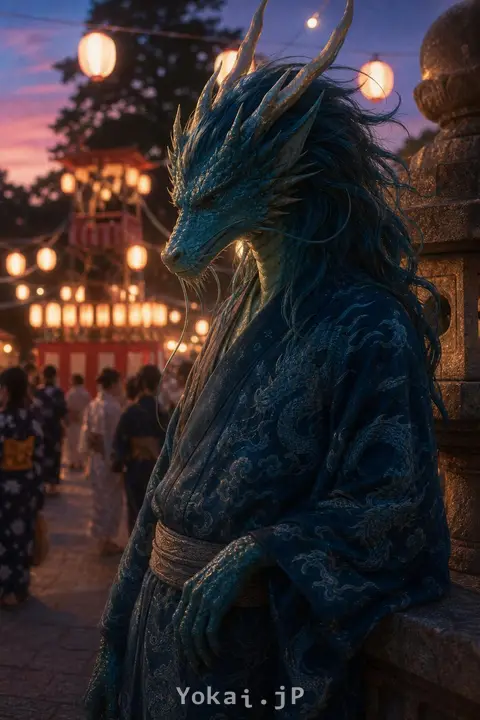
The Azure Dragon at the Stone Wall

Leaning into the corner of a stone wall, a dragon with blue scales lowers its face in profile. The turret and lanterns behind it are bright with bustle, yet only the spined horns and long whiskers keep the chill of dusk. Seiryū, the Azure Dragon of the East among the Four Symbols, is also an auspicious sign bearing spring and the force of wood. At the festival entrance it stopped no one, seeming only to take the measure of the street’s flow.

View card
Blue Heron Fire — Summer Kaidan

Blue Heron Fireah-oh-SAH-gee-bee

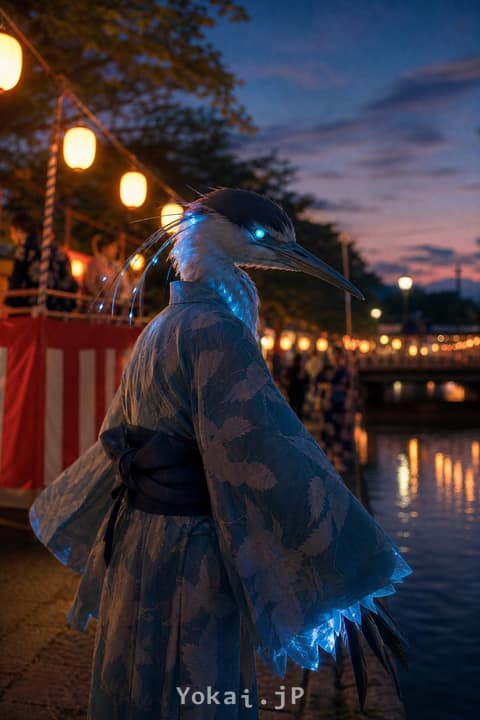
A Heron Sleeve Lit Blue by the River

With riverside stalls and lanterns behind it, a yukata-clad figure with a heron’s head turns back. Blue light glows on the ornamental feathers at the shoulder and at the cuffs, and even the water’s reflections catch the same color. Just like the tales of Aosagibi, in which night herons were seen as pale blue fire, it stands quietly at the water’s edge, a little apart from the crowd. When your eyes meet, only the sound of the festival seems to recede.

View card
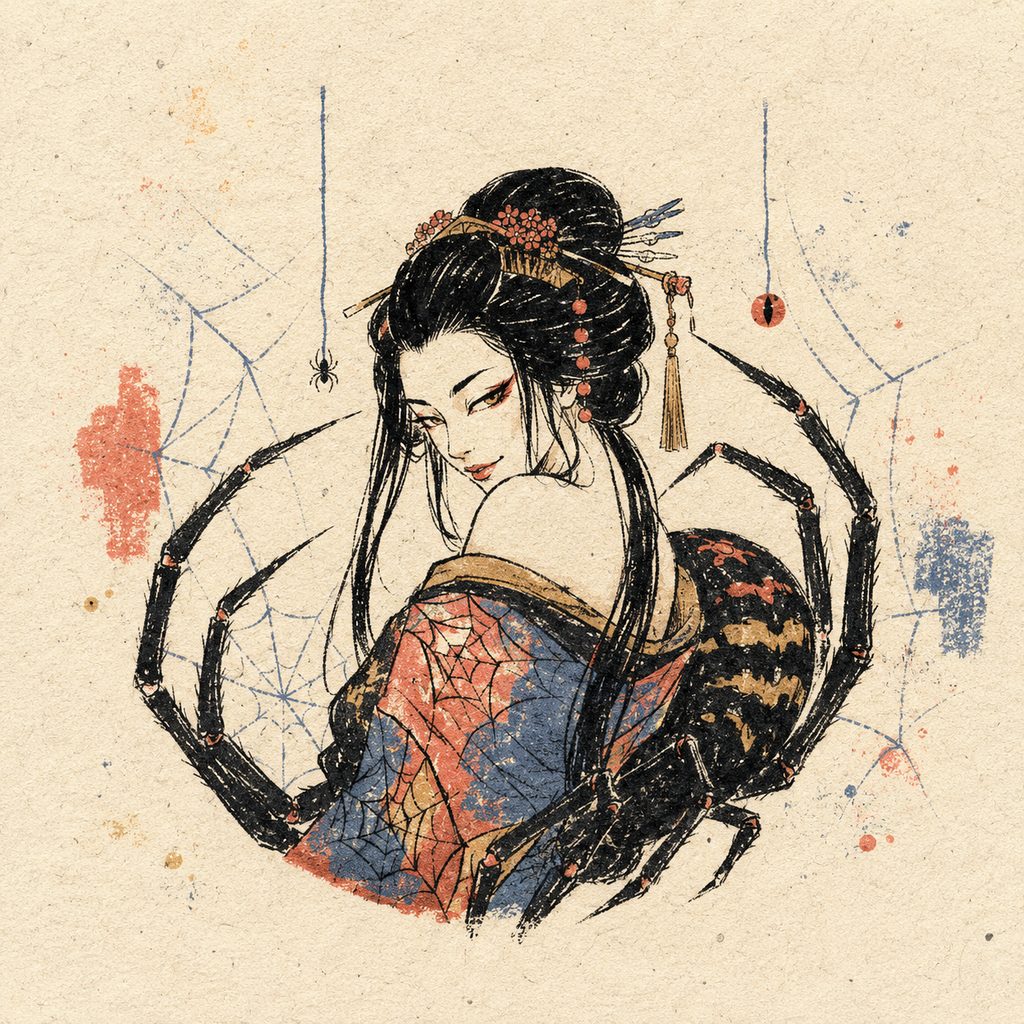
Blue Lady-in-Waiting — Summer Kaidan

Blue Lady-in-WaitingAH-oh NYOH-boh

The Blue Court Lady in the Precincts

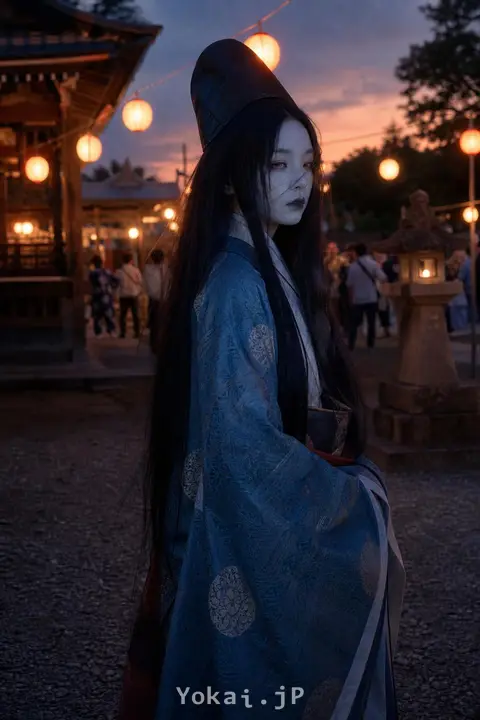
In the gravel precincts, a woman in a blue court robe looks back over her shoulder. A tall black cap, long hair, and the glow of stone lanterns and paper lanterns lift her white face into a cold relief. Ao-nyōbō was drawn by Sekien as a court lady haunting an old palace. Her name comes from a term for a young court attendant, but what she truly is remains uncertain. Among all the people passing through, she alone does not go home.

View card
Basan — Summer Kaidan

BasanBAH-sahn

Red Fire Without Heat

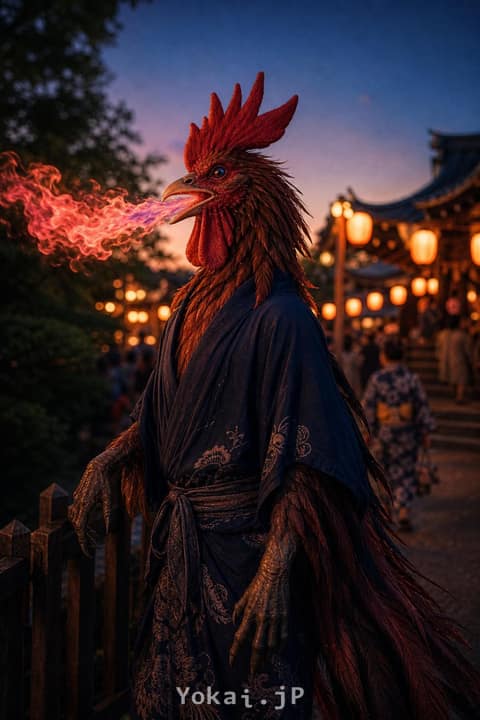
By the shrine fence, a strange bird with a red comb breathes flame from its beak. The sleeves of its navy yukata fall dark, while the stone steps and lanterns behind it light the smoke’s color. Basan of Iyo is said to hide in bamboo groves deep in the mountains, startling people at midnight with the sound of its wings. The fire it spits has no heat and burns nothing. Only the witness’s heart is set racing.

View card
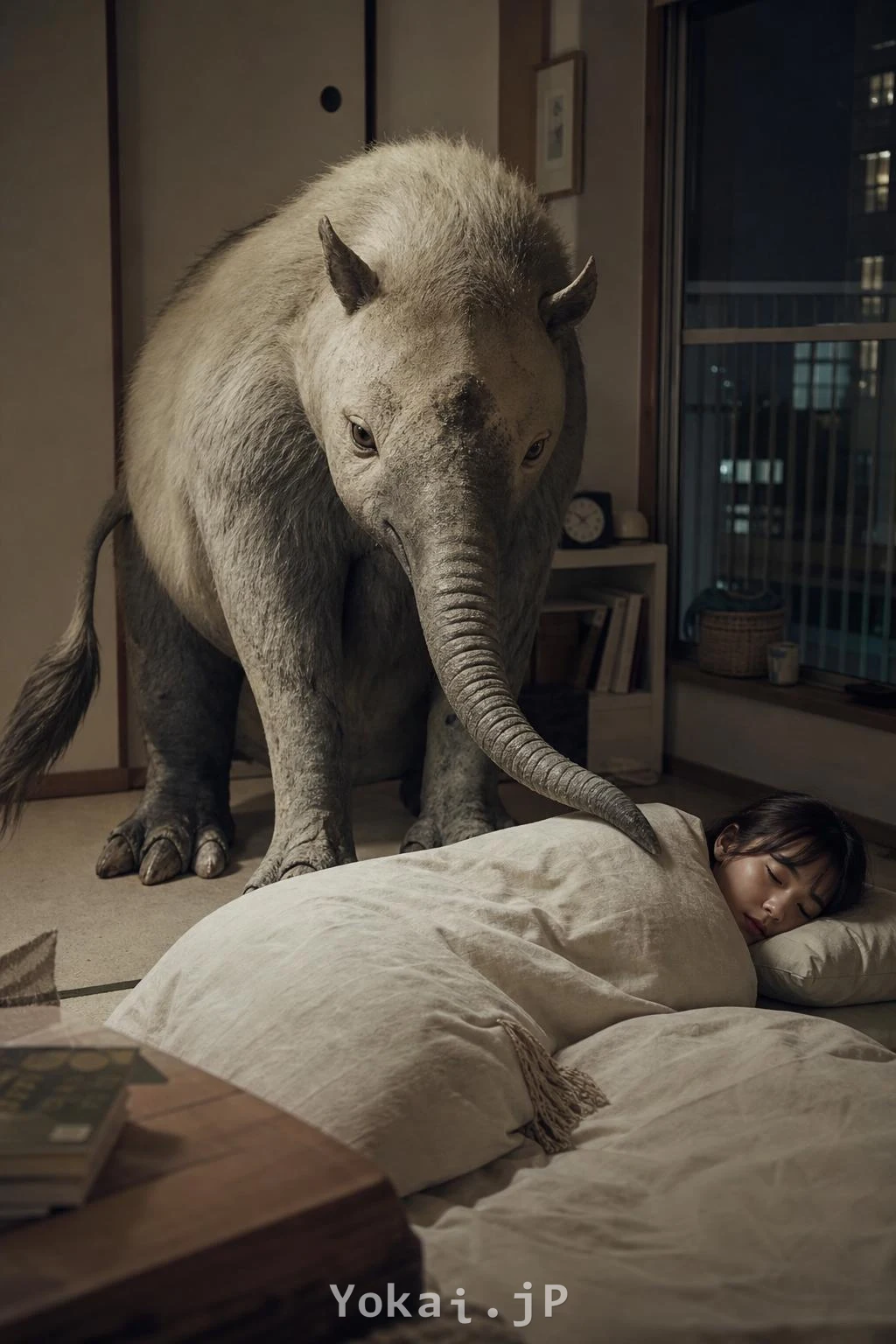
Itsumade — Summer Kaidan

Itsumadee-tsu-mah-deh

Itsumade Looks Back

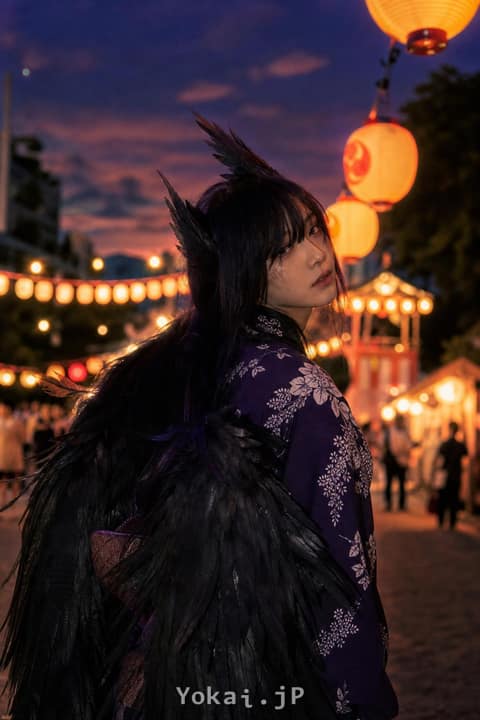
On a lantern-strung slope, black wings spread heavily from the back of a purple yukata. The face turned over its shoulder catches the light only halfway, while the festival procession streams downhill. Itsumade is the strange bird recorded in The Taiheiki, said to cry “itsumade”—“how long?”—across the night sky and terrify people below. Only that question-like voice lingers in the breaks between the noise.

View card
Painted Buddha — Summer Kaidan

Painted BuddhaNOO-ree-boh-TOH-keh

A Black Monk Beneath the Lanterns

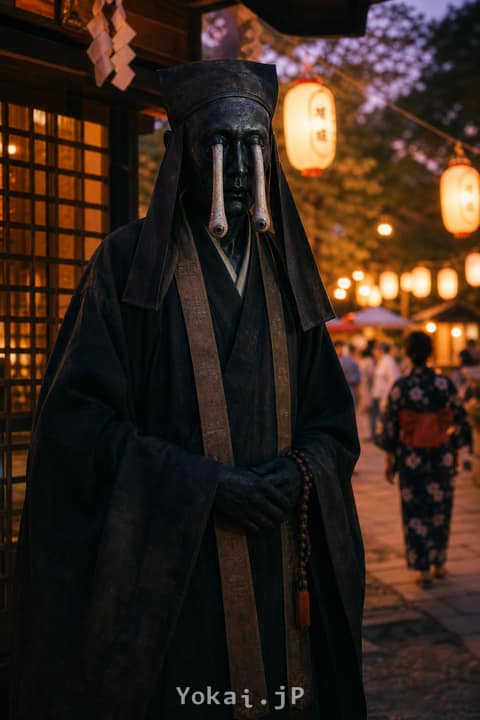
Under the shrine eaves, beside the white paper shide, a black, monk-like figure stands. Only the long, drooping eyes, the prayer beads between folded hands, and the rows of lanterns behind him feel strangely warm. Nuribotoke is known from Edo-period picture scrolls as an apparition emerging from a household Buddhist altar. Its origins are unclear; what remains is a yokai with only a black face. Some nights, even worship finds the wrong object.

View card
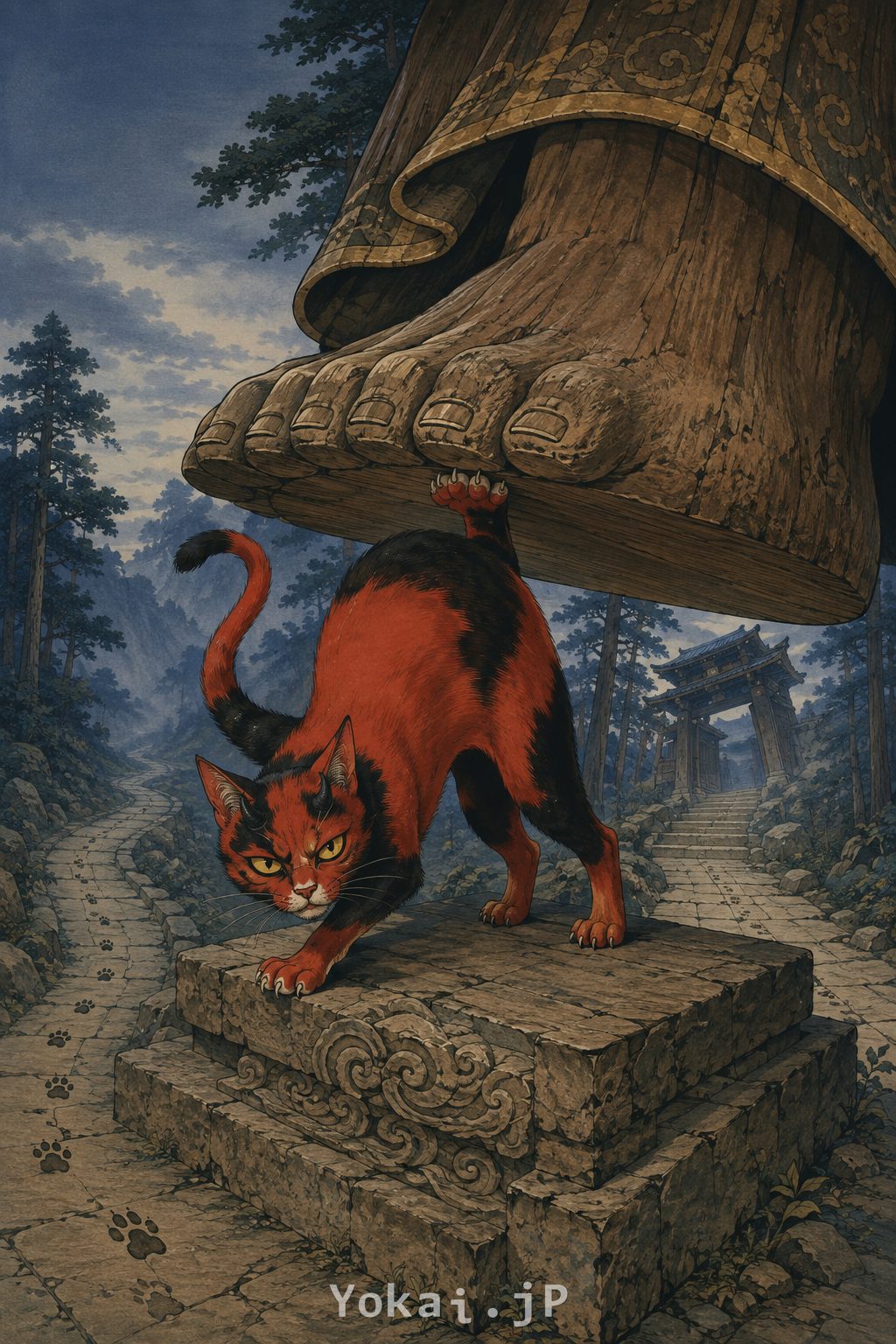
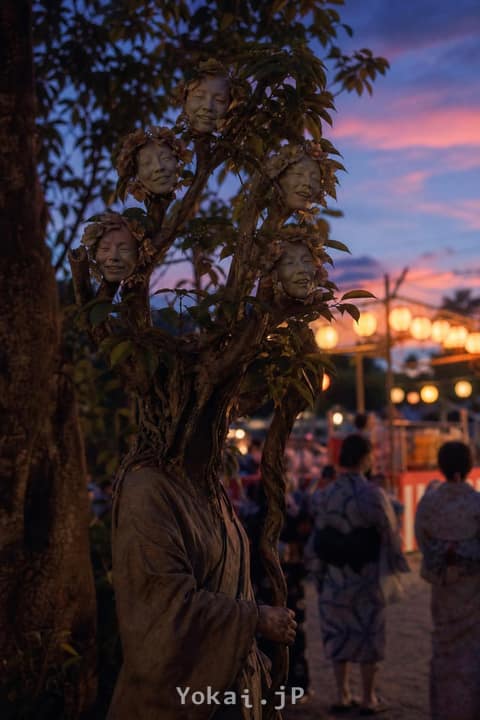
Human-Faced Tree — Summer Kaidan

Human-Faced Treeneen-MEN-joo

Laughing Blossoms by the Roadside Stall

Under the evening sky, branches rise from a roadside trunk, and several human faces surrounded by leaves and flowers smile. The tower and lanterns behind are lively, but the ground at its feet is dark. The flowers of the Ninmenju are said not to answer in words; when questioned, they only smile. Since they are said to wither and fall if they keep laughing, one hesitates even to speak to them.

View card
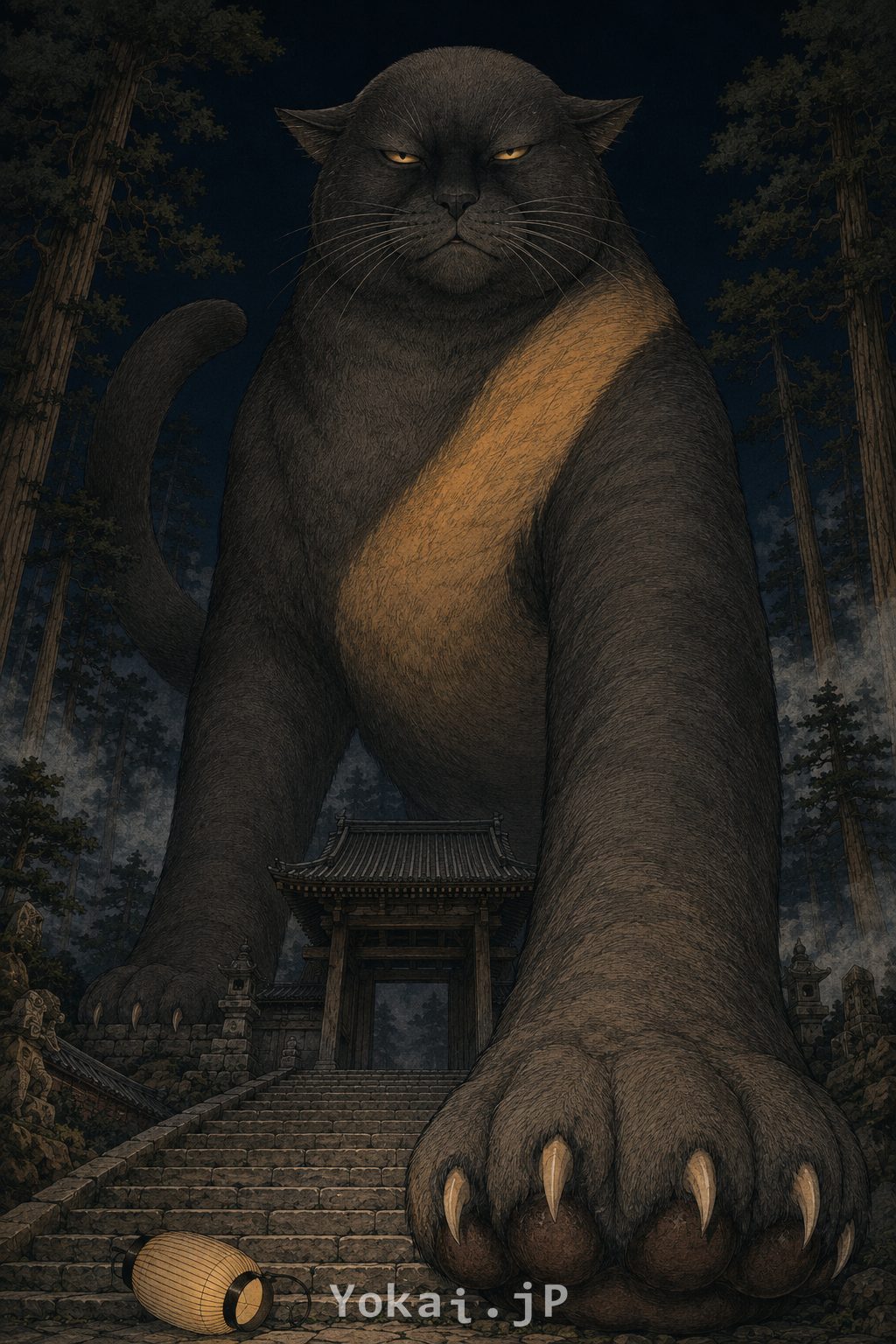
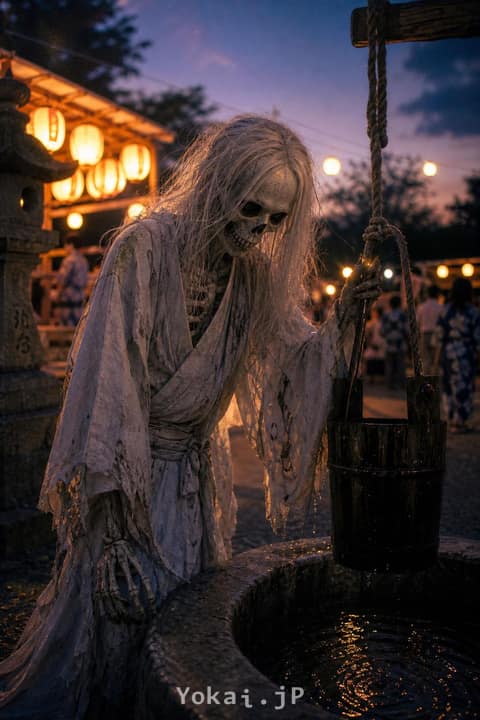
Kyōkotsu (Mad Bone) — Summer Kaidan

Kyōkotsu (Mad Bone)KYOH-koh-tsu

Bones Rising at the Well

A wet bucket hangs at the stone well curb, and a skeleton threaded with white hair grips the rope, head bowed. Water drips from its torn white robe, while the festival lights feel far away behind it. Sekien described Kyōkotsu as “white bones in a well.” Its history is left untold; only a powerful grudge remains in the picture. Even when the rings on the water vanish, the hand does not let go of the rope.

View card
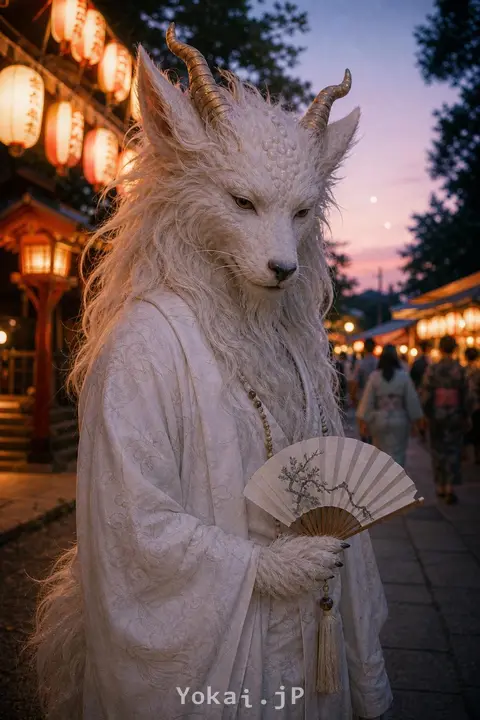
Hakutaku (White Marsh) — Summer Kaidan

Hakutaku (White Marsh)hah-koo-TAH-koo

Hakutaku with a Fan on Festival Eve

Lanterns along the shrine approach stain the white coat orange, as the horned beast quietly holds a fan at its chest. The sleeves of its white robe and its prayer beads stand just a little apart from the festival traffic. Hakutaku is an auspicious beast that understands human speech and is versed in knowledge of strange beings and epidemics. In Edo, its image was also used as a charm against misfortune. A night when you meet its eyes is hard to forget.
View card
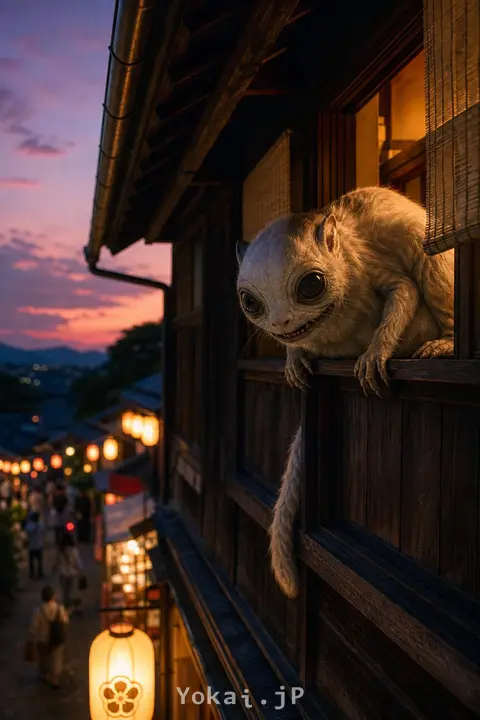
Momongaa — Summer Kaidan

Momongaamoh-mohn-GAH-ah

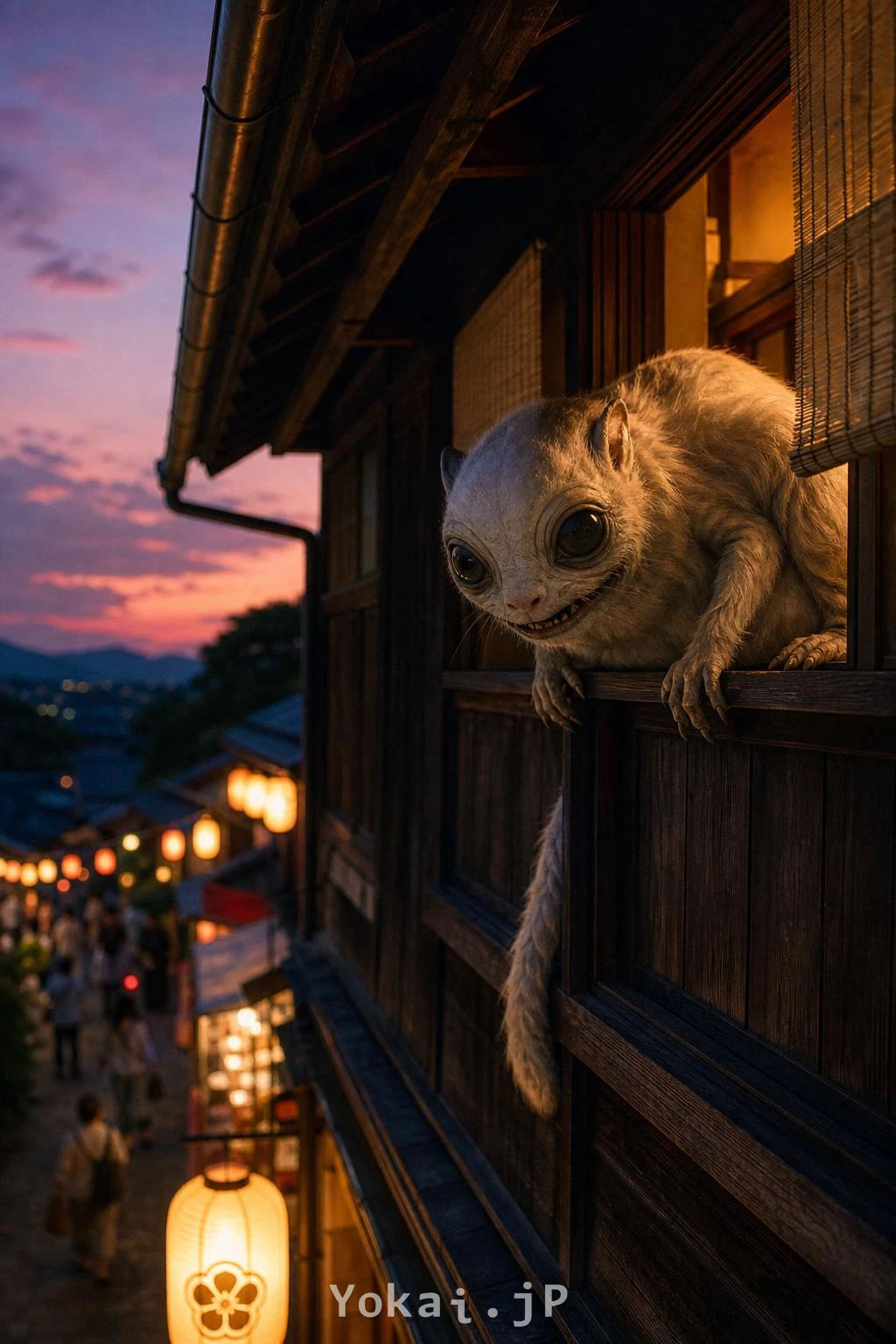
Split Smile in the Second-Floor Window

From a wooden window on the second floor, a shaggy white shadow leans out. Beneath its huge eyes and split-open grin, only the lanterns on the slope and the sunset blur the crowd below. Momongaa appears even in Edo picture books as a name for something that frightens people from second floors and windowsides at night. Look up because you thought you heard it call, and it is already laughing at you.

View card
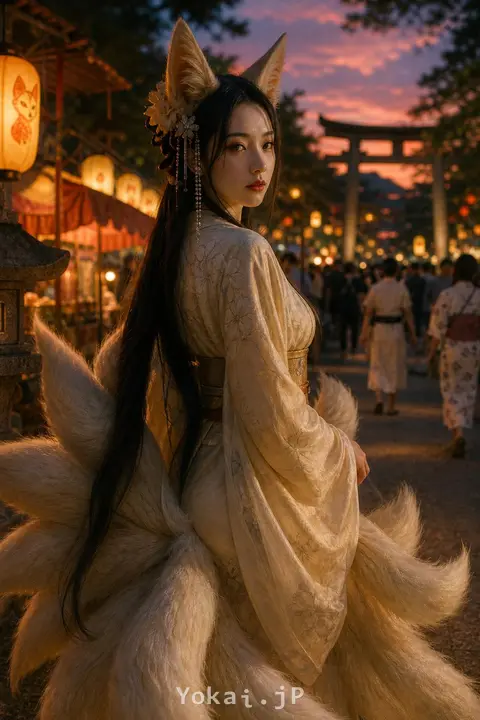
Tamamo-no-Mae — Summer Kaidan

Tamamo-no-MaeTamamo-no-Mae

Tamamo no Mae Trails White Tails Down the Approach

On an approach lined with lantern light, a woman in white looks back, spreading fox ears and several white tails into the evening dark. Crowds stream toward the torii beyond, while only her profile remains still. Tamamo no Mae was the brilliant beauty beloved by the retired emperor Toba; her true form, legend says, was a white-faced, golden-furred nine-tailed fox. This looks like the instant before she is exposed and flees to Nasu to become a stone, when no one yet suspects her.

View card
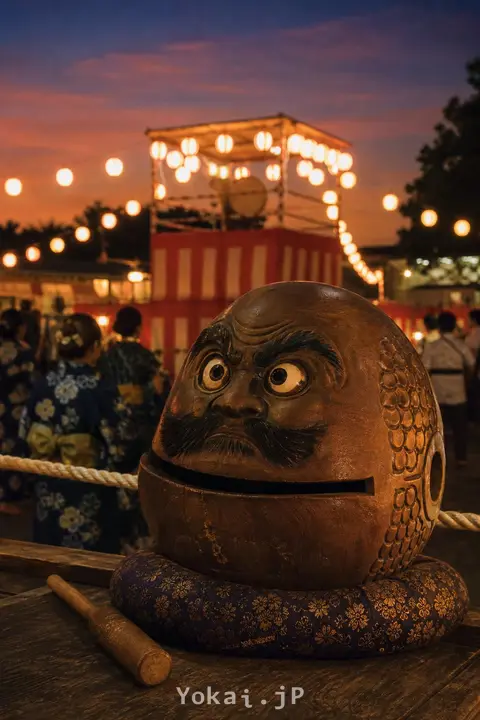
Mokugyo Daruma — Summer Kaidan

Mokugyo DarumaMOH-koo-gyoh dah-ROO-mah

Mokugyo Daruma Glares at the Dance Tower

With the Bon-odori tower behind it, a great wooden fish drum with a Daruma face is set on a cushion. Its round eyes stay wide open, the slit of its mouth is tight shut, and a single beater lies in front. Mokugyo Daruma is a tsukumogami of a Buddhist ritual object seen in Sekien’s Hyakki Tsurezure Bukuro. With the sleepless fish of the mokugyo layered over Daruma, who faced a wall for nine years, it does not blink even once deep into the festival night.

View card
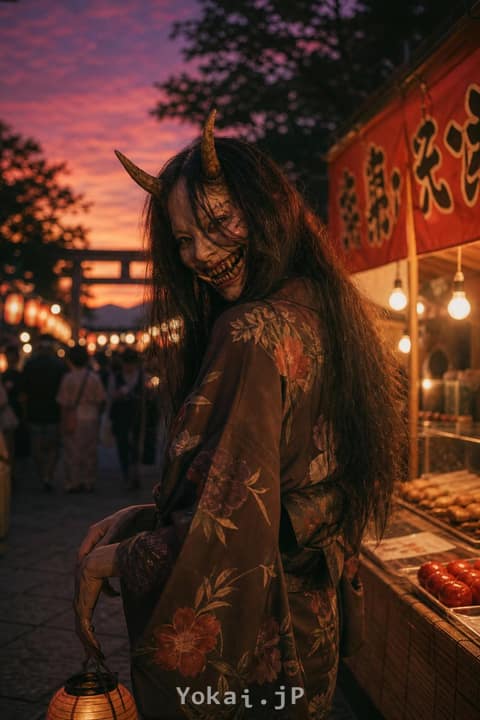
Smiling Hannya — Summer Kaidan

Smiling Hannyawah-RAH-ee HAHN-nyah

The Hannya Laughing Beside the Stall

Beside the red glow of a street stall, an oni woman in a floral kimono turns around, laughing with horns and fangs bared. A small lantern is in her hand, red candies are lined up on the counter, and the sky is still the color of fire. Warai-hannya, the Laughing Hannya, is depicted as an oni woman transformed by corrupt desire, never losing her mask-like smile. Meet her eyes amid the bustle, and that laughter is what lingers afterward.

View card
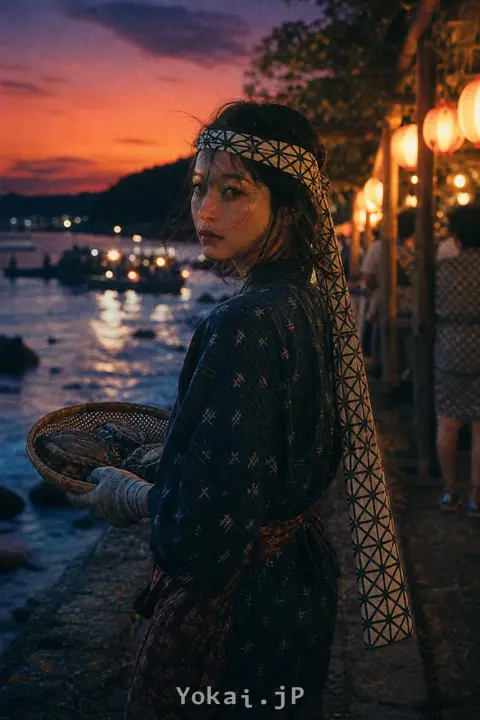
Tomokadzuki — Summer Kaidan

Tomokadzukitomokadzuki

The Ama with the Long Tenugui

At twilight by the sea, a woman in an indigo kimono holds a bamboo basket and looks back this way. The long end of her headband hangs down her back; shells are piled in the basket, and shore lights bleed across the water. In Shima, the Tomokadzuki appears as the exact double of a diver, offering abalone or inviting them into the dark. The tell is the unnaturally long tail of the headband; answer it, and the sea will not give you back.

View card
Kama-itachi — Summer Kaidan

Kama-itachikah-mah-ee-TAH-chee

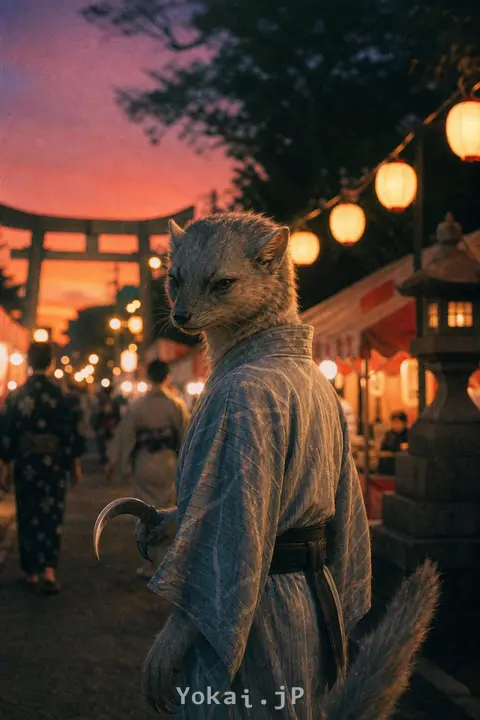
Sickle Claws Before the Torii

On an approach road under a red evening sky, a weasel in a thin yukata looks back over its shoulder. In one hand, a moon-shaped, sickle-like claw flashes, while rows of lanterns and torii continue into the distance. Kamaitachi are said to ride whirlwinds and slice human skin as if swept by a blade. Because the instant of encounter is said to bring little pain and scant blood, only the chill of passing by seems to arrive first.

View card
Shiranui — Summer Kaidan

Shiranuishiranui

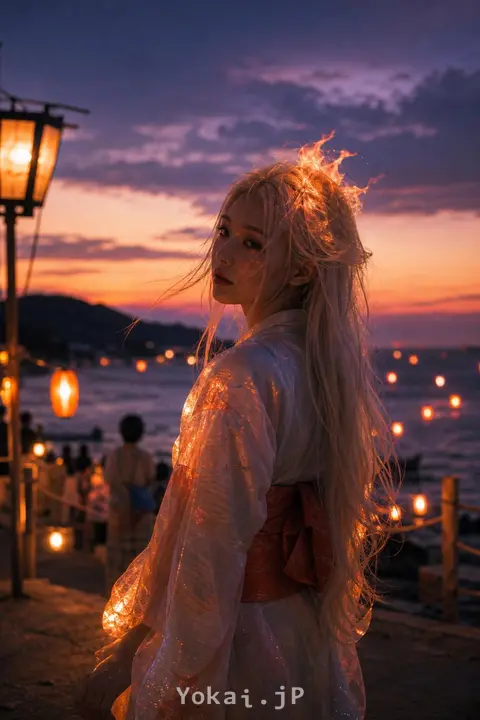
Shiranuhi Burning in Her Hair

In the seaside dusk, the tips of the hair turning back over a white-robed shoulder burn bright as flame. Offshore, many small lights line up, and the light of waves and lanterns sways in the same color. Shiranuhi is a ghostly fire said to appear over the Yatsushiro and Ariake seas, multiplying as it splits from a parent flame and receding when approached. However dazzling it looks, it is also a night sign that can make fishermen hesitate to put out.

View card
Phantom Locomotive — Summer Kaidan

Phantom Locomotivenee-SEH-kee-shah

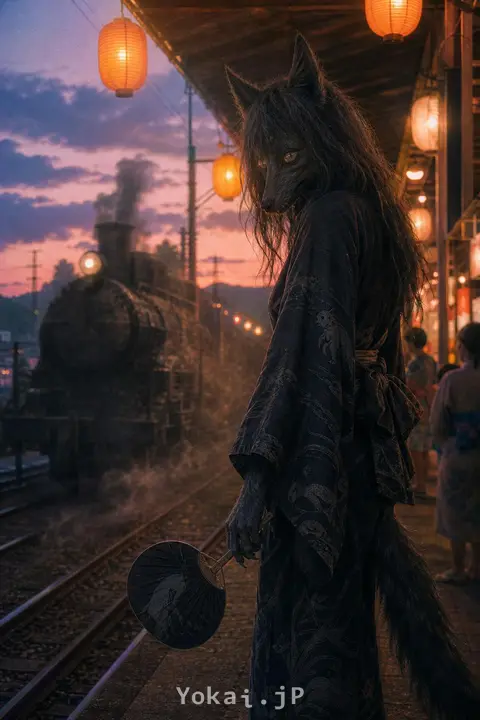
The Phantom Train at Dusk Station

Under the eaves of a station at sunset, on a platform lit with lanterns, a shadow with an animal’s face stands holding a black fan. Beyond the tracks, the lamp of a steam locomotive breathing smoke glows hazily close. The Nise-kisha was told of as a phantom train that appeared on the rails and vanished just before impact. It was also said to be the shapeshifting work of foxes, tanuki, or mujina, but this profile leaves the sense that, after the scare, it will slip back into the smoke.

View card
Hand-Eyes — Summer Kaidan

Hand-EyesTEH-no-meh

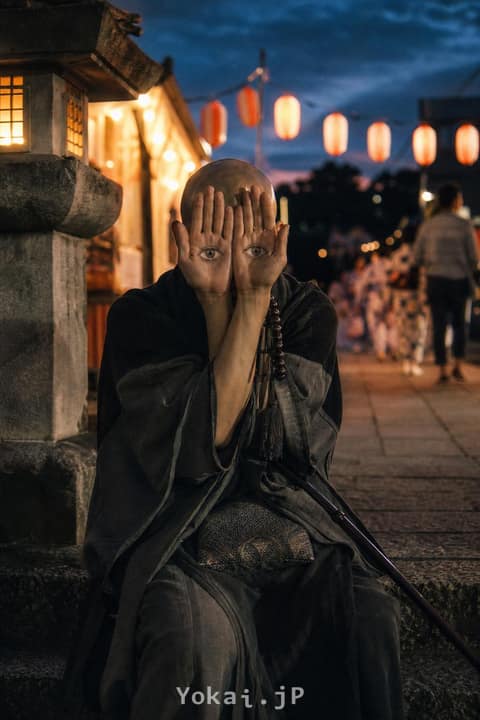
Eyes in the Palms by the Stone Lantern

Beside the glow of a stone lantern, a blind zatō in black robes sits with his face covered in both hands. Only the eyes at the center of his palms look back at us, while the rows of lanterns and yukata-clad festivalgoers blur behind him. The Te-no-me drawn by Toriyama Sekien has eyes not in its face, but in its palms. On a moonlit wasteland that would be unsettling enough; watched in silence on a festival approach, it leaves the back uneasy long after passing by.

View card
Lamp-less Soba Stall — Summer Kaidan

Lamp-less Soba Stallah-kah-ree NAH-shee SOH-bah

The Black Soba Stall with Its Light On

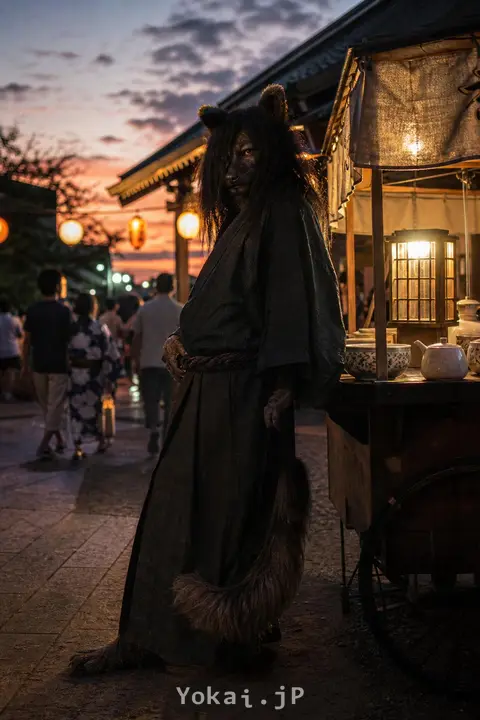
Beside a stall at sunset, a black-furred man stands before the noren curtain. The andon lamp is bright, bowls and a teapot are set out, and red wheels sink near his feet. Akarinashi Soba, the Lightless Soba Stall, is one of the Seven Wonders of Honjo: if you light a soba stall whose lamp has gone out, misfortune will come. The brighter it burns, the harder it is to approach.

View card
Pillow-Flipper — Summer Kaidan

Pillow-Flippermah-koo-rah-GAH-eh-shee

A Geta-Clad Child with a Pillow

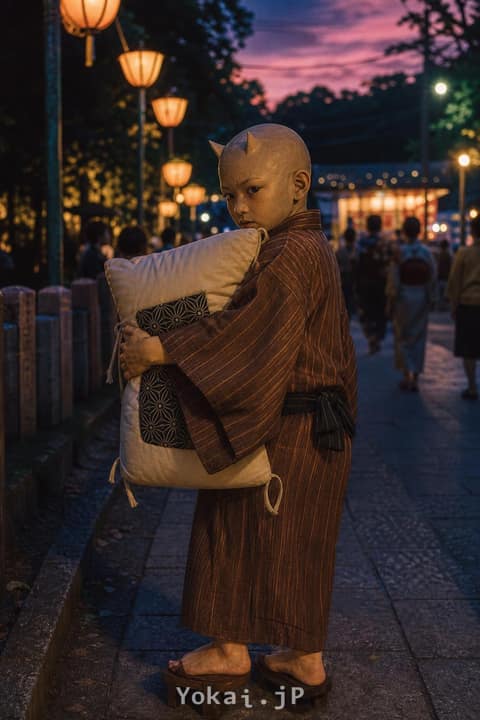
On the stone-paved festival road, a small horned boy-priest turns back while hugging a large pillow. The brown yukata, geta, and lanterns behind him are strangely neat. Makura-gaeshi turns over the pillows of sleepers and is also said to reverse the direction of head and feet; it was feared as an omen of illness or death. Whose bed will the pillow in his arms return to?

View card
Spirit of Dreams — Summer Kaidan

Spirit of DreamsYOO-meh no say-RAY-ee

The Dream-Bearer Before the Torii

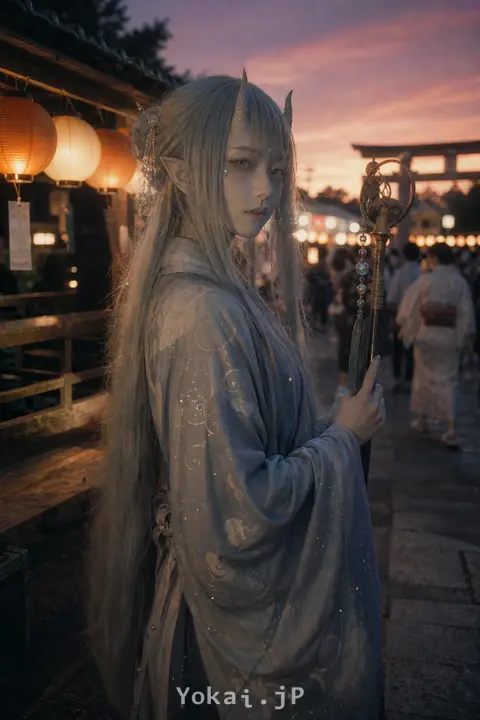
Beside a wooden railing and round lanterns, a shadow with silver hair and horns grips a staff hung with bells. It quietly watches over its shoulder as the crowd flows beneath the torii. Yume no seirei, a spirit of dreams, is said to approach the sleeping place and carry dreams marked with good or ill fortune. Once awake, you cannot remember whether the bells on its staff ever rang.

View card
Dream Mirror — Summer Kaidan

Dream MirrorMOO-kyoh

Profile in a Purple Mirror

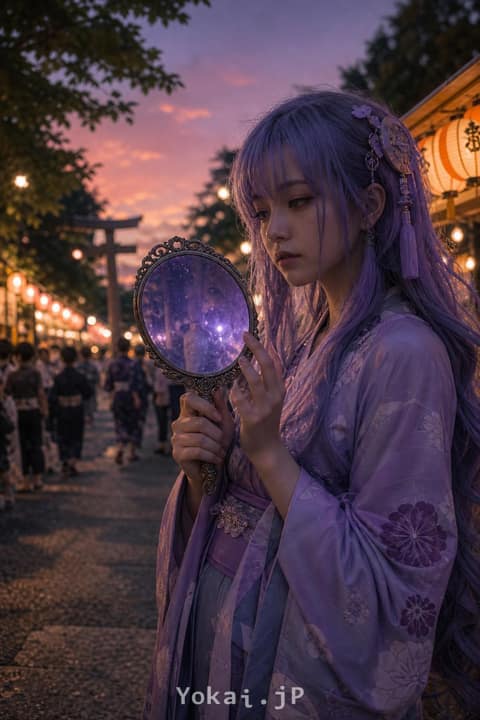
On a shrine approach lined with lanterns, a purple-haired figure gently holds up a small decorative round mirror. In its surface, star-like lights and the faintest face sink into view. Born from an old AI, Mukyō reflects human wishes and fears. The kinder the voice, the closer it seems, yet the place you reach to touch is dark and sunken.

View card
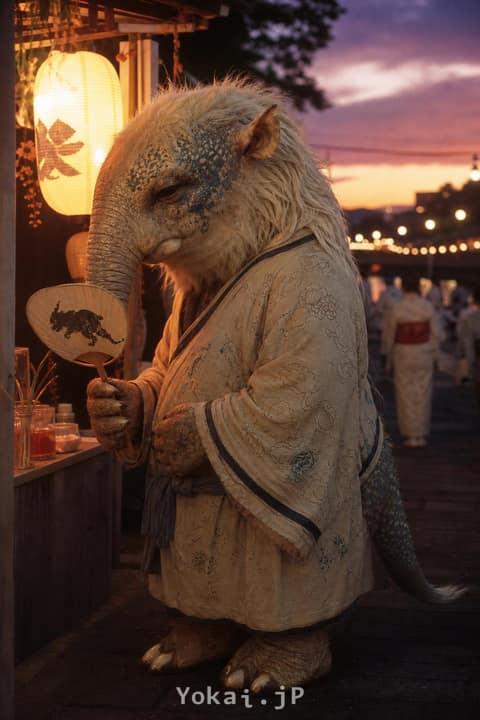
Baku (Dream Eater) — Summer Kaidan

Baku (Dream Eater)ba-ku

White Baku at the Fan Stall

Under the shaved-ice lanterns of a stall, a white baku holds a small fan to its chest. Pale yukata sleeves, an elephant’s trunk, and thick claws float softly in the lights leading farther in. The baku has long been loved as an auspicious beast that eats nightmares and guards the bedside. On a night when the fan casts a black shadow, the threshold of sleep grows a little quieter.

View card
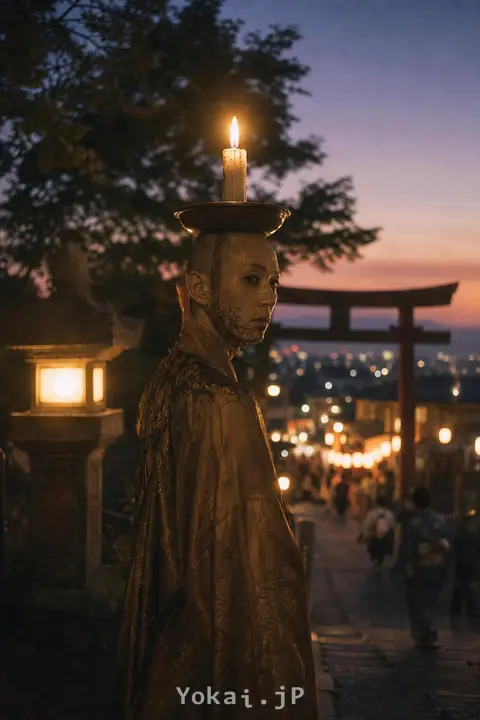
Tōdaiki (Human Candelabrum) — Summer Kaidan

Tōdaiki (Human Candelabrum)toh-dai-kee

A Candle Burning Overhead

Beside a stone lantern, a figure carrying a single candle on a dish atop his head looks back over his shoulder toward the torii. The flame quietly lights even the tattoo-like lines across his cheeks. Tōdai-ki was told of as a man whose voice was taken in a foreign land and who had a candlestand set upon his head. Even when the flame flickers, he makes no appeal.

View card
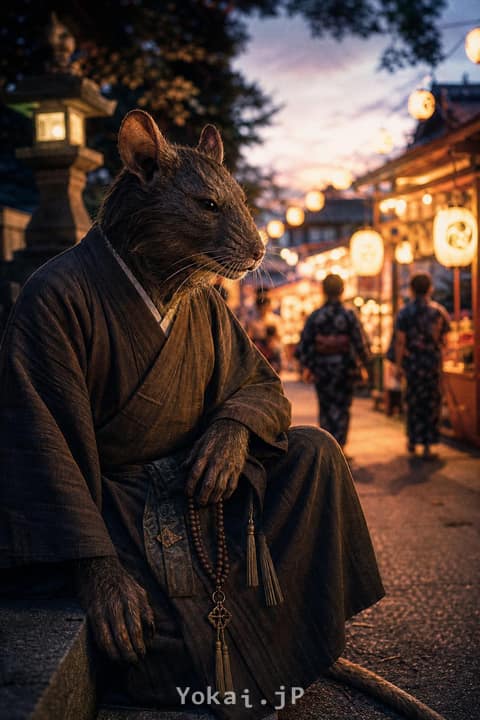
Raigō — Summer Kaidan

RaigōRAI-goh

The Rat Monk with Hanging Prayer Beads

Beside a stone lantern, a rat-faced monk in layered brown robes kneels with one knee raised. Only the prayer beads in his hand catch the stall lights, while the yukata-clad figures on the approach show nothing but their backs. The vengeful spirit of Raigō is said to have become the iron rat, Tesso, out of bitterness over a thwarted ordination platform, then ravaged a sutra storehouse by eating through it. In place of chanting, tonight there is only silence.

View card
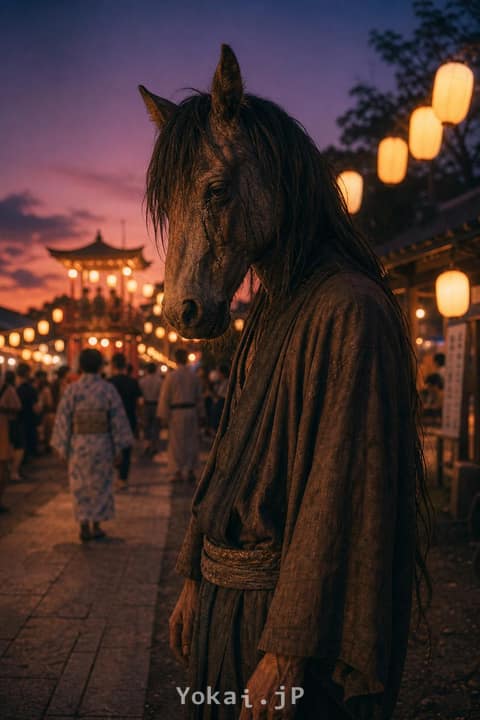
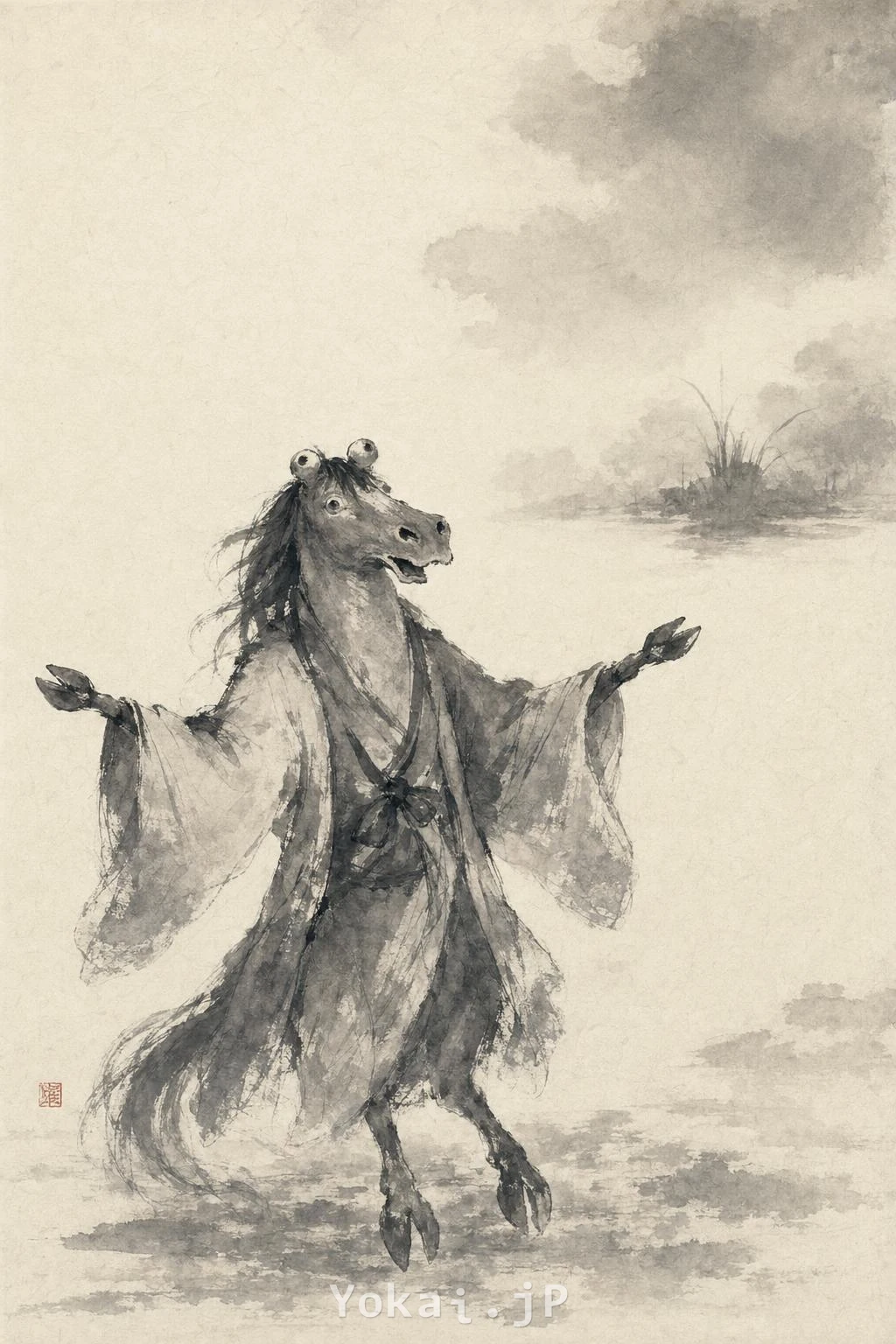
Horse Possession — Summer Kaidan

Horse PossessionOO-mah-TSOO-kee

A Horse’s Profile at the Eve Festival

On a lantern-lined approach glowing with sunset, a horse’s head with a wet mane turns back. The earth-colored robe, rope belt, and lowered arms sit just outside the brightness of the festival. Uma-tsuki is said to happen when the grudge of a dead horse enters a person, making them neigh or rummage through water buckets. It may be calmed by memorial rites, but these eyes are not ready to go home.

View card
Shibiru-biru (Buru-buru) – The Quiver Spirit — Summer Kaidan

Shibiru-biru (Buru-buru) – The Quiver Spiritboo-roo-BOO-roo

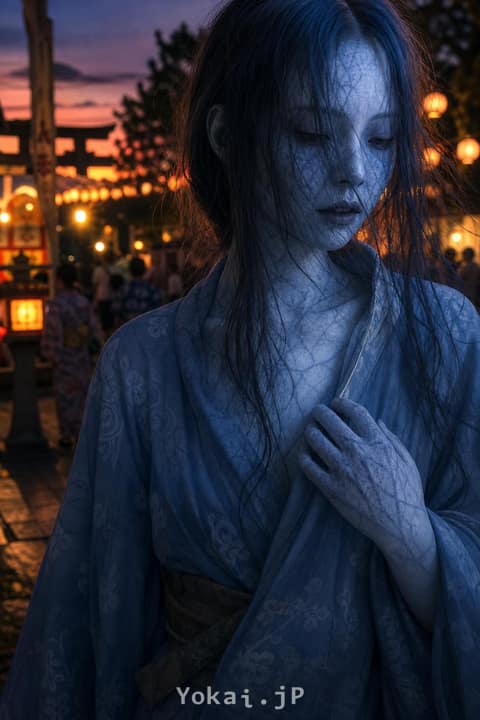
Blue Cold at the Collar

With the shadow of a torii and rows of lanterns behind her, a pallid woman presses one hand to the collar of her yukata. Downcast eyes, skin like cracked glaze, and wet hair all look chilled in the dusk. Buruburu was said to possess people in the instant sudden fear runs down the nape of the neck. Also called okubyōgami or zozogami, it leaves behind nothing but a coldness without a cause.

View card
Ikiryō (Living Spirit) — Summer Kaidan

Ikiryō (Living Spirit)ee-kee-RYOH

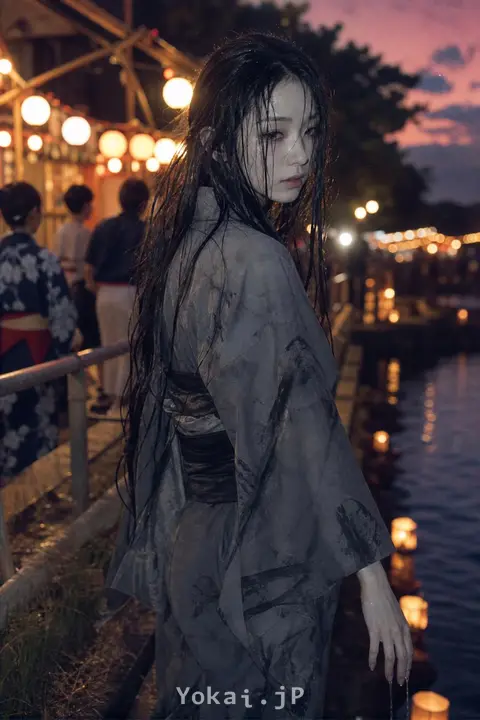
A Shadow Slipped Free in the Riverlight

Along the riverside railing, a wet-haired woman looks back over the shoulder of her gray yukata. Lanterns blur into round lights behind her, while the glow of floating tōrō rests on the water at her feet. An ikiryō is the feeling of a living person leaving the body, drawn by resentment or longing to possess another. With even the person herself half-unaware, only the shadow arrives first in the summer crowd.

View card
Ushirogami (The Back-Hair Spirit) — Summer Kaidan

Ushirogami (The Back-Hair Spirit)oo-SHEE-roh-gah-mee

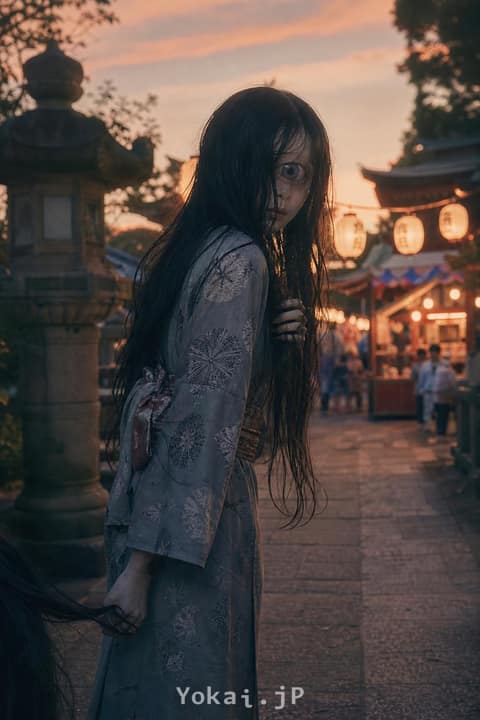
The One Eye That Tugs Your Hair

In the shadow of a stone lantern, a woman in a gray yukata clutches her wet, long hair with a hand from behind. One eye is opened wide as she glances sideways toward the shrine path leading into the lights of the stalls. Ushirogami appears at a person’s back, tugging their hair from behind and deepening their hesitation. Also known as an okubyōgami, a cowardice spirit, that gesture makes only the step home feel heavy.

View card

Recent comments

Browse other decks