Color portraits that resolve the shadow behind the shoji
A reveal deck that reimagines Edo shadow-guessing prints for yokai. Each folklore-faithful full-body figure stands alone on transparency and relates to its shoji clue through the same action and a believable cast-shadow projection.
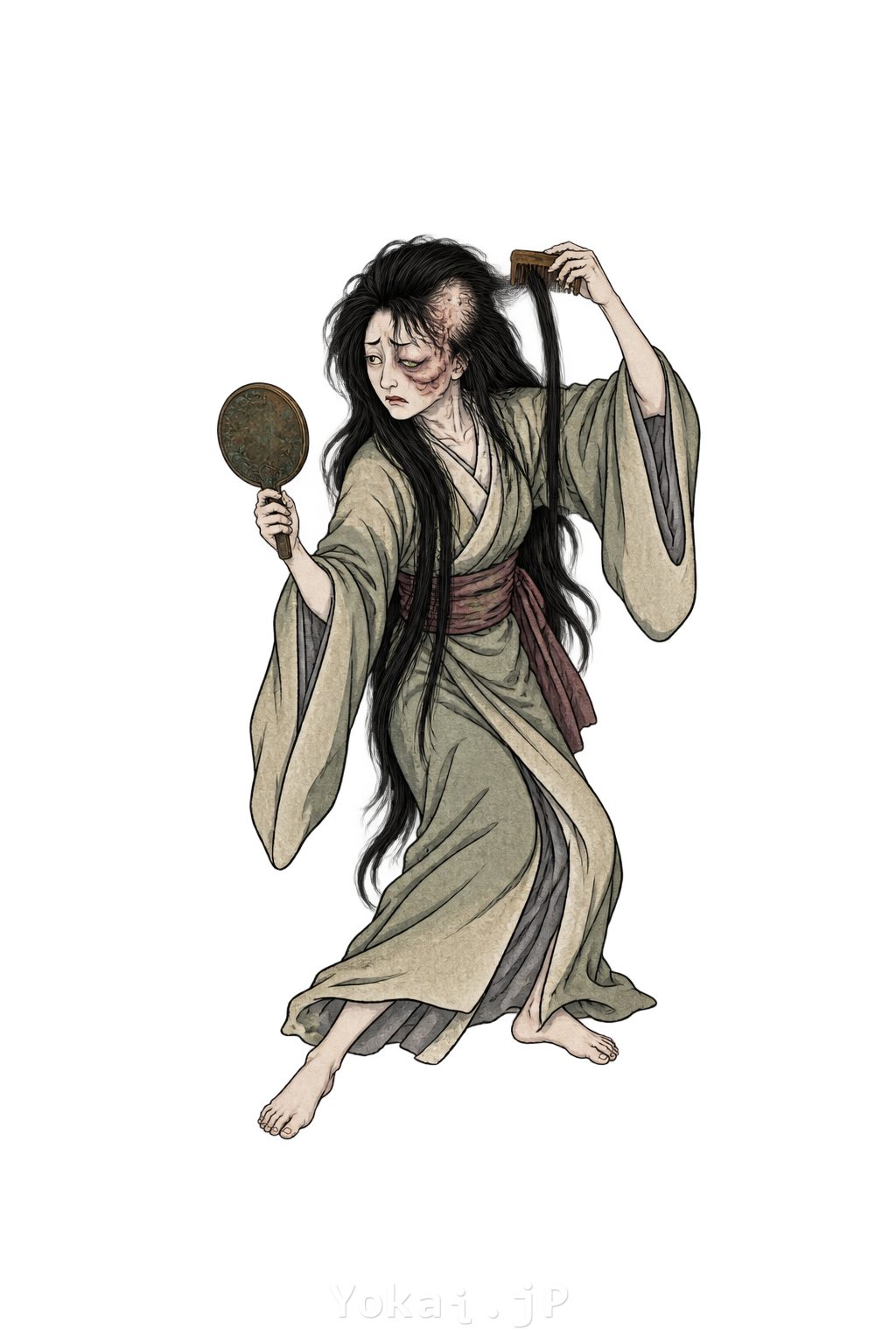
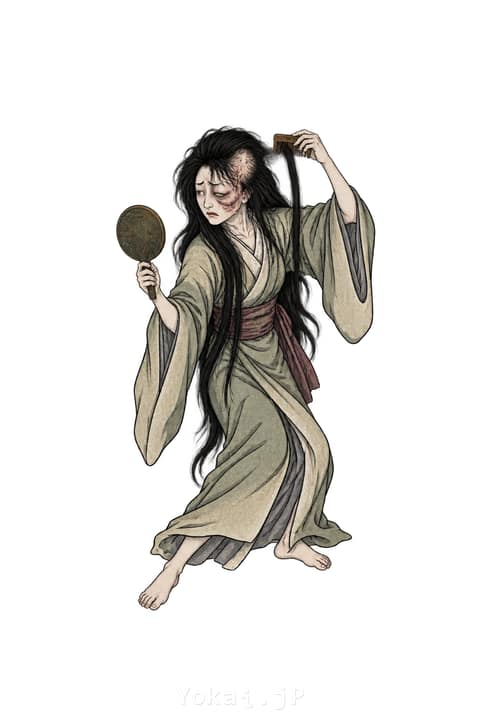
Oiwa of Yotsuya Kaidan raises a comb tangled with fallen hair and confronts her poison-swollen reflection in a round mirror. This color portrait reveals the iconic hair-combing gesture behind the matching shoji shadow.
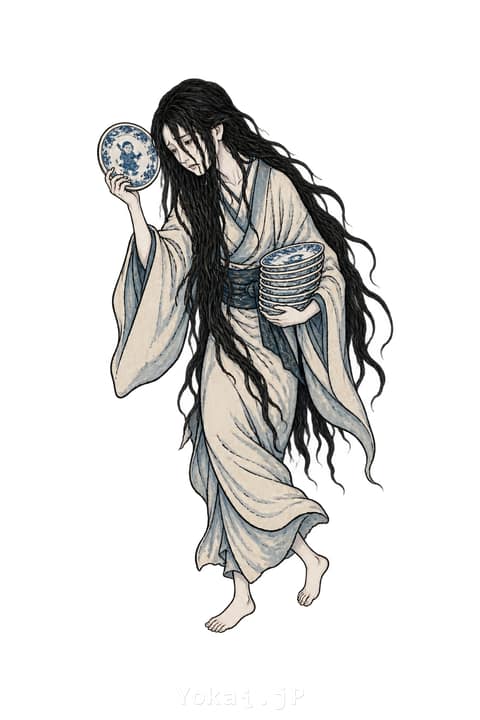
Sarayashiki's Okiku lets her wet hair fall as she raises one plate to her face and cradles the remaining eight, beginning the count again. This color portrait reveals the figure behind the matching shoji shadow.
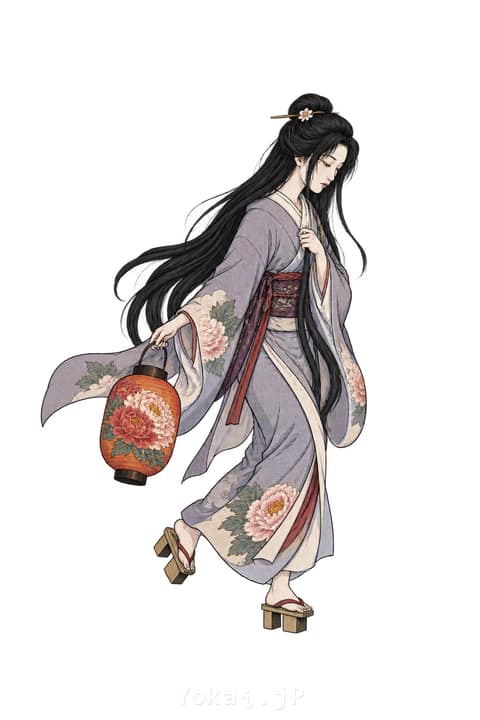
Otsuyu walks through the night with long black hair streaming, a peony lantern held low and tall geta poised to sound. Omitting her attendant O-Yone, this color portrait condenses the tale's ghostly procession into one silhouette.
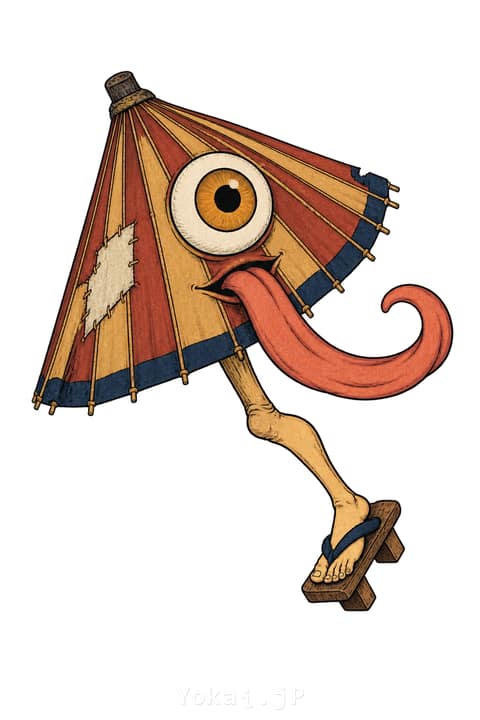
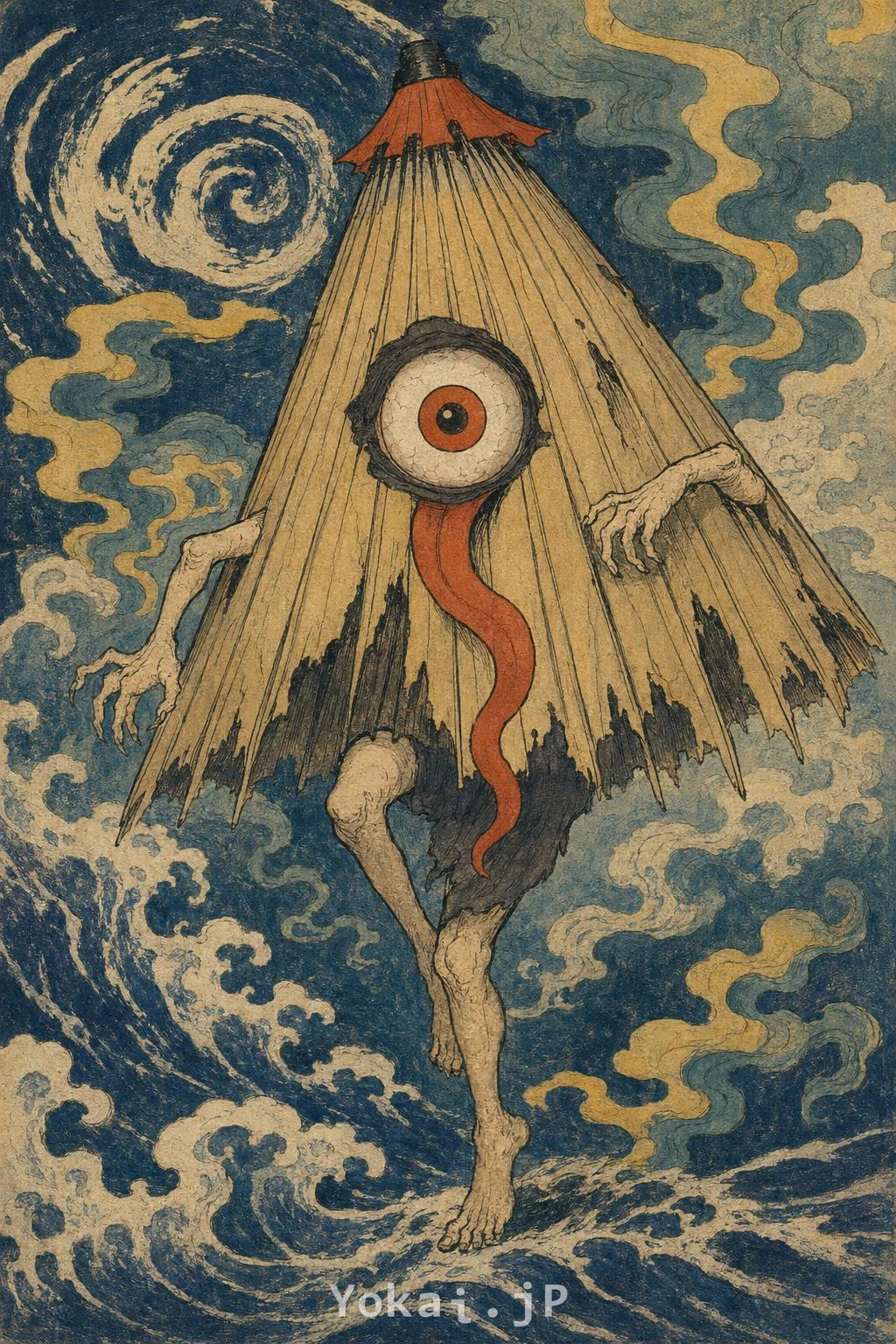
An old iron-red and ochre wagasa opens one enormous eye, lashes its long tongue to the right, and hops on a single leg. Indigo edging, radiating bamboo ribs, one broad pale repair, a bent leg, and a lone geta complete this color reveal of an Edo toy-print favorite.
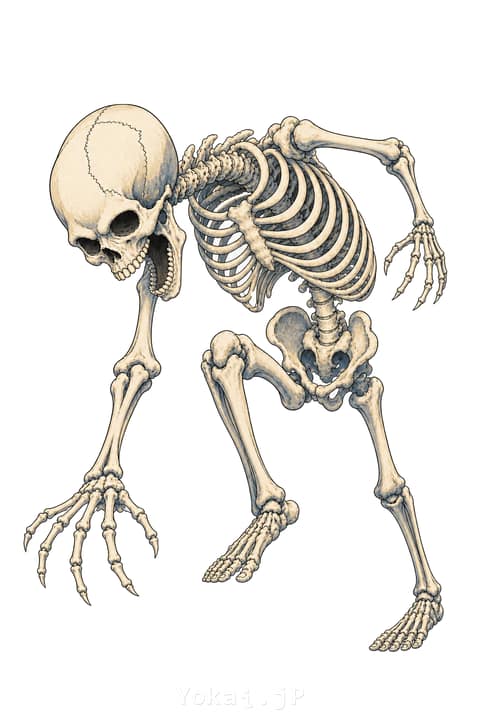
Gashadokuro, the giant skeleton whose familiar form took shape in Shōwa-era supernatural media, lowers its immense skull and opens its jaw in a crouch. A five-fingered bony hand reaches forward above an arched rib cage, raised knee, and long bracing leg, rendered in calm fields of bone white, pale smoky ochre, indigo grey, and sumi ink.
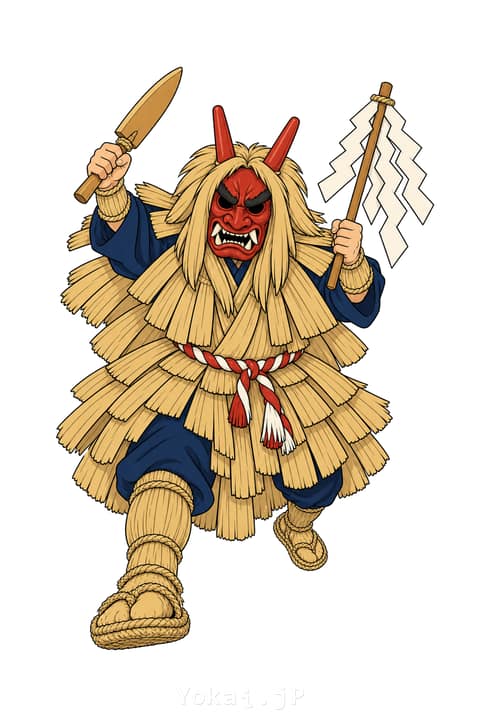
Wearing a red mask with two horns, Namahage steps forward with a ritual deba and gohei raised. Layered kede straw, shin wraps, and sandals reveal the Oga visiting deity who calls at homes on New Year’s Eve.
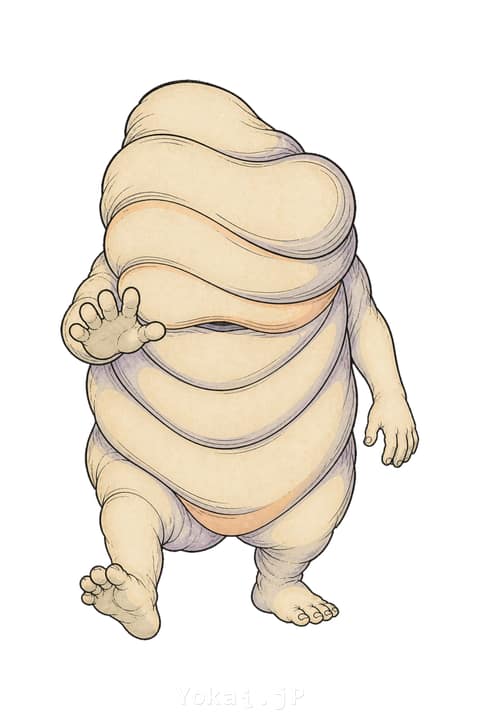
Nuppefuhofu survives mainly as a name and image in Edo-period yokai picture scrolls. It resembles a deeply folded, one-head-tall lump with short limbs; the boundary between face and body is unclear, and no distinct eyes, nose, or ears can be made out. Here it raises one hand and takes a ponderous step.
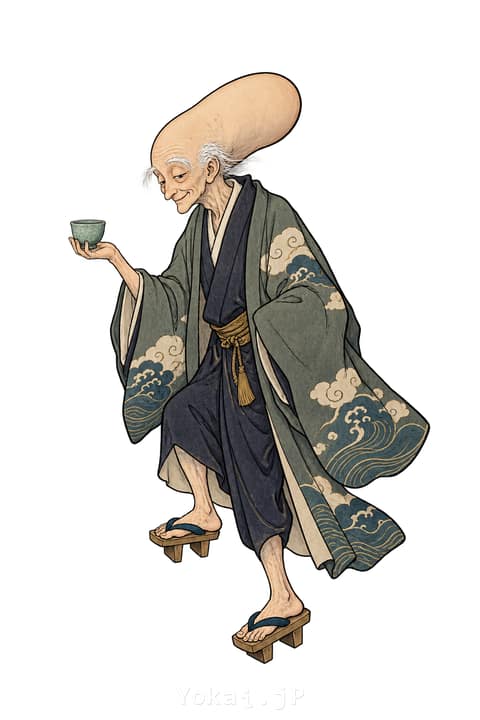
Nurarihyon slips forward with the hem of his haori in motion, balancing a tea cup beneath his enormous backward-stretched bald head. An indigo kimono, blue-grey cloud-and-wave motifs, thin limbs, and two geta complete this color reveal of the uninvited guest who acts at home wherever he enters.
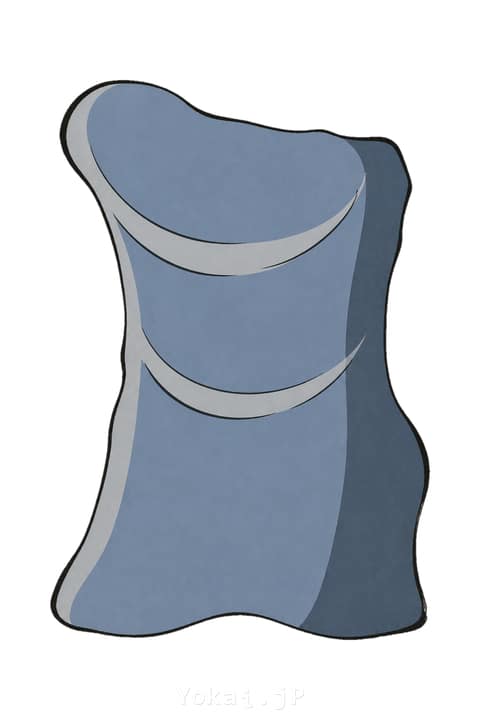
On Kyushu night roads, Nurikabe was an unseen yet tangible plane that stopped all forward motion. This reveal does not claim a fixed body: it briefly makes that obstacle visible as a faceless, limbless ash-blue barrier spanning the road. Unequal side swells and two broad pressure arcs express resistance to a head-on passage. The design is distinct from the later rectangular character and the three-eyed beast labeled Nurikabe in a picture scroll.
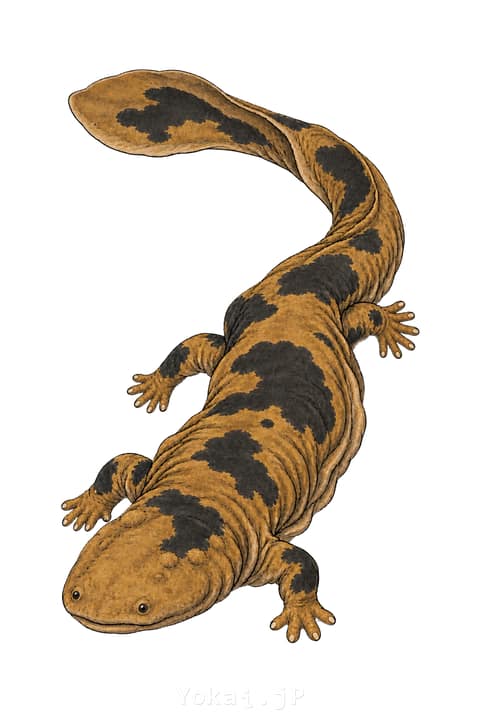
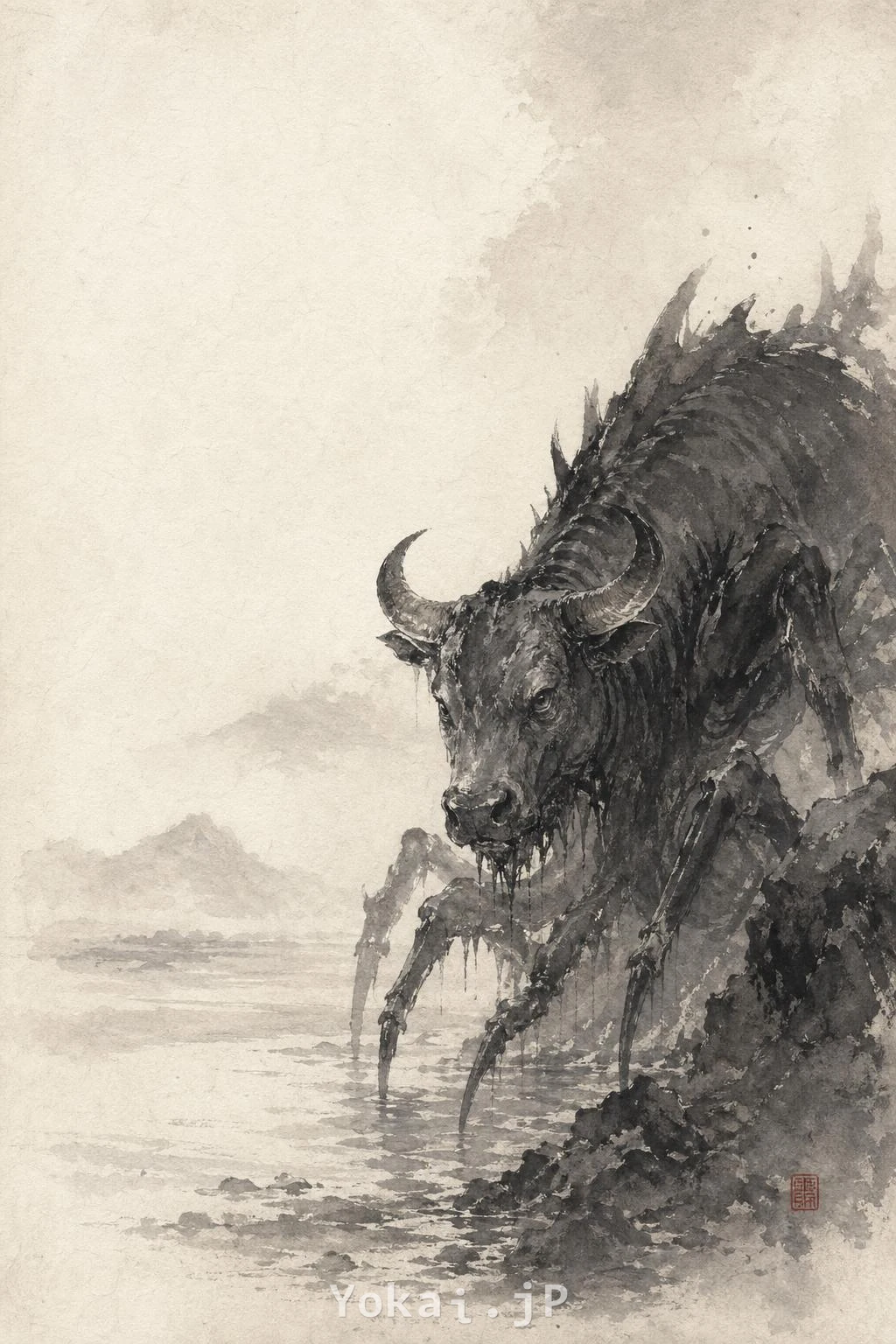
A gigantic hanzaki from Ryuto-no-fuchi in Yubara, Mimasaka. A 2022 Maniwa City guide quoting the 1691 Sakuyoshi describes a monster about ten meters long; after its death and a succession of calamities, its spirit was enshrined as a daimyojin. This reveal keeps Japanese giant salamander anatomy: one flat head, four short limbs, four digits on each forefoot, five on each hind foot, and one thick laterally compressed tail caught mid-strike. It omits people, wounds, shrine, and festival float.
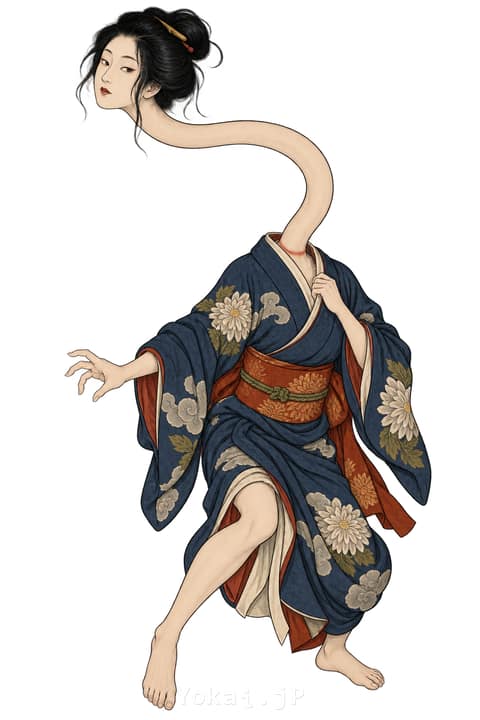
A woman in a blue kosode twists mid-step as the neck rising from her collar sweeps in a broad S-curve toward her backward glance. This color portrait reveals the figure behind the shoji silhouette.
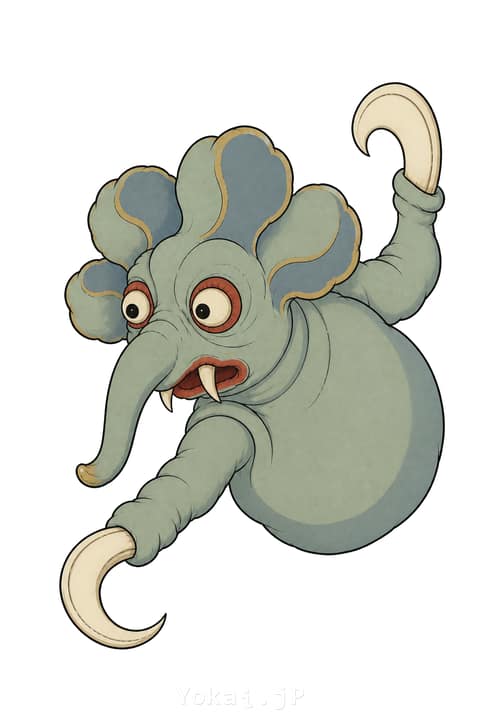
Waira survives as an image with a name but no explanation in Sawaki Sushi's 1737 Hyakkai Zukan and Toriyama Sekien's 1776 Gazu Hyakki Yagyo. The old pictures show a lobed head, two large eyes, a drooping nose, and one enormous hook claw on each forelimb, but never reveal the lower body. This reveal treats that upper-body icon as the complete canonical form: one head, two forelimbs, two hooks, and one rounded rear mass. It adds no hind legs, tail, wings, sex-based colors, or mole-eating tale.
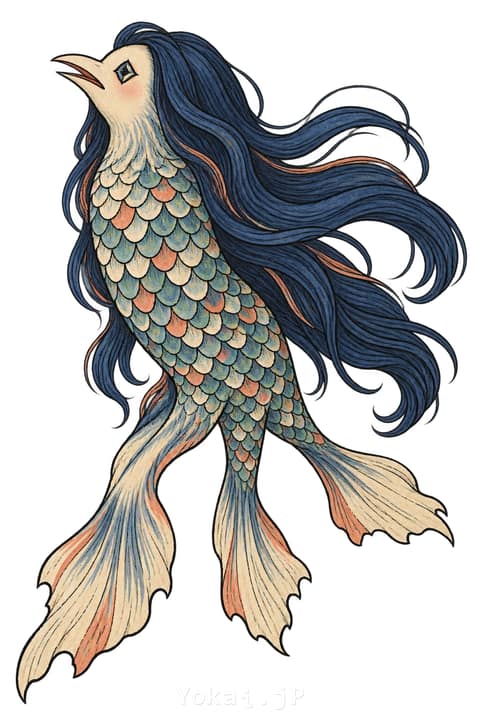
Amabie lifts its beak as if rising from the sea, long hair streaming like a tide while exactly three fin-like legs spread beneath a scaled body. This color portrait reveals the prophetic yokai pictured in the Higo kawaraban.
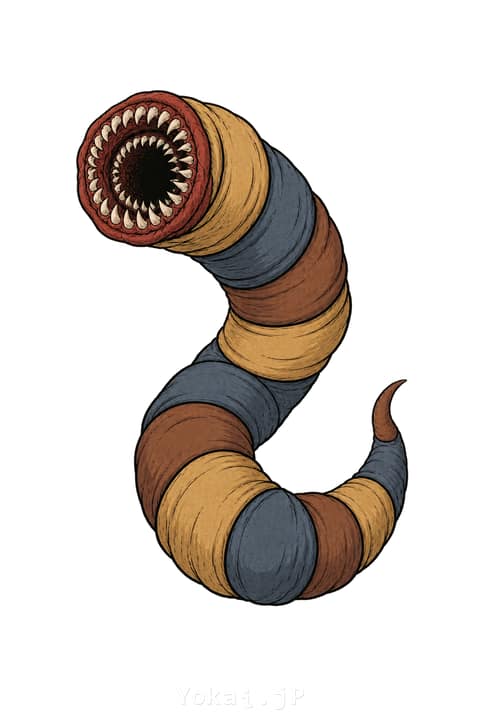
A gigantic cylindrical worm with neither eyes nor limbs twists into a questioning S. Layer after layer of inward-pointing teeth circles the round maw, while armor-like rings cover the heavy body. Calm fields of ochre, iron brown, indigo grey, iron red, and bone white reveal this subterranean predator.
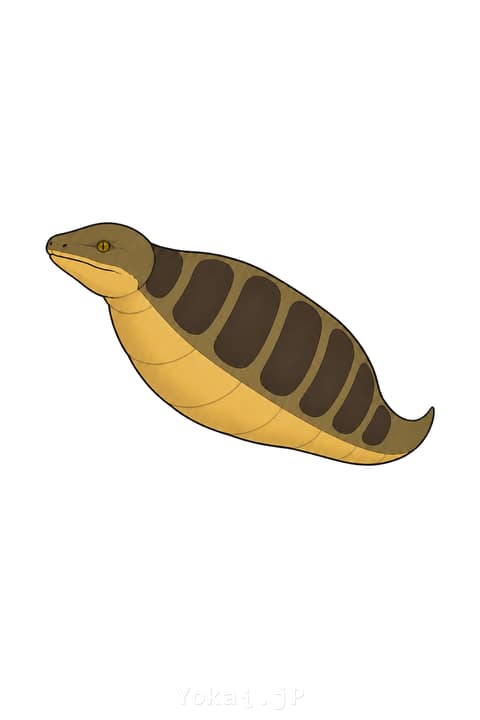
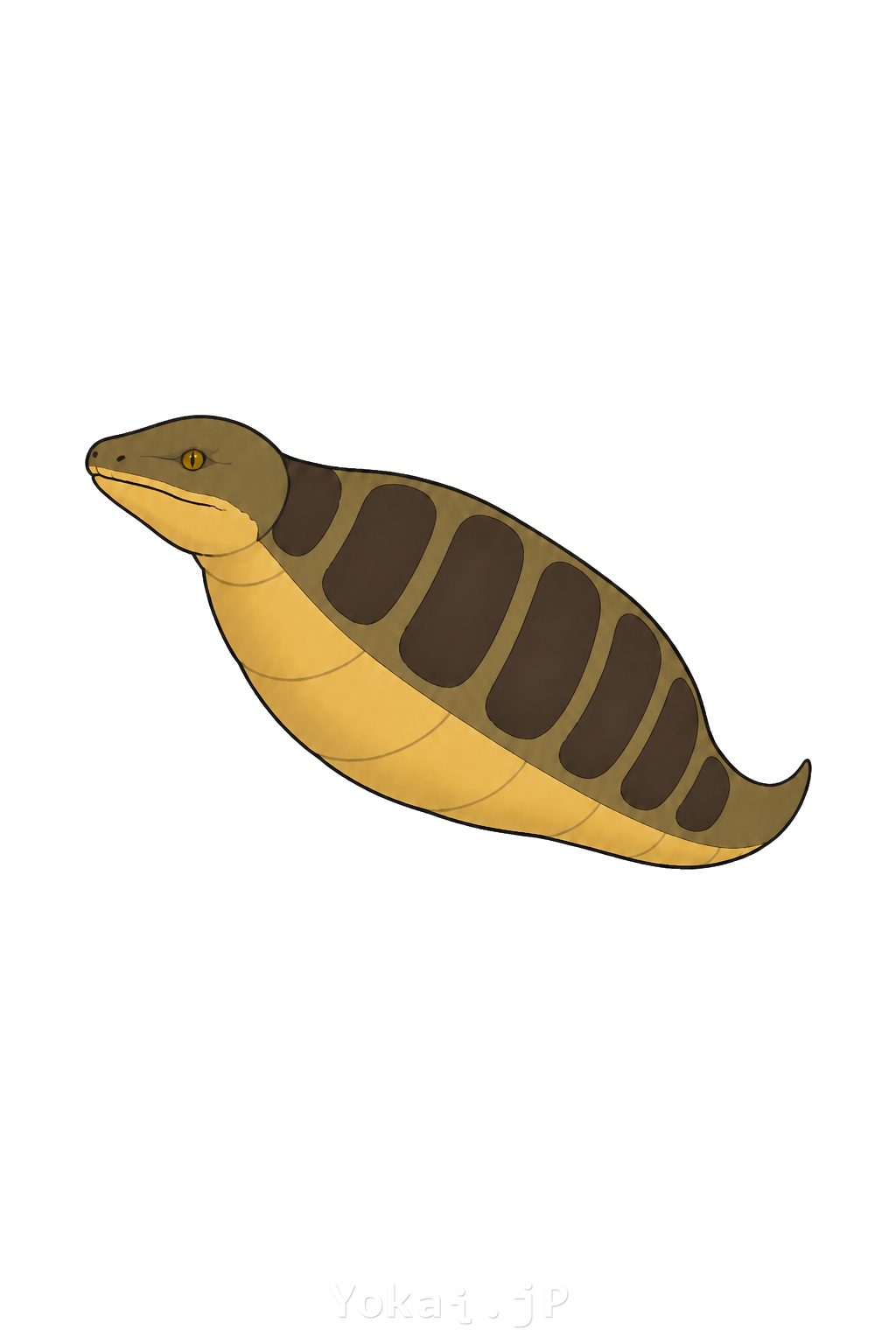
Higashishirakawa Village folklore describes Tsuchinoko as a 30–80 cm mystery snake with a beer-bottle-thick body and triangular head, able to jump, roll, and travel straight. Without claiming it is real, this reveal gathers those recurring traits into one figure: a dark brown back, ochre belly, seven broad marks, an enormous middle, and a short tail. It leaps toward the upper-left in near profile, with no legs, exposed tongue, literal bottle, or landscape.
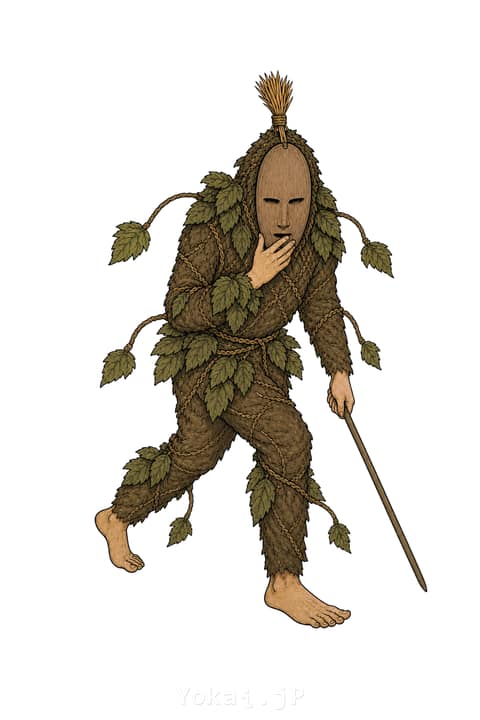
One Paantu from the Shimajiri rite on Miyako Island walks forward, wrapped head to foot in Shiinoki-kazura vines and coated in mud from the village well. One hand carries a Danchiku cane while the other holds a wooden mask over the face. The mud shared with people and homes is understood as purification and blessing.
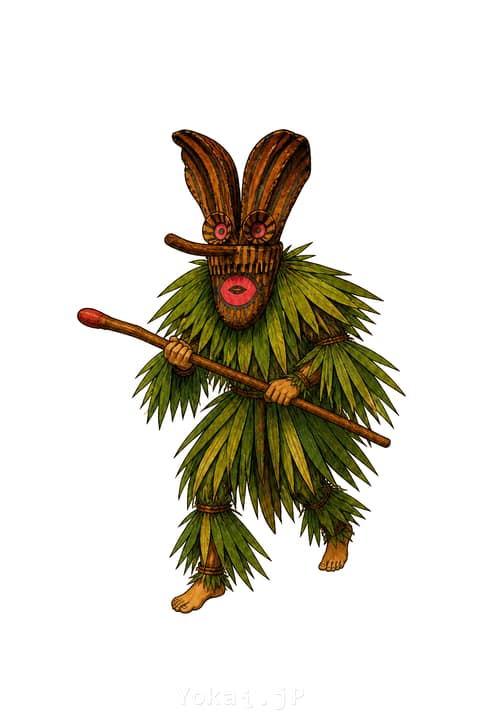
A ritual visiting deity who appears on Akusekijima at the close of Bon on the sixteenth day of the seventh lunar month. This portrait isolates one of the traditional three figures: a tall mask with two high ear panels, a body wrapped in fan-palm leaves, and one Bozemara staff tipped with red mud. The tip carries blessing mud, not fire.
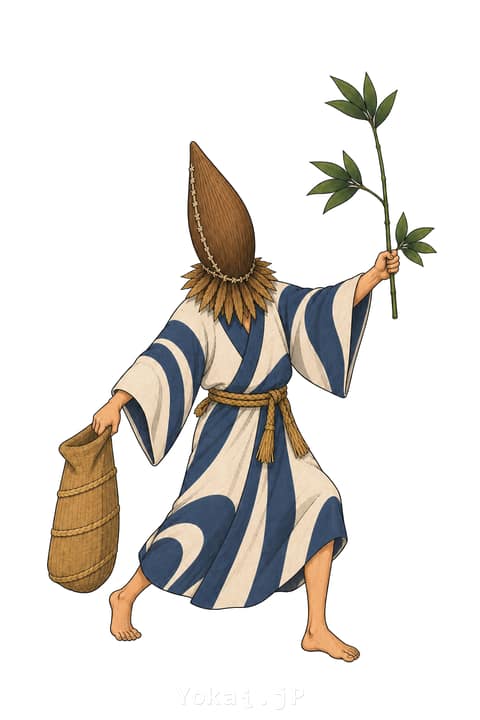
An adult O-garappa role from the Takahashi water-deity rite in Kinpo, Minamisatsuma. One figure wears a pointed Shuro-palm mask and broad Yogi night garment, carrying a Sasa bamboo spray and an empty Kamas sack. Its frightening performance teaches children to respect water danger, while the Sasa purification asks for safety and health.
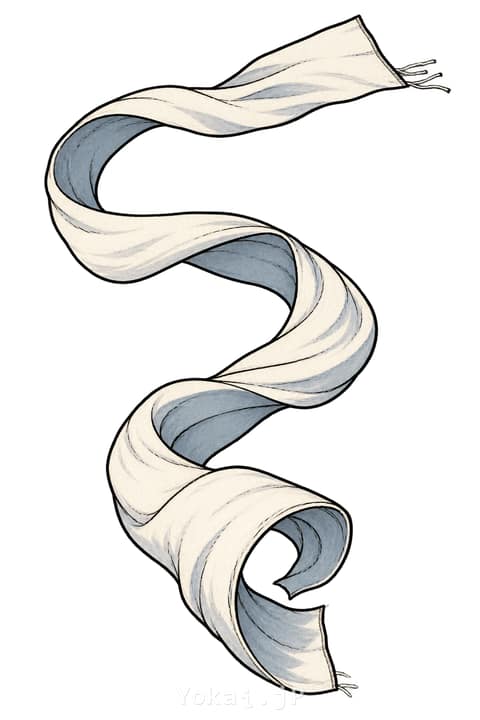
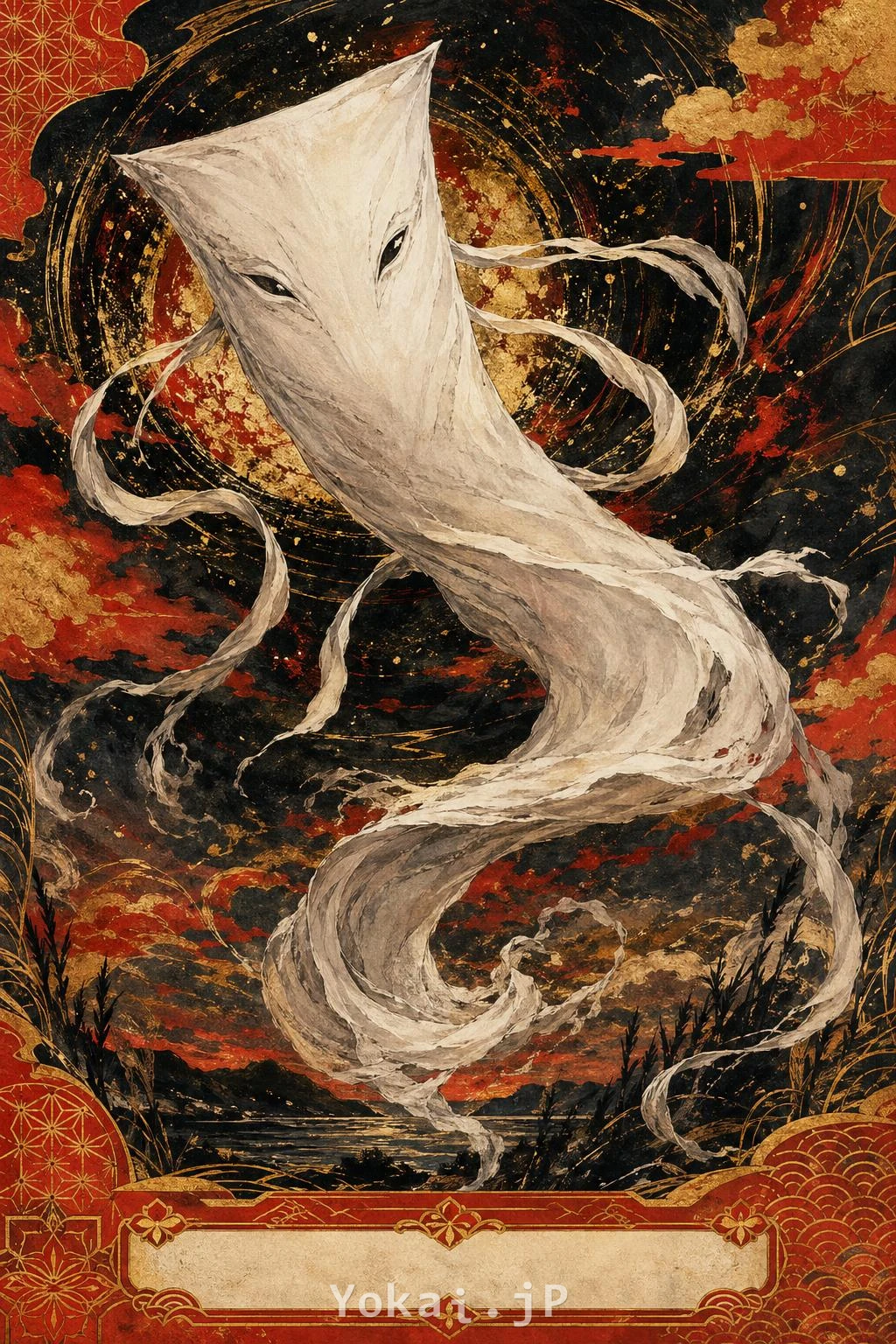
A single strip of plain white cotton, with neither face nor limbs, glides silently through a broad loop and descends into a tightening curl. This color portrait reveals the cloth apparition recorded on the night roads of Ōsumi.
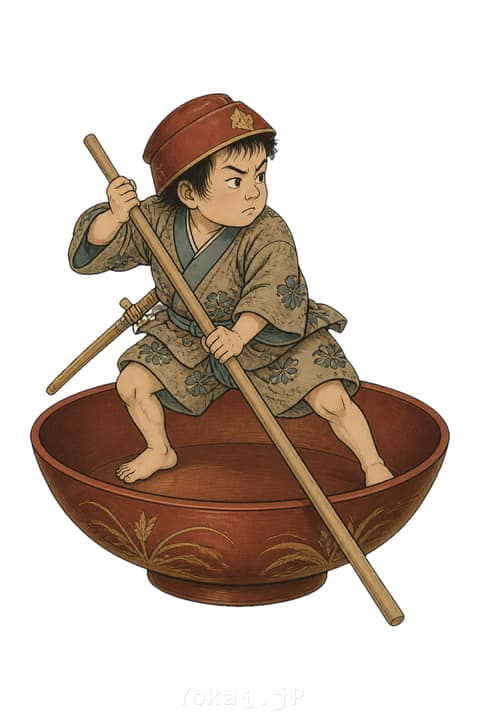
This reveal depicts the Issun-bōshi of the Otogizōshi traveling from Naniwa in Settsu toward the capital, braced inside a rice-bowl boat and driving it with a single chopstick paddle. His one-inch body, round travel hat, and needle sword at the waist make his scale legible through ordinary objects. The forward lean presents not an innocent nursery-tale mascot, but an ambitious little trickster who overcomes physical weakness through nerve and cunning.
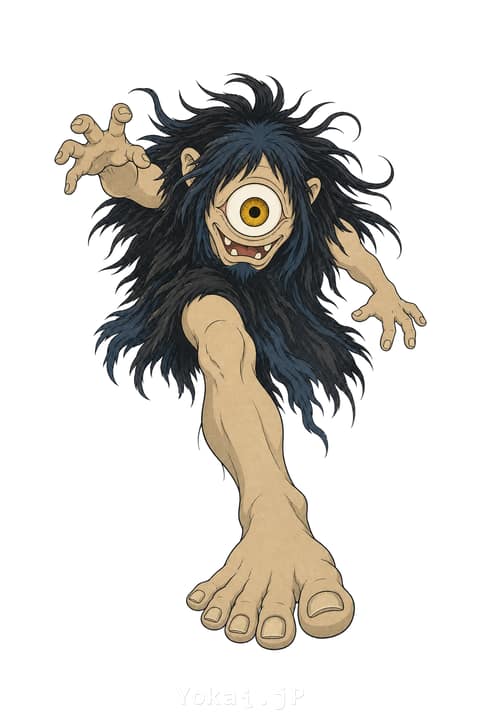
The Kii mountain spirit springs forward on its sole giant leg. Its dish-like single eye, shaggy crown, balancing hands, and broad five-toed foot reveal the answer after the guess.
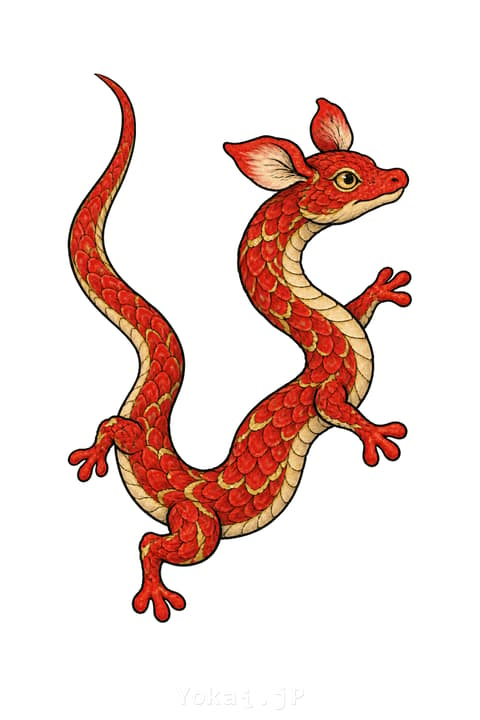
A tiny venomous serpent recorded in volume eleven of Asai Ryoi's Otogi Boko. Barely four sun long—about twelve centimeters—it is described as scarlet, with two ears, four legs, gold showing between its scales, and the form of a small dragon. This reveal isolates one creature in an open S so all four legs and its single tail remain distinct. It adds no horns, whiskers, mane, wings, or jewel. The bounding pose is a silhouette design, not a claimed behavior from the tale.
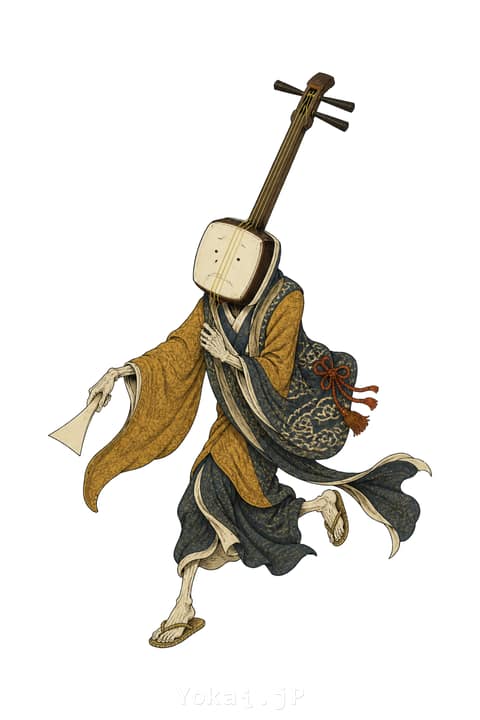
Shami-chōrō dances on one foot, his face formed by a shamisen body and its long neck rising overhead with exactly three tuning pegs. He extends a broad bachi plectrum, while the instrument's storage bag wraps around him like a monk's robe and the smallest bumps and curves in the skin suggest an elderly expression.
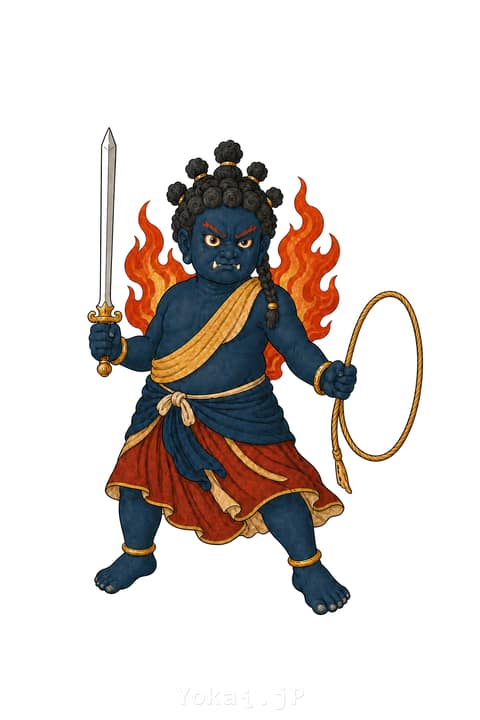
This color reveal shows the blue-black, child-formed Fudō Myō-ō stepping forward, his wisdom sword upright on canvas-left in his right hand and one broad lasso loop on canvas-right in his left. Seven compact topknots, one left sidelock, an old-gold shoulder cloth, an iron-vermilion skirt, and a compact Karura flame complete the figure. Attendants, dragon, rock seat, and extra implements are omitted so its outline can be compared cleanly with the shoji clue.
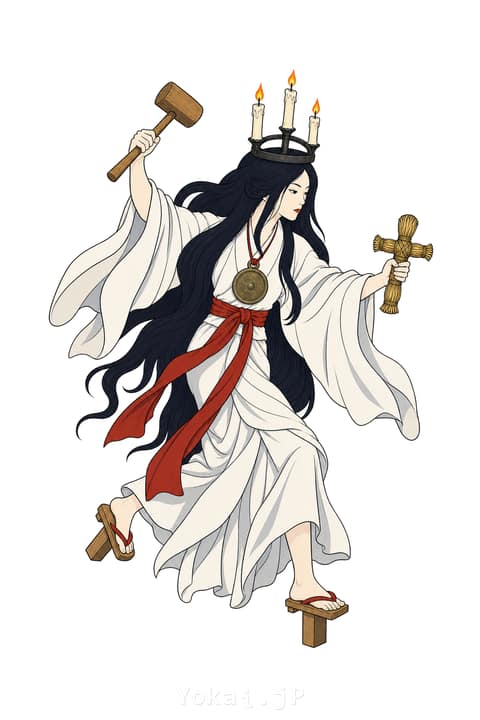
Wearing an iron trivet with three candles, a white-robed woman raises a mallet and presents a straw doll. The round mirror, long black hair, red sash, and one-tooth geta reveal the Edo-period image of the midnight ritual.
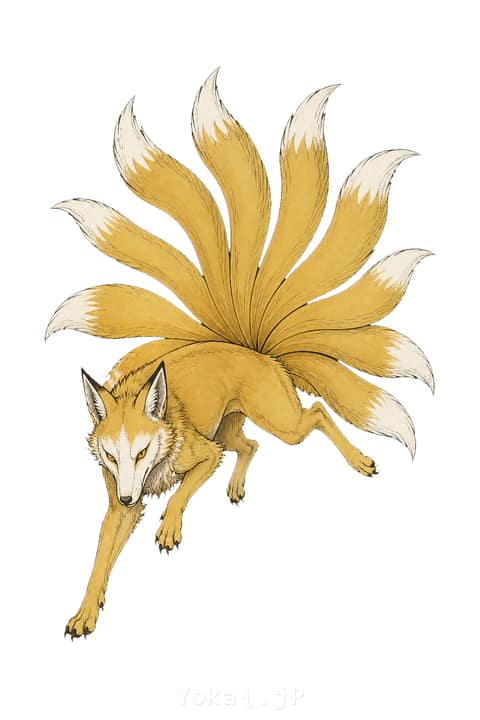
The great white-faced, golden-furred fox leaps with all nine tails spread like a ceremonial fan. Nine distinct tips and four complete limbs reveal the supernatural true form hidden behind the legend of Tamamo-no-Mae.
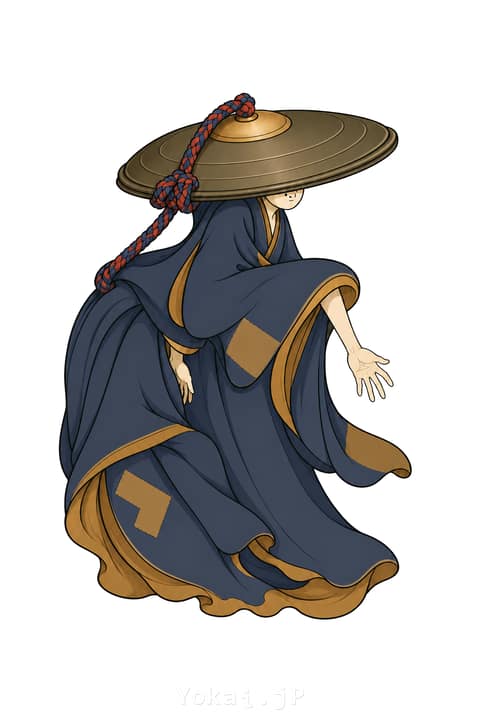
Two joined nyohachi cymbal plates laid horizontally form Nyubachi-bo's head itself, with one thick cord passing through the central boss. A tiny face nestles deep beneath the rim while two patched monk sleeves open in opposite directions. The hands carry no gong, striker, beads, or staff, and the continuous robe hem conceals every leg and foot.
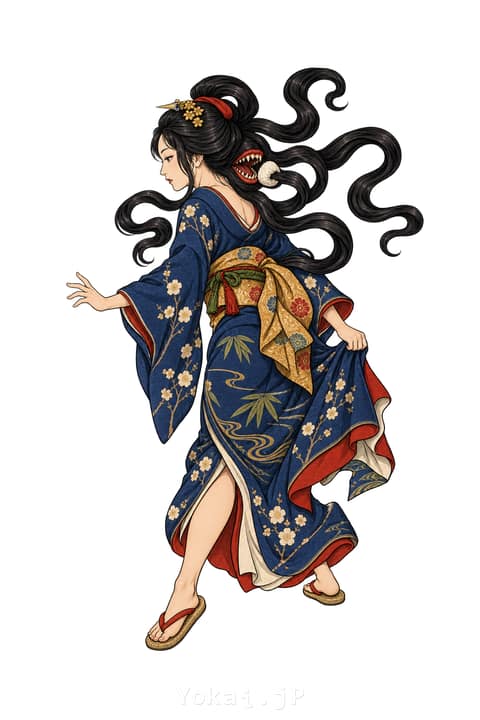
As a composed woman turns, the mouth behind her head opens its teeth and one of six long locks carries rice toward it. Her ordinary mouth stays quietly closed while the second mouth demands food beyond her control, following the Edo-period visual tradition.
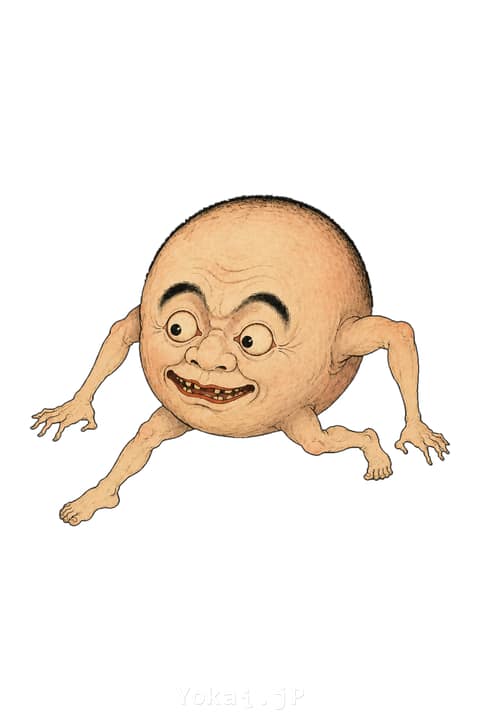
Gotaimen, an Edo-period picture-scroll yokai, does not have five faces. It is one enormous human head with two arms and two legs attached directly to it. Thick brows, staring eyes, a broad nose, a toothy grin, and crabwise limbs appear in restrained flesh, sumi black, and iron-red fields. The image gives form to a scroll-born visual pun: the head, right hand, left hand, right foot, and left foot make its five bodily parts.
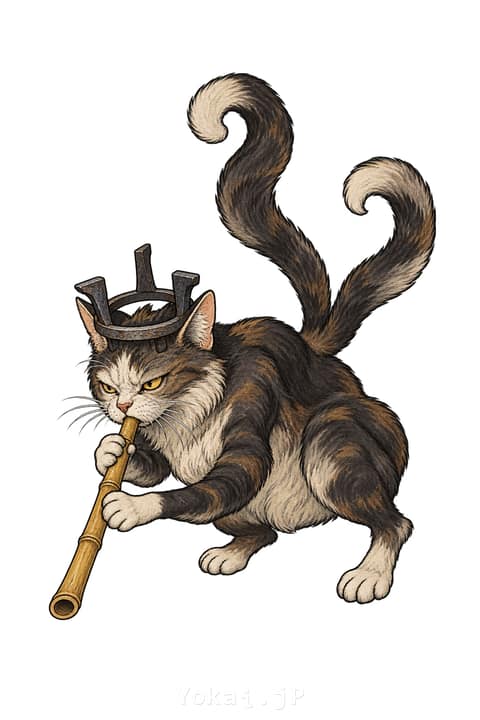
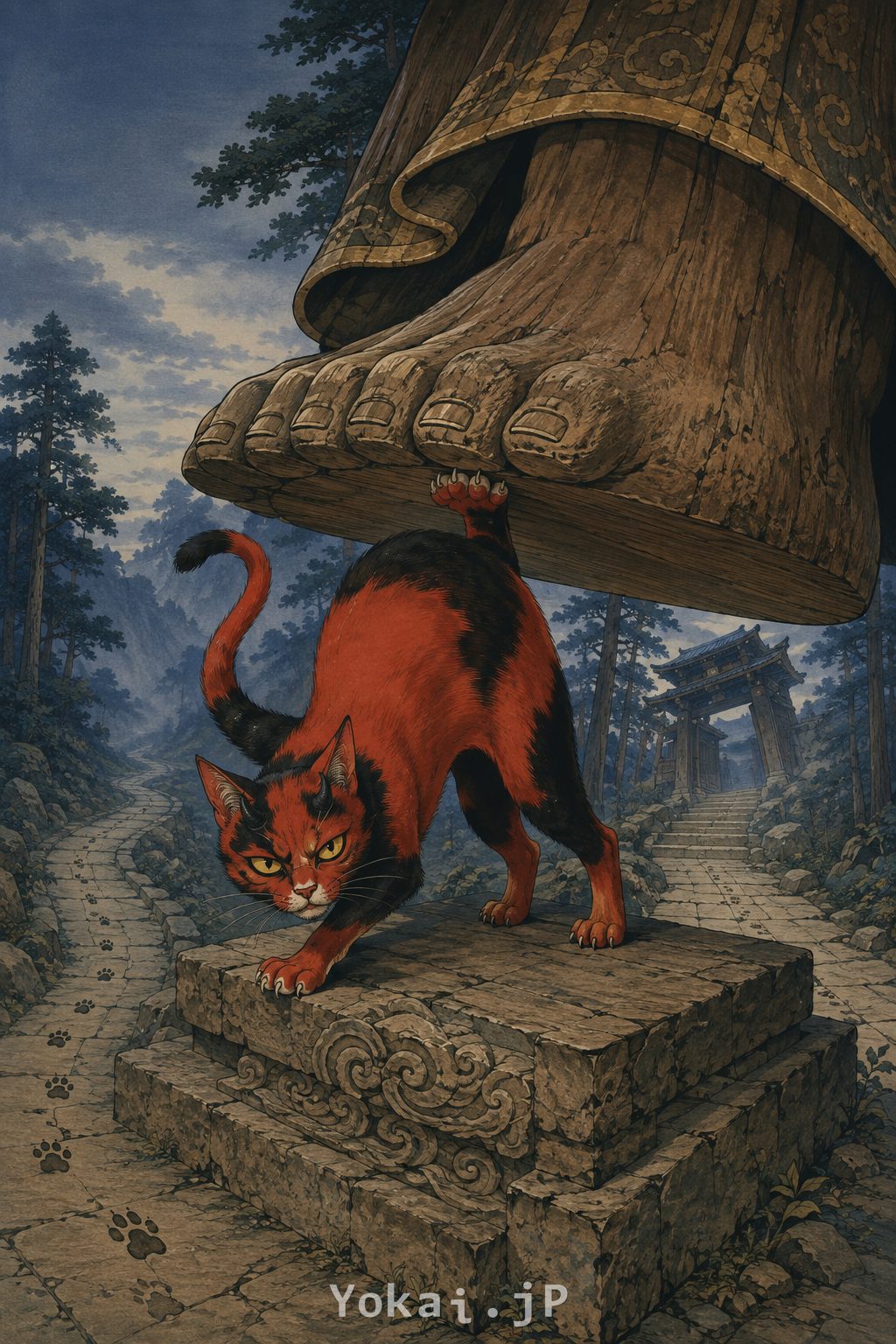
Based on Toriyama Sekien's Gazu Hyakki Tsurezure Bukuro, this two-tailed old cat crouches with a three-pronged iron trivet on its head and one fire-blowing bamboo tube at its mouth. With no hearth or flames, the two tails, trivet and tube carry the identity. Later claims that it creates fire by itself are not treated as an attested power.