YOKAI.JP

Togakushi Shrine Kuzuryushaとがくしじんじゃくずりゅうしゃ

2 yokai rooted in Togakushi Shrine Kuzuryusha. Explore the legends tied to this land.

Also known as: 九頭龍社 / 戸隠九頭龍社 / 戸隠神社
  • Kuzuryū (Nine-Headed Dragon)

    Kuzuryū (Nine-Headed Dragon)

    Divine

    koo-zoo-RYOO

    Togakushi Kuzuryu Ōgami (Great Nine-Headed Dragon of Togakushi)

    Deities & Divine SpiritsTogakushi in Shinano Province; Kuzuryū River basin in Echizen Province

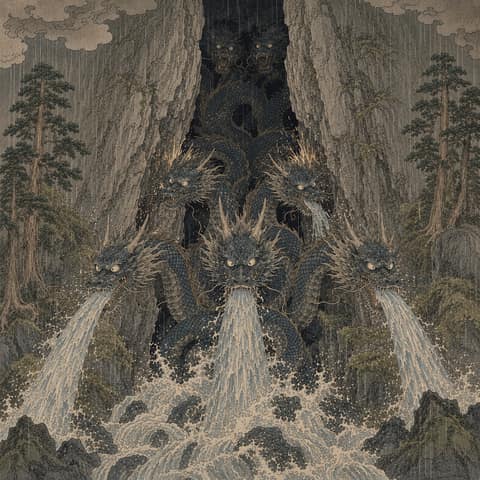
    The Kuzuryu Ōgami of Mount Togakushi is venerated as a water deity pacified through subjugation and transformed into a benevolent god. Medieval accounts center on a tale of pacification and sanctification by a figure known as Gakumon, after which the deity became revered as Kuzuryu Gongen, a principal icon for rainmaking, integrated into the rites of shrine attendants and Shugendō practitioners. It is said to favor pears as offerings, and from the early modern period was believed to cure toothache and bless marriages. Its representations vary by era—divine statue, serpent form, or dragon form—and it is linked to rock grottoes, springs, and ravines. As a guardian of local water sources and a symbol of agricultural stability, its tempestuous aspects are understood to be soothed through requiem rites and festivals. Even without mixing with Echizen traditions of the Black and White Dragons, it shares the essential functions of a water god, governing rain, river levels, and community livelihood.

  • Ryūjin

    Ryūjin

    Divine

    Ryūjin (the Dragon God)

    Ryujin, Water-God Who Stills the Storm

    Divine Spirits & DeitiesAll across Japan (the deity who governs the seas, lakes, and great rivers)

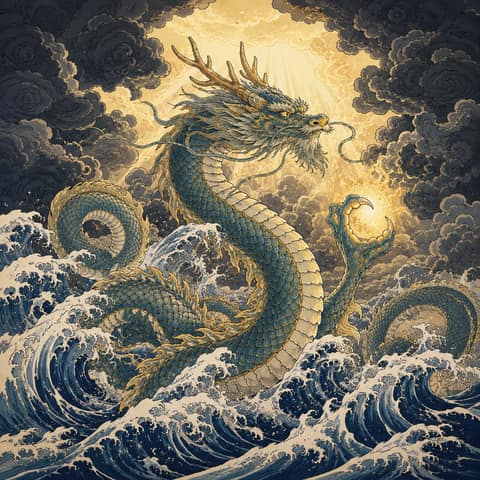
    As the "water-god who stills the storm," Ryujin stands at the border of sea and sky holding the weather in his hands, and it was to him that fishermen, sailors, and the rice-growing folk of the villages prayed most urgently. His power cuts both ways. At times he grants the blessed rain that nourishes the paddies; at times he raises great waves and tempests that shatter ships. For this reason people approached him through many rites, hoping to calm his raging face and draw out his face of blessing. The greatest divine treasures the sea-dragon holds are the tide-flowing and tide-ebbing jewels that command the rise and fall of the tide. Hoori received these two jewels from the sea-god, drowning his elder brother with the flowing jewel and saving him with the ebbing jewel to force his submission. This power to govern the tide at will reveals the very essence of the dragon who rules the sea. At coastal shrines people prayed for storms to subside and for good catches; inland they prayed for rain, offering black horses in drought and sinking offerings into deep pools to court his favor. The legends of human sacrifice handed down at Lake Ashi and at ponds across the land share a single plot — a high priest subdues the raging dragon and turns it into a guardian — telling us that fear and reverence were two sides of one coin. His face as lord of the Dragon Palace is of a piece with this water-divinity. Beyond the sea, on the floor of the waters, the dragon's palace is an otherworld of riches and of time, and one who visits it either gains treasure or, like the one who opened the jeweled box, bears away years that can never be regained. Ryujin is no mere monster but a deity who embodies water itself — the very resource of life and death — and to still the storm was, in the end, to make people keep the fragile covenant drawn between humankind and nature.